INTRODUCTION
Drug-induced skin reaction or drug eruption is a general term for
eruptions in the skin and mucosa induced by a drug or its metabolites.
 Drug-induced skin reactions are common, accounting for 30% of all reported adverse
drug reactions.
 Some types of drug reaction can cause systemic as well as skin involvement.
 All drug induced skin eruptions along with causing morbidity can also affect the
patient's confidence in the prescriber and future adherence with medication.
 Therefore, it is important that all drug associated rashes are carefully evaluated and
documented.
 Diagnosis requires a comprehensive drug history and knowledge of likely causative
drugs.
 Definitive diagnosis of a drug-induced skin condition would require drug re-challenge,
this is not recommended.
2
EPIDEMIOLOGY
 Approximately 2% of drug-induced skin eruptions meet the World
Health Organization definition of a serious reaction.
 Patients with drug reactions were found to be more commonly
female (63%) than male(37%)
 Prevalence rate was found to increase with age and the number of
medications.
 Beta-lactam antibiotics were found to be the most frequent cause of
adverse cutaneous drug reactions (42.7%), followed by non-steroidal
anti-inflammatory drugs (16.5%).
 Acute urticaria was the most common clinical presentation (59.2%)
followed by fixed drug eruptions(18.5%), and maculopapular
eruptions (14.9%).
3
ETIOLOGY
 Properties of a drug that increase the risk of a drug-induced reactions are:
a) Molecular weight >4,000 Da (e.g., insulin, erythropoietin)
b) Presence of foreign proteins or large polypeptides of nonhuman origin
(streptokinase, beef or pork insulin, chimeric/murine-derived monoclonal
antibodies)
c) The ability of the parent drug or its active metabolite to bind to a carrier
protein and form a complete antigen (penicillins and sulfonamides).
 Patients taking combination preparations.
 Excipients contained in medication.
 Individuals at higher risk of drug eruptions (HIV infection).
 Genetic factors like HLA-B antigen are sensitive to drugs
4
PATHOPHYSIOLOGY
 Mainly two mechanisms : IMMONOLOGIC AND NONIMMUNOLOGIC
IMMUNOLOGIC MECHANISM
A drug or the complex of a drug and a serum protein becomes antigenic, causing a
drug eruption
 IgE mediated type I allergy: Within 2 hours after exposure to an antigen (e.g.,
penicillin or some NSAIDs), urticaria or anaphylactic shock occurs.
 Type II allergy: Complements are activated by an antigenic drug that connects
with tissues, resulting in hemolytic anemia and thrombocytopenia. It is observed
in some cases of purpura-like eruptions.
 Immune complex-associated type III allergy: Immune complex deposits in tissues,
causing disorders. Vasculitic eruptions are example for this type.
 Type IV allergy: A delayed hypersensitivity reaction is induced by T cells that
have been sensitized to drug antigens. Example eczema-like eruptions , are
produced by type IV allergy or by T-cell mechanisms that resemble type IV allergy.
5
PATHOPHYSIOLOGY cont.…
NON IMMUNOLOGIC MECHANISMS
 Pharmacologic effects: Drug-induced skin reactions may be produced by essential
pharmacological action of the drug. Hair loss caused by anticancer agents and
exfoliation in palms and soles caused by retinoids are examples.
 Accumulation: A drug accumulates in the skin or mucous membranes from
prolonged use .Example arsenic melanoderma and argyria.
 Drug interaction: One drug may inhibit another drug’s metabolism or excretion, or
it may influence protein binding, leading to the same symptoms as those in drug
overdose.
 Specific condition of patients: Inherited enzyme deficiency may cause drug
reactions; excessive reaction occurs against a minute amount of drug (intolerance).
An unexpected action of the drug is caused (idiosyncrasy).
6
DIAGNOSIS
 History is taken on drug-induced skin reactions
 Skin test (scratch test, prick test, intradermal test)
 Patch test
 Drug lymphocyte stimulation test (DLST)
 Skin biopsy
 Rechallenge test (absolutely contraindicated in severe forms of drug
reactions)
7
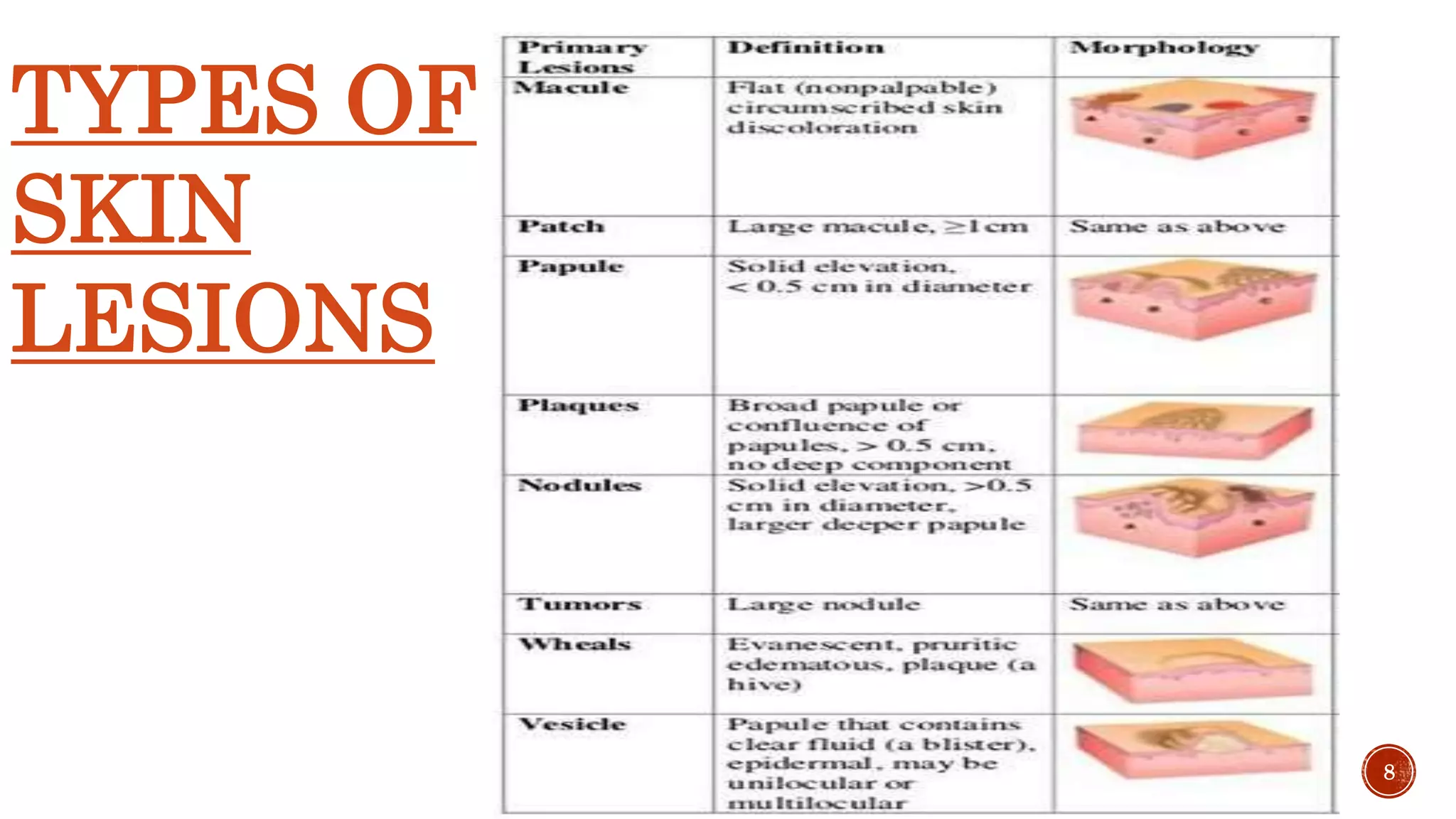
TYPES OF
SKIN
LESIONS
8
DRUG REACTIONS CAUSING CHANGES TO
SKIN FUNCTION
Abnormal photosensitivity
 Two types – Photo allergic and phototoxic
 Phototoxic reactions - more common, resemble severe sunburn, can progress to
blistering, are dose dependent for both the drug and sunlight, occur within 5–15h
of taking the drug and subside quickly on drug withdrawal.
 Photoallergic rashes - eczematous, but may be lichenoid, urticarial, bullous or
purpuric. They are not dose dependent, occur following exposure to normal
amounts of sunlight exposure. The onset can be delayed by weeks or months,
while recovery is often slow following drug withdrawal.
 Amiodarone, nalidixic acid, NSAIDs, chlorpromazine, tetracyclines, etc can cause
phototoxic reactions
 Griseofulvin, NSAIDs, sulphonamides, sulphonylureas and thiazide diuretics can
cause photoallergic reactions.
9
TREATMENT
 Patients receiving known photosensitising drugs
should be advised to avoid strong sunlight.
 They should also be advised to use a broad-
spectrum topical sunscreen, providing both UVA
protection (indicated by the ‘star rating’ on the
bottle) and UVB cover (indicated by the sun
protection factor, SPF).
10
Pigmentary changes
 Can be hyper-pigmentation, hypo-pigmentation and
discoloration
 Pigmentary changes can be widespread or localised
 Mechanism –
a) Drug or drug metabolite deposition in the dermis and
epidermis
b) Enhanced melanin production .
 Examples –
a) Red Man Syndrome caused by Vancomycin,
Amphotericin, Rifampicin
b) Blue gray syndrome Caused by amiodarone
c) Minocycline pigmentation
 Withdrawal is the only suitable treatment
RED MAN SYNDROME
Minocycline pigmentation 11
Nail changes
 Growth and colour of finger and toenails,
abnormalities of texture and architecture of the
nail unit, etc
 Blue discoloration of the nails can result from
therapy with mepacrine
 Blue–black pigmentation may accompany
treatment with minocycline and certain cytotoxic
drugs such as hydroxyurea.
 White nails (leuconychia) can result use of
chemotherapeutic agents, especially,
cyclophosphamide, doxorubicin and vincristine
 Any cytotoxic agent may induce onycholysis by
direct toxicity to the matrix.
leuconychia
onycholysis 12
TREATMENT
 There is no specific treatment for drug-induced nail disease.
 Where possible, the causative drug is stopped; however, it may be
continued if the nail symptoms are tolerable, especially, if there is no
suitable alternative medication.
 If nails are brittle:
a) Maintain short nails to reduce trauma
b) Minimise immersion in water
c) Avoid the repeated use of nail polish removers
d) Apply nail moisturisers
e) Oral biotin may reduce nail brittleness (unproven).
13
Hair changes
 Either alopecia or hirsutism
 Alopecia is loss of hair
 Drug-induced alopecia
- interference with the ‘anagen’ or growth phase of the hair cycle, loss is rapid
complete and dose dependent e.g. Cytotoxic drugs
- interference with the ‘telogen’ or shedding phase , unnoticed by patient
E.g. Retinoid therapy
 Hirsutism is excessive hairiness and hypertrichosis is the growth of hair at sites not
normally hairy.
 Minoxidil produces hypertrichosis as side effect which has been exploited as a topical
preparation for the treatment of male pattern baldness.
 Acetazolamide, anabolic steroids, ciclosporin, danazol, tamoxifen, verapamil, etc can also
cause hirsutism.
14
TREATMENT
 Review of medications to identify potential side effects.
 When hair loss does occur from a drug , there is a good chance that the hair will
grow back on its own after stopping the medication.
 If stopping the drug does not improve hair thinning, treatment with finasteride or
minoxidil.
 1 ml of minoxidil 2% solutions are applied on scalp twice a day.
 The initial dosage for oral route is 0.2 mg/kg minoxidil in single doses
 Finasteride 1-5mg once daily is prefered
 One technique that can prevent hair loss during chemotherapy is scalp
hypothermia, and it involves placing ice packs on the scalp a few minutes before --
and for about a half-hour after -- chemotherapy treatment.
15
MILD DRUG-INDUCED SKIN DISORDERS
Drug-induced exanthems
 Characterised by erythema and may be morbilliform or
maculopapular and involves more than 90% of the BSA
 Begins within 7 days of commencing a drug.
 The mechanism is delayed (type IV) hypersensitivity.
 Antibiotics (e.g. sulphonamides, ampicillin, isoniazid),
Anticonvulsants (e.g. phenytoin, carbamazepine) and
Antimalarials (chloroquine)
TREATMENT
 If the drug can be identified, it should be stopped
 Appropriate symptomatic relief instituted with
antihistamines and topical steroids.
 A clear record of the reaction should be made in the
patient's notes.
16
Urticaria and angioedema
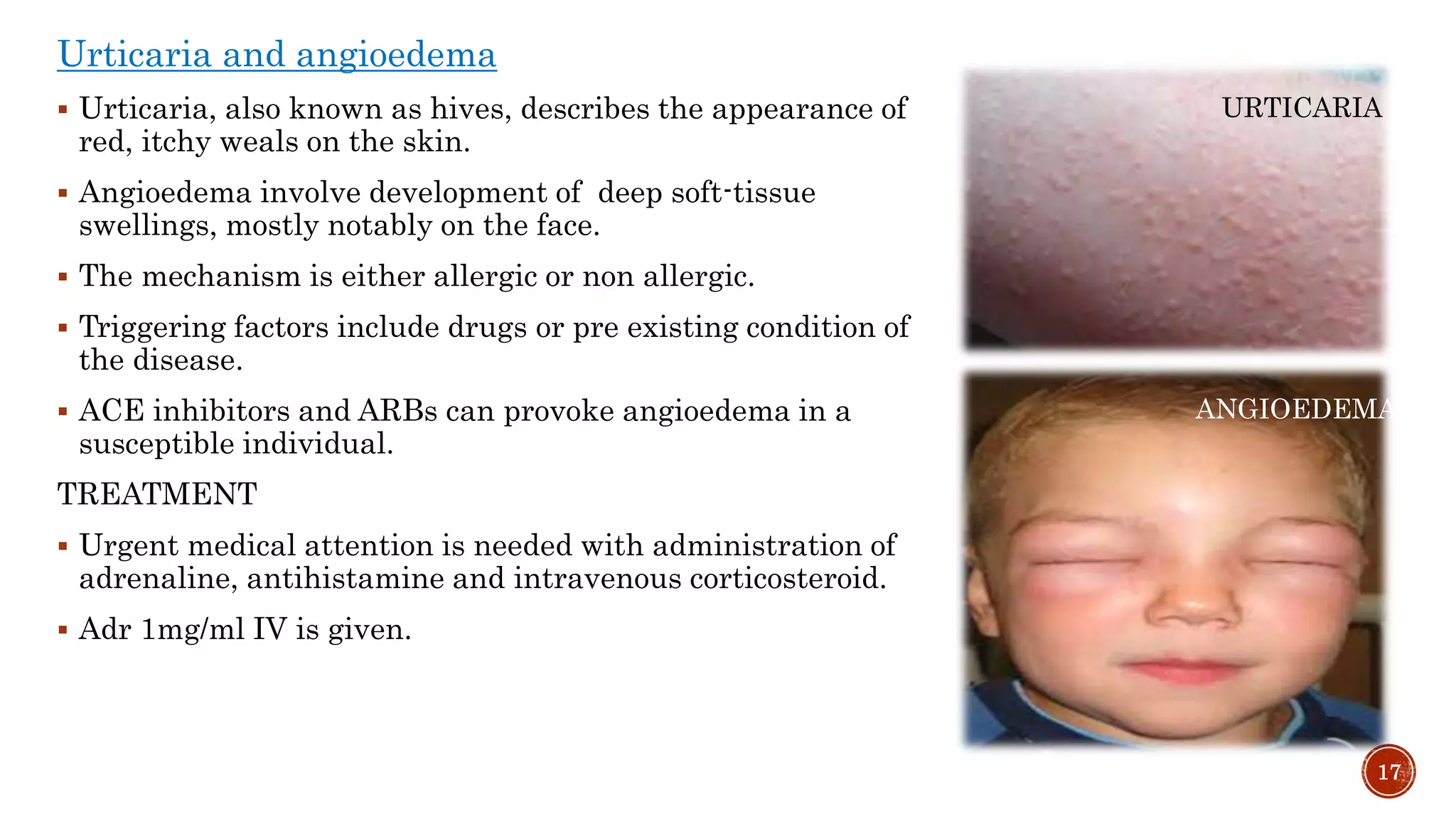
 Urticaria, also known as hives, describes the appearance of
red, itchy weals on the skin.
 Angioedema involve development of deep soft-tissue
swellings, mostly notably on the face.
 The mechanism is either allergic or non allergic.
 Triggering factors include drugs or pre existing condition of
the disease.
 ACE inhibitors and ARBs can provoke angioedema in a
susceptible individual.
TREATMENT
 Urgent medical attention is needed with administration of
adrenaline, antihistamine and intravenous corticosteroid.
 Adr 1mg/ml IV is given.
URTICARIA
ANGIOEDEMA
17
Fixed drug eruptions
 Characterised by one or more inflammatory patches
that recur at the same cutaneous or mucosal site
each time the patient is exposed to the offending
drug.
 The patch is seen as a deep red, circular and well-
demarcated lesions.
 Because these lesions have a marked propensity to
recur at the same location with each drug exposure,
the word fixed is applied.
 Mechanism is due to allergic response.
 Commonly implicated drugs include antimicrobial
agents (tetracycline, sulfonamides, metronidazole,
nystatin), anti-inflammatory drugs(salicylates,
nonsteroidal anti-inflammatory drugs),
barbiturates, oral contraceptives, and
phenolphthalein-containing laxatives.
18
TREATMENT
 Topical steroids may ameliorate the symptoms.
 Topical steroid cream (such as betamethasone diproprionate 0.05% or equivalent,
or clobetasol 0.05% or equivalent), with or without oral antihistamines, can be
given.
19
Pruritus
 Pruritus ( intensive itching) is characterised by drug rash, or may be an isolated
symptom provoked by a medication.
 The most common trigger of drug-induced pruritus is the administration of opiate
analgesics and their related synthetic derivatives such as tramadol.
 ACE inhibitors, beta blockers , sildenafil, amiodarone, hydroxyethyl starch, etc can
also cause pruritus.
 Opiate-induced pruritus is centrally mediated, rather than by peripheral nerves;
therefore, antihistamines do not, in general, ameliorate the itch.
 Moisturizers are preferred for treatment
Acneiform eruptions
 Acne may be drug-induced or drug-exacerbated.
 One of the most commonly prescribed drugs to produce an acneiform eruption is
corticosteroid, in either topical or oral form.
 Illicit use of anabolic steroids can also produce this effect.
20
 Other drugs which may worsen or provoke acne include ciclosporin, lithium and
progesterone-only oral contraceptives.
 A new class of anticancer drug, endothelial growth factor receptor antagonists, for
example cetuximab, commonly produce an acneiform eruption.
 Ethambutol, haloperidol, isoniazid, oral contraceptives, phenobarbital, phenytoin,
propylthiouracil, etc are other drugs causing acne.
TREATMENT
 Withdrawal of drug if possible.
 Oral/topical antibiotics ( tetracyclines) is given as first line therapy
 Oral /topical retinoids is also given
21
Psoriasiform eruptions
 Drugs can either exacerbate psoriasis in predisposed patients or induce
psoriasiform rashes in previously unaffected patients.
 The psoriasiform eruptions mimic psoriasis and are characterised by itchy, scaly
red patches on the elbows, forearms, knees, legs and scalp.
 Drugs which have a well established effect of worsening pre-existing psoriasis
include beta blockers, lithium, antimalarials and ACE inhibitors.
 Topical corticosteroids are preferred.
 Vitamin D analogues for slow skin cell growth eg. Calcipotriene
 Topical retinoids.
 Calcineurin inhibitors — tacrolimus and pimecrolimus — reduce inflammation
and plaque buildup.
 Phototherapy
 PUVA Therapy
22
Eczematous eruptions and contact dermatitis
 Retinoid drugs (such as isotretinoin, acitretin and alitretinoin) and statins have a
drying effect on the skin, and can exacerbate pre-existing eczema or precipitate
eczema in a susceptible individual.
 Irritant contact dermatitis may be seen in preparations with an alcohol base,
such as topical antibiotics.
 Allergic contact dermatitis is a delayed (type IV) hypersensitivity reaction which
can develop to any topical preparation. This was thought to be caused by
excipients of preparation.
 The patient should be counselled to stop the preparation.
 Patch testing carried out by a dermatologist is a useful way of investigating .
TREATMENT
 Taking lukewarm baths
 Applying moisturizer within 3 minutes of bathing to "lock in" moisture
 Moisturizing every day
23
 Wearing cotton and soft fabrics, and avoiding rough, scratchy fibers and tight-
fitting clothing
 Using a mild soap or a non-soap cleanser when washing
PHARMACOLOGICAL
 Topical and systemic corticosteroids
 Antibiotics
 Antihistamines
 Phototherapy
24
Erythema nodosum
 It is an acute inflammatory reaction with painful
subcutaneous nodules.
 Erythema nodosum is usually a complication of infection
with, for example, streptococcus or tuberculosis, or is a
cutaneous manifestation of an inflammatory condition
such as sarcoidosis.
 In its drug-induced form, it may be caused by oral
contraceptives, sulphonamide antibiotics, salicylates,
penicillins and gold salts.
TREATMENT
 Treatment must be customized for the particular patient.
 Treatments for erythema nodosum include anti-
inflammatory drugs, and cortisone orally or injection.
 Colchicine is sometime used effectively to reduce
inflammation
25
SEVERE DRUG-INDUCED SKIN DISORDERS
Erythema multiforme
 It is an eruption of target-like lesions which are
characterised by concentric red and pale rings with,
central blistering
 Mainly occurs on the limbs rather than the trunk but
mucous membrane surfaces, such as the eye, the mouth
and the genital tract, may also become involved.
 Drug induced EM will usually present within 2 weeks of
starting a new medication.
 Principal cause is infection but can also be drug induced
e.g., allopurinol, antiretrovirals, for example nevirapine,
barbiturates, carbamazepine, cimetidine, dapsone, gold
salts, etc
 Once the responsible drug has been stopped, treatment
is symptomatic with paracetamol, topical steroids and
appropriate topical therapy for the mouth and other
involved mucosal surfaces.
26
Stevens–Johnson Syndrome and Toxic Epidermal Necrosis
 These are a life-threatening, mucocutaneous drug
hypersensitivity syndrome characterised by blistering and
epidermal sloughing.
 In SJS, there is epidermal detachment of <10% BSA, in TEN
there is detachment of >30% of the BSA.
 Fever, malaise, and upper respiratory tract symptoms may
precede the eruption by a few days.
 Involvement of the mucous membranes of the eyes, mouth,
and nose is a prominent early feature.
 HIV-infected patients are at higher risk.
 Drugs most frequently implicated include allopurinol,
aminopenicillins, carbamazepine, hydantoin,
phenylbutazone, piroxicam, and sulfa drugs
27
TREATMENT
 A multidisciplinary approach, including dermatologists, ophthalmologists and
intensive care physicians, is critical to a successful outcome.
 Drug withdrawal is the first step.
 Following drug withdrawal, the management is supportive, including prompt
treatment of infection, careful attention to thermoregulation, fluid balance and
skin care, and introduction of appropriate eye and lid care.
 Should be monitored closely for signs of progression in the first 48h of admission.
28
Lupus Erythematosus
 The cutaneous manifestations of drug-induced LE
include the characteristic butterfly-shaped rash on
the face, photosensitive erythema on dorsal hands
and neck, and annular lesions on limbs.
 Mechanism was due to Type 3 hypersensitivity.
 Drugs associated include amoxicillin, ampicillin,
bleomycin, captopril, carbamazepine, chlorpromazine,
co-trimoxazole, etc.
 Biological therapy targeting tumour necrosis factor
alpha (TNF-α) such as infliximab and etanercept has
been found to provoke lupus both in its systemic and
limited cutaneous forms.
TREATMENT-
 To reduce skin related problems immunosuppressive
agents or topical steroids is preferred.
29
Drug Reaction With Eosinophilia And Systemic
Symptoms (DRESS)
 It is an extensive, inflammatory, maculo-papular exanthem.
 Other skin signs may also be present including pustules, purpura, blisters, target-like lesions
and facial oedema.
 There will also be a haematological abnormality, either a raised eosinophil count (>1.5 ×
109/L) or the presence of atypical lymphocytes on the blood film.
 There is prominent systemic involvement , most commonly fever, lymph node enlargement
and liver function abnormalities.
 Less typically, there is renal, pulmonary or cardiac involvement.
 The drugs commonly associated with this syndrome include allopurinol, antiretrovirals
(efavirenz), carbamazepine, cotrimoxazole, lamotrigine, phenobarbitone, phenytoin, etc
TREATMENT
 DRESS syndrome should be managed in an intensive care set up for appropriate supportive
care and infection control. Topical corticosteroids can give symptomatic relief, but systemic
therapy with steroid and other immunosuppressant is usually required.
30
REFERENCES
1) Lloyd Young and Koda-Kimble MA Applied Therapeutics: The clinical Use
of Drugs, 9th Edition, 38-1 to 38-19
2) Roger and Walker. Clinical Pharmacy and Therapeutics – Churchill
Livingstone publication, 5
th edition, 880-891
3) Richard A Helms , David T Quan, Eric T Herfindal, Textbook of Therapeutics:
Drug and Disease Management, 8th edition, 194-195
4) https://www.uspharmacist.com/article/drug-induced-skin-disorders accessed
on 08/10/2019
31
THANK
YOU
32

Drug induced skin disorders

  • 2.
    INTRODUCTION Drug-induced skin reactionor drug eruption is a general term for eruptions in the skin and mucosa induced by a drug or its metabolites.  Drug-induced skin reactions are common, accounting for 30% of all reported adverse drug reactions.  Some types of drug reaction can cause systemic as well as skin involvement.  All drug induced skin eruptions along with causing morbidity can also affect the patient's confidence in the prescriber and future adherence with medication.  Therefore, it is important that all drug associated rashes are carefully evaluated and documented.  Diagnosis requires a comprehensive drug history and knowledge of likely causative drugs.  Definitive diagnosis of a drug-induced skin condition would require drug re-challenge, this is not recommended. 2
  • 3.
    EPIDEMIOLOGY  Approximately 2%of drug-induced skin eruptions meet the World Health Organization definition of a serious reaction.  Patients with drug reactions were found to be more commonly female (63%) than male(37%)  Prevalence rate was found to increase with age and the number of medications.  Beta-lactam antibiotics were found to be the most frequent cause of adverse cutaneous drug reactions (42.7%), followed by non-steroidal anti-inflammatory drugs (16.5%).  Acute urticaria was the most common clinical presentation (59.2%) followed by fixed drug eruptions(18.5%), and maculopapular eruptions (14.9%). 3
  • 4.
    ETIOLOGY  Properties ofa drug that increase the risk of a drug-induced reactions are: a) Molecular weight >4,000 Da (e.g., insulin, erythropoietin) b) Presence of foreign proteins or large polypeptides of nonhuman origin (streptokinase, beef or pork insulin, chimeric/murine-derived monoclonal antibodies) c) The ability of the parent drug or its active metabolite to bind to a carrier protein and form a complete antigen (penicillins and sulfonamides).  Patients taking combination preparations.  Excipients contained in medication.  Individuals at higher risk of drug eruptions (HIV infection).  Genetic factors like HLA-B antigen are sensitive to drugs 4
  • 5.
    PATHOPHYSIOLOGY  Mainly twomechanisms : IMMONOLOGIC AND NONIMMUNOLOGIC IMMUNOLOGIC MECHANISM A drug or the complex of a drug and a serum protein becomes antigenic, causing a drug eruption  IgE mediated type I allergy: Within 2 hours after exposure to an antigen (e.g., penicillin or some NSAIDs), urticaria or anaphylactic shock occurs.  Type II allergy: Complements are activated by an antigenic drug that connects with tissues, resulting in hemolytic anemia and thrombocytopenia. It is observed in some cases of purpura-like eruptions.  Immune complex-associated type III allergy: Immune complex deposits in tissues, causing disorders. Vasculitic eruptions are example for this type.  Type IV allergy: A delayed hypersensitivity reaction is induced by T cells that have been sensitized to drug antigens. Example eczema-like eruptions , are produced by type IV allergy or by T-cell mechanisms that resemble type IV allergy. 5
  • 6.
    PATHOPHYSIOLOGY cont.… NON IMMUNOLOGICMECHANISMS  Pharmacologic effects: Drug-induced skin reactions may be produced by essential pharmacological action of the drug. Hair loss caused by anticancer agents and exfoliation in palms and soles caused by retinoids are examples.  Accumulation: A drug accumulates in the skin or mucous membranes from prolonged use .Example arsenic melanoderma and argyria.  Drug interaction: One drug may inhibit another drug’s metabolism or excretion, or it may influence protein binding, leading to the same symptoms as those in drug overdose.  Specific condition of patients: Inherited enzyme deficiency may cause drug reactions; excessive reaction occurs against a minute amount of drug (intolerance). An unexpected action of the drug is caused (idiosyncrasy). 6
  • 7.
    DIAGNOSIS  History istaken on drug-induced skin reactions  Skin test (scratch test, prick test, intradermal test)  Patch test  Drug lymphocyte stimulation test (DLST)  Skin biopsy  Rechallenge test (absolutely contraindicated in severe forms of drug reactions) 7
  • 8.
  • 9.
    DRUG REACTIONS CAUSINGCHANGES TO SKIN FUNCTION Abnormal photosensitivity  Two types – Photo allergic and phototoxic  Phototoxic reactions - more common, resemble severe sunburn, can progress to blistering, are dose dependent for both the drug and sunlight, occur within 5–15h of taking the drug and subside quickly on drug withdrawal.  Photoallergic rashes - eczematous, but may be lichenoid, urticarial, bullous or purpuric. They are not dose dependent, occur following exposure to normal amounts of sunlight exposure. The onset can be delayed by weeks or months, while recovery is often slow following drug withdrawal.  Amiodarone, nalidixic acid, NSAIDs, chlorpromazine, tetracyclines, etc can cause phototoxic reactions  Griseofulvin, NSAIDs, sulphonamides, sulphonylureas and thiazide diuretics can cause photoallergic reactions. 9
  • 10.
    TREATMENT  Patients receivingknown photosensitising drugs should be advised to avoid strong sunlight.  They should also be advised to use a broad- spectrum topical sunscreen, providing both UVA protection (indicated by the ‘star rating’ on the bottle) and UVB cover (indicated by the sun protection factor, SPF). 10
  • 11.
    Pigmentary changes  Canbe hyper-pigmentation, hypo-pigmentation and discoloration  Pigmentary changes can be widespread or localised  Mechanism – a) Drug or drug metabolite deposition in the dermis and epidermis b) Enhanced melanin production .  Examples – a) Red Man Syndrome caused by Vancomycin, Amphotericin, Rifampicin b) Blue gray syndrome Caused by amiodarone c) Minocycline pigmentation  Withdrawal is the only suitable treatment RED MAN SYNDROME Minocycline pigmentation 11
  • 12.
    Nail changes  Growthand colour of finger and toenails, abnormalities of texture and architecture of the nail unit, etc  Blue discoloration of the nails can result from therapy with mepacrine  Blue–black pigmentation may accompany treatment with minocycline and certain cytotoxic drugs such as hydroxyurea.  White nails (leuconychia) can result use of chemotherapeutic agents, especially, cyclophosphamide, doxorubicin and vincristine  Any cytotoxic agent may induce onycholysis by direct toxicity to the matrix. leuconychia onycholysis 12
  • 13.
    TREATMENT  There isno specific treatment for drug-induced nail disease.  Where possible, the causative drug is stopped; however, it may be continued if the nail symptoms are tolerable, especially, if there is no suitable alternative medication.  If nails are brittle: a) Maintain short nails to reduce trauma b) Minimise immersion in water c) Avoid the repeated use of nail polish removers d) Apply nail moisturisers e) Oral biotin may reduce nail brittleness (unproven). 13
  • 14.
    Hair changes  Eitheralopecia or hirsutism  Alopecia is loss of hair  Drug-induced alopecia - interference with the ‘anagen’ or growth phase of the hair cycle, loss is rapid complete and dose dependent e.g. Cytotoxic drugs - interference with the ‘telogen’ or shedding phase , unnoticed by patient E.g. Retinoid therapy  Hirsutism is excessive hairiness and hypertrichosis is the growth of hair at sites not normally hairy.  Minoxidil produces hypertrichosis as side effect which has been exploited as a topical preparation for the treatment of male pattern baldness.  Acetazolamide, anabolic steroids, ciclosporin, danazol, tamoxifen, verapamil, etc can also cause hirsutism. 14
  • 15.
    TREATMENT  Review ofmedications to identify potential side effects.  When hair loss does occur from a drug , there is a good chance that the hair will grow back on its own after stopping the medication.  If stopping the drug does not improve hair thinning, treatment with finasteride or minoxidil.  1 ml of minoxidil 2% solutions are applied on scalp twice a day.  The initial dosage for oral route is 0.2 mg/kg minoxidil in single doses  Finasteride 1-5mg once daily is prefered  One technique that can prevent hair loss during chemotherapy is scalp hypothermia, and it involves placing ice packs on the scalp a few minutes before -- and for about a half-hour after -- chemotherapy treatment. 15
  • 16.
    MILD DRUG-INDUCED SKINDISORDERS Drug-induced exanthems  Characterised by erythema and may be morbilliform or maculopapular and involves more than 90% of the BSA  Begins within 7 days of commencing a drug.  The mechanism is delayed (type IV) hypersensitivity.  Antibiotics (e.g. sulphonamides, ampicillin, isoniazid), Anticonvulsants (e.g. phenytoin, carbamazepine) and Antimalarials (chloroquine) TREATMENT  If the drug can be identified, it should be stopped  Appropriate symptomatic relief instituted with antihistamines and topical steroids.  A clear record of the reaction should be made in the patient's notes. 16
  • 17.
    Urticaria and angioedema Urticaria, also known as hives, describes the appearance of red, itchy weals on the skin.  Angioedema involve development of deep soft-tissue swellings, mostly notably on the face.  The mechanism is either allergic or non allergic.  Triggering factors include drugs or pre existing condition of the disease.  ACE inhibitors and ARBs can provoke angioedema in a susceptible individual. TREATMENT  Urgent medical attention is needed with administration of adrenaline, antihistamine and intravenous corticosteroid.  Adr 1mg/ml IV is given. URTICARIA ANGIOEDEMA 17
  • 18.
    Fixed drug eruptions Characterised by one or more inflammatory patches that recur at the same cutaneous or mucosal site each time the patient is exposed to the offending drug.  The patch is seen as a deep red, circular and well- demarcated lesions.  Because these lesions have a marked propensity to recur at the same location with each drug exposure, the word fixed is applied.  Mechanism is due to allergic response.  Commonly implicated drugs include antimicrobial agents (tetracycline, sulfonamides, metronidazole, nystatin), anti-inflammatory drugs(salicylates, nonsteroidal anti-inflammatory drugs), barbiturates, oral contraceptives, and phenolphthalein-containing laxatives. 18
  • 19.
    TREATMENT  Topical steroidsmay ameliorate the symptoms.  Topical steroid cream (such as betamethasone diproprionate 0.05% or equivalent, or clobetasol 0.05% or equivalent), with or without oral antihistamines, can be given. 19
  • 20.
    Pruritus  Pruritus (intensive itching) is characterised by drug rash, or may be an isolated symptom provoked by a medication.  The most common trigger of drug-induced pruritus is the administration of opiate analgesics and their related synthetic derivatives such as tramadol.  ACE inhibitors, beta blockers , sildenafil, amiodarone, hydroxyethyl starch, etc can also cause pruritus.  Opiate-induced pruritus is centrally mediated, rather than by peripheral nerves; therefore, antihistamines do not, in general, ameliorate the itch.  Moisturizers are preferred for treatment Acneiform eruptions  Acne may be drug-induced or drug-exacerbated.  One of the most commonly prescribed drugs to produce an acneiform eruption is corticosteroid, in either topical or oral form.  Illicit use of anabolic steroids can also produce this effect. 20
  • 21.
     Other drugswhich may worsen or provoke acne include ciclosporin, lithium and progesterone-only oral contraceptives.  A new class of anticancer drug, endothelial growth factor receptor antagonists, for example cetuximab, commonly produce an acneiform eruption.  Ethambutol, haloperidol, isoniazid, oral contraceptives, phenobarbital, phenytoin, propylthiouracil, etc are other drugs causing acne. TREATMENT  Withdrawal of drug if possible.  Oral/topical antibiotics ( tetracyclines) is given as first line therapy  Oral /topical retinoids is also given 21
  • 22.
    Psoriasiform eruptions  Drugscan either exacerbate psoriasis in predisposed patients or induce psoriasiform rashes in previously unaffected patients.  The psoriasiform eruptions mimic psoriasis and are characterised by itchy, scaly red patches on the elbows, forearms, knees, legs and scalp.  Drugs which have a well established effect of worsening pre-existing psoriasis include beta blockers, lithium, antimalarials and ACE inhibitors.  Topical corticosteroids are preferred.  Vitamin D analogues for slow skin cell growth eg. Calcipotriene  Topical retinoids.  Calcineurin inhibitors — tacrolimus and pimecrolimus — reduce inflammation and plaque buildup.  Phototherapy  PUVA Therapy 22
  • 23.
    Eczematous eruptions andcontact dermatitis  Retinoid drugs (such as isotretinoin, acitretin and alitretinoin) and statins have a drying effect on the skin, and can exacerbate pre-existing eczema or precipitate eczema in a susceptible individual.  Irritant contact dermatitis may be seen in preparations with an alcohol base, such as topical antibiotics.  Allergic contact dermatitis is a delayed (type IV) hypersensitivity reaction which can develop to any topical preparation. This was thought to be caused by excipients of preparation.  The patient should be counselled to stop the preparation.  Patch testing carried out by a dermatologist is a useful way of investigating . TREATMENT  Taking lukewarm baths  Applying moisturizer within 3 minutes of bathing to "lock in" moisture  Moisturizing every day 23
  • 24.
     Wearing cottonand soft fabrics, and avoiding rough, scratchy fibers and tight- fitting clothing  Using a mild soap or a non-soap cleanser when washing PHARMACOLOGICAL  Topical and systemic corticosteroids  Antibiotics  Antihistamines  Phototherapy 24
  • 25.
    Erythema nodosum  Itis an acute inflammatory reaction with painful subcutaneous nodules.  Erythema nodosum is usually a complication of infection with, for example, streptococcus or tuberculosis, or is a cutaneous manifestation of an inflammatory condition such as sarcoidosis.  In its drug-induced form, it may be caused by oral contraceptives, sulphonamide antibiotics, salicylates, penicillins and gold salts. TREATMENT  Treatment must be customized for the particular patient.  Treatments for erythema nodosum include anti- inflammatory drugs, and cortisone orally or injection.  Colchicine is sometime used effectively to reduce inflammation 25
  • 26.
    SEVERE DRUG-INDUCED SKINDISORDERS Erythema multiforme  It is an eruption of target-like lesions which are characterised by concentric red and pale rings with, central blistering  Mainly occurs on the limbs rather than the trunk but mucous membrane surfaces, such as the eye, the mouth and the genital tract, may also become involved.  Drug induced EM will usually present within 2 weeks of starting a new medication.  Principal cause is infection but can also be drug induced e.g., allopurinol, antiretrovirals, for example nevirapine, barbiturates, carbamazepine, cimetidine, dapsone, gold salts, etc  Once the responsible drug has been stopped, treatment is symptomatic with paracetamol, topical steroids and appropriate topical therapy for the mouth and other involved mucosal surfaces. 26
  • 27.
    Stevens–Johnson Syndrome andToxic Epidermal Necrosis  These are a life-threatening, mucocutaneous drug hypersensitivity syndrome characterised by blistering and epidermal sloughing.  In SJS, there is epidermal detachment of <10% BSA, in TEN there is detachment of >30% of the BSA.  Fever, malaise, and upper respiratory tract symptoms may precede the eruption by a few days.  Involvement of the mucous membranes of the eyes, mouth, and nose is a prominent early feature.  HIV-infected patients are at higher risk.  Drugs most frequently implicated include allopurinol, aminopenicillins, carbamazepine, hydantoin, phenylbutazone, piroxicam, and sulfa drugs 27
  • 28.
    TREATMENT  A multidisciplinaryapproach, including dermatologists, ophthalmologists and intensive care physicians, is critical to a successful outcome.  Drug withdrawal is the first step.  Following drug withdrawal, the management is supportive, including prompt treatment of infection, careful attention to thermoregulation, fluid balance and skin care, and introduction of appropriate eye and lid care.  Should be monitored closely for signs of progression in the first 48h of admission. 28
  • 29.
    Lupus Erythematosus  Thecutaneous manifestations of drug-induced LE include the characteristic butterfly-shaped rash on the face, photosensitive erythema on dorsal hands and neck, and annular lesions on limbs.  Mechanism was due to Type 3 hypersensitivity.  Drugs associated include amoxicillin, ampicillin, bleomycin, captopril, carbamazepine, chlorpromazine, co-trimoxazole, etc.  Biological therapy targeting tumour necrosis factor alpha (TNF-α) such as infliximab and etanercept has been found to provoke lupus both in its systemic and limited cutaneous forms. TREATMENT-  To reduce skin related problems immunosuppressive agents or topical steroids is preferred. 29
  • 30.
    Drug Reaction WithEosinophilia And Systemic Symptoms (DRESS)  It is an extensive, inflammatory, maculo-papular exanthem.  Other skin signs may also be present including pustules, purpura, blisters, target-like lesions and facial oedema.  There will also be a haematological abnormality, either a raised eosinophil count (>1.5 × 10⁹/L) or the presence of atypical lymphocytes on the blood film.  There is prominent systemic involvement , most commonly fever, lymph node enlargement and liver function abnormalities.  Less typically, there is renal, pulmonary or cardiac involvement.  The drugs commonly associated with this syndrome include allopurinol, antiretrovirals (efavirenz), carbamazepine, cotrimoxazole, lamotrigine, phenobarbitone, phenytoin, etc TREATMENT  DRESS syndrome should be managed in an intensive care set up for appropriate supportive care and infection control. Topical corticosteroids can give symptomatic relief, but systemic therapy with steroid and other immunosuppressant is usually required. 30
  • 31.
    REFERENCES 1) Lloyd Youngand Koda-Kimble MA Applied Therapeutics: The clinical Use of Drugs, 9th Edition, 38-1 to 38-19 2) Roger and Walker. Clinical Pharmacy and Therapeutics – Churchill Livingstone publication, 5 th edition, 880-891 3) Richard A Helms , David T Quan, Eric T Herfindal, Textbook of Therapeutics: Drug and Disease Management, 8th edition, 194-195 4) https://www.uspharmacist.com/article/drug-induced-skin-disorders accessed on 08/10/2019 31
  • 32.