Drones and Its
Applications
What is a Drone?
Drone is a relatively small size remote controlled or automatic pilotless
aircraft.
Advantages Disadvantages
• Cheap and cost effective
• High spatial resolution
• High accuracy
• Easier to deploy
• No hindrances from clouds
• A great tool for surveillance
• Limited capabilities and coverages
• Care required to use in populated areas
• Chances of misuse due to easy
operation
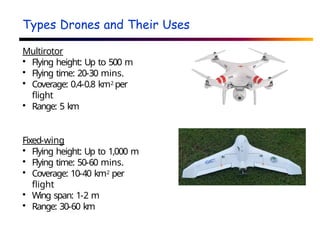
Types Drones and Their Uses
Multirotor

Flying height: Up to 500 m

Flying time: 20-30 mins.

Coverage: 0.4-0.8 km2 per
flight

Range: 5 km
Fixed-wing

Flying height: Up to 1,000 m

Flying time: 50-60 mins.

Coverage: 10-40 km2 per
flight

Wing span: 1-2 m

Range: 30-60 km
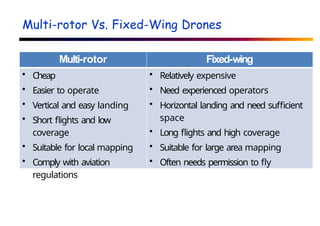
Multi-rotor Vs. Fixed-Wing Drones
Multi-rotor Fixed-wing
• Cheap
• Easier to operate
• Vertical and easy landing
• Short flights and low
coverage
• Suitable for local mapping
• Comply with aviation
regulations
• Relatively expensive
• Need experienced operators
• Horizontal landing and need sufficient
space
• Long flights and high coverage
• Suitable for large area mapping
• Often needs permission to fly
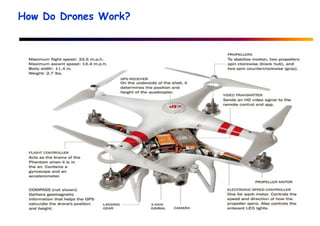
How Do Drones Work?
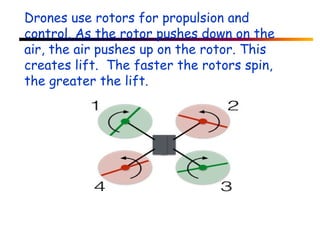
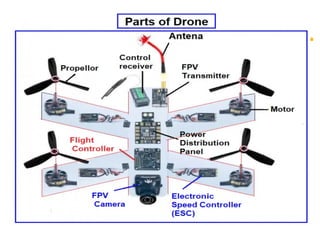
Drones use rotors for propulsion and
control. As the rotor pushes down on the
air, the air pushes up on the rotor. This
creates lift. The faster the rotors spin,
the greater the lift.
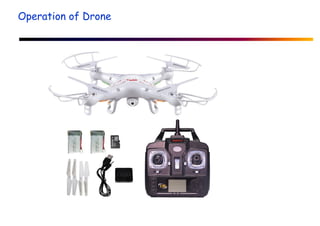
Operation of Drone
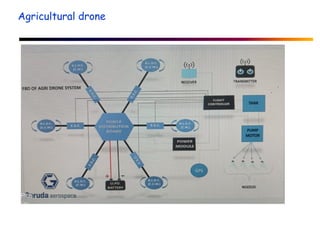
Agricultural drone
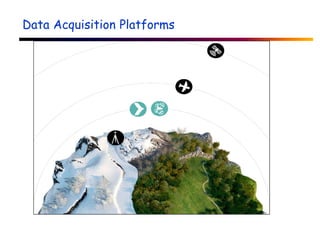
Data Acquisition Platforms
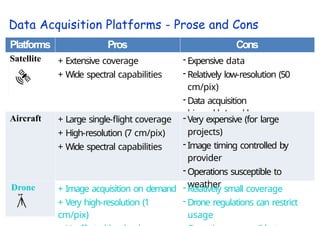
Data Acquisition Platforms - Prose and Cons
Platforms Pros Cons
Satellite + Extensive coverage
+ Wide spectral capabilities
- Expensive data
- Relatively low-resolution (50
cm/pix)
- Data acquisition
bi-weekly/weekly
Aircraft + Large single-flight coverage
+ High-resolution (7 cm/pix)
+ Wide spectral capabilities
- Very expensive (for large
projects)
- Image timing controlled by
provider
- Operations susceptible to
weather
Drone + Image acquisition on demand
+ Very high-resolution (1
cm/pix)
- Relatively small coverage
- Drone regulations can restrict
usage
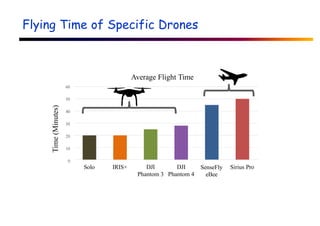
Flying Time of Specific Drones
60
50
40
30
20
10
0
Solo IRIS+ DJI DJI
Phantom 3 Phantom 4
SenseFly
eBee
Sirius Pro
Average Flight Time
Time
(Minutes)
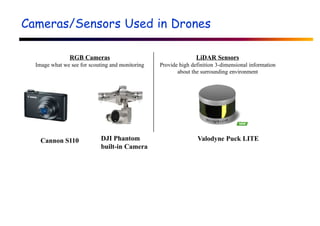
Cameras/Sensors Used in Drones
RGB Cameras
Image what we see for scouting and monitoring
LiDAR Sensors
Provide high definition 3-dimensional information
about the surrounding environment
DJI Phantom
built-in Camera
Valodyne Puck LITE
Cannon S110
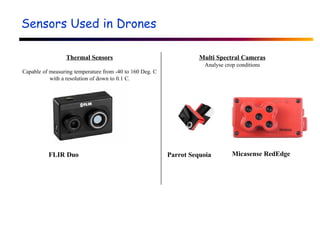
Sensors Used in Drones
Thermal Sensors
Capable of measuring temperature from -40 to 160 Deg. C
with a resolution of down to 0.1 C.
Multi Spectral Cameras
Analyse crop conditions
Parrot Sequoia Micasense RedEdge
FLIR Duo
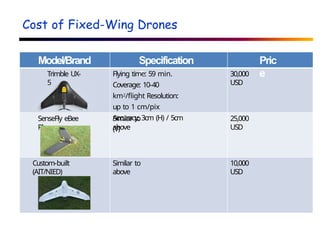
Cost of Fixed-Wing Drones
Model/Brand Specification
s
Pric
e
Trimble UX-
5
Flying time: 59 min.
Coverage: 10-40
km2/flight Resolution:
up to 1 cm/pix
Accuracy: 3cm (H) / 5cm
(V)
30,000
USD
SenseFly eBee
Plus
Similar to
above
25,000
USD
Custom-built
(AIT/NIED)
Similar to
above
10,000
USD
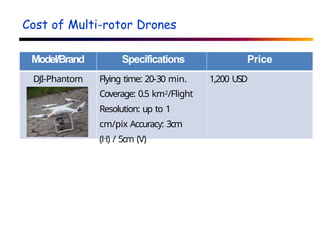
Cost of Multi-rotor Drones
Model/Brand Specifications Price
DJI-Phantom Flying time: 20-30 min.
Coverage: 0.5 km2/Flight
Resolution: up to 1
cm/pix Accuracy: 3cm
(H) / 5cm (V)
1,200 USD
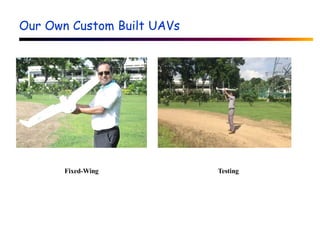
Our Own Custom Built UAVs
Fixed-Wing Testing
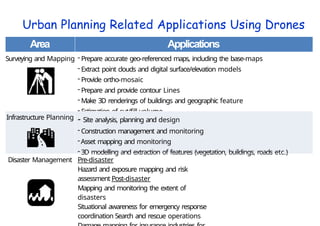
Urban Planning Related Applications Using Drones
Area Applications
Surveying and Mapping - Prepare accurate geo-referenced maps, including the base-maps
- Extract point clouds and digital surface/elevation models
- Provide ortho-mosaic
- Prepare and provide contour Lines
- Make 3D renderings of buildings and geographic feature
- Estimation of cut/fill volume
Infrastructure Planning - Site analysis, planning and design
- Construction management and monitoring
-Asset mapping and monitoring
- 3D modelling and extraction of features (vegetation, buildings, roads etc.)
Disaster Management Pre-disaster
Hazard and exposure mapping and risk
assessment Post-disaster
Mapping and monitoring the extent of
disasters
Situational awareness for emergency response
coordination Search and rescue operations
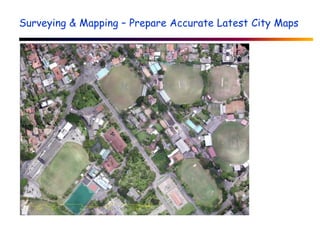
Surveying & Mapping – Prepare Accurate Latest City Maps
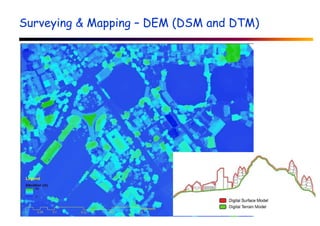
DSM
Surveying & Mapping – DEM (DSM and DTM)
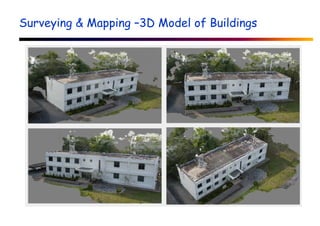
Surveying & Mapping –3D Model of Buildings
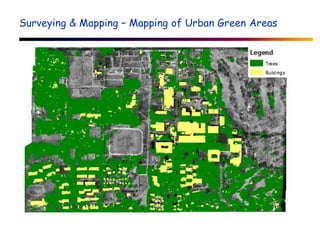
Surveying & Mapping – Mapping of Urban Green Areas
2
0
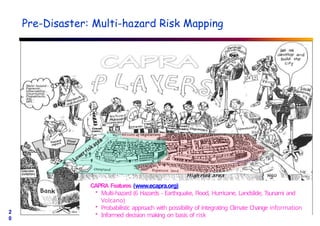
Pre-Disaster: Multi-hazard Risk Mapping
CAPRA Features (www.ecapra.org)
• Multi-hazard (6 Hazards - Earthquake, Flood, Hurricane, Landslide, Tsunami and
Volcano)
• Probabilistic approach with possibility of integrating Climate Change information
• Informed decision making on basis of risk
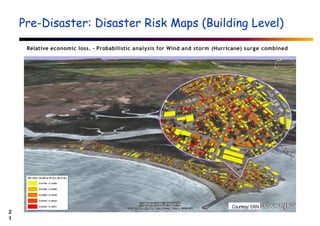
Pre-Disaster: Disaster Risk Maps (Building Level)
Relative economic loss. - Probabilistic analysis for Wind and storm (Hurricane) surge combined
Courtesy: ERN
2
1
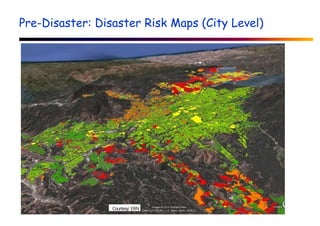
Pre-Disaster: Disaster Risk Maps (City Level)
Courtesy: ERN
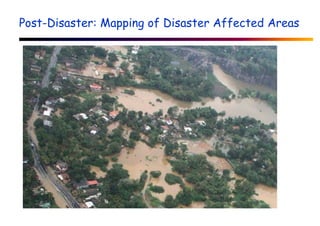
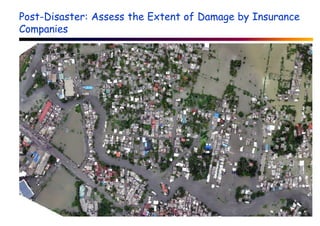
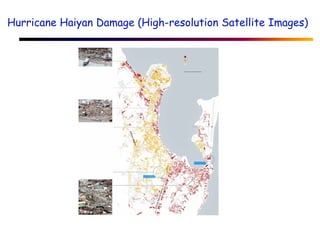
Post-Disaster: Mapping of Disaster Affected Areas
Post-Disaster: Assess the Extent of Damage by Insurance
Companies
Hurricane Haiyan Damage (High-resolution Satellite Images)
Thank you for your kind
attention

drone introduction with parts and programming .pptx

  • 1.
  • 2.
    What is aDrone? Drone is a relatively small size remote controlled or automatic pilotless aircraft. Advantages Disadvantages • Cheap and cost effective • High spatial resolution • High accuracy • Easier to deploy • No hindrances from clouds • A great tool for surveillance • Limited capabilities and coverages • Care required to use in populated areas • Chances of misuse due to easy operation
  • 3.
    Types Drones andTheir Uses Multirotor  Flying height: Up to 500 m  Flying time: 20-30 mins.  Coverage: 0.4-0.8 km2 per flight  Range: 5 km Fixed-wing  Flying height: Up to 1,000 m  Flying time: 50-60 mins.  Coverage: 10-40 km2 per flight  Wing span: 1-2 m  Range: 30-60 km
  • 4.
    Multi-rotor Vs. Fixed-WingDrones Multi-rotor Fixed-wing • Cheap • Easier to operate • Vertical and easy landing • Short flights and low coverage • Suitable for local mapping • Comply with aviation regulations • Relatively expensive • Need experienced operators • Horizontal landing and need sufficient space • Long flights and high coverage • Suitable for large area mapping • Often needs permission to fly
  • 5.
  • 6.
    Drones use rotorsfor propulsion and control. As the rotor pushes down on the air, the air pushes up on the rotor. This creates lift. The faster the rotors spin, the greater the lift.
  • 8.
  • 9.
  • 10.
  • 11.
    Data Acquisition Platforms- Prose and Cons Platforms Pros Cons Satellite + Extensive coverage + Wide spectral capabilities - Expensive data - Relatively low-resolution (50 cm/pix) - Data acquisition bi-weekly/weekly Aircraft + Large single-flight coverage + High-resolution (7 cm/pix) + Wide spectral capabilities - Very expensive (for large projects) - Image timing controlled by provider - Operations susceptible to weather Drone + Image acquisition on demand + Very high-resolution (1 cm/pix) - Relatively small coverage - Drone regulations can restrict usage
  • 12.
    Flying Time ofSpecific Drones 60 50 40 30 20 10 0 Solo IRIS+ DJI DJI Phantom 3 Phantom 4 SenseFly eBee Sirius Pro Average Flight Time Time (Minutes)
  • 13.
    Cameras/Sensors Used inDrones RGB Cameras Image what we see for scouting and monitoring LiDAR Sensors Provide high definition 3-dimensional information about the surrounding environment DJI Phantom built-in Camera Valodyne Puck LITE Cannon S110
  • 14.
    Sensors Used inDrones Thermal Sensors Capable of measuring temperature from -40 to 160 Deg. C with a resolution of down to 0.1 C. Multi Spectral Cameras Analyse crop conditions Parrot Sequoia Micasense RedEdge FLIR Duo
  • 15.
    Cost of Fixed-WingDrones Model/Brand Specification s Pric e Trimble UX- 5 Flying time: 59 min. Coverage: 10-40 km2/flight Resolution: up to 1 cm/pix Accuracy: 3cm (H) / 5cm (V) 30,000 USD SenseFly eBee Plus Similar to above 25,000 USD Custom-built (AIT/NIED) Similar to above 10,000 USD
  • 16.
    Cost of Multi-rotorDrones Model/Brand Specifications Price DJI-Phantom Flying time: 20-30 min. Coverage: 0.5 km2/Flight Resolution: up to 1 cm/pix Accuracy: 3cm (H) / 5cm (V) 1,200 USD
  • 17.
    Our Own CustomBuilt UAVs Fixed-Wing Testing
  • 18.
    Urban Planning RelatedApplications Using Drones Area Applications Surveying and Mapping - Prepare accurate geo-referenced maps, including the base-maps - Extract point clouds and digital surface/elevation models - Provide ortho-mosaic - Prepare and provide contour Lines - Make 3D renderings of buildings and geographic feature - Estimation of cut/fill volume Infrastructure Planning - Site analysis, planning and design - Construction management and monitoring -Asset mapping and monitoring - 3D modelling and extraction of features (vegetation, buildings, roads etc.) Disaster Management Pre-disaster Hazard and exposure mapping and risk assessment Post-disaster Mapping and monitoring the extent of disasters Situational awareness for emergency response coordination Search and rescue operations
  • 19.
    Surveying & Mapping– Prepare Accurate Latest City Maps
  • 20.
    DSM Surveying & Mapping– DEM (DSM and DTM)
  • 21.
    Surveying & Mapping–3D Model of Buildings
  • 22.
    Surveying & Mapping– Mapping of Urban Green Areas
  • 23.
    2 0 Pre-Disaster: Multi-hazard RiskMapping CAPRA Features (www.ecapra.org) • Multi-hazard (6 Hazards - Earthquake, Flood, Hurricane, Landslide, Tsunami and Volcano) • Probabilistic approach with possibility of integrating Climate Change information • Informed decision making on basis of risk
  • 24.
    Pre-Disaster: Disaster RiskMaps (Building Level) Relative economic loss. - Probabilistic analysis for Wind and storm (Hurricane) surge combined Courtesy: ERN 2 1
  • 25.
    Pre-Disaster: Disaster RiskMaps (City Level) Courtesy: ERN
  • 26.
    Post-Disaster: Mapping ofDisaster Affected Areas
  • 27.
    Post-Disaster: Assess theExtent of Damage by Insurance Companies
  • 28.
    Hurricane Haiyan Damage(High-resolution Satellite Images)
  • 29.
    Thank you foryour kind attention