Hayat Burhani, Nadera, MD, MPH, MPPM (Fellow, Melbourne University)
Melbourne
7May 2015
Can Aid be delivered effectively in insecure contexts?
The MoPH, Donors and the NGOs Partnership and its Impact on
Maternal and Child Health in Afghanistan
Outline:
 Health sector Key information
 Health system Pyramid
 strategies for health services
 BPHS, success and challenges
Total Population (CSO) 27.5 Million
Population Growth (AMS ) 2.4%
Women of Child Bearing Age(15-49) 5.5million
Literacy Rate (General Population) 29 – 38%
Women Literacy Rate 14%
Indicators 2002
Maternal Mortality Ratio 1600
Under five Mortality Rate 257
Infant mortality rate per 165
Life expectancy rate 42
Number of midwives 462
Coverage of Primary Health Care (1h walk
from Health Facilities)
5%
Health Situation in 2002
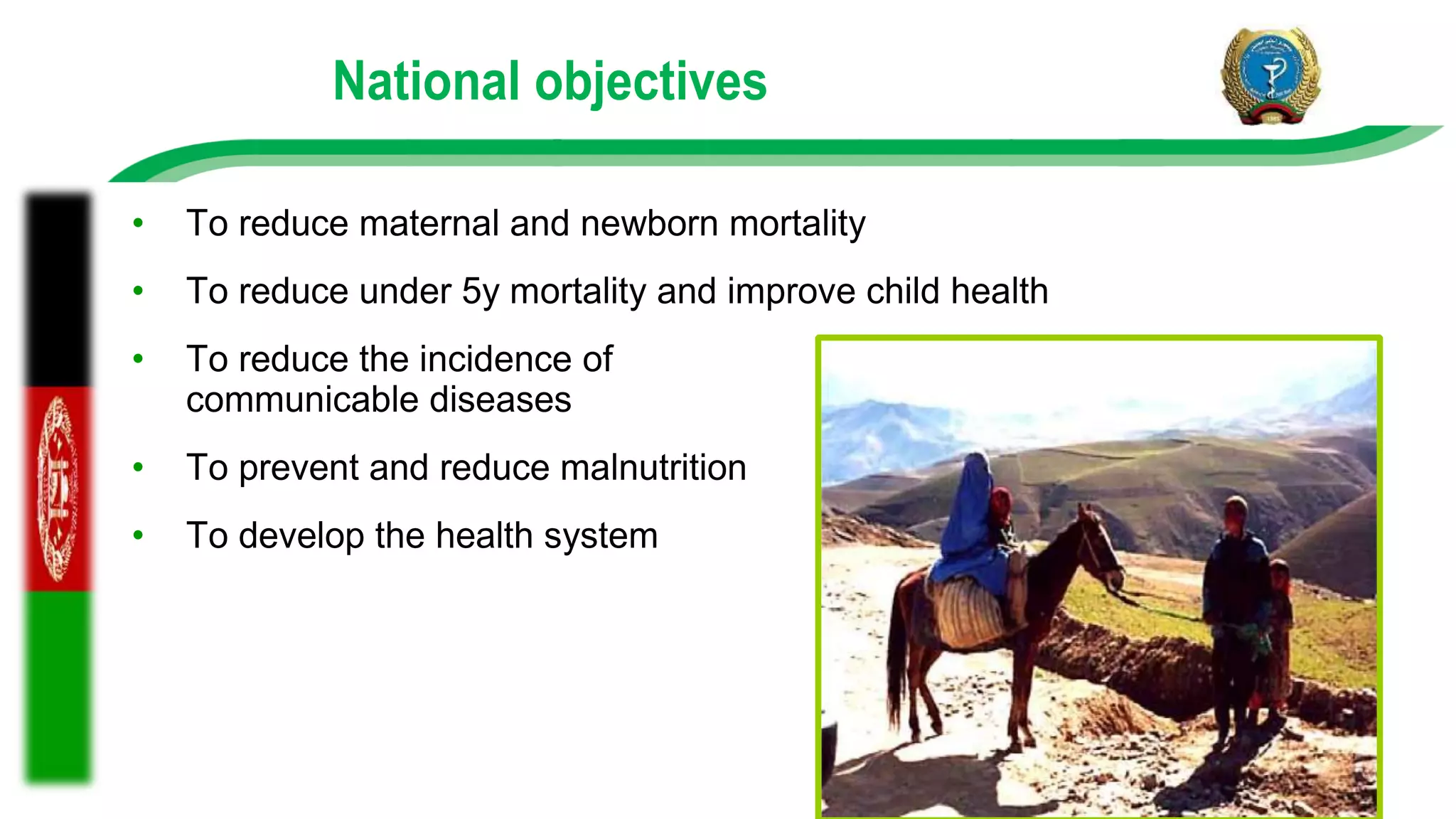
National objectives
• To reduce maternal and newborn mortality
• To reduce under 5y mortality and improve child health
• To reduce the incidence of
communicable diseases
• To prevent and reduce malnutrition
• To develop the health system
The MoPH Strategies for provision of health services and Number of
Health facilities per year.
 Basic Package of Health Services
 Supported by donors agencies
 Implemented by NGOs and SM
 Essential Package of Hospital Services
 Supported by Core budget
 Implemented by the MoPH
 Tertiary Services
 Supported by government budget 496
1112
1281
1237
1420
1667
1803
1987
2016
2047
2160 2286
0
500
1000
1500
2000
2500
2003 2004 2005 2006 2007 2008 2009 2010 2011 2012 2013 2014
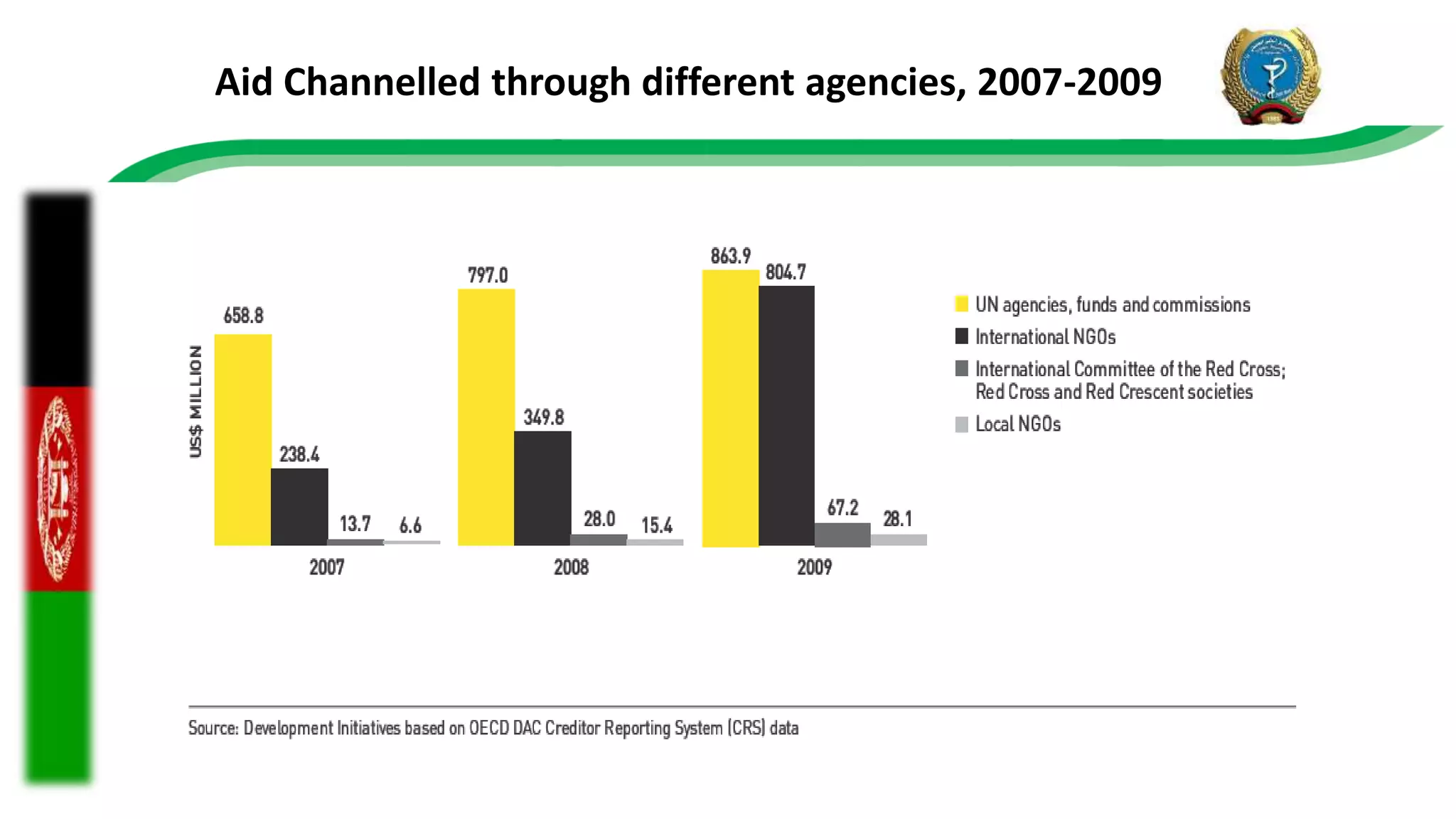
Aid Channelled through different agencies, 2007-2009
Success and Achievements
 Increased access from 8% to 57% from 2003 to 2013
 Defined all PHC service in a single package and provided
opportunity to holistic implementation
 Through contract out of service delivery MoPH focused on
stewardship role
 BPHS is a pro-rural concept and responded to health need of most
essential interventions for mother, child, under-served and hard to
reach population
 The establishment of 34 Community Midwifery
programs, trained, 3334
 The establishment of Community Nursing Programs
started 2011, 360 graduated and 994 under training
 Training of 28837 Community Health Workers
Continue
Indicators 2010 (AMS)
Maternal Mortality Ratio 327
Under five Mortality Rate 97
Infant mortality rate per 77
Life expectancy rate 64
Number of midwives 3334
Coverage of Primary Health Care (1h walk
from Health Facilities)
57%
Key National Indicators in 2010
 Improve the quality of health service at all levels with intention to
improve the health outcomes
 Expansion of service to marginalized population (left out from BPHS,
Nomades, IDPs, and highly mobile population)
 Enhance the health services to under-served components of the
package (mental health, disability, essential drugs)
 Financial and programmatic sustainability of services in long term
and defining an exit strategy for BPHS
 Having special package to security compromised area in Afghanistan
Challenges
Dr-nadera-hayat-burhani-presentation

Dr-nadera-hayat-burhani-presentation

  • 1.
    Hayat Burhani, Nadera,MD, MPH, MPPM (Fellow, Melbourne University) Melbourne 7May 2015 Can Aid be delivered effectively in insecure contexts? The MoPH, Donors and the NGOs Partnership and its Impact on Maternal and Child Health in Afghanistan
  • 2.
    Outline:  Health sectorKey information  Health system Pyramid  strategies for health services  BPHS, success and challenges
  • 3.
    Total Population (CSO)27.5 Million Population Growth (AMS ) 2.4% Women of Child Bearing Age(15-49) 5.5million Literacy Rate (General Population) 29 – 38% Women Literacy Rate 14%
  • 4.
    Indicators 2002 Maternal MortalityRatio 1600 Under five Mortality Rate 257 Infant mortality rate per 165 Life expectancy rate 42 Number of midwives 462 Coverage of Primary Health Care (1h walk from Health Facilities) 5% Health Situation in 2002
  • 5.
    National objectives • Toreduce maternal and newborn mortality • To reduce under 5y mortality and improve child health • To reduce the incidence of communicable diseases • To prevent and reduce malnutrition • To develop the health system
  • 7.
    The MoPH Strategiesfor provision of health services and Number of Health facilities per year.  Basic Package of Health Services  Supported by donors agencies  Implemented by NGOs and SM  Essential Package of Hospital Services  Supported by Core budget  Implemented by the MoPH  Tertiary Services  Supported by government budget 496 1112 1281 1237 1420 1667 1803 1987 2016 2047 2160 2286 0 500 1000 1500 2000 2500 2003 2004 2005 2006 2007 2008 2009 2010 2011 2012 2013 2014
  • 8.
    Aid Channelled throughdifferent agencies, 2007-2009
  • 9.
    Success and Achievements Increased access from 8% to 57% from 2003 to 2013  Defined all PHC service in a single package and provided opportunity to holistic implementation  Through contract out of service delivery MoPH focused on stewardship role  BPHS is a pro-rural concept and responded to health need of most essential interventions for mother, child, under-served and hard to reach population
  • 10.
     The establishmentof 34 Community Midwifery programs, trained, 3334  The establishment of Community Nursing Programs started 2011, 360 graduated and 994 under training  Training of 28837 Community Health Workers Continue
  • 11.
    Indicators 2010 (AMS) MaternalMortality Ratio 327 Under five Mortality Rate 97 Infant mortality rate per 77 Life expectancy rate 64 Number of midwives 3334 Coverage of Primary Health Care (1h walk from Health Facilities) 57% Key National Indicators in 2010
  • 12.
     Improve thequality of health service at all levels with intention to improve the health outcomes  Expansion of service to marginalized population (left out from BPHS, Nomades, IDPs, and highly mobile population)  Enhance the health services to under-served components of the package (mental health, disability, essential drugs)  Financial and programmatic sustainability of services in long term and defining an exit strategy for BPHS  Having special package to security compromised area in Afghanistan Challenges