Future of Indian Manufacturing
-2025
Dr. K.SIVASAKTHIVEL. M.E , Ph.D.
Manufacturing Sector in India
 The manufacturing sector of India has the potential to reach US$ 1 trillion by 2025
and India is expected to rank amongst the top five growth economies and
manufacturing destination of the world.
 Investments in Indian manufacturing sector has been on rise ,both domestic and
foreign.
 Huge domestic market with a rapidly increasing middle class and overall
population.
 Initiatives like Make in India and sector specific incentives to various manufacturing
companies aiming to make India a global manufacturing hub.
 Increasing share of young working population in the total population.
FUTURE-READY MANUFACTURING
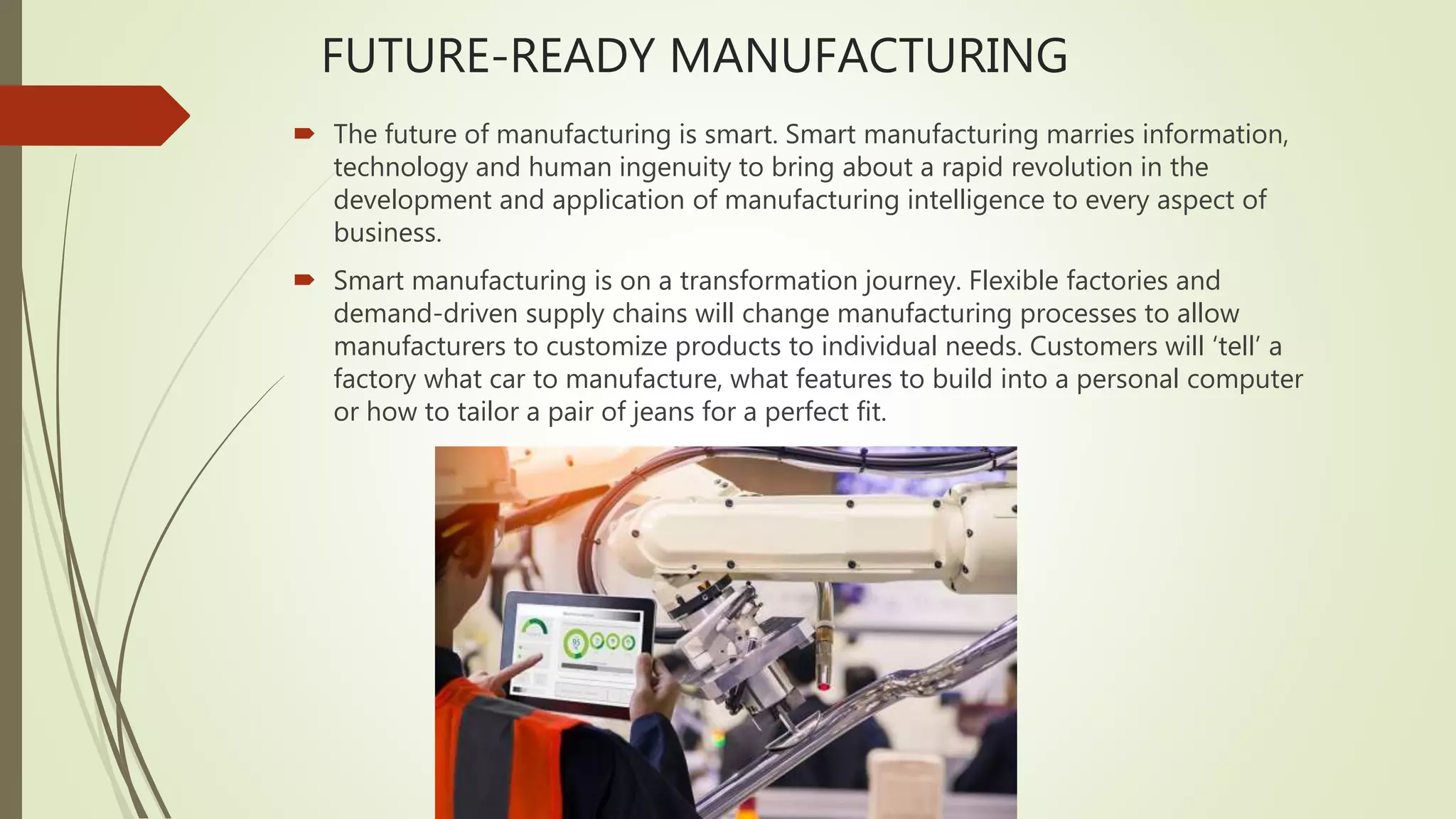
 The future of manufacturing is smart. Smart manufacturing marries information,
technology and human ingenuity to bring about a rapid revolution in the
development and application of manufacturing intelligence to every aspect of
business.
 Smart manufacturing is on a transformation journey. Flexible factories and
demand-driven supply chains will change manufacturing processes to allow
manufacturers to customize products to individual needs. Customers will ‘tell’ a
factory what car to manufacture, what features to build into a personal computer
or how to tailor a pair of jeans for a perfect fit.
 Smart manufacturing focus on enhancing operational excellence, rather than on
capacity creation.
 As manufacturing facilities move towards the smart factory concept, there will be a
need for real-time performance management across multiple facilities.
 Adoption of advanced solutions leads to high levels of data availability, which will
further create a need for robust control, capable of converting it into actionable
intelligence and enhanced operational excellence.
 In order for the plant to operate in a dynamic, integrated, mobile, real-time
connected environment, it is essential to have shop floor connectivity and
collaboration, logistics, asset and supply chain tracking, operations workflow
automation, unified communications, control system flexibility, security and
personnel tracking, and integrated business and plant data.
Problems faced by Indian manufacturing
Industries
 Lack of innovation and technologies in production process, planning, machine
capability etc. are rampant.
 Cost and Fragmentation of Transportation and Logistics.
 Transportation is very costly and slow in India. It can take long delivery time to
get products to the coasts from some places in India.
 Shortage of skilled persons in the market. ITI and other technical training centers
are producing the skilled labor who are using old technologies and they are not a
ready fit for market. Industries had to invest in them to bring them to a level.
 Alternate job opportunities for today’s young generation is more and due to this,
few are working in Manufacturing Industry. Now this has an impact on the growth
and affecting the economy too.
Indian Government Initiatives
Some of the notable initiatives and developments to promote a healthy environment for the
growth of manufacturing sector in the country are
 The Ministry of Defense, Government of India, approved the “Strategic Partnership” model
which will enable private companies to tie up with foreign players for manufacturing
submarines, fighter jets, helicopters and armored vehicles.
 In August 2019, the government permitted 100 per cent FDI in contract manufacturing
through automatic route.
 The Government of India has announced a National Manufacturing Policy with the
objective of enhancing the share of manufacturing in GDP to 25% within a decade and
creating additional 100 million jobs.
 Single window clearance initiative streamline the process and reduce the cost and time in
starting new projects.
 Prime minister Mudra plan provides loan for small business.
 key investments and developments in the Indian roads sector (At present National
Highway Length is 142126 KM ) improves the connectivity of major places in India and
reduce transport time.
Future of Indian manufacturing companies
Initiatives
Indian manufacturing companies has to evaluate how their business is changing and design a
roadmap to build a smart company, which can adjust to their customer needs. The integration
information across machines, systems and people are a key element in this journey.
 Role of digitalization
 Innovation
 Role of University
 Ensuring data security
 Embracing additive manufacturing and 3D printing
 Focus of standardization
 Optimization of Inventory control
 Managing the Cultural Impact in Manufacturing
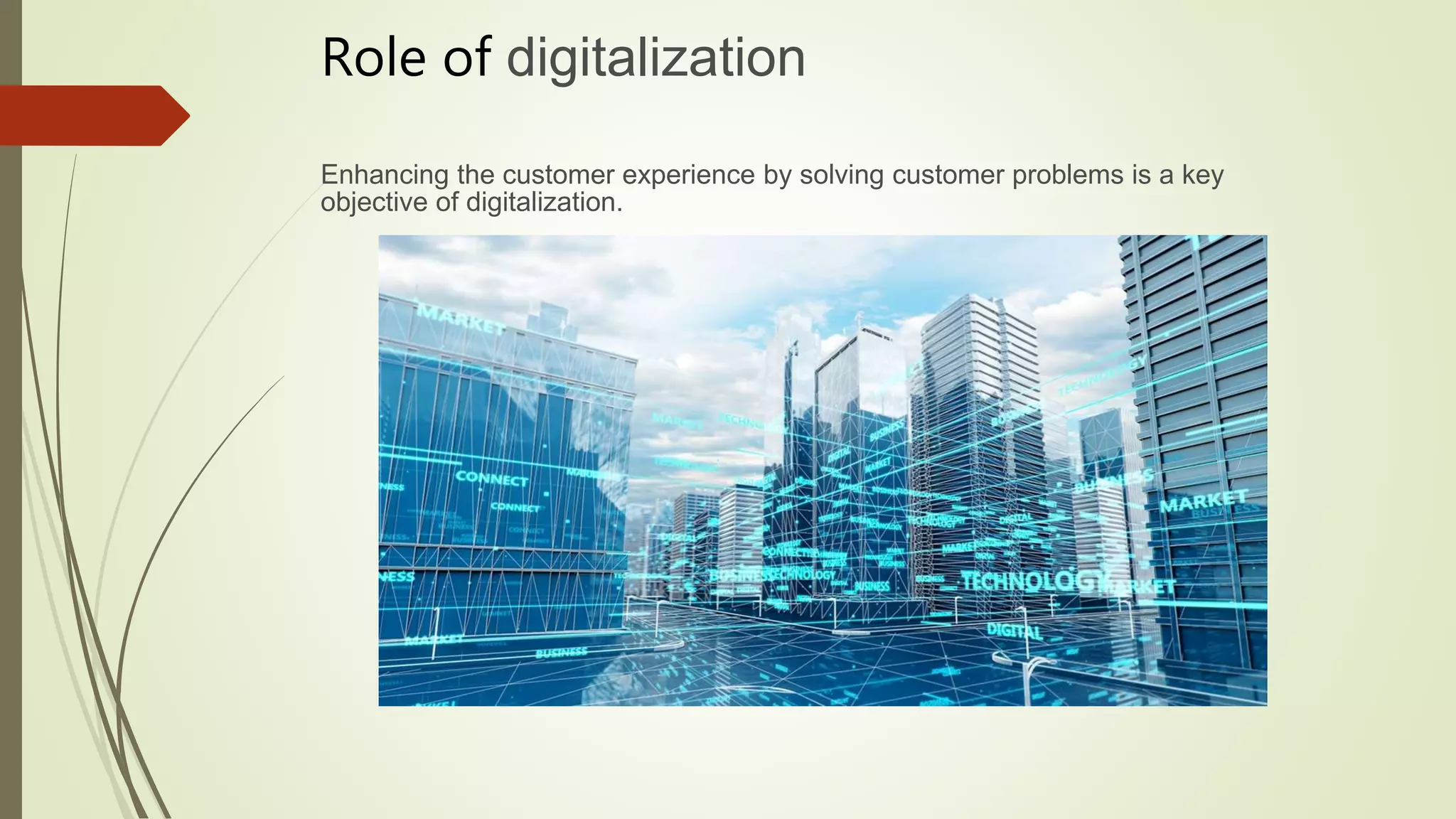
Role of digitalization
Enhancing the customer experience by solving customer problems is a key
objective of digitalization.
Advantages of digitalization
 Digitization continues to drive revolutionary business opportunities, which is why it’s
important for industrial professionals to understand the advantages of digital
manufacturing.
 Digital manufacturing is an attractive concept because it enhances connectivity,
productivity, quality and consistency through automation intelligence and virtual
representation – effectively lowering costs and helping companies remain competitive.
 Enhance operational efficiency with improved processes
 Attract and empower the next generation of workers.
 Increase customer satisfaction.
 Improve operational efficiencies, supply chain planning, inventory cost control,
compliance requirements and operation within the Industrial Internet of Things(IIOT)
Innovation
 India is now ranked 52 ND on the Global Innovation Index (GII) 2019 does highlight
the increasing popularity of an innovation-backed culture gaining prominence
across country's factories and manufacturing plants.
 Indian manufacturing company have begun to realize the merits in investing in
innovation. It’s no longer seen as an avoidable cost. Instead, the industry, along
with the products' end-users, now realize the benefits of the premium placed on
new ideas.
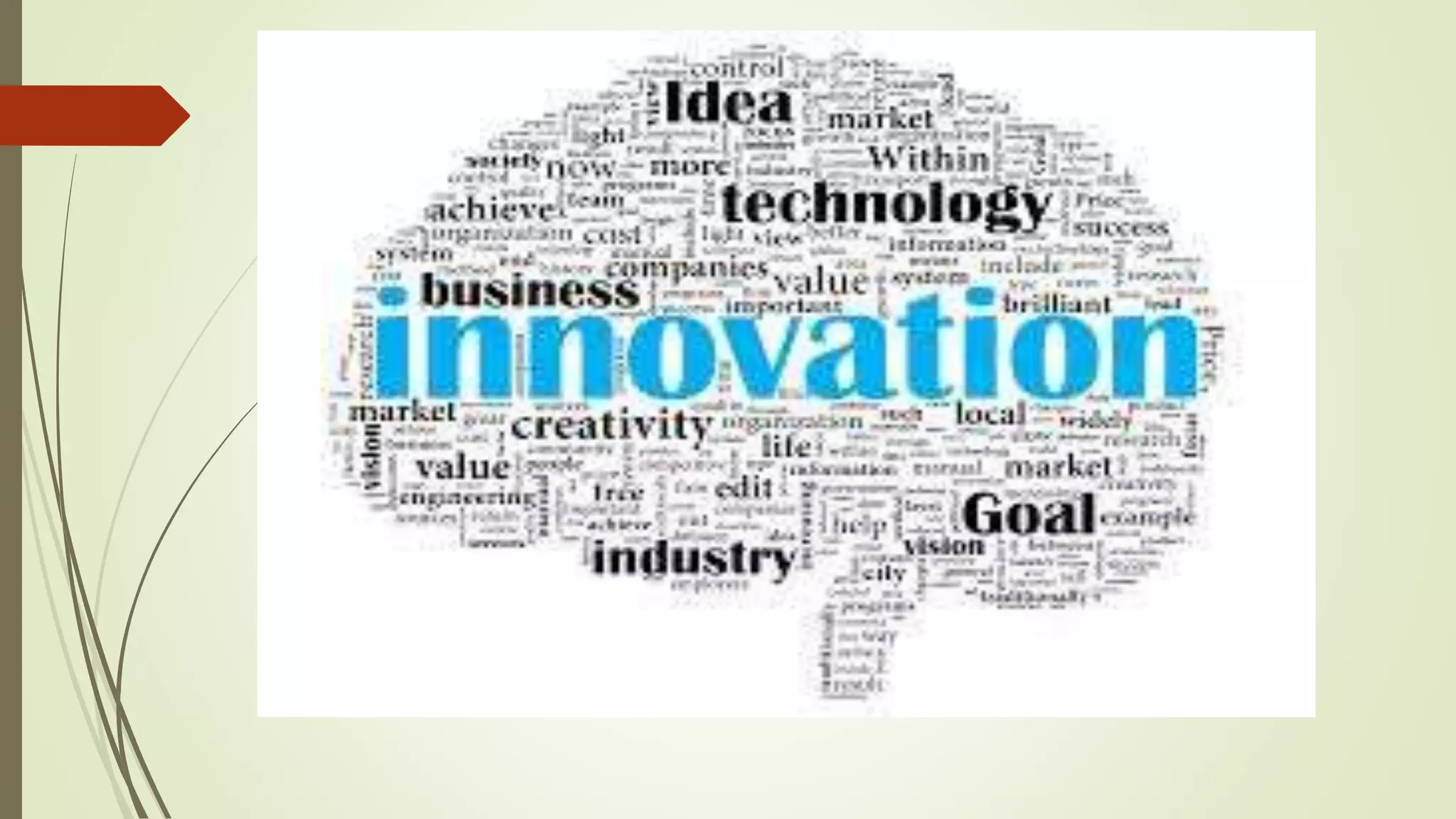
 Innovation fueling next gen manufacturing .
 Innovate or perish is latest mantra in Manufacturing company.
 Innovation Keeps Organizations Relevant.
 Innovation Helps growth of Companies and country.
Role of University
 University has to teach a new set of thought processes to liberate students- of
current and soon-to-be designers from old thinking and allow them to tap into
technologies of the future.
 University has to train students for the manufacturing jobs of tomorrow.
 University has to play in rebuilding manufacturing and educating the next
generation of manufacturing engineers.
 University-industry economic development partnerships are required.
 University has to act as a Manufacturing R&D and training powerhouse.
 University has to take active part in the innovation process and file more patent.
 University has to be partnered with at least 100 manufacturers in developing and
funding research that can be used in their industries.
 It is a very important part of the University to use the talent of our professors,
graduate and undergrad students and technology.
 University has to commit innovating applied research for product design,
technology commercialization, and manufacturing for industry through its
programs.
 University has to conduct one-week training camps for high-school teachers to
work hands-on with metals, ceramics, polymers and composites and learn how to
incorporate these activities and demos into their science classes.
Ensuring data security
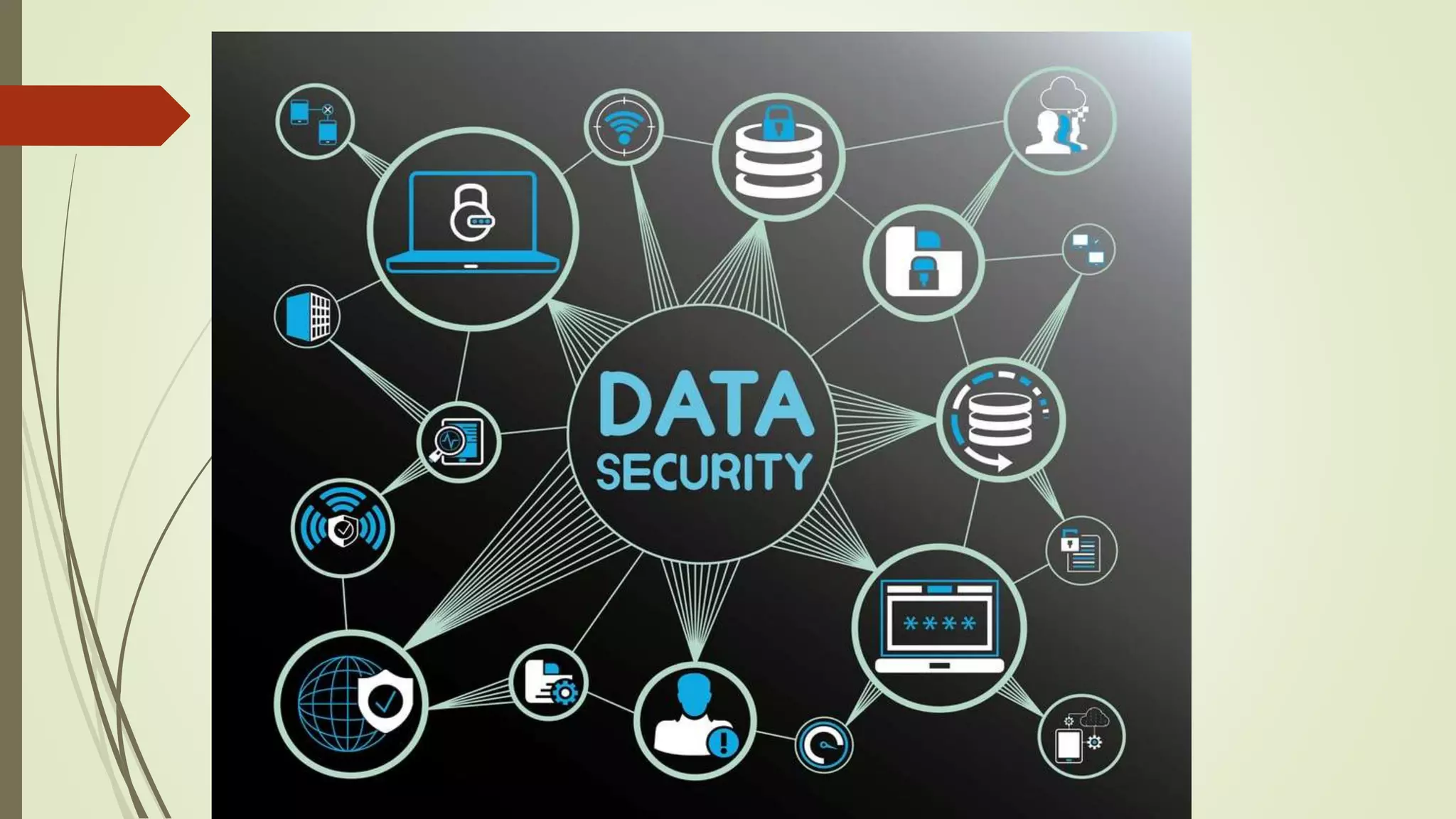
 Reliability of network and resources is very crucial for guaranteeing uninterrupted
manufacturing. The telecom network has to highly reliable and should have
back-up layer incorporated in it.
 As far as accessibility of data security technology goes – yes it does exist and we
have seen how Indian IT companies use this technology to service their
multinational clients in financial and insurance domain.
 In terms of reliability of the network, well with frequent call drops, it does put a
question mark. But for sure this can be achieved by having primary and
secondary lines in place.
 The companies will also have to invest in DR/BCP processes designed specifically
for the plants.
Embracing additive manufacturing and 3D
printing
 Additive manufacturing is the industrial production name for 3Dprinting a
computer controlled process that creates three dimensional objects by depositing
materials, usually in layers.
 Using computer aided design or 3D object scanners, additive manufacturing allows
for the creation of objects with precise geometric shapes. These are built layer by
layer which is in contrast to traditional manufacturing that often requires
machining or other techniques to remove surplus material.
 It Reduces Waste Production.
 It Saves on Energy Costs.
 It Is Easy to Change or Revise Versions of a Product.
 Reduced Tooling Costs.
 Quicker Speed to Market.
 Easily Test Complex Component Geometries.
 Better Component Quality.
Focus on standardization
 Industry 4.0 will require standardization at multiple levels – processes,
connectivity, systems and people maturity.
 With the advent of newer technologies, the technological integration can be
achieved in India, where there is large IT workforce.
 More and more producers has to embrace the Made-to-Order (MTO) and
Configure / Engineer-to-Order (CTO/ETO) production models as against the
Make-to-Stock (MTS) – this is possible only through standardization and
analyzing the complete product life cycle.
 The reality is that standardization has become a necessity to remain competitive
in market.
Optimizing inventory level
 By reducing its inventory at scale, the company is able to drive significant financial
benefits whilst continuing to produce highly complex industrial equipment.
 Reductions of up to 35% can be achieved by the manufacturer as a result of the
implementation of the Inventory Optimization solution.
 Dynamically optimize inventory levels using a stochastic optimization algorithm.
 Invest into Inventory Optimization Technology. A centralized inventory
management system coupled with inventory optimization software will enable a
company to better track inventory levels and prepare for unexpected events.
Managing the Cultural Impact in Manufacturing
 Culture is a powerful, latent and often unconscious set of forces that determine both of
our individual and collective behavior
 Culture is playing major role for any company want to adapt new method, techniques or
new system.
 The impact on the people involved needs to be a key consideration when putting a
strategy and implementation plan in place.
 National culture is playing very essential role in forming the corporate culture.
 Communication at every stage is essential-particularly before implementation.
 Taking time to address any potential issues at the start of a project will ensure users are
bought into the process, enable them to understand what is expected of them, and
avoid any pitfalls further down the line.
THANKS

Dr.k.sivasakthivel

  • 1.
    Future of IndianManufacturing -2025 Dr. K.SIVASAKTHIVEL. M.E , Ph.D.
  • 2.
    Manufacturing Sector inIndia  The manufacturing sector of India has the potential to reach US$ 1 trillion by 2025 and India is expected to rank amongst the top five growth economies and manufacturing destination of the world.  Investments in Indian manufacturing sector has been on rise ,both domestic and foreign.  Huge domestic market with a rapidly increasing middle class and overall population.  Initiatives like Make in India and sector specific incentives to various manufacturing companies aiming to make India a global manufacturing hub.  Increasing share of young working population in the total population.
  • 3.
    FUTURE-READY MANUFACTURING  Thefuture of manufacturing is smart. Smart manufacturing marries information, technology and human ingenuity to bring about a rapid revolution in the development and application of manufacturing intelligence to every aspect of business.  Smart manufacturing is on a transformation journey. Flexible factories and demand-driven supply chains will change manufacturing processes to allow manufacturers to customize products to individual needs. Customers will ‘tell’ a factory what car to manufacture, what features to build into a personal computer or how to tailor a pair of jeans for a perfect fit.
  • 4.
     Smart manufacturingfocus on enhancing operational excellence, rather than on capacity creation.  As manufacturing facilities move towards the smart factory concept, there will be a need for real-time performance management across multiple facilities.  Adoption of advanced solutions leads to high levels of data availability, which will further create a need for robust control, capable of converting it into actionable intelligence and enhanced operational excellence.  In order for the plant to operate in a dynamic, integrated, mobile, real-time connected environment, it is essential to have shop floor connectivity and collaboration, logistics, asset and supply chain tracking, operations workflow automation, unified communications, control system flexibility, security and personnel tracking, and integrated business and plant data.
  • 5.
    Problems faced byIndian manufacturing Industries  Lack of innovation and technologies in production process, planning, machine capability etc. are rampant.  Cost and Fragmentation of Transportation and Logistics.  Transportation is very costly and slow in India. It can take long delivery time to get products to the coasts from some places in India.  Shortage of skilled persons in the market. ITI and other technical training centers are producing the skilled labor who are using old technologies and they are not a ready fit for market. Industries had to invest in them to bring them to a level.  Alternate job opportunities for today’s young generation is more and due to this, few are working in Manufacturing Industry. Now this has an impact on the growth and affecting the economy too.
  • 6.
    Indian Government Initiatives Someof the notable initiatives and developments to promote a healthy environment for the growth of manufacturing sector in the country are  The Ministry of Defense, Government of India, approved the “Strategic Partnership” model which will enable private companies to tie up with foreign players for manufacturing submarines, fighter jets, helicopters and armored vehicles.  In August 2019, the government permitted 100 per cent FDI in contract manufacturing through automatic route.  The Government of India has announced a National Manufacturing Policy with the objective of enhancing the share of manufacturing in GDP to 25% within a decade and creating additional 100 million jobs.  Single window clearance initiative streamline the process and reduce the cost and time in starting new projects.  Prime minister Mudra plan provides loan for small business.  key investments and developments in the Indian roads sector (At present National Highway Length is 142126 KM ) improves the connectivity of major places in India and reduce transport time.
  • 7.
    Future of Indianmanufacturing companies Initiatives Indian manufacturing companies has to evaluate how their business is changing and design a roadmap to build a smart company, which can adjust to their customer needs. The integration information across machines, systems and people are a key element in this journey.  Role of digitalization  Innovation  Role of University  Ensuring data security  Embracing additive manufacturing and 3D printing  Focus of standardization  Optimization of Inventory control  Managing the Cultural Impact in Manufacturing
  • 8.
    Role of digitalization Enhancingthe customer experience by solving customer problems is a key objective of digitalization.
  • 9.
    Advantages of digitalization Digitization continues to drive revolutionary business opportunities, which is why it’s important for industrial professionals to understand the advantages of digital manufacturing.  Digital manufacturing is an attractive concept because it enhances connectivity, productivity, quality and consistency through automation intelligence and virtual representation – effectively lowering costs and helping companies remain competitive.  Enhance operational efficiency with improved processes  Attract and empower the next generation of workers.  Increase customer satisfaction.  Improve operational efficiencies, supply chain planning, inventory cost control, compliance requirements and operation within the Industrial Internet of Things(IIOT)
  • 11.
    Innovation  India isnow ranked 52 ND on the Global Innovation Index (GII) 2019 does highlight the increasing popularity of an innovation-backed culture gaining prominence across country's factories and manufacturing plants.  Indian manufacturing company have begun to realize the merits in investing in innovation. It’s no longer seen as an avoidable cost. Instead, the industry, along with the products' end-users, now realize the benefits of the premium placed on new ideas.  Innovation fueling next gen manufacturing .  Innovate or perish is latest mantra in Manufacturing company.  Innovation Keeps Organizations Relevant.  Innovation Helps growth of Companies and country.
  • 12.
    Role of University University has to teach a new set of thought processes to liberate students- of current and soon-to-be designers from old thinking and allow them to tap into technologies of the future.  University has to train students for the manufacturing jobs of tomorrow.  University has to play in rebuilding manufacturing and educating the next generation of manufacturing engineers.  University-industry economic development partnerships are required.  University has to act as a Manufacturing R&D and training powerhouse.  University has to take active part in the innovation process and file more patent.
  • 13.
     University hasto be partnered with at least 100 manufacturers in developing and funding research that can be used in their industries.  It is a very important part of the University to use the talent of our professors, graduate and undergrad students and technology.  University has to commit innovating applied research for product design, technology commercialization, and manufacturing for industry through its programs.  University has to conduct one-week training camps for high-school teachers to work hands-on with metals, ceramics, polymers and composites and learn how to incorporate these activities and demos into their science classes.
  • 15.
    Ensuring data security Reliability of network and resources is very crucial for guaranteeing uninterrupted manufacturing. The telecom network has to highly reliable and should have back-up layer incorporated in it.  As far as accessibility of data security technology goes – yes it does exist and we have seen how Indian IT companies use this technology to service their multinational clients in financial and insurance domain.  In terms of reliability of the network, well with frequent call drops, it does put a question mark. But for sure this can be achieved by having primary and secondary lines in place.  The companies will also have to invest in DR/BCP processes designed specifically for the plants.
  • 16.
  • 17.
     Additive manufacturingis the industrial production name for 3Dprinting a computer controlled process that creates three dimensional objects by depositing materials, usually in layers.  Using computer aided design or 3D object scanners, additive manufacturing allows for the creation of objects with precise geometric shapes. These are built layer by layer which is in contrast to traditional manufacturing that often requires machining or other techniques to remove surplus material.  It Reduces Waste Production.  It Saves on Energy Costs.  It Is Easy to Change or Revise Versions of a Product.  Reduced Tooling Costs.  Quicker Speed to Market.  Easily Test Complex Component Geometries.  Better Component Quality.
  • 18.
    Focus on standardization Industry 4.0 will require standardization at multiple levels – processes, connectivity, systems and people maturity.  With the advent of newer technologies, the technological integration can be achieved in India, where there is large IT workforce.  More and more producers has to embrace the Made-to-Order (MTO) and Configure / Engineer-to-Order (CTO/ETO) production models as against the Make-to-Stock (MTS) – this is possible only through standardization and analyzing the complete product life cycle.  The reality is that standardization has become a necessity to remain competitive in market.
  • 19.
    Optimizing inventory level By reducing its inventory at scale, the company is able to drive significant financial benefits whilst continuing to produce highly complex industrial equipment.  Reductions of up to 35% can be achieved by the manufacturer as a result of the implementation of the Inventory Optimization solution.  Dynamically optimize inventory levels using a stochastic optimization algorithm.  Invest into Inventory Optimization Technology. A centralized inventory management system coupled with inventory optimization software will enable a company to better track inventory levels and prepare for unexpected events.
  • 20.
    Managing the CulturalImpact in Manufacturing  Culture is a powerful, latent and often unconscious set of forces that determine both of our individual and collective behavior  Culture is playing major role for any company want to adapt new method, techniques or new system.  The impact on the people involved needs to be a key consideration when putting a strategy and implementation plan in place.  National culture is playing very essential role in forming the corporate culture.  Communication at every stage is essential-particularly before implementation.  Taking time to address any potential issues at the start of a project will ensure users are bought into the process, enable them to understand what is expected of them, and avoid any pitfalls further down the line.
  • 21.