OPEN ACCESS Journal of Applied Sciences
ISSN 1812-5654
DOI: 10.3923/jas.2018.138.145
Research Article
Constraints and Potentials of Fish Markets in Chittagong City: A
Case Study of Kazir Dewari Bazar
1
Abul Khair Mohammed Shafikul Hasan, 2
Mohammad Elius Hossain, 1
Md. Simul Bhuyan,
1
Mohammad Saydul Islam Sarkar, 3
Md. Masum Billah and 4
Dilruba Chawdhury
1
Faculty of Marine Sciences and Fisheries, University of Chittagong, 4331 Chittagong, Bangladesh
2
Deputy Commissioner and District Magistrate, Chattogram, Bangladesh
3
Department of Land Management, Faculty of Agriculture, Universiti Putra Malaysia, 43400 UPM, Serdang, Selangor Darul Ehsan, Malaysia
4
Department of Business Administration, Uttara University, Dhaka, Bangladesh
Abstract
Background and Objective: Fisheries sector plays a significant role in the economy of the country. The marketing system with good
management and environmentis pre-requisite for sustainable economic structure. The present study was executed to know the existing
drawbacks and potentials of Kazir Dewari Bazar. Along with some recommendations was extracted from the study area to improve the
existing Bazar condition. Materials and Methods: The survey was conducted in 2017 for collecting the field data by using different
methods (e.g., structured interview, Focus Group Discussion and Key informant interview etc.). Results: The Bazar is very important to
the local community but with some common problems. Intermediaries had great influence on the fish seller income (p<0.05). The
environment of the Bazar was not up to the mark. The market condition was not hygienic for handling fish due to lack of proper physical
facilities. This unhygienic environment causes various health problems to sellers and buyers. Marine fishes are the common fish in the
Bazar. Importantly, the fishermen and retailers got limited profits while stockists (Aratdars) received high profits from selling fish.
Consequently, the financial condition of the fishing community and the retailers were not good enough. Conclusion: Physical facilities
like processing, packaging, sanitation, water supply, drainage, cleaning, washing, maintenance and other necessary measures were not
sufficient in the Bazar. This situation can be improved by proper management of the Bazar committee and strict monitoring from the
government.
Key words: Drawbacks, potentials, aratdars, unhygienic, monitoring, marketing system, fisheries sector
Citation: Abul Khair Mohammed Shafikul Hasan, Mohammad Elius Hossain, Md. Simul Bhuyan, Mohammad Saydul Islam Sarkar, Md. Masum Billah and
Dilruba Chawdhury, 2018. Constraints and potentials of fish markets in Chittagong city: a case study of Kazir dewari bazar. J. Applied Sci., 18: 138-145.
Corresponding Author: Md. Simul Bhuyan, Faculty of Marine Sciences and Fisheries, University of Chittagong, 4331 Chittagong,
Bangladesh Tel: +88-01754291218
Copyright: © 2018 Abul Khair Mohammed Shafikul Hasan et al. This is an open access article distributed under the terms of the creative commons
attribution License, which permits unrestricted use, distribution and reproduction in any medium, provided the original author and source are credited.
Competing Interest: The authors have declared that no competing interest exists.
Data Availability: All relevant data are within the paper and its supporting information files.
J. Applied Sci., 18 (3): 138-145, 2018
INTRODUCTION
Appetite and lack of healthy sustenance stay among the
most crushing issues confronting the world poor and
destitute1
. Around 80 to 90 million individuals must be
bolstered yearly and most solid wellspring of protein for some
is fish. A great number of individuals who rely upon fish are
confronted day by day with the dread of food shortage2
.
Fish can be regarded as the major source of animal
protein that required for Bangladeshi people (Popularly
known as Mache-Bhate Banglaee)3
. Fish is the only source of
protein and minerals to the subsistence level fishermen4
. Fish
contributes nearly 60% of the national animal protein
consumption and 19% of the total protein intake in the
average Bangladeshi diet5
. Besides protein source, nearly
12 million people directly or indirectly involved in fishing
activities for their living6
. It offers 1.78 million people s
full-timeandpart-timeservicefacilities7
. Importantly,fisheries
play a vital role in the national economy of Bangladesh. This
sectorhelpingtheeconomythroughemploymentgeneration,
poverty alleviation, the supply of animal protein and foreign
exchange earnings8
. Likewise, the fisheries sector contributes
around 2.46% of the total export earnings, 4.39% to GDP and
22.76% to the agrarian sector9
.
With the number of inhabitants in Bangladesh on the
ascent, there is a relating interest for fish utilization.
Consequently, there is a requirement for an appropriate
agrarian framework to take care of the expanding demand
for nourishment and furthermore, amplify the use of the
accessible restricted assets absent much wastage. In
perspective of this, coordinated fish cultivating fit precisely
into this. Incorporated fish cultivating is a differentiated and
composedmethodforcultivatingwithfishasthefundamental
focus alongside other ranch items10
.
A fish market is a commercial center utilized for
promoting of fish and fish items. Fish marketing might be
extensively characterized as every one of those capacities
required from the purpose of getting of fish to the point of
definite utilization. Like the fish as some other creation draws
nearer and closer to a definitive consumer, the offering cost
increments since the edges of the different middle people
and functionaries are added to it. The value effectiveness is
worried about enhancing the task of purchasing, offering and
other associated parts of the marketing procedure with the
goal that it will stay receptive to consumer course11
.
Marketing plays a vital job in a bazaar economy. The job
of advertising as an impetus to angle generation and
efficiency can't be overemphasized. The advertising of
agrarian items in Bangladesh includes different markets or
trade focuses2
. The impact of the marketing system is
surveyed by the capacity of the market to make time,
put shape and ownership utility2
. Since fast conservation
and transport ended up accessible in the 19th to
21st-century angle markets can, in fact, be set up at wherever.
Fish goes through different market member and trade
pounds before they achieve the last shopper. These market
go-betweens are the entire merchants and retailers. Both
assume the imperative job in the promoting framework.
Moreover, because of the bulky idea of fish dissemination
channel, the local fish seller is looked with the issue of benefit
expansion. In this way, the outcome is that exercises in this
area are for the most part overwhelmed by private segment
nearnesswithpracticallyzeropreparationfromthelegislature.
Accordingly, any endeavor utilized at improving a nation's
advertising framework needs to begin with a right
investigation of the issue2
.
Kazir Dewari Bazar is one of the most important Bazar to
the local fishermen, intermediaries and consumer. It has a
great impact on the economy of the country with a lot of
marine fishes. The present study was carried out to know the
existing problems and potentials of the Kazir Dewari Bazar. It
also studied the prices of fish and also provides some future
recommendations to develop the fish marketing systems in
Kazir Dewari Bazar.
MATERIALS AND METHODS
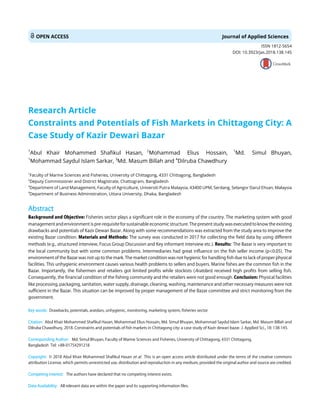
Study area: Chittagong city is the second largest city of
Bangladesh. It is situated between 22E14' and 22E24' N and
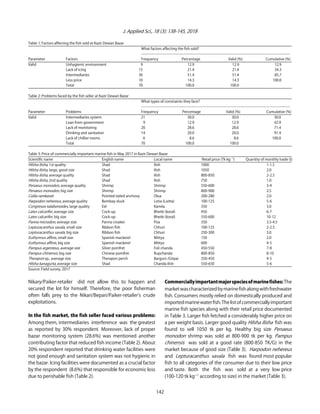
91E46' and 91 53' E (Fig. 1). There are many Bazar in the
Chittagong city. Kazir Dewari Bazar is one of them. To make
angle accessible to purchasers at the opportune time and in
the perfect place requires a compelling showcasing
framework.
Target groups: Fishermen, processor, baperi, aratdar,
wholesalers, retailers and consumers were selected for the
present study to collect the primary data. These stakeholders
are directly involved in marketing activities.
Data collection: Primary data were collected from the
selected field on 30 May to 4 June, 2017. Oral interview, focus
group discussion, key informant interviews and direct
observations techniques were followed to collect the primary
139
J. Applied Sci., 18 (3): 138-145, 2018
Fig. 1: Research site (Map created by ArcGIS v.10.3, ©Md. Simul Bhuyan)
140
88°30N0OE 90°30N0OE 91°30N0OE 93°30N0OE
27°0N0ON
25°30N0ON
24°0N0ON
22°30N0ON
21°0N0ON
27°0N0ON
25°30N0ON
24°0N0ON
22°30N0ON
21°0N0ON
0 37.575 150 km
N
0 5 10 20 km
22°30N0ON 22°30N0ON
91°30N0OE
91°30N0OE
N
W E
S
J. Applied Sci., 18 (3): 138-145, 2018
Lender/Mohajans
Transported to
processing
industry
Processing
Export
Kazir dewari
bazar
Retailers/paikers
Small town
Traders (baparies)
Stockists ( )
Aratdars
Fishermen
Icing and boxing
Consumers
Transfer and transport
Disposal
Collection
Storage
West generation
Processing and recovery
data12-14
. This technique was implemented because most of
the coastal fishing community and fish sellers were
uneducated and some have a low level of education15
. Some
basics questions were asked to the respondents. The
questions were:
C What is the name of the market?
C What factors affecting the fish sold?
C What types of constraints they face?
C What is the price of available fish?
C What are the recommendations to solve the existing
problems?
Data analysis: The collected primary data were then
secondary data were reviewed. Data were collected in local
unit converted into a standard unit to reduce inaccuracy.
Finally, the data were then put into the table and transferred
to a computer. Calculations were performed by using
MS-Excel16
2013. Descriptive statistics and One Way ANOVA
analysis was executed to find out community perception
percentage and significant impact of a factor on fish seller
income.
RESULTS
The Kazir Dewari Bazar fish market is getting crowded at
any level. Infrastructure facilities are important for
marketing fisheries products domestically and for the
physical development of markets. In city corporations and
municipalities often provide infrastructure facilities in the
form of pakka roofs, tin shades, pakka platforms, raised
selling places and water connections. However, washing
and cleaning of spaces dedicated to selling fish and
disposal of wastes and residues do not meet hygienically
acceptable standards. The intermediaries system had a
significant impact on the income of fish seller (p<0.05). The
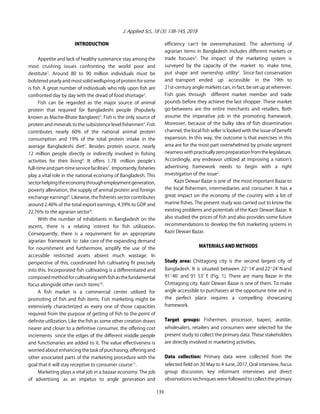
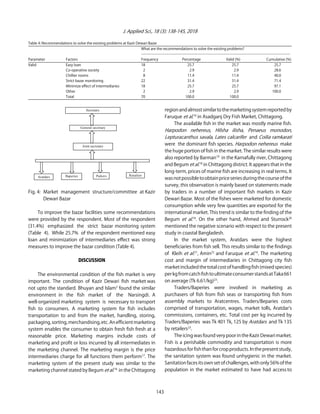
marketing channel of Kazir Dewari Bazar was presented in
(Fig. 2).
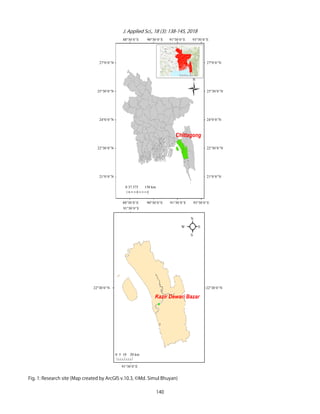
The activities associated with solid waste management
from the point of generation to final disposal may be finally
grouped into functional elements as illustrated in the simple
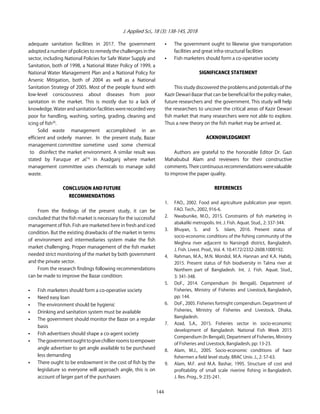
flow chart given in (Fig. 3).
Although solid waste management also included
financing, operation and equipment management.
Market management structure/committee consists of
different kinds of people. They also conduct the market
Fig. 2: Marketing channels at Kazir Dewari Bazar
Fig. 3: Basic functional elements of a solid waste
management system
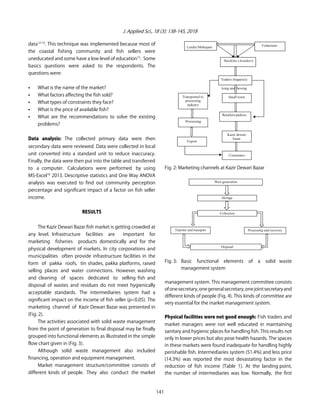
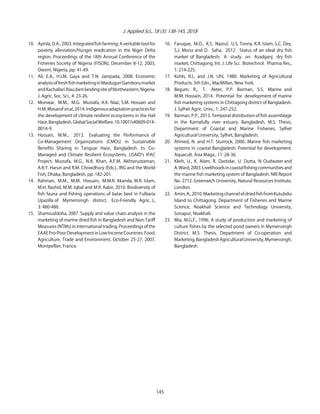
management system. This management committee consists
ofonesecretary,onegeneralsecretary,onejointsecretaryand
different kinds of people (Fig. 4). This kinds of committee are
very essential for the market management system.
Physical facilities were not good enough: Fish traders and
market managers were not well educated in maintaining
sanitary and hygienic places for handling fish. This results not
only in lower prices but also pose health hazards. The spaces
in these markets were found inadequate for handling highly
perishable fish. Intermediaries system (51.4%) and less price
(14.3%) was reported the most devastating factor in the
reduction of fish income (Table 1). At the landing point,
the number of intermediaries was low. Normally, the first
141
J. Applied Sci., 18 (3): 138-145, 2018
Table 1: Factors affecting the fish sold at Kazir Dewari Bazar
What factors affecting the fish sold?
------------------------------------------------------------------------------------------------------------------------
Parameter Factors Frequency Percentage Valid (%) Cumulative (%)
Valid Unhygienic environment 9 12.9 12.9 12.9
Lack of icing 15 21.4 21.4 34.3
Intermediaries 36 51.4 51.4 85.7
Less price 10 14.3 14.3 100.0
Total 70 100.0 100.0
Table 2: Problems faced by the fish seller at Kazir Dewari Bazar
What types of constraints they face?
------------------------------------------------------------------------------------------------------------------------
Parameter Problems Frequency Percentage Valid (%) Cumulative (%)
Valid Intermediaries system 21 30.0 30.0 30.0
Loan from government 9 12.9 12.9 42.9
Lack of monitoring 20 28.6 28.6 71.4
Drinking and sanitation 14 20.0 20.0 91.4
Lack of chillier rooms 6 8.6 8.6 100.0
Total 70 100.0 100.0
Table 3: Price of commercially important marine fish in May 2017 in Kazir Dewari Bazar
Scientific name English name Local name Retail price (Tk kgG1
) Quantity of monthly trade (t)
Hilsha ilisha, 1st quality Shad Ilish 1000 1-1.5
Hilsha ilisha, large, good size Shad Ilish 1050 2.0
Hilsha ilisha, average quality Shad Ilish 800-850 2-2.5
Hilsha ilisha, 2nd quality Shad Ilish 750 1.0
Penaeus monodon, average quality Shrimp Shrimp 550-600 3-4
Penaeus monodon, big size Shrimp Shrimp 800-900 2.5
Coilia ramkarati Pointed-tailed anchovy Olua 200-280 2.0
Harpodon nehereus, average quality Bombay-duck Lotia (Loitta) 100-125 5-6
Congresox talabonoides, large quality Eel Kamila 350 3.0
Lates calcarifer, average size Cock-up Bhetki (koral) 450 6-7
Lates calcarifer, big size Cock-up Bhetki (koral) 550-600 10-12
Panna microdon, average size Panna croaker Poa 350 3.5-4.5
Lepturacanthus savala, small size Ribbon fish Chhuri 100-125 2-2.5
Lepturacanthus savala, big size Ribbon fish Chhuri 250-300 3.0
Euthynnus affinis, small size Spanish mackerel Mittya 150 2.0
Euthynnus affinis, big size Spanish mackerel Mittya 600 4-5
Pampus argenteus, average size Silver pomfret Foli chanda 450-550 7-8
Pampus chinensis, big size Chinese pomfret Rupchanda 800-850 8-10
Therapon sp., average size Therapon perch Barguni /Girpai 350-450 4-5
Hilsha kanagurta, average size Shad Chanda ilish 550-650 5-6
Source: Field survey, 2017
Nikary/Paiker-retailer did not allow this to happen and
secured the lot for himself. Therefore, the poor fisherman
often falls prey to the Nikari/Bepari/Paiker-retailer's crude
exploitations.
In the fish market, the fish seller faced various problems:
Among them, intermediaries interference was the greatest
as reported by 30% respondent. Moreover, lack of proper
bazar monitoring system (28.6%) was mentioned another
contributing factor that reduced fish income (Table 2). About
20% respondent reported that drinking water facilities were
not good enough and sanitation system was not hygienic in
the bazar. Icing facilities were documented as a crucial factor
by the respondent (8.6%) that responsible for economic loss
due to perishable fish (Table 2).
Commerciallyimportantmajorspeciesofmarinefishes:The
marketwascharacterizedbymarinefishalongwithfreshwater
fish. Consumers mostly relied on domestically produced and
importedmarinewaterfish.Thelistofcommerciallyimportant
marine fish species along with their retail price documented
in Table 3. Larger fish fetched a considerably higher price on
a per weight basis. Larger good quality Hilsha ilisha fish was
found to sell 1050 tk per kg. Healthy big size Penaeus
monodon shrimp was sold at 800-900 tk per kg. Pampus
chinensis was sold at a good rate (800-850 TK/G) in the
market because of good size (Table 3). Harpodon nehereus
and Lepturacanthus savala fish was found most popular
fish to all categories of the consumer due to their low price
and taste. Both the fish was sold at a very low price
(100-120 tk kgG1
according to size) in the market (Table 3).
142
J. Applied Sci., 18 (3): 138-145, 2018
Secretary
General secretary
Joint secretary
Aratdars Baperies Paikers Retailers
Table 4: Recommendations to solve the existing problems at Kazir Dewari Bazar
What are the recommendations to solve the existing problems?
------------------------------------------------------------------------------------------------------------------------
Parameter Factors Frequency Percentage Valid (%) Cumulative (%)
Valid Easy loan 18 25.7 25.7 25.7
Co-operative society 2 2.9 2.9 28.6
Chillier rooms 8 11.4 11.4 40.0
Strict bazar monitoring 22 31.4 31.4 71.4
Minimize effect of intermediaries 18 25.7 25.7 97.1
Other 2 2.9 2.9 100.0
Total 70 100.0 100.0
Fig. 4: Market management structure/committee at Kazir
Dewari Bazar
To improve the bazar facilities some recommendations
were provided by the respondent. Most of the respondent
(31.4%) emphasized the strict bazar monitoring system
(Table 4). While 25.7% of the respondent mentioned easy
loan and minimization of intermediaries effect was strong
measures to improve the bazar condition (Table 4).
DISCUSSION
The environmental condition of the fish market is very
important. The condition of Kazir Dewari fish market was
not upto the standard. Bhuyan and Islam3
found the similar
environment in the fish market of the Narsingdi. A
well-organized marketing system is necessary to transport
fish to consumers. A marketing system for fish includes
transportation to and from the market, handling, storing,
packaging,sorting,merchandising,etc.Anefficientmarketing
system enables the consumer to obtain fresh fish fresh at a
reasonable price. Marketing margins include costs of
marketing and profit or loss incurred by all intermediates in
the marketing channel. The marketing margin is the price
intermediaries charge for all functions them perform17
. The
marketing system of the present study was similar to the
marketing channel stated by Begum et al.18
in the Chittagong
regionandalmostsimilartothemarketingsystemreportedby
Faruque et al.16
in Asadganj Dry Fish Market, Chittagong.
The available fish in the market was mostly marine fish.
Harpodon nehereus, Hilsha ilisha, Penaeus monodon,
Lepturacanthus savala, Lates calcarifer and Coilia ramkarati
were the dominant fish species. Harpodon nehereus make
the huge portion of fish in the market. The similar results were
also reported by Barman19
in the Karnafully river, Chittagong
and Begum et al.18
in Chittagong district. It appears that in the
long-term, prices of marine fish are increasing in real terms. It
wasnotpossibletoobtainpriceseriesduringthecourseofthe
survey, this observation is mainly based on statements made
by traders in a number of important fish markets in Kazir
Dewari Bazar. Most of the fishes were marketed for domestic
consumption while very few quantities are exported for the
international market. This trend is similar to the finding of the
Begum et al.18
. On the other hand, Ahmed and Sturrock20
mentioned the negative scenario with respect to the present
study in coastal Bangladesh.
In the market system, Aratdars were the highest
beneficiaries from fish sell. This results similar to the findings
of Kleih et al.21
, Amin22
and Faruque et al.16
. The marketing
cost and margin of intermediaries in Chittagong city fish
market included thetotalcostofhandling fish(mixed species)
perkgfromcatch fishtoultimateconsumerstandsatTaka661
on average (Tk 6.61/kg)23
.
Traders/Baperies were involved in marketing as
purchasers of fish from fish seas or transporting fish from
assembly markets to Aratcentres. Traders/Beparies costs
comprised of transportation, wages, market tolls, Aratdar's
commissions, containers, etc. Total cost per kg incurred by
Traders/Baperies was Tk 401 Tk, 125 by Aratdars and Tk 135
by retailers23
.
The icing was found very poor in the Kazir Dewari market.
Fish is a perishable commodity and transportation is more
hazardous for fishthan forcropproducts. Inthepresent study,
the sanitation system was found unhygienic in the market.
Sanitation faces its own set ofchallenges, withonly56%ofthe
population in the market estimated to have had access to
143
J. Applied Sci., 18 (3): 138-145, 2018
adequate sanitation facilities in 2017. The government
adopted a number of policies to remedy the challenges in the
sector, including National Policies for Safe Water Supply and
Sanitation, both of 1998, a National Water Policy of 1999, a
National Water Management Plan and a National Policy for
Arsenic Mitigation, both of 2004 as well as a National
Sanitation Strategy of 2005. Most of the people found with
low-level consciousness about diseases from poor
sanitation in the market. This is mostly due to a lack of
knowledge. Water and sanitation facilities were recorded very
poor for handling, washing, sorting, grading, cleaning and
icing of fish20
.
Solid waste management accomplished in an
efficient and orderly manner. In the present study, Bazar
management committee sometime used some chemical
to disinfect the market environment. A similar result was
stated by Faruque et al.16
in Asadganj where market
management committee uses chemicals to manage solid
waste.
CONCLUSION AND FUTURE
RECOMMENDATIONS
From the findings of the present study, it can be
concluded that the fish market is necessary for the successful
management of fish. Fish are marketed here in fresh and iced
condition. But the existing drawbacks of the market in terms
of environment and intermediaries system make the fish
market challenging. Proper management of the fish market
needed strict monitoring of the market by both government
and the private sector.
From the research findings following recommendations
can be made to improve the Bazar condition:
C Fish marketers should form a co-operative society
C Need easy loan
C The environment should be hygienic
C Drinking and sanitation system must be available
C The government should monitor the Bazar on a regular
basis
C Fish advertisers should shape a co-agent society
C Thegovernmentoughttogivechillierroomstoempower
angle advertiser to get angle available to be purchased
less demanding
C There ought to be endowment in the cost of fish by the
legislature so everyone will approach angle, this is on
account of larger part of the purchasers
C The government ought to likewise give transportation
facilities and great infra-structural facilities
C Fish marketers should form a co-operative society
SIGNIFICANCE STATEMENT
This study discovered the problems and potentials of the
Kazir Dewari Bazar that can be beneficial for the policy maker,
future researchers and the government. This study will help
the researchers to uncover the critical areas of Kazir Dewari
fish market that many researchers were not able to explore.
Thus a new theory on the fish market may be arrived at.
ACKNOWLEDGMENT
Authors are grateful to the honorable Editor Dr. Gazi
Mahabubul Alam and reviewers for their constructive
comments.Theircontinuousrecommendationswerevaluable
to improve the paper quality.
REFERENCES
1. FAO., 2002. Food and agriculture publication year report.
FAO. Tech., 2002, 916-6.
2. Nwabunike, M.O., 2015. Constraints of fish marketing in
abakaliki metropolis. Int. J. Fish. Aquat. Stud., 2: 337-344.
3. Bhuyan, S. and S. Islam, 2016. Present status of
socio-economic conditions of the fishing community of the
Meghna river adjacent to Narsingdi district, Bangladesh.
J. Fish. Livest. Prod., Vol. 4. 10.4172/2332-2608.1000192.
4. Rahman, M.A., M.N. Mondol, M.A. Hannan and K.A. Habib,
2015. Present status of fish biodiversity in Talma river at
Northern part of Bangladesh. Int. J. Fish. Aquat. Stud.,
3: 341-348.
5. DoF., 2014. Compendium (In Bengali). Department of
Fisheries, Ministry of Fisheries and Livestock, Bangladesh,
pp: 144.
6. DoF., 2005. Fisheries fortnight compendium. Department of
Fisheries, Ministry of Fisheries and Livestock, Dhaka,
Bangladesh.
7. Azad, S.A., 2015. Fisheries sector in socio-economic
development of Bangladesh. National Fish Week 2015
Compendium (In Bengali), Department of Fisheries, Ministry
of Fisheries and Livestock, Bangladesh, pp: 13-23.
8. Alam, M.J., 2005. Socio-economic conditions of haor
fishermen a field level study. BRAC Univ. J., 2: 57-63.
9. Alam, M.F. and M.A. Bashar, 1995. Structure of cost and
profitability of small scale riverine fishing in Bangladesh.
J. Res. Prog., 9: 235-241.
144
J. Applied Sci., 18 (3): 138-145, 2018
10. Ayinla, O.A., 2003. Integrated fish farming: A veritable tool for
poverty alleviation/Hunger eradication in the Niger Delta
region. Proceedings of the 18th Annual Conference of the
Fisheries Society of Nigeria (FISON), December 8-12, 2003,
Owerri, Nigeria, pp: 41-49.
11. Ali, E.A., H.I.M. Gaya and T.N. Jampada, 2008. Economic
analysisoffreshfishmarketinginMaiduguriGamborumarket
andKachallariAlaudamlandingsiteofNortheastern,Nigeria.
J. Agric. Soc. Sci., 4: 23-26.
12. Monwar, M.M., M.G. Mustafa, A.K. Niaz, S.M. Hossain and
H.M.Mosarofetal.,2014. Indigenousadaptationpracticesfor
the development of climate resilient ecosystems in the Hail
Haor,Bangladesh.GlobalSocialWelfare.10.1007/s40609-014-
0014-9.
13. Hossain, M.M., 2013. Evaluating the Performance of
Co-Management Organizations (CMOs) in Sustainable
Benefits Sharing in Tanguar Haor, Bangladesh. In: Co-
Managed and Climate Resilient Ecosystems. USAID s IPAC
Project, Mustafa, M.G., N.A. Khan, A.F.M. Akhtaruzzaman,
A.K.Y. Harun and R.M. Chowdhury (Eds.)., IRG and the World
Fish, Dhaka, Bangladesh, pp: 182-201.
14. Rahman, M.M., M.M. Hossain, M.M.R. Akanda, M.R. Islam,
M.H. Rashid, M.M. Iqbal and M.R. Kabir, 2010. Biodiversity of
fish fauna and fishing operations of katar beel in Fulbaria
Upazilla of Mymensingh district. Eco-Friendly Agric. J.,
3: 480-486.
15. Shamsuddoha, 2007. Supply and value chain analysis in the
marketing of marine dried fish in Bangladesh and Non-Tariff
Measures (NTMs) in international trading. Proceedings of the
EAAEPro-PoorDevelopmentinLowIncomeCountries:Food,
Agriculture, Trade and Environment, October 25-27, 2007,
Montpellier, France.
16. Faruque, M.O., K.S. Nazrul, U.S. Tonny, K.R. Islam, S.C. Dey,
S.J. Mona and D. Saha, 2012. Status of an ideal dry fish
market of Bangladesh: A study on Asadganj dry fish
market, Chittagong. Int. J. Life Sci. Biotechnol. Pharma Res.,
1: 214-225.
17. Kohls, R.L. and J.N. Uhl, 1980. Marketing of Agricultural
Products. 5th Edn., MacMillan, New York.
18. Begum, R., T. Akter, P.P. Barman, S.S. Marine and
M.M. Hossain, 2014. Potential for development of marine
fish marketing systems in Chittagong district of Bangladesh.
J. Sylhet Agric. Univ., 1: 247-252.
19. Barman, P.P., 2013. Temporal distribution of fish assemblage
in the Karnafully river estuary, Bangladesh. M.S. Thesis,
Department of Coastal and Marine Fisheries, Sylhet
Agricultural University, Sylhet, Bangladesh.
20. Ahmed, N. and H.T. Sturrock, 2006. Marine fish marketing
systems in coastal Bangladesh: Potential for development.
Aquacult. Asia Maga., 11: 28-36.
21. Kleih, U., K. Alam, R. Dastidar, U. Dutta, N. Oudwater and
A.Ward,2003.Livelihoodsincoastalfishingcommunitiesand
the marine fish marketing system of Bangladesh. NRI Report
No. 2712. Greenwich University, Natural Resources Institute,
London.
22. Amin,A.,2010.MarketingchannelofdriedfishfromKutubdia
Island to Chittagong. Department of Fisheries and Marine
Science, Noakhali Science and Technology University,
Sonapur, Noakhali.
23. Mia, M.G.F., 1996. A study of production and marketing of
culture fishes by the selected pond owners in Mymensingh
District. M.S. Thesis, Department of Co-operation and
Marketing,BangladeshAgriculturalUniversity,Mymensingh,
Bangladesh.
145

Dried fish sample

  • 2.
    OPEN ACCESS Journalof Applied Sciences ISSN 1812-5654 DOI: 10.3923/jas.2018.138.145 Research Article Constraints and Potentials of Fish Markets in Chittagong City: A Case Study of Kazir Dewari Bazar 1 Abul Khair Mohammed Shafikul Hasan, 2 Mohammad Elius Hossain, 1 Md. Simul Bhuyan, 1 Mohammad Saydul Islam Sarkar, 3 Md. Masum Billah and 4 Dilruba Chawdhury 1 Faculty of Marine Sciences and Fisheries, University of Chittagong, 4331 Chittagong, Bangladesh 2 Deputy Commissioner and District Magistrate, Chattogram, Bangladesh 3 Department of Land Management, Faculty of Agriculture, Universiti Putra Malaysia, 43400 UPM, Serdang, Selangor Darul Ehsan, Malaysia 4 Department of Business Administration, Uttara University, Dhaka, Bangladesh Abstract Background and Objective: Fisheries sector plays a significant role in the economy of the country. The marketing system with good management and environmentis pre-requisite for sustainable economic structure. The present study was executed to know the existing drawbacks and potentials of Kazir Dewari Bazar. Along with some recommendations was extracted from the study area to improve the existing Bazar condition. Materials and Methods: The survey was conducted in 2017 for collecting the field data by using different methods (e.g., structured interview, Focus Group Discussion and Key informant interview etc.). Results: The Bazar is very important to the local community but with some common problems. Intermediaries had great influence on the fish seller income (p<0.05). The environment of the Bazar was not up to the mark. The market condition was not hygienic for handling fish due to lack of proper physical facilities. This unhygienic environment causes various health problems to sellers and buyers. Marine fishes are the common fish in the Bazar. Importantly, the fishermen and retailers got limited profits while stockists (Aratdars) received high profits from selling fish. Consequently, the financial condition of the fishing community and the retailers were not good enough. Conclusion: Physical facilities like processing, packaging, sanitation, water supply, drainage, cleaning, washing, maintenance and other necessary measures were not sufficient in the Bazar. This situation can be improved by proper management of the Bazar committee and strict monitoring from the government. Key words: Drawbacks, potentials, aratdars, unhygienic, monitoring, marketing system, fisheries sector Citation: Abul Khair Mohammed Shafikul Hasan, Mohammad Elius Hossain, Md. Simul Bhuyan, Mohammad Saydul Islam Sarkar, Md. Masum Billah and Dilruba Chawdhury, 2018. Constraints and potentials of fish markets in Chittagong city: a case study of Kazir dewari bazar. J. Applied Sci., 18: 138-145. Corresponding Author: Md. Simul Bhuyan, Faculty of Marine Sciences and Fisheries, University of Chittagong, 4331 Chittagong, Bangladesh Tel: +88-01754291218 Copyright: © 2018 Abul Khair Mohammed Shafikul Hasan et al. This is an open access article distributed under the terms of the creative commons attribution License, which permits unrestricted use, distribution and reproduction in any medium, provided the original author and source are credited. Competing Interest: The authors have declared that no competing interest exists. Data Availability: All relevant data are within the paper and its supporting information files.
  • 3.
    J. Applied Sci.,18 (3): 138-145, 2018 INTRODUCTION Appetite and lack of healthy sustenance stay among the most crushing issues confronting the world poor and destitute1 . Around 80 to 90 million individuals must be bolstered yearly and most solid wellspring of protein for some is fish. A great number of individuals who rely upon fish are confronted day by day with the dread of food shortage2 . Fish can be regarded as the major source of animal protein that required for Bangladeshi people (Popularly known as Mache-Bhate Banglaee)3 . Fish is the only source of protein and minerals to the subsistence level fishermen4 . Fish contributes nearly 60% of the national animal protein consumption and 19% of the total protein intake in the average Bangladeshi diet5 . Besides protein source, nearly 12 million people directly or indirectly involved in fishing activities for their living6 . It offers 1.78 million people s full-timeandpart-timeservicefacilities7 . Importantly,fisheries play a vital role in the national economy of Bangladesh. This sectorhelpingtheeconomythroughemploymentgeneration, poverty alleviation, the supply of animal protein and foreign exchange earnings8 . Likewise, the fisheries sector contributes around 2.46% of the total export earnings, 4.39% to GDP and 22.76% to the agrarian sector9 . With the number of inhabitants in Bangladesh on the ascent, there is a relating interest for fish utilization. Consequently, there is a requirement for an appropriate agrarian framework to take care of the expanding demand for nourishment and furthermore, amplify the use of the accessible restricted assets absent much wastage. In perspective of this, coordinated fish cultivating fit precisely into this. Incorporated fish cultivating is a differentiated and composedmethodforcultivatingwithfishasthefundamental focus alongside other ranch items10 . A fish market is a commercial center utilized for promoting of fish and fish items. Fish marketing might be extensively characterized as every one of those capacities required from the purpose of getting of fish to the point of definite utilization. Like the fish as some other creation draws nearer and closer to a definitive consumer, the offering cost increments since the edges of the different middle people and functionaries are added to it. The value effectiveness is worried about enhancing the task of purchasing, offering and other associated parts of the marketing procedure with the goal that it will stay receptive to consumer course11 . Marketing plays a vital job in a bazaar economy. The job of advertising as an impetus to angle generation and efficiency can't be overemphasized. The advertising of agrarian items in Bangladesh includes different markets or trade focuses2 . The impact of the marketing system is surveyed by the capacity of the market to make time, put shape and ownership utility2 . Since fast conservation and transport ended up accessible in the 19th to 21st-century angle markets can, in fact, be set up at wherever. Fish goes through different market member and trade pounds before they achieve the last shopper. These market go-betweens are the entire merchants and retailers. Both assume the imperative job in the promoting framework. Moreover, because of the bulky idea of fish dissemination channel, the local fish seller is looked with the issue of benefit expansion. In this way, the outcome is that exercises in this area are for the most part overwhelmed by private segment nearnesswithpracticallyzeropreparationfromthelegislature. Accordingly, any endeavor utilized at improving a nation's advertising framework needs to begin with a right investigation of the issue2 . Kazir Dewari Bazar is one of the most important Bazar to the local fishermen, intermediaries and consumer. It has a great impact on the economy of the country with a lot of marine fishes. The present study was carried out to know the existing problems and potentials of the Kazir Dewari Bazar. It also studied the prices of fish and also provides some future recommendations to develop the fish marketing systems in Kazir Dewari Bazar. MATERIALS AND METHODS Study area: Chittagong city is the second largest city of Bangladesh. It is situated between 22E14' and 22E24' N and 91E46' and 91 53' E (Fig. 1). There are many Bazar in the Chittagong city. Kazir Dewari Bazar is one of them. To make angle accessible to purchasers at the opportune time and in the perfect place requires a compelling showcasing framework. Target groups: Fishermen, processor, baperi, aratdar, wholesalers, retailers and consumers were selected for the present study to collect the primary data. These stakeholders are directly involved in marketing activities. Data collection: Primary data were collected from the selected field on 30 May to 4 June, 2017. Oral interview, focus group discussion, key informant interviews and direct observations techniques were followed to collect the primary 139
  • 4.
    J. Applied Sci.,18 (3): 138-145, 2018 Fig. 1: Research site (Map created by ArcGIS v.10.3, ©Md. Simul Bhuyan) 140 88°30N0OE 90°30N0OE 91°30N0OE 93°30N0OE 88°30N0OE 90°30N0OE 91°30N0OE 93°30N0OE 27°0N0ON 25°30N0ON 24°0N0ON 22°30N0ON 21°0N0ON 27°0N0ON 25°30N0ON 24°0N0ON 22°30N0ON 21°0N0ON 0 37.575 150 km N 0 5 10 20 km 22°30N0ON 22°30N0ON 91°30N0OE 91°30N0OE N W E S
  • 5.
    J. Applied Sci.,18 (3): 138-145, 2018 Lender/Mohajans Transported to processing industry Processing Export Kazir dewari bazar Retailers/paikers Small town Traders (baparies) Stockists ( ) Aratdars Fishermen Icing and boxing Consumers Transfer and transport Disposal Collection Storage West generation Processing and recovery data12-14 . This technique was implemented because most of the coastal fishing community and fish sellers were uneducated and some have a low level of education15 . Some basics questions were asked to the respondents. The questions were: C What is the name of the market? C What factors affecting the fish sold? C What types of constraints they face? C What is the price of available fish? C What are the recommendations to solve the existing problems? Data analysis: The collected primary data were then secondary data were reviewed. Data were collected in local unit converted into a standard unit to reduce inaccuracy. Finally, the data were then put into the table and transferred to a computer. Calculations were performed by using MS-Excel16 2013. Descriptive statistics and One Way ANOVA analysis was executed to find out community perception percentage and significant impact of a factor on fish seller income. RESULTS The Kazir Dewari Bazar fish market is getting crowded at any level. Infrastructure facilities are important for marketing fisheries products domestically and for the physical development of markets. In city corporations and municipalities often provide infrastructure facilities in the form of pakka roofs, tin shades, pakka platforms, raised selling places and water connections. However, washing and cleaning of spaces dedicated to selling fish and disposal of wastes and residues do not meet hygienically acceptable standards. The intermediaries system had a significant impact on the income of fish seller (p<0.05). The marketing channel of Kazir Dewari Bazar was presented in (Fig. 2). The activities associated with solid waste management from the point of generation to final disposal may be finally grouped into functional elements as illustrated in the simple flow chart given in (Fig. 3). Although solid waste management also included financing, operation and equipment management. Market management structure/committee consists of different kinds of people. They also conduct the market Fig. 2: Marketing channels at Kazir Dewari Bazar Fig. 3: Basic functional elements of a solid waste management system management system. This management committee consists ofonesecretary,onegeneralsecretary,onejointsecretaryand different kinds of people (Fig. 4). This kinds of committee are very essential for the market management system. Physical facilities were not good enough: Fish traders and market managers were not well educated in maintaining sanitary and hygienic places for handling fish. This results not only in lower prices but also pose health hazards. The spaces in these markets were found inadequate for handling highly perishable fish. Intermediaries system (51.4%) and less price (14.3%) was reported the most devastating factor in the reduction of fish income (Table 1). At the landing point, the number of intermediaries was low. Normally, the first 141
  • 6.
    J. Applied Sci.,18 (3): 138-145, 2018 Table 1: Factors affecting the fish sold at Kazir Dewari Bazar What factors affecting the fish sold? ------------------------------------------------------------------------------------------------------------------------ Parameter Factors Frequency Percentage Valid (%) Cumulative (%) Valid Unhygienic environment 9 12.9 12.9 12.9 Lack of icing 15 21.4 21.4 34.3 Intermediaries 36 51.4 51.4 85.7 Less price 10 14.3 14.3 100.0 Total 70 100.0 100.0 Table 2: Problems faced by the fish seller at Kazir Dewari Bazar What types of constraints they face? ------------------------------------------------------------------------------------------------------------------------ Parameter Problems Frequency Percentage Valid (%) Cumulative (%) Valid Intermediaries system 21 30.0 30.0 30.0 Loan from government 9 12.9 12.9 42.9 Lack of monitoring 20 28.6 28.6 71.4 Drinking and sanitation 14 20.0 20.0 91.4 Lack of chillier rooms 6 8.6 8.6 100.0 Total 70 100.0 100.0 Table 3: Price of commercially important marine fish in May 2017 in Kazir Dewari Bazar Scientific name English name Local name Retail price (Tk kgG1 ) Quantity of monthly trade (t) Hilsha ilisha, 1st quality Shad Ilish 1000 1-1.5 Hilsha ilisha, large, good size Shad Ilish 1050 2.0 Hilsha ilisha, average quality Shad Ilish 800-850 2-2.5 Hilsha ilisha, 2nd quality Shad Ilish 750 1.0 Penaeus monodon, average quality Shrimp Shrimp 550-600 3-4 Penaeus monodon, big size Shrimp Shrimp 800-900 2.5 Coilia ramkarati Pointed-tailed anchovy Olua 200-280 2.0 Harpodon nehereus, average quality Bombay-duck Lotia (Loitta) 100-125 5-6 Congresox talabonoides, large quality Eel Kamila 350 3.0 Lates calcarifer, average size Cock-up Bhetki (koral) 450 6-7 Lates calcarifer, big size Cock-up Bhetki (koral) 550-600 10-12 Panna microdon, average size Panna croaker Poa 350 3.5-4.5 Lepturacanthus savala, small size Ribbon fish Chhuri 100-125 2-2.5 Lepturacanthus savala, big size Ribbon fish Chhuri 250-300 3.0 Euthynnus affinis, small size Spanish mackerel Mittya 150 2.0 Euthynnus affinis, big size Spanish mackerel Mittya 600 4-5 Pampus argenteus, average size Silver pomfret Foli chanda 450-550 7-8 Pampus chinensis, big size Chinese pomfret Rupchanda 800-850 8-10 Therapon sp., average size Therapon perch Barguni /Girpai 350-450 4-5 Hilsha kanagurta, average size Shad Chanda ilish 550-650 5-6 Source: Field survey, 2017 Nikary/Paiker-retailer did not allow this to happen and secured the lot for himself. Therefore, the poor fisherman often falls prey to the Nikari/Bepari/Paiker-retailer's crude exploitations. In the fish market, the fish seller faced various problems: Among them, intermediaries interference was the greatest as reported by 30% respondent. Moreover, lack of proper bazar monitoring system (28.6%) was mentioned another contributing factor that reduced fish income (Table 2). About 20% respondent reported that drinking water facilities were not good enough and sanitation system was not hygienic in the bazar. Icing facilities were documented as a crucial factor by the respondent (8.6%) that responsible for economic loss due to perishable fish (Table 2). Commerciallyimportantmajorspeciesofmarinefishes:The marketwascharacterizedbymarinefishalongwithfreshwater fish. Consumers mostly relied on domestically produced and importedmarinewaterfish.Thelistofcommerciallyimportant marine fish species along with their retail price documented in Table 3. Larger fish fetched a considerably higher price on a per weight basis. Larger good quality Hilsha ilisha fish was found to sell 1050 tk per kg. Healthy big size Penaeus monodon shrimp was sold at 800-900 tk per kg. Pampus chinensis was sold at a good rate (800-850 TK/G) in the market because of good size (Table 3). Harpodon nehereus and Lepturacanthus savala fish was found most popular fish to all categories of the consumer due to their low price and taste. Both the fish was sold at a very low price (100-120 tk kgG1 according to size) in the market (Table 3). 142
  • 7.
    J. Applied Sci.,18 (3): 138-145, 2018 Secretary General secretary Joint secretary Aratdars Baperies Paikers Retailers Table 4: Recommendations to solve the existing problems at Kazir Dewari Bazar What are the recommendations to solve the existing problems? ------------------------------------------------------------------------------------------------------------------------ Parameter Factors Frequency Percentage Valid (%) Cumulative (%) Valid Easy loan 18 25.7 25.7 25.7 Co-operative society 2 2.9 2.9 28.6 Chillier rooms 8 11.4 11.4 40.0 Strict bazar monitoring 22 31.4 31.4 71.4 Minimize effect of intermediaries 18 25.7 25.7 97.1 Other 2 2.9 2.9 100.0 Total 70 100.0 100.0 Fig. 4: Market management structure/committee at Kazir Dewari Bazar To improve the bazar facilities some recommendations were provided by the respondent. Most of the respondent (31.4%) emphasized the strict bazar monitoring system (Table 4). While 25.7% of the respondent mentioned easy loan and minimization of intermediaries effect was strong measures to improve the bazar condition (Table 4). DISCUSSION The environmental condition of the fish market is very important. The condition of Kazir Dewari fish market was not upto the standard. Bhuyan and Islam3 found the similar environment in the fish market of the Narsingdi. A well-organized marketing system is necessary to transport fish to consumers. A marketing system for fish includes transportation to and from the market, handling, storing, packaging,sorting,merchandising,etc.Anefficientmarketing system enables the consumer to obtain fresh fish fresh at a reasonable price. Marketing margins include costs of marketing and profit or loss incurred by all intermediates in the marketing channel. The marketing margin is the price intermediaries charge for all functions them perform17 . The marketing system of the present study was similar to the marketing channel stated by Begum et al.18 in the Chittagong regionandalmostsimilartothemarketingsystemreportedby Faruque et al.16 in Asadganj Dry Fish Market, Chittagong. The available fish in the market was mostly marine fish. Harpodon nehereus, Hilsha ilisha, Penaeus monodon, Lepturacanthus savala, Lates calcarifer and Coilia ramkarati were the dominant fish species. Harpodon nehereus make the huge portion of fish in the market. The similar results were also reported by Barman19 in the Karnafully river, Chittagong and Begum et al.18 in Chittagong district. It appears that in the long-term, prices of marine fish are increasing in real terms. It wasnotpossibletoobtainpriceseriesduringthecourseofthe survey, this observation is mainly based on statements made by traders in a number of important fish markets in Kazir Dewari Bazar. Most of the fishes were marketed for domestic consumption while very few quantities are exported for the international market. This trend is similar to the finding of the Begum et al.18 . On the other hand, Ahmed and Sturrock20 mentioned the negative scenario with respect to the present study in coastal Bangladesh. In the market system, Aratdars were the highest beneficiaries from fish sell. This results similar to the findings of Kleih et al.21 , Amin22 and Faruque et al.16 . The marketing cost and margin of intermediaries in Chittagong city fish market included thetotalcostofhandling fish(mixed species) perkgfromcatch fishtoultimateconsumerstandsatTaka661 on average (Tk 6.61/kg)23 . Traders/Baperies were involved in marketing as purchasers of fish from fish seas or transporting fish from assembly markets to Aratcentres. Traders/Beparies costs comprised of transportation, wages, market tolls, Aratdar's commissions, containers, etc. Total cost per kg incurred by Traders/Baperies was Tk 401 Tk, 125 by Aratdars and Tk 135 by retailers23 . The icing was found very poor in the Kazir Dewari market. Fish is a perishable commodity and transportation is more hazardous for fishthan forcropproducts. Inthepresent study, the sanitation system was found unhygienic in the market. Sanitation faces its own set ofchallenges, withonly56%ofthe population in the market estimated to have had access to 143
  • 8.
    J. Applied Sci.,18 (3): 138-145, 2018 adequate sanitation facilities in 2017. The government adopted a number of policies to remedy the challenges in the sector, including National Policies for Safe Water Supply and Sanitation, both of 1998, a National Water Policy of 1999, a National Water Management Plan and a National Policy for Arsenic Mitigation, both of 2004 as well as a National Sanitation Strategy of 2005. Most of the people found with low-level consciousness about diseases from poor sanitation in the market. This is mostly due to a lack of knowledge. Water and sanitation facilities were recorded very poor for handling, washing, sorting, grading, cleaning and icing of fish20 . Solid waste management accomplished in an efficient and orderly manner. In the present study, Bazar management committee sometime used some chemical to disinfect the market environment. A similar result was stated by Faruque et al.16 in Asadganj where market management committee uses chemicals to manage solid waste. CONCLUSION AND FUTURE RECOMMENDATIONS From the findings of the present study, it can be concluded that the fish market is necessary for the successful management of fish. Fish are marketed here in fresh and iced condition. But the existing drawbacks of the market in terms of environment and intermediaries system make the fish market challenging. Proper management of the fish market needed strict monitoring of the market by both government and the private sector. From the research findings following recommendations can be made to improve the Bazar condition: C Fish marketers should form a co-operative society C Need easy loan C The environment should be hygienic C Drinking and sanitation system must be available C The government should monitor the Bazar on a regular basis C Fish advertisers should shape a co-agent society C Thegovernmentoughttogivechillierroomstoempower angle advertiser to get angle available to be purchased less demanding C There ought to be endowment in the cost of fish by the legislature so everyone will approach angle, this is on account of larger part of the purchasers C The government ought to likewise give transportation facilities and great infra-structural facilities C Fish marketers should form a co-operative society SIGNIFICANCE STATEMENT This study discovered the problems and potentials of the Kazir Dewari Bazar that can be beneficial for the policy maker, future researchers and the government. This study will help the researchers to uncover the critical areas of Kazir Dewari fish market that many researchers were not able to explore. Thus a new theory on the fish market may be arrived at. ACKNOWLEDGMENT Authors are grateful to the honorable Editor Dr. Gazi Mahabubul Alam and reviewers for their constructive comments.Theircontinuousrecommendationswerevaluable to improve the paper quality. REFERENCES 1. FAO., 2002. Food and agriculture publication year report. FAO. Tech., 2002, 916-6. 2. Nwabunike, M.O., 2015. Constraints of fish marketing in abakaliki metropolis. Int. J. Fish. Aquat. Stud., 2: 337-344. 3. Bhuyan, S. and S. Islam, 2016. Present status of socio-economic conditions of the fishing community of the Meghna river adjacent to Narsingdi district, Bangladesh. J. Fish. Livest. Prod., Vol. 4. 10.4172/2332-2608.1000192. 4. Rahman, M.A., M.N. Mondol, M.A. Hannan and K.A. Habib, 2015. Present status of fish biodiversity in Talma river at Northern part of Bangladesh. Int. J. Fish. Aquat. Stud., 3: 341-348. 5. DoF., 2014. Compendium (In Bengali). Department of Fisheries, Ministry of Fisheries and Livestock, Bangladesh, pp: 144. 6. DoF., 2005. Fisheries fortnight compendium. Department of Fisheries, Ministry of Fisheries and Livestock, Dhaka, Bangladesh. 7. Azad, S.A., 2015. Fisheries sector in socio-economic development of Bangladesh. National Fish Week 2015 Compendium (In Bengali), Department of Fisheries, Ministry of Fisheries and Livestock, Bangladesh, pp: 13-23. 8. Alam, M.J., 2005. Socio-economic conditions of haor fishermen a field level study. BRAC Univ. J., 2: 57-63. 9. Alam, M.F. and M.A. Bashar, 1995. Structure of cost and profitability of small scale riverine fishing in Bangladesh. J. Res. Prog., 9: 235-241. 144
  • 9.
    J. Applied Sci.,18 (3): 138-145, 2018 10. Ayinla, O.A., 2003. Integrated fish farming: A veritable tool for poverty alleviation/Hunger eradication in the Niger Delta region. Proceedings of the 18th Annual Conference of the Fisheries Society of Nigeria (FISON), December 8-12, 2003, Owerri, Nigeria, pp: 41-49. 11. Ali, E.A., H.I.M. Gaya and T.N. Jampada, 2008. Economic analysisoffreshfishmarketinginMaiduguriGamborumarket andKachallariAlaudamlandingsiteofNortheastern,Nigeria. J. Agric. Soc. Sci., 4: 23-26. 12. Monwar, M.M., M.G. Mustafa, A.K. Niaz, S.M. Hossain and H.M.Mosarofetal.,2014. Indigenousadaptationpracticesfor the development of climate resilient ecosystems in the Hail Haor,Bangladesh.GlobalSocialWelfare.10.1007/s40609-014- 0014-9. 13. Hossain, M.M., 2013. Evaluating the Performance of Co-Management Organizations (CMOs) in Sustainable Benefits Sharing in Tanguar Haor, Bangladesh. In: Co- Managed and Climate Resilient Ecosystems. USAID s IPAC Project, Mustafa, M.G., N.A. Khan, A.F.M. Akhtaruzzaman, A.K.Y. Harun and R.M. Chowdhury (Eds.)., IRG and the World Fish, Dhaka, Bangladesh, pp: 182-201. 14. Rahman, M.M., M.M. Hossain, M.M.R. Akanda, M.R. Islam, M.H. Rashid, M.M. Iqbal and M.R. Kabir, 2010. Biodiversity of fish fauna and fishing operations of katar beel in Fulbaria Upazilla of Mymensingh district. Eco-Friendly Agric. J., 3: 480-486. 15. Shamsuddoha, 2007. Supply and value chain analysis in the marketing of marine dried fish in Bangladesh and Non-Tariff Measures (NTMs) in international trading. Proceedings of the EAAEPro-PoorDevelopmentinLowIncomeCountries:Food, Agriculture, Trade and Environment, October 25-27, 2007, Montpellier, France. 16. Faruque, M.O., K.S. Nazrul, U.S. Tonny, K.R. Islam, S.C. Dey, S.J. Mona and D. Saha, 2012. Status of an ideal dry fish market of Bangladesh: A study on Asadganj dry fish market, Chittagong. Int. J. Life Sci. Biotechnol. Pharma Res., 1: 214-225. 17. Kohls, R.L. and J.N. Uhl, 1980. Marketing of Agricultural Products. 5th Edn., MacMillan, New York. 18. Begum, R., T. Akter, P.P. Barman, S.S. Marine and M.M. Hossain, 2014. Potential for development of marine fish marketing systems in Chittagong district of Bangladesh. J. Sylhet Agric. Univ., 1: 247-252. 19. Barman, P.P., 2013. Temporal distribution of fish assemblage in the Karnafully river estuary, Bangladesh. M.S. Thesis, Department of Coastal and Marine Fisheries, Sylhet Agricultural University, Sylhet, Bangladesh. 20. Ahmed, N. and H.T. Sturrock, 2006. Marine fish marketing systems in coastal Bangladesh: Potential for development. Aquacult. Asia Maga., 11: 28-36. 21. Kleih, U., K. Alam, R. Dastidar, U. Dutta, N. Oudwater and A.Ward,2003.Livelihoodsincoastalfishingcommunitiesand the marine fish marketing system of Bangladesh. NRI Report No. 2712. Greenwich University, Natural Resources Institute, London. 22. Amin,A.,2010.MarketingchannelofdriedfishfromKutubdia Island to Chittagong. Department of Fisheries and Marine Science, Noakhali Science and Technology University, Sonapur, Noakhali. 23. Mia, M.G.F., 1996. A study of production and marketing of culture fishes by the selected pond owners in Mymensingh District. M.S. Thesis, Department of Co-operation and Marketing,BangladeshAgriculturalUniversity,Mymensingh, Bangladesh. 145