DRAMA CONVENTIONS
CONVENTIONS
 Dramas usually centre around real life situations with realistic and
believable settings, characters, and stories.This appeals to mass
audiences as there are a range of plots that are relatable to, and the
portrayal of character development promotes audience attachment as
the viewers can feel empathy for the hardships faced.
 Often drama films have elements of other genres in them, for example:
romance, war, sports, horror, comedy and crime.
 Dramas have lots of focus around intense social interaction, and
conflict as the plot purpose is to move audience emotionally – aided by
the frequent climaxes and anti-climaxes that perpetuate tension
 Generally, drama films have happy endings, which means more often
than not they are stand-alone films without sequels, as the ‘loose-ends’
are all tied up at the conclusion.
FILMSTHAT BREAK CONVENTION
 ‘A Serious Man’ (2009)
 Had an unpredictable ending that defied the convention by going against
the typical ‘clichéd’ conclusions of many dramas.
 ‘Titanic’ (1997)
 Diverged from the conventions of the genre, the ending to Titanic was
not happy but tragic for both of the main protagonists.
 ‘Rocky’ (1976)
 Broke convention as it had 5 sequels ‘Rocky II’, ‘Rocky III’, ‘Rocky IV’,
‘RockyV’ and ‘Rocky Balboa’, unlike the majority of drama films.
OPENING SEQUENCES
Drawing mainly from the four film openings I analysed, it was clear that
some of major similarities between them were representative of the
conventions of opening sequences of drama films.
 Immediate introduction to the main character(s)
 Establishment of familiar and recognisable setting, where most of the
film takes place
 Initial implication of themes running throughout the films (i.e. racial
tensions, freedom and corruption)
 Establishment of empathy/sympathy for the main character, e.g. the
protagonist shown to be abused or controlled or unhappy.
 Clear setting of atmosphere and tone through use of light, sounds,
interaction between characters and editing pace
CONVENTIONAL CHARACTERS
 PROTAGONIST: the central character to the plot, generally the one who
experiences the main force of the ‘real-life’ issue and goes on the emotional
journey as the plot develops. E.g. King GeorgeVI in ‘The King’s Speech’ (2010)
 BEST FRIEND/COMPANION: the emotional support for the protagonist, often
is the voice of reason and helps the protagonist through the peaks and troughs
of the plot. E.g. Bubba in ‘Forrest Gump’ (1994)
 LOVE INTEREST: can either be a source of motivation for the protagonist or a
source of pain. In many romantic dramas, the ‘happy ending’ revolves around
the love interest. E.g.Adrian in ‘Rocky’ (1976)
 ANTAGONIST: sometimes the antagonist is one person, however sometimes
there are multiple antagonists who contribute to the hardships faced by the
protagonist. Generally, in keeping with the ‘happy ending’, this character ‘gets
what they deserve’ and the protagonist triumphs. E.g. Sam in ‘Kidulthood’
(2006)
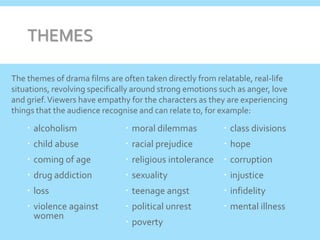
THEMES
 alcoholism
 child abuse
 coming of age
 drug addiction
 loss
 violence against
women
 moral dilemmas
 racial prejudice
 religious intolerance
 sexuality
 teenage angst
 political unrest
 poverty
 class divisions
 hope
 corruption
 injustice
 infidelity
 mental illness
The themes of drama films are often taken directly from relatable, real-life
situations, revolving specifically around strong emotions such as anger, love
and grief.Viewers have empathy for the characters as they are experiencing
things that the audience recognise and can relate to, for example:

Drama conventions

  • 1.
  • 2.
    CONVENTIONS  Dramas usuallycentre around real life situations with realistic and believable settings, characters, and stories.This appeals to mass audiences as there are a range of plots that are relatable to, and the portrayal of character development promotes audience attachment as the viewers can feel empathy for the hardships faced.  Often drama films have elements of other genres in them, for example: romance, war, sports, horror, comedy and crime.  Dramas have lots of focus around intense social interaction, and conflict as the plot purpose is to move audience emotionally – aided by the frequent climaxes and anti-climaxes that perpetuate tension  Generally, drama films have happy endings, which means more often than not they are stand-alone films without sequels, as the ‘loose-ends’ are all tied up at the conclusion.
  • 3.
    FILMSTHAT BREAK CONVENTION ‘A Serious Man’ (2009)  Had an unpredictable ending that defied the convention by going against the typical ‘clichéd’ conclusions of many dramas.  ‘Titanic’ (1997)  Diverged from the conventions of the genre, the ending to Titanic was not happy but tragic for both of the main protagonists.  ‘Rocky’ (1976)  Broke convention as it had 5 sequels ‘Rocky II’, ‘Rocky III’, ‘Rocky IV’, ‘RockyV’ and ‘Rocky Balboa’, unlike the majority of drama films.
  • 4.
    OPENING SEQUENCES Drawing mainlyfrom the four film openings I analysed, it was clear that some of major similarities between them were representative of the conventions of opening sequences of drama films.  Immediate introduction to the main character(s)  Establishment of familiar and recognisable setting, where most of the film takes place  Initial implication of themes running throughout the films (i.e. racial tensions, freedom and corruption)  Establishment of empathy/sympathy for the main character, e.g. the protagonist shown to be abused or controlled or unhappy.  Clear setting of atmosphere and tone through use of light, sounds, interaction between characters and editing pace
  • 5.
    CONVENTIONAL CHARACTERS  PROTAGONIST:the central character to the plot, generally the one who experiences the main force of the ‘real-life’ issue and goes on the emotional journey as the plot develops. E.g. King GeorgeVI in ‘The King’s Speech’ (2010)  BEST FRIEND/COMPANION: the emotional support for the protagonist, often is the voice of reason and helps the protagonist through the peaks and troughs of the plot. E.g. Bubba in ‘Forrest Gump’ (1994)  LOVE INTEREST: can either be a source of motivation for the protagonist or a source of pain. In many romantic dramas, the ‘happy ending’ revolves around the love interest. E.g.Adrian in ‘Rocky’ (1976)  ANTAGONIST: sometimes the antagonist is one person, however sometimes there are multiple antagonists who contribute to the hardships faced by the protagonist. Generally, in keeping with the ‘happy ending’, this character ‘gets what they deserve’ and the protagonist triumphs. E.g. Sam in ‘Kidulthood’ (2006)
  • 6.
    THEMES  alcoholism  childabuse  coming of age  drug addiction  loss  violence against women  moral dilemmas  racial prejudice  religious intolerance  sexuality  teenage angst  political unrest  poverty  class divisions  hope  corruption  injustice  infidelity  mental illness The themes of drama films are often taken directly from relatable, real-life situations, revolving specifically around strong emotions such as anger, love and grief.Viewers have empathy for the characters as they are experiencing things that the audience recognise and can relate to, for example: