GROUP PRESENTATION
SUBJECT NAME : DIGITAL PRINCIPLES AND
COMPUTER ORGANIZATION
SUBJECT CODE : 231ITS301T
TOPIC NAME : ENCODER AND DECODER
PRESENTED BY :
1. AKSHAY.R (07)
2. ANURANJANA. M.J (11)
3. ARCHIISH. B (13)
4. HEM KISHORRE (50)
5. JAINITHISH. M (55)
Introduction:
 Encoders and Decoders are digital ICs which are used for encoding and
decoding.
 An encoder is a device, circuit, or program that converts digital data into an
analogue signal.
 A decoder is a device, circuit, or program that converts an analogue signal into
digital data.
 Both encoder and decoder are multiple input and multiple output devices and
combinational logic circuits.
 The encoders and decoders are used in many electronics projects to compress
the multiple number of inputs into smaller number of outputs.
WHAT IS AN ENCODER?
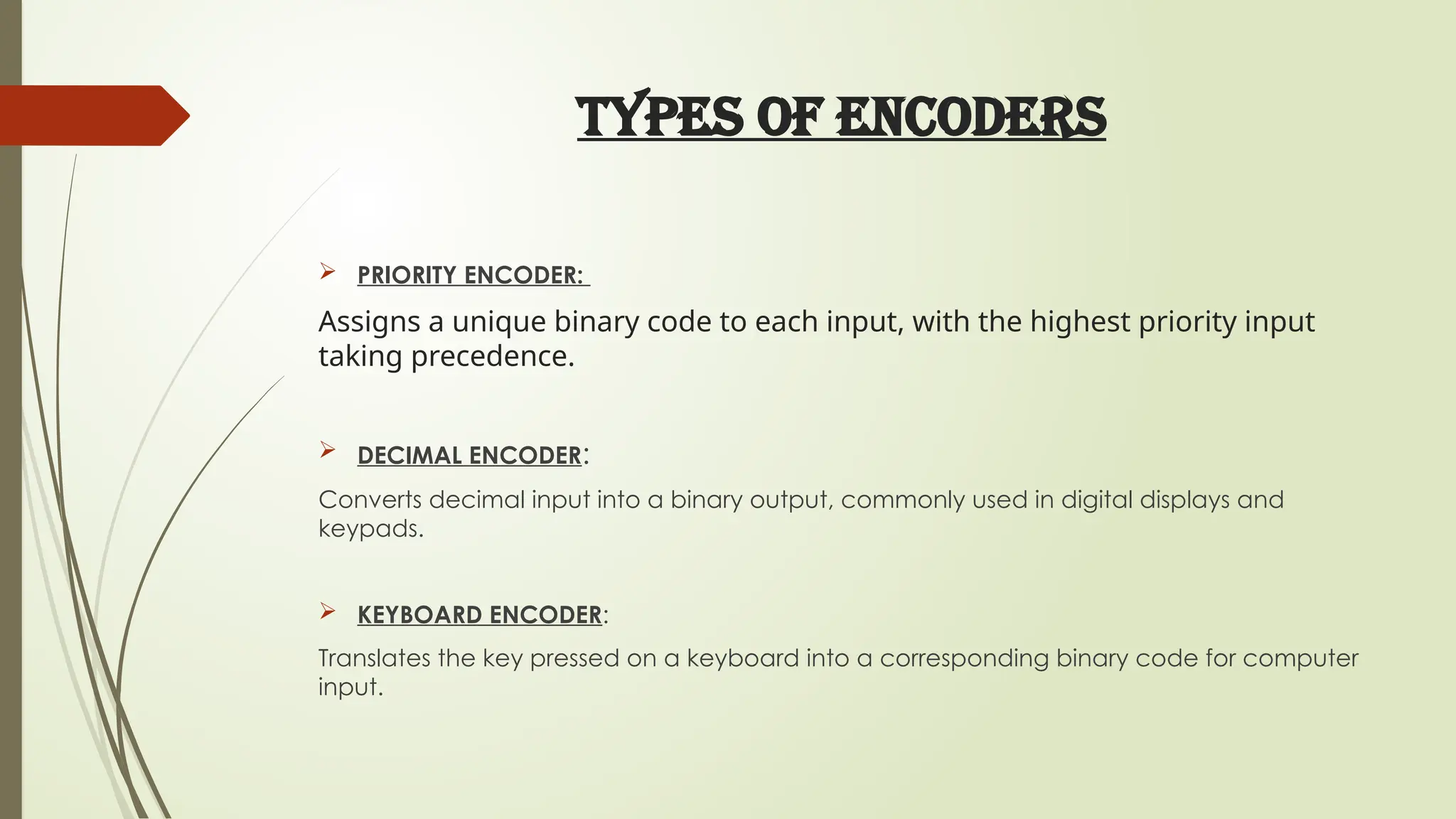
 An encoder is a device, algorithm, or system
component that converts information from one format
or code to another.
 This process often involves translating data into a
more suitable or efficient representation for various
purposes such as processing, transmission, or storage.
 Encoders often use binary codes to represent the input
data, converting it into a digital format for processing.
 Encoders help reduce the number of signal lines
required for data transmission, improving efficiency
and reliability.
TYPES OF ENCODERS
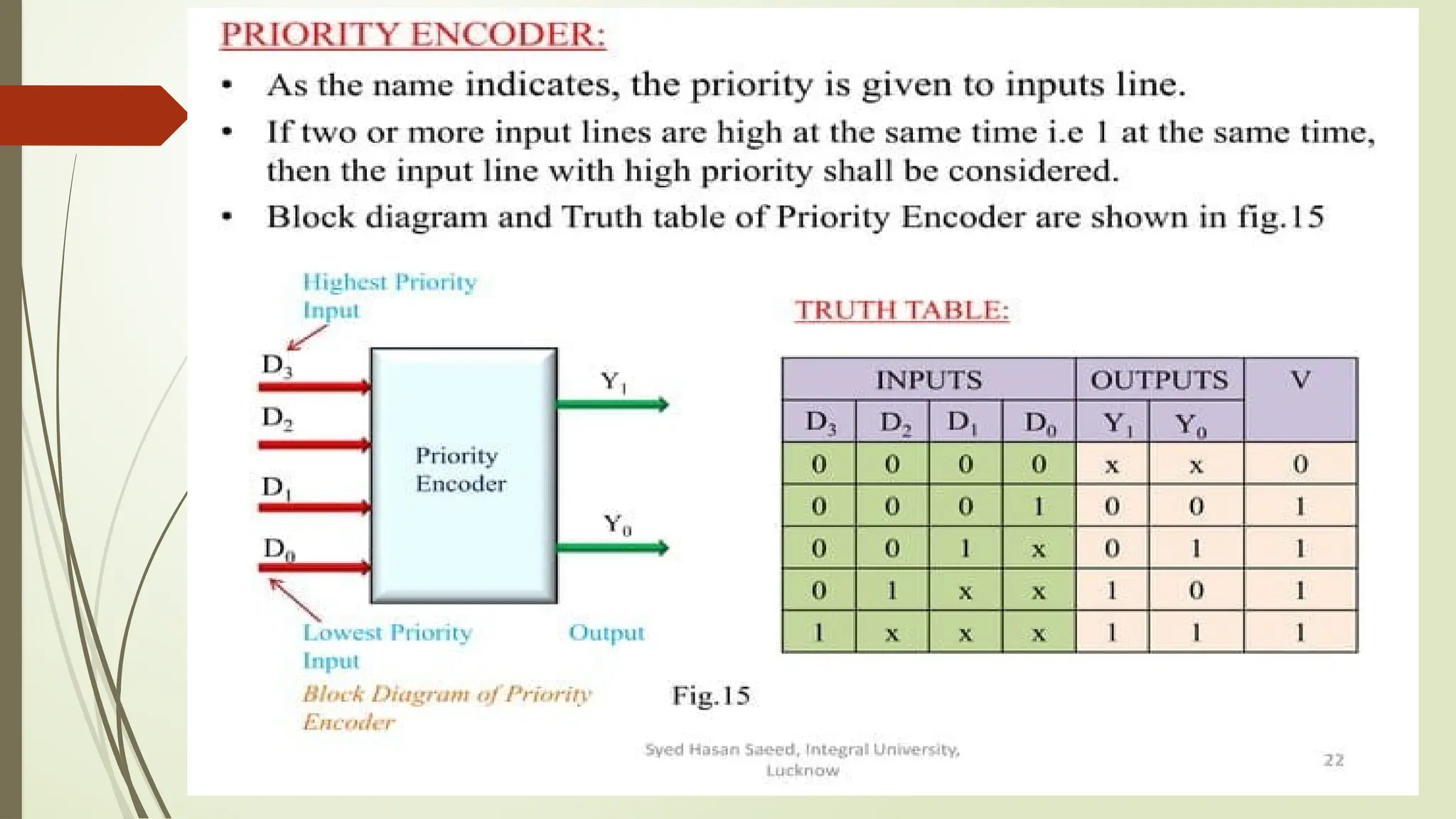
 PRIORITY ENCODER:
Assigns a unique binary code to each input, with the highest priority input
taking precedence.
 DECIMAL ENCODER:
Converts decimal input into a binary output, commonly used in digital displays and
keypads.
 KEYBOARD ENCODER:
Translates the key pressed on a keyboard into a corresponding binary code for computer
input.
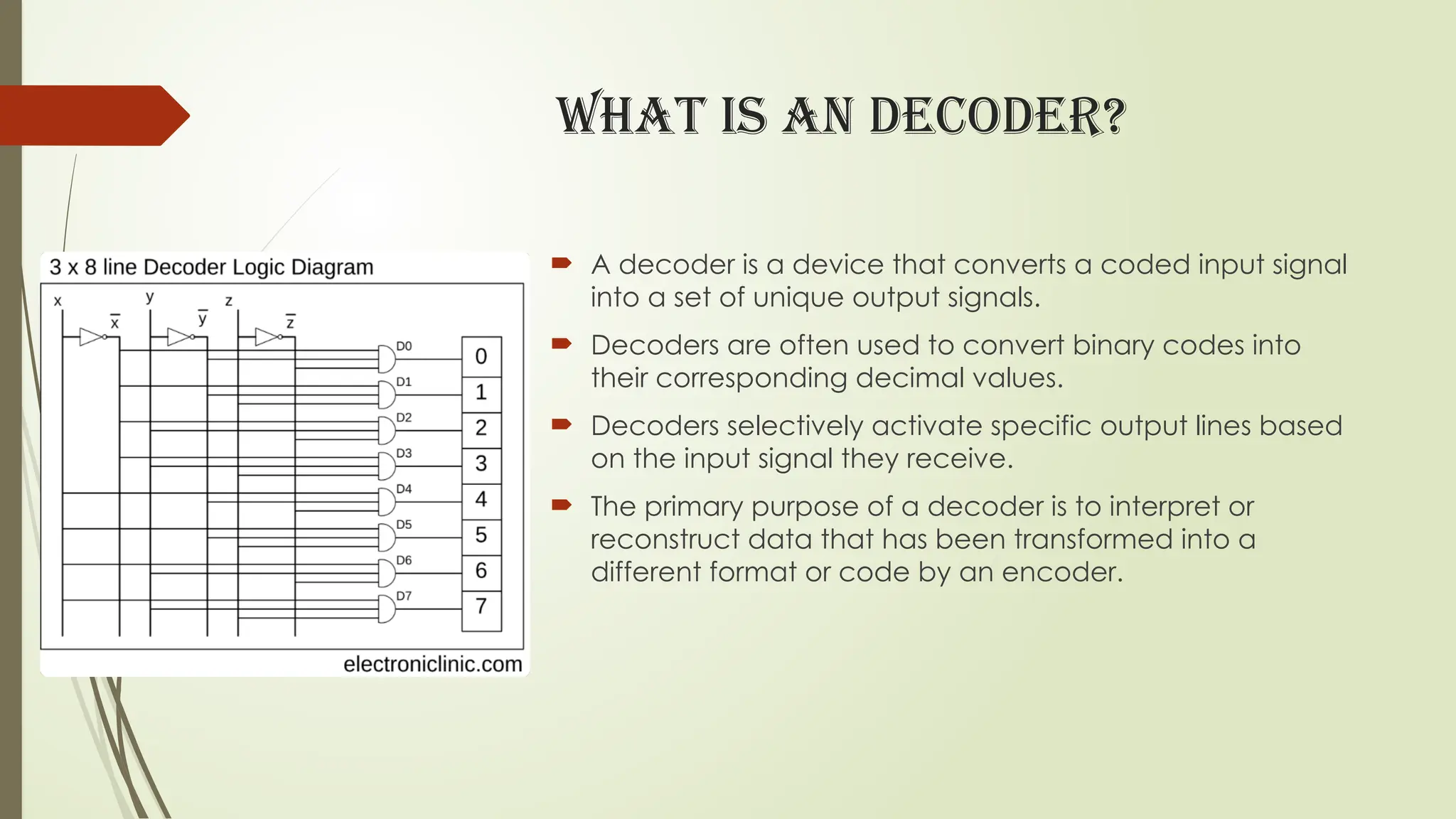
WHAT IS AN DECODER?
 A decoder is a device that converts a coded input signal
into a set of unique output signals.
 Decoders are often used to convert binary codes into
their corresponding decimal values.
 Decoders selectively activate specific output lines based
on the input signal they receive.
 The primary purpose of a decoder is to interpret or
reconstruct data that has been transformed into a
different format or code by an encoder.
TYPES OF DECODERS
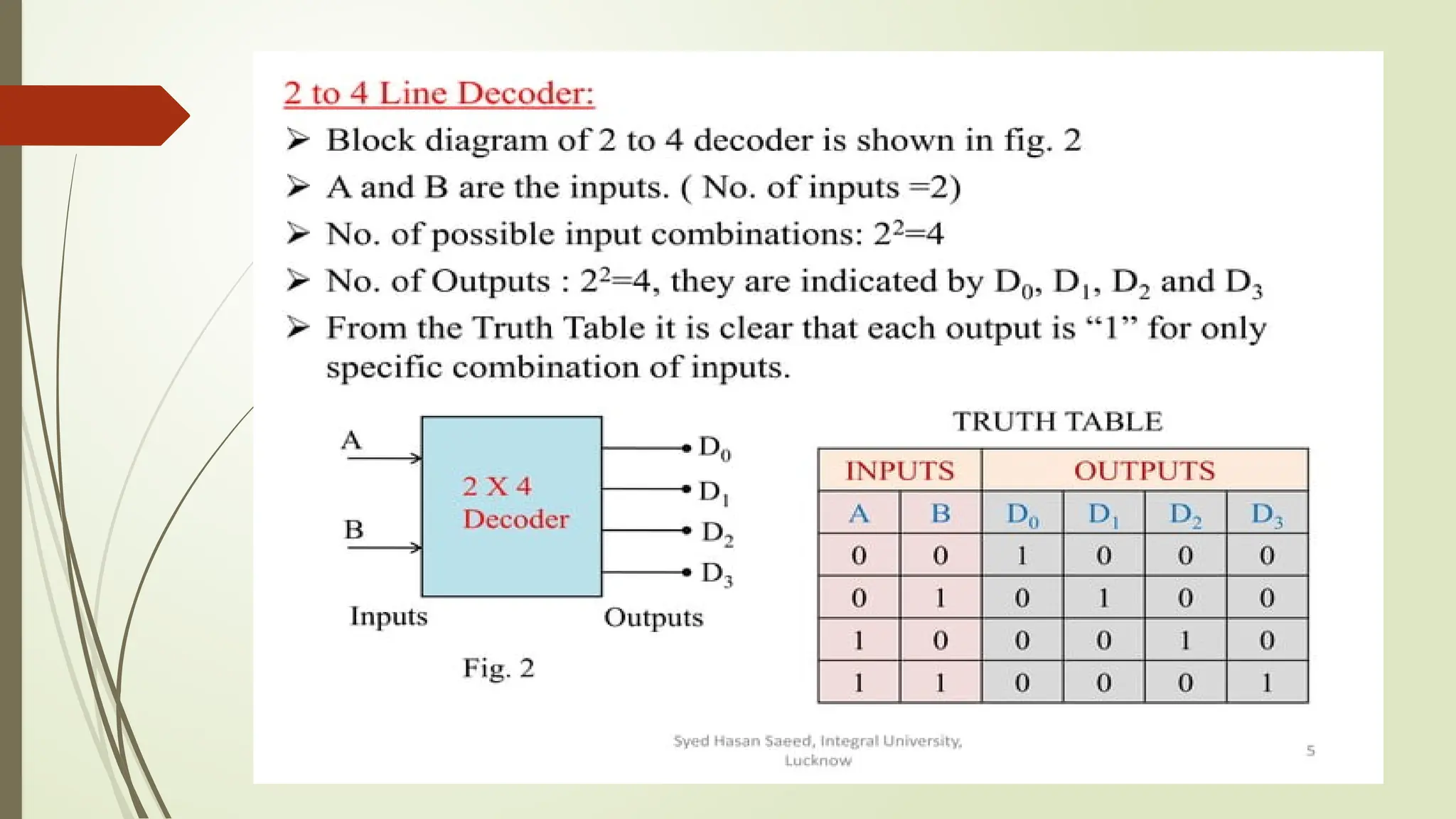
 BINARY DECODERS:
A binary decoder is a digital circuit that converts binary input into a unique
output signal.
 PRIORITY DECODERS:
A priority decoder is a type of digital circuit that not only decodes binary inputs
but also resolves situations where multiple input lines might be active
simultaneously.
 BCD DECODERS:
A BCD (Binary-Coded Decimal) decoder is a digital circuit designed to
decode binary-coded decimal inputs into a format that can drive displays or
other output devices.
APPLICATIONS OF ENCODERS AND
DECODERS:
 Data conversion-
Encoders and decoders enable the conversion of data between different
formats and representations.
 Communication Systems-
They play a crucial role in transmitting and interpreting signals in
communication networks.
 Digital Electronics-
Encoders and decoders are fundamental components in digital circuits and
microprocessor-based systems.
 Computer Programming-
They are used in programming languages and digital input/output devices.
CONCLUSION:
 Encoders and decoders are essential building blocks in the
world of digital electronics and communication systems.
 They facilitate the conversion and interpretation of data,
enabling efficient and reliable data transfer and
processing.
 Understanding the principles and applications of these
devices is crucial for anyone working in the field of digital
technology.
THANK YOU!!

DPCO.ppt.pptxrtdgdggffgddfdddfffffffffffffffffffff

  • 1.
    GROUP PRESENTATION SUBJECT NAME: DIGITAL PRINCIPLES AND COMPUTER ORGANIZATION SUBJECT CODE : 231ITS301T TOPIC NAME : ENCODER AND DECODER PRESENTED BY : 1. AKSHAY.R (07) 2. ANURANJANA. M.J (11) 3. ARCHIISH. B (13) 4. HEM KISHORRE (50) 5. JAINITHISH. M (55)
  • 2.
    Introduction:  Encoders andDecoders are digital ICs which are used for encoding and decoding.  An encoder is a device, circuit, or program that converts digital data into an analogue signal.  A decoder is a device, circuit, or program that converts an analogue signal into digital data.  Both encoder and decoder are multiple input and multiple output devices and combinational logic circuits.  The encoders and decoders are used in many electronics projects to compress the multiple number of inputs into smaller number of outputs.
  • 3.
    WHAT IS ANENCODER?  An encoder is a device, algorithm, or system component that converts information from one format or code to another.  This process often involves translating data into a more suitable or efficient representation for various purposes such as processing, transmission, or storage.  Encoders often use binary codes to represent the input data, converting it into a digital format for processing.  Encoders help reduce the number of signal lines required for data transmission, improving efficiency and reliability.
  • 4.
    TYPES OF ENCODERS PRIORITY ENCODER: Assigns a unique binary code to each input, with the highest priority input taking precedence.  DECIMAL ENCODER: Converts decimal input into a binary output, commonly used in digital displays and keypads.  KEYBOARD ENCODER: Translates the key pressed on a keyboard into a corresponding binary code for computer input.
  • 6.
    WHAT IS ANDECODER?  A decoder is a device that converts a coded input signal into a set of unique output signals.  Decoders are often used to convert binary codes into their corresponding decimal values.  Decoders selectively activate specific output lines based on the input signal they receive.  The primary purpose of a decoder is to interpret or reconstruct data that has been transformed into a different format or code by an encoder.
  • 7.
    TYPES OF DECODERS BINARY DECODERS: A binary decoder is a digital circuit that converts binary input into a unique output signal.  PRIORITY DECODERS: A priority decoder is a type of digital circuit that not only decodes binary inputs but also resolves situations where multiple input lines might be active simultaneously.  BCD DECODERS: A BCD (Binary-Coded Decimal) decoder is a digital circuit designed to decode binary-coded decimal inputs into a format that can drive displays or other output devices.
  • 9.
    APPLICATIONS OF ENCODERSAND DECODERS:  Data conversion- Encoders and decoders enable the conversion of data between different formats and representations.  Communication Systems- They play a crucial role in transmitting and interpreting signals in communication networks.
  • 10.
     Digital Electronics- Encodersand decoders are fundamental components in digital circuits and microprocessor-based systems.  Computer Programming- They are used in programming languages and digital input/output devices.
  • 11.
    CONCLUSION:  Encoders anddecoders are essential building blocks in the world of digital electronics and communication systems.  They facilitate the conversion and interpretation of data, enabling efficient and reliable data transfer and processing.  Understanding the principles and applications of these devices is crucial for anyone working in the field of digital technology.
  • 12.