Presented By
NARESH GORANTLA, M.Pharm.., (Ph.D)
Assoc. Professor,
Balaji college of Pharmacy,
Anantapuramu
PHARMACEUTICAL
DOSAGE FORMS
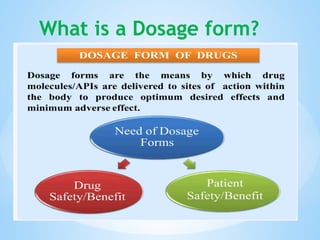
What is a Dosage form?
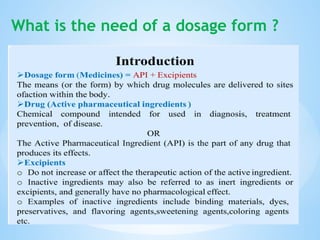
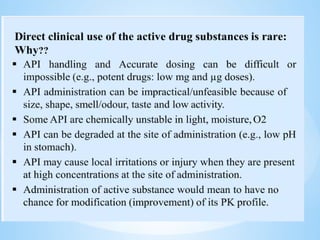
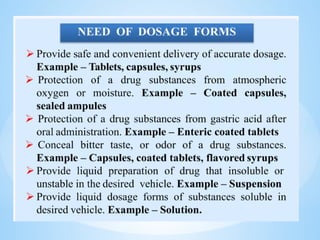
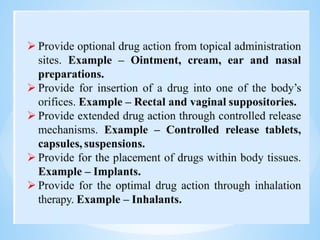
What is the need of a dosage form ?
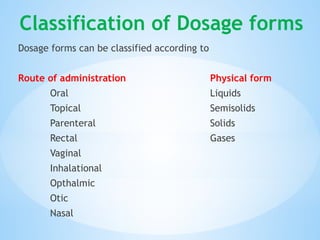
Classification of Dosage forms
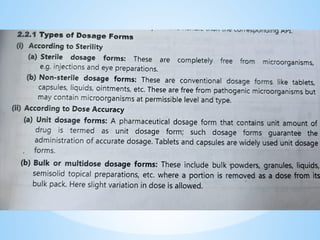
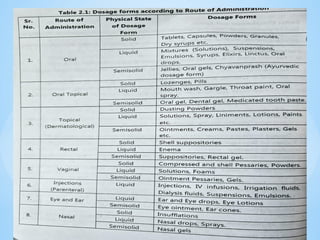
Dosage forms can be classified according to
Route of administration Physical form
Oral Liquids
Topical Semisolids
Parenteral Solids
Rectal Gases
Vaginal
Inhalational
Opthalmic
Otic
Nasal
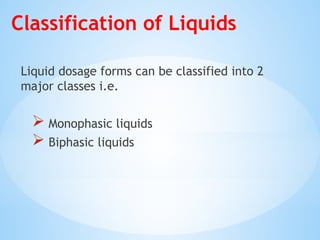
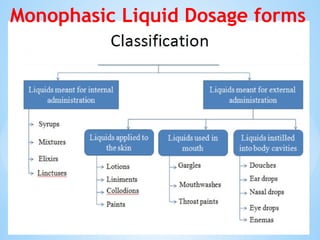
Classification of Liquids
Liquid dosage forms can be classified into 2
major classes i.e.
 Monophasic liquids
 Biphasic liquids
Monophasic liquids (Solutions)
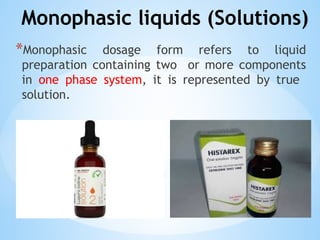
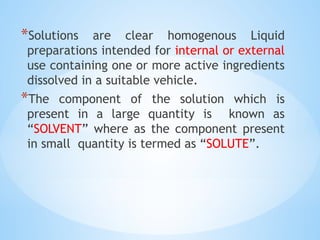
*Monophasic dosage form refers to liquid
preparation containing two or more components
in one phase system, it is represented by true
solution.
*Solutions are clear homogenous Liquid
preparations intended for internal or external
use containing one or more active ingredients
dissolved in a suitable vehicle.
*The component of the solution which is
present in a large quantity is known as
“SOLVENT” where as the component present
in small quantity is termed as “SOLUTE”.
Monophasic Liquid Dosage forms
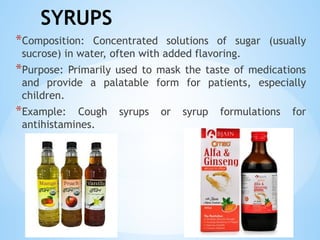
SYRUPS
*Composition: Concentrated solutions of sugar (usually
sucrose) in water, often with added flavoring.
*Purpose: Primarily used to mask the taste of medications
and provide a palatable form for patients, especially
children.
*Example: Cough syrups or syrup formulations for
antihistamines.
MIXTURES
* A Mixture is a liquid preparation meant for oral
administration in which medicament or
medicaments are dissolved or suspended in a
suitable vehicle.
* Not used for long period of time.
* Prescribed for acute conditions like cough,
indigestion, diarrhoea, constipation etc.
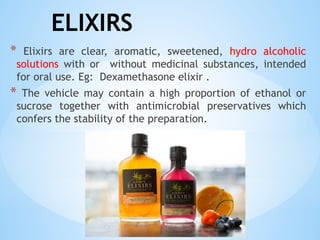
ELIXIRS
* Elixirs are clear, aromatic, sweetened, hydro alcoholic
solutions with or without medicinal substances, intended
for oral use. Eg: Dexamethasone elixir .
* The vehicle may contain a high proportion of ethanol or
sucrose together with antimicrobial preservatives which
confers the stability of the preparation.
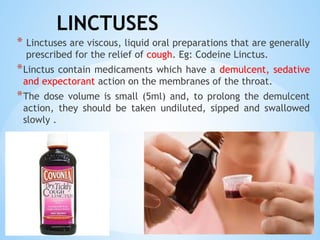
LINCTUSES
* Linctuses are viscous, liquid oral preparations that are generally
prescribed for the relief of cough. Eg: Codeine Linctus.
*Linctus contain medicaments which have a demulcent, sedative
and expectorant action on the membranes of the throat.
*The dose volume is small (5ml) and, to prolong the demulcent
action, they should be taken undiluted, sipped and swallowed
slowly .
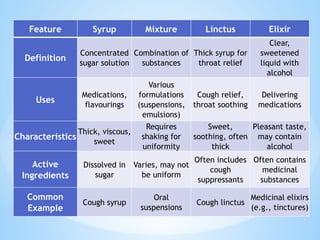
Feature Syrup Mixture Linctus Elixir
Definition
Concentrated
sugar solution
Combination of
substances
Thick syrup for
throat relief
Clear,
sweetened
liquid with
alcohol
Uses
Medications,
flavourings
Various
formulations
(suspensions,
emulsions)
Cough relief,
throat soothing
Delivering
medications
Characteristics
Thick, viscous,
sweet
Requires
shaking for
uniformity
Sweet,
soothing, often
thick
Pleasant taste,
may contain
alcohol
Active
Ingredients
Dissolved in
sugar
Varies, may not
be uniform
Often includes
cough
suppressants
Often contains
medicinal
substances
Common
Example
Cough syrup
Oral
suspensions
Cough linctus
Medicinal elixirs
(e.g., tinctures)
LOTIONS
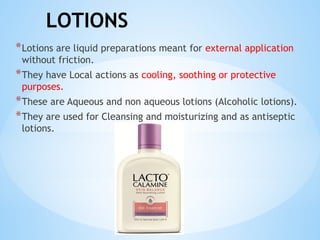
*Lotions are liquid preparations meant for external application
without friction.
*They have Local actions as cooling, soothing or protective
purposes.
*These are Aqueous and non aqueous lotions (Alcoholic lotions).
*They are used for Cleansing and moisturizing and as antiseptic
lotions.
LINIMENTS
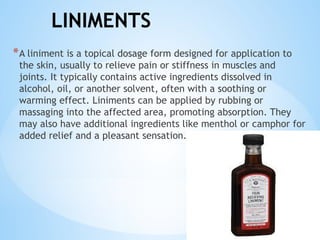
*A liniment is a topical dosage form designed for application to
the skin, usually to relieve pain or stiffness in muscles and
joints. It typically contains active ingredients dissolved in
alcohol, oil, or another solvent, often with a soothing or
warming effect. Liniments can be applied by rubbing or
massaging into the affected area, promoting absorption. They
may also have additional ingredients like menthol or camphor for
added relief and a pleasant sensation..
COLLODIONS
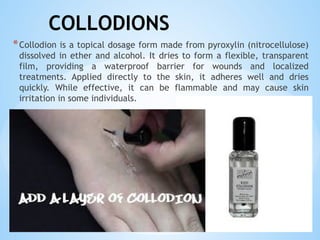
*Collodion is a topical dosage form made from pyroxylin (nitrocellulose)
dissolved in ether and alcohol. It dries to form a flexible, transparent
film, providing a waterproof barrier for wounds and localized
treatments. Applied directly to the skin, it adheres well and dries
quickly. While effective, it can be flammable and may cause skin
irritation in some individuals.
GARGLES
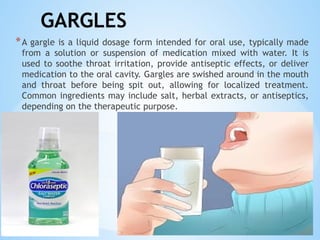
*A gargle is a liquid dosage form intended for oral use, typically made
from a solution or suspension of medication mixed with water. It is
used to soothe throat irritation, provide antiseptic effects, or deliver
medication to the oral cavity. Gargles are swished around in the mouth
and throat before being spit out, allowing for localized treatment.
Common ingredients may include salt, herbal extracts, or antiseptics,
depending on the therapeutic purpose.
MOUTH WASHES
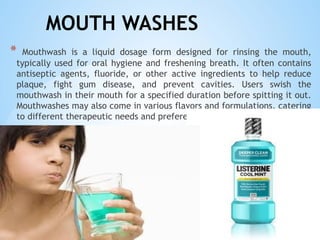
* Mouthwash is a liquid dosage form designed for rinsing the mouth,
typically used for oral hygiene and freshening breath. It often contains
antiseptic agents, fluoride, or other active ingredients to help reduce
plaque, fight gum disease, and prevent cavities. Users swish the
mouthwash in their mouth for a specified duration before spitting it out.
Mouthwashes may also come in various flavors and formulations, catering
to different therapeutic needs and preferences.
THROAT PAINTS
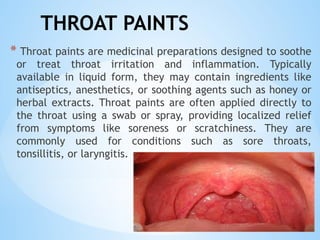
* Throat paints are medicinal preparations designed to soothe
or treat throat irritation and inflammation. Typically
available in liquid form, they may contain ingredients like
antiseptics, anesthetics, or soothing agents such as honey or
herbal extracts. Throat paints are often applied directly to
the throat using a swab or spray, providing localized relief
from symptoms like soreness or scratchiness. They are
commonly used for conditions such as sore throats,
tonsillitis, or laryngitis.
DOUCHES
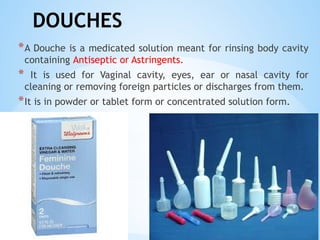
*A Douche is a medicated solution meant for rinsing body cavity
containing Antiseptic or Astringents.
* It is used for Vaginal cavity, eyes, ear or nasal cavity for
cleaning or removing foreign particles or discharges from them.
*It is in powder or tablet form or concentrated solution form.
EAR DROPS
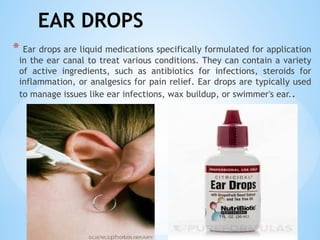
* Ear drops are liquid medications specifically formulated for application
in the ear canal to treat various conditions. They can contain a variety
of active ingredients, such as antibiotics for infections, steroids for
inflammation, or analgesics for pain relief. Ear drops are typically used
to manage issues like ear infections, wax buildup, or swimmer's ear..
NASAL DROPS
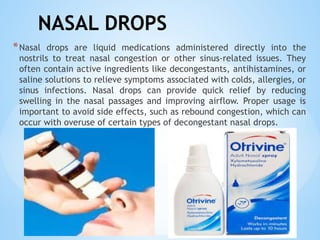
*Nasal drops are liquid medications administered directly into the
nostrils to treat nasal congestion or other sinus-related issues. They
often contain active ingredients like decongestants, antihistamines, or
saline solutions to relieve symptoms associated with colds, allergies, or
sinus infections. Nasal drops can provide quick relief by reducing
swelling in the nasal passages and improving airflow. Proper usage is
important to avoid side effects, such as rebound congestion, which can
occur with overuse of certain types of decongestant nasal drops.
EYE DROPS
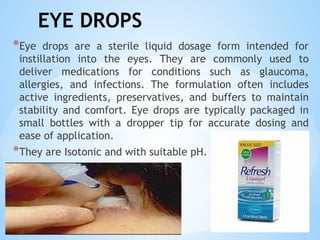
*Eye drops are a sterile liquid dosage form intended for
instillation into the eyes. They are commonly used to
deliver medications for conditions such as glaucoma,
allergies, and infections. The formulation often includes
active ingredients, preservatives, and buffers to maintain
stability and comfort. Eye drops are typically packaged in
small bottles with a dropper tip for accurate dosing and
ease of application.
*They are Isotonic and with suitable pH.
ENEMAS
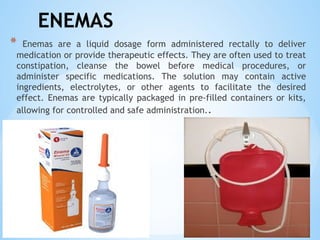
* Enemas are a liquid dosage form administered rectally to deliver
medication or provide therapeutic effects. They are often used to treat
constipation, cleanse the bowel before medical procedures, or
administer specific medications. The solution may contain active
ingredients, electrolytes, or other agents to facilitate the desired
effect. Enemas are typically packaged in pre-filled containers or kits,
allowing for controlled and safe administration..
Biphasic Liquids
 Biphasic liquid dosage forms consist of two distinct
phases, typically an aqueous (water-based) phase
and a non-aqueous phase, such as an oil. These
forms can include emulsions, where one liquid is
dispersed in another, and suspensions, where solid
particles are suspended in a liquid. Biphasic
formulations are often used to enhance the
solubility and stability of active ingredients,
allowing for improved absorption and therapeutic
effect. They require proper mixing before use to
ensure uniform distribution of the active
components.
Biphasic Liquids
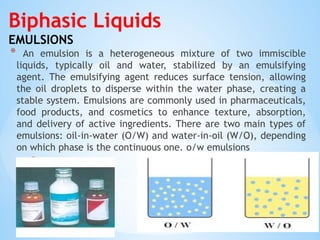
EMULSIONS
* An emulsion is a heterogeneous mixture of two immiscible
liquids, typically oil and water, stabilized by an emulsifying
agent. The emulsifying agent reduces surface tension, allowing
the oil droplets to disperse within the water phase, creating a
stable system. Emulsions are commonly used in pharmaceuticals,
food products, and cosmetics to enhance texture, absorption,
and delivery of active ingredients. There are two main types of
emulsions: oil-in-water (O/W) and water-in-oil (W/O), depending
on which phase is the continuous one. o/w emulsions
*w/o emulsions
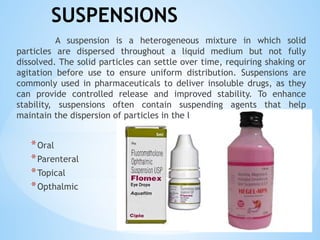
SUSPENSIONS
A suspension is a heterogeneous mixture in which solid
particles are dispersed throughout a liquid medium but not fully
dissolved. The solid particles can settle over time, requiring shaking or
agitation before use to ensure uniform distribution. Suspensions are
commonly used in pharmaceuticals to deliver insoluble drugs, as they
can provide controlled release and improved stability. To enhance
stability, suspensions often contain suspending agents that help
maintain the dispersion of particles in the liquid.
*Oral
*Parenteral
*Topical
*Opthalmic
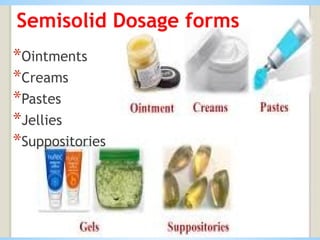
Semisolid Dosage forms
*Ointments
*Creams
*Pastes
*Jellies
*Suppositories
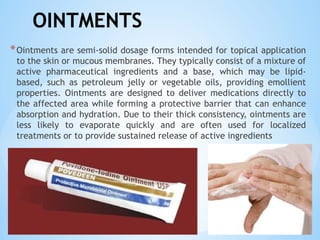
OINTMENTS
*Ointments are semi-solid dosage forms intended for topical application
to the skin or mucous membranes. They typically consist of a mixture of
active pharmaceutical ingredients and a base, which may be lipid-
based, such as petroleum jelly or vegetable oils, providing emollient
properties. Ointments are designed to deliver medications directly to
the affected area while forming a protective barrier that can enhance
absorption and hydration. Due to their thick consistency, ointments are
less likely to evaporate quickly and are often used for localized
treatments or to provide sustained release of active ingredients
CREAMS
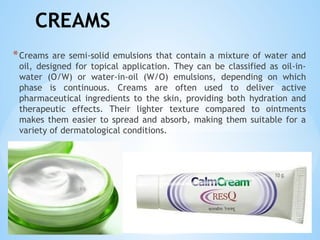
*Creams are semi-solid emulsions that contain a mixture of water and
oil, designed for topical application. They can be classified as oil-in-
water (O/W) or water-in-oil (W/O) emulsions, depending on which
phase is continuous. Creams are often used to deliver active
pharmaceutical ingredients to the skin, providing both hydration and
therapeutic effects. Their lighter texture compared to ointments
makes them easier to spread and absorb, making them suitable for a
variety of dermatological conditions.
PASTES
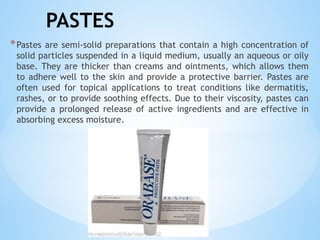
*Pastes are semi-solid preparations that contain a high concentration of
solid particles suspended in a liquid medium, usually an aqueous or oily
base. They are thicker than creams and ointments, which allows them
to adhere well to the skin and provide a protective barrier. Pastes are
often used for topical applications to treat conditions like dermatitis,
rashes, or to provide soothing effects. Due to their viscosity, pastes can
provide a prolonged release of active ingredients and are effective in
absorbing excess moisture.
JELLIES
*Jellies are semi-solid dosage forms that consist of a gel-like matrix,
typically made from water, gelling agents, and sometimes active
pharmaceutical ingredients. They have a smooth, viscous texture that
allows for easy application to the skin or mucous membranes. Jellies
are often used for topical medications, personal care products, or as
vehicle formulations to enhance the absorption of active ingredients.
Their unique consistency allows them to provide a cooling effect upon
application while retaining moisture on the skin..
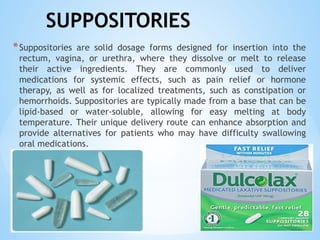
SUPPOSITORIES
*Suppositories are solid dosage forms designed for insertion into the
rectum, vagina, or urethra, where they dissolve or melt to release
their active ingredients. They are commonly used to deliver
medications for systemic effects, such as pain relief or hormone
therapy, as well as for localized treatments, such as constipation or
hemorrhoids. Suppositories are typically made from a base that can be
lipid-based or water-soluble, allowing for easy melting at body
temperature. Their unique delivery route can enhance absorption and
provide alternatives for patients who may have difficulty swallowing
oral medications.
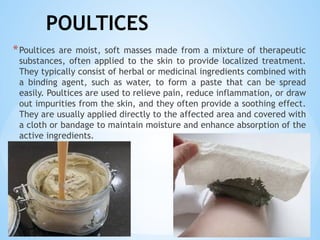
POULTICES
*Poultices are moist, soft masses made from a mixture of therapeutic
substances, often applied to the skin to provide localized treatment.
They typically consist of herbal or medicinal ingredients combined with
a binding agent, such as water, to form a paste that can be spread
easily. Poultices are used to relieve pain, reduce inflammation, or draw
out impurities from the skin, and they often provide a soothing effect.
They are usually applied directly to the affected area and covered with
a cloth or bandage to maintain moisture and enhance absorption of the
active ingredients.
Solid dosage forms are pharmaceutical preparations
that are characterized by their fixed shape and
volume, typically in the form of tablets, capsules,
or powders. These forms are designed to provide
precise dosing and facilitate convenient
administration of medications. Solid dosage forms
often enhance stability and can improve the
bioavailability of active ingredients. They may also
incorporate various excipients to aid in
manufacturing, stability, and patient acceptance.
SOLID DOSAGE FORMS
SOLID DOSAGE FORMS
* Tablets and Capsules
* Powders and Granules
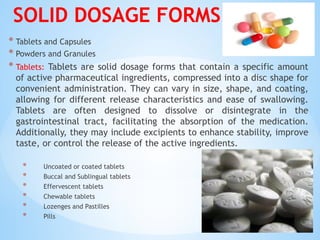
* Tablets: Tablets are solid dosage forms that contain a specific amount
of active pharmaceutical ingredients, compressed into a disc shape for
convenient administration. They can vary in size, shape, and coating,
allowing for different release characteristics and ease of swallowing.
Tablets are often designed to dissolve or disintegrate in the
gastrointestinal tract, facilitating the absorption of the medication.
Additionally, they may include excipients to enhance stability, improve
taste, or control the release of the active ingredients.
* Uncoated or coated tablets
* Buccal and Sublingual tablets
* Effervescent tablets
* Chewable tablets
* Lozenges and Pastilles
* Pills
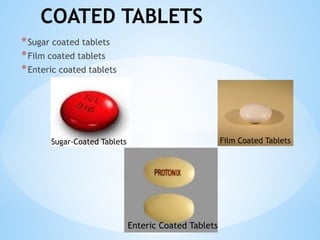
COATED TABLETS
*Sugar coated tablets
*Film coated tablets
*Enteric coated tablets
Sugar-Coated Tablets Film Coated Tablets
Enteric Coated Tablets
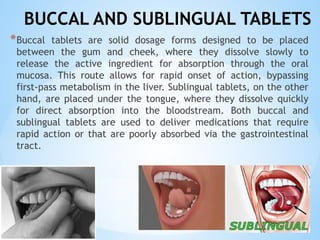
BUCCAL AND SUBLINGUAL TABLETS
*Buccal tablets are solid dosage forms designed to be placed
between the gum and cheek, where they dissolve slowly to
release the active ingredient for absorption through the oral
mucosa. This route allows for rapid onset of action, bypassing
first-pass metabolism in the liver. Sublingual tablets, on the other
hand, are placed under the tongue, where they dissolve quickly
for direct absorption into the bloodstream. Both buccal and
sublingual tablets are used to deliver medications that require
rapid action or that are poorly absorbed via the gastrointestinal
tract.
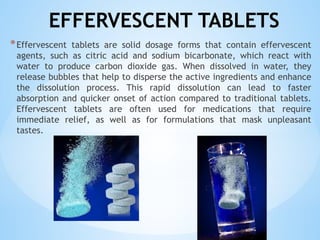
EFFERVESCENT TABLETS
*Effervescent tablets are solid dosage forms that contain effervescent
agents, such as citric acid and sodium bicarbonate, which react with
water to produce carbon dioxide gas. When dissolved in water, they
release bubbles that help to disperse the active ingredients and enhance
the dissolution process. This rapid dissolution can lead to faster
absorption and quicker onset of action compared to traditional tablets.
Effervescent tablets are often used for medications that require
immediate relief, as well as for formulations that mask unpleasant
tastes.
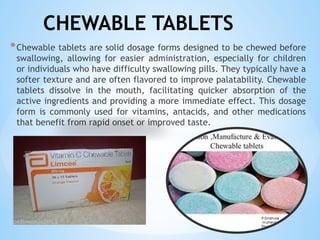
CHEWABLE TABLETS
*Chewable tablets are solid dosage forms designed to be chewed before
swallowing, allowing for easier administration, especially for children
or individuals who have difficulty swallowing pills. They typically have a
softer texture and are often flavored to improve palatability. Chewable
tablets dissolve in the mouth, facilitating quicker absorption of the
active ingredients and providing a more immediate effect. This dosage
form is commonly used for vitamins, antacids, and other medications
that benefit from rapid onset or improved taste.
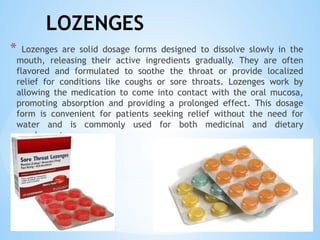
LOZENGES
* Lozenges are solid dosage forms designed to dissolve slowly in the
mouth, releasing their active ingredients gradually. They are often
flavored and formulated to soothe the throat or provide localized
relief for conditions like coughs or sore throats. Lozenges work by
allowing the medication to come into contact with the oral mucosa,
promoting absorption and providing a prolonged effect. This dosage
form is convenient for patients seeking relief without the need for
water and is commonly used for both medicinal and dietary
supplements.
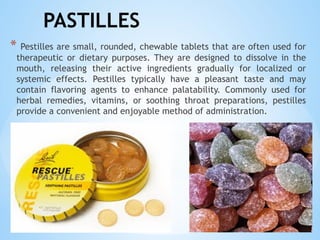
PASTILLES
* Pestilles are small, rounded, chewable tablets that are often used for
therapeutic or dietary purposes. They are designed to dissolve in the
mouth, releasing their active ingredients gradually for localized or
systemic effects. Pestilles typically have a pleasant taste and may
contain flavoring agents to enhance palatability. Commonly used for
herbal remedies, vitamins, or soothing throat preparations, pestilles
provide a convenient and enjoyable method of administration.
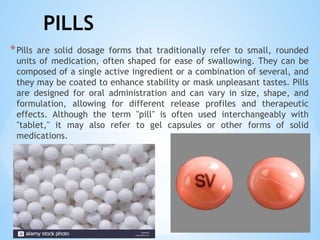
PILLS
*Pills are solid dosage forms that traditionally refer to small, rounded
units of medication, often shaped for ease of swallowing. They can be
composed of a single active ingredient or a combination of several, and
they may be coated to enhance stability or mask unpleasant tastes. Pills
are designed for oral administration and can vary in size, shape, and
formulation, allowing for different release profiles and therapeutic
effects. Although the term "pill" is often used interchangeably with
"tablet," it may also refer to gel capsules or other forms of solid
medications.
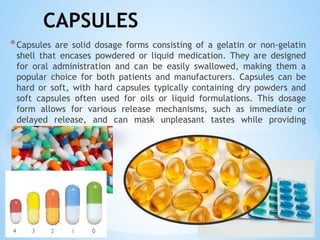
CAPSULES
*Capsules are solid dosage forms consisting of a gelatin or non-gelatin
shell that encases powdered or liquid medication. They are designed
for oral administration and can be easily swallowed, making them a
popular choice for both patients and manufacturers. Capsules can be
hard or soft, with hard capsules typically containing dry powders and
soft capsules often used for oils or liquid formulations. This dosage
form allows for various release mechanisms, such as immediate or
delayed release, and can mask unpleasant tastes while providing
precise dosing.
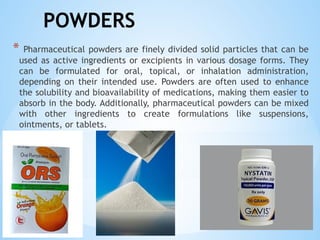
POWDERS
* Pharmaceutical powders are finely divided solid particles that can be
used as active ingredients or excipients in various dosage forms. They
can be formulated for oral, topical, or inhalation administration,
depending on their intended use. Powders are often used to enhance
the solubility and bioavailability of medications, making them easier to
absorb in the body. Additionally, pharmaceutical powders can be mixed
with other ingredients to create formulations like suspensions,
ointments, or tablets.
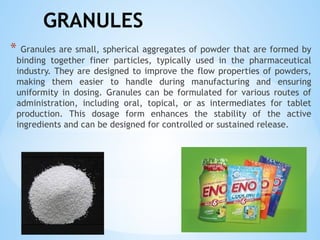
GRANULES
* Granules are small, spherical aggregates of powder that are formed by
binding together finer particles, typically used in the pharmaceutical
industry. They are designed to improve the flow properties of powders,
making them easier to handle during manufacturing and ensuring
uniformity in dosing. Granules can be formulated for various routes of
administration, including oral, topical, or as intermediates for tablet
production. This dosage form enhances the stability of the active
ingredients and can be designed for controlled or sustained release.
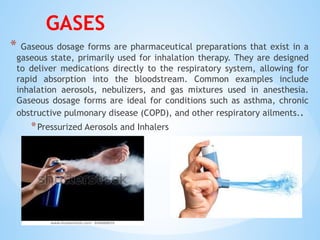
GASES
* Gaseous dosage forms are pharmaceutical preparations that exist in a
gaseous state, primarily used for inhalation therapy. They are designed
to deliver medications directly to the respiratory system, allowing for
rapid absorption into the bloodstream. Common examples include
inhalation aerosols, nebulizers, and gas mixtures used in anesthesia.
Gaseous dosage forms are ideal for conditions such as asthma, chronic
obstructive pulmonary disease (COPD), and other respiratory ailments..
*Pressurized Aerosols and Inhalers
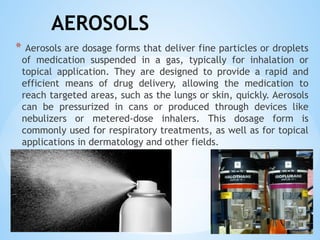
AEROSOLS
* Aerosols are dosage forms that deliver fine particles or droplets
of medication suspended in a gas, typically for inhalation or
topical application. They are designed to provide a rapid and
efficient means of drug delivery, allowing the medication to
reach targeted areas, such as the lungs or skin, quickly. Aerosols
can be pressurized in cans or produced through devices like
nebulizers or metered-dose inhalers. This dosage form is
commonly used for respiratory treatments, as well as for topical
applications in dermatology and other fields.
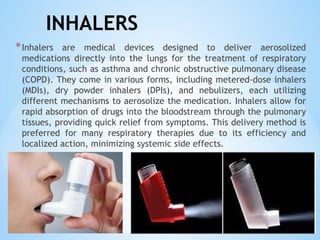
INHALERS
*Inhalers are medical devices designed to deliver aerosolized
medications directly into the lungs for the treatment of respiratory
conditions, such as asthma and chronic obstructive pulmonary disease
(COPD). They come in various forms, including metered-dose inhalers
(MDIs), dry powder inhalers (DPIs), and nebulizers, each utilizing
different mechanisms to aerosolize the medication. Inhalers allow for
rapid absorption of drugs into the bloodstream through the pulmonary
tissues, providing quick relief from symptoms. This delivery method is
preferred for many respiratory therapies due to its efficiency and
localized action, minimizing systemic side effects.
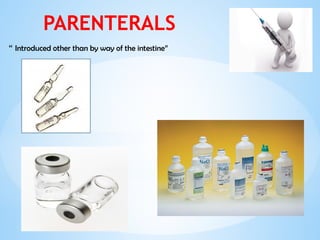
PARENTERALS
“ Introduced other than by way of the intestine”
Parenteral dosage forms refer to medications administered via injection or
infusion, bypassing the gastrointestinal tract. This method is essential for
delivering drugs that cannot be effectively absorbed orally due to factors like
degradation in the digestive system or the need for rapid onset of action.
Types of Parenteral Dosage Forms:
1.Injectables: These include solutions, suspensions, or emulsions
administered via various routes, such as intravenous (IV), intramuscular (IM),
or subcutaneous (SC).
2.Infusions: Typically delivered through IV routes, infusions provide
continuous administration of medications over an extended period.
3.Implants: These are solid or semi-solid forms inserted into the body to
provide sustained release of medication.
Advantages:
•Rapid Onset of Action: Parenteral administration allows for immediate
therapeutic effects.
•Controlled Dosing: Precise measurement of medication can be achieved,
minimizing variability in absorption.
•Bypass First-Pass Metabolism: Medications avoid degradation in the liver,
enhancing bioavailability.
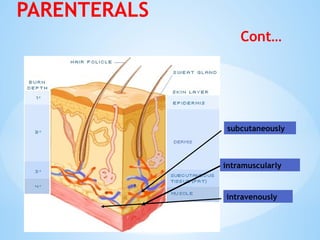
PARENTERALS
Cont…
subcutaneously
intramuscularly
intravenously
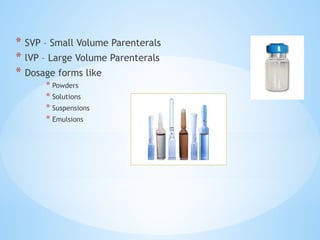
* SVP – Small Volume Parenterals
* lVP – Large Volume Parenterals
* Dosage forms like
* Powders
* Solutions
* Suspensions
* Emulsions
THANK YOU

dosageforms Pharmaceutics -I-191114173120.pptx

  • 1.
    Presented By NARESH GORANTLA,M.Pharm.., (Ph.D) Assoc. Professor, Balaji college of Pharmacy, Anantapuramu PHARMACEUTICAL DOSAGE FORMS
  • 2.
    What is aDosage form?
  • 3.
    What is theneed of a dosage form ?
  • 7.
    Classification of Dosageforms Dosage forms can be classified according to Route of administration Physical form Oral Liquids Topical Semisolids Parenteral Solids Rectal Gases Vaginal Inhalational Opthalmic Otic Nasal
  • 8.
    Classification of Liquids Liquiddosage forms can be classified into 2 major classes i.e.  Monophasic liquids  Biphasic liquids
  • 9.
    Monophasic liquids (Solutions) *Monophasicdosage form refers to liquid preparation containing two or more components in one phase system, it is represented by true solution.
  • 10.
    *Solutions are clearhomogenous Liquid preparations intended for internal or external use containing one or more active ingredients dissolved in a suitable vehicle. *The component of the solution which is present in a large quantity is known as “SOLVENT” where as the component present in small quantity is termed as “SOLUTE”.
  • 11.
  • 12.
    SYRUPS *Composition: Concentrated solutionsof sugar (usually sucrose) in water, often with added flavoring. *Purpose: Primarily used to mask the taste of medications and provide a palatable form for patients, especially children. *Example: Cough syrups or syrup formulations for antihistamines.
  • 13.
    MIXTURES * A Mixtureis a liquid preparation meant for oral administration in which medicament or medicaments are dissolved or suspended in a suitable vehicle. * Not used for long period of time. * Prescribed for acute conditions like cough, indigestion, diarrhoea, constipation etc.
  • 14.
    ELIXIRS * Elixirs areclear, aromatic, sweetened, hydro alcoholic solutions with or without medicinal substances, intended for oral use. Eg: Dexamethasone elixir . * The vehicle may contain a high proportion of ethanol or sucrose together with antimicrobial preservatives which confers the stability of the preparation.
  • 15.
    LINCTUSES * Linctuses areviscous, liquid oral preparations that are generally prescribed for the relief of cough. Eg: Codeine Linctus. *Linctus contain medicaments which have a demulcent, sedative and expectorant action on the membranes of the throat. *The dose volume is small (5ml) and, to prolong the demulcent action, they should be taken undiluted, sipped and swallowed slowly .
  • 16.
    Feature Syrup MixtureLinctus Elixir Definition Concentrated sugar solution Combination of substances Thick syrup for throat relief Clear, sweetened liquid with alcohol Uses Medications, flavourings Various formulations (suspensions, emulsions) Cough relief, throat soothing Delivering medications Characteristics Thick, viscous, sweet Requires shaking for uniformity Sweet, soothing, often thick Pleasant taste, may contain alcohol Active Ingredients Dissolved in sugar Varies, may not be uniform Often includes cough suppressants Often contains medicinal substances Common Example Cough syrup Oral suspensions Cough linctus Medicinal elixirs (e.g., tinctures)
  • 17.
    LOTIONS *Lotions are liquidpreparations meant for external application without friction. *They have Local actions as cooling, soothing or protective purposes. *These are Aqueous and non aqueous lotions (Alcoholic lotions). *They are used for Cleansing and moisturizing and as antiseptic lotions.
  • 18.
    LINIMENTS *A liniment isa topical dosage form designed for application to the skin, usually to relieve pain or stiffness in muscles and joints. It typically contains active ingredients dissolved in alcohol, oil, or another solvent, often with a soothing or warming effect. Liniments can be applied by rubbing or massaging into the affected area, promoting absorption. They may also have additional ingredients like menthol or camphor for added relief and a pleasant sensation..
  • 19.
    COLLODIONS *Collodion is atopical dosage form made from pyroxylin (nitrocellulose) dissolved in ether and alcohol. It dries to form a flexible, transparent film, providing a waterproof barrier for wounds and localized treatments. Applied directly to the skin, it adheres well and dries quickly. While effective, it can be flammable and may cause skin irritation in some individuals.
  • 20.
    GARGLES *A gargle isa liquid dosage form intended for oral use, typically made from a solution or suspension of medication mixed with water. It is used to soothe throat irritation, provide antiseptic effects, or deliver medication to the oral cavity. Gargles are swished around in the mouth and throat before being spit out, allowing for localized treatment. Common ingredients may include salt, herbal extracts, or antiseptics, depending on the therapeutic purpose.
  • 21.
    MOUTH WASHES * Mouthwashis a liquid dosage form designed for rinsing the mouth, typically used for oral hygiene and freshening breath. It often contains antiseptic agents, fluoride, or other active ingredients to help reduce plaque, fight gum disease, and prevent cavities. Users swish the mouthwash in their mouth for a specified duration before spitting it out. Mouthwashes may also come in various flavors and formulations, catering to different therapeutic needs and preferences.
  • 22.
    THROAT PAINTS * Throatpaints are medicinal preparations designed to soothe or treat throat irritation and inflammation. Typically available in liquid form, they may contain ingredients like antiseptics, anesthetics, or soothing agents such as honey or herbal extracts. Throat paints are often applied directly to the throat using a swab or spray, providing localized relief from symptoms like soreness or scratchiness. They are commonly used for conditions such as sore throats, tonsillitis, or laryngitis.
  • 23.
    DOUCHES *A Douche isa medicated solution meant for rinsing body cavity containing Antiseptic or Astringents. * It is used for Vaginal cavity, eyes, ear or nasal cavity for cleaning or removing foreign particles or discharges from them. *It is in powder or tablet form or concentrated solution form.
  • 24.
    EAR DROPS * Eardrops are liquid medications specifically formulated for application in the ear canal to treat various conditions. They can contain a variety of active ingredients, such as antibiotics for infections, steroids for inflammation, or analgesics for pain relief. Ear drops are typically used to manage issues like ear infections, wax buildup, or swimmer's ear..
  • 25.
    NASAL DROPS *Nasal dropsare liquid medications administered directly into the nostrils to treat nasal congestion or other sinus-related issues. They often contain active ingredients like decongestants, antihistamines, or saline solutions to relieve symptoms associated with colds, allergies, or sinus infections. Nasal drops can provide quick relief by reducing swelling in the nasal passages and improving airflow. Proper usage is important to avoid side effects, such as rebound congestion, which can occur with overuse of certain types of decongestant nasal drops.
  • 26.
    EYE DROPS *Eye dropsare a sterile liquid dosage form intended for instillation into the eyes. They are commonly used to deliver medications for conditions such as glaucoma, allergies, and infections. The formulation often includes active ingredients, preservatives, and buffers to maintain stability and comfort. Eye drops are typically packaged in small bottles with a dropper tip for accurate dosing and ease of application. *They are Isotonic and with suitable pH.
  • 27.
    ENEMAS * Enemas area liquid dosage form administered rectally to deliver medication or provide therapeutic effects. They are often used to treat constipation, cleanse the bowel before medical procedures, or administer specific medications. The solution may contain active ingredients, electrolytes, or other agents to facilitate the desired effect. Enemas are typically packaged in pre-filled containers or kits, allowing for controlled and safe administration..
  • 28.
    Biphasic Liquids  Biphasicliquid dosage forms consist of two distinct phases, typically an aqueous (water-based) phase and a non-aqueous phase, such as an oil. These forms can include emulsions, where one liquid is dispersed in another, and suspensions, where solid particles are suspended in a liquid. Biphasic formulations are often used to enhance the solubility and stability of active ingredients, allowing for improved absorption and therapeutic effect. They require proper mixing before use to ensure uniform distribution of the active components.
  • 29.
    Biphasic Liquids EMULSIONS * Anemulsion is a heterogeneous mixture of two immiscible liquids, typically oil and water, stabilized by an emulsifying agent. The emulsifying agent reduces surface tension, allowing the oil droplets to disperse within the water phase, creating a stable system. Emulsions are commonly used in pharmaceuticals, food products, and cosmetics to enhance texture, absorption, and delivery of active ingredients. There are two main types of emulsions: oil-in-water (O/W) and water-in-oil (W/O), depending on which phase is the continuous one. o/w emulsions *w/o emulsions
  • 30.
    SUSPENSIONS A suspension isa heterogeneous mixture in which solid particles are dispersed throughout a liquid medium but not fully dissolved. The solid particles can settle over time, requiring shaking or agitation before use to ensure uniform distribution. Suspensions are commonly used in pharmaceuticals to deliver insoluble drugs, as they can provide controlled release and improved stability. To enhance stability, suspensions often contain suspending agents that help maintain the dispersion of particles in the liquid. *Oral *Parenteral *Topical *Opthalmic
  • 31.
  • 32.
    OINTMENTS *Ointments are semi-soliddosage forms intended for topical application to the skin or mucous membranes. They typically consist of a mixture of active pharmaceutical ingredients and a base, which may be lipid- based, such as petroleum jelly or vegetable oils, providing emollient properties. Ointments are designed to deliver medications directly to the affected area while forming a protective barrier that can enhance absorption and hydration. Due to their thick consistency, ointments are less likely to evaporate quickly and are often used for localized treatments or to provide sustained release of active ingredients
  • 33.
    CREAMS *Creams are semi-solidemulsions that contain a mixture of water and oil, designed for topical application. They can be classified as oil-in- water (O/W) or water-in-oil (W/O) emulsions, depending on which phase is continuous. Creams are often used to deliver active pharmaceutical ingredients to the skin, providing both hydration and therapeutic effects. Their lighter texture compared to ointments makes them easier to spread and absorb, making them suitable for a variety of dermatological conditions.
  • 34.
    PASTES *Pastes are semi-solidpreparations that contain a high concentration of solid particles suspended in a liquid medium, usually an aqueous or oily base. They are thicker than creams and ointments, which allows them to adhere well to the skin and provide a protective barrier. Pastes are often used for topical applications to treat conditions like dermatitis, rashes, or to provide soothing effects. Due to their viscosity, pastes can provide a prolonged release of active ingredients and are effective in absorbing excess moisture.
  • 35.
    JELLIES *Jellies are semi-soliddosage forms that consist of a gel-like matrix, typically made from water, gelling agents, and sometimes active pharmaceutical ingredients. They have a smooth, viscous texture that allows for easy application to the skin or mucous membranes. Jellies are often used for topical medications, personal care products, or as vehicle formulations to enhance the absorption of active ingredients. Their unique consistency allows them to provide a cooling effect upon application while retaining moisture on the skin..
  • 36.
    SUPPOSITORIES *Suppositories are soliddosage forms designed for insertion into the rectum, vagina, or urethra, where they dissolve or melt to release their active ingredients. They are commonly used to deliver medications for systemic effects, such as pain relief or hormone therapy, as well as for localized treatments, such as constipation or hemorrhoids. Suppositories are typically made from a base that can be lipid-based or water-soluble, allowing for easy melting at body temperature. Their unique delivery route can enhance absorption and provide alternatives for patients who may have difficulty swallowing oral medications.
  • 37.
    POULTICES *Poultices are moist,soft masses made from a mixture of therapeutic substances, often applied to the skin to provide localized treatment. They typically consist of herbal or medicinal ingredients combined with a binding agent, such as water, to form a paste that can be spread easily. Poultices are used to relieve pain, reduce inflammation, or draw out impurities from the skin, and they often provide a soothing effect. They are usually applied directly to the affected area and covered with a cloth or bandage to maintain moisture and enhance absorption of the active ingredients.
  • 38.
    Solid dosage formsare pharmaceutical preparations that are characterized by their fixed shape and volume, typically in the form of tablets, capsules, or powders. These forms are designed to provide precise dosing and facilitate convenient administration of medications. Solid dosage forms often enhance stability and can improve the bioavailability of active ingredients. They may also incorporate various excipients to aid in manufacturing, stability, and patient acceptance. SOLID DOSAGE FORMS
  • 39.
    SOLID DOSAGE FORMS *Tablets and Capsules * Powders and Granules * Tablets: Tablets are solid dosage forms that contain a specific amount of active pharmaceutical ingredients, compressed into a disc shape for convenient administration. They can vary in size, shape, and coating, allowing for different release characteristics and ease of swallowing. Tablets are often designed to dissolve or disintegrate in the gastrointestinal tract, facilitating the absorption of the medication. Additionally, they may include excipients to enhance stability, improve taste, or control the release of the active ingredients. * Uncoated or coated tablets * Buccal and Sublingual tablets * Effervescent tablets * Chewable tablets * Lozenges and Pastilles * Pills
  • 40.
    COATED TABLETS *Sugar coatedtablets *Film coated tablets *Enteric coated tablets Sugar-Coated Tablets Film Coated Tablets Enteric Coated Tablets
  • 41.
    BUCCAL AND SUBLINGUALTABLETS *Buccal tablets are solid dosage forms designed to be placed between the gum and cheek, where they dissolve slowly to release the active ingredient for absorption through the oral mucosa. This route allows for rapid onset of action, bypassing first-pass metabolism in the liver. Sublingual tablets, on the other hand, are placed under the tongue, where they dissolve quickly for direct absorption into the bloodstream. Both buccal and sublingual tablets are used to deliver medications that require rapid action or that are poorly absorbed via the gastrointestinal tract.
  • 42.
    EFFERVESCENT TABLETS *Effervescent tabletsare solid dosage forms that contain effervescent agents, such as citric acid and sodium bicarbonate, which react with water to produce carbon dioxide gas. When dissolved in water, they release bubbles that help to disperse the active ingredients and enhance the dissolution process. This rapid dissolution can lead to faster absorption and quicker onset of action compared to traditional tablets. Effervescent tablets are often used for medications that require immediate relief, as well as for formulations that mask unpleasant tastes.
  • 43.
    CHEWABLE TABLETS *Chewable tabletsare solid dosage forms designed to be chewed before swallowing, allowing for easier administration, especially for children or individuals who have difficulty swallowing pills. They typically have a softer texture and are often flavored to improve palatability. Chewable tablets dissolve in the mouth, facilitating quicker absorption of the active ingredients and providing a more immediate effect. This dosage form is commonly used for vitamins, antacids, and other medications that benefit from rapid onset or improved taste.
  • 44.
    LOZENGES * Lozenges aresolid dosage forms designed to dissolve slowly in the mouth, releasing their active ingredients gradually. They are often flavored and formulated to soothe the throat or provide localized relief for conditions like coughs or sore throats. Lozenges work by allowing the medication to come into contact with the oral mucosa, promoting absorption and providing a prolonged effect. This dosage form is convenient for patients seeking relief without the need for water and is commonly used for both medicinal and dietary supplements.
  • 45.
    PASTILLES * Pestilles aresmall, rounded, chewable tablets that are often used for therapeutic or dietary purposes. They are designed to dissolve in the mouth, releasing their active ingredients gradually for localized or systemic effects. Pestilles typically have a pleasant taste and may contain flavoring agents to enhance palatability. Commonly used for herbal remedies, vitamins, or soothing throat preparations, pestilles provide a convenient and enjoyable method of administration.
  • 46.
    PILLS *Pills are soliddosage forms that traditionally refer to small, rounded units of medication, often shaped for ease of swallowing. They can be composed of a single active ingredient or a combination of several, and they may be coated to enhance stability or mask unpleasant tastes. Pills are designed for oral administration and can vary in size, shape, and formulation, allowing for different release profiles and therapeutic effects. Although the term "pill" is often used interchangeably with "tablet," it may also refer to gel capsules or other forms of solid medications.
  • 47.
    CAPSULES *Capsules are soliddosage forms consisting of a gelatin or non-gelatin shell that encases powdered or liquid medication. They are designed for oral administration and can be easily swallowed, making them a popular choice for both patients and manufacturers. Capsules can be hard or soft, with hard capsules typically containing dry powders and soft capsules often used for oils or liquid formulations. This dosage form allows for various release mechanisms, such as immediate or delayed release, and can mask unpleasant tastes while providing precise dosing.
  • 48.
    POWDERS * Pharmaceutical powdersare finely divided solid particles that can be used as active ingredients or excipients in various dosage forms. They can be formulated for oral, topical, or inhalation administration, depending on their intended use. Powders are often used to enhance the solubility and bioavailability of medications, making them easier to absorb in the body. Additionally, pharmaceutical powders can be mixed with other ingredients to create formulations like suspensions, ointments, or tablets.
  • 49.
    GRANULES * Granules aresmall, spherical aggregates of powder that are formed by binding together finer particles, typically used in the pharmaceutical industry. They are designed to improve the flow properties of powders, making them easier to handle during manufacturing and ensuring uniformity in dosing. Granules can be formulated for various routes of administration, including oral, topical, or as intermediates for tablet production. This dosage form enhances the stability of the active ingredients and can be designed for controlled or sustained release.
  • 50.
    GASES * Gaseous dosageforms are pharmaceutical preparations that exist in a gaseous state, primarily used for inhalation therapy. They are designed to deliver medications directly to the respiratory system, allowing for rapid absorption into the bloodstream. Common examples include inhalation aerosols, nebulizers, and gas mixtures used in anesthesia. Gaseous dosage forms are ideal for conditions such as asthma, chronic obstructive pulmonary disease (COPD), and other respiratory ailments.. *Pressurized Aerosols and Inhalers
  • 51.
    AEROSOLS * Aerosols aredosage forms that deliver fine particles or droplets of medication suspended in a gas, typically for inhalation or topical application. They are designed to provide a rapid and efficient means of drug delivery, allowing the medication to reach targeted areas, such as the lungs or skin, quickly. Aerosols can be pressurized in cans or produced through devices like nebulizers or metered-dose inhalers. This dosage form is commonly used for respiratory treatments, as well as for topical applications in dermatology and other fields.
  • 52.
    INHALERS *Inhalers are medicaldevices designed to deliver aerosolized medications directly into the lungs for the treatment of respiratory conditions, such as asthma and chronic obstructive pulmonary disease (COPD). They come in various forms, including metered-dose inhalers (MDIs), dry powder inhalers (DPIs), and nebulizers, each utilizing different mechanisms to aerosolize the medication. Inhalers allow for rapid absorption of drugs into the bloodstream through the pulmonary tissues, providing quick relief from symptoms. This delivery method is preferred for many respiratory therapies due to its efficiency and localized action, minimizing systemic side effects.
  • 53.
    PARENTERALS “ Introduced otherthan by way of the intestine”
  • 54.
    Parenteral dosage formsrefer to medications administered via injection or infusion, bypassing the gastrointestinal tract. This method is essential for delivering drugs that cannot be effectively absorbed orally due to factors like degradation in the digestive system or the need for rapid onset of action. Types of Parenteral Dosage Forms: 1.Injectables: These include solutions, suspensions, or emulsions administered via various routes, such as intravenous (IV), intramuscular (IM), or subcutaneous (SC). 2.Infusions: Typically delivered through IV routes, infusions provide continuous administration of medications over an extended period. 3.Implants: These are solid or semi-solid forms inserted into the body to provide sustained release of medication. Advantages: •Rapid Onset of Action: Parenteral administration allows for immediate therapeutic effects. •Controlled Dosing: Precise measurement of medication can be achieved, minimizing variability in absorption. •Bypass First-Pass Metabolism: Medications avoid degradation in the liver, enhancing bioavailability.
  • 55.
  • 56.
    * SVP –Small Volume Parenterals * lVP – Large Volume Parenterals * Dosage forms like * Powders * Solutions * Suspensions * Emulsions
  • 59.