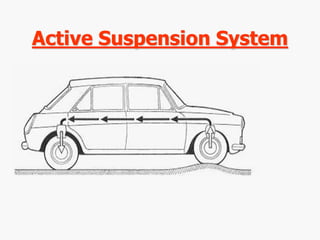
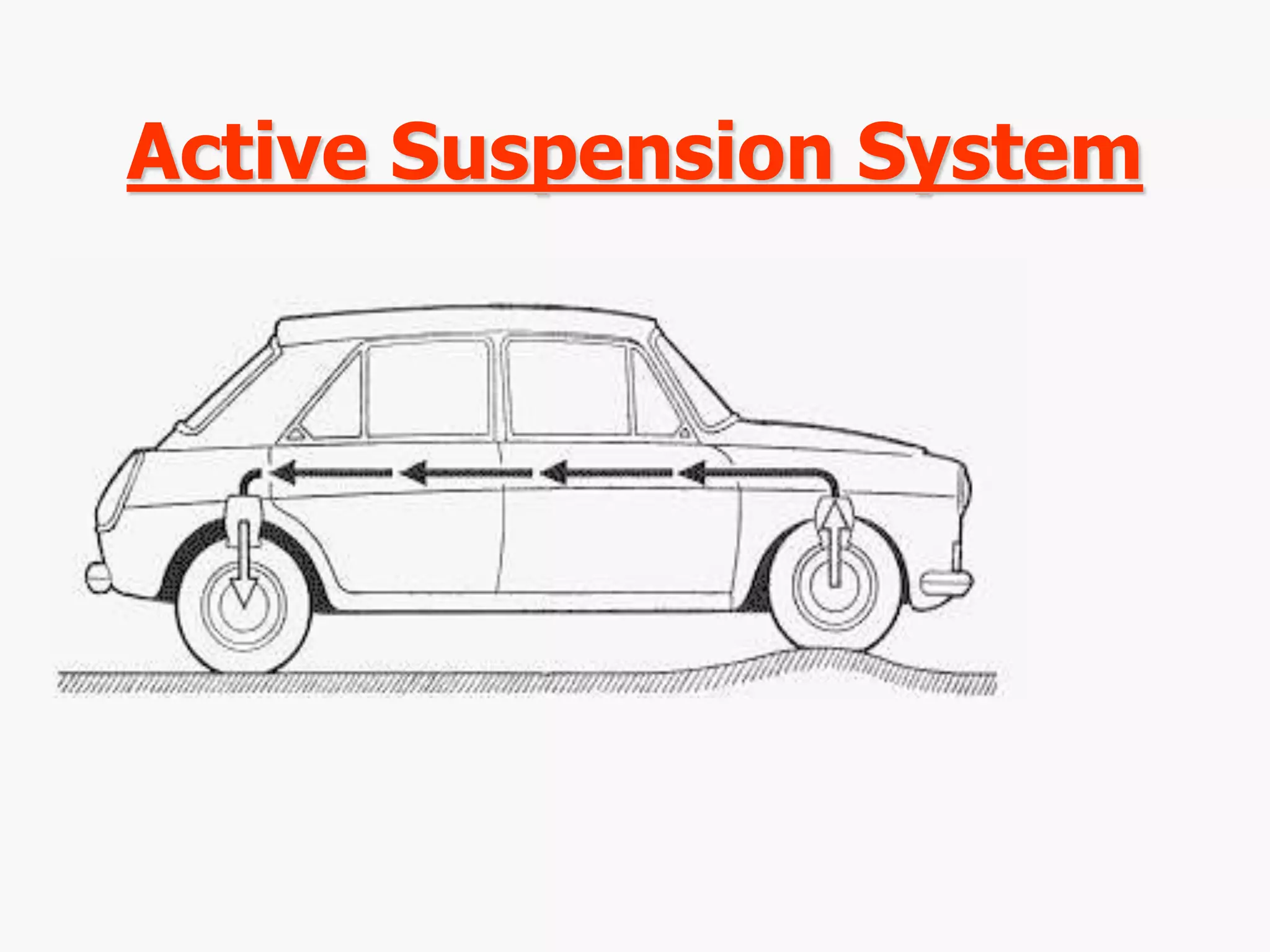
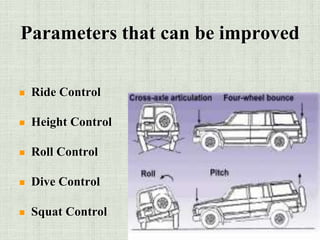
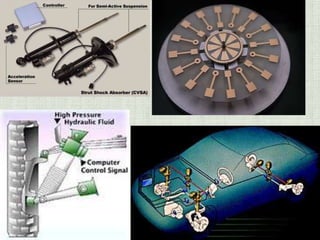
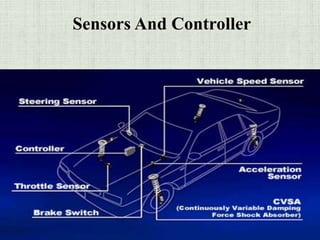
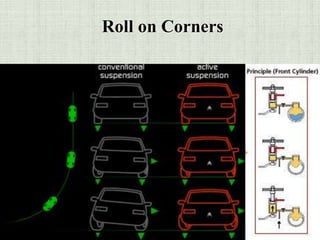
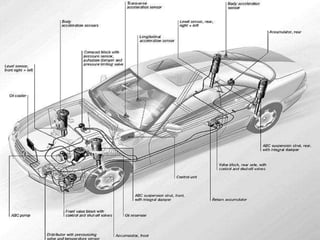
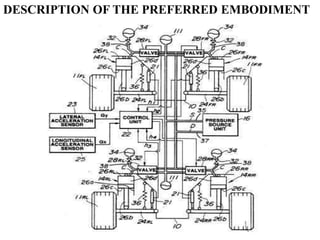
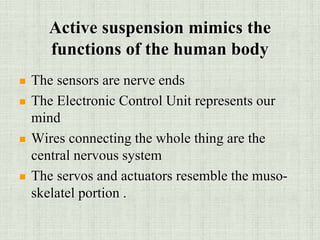
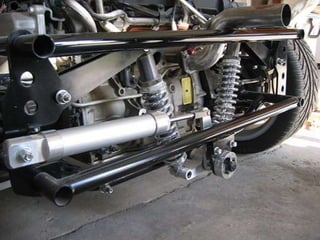
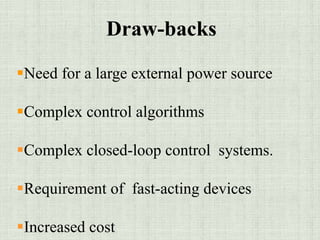
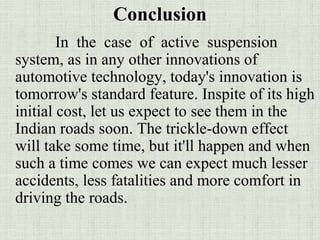
An active suspension system uses sensors, an electronic control unit, actuators, and adjustable shocks and springs to improve ride control, height control, roll control, dive control, and squat control compared to a conventional passive suspension system. The active suspension system mimics the functions of the human body to reduce sway and rolling, improve handling, and provide a more comfortable ride compared to adding extra springs. While complex control algorithms and increased costs present drawbacks, active suspension systems are expected to become more common as technology advances.