Speech delay is one of the most common early childhood concerns—often leading parents to wonder: Is this just a delay, or is it something more serious like autism? This powerful and informative presentation is designed to guide caregivers through the complex connection between speech delay and autism spectrum disorder (ASD), helping them make informed, confident next steps.
In this SlideShare presentation, we break down what a speech delay really means, how it differs from language delay, and when it might be a sign of something deeper—such as autism. Backed by developmental science, real-life examples, and early intervention recommendations, this visual guide equips parents with clarity, support, and trusted tools to take action.
✅ What You'll Learn in This Presentation:
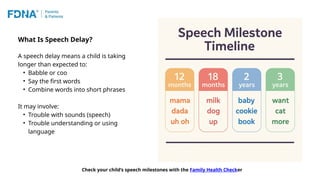
What is considered a typical speech development timeline
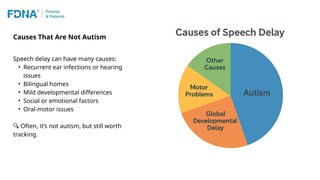
Common causes of speech delays in toddlers and preschoolers that are not autism-related (e.g., hearing issues, bilingual homes, normal variability)
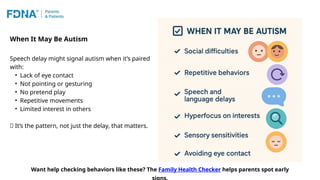
Signs that a speech delay may be linked to autism, including social communication red flags like lack of eye contact, limited gestures, or repetitive behavior
The importance of pattern recognition rather than focusing on a single symptom
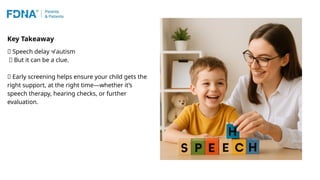
When to seek developmental screening or a speech-language evaluation
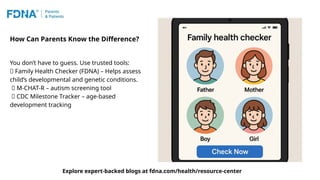
Which trusted tools and apps to use at home to track milestones
🔎 Who Is This Presentation For?
Parents wondering “Why isn’t my child talking yet?”
Caregivers unsure about the difference between speech delay and autism
Educators looking to support early childhood development
Pediatric professionals sharing resources with concerned families
Anyone interested in child development milestones and early signs of autism
📲 Includes Subtle Promotion of Parent Tools:
This presentation subtly introduces helpful resources like the Family Health Checker, a parent-friendly tool by FDNA that helps track your child’s speech, motor, and social milestones. Parents can quickly compare their child’s progress to developmental norms and receive personalized guidance on when to consult a professional.
Also featured is FDNA’s Resource Center—a blog platform full of expertly written articles on early childhood development, speech delays, autism signs, and genetic conditions. These blogs help parents understand concerns such as “Why isn’t my toddler talking?”, “When to worry about delays?”, or “Is this just late talking or something more?”