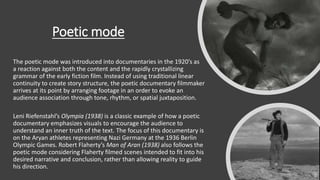
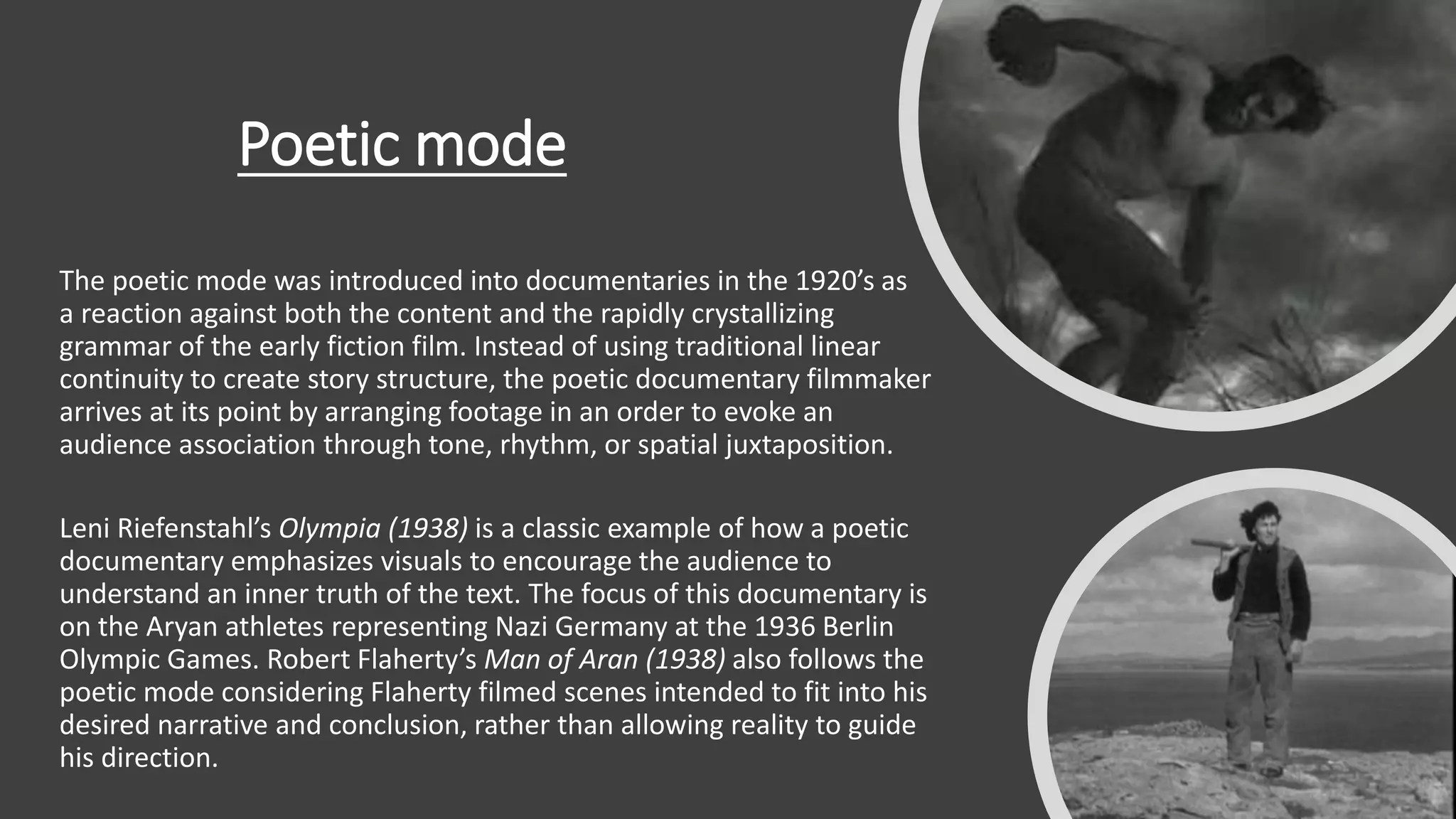
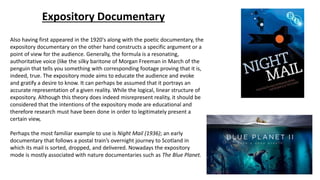
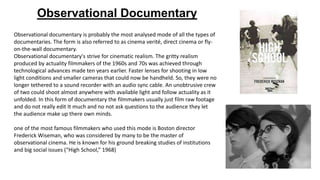
The document introduces several poetic modes of documentary filmmaking that emerged in the 1920s as alternatives to traditional linear storytelling. It gives two examples: Leni Riefenstahl's Olympia (1938) which emphasizes visuals to convey an inner truth about the 1936 Berlin Olympics, and Robert Flaherty's Man of Aran (1938) which staged scenes to fit a predetermined narrative rather than purely documenting reality. Both follow the poetic mode of using non-linear editing techniques like juxtaposition and rhythm to evoke meanings and emotions in the audience.