Activity Presentation
Reported by ASHISH PANDA
1702293
Contents
Applications
How and what are
Hooke’s joint for?
03
Hooke’s Joint
Types of it
02
Working
How does it operate or
work?
04
Introduction
An overview of what we
will be discussing!
01
Calculations
Various calculations
related to Hooke’s Joint
05
INTRODUCTION
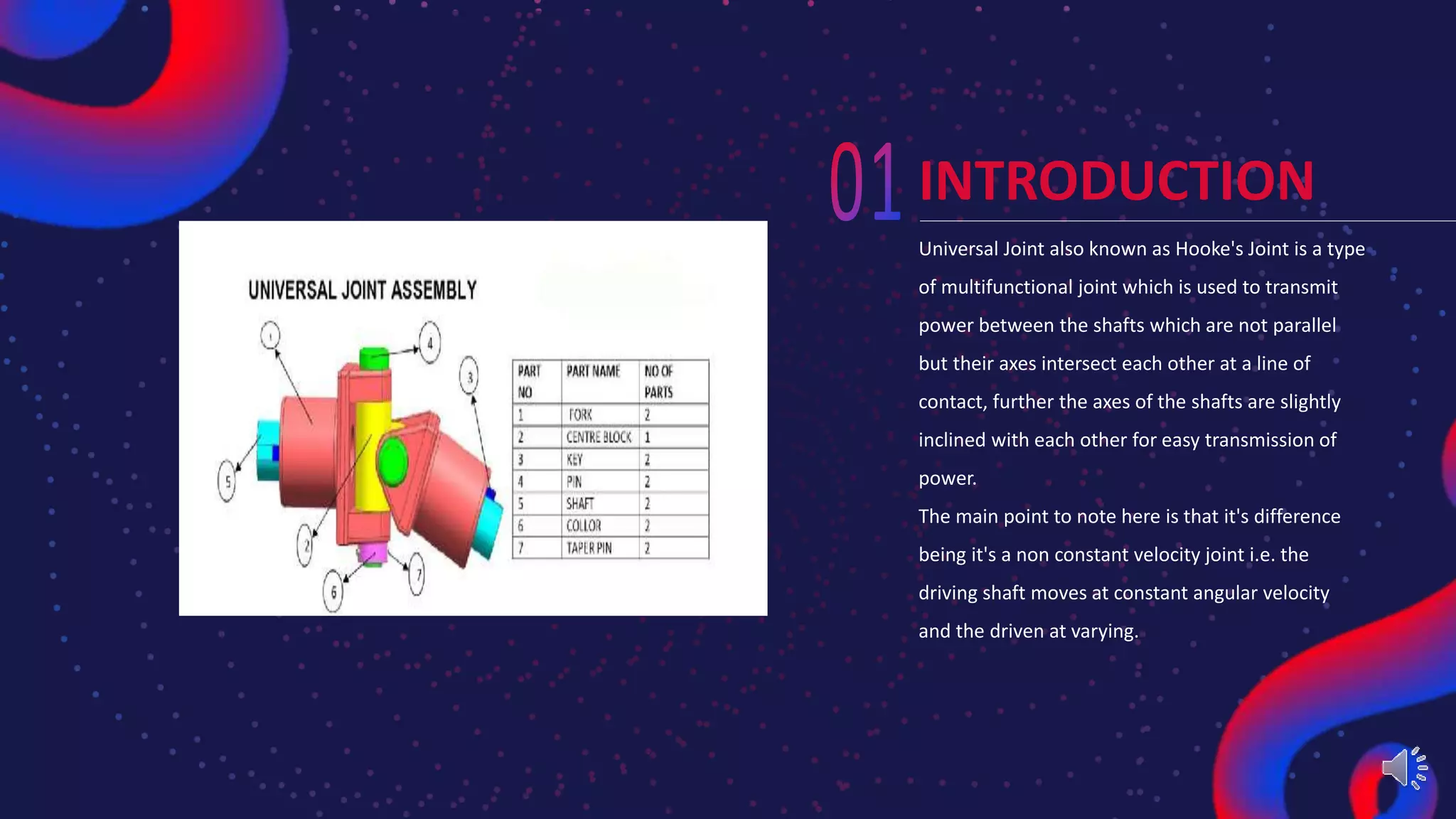
Universal Joint also known as Hooke's Joint is a type
of multifunctional joint which is used to transmit
power between the shafts which are not parallel
but their axes intersect each other at a line of
contact, further the axes of the shafts are slightly
inclined with each other for easy transmission of
power.
The main point to note here is that it's difference
being it's a non constant velocity joint i.e. the
driving shaft moves at constant angular velocity
and the driven at varying.
HOOKE’S JOINT
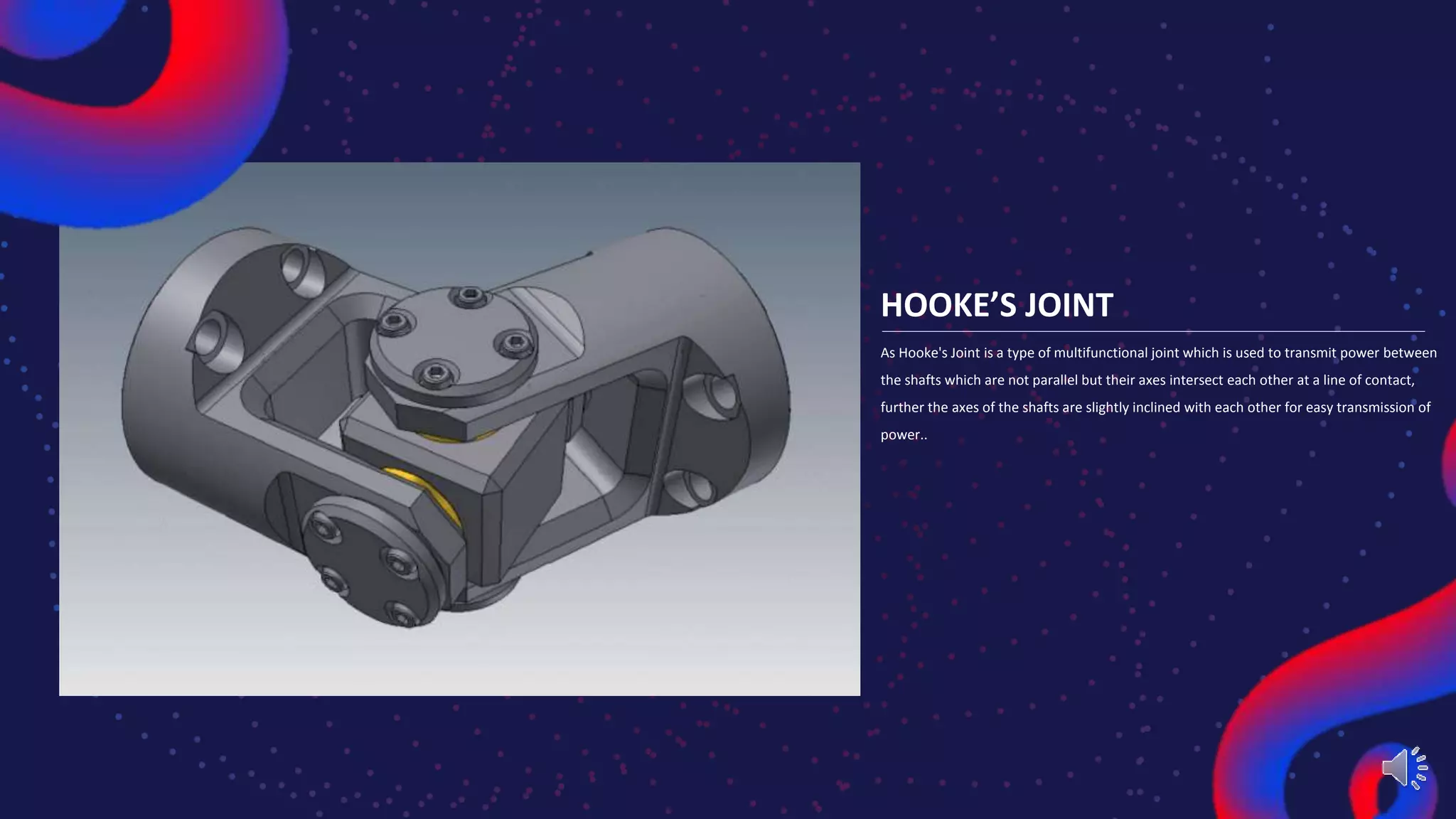
As Hooke's Joint is a type of multifunctional joint which is used to transmit power between
the shafts which are not parallel but their axes intersect each other at a line of contact,
further the axes of the shafts are slightly inclined with each other for easy transmission of
power..
APPLICATIONS
.
PARTS
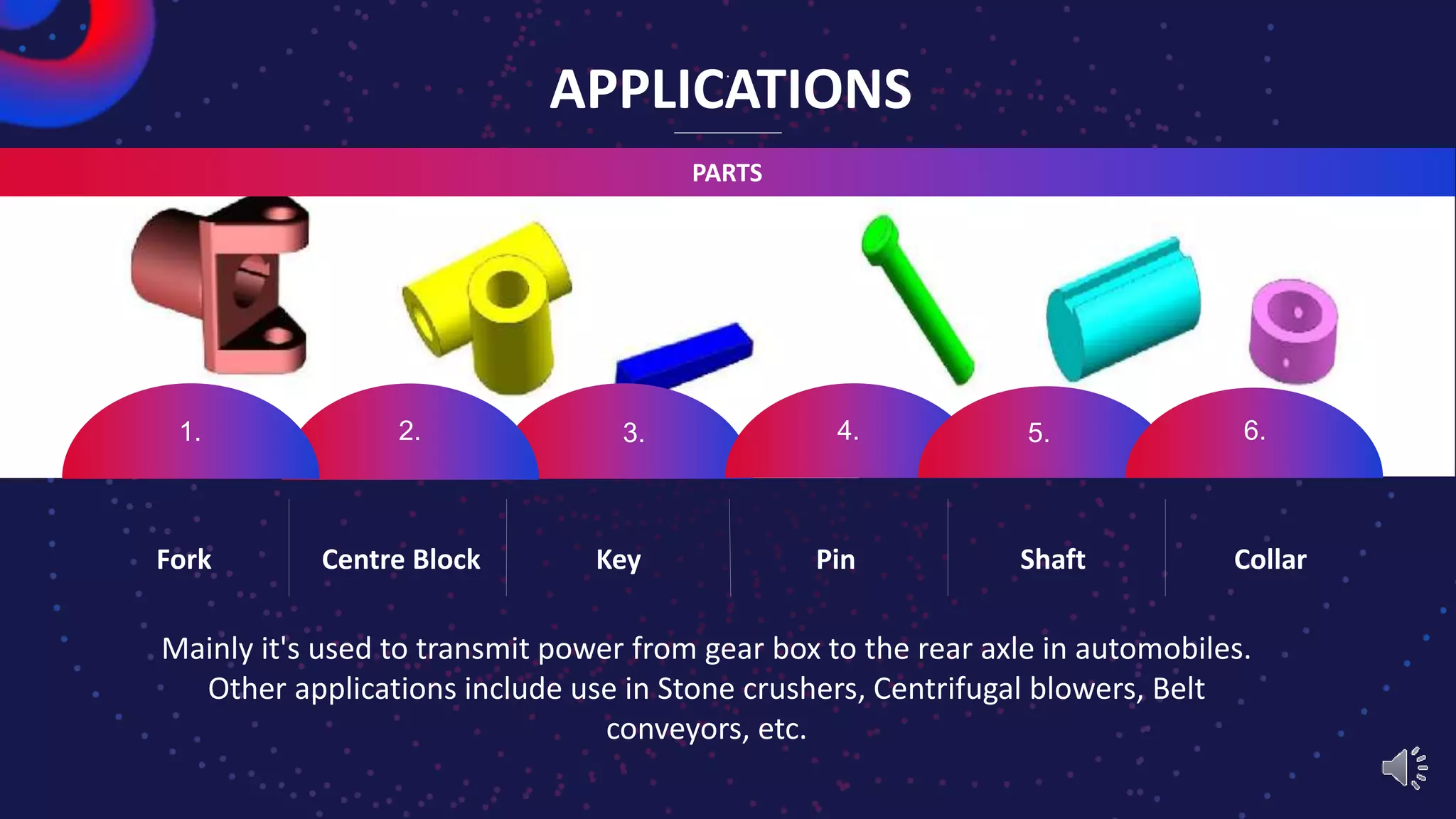
Fork Centre Block Key Pin Shaft Collar
1. 2. 3. 4. 5. 6.
Mainly it's used to transmit power from gear box to the rear axle in automobiles.
Other applications include use in Stone crushers, Centrifugal blowers, Belt
conveyors, etc.
WORKING
Copy paste fonts. Choose the only option to retain
text.
……
Text here
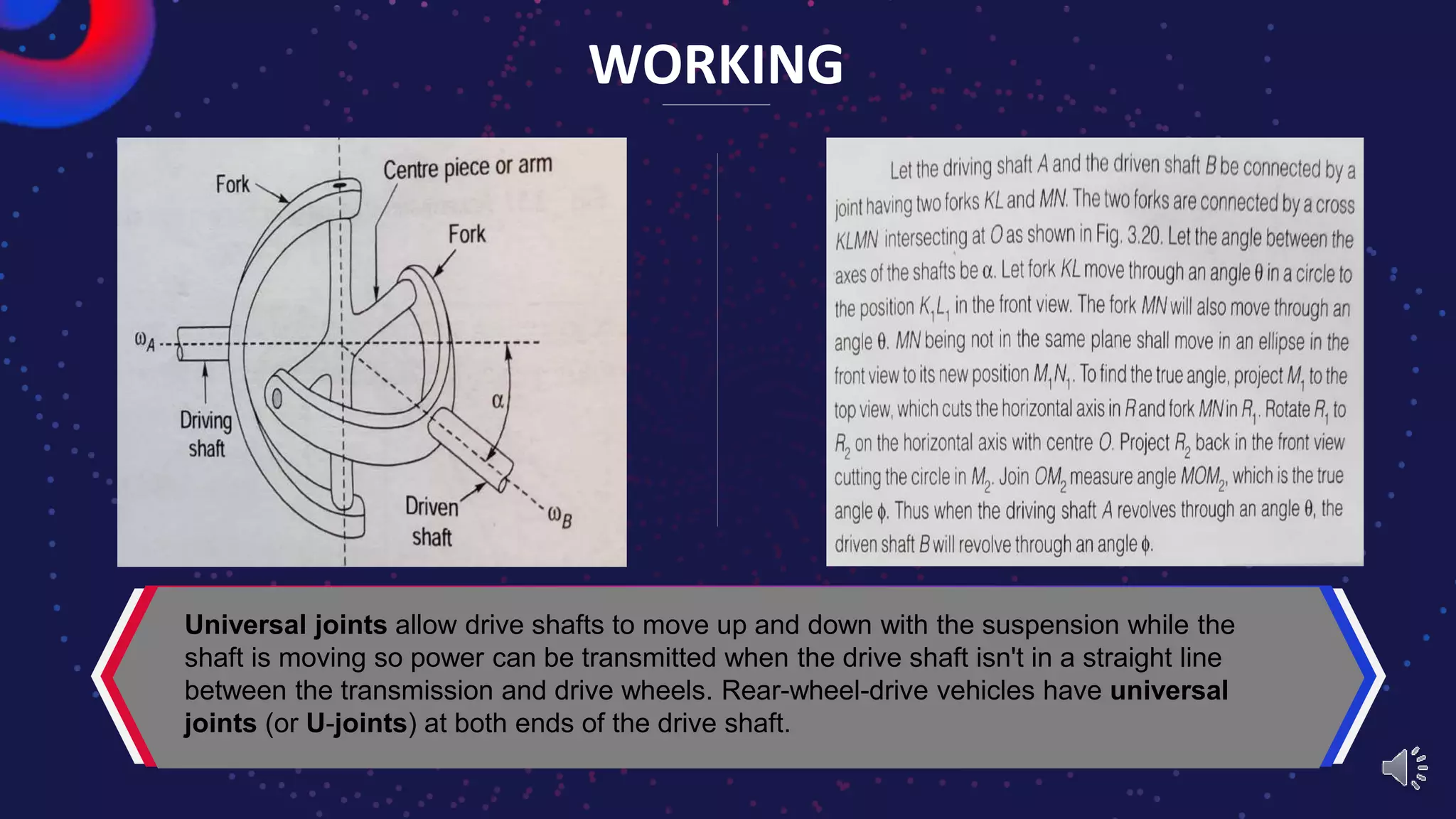
Universal joints allow drive shafts to move up and down with the suspension while the
shaft is moving so power can be transmitted when the drive shaft isn't in a straight line
between the transmission and drive wheels. Rear-wheel-drive vehicles have universal
joints (or U-joints) at both ends of the drive shaft.
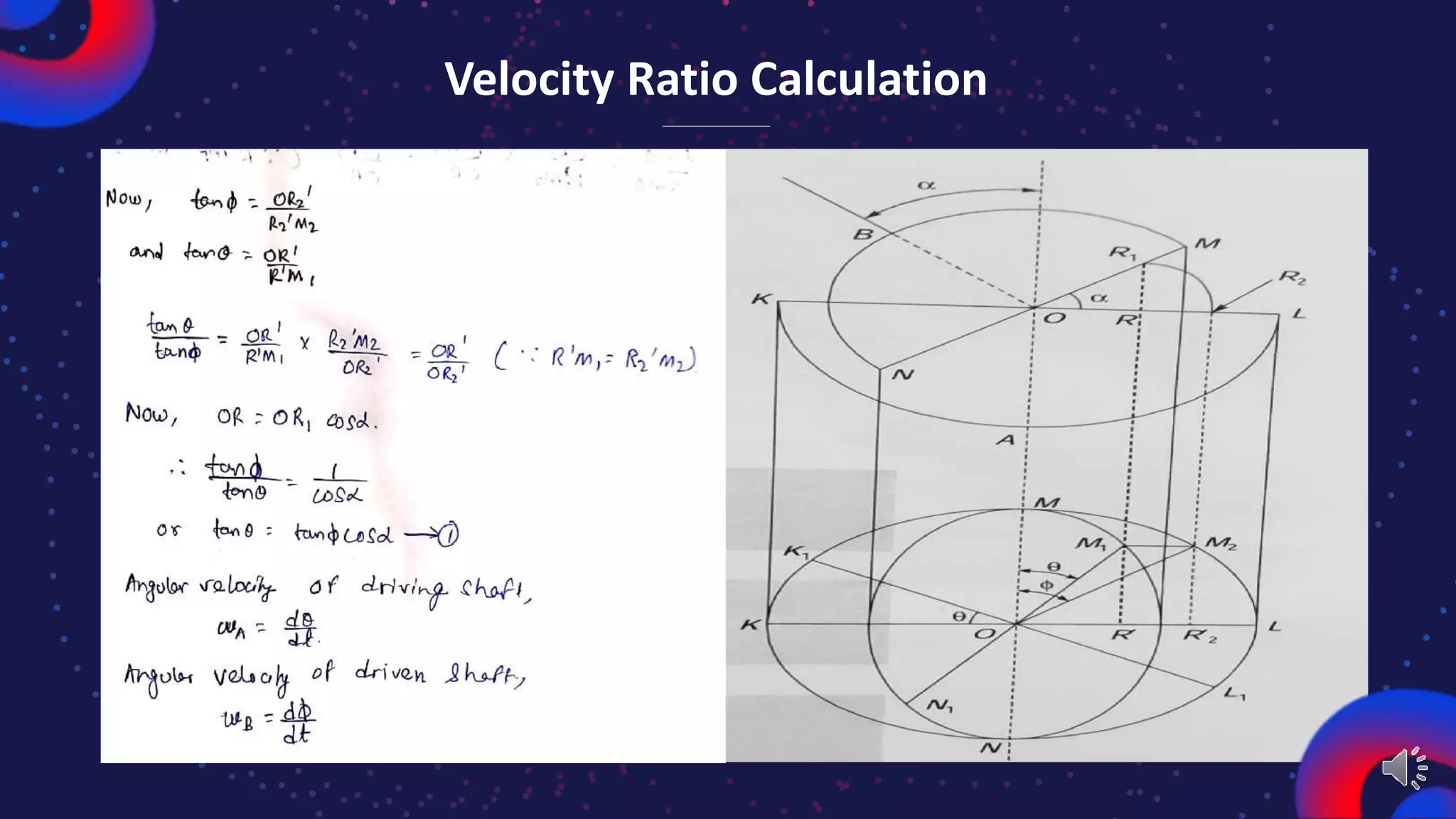
Velocity Ratio Calculation
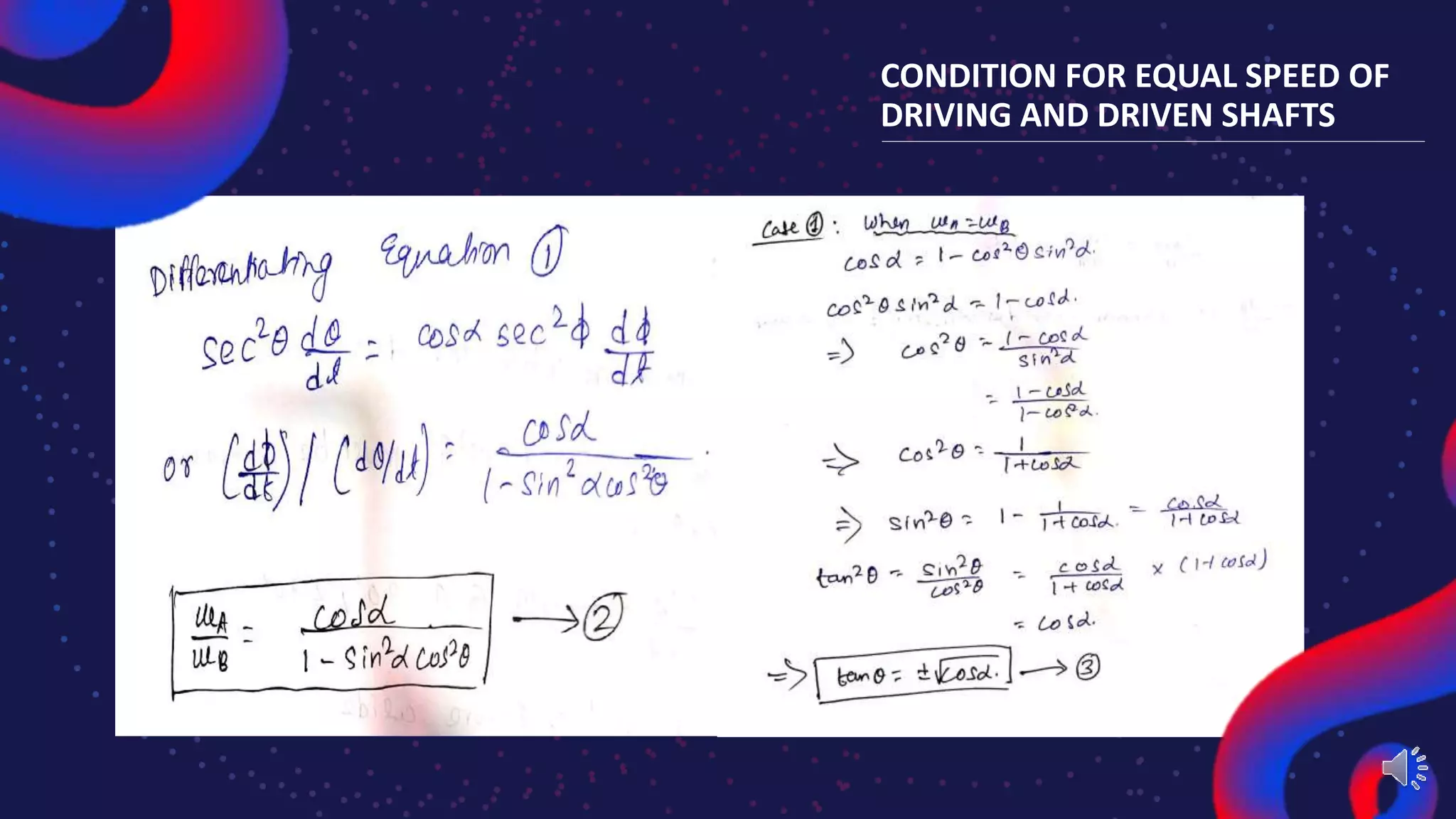
CONDITION FOR EQUAL SPEED OF
DRIVING AND DRIVEN SHAFTS
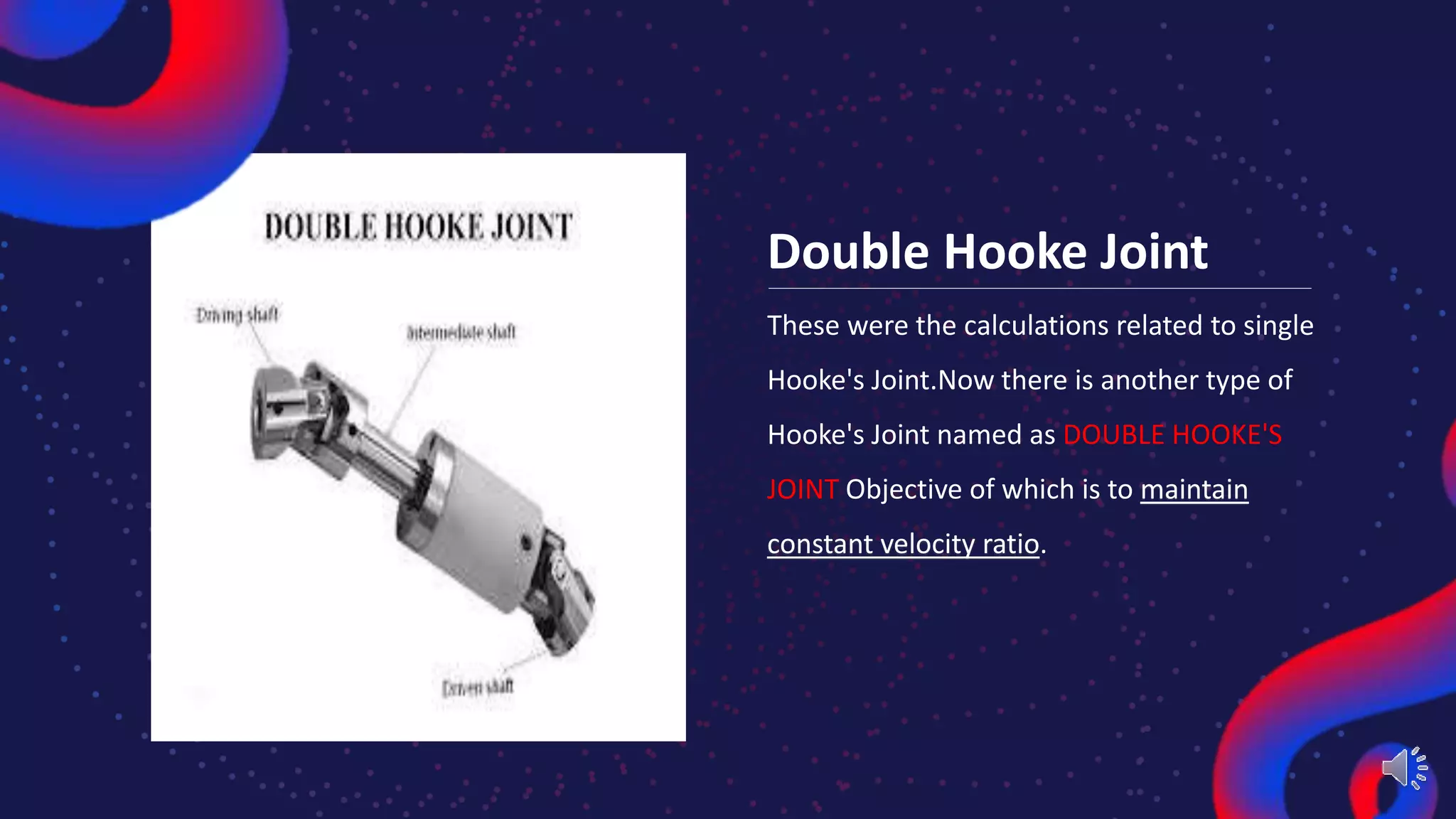
Double Hooke Joint
These were the calculations related to single
Hooke's Joint.Now there is another type of
Hooke's Joint named as DOUBLE HOOKE'S
JOINT Objective of which is to maintain
constant velocity ratio.
PPT BY:-
Ashish Panda
1702293(DME)
THANK YOU

DME Design of Machines Analysis of Universal Joints

  • 1.
  • 2.
    Contents Applications How and whatare Hooke’s joint for? 03 Hooke’s Joint Types of it 02 Working How does it operate or work? 04 Introduction An overview of what we will be discussing! 01 Calculations Various calculations related to Hooke’s Joint 05
  • 3.
    INTRODUCTION Universal Joint alsoknown as Hooke's Joint is a type of multifunctional joint which is used to transmit power between the shafts which are not parallel but their axes intersect each other at a line of contact, further the axes of the shafts are slightly inclined with each other for easy transmission of power. The main point to note here is that it's difference being it's a non constant velocity joint i.e. the driving shaft moves at constant angular velocity and the driven at varying.
  • 4.
    HOOKE’S JOINT As Hooke'sJoint is a type of multifunctional joint which is used to transmit power between the shafts which are not parallel but their axes intersect each other at a line of contact, further the axes of the shafts are slightly inclined with each other for easy transmission of power..
  • 5.
    APPLICATIONS . PARTS Fork Centre BlockKey Pin Shaft Collar 1. 2. 3. 4. 5. 6. Mainly it's used to transmit power from gear box to the rear axle in automobiles. Other applications include use in Stone crushers, Centrifugal blowers, Belt conveyors, etc.
  • 6.
    WORKING Copy paste fonts.Choose the only option to retain text. …… Text here Universal joints allow drive shafts to move up and down with the suspension while the shaft is moving so power can be transmitted when the drive shaft isn't in a straight line between the transmission and drive wheels. Rear-wheel-drive vehicles have universal joints (or U-joints) at both ends of the drive shaft.
  • 7.
  • 8.
    CONDITION FOR EQUALSPEED OF DRIVING AND DRIVEN SHAFTS
  • 9.
    Double Hooke Joint Thesewere the calculations related to single Hooke's Joint.Now there is another type of Hooke's Joint named as DOUBLE HOOKE'S JOINT Objective of which is to maintain constant velocity ratio.
  • 10.