ADRIANO MESCIA
Final Major Project
What could become possible if designers used their
power to influence choices and beliefs in a positive way?
Imagine: what it we didn’t just go good design...we did good?
David d. berman
How can we incentivise and
change people behaviours
in order to make them
more responsible towards
energy saving
through gamification and
the social network sharing culture?
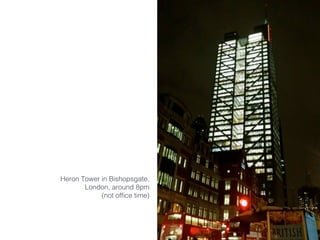
Heron Tower in Bishopsgate,
London, around 8pm
(not office time)
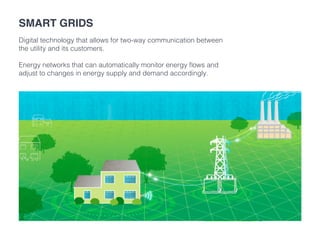
Smart grids
Digital technology that allows for two-way communication between
the utility and its customers.
Energy networks that can automatically monitor energy flows and
adjust to changes in energy supply and demand accordingly.
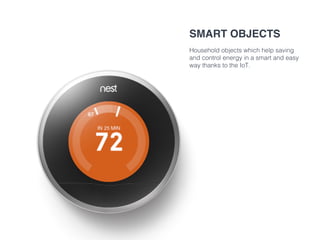
Smart objects
Household objects which help saving
and control energy in a smart and easy
way thanks to the IoT.
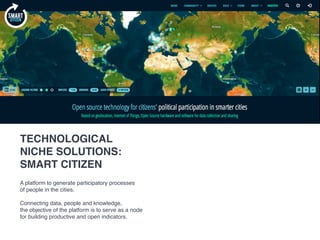
A platform to generate participatory processes
of people in the cities.
Connecting data, people and knowledge,
the objective of the platform is to serve as a node
for building productive and open indicators.
technological
niche solutions:
SMART CITIZEN
Gamification
The craft of deriving all the fun and engaging
elements found in games and applying them
to real-world or productive activities.
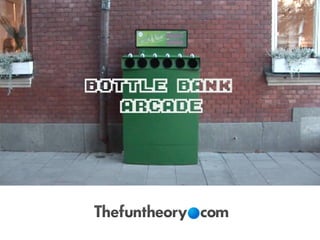
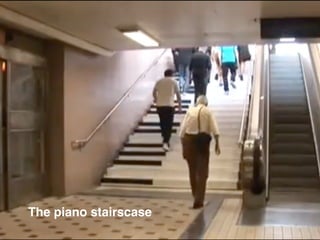
The piano stairscase
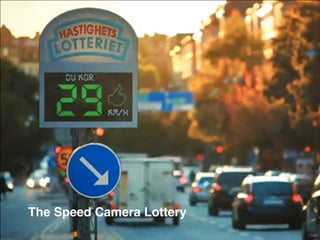
The Speed Camera Lottery
Key practioners
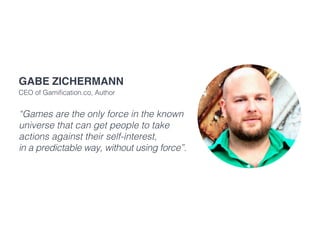
“Games are the only force in the known
universe that can get people to take
actions against their self-interest,
in a predictable way, without using force”.
Gabe Zichermann
CEO of Gamification.co, Author
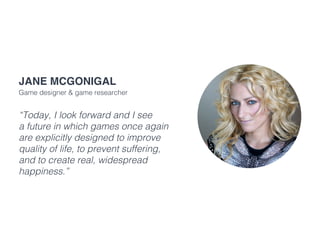
“Today, I look forward and I see
a future in which games once again
are explicitly designed to improve
quality of life, to prevent suffering,
and to create real, widespread
happiness.”
jane mcgonigal
Game designer & game researcher
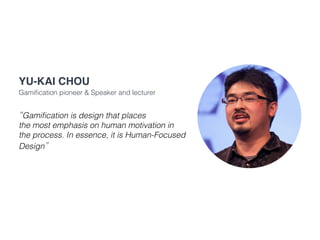
“Gamification is design that places
the most emphasis on human motivation in
the process. In essence, it is Human-Focused
Design”
Yu-kai Chou
Gamification pioneer & Speaker and lecturer
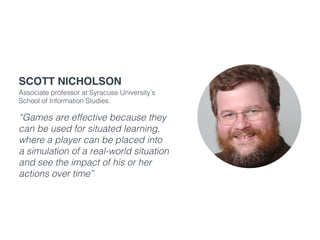
“Games are effective because they
can be used for situated learning,
where a player can be placed into
a simulation of a real-world situation
and see the impact of his or her
actions over time”
Scott Nicholson
Associate professor at Syracuse University’s
School of Information Studies.
The jitter of your thumb on the button or the flicker of your wrist on the
mouse connect directly to an invisible, intangible gamespace of pure
contest, pure agon.
It doesn’t matter if your cave comes equipped with a Playstation
or Bloomberg terminal.
It doesn’t matter whether you think you are playing the bond market
or Grand Theft Auto.
It is all just an algorithm with enough unknowns to make
a game of it.
McKenzie Wark
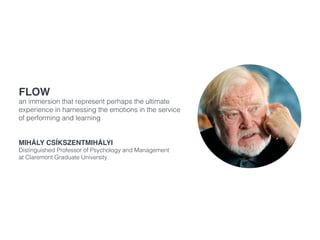
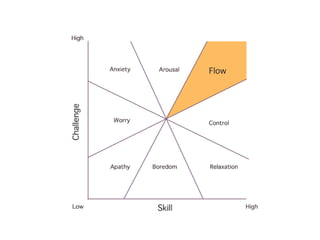
Flow
an immersion that represent perhaps the ultimate
experience in harnessing the emotions in the service
of performing and learning
Mihály Csíkszentmihályi
Distinguished Professor of Psychology and Management
at Claremont Graduate University
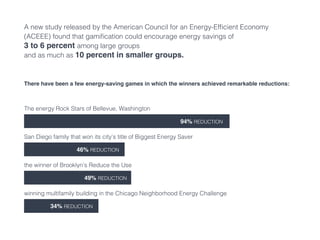
A new study released by the American Council for an Energy-Efficient Economy
(ACEEE) found that gamification could encourage energy savings of
3 to 6 percent among large groups
and as much as 10 percent in smaller groups.
There have been a few energy-saving games in which the winners achieved remarkable reductions:
The energy Rock Stars of Bellevue, Washington
94% reduction
San Diego family that won its city’s title of Biggest Energy Saver
46% reduction
the winner of Brooklyn’s Reduce the Use
49% reduction
winning multifamily building in the Chicago Neighborhood Energy Challenge
34% reduction
The group approaches major companies and develops
games where co-workers compete to save as much
energy as possible.
Employees are given points when they take action,
like when they watch less TV, maintain appropriate
car tire pressure or air seal their homes.
"When people adopt simple practices, see
their peers doing the same and then see how
those simple actions add up, these folks feel
empowered—they see themselves as part
of a climate change solution and support
additional action,"
Kathy Kuntz
Executive director of Cool Choices
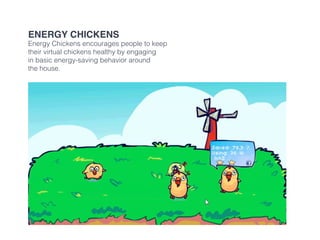
Energy Chickens
Energy Chickens encourages people to keep
their virtual chickens healthy by engaging
in basic energy-saving behavior around
the house.
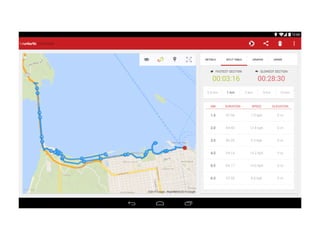
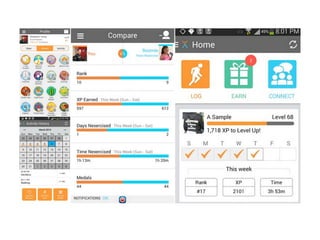
Through JouleBug, people get points for a num-
ber of actions, like using a reusable mug or gro-
cery bag. Users build on their actions to receive
trophies and share their accomplishments with
their friends. They can also sign up for fee-ba-
sed contests.
"People regulate behaviors based on
feedback from the immediate environment
and from people around us"
Magnus Bång
Gamification expert, Linkoping University, Sweden
Dissertation proposal presentation

Dissertation proposal presentation

  • 1.
  • 2.
    What could becomepossible if designers used their power to influence choices and beliefs in a positive way? Imagine: what it we didn’t just go good design...we did good? David d. berman
  • 4.
    How can weincentivise and change people behaviours in order to make them more responsible towards energy saving through gamification and the social network sharing culture?
  • 5.
    Heron Tower inBishopsgate, London, around 8pm (not office time)
  • 6.
    Smart grids Digital technologythat allows for two-way communication between the utility and its customers. Energy networks that can automatically monitor energy flows and adjust to changes in energy supply and demand accordingly.
  • 7.
    Smart objects Household objectswhich help saving and control energy in a smart and easy way thanks to the IoT.
  • 8.
    A platform togenerate participatory processes of people in the cities. Connecting data, people and knowledge, the objective of the platform is to serve as a node for building productive and open indicators. technological niche solutions: SMART CITIZEN
  • 9.
    Gamification The craft ofderiving all the fun and engaging elements found in games and applying them to real-world or productive activities.
  • 11.
  • 12.
  • 13.
  • 14.
    “Games are theonly force in the known universe that can get people to take actions against their self-interest, in a predictable way, without using force”. Gabe Zichermann CEO of Gamification.co, Author
  • 15.
    “Today, I lookforward and I see a future in which games once again are explicitly designed to improve quality of life, to prevent suffering, and to create real, widespread happiness.” jane mcgonigal Game designer & game researcher
  • 16.
    “Gamification is designthat places the most emphasis on human motivation in the process. In essence, it is Human-Focused Design” Yu-kai Chou Gamification pioneer & Speaker and lecturer
  • 17.
    “Games are effectivebecause they can be used for situated learning, where a player can be placed into a simulation of a real-world situation and see the impact of his or her actions over time” Scott Nicholson Associate professor at Syracuse University’s School of Information Studies.
  • 18.
    The jitter ofyour thumb on the button or the flicker of your wrist on the mouse connect directly to an invisible, intangible gamespace of pure contest, pure agon. It doesn’t matter if your cave comes equipped with a Playstation or Bloomberg terminal. It doesn’t matter whether you think you are playing the bond market or Grand Theft Auto. It is all just an algorithm with enough unknowns to make a game of it. McKenzie Wark
  • 19.
    Flow an immersion thatrepresent perhaps the ultimate experience in harnessing the emotions in the service of performing and learning Mihály Csíkszentmihályi Distinguished Professor of Psychology and Management at Claremont Graduate University
  • 21.
    A new studyreleased by the American Council for an Energy-Efficient Economy (ACEEE) found that gamification could encourage energy savings of 3 to 6 percent among large groups and as much as 10 percent in smaller groups. There have been a few energy-saving games in which the winners achieved remarkable reductions: The energy Rock Stars of Bellevue, Washington 94% reduction San Diego family that won its city’s title of Biggest Energy Saver 46% reduction the winner of Brooklyn’s Reduce the Use 49% reduction winning multifamily building in the Chicago Neighborhood Energy Challenge 34% reduction
  • 22.
    The group approachesmajor companies and develops games where co-workers compete to save as much energy as possible. Employees are given points when they take action, like when they watch less TV, maintain appropriate car tire pressure or air seal their homes.
  • 23.
    "When people adoptsimple practices, see their peers doing the same and then see how those simple actions add up, these folks feel empowered—they see themselves as part of a climate change solution and support additional action," Kathy Kuntz Executive director of Cool Choices
  • 24.
    Energy Chickens Energy Chickensencourages people to keep their virtual chickens healthy by engaging in basic energy-saving behavior around the house.
  • 25.
    Through JouleBug, peopleget points for a num- ber of actions, like using a reusable mug or gro- cery bag. Users build on their actions to receive trophies and share their accomplishments with their friends. They can also sign up for fee-ba- sed contests.
  • 26.
    "People regulate behaviorsbased on feedback from the immediate environment and from people around us" Magnus Bång Gamification expert, Linkoping University, Sweden