Downloaded 23 times





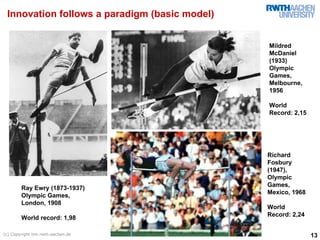


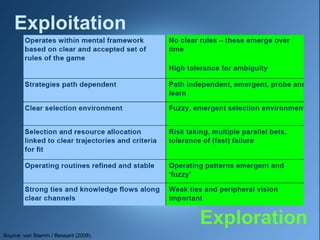
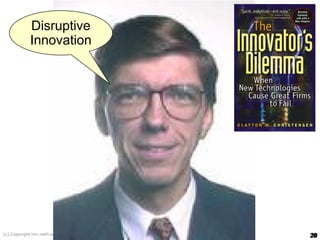
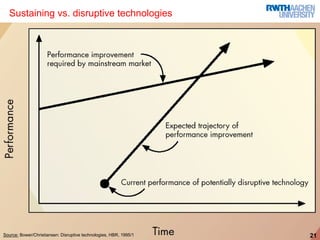
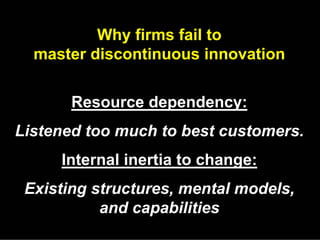
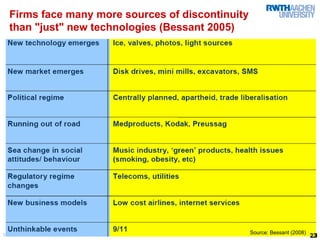

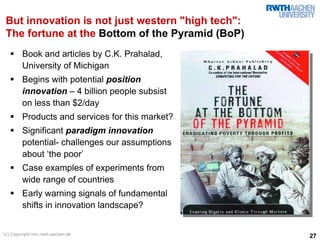

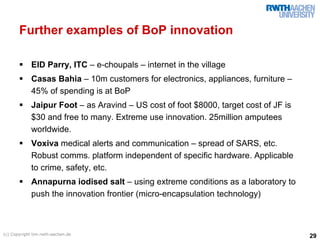
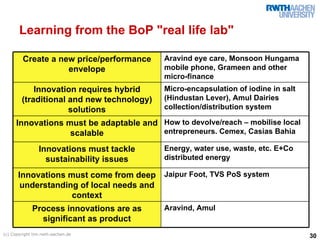
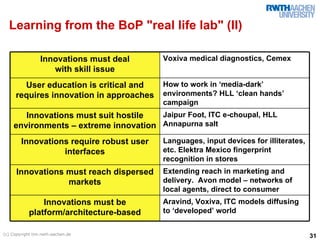


The document discusses disruptive innovation and challenges common paradigms of innovation based on examples from developing countries. It highlights how innovation at the "Bottom of the Pyramid" provides lessons, including creating new price/performance envelopes, requiring hybrid traditional and new technology solutions, being adaptable and scalable, tackling sustainability issues, coming from deep understanding of local needs/context, and dealing with skills issues through innovative education approaches. Examples discussed include low-cost eye surgery in India, microencapsulated iodized salt, mobile phones, microfinance, and distributed energy systems.


