All you need to know about…
DISABILITY at work
London HR and Training
2016
Introduction
Page 2
Intro - London HR and Training
• London HR and Training is a specialist human
resources and training consultancy headed by Timothy
Holden
• 10 years in banking
• 20 years in training and human resources
• Business owner since 2007
• The core services provided by London HR and Training
are:
- Reducing costs and saving time through bespoke HR
initiatives and projects
- Training course design and delivery
- Services for job seekers
Page 3
Contents
5-6 Definitions
7-8 Types of disability
9-12 Discrimination arising from disability
13-16 Types of discrimination
17-20 Reasonable adjustments
21-22 Asking questions before making a job offer
23-25 Stereotypes of disabled people
26-27 Key drivers for employing people with disabilities
28-29 Steps that employers may choose to implement
30-31 Recommendations for inclusion
32-33 Areas to record and document
34-35 Sickness absence and disability
36-38 Tips for supervisors of employees with a disability
39-41 Tips for co-workers of an employee with a disability
42-43 Good practices of diversity inclusion
44-46 An action plan for moving forward
47-48 Exercise
49-50 To sum up…
Definitions
Page 5
Definitions
• Disability
• Disability discrimination
Page 6
Types of disability
Types of disability
• Mobility impairments
• Vision impairments
• Deaf or hard of hearing
• Speech impairments
• Respiratory/chemical sensitivity
• Psychiatric impairments
• Cognitive impairments
Page 8
Discrimination arising
from disability
Discrimination arising from
disability 1 of 3
• Difference between ‘unfavourably’
and ‘less favourably’
Page 10
Discrimination arising from
disability 2 of 3
Areas where it may occur
• Recruitment
• Pay
• Terms and conditions of employment
• Sickness absence
• Promotion opportunities
• Training opportunities
• Dismissals and terminations
• RedundancyPage 11
Discrimination arising from
disability 3 of 3
Complaints
• Informal complaints
• Formal complaints
Page 12
Types of discrimination
Types of discrimination 1 of 3
• Direct discrimination
• Indirect discrimination
• Harassment
• Victimisation
Page 14
Types of discrimination 2 of 3
Additional types of discrimination
related to disability
• Discrimination arising from disability
• Failure to make ‘reasonable
adjustments’
Page 15
Types of discrimination 3 of 3
Types of direct discrimination related
to disability
• Their disability (ordinary direct
discrimination)
• The disability of someone they are
associated with (direct
discrimination by association)
• How they are perceived (direct
discrimination by perception)
Page 16
Reasonable adjustments
Reasonable adjustments 1 of 3
• Failure to make reasonable
adjustments
• Recruitment and reasonable
adjustments
• When to make reasonable
adjustments
• Questions to ask
• Examples of reasonable adjustments
Page 18
Reasonable adjustments 2 of 3
Typical adjustment requests
• Adjusting or modifying tests and
training materials
• Allowing the use of a job coach
• Modifying or acquiring equipment or
devices
• Modifying policies or workplace rules
• Modifying work schedules
Page 19
Reasonable adjustments 3 of 3
Typical adjustment requests (cont.)
• Providing qualified readers or
interpreters
• Job restructuring
• Leave
• Reassignment to a vacant position
• Teleworking
Page 20
Asking questions before
making a job offer
Asking questions before making
a job offer
• Pre-employment medical
questionnaires
• The interview
• Function essential to the role
• Positive action
• Monitor
• Genuine requirement
Page 22
Stereotypes of disabled
people
Stereotypes of disabled people
1 of 2
• Pitiable and pathetic; sweet and
innocent; a miracle cure
• Victim or an object of violence
• Sinister or evil
• Atmosphere/curios or exotica in
freak shows, comics or films
• ‘Super-crip’; triumph over
tragedy/noble warrior
Page 24
Stereotypes of disabled people
2 of 2
• Laughable or the butt of jokes
• Having a chip on their
shoulder/aggressive avenger
• A burden/outcast
• Non-sexual or incapable of a
worthwhile relationship
• Incapable of fully participating in
everyday life
Page 25
Key drivers for employing
people with disabilities
Key drivers for employing
people with disabilities
• Corporate social responsibility
• Personal commitment from the CEO
or founder
• Financial incentives
• Pressure from society
• Legislation
Page 27
Steps that employers may
choose to implement
Steps that employers may
choose to implement
• Conduct targeted outreach
• Form community linkages or
partnerships
• Post job vacancies in targeted spaces
• Commence an internship programme
Page 29
Recommendations for
inclusion
Recommendations for inclusion
Page 31
Build the
business case
Accommodate
Change the
dialogue
Increase
workplace
awareness
Areas to record and
document
Areas to record and document
• Medical information that was provided
and further requests for information
• Whether modification of the existing
job was considered
• Whether a reasonable adjustment
occurred so that the employee could
be transferred to a different job
• All offers made and any acceptance or
rejection of offers
Page 33
Sickness absence and
disability
Sickness absence and disability
• Cox v. Post Office
• Pousson v. British Telecom
• Royal Liverpool Children’s NHS Trust
v. Dunsby
• Northamptonshire County Council v.
Meikle
• O’Hanlon v. HMRC
Page 35
Tips for supervisors of
employees with a disability
Tips for supervisors of
employees with a disability
1 of 2
• Take time to understand
• Learn appropriate first-aid and
emergency procedures
• Collect and maintain emergency contact
information
• Practice “golden rule” patience at all
times
• Explain rules, duties, tasks, functions,
responsibilities and expectations
Page 37
Tips for supervisors of
employees with a disability
2 of 2
• Include workers with difficulties in the
loop of information
• Be yourself!
• Don’t be overprotective of workers with
disabilities
• Encourage workers with disabilities to ask
for any reasonable adjustment they deem
necessary
• Don’t talk down to the disabled
Page 38
Tips for co-workers of an
employee with a disability
Tips for co-workers of an
employee with a disability 1 of 2
• Say ‘person with disability’ not
‘disabled person’
• Don’t use demeaning or dismissive
labels or descriptors
• Don’t feel you have to talk louder to
every person who has a disability
• Never pet a guide dog whilst working
Page 40
Tips for co-workers of an
employee with a disability 2 of 2
• Don’t push a person in a wheelchair
without first asking permission
• Look beyond the limitations and
respect workers with disabilities as
complete and well-rounded people
• Realise that persons with disabilities
don’t want charity; they want
opportunity
Page 41
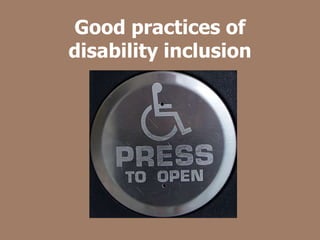
Good practices of
disability inclusion
Good practices of disability
inclusion
Page 43
An action plan for moving
forwards
An action plan for moving
forwards 1 of 2
• Audit existing policies and practices
• Draw up a business case for change
and get management support
• Develop a good practice policy,
check it is legally sound and promote
it to all employees
• Clarify line manager and employee
responsibilities
Page 45
An action plan for moving
forwards 2 of 2
• Design an action plan to be
implemented
• Follow best practice in respect of
recruitment
• Keep up to date with changes and legal
development
• Network with other employers
• Listen to disabled customers and
employees to understand them
Page 46
Exercise
Exercise
Page 48
To sum up…
To sum up…
• Conclusion
• Summary
• Videos
• Useful links
Page 50

Disability July 2016

  • 1.
    All you needto know about… DISABILITY at work London HR and Training 2016
  • 2.
  • 3.
    Intro - LondonHR and Training • London HR and Training is a specialist human resources and training consultancy headed by Timothy Holden • 10 years in banking • 20 years in training and human resources • Business owner since 2007 • The core services provided by London HR and Training are: - Reducing costs and saving time through bespoke HR initiatives and projects - Training course design and delivery - Services for job seekers Page 3
  • 4.
    Contents 5-6 Definitions 7-8 Typesof disability 9-12 Discrimination arising from disability 13-16 Types of discrimination 17-20 Reasonable adjustments 21-22 Asking questions before making a job offer 23-25 Stereotypes of disabled people 26-27 Key drivers for employing people with disabilities 28-29 Steps that employers may choose to implement 30-31 Recommendations for inclusion 32-33 Areas to record and document 34-35 Sickness absence and disability 36-38 Tips for supervisors of employees with a disability 39-41 Tips for co-workers of an employee with a disability 42-43 Good practices of diversity inclusion 44-46 An action plan for moving forward 47-48 Exercise 49-50 To sum up…
  • 5.
  • 6.
  • 7.
  • 8.
    Types of disability •Mobility impairments • Vision impairments • Deaf or hard of hearing • Speech impairments • Respiratory/chemical sensitivity • Psychiatric impairments • Cognitive impairments Page 8
  • 9.
  • 10.
    Discrimination arising from disability1 of 3 • Difference between ‘unfavourably’ and ‘less favourably’ Page 10
  • 11.
    Discrimination arising from disability2 of 3 Areas where it may occur • Recruitment • Pay • Terms and conditions of employment • Sickness absence • Promotion opportunities • Training opportunities • Dismissals and terminations • RedundancyPage 11
  • 12.
    Discrimination arising from disability3 of 3 Complaints • Informal complaints • Formal complaints Page 12
  • 13.
  • 14.
    Types of discrimination1 of 3 • Direct discrimination • Indirect discrimination • Harassment • Victimisation Page 14
  • 15.
    Types of discrimination2 of 3 Additional types of discrimination related to disability • Discrimination arising from disability • Failure to make ‘reasonable adjustments’ Page 15
  • 16.
    Types of discrimination3 of 3 Types of direct discrimination related to disability • Their disability (ordinary direct discrimination) • The disability of someone they are associated with (direct discrimination by association) • How they are perceived (direct discrimination by perception) Page 16
  • 17.
  • 18.
    Reasonable adjustments 1of 3 • Failure to make reasonable adjustments • Recruitment and reasonable adjustments • When to make reasonable adjustments • Questions to ask • Examples of reasonable adjustments Page 18
  • 19.
    Reasonable adjustments 2of 3 Typical adjustment requests • Adjusting or modifying tests and training materials • Allowing the use of a job coach • Modifying or acquiring equipment or devices • Modifying policies or workplace rules • Modifying work schedules Page 19
  • 20.
    Reasonable adjustments 3of 3 Typical adjustment requests (cont.) • Providing qualified readers or interpreters • Job restructuring • Leave • Reassignment to a vacant position • Teleworking Page 20
  • 21.
  • 22.
    Asking questions beforemaking a job offer • Pre-employment medical questionnaires • The interview • Function essential to the role • Positive action • Monitor • Genuine requirement Page 22
  • 23.
  • 24.
    Stereotypes of disabledpeople 1 of 2 • Pitiable and pathetic; sweet and innocent; a miracle cure • Victim or an object of violence • Sinister or evil • Atmosphere/curios or exotica in freak shows, comics or films • ‘Super-crip’; triumph over tragedy/noble warrior Page 24
  • 25.
    Stereotypes of disabledpeople 2 of 2 • Laughable or the butt of jokes • Having a chip on their shoulder/aggressive avenger • A burden/outcast • Non-sexual or incapable of a worthwhile relationship • Incapable of fully participating in everyday life Page 25
  • 26.
    Key drivers foremploying people with disabilities
  • 27.
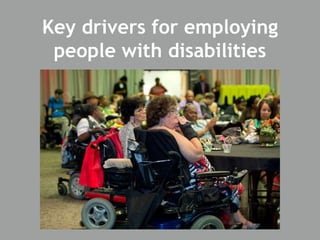
    Key drivers foremploying people with disabilities • Corporate social responsibility • Personal commitment from the CEO or founder • Financial incentives • Pressure from society • Legislation Page 27
  • 28.
    Steps that employersmay choose to implement
  • 29.
    Steps that employersmay choose to implement • Conduct targeted outreach • Form community linkages or partnerships • Post job vacancies in targeted spaces • Commence an internship programme Page 29
  • 30.
  • 31.
    Recommendations for inclusion Page31 Build the business case Accommodate Change the dialogue Increase workplace awareness
  • 32.
    Areas to recordand document
  • 33.
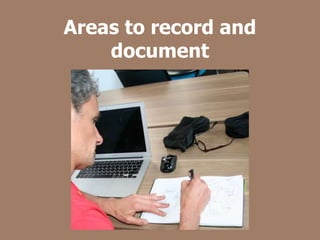
    Areas to recordand document • Medical information that was provided and further requests for information • Whether modification of the existing job was considered • Whether a reasonable adjustment occurred so that the employee could be transferred to a different job • All offers made and any acceptance or rejection of offers Page 33
  • 34.
  • 35.
    Sickness absence anddisability • Cox v. Post Office • Pousson v. British Telecom • Royal Liverpool Children’s NHS Trust v. Dunsby • Northamptonshire County Council v. Meikle • O’Hanlon v. HMRC Page 35
  • 36.
    Tips for supervisorsof employees with a disability
  • 37.
    Tips for supervisorsof employees with a disability 1 of 2 • Take time to understand • Learn appropriate first-aid and emergency procedures • Collect and maintain emergency contact information • Practice “golden rule” patience at all times • Explain rules, duties, tasks, functions, responsibilities and expectations Page 37
  • 38.
    Tips for supervisorsof employees with a disability 2 of 2 • Include workers with difficulties in the loop of information • Be yourself! • Don’t be overprotective of workers with disabilities • Encourage workers with disabilities to ask for any reasonable adjustment they deem necessary • Don’t talk down to the disabled Page 38
  • 39.
    Tips for co-workersof an employee with a disability
  • 40.
    Tips for co-workersof an employee with a disability 1 of 2 • Say ‘person with disability’ not ‘disabled person’ • Don’t use demeaning or dismissive labels or descriptors • Don’t feel you have to talk louder to every person who has a disability • Never pet a guide dog whilst working Page 40
  • 41.
    Tips for co-workersof an employee with a disability 2 of 2 • Don’t push a person in a wheelchair without first asking permission • Look beyond the limitations and respect workers with disabilities as complete and well-rounded people • Realise that persons with disabilities don’t want charity; they want opportunity Page 41
  • 42.
  • 43.
    Good practices ofdisability inclusion Page 43
  • 44.
    An action planfor moving forwards
  • 45.
    An action planfor moving forwards 1 of 2 • Audit existing policies and practices • Draw up a business case for change and get management support • Develop a good practice policy, check it is legally sound and promote it to all employees • Clarify line manager and employee responsibilities Page 45
  • 46.
    An action planfor moving forwards 2 of 2 • Design an action plan to be implemented • Follow best practice in respect of recruitment • Keep up to date with changes and legal development • Network with other employers • Listen to disabled customers and employees to understand them Page 46
  • 47.
  • 48.
  • 49.
  • 50.
    To sum up… •Conclusion • Summary • Videos • Useful links Page 50