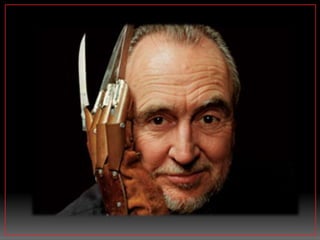
Wes Craven
• Craven was born in Cleveland, Ohio, the son of Caroline 
and Paul Craven. He was raised in a strict Baptist family. 
Craven earned an undergraduate degree in English and 
Psychology from Wheaton College in Illinois and a masters 
degree in Philosophy and Writing from Johns Hopkins 
University. 
• Craven briefly taught English at Westminster College and 
was a humanities professor at Clarkson College of 
Technology (now Clarkson University) in Potsdam, New 
York. His first job in the film industry was as a sound editor 
for a post-production company in New York City.
• Craven left the academic world for the more lucrative role 
of pornographic film director. In the documentary Inside 
Deep Throat, Craven says on camera he made "many 
hard core X-rated films" under false names. While his role 
in Deep Throat is undisclosed, most of his early known 
work involved writing, film editing or both. In 1972 Wes 
Craven directed his first feature film The Last House on 
the Left.
• Craven's works tend to share a common exploration of the nature of 
reality. A Nightmare on Elm Street, for example, dealt with the 
consequences of dreams in real life. New Nightmare "brushes 
against" (but does not quite break) the fourth wall by having actress 
Heather Langenkamp play herself as she is haunted by the villain of 
the film in which she once starred. At one point in the film, we see 
on Wes Craven's word processor a script he has written, which 
includes the exact conversation he just had with Heather — as if the 
script was being written as the action unfolded. The Serpent and the 
Rainbow portrays a man who cannot distinguish between 
nightmarish visions and reality. In Scream, the characters frequently 
reference horror films similar to their situations, and at one point 
Billy Loomis tells his girlfriend that life is just a big movie. This 
concept was emphasized in the sequels, as copycat stalkers re-enact 
the events of a new film about the Woodsboro killings 
occurring in Scream. Scream included a scene mentioning the well-known 
Richard Gere urban legend. Craven stated in interviews that 
he received calls from agents telling him that if he left that scene in, 
he would never work again. He directed Scream 4. 
• Although known for directing horror/thriller films, he has worked on 
two that were outside this genre: the 1999 film Music of the Heart, 
and as one of the 22 directors in the 2006 collaboration Paris, je 
t'aime.
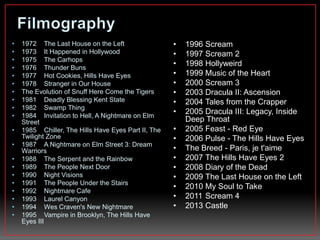
• 1972 The Last House on the Left 
• 1973 It Happened in Hollywood 
• 1975 The Carhops 
• 1976 Thunder Buns 
• 1977 Hot Cookies, Hills Have Eyes 
• 1978 Stranger in Our House 
• The Evolution of Snuff Here Come the Tigers 
• 1981 Deadly Blessing Kent State 
• 1982 Swamp Thing 
• 1984 Invitation to Hell, A Nightmare on Elm 
Street 
• 1985 Chiller, The Hills Have Eyes Part II, The 
Twilight Zone 
• 1987 A Nightmare on Elm Street 3: Dream 
Warriors 
• 1988 The Serpent and the Rainbow 
• 1989 The People Next Door 
• 1990 Night Visions 
• 1991 The People Under the Stairs 
• 1992 Nightmare Cafe 
• 1993 Laurel Canyon 
• 1994 Wes Craven's New Nightmare 
• 1995 Vampire in Brooklyn, The Hills Have 
Eyes III 
• 1996 Scream 
• 1997 Scream 2 
• 1998 Hollyweird 
• 1999 Music of the Heart 
• 2000 Scream 3 
• 2003 Dracula II: Ascension 
• 2004 Tales from the Crapper 
• 2005 Dracula III: Legacy, Inside 
Deep Throat 
• 2005 Feast - Red Eye 
• 2006 Pulse - The Hills Have Eyes 
• The Breed - Paris, je t'aime 
• 2007 The Hills Have Eyes 2 
• 2008 Diary of the Dead 
• 2009 The Last House on the Left 
• 2010 My Soul to Take 
• 2011 Scream 4 
• 2013 Castle
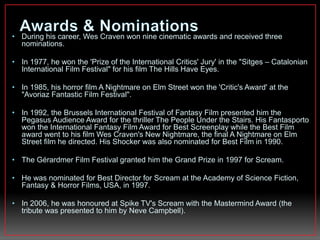
• During his career, Wes Craven won nine cinematic awards and received three 
nominations. 
• In 1977, he won the 'Prize of the International Critics' Jury' in the "Sitges – Catalonian 
International Film Festival" for his film The Hills Have Eyes. 
• In 1985, his horror film A Nightmare on Elm Street won the 'Critic's Award' at the 
"Avoriaz Fantastic Film Festival". 
• In 1992, the Brussels International Festival of Fantasy Film presented him the 
Pegasus Audience Award for the thriller The People Under the Stairs. His Fantasporto 
won the International Fantasy Film Award for Best Screenplay while the Best Film 
award went to his film Wes Craven's New Nightmare, the final A Nightmare on Elm 
Street film he directed. His Shocker was also nominated for Best Film in 1990. 
• The Gérardmer Film Festival granted him the Grand Prize in 1997 for Scream. 
• He was nominated for Best Director for Scream at the Academy of Science Fiction, 
Fantasy & Horror Films, USA, in 1997. 
• In 2006, he was honoured at Spike TV's Scream with the Mastermind Award (the 
tribute was presented to him by Neve Campbell).

Director case study

  • 1.
  • 3.
    • Craven wasborn in Cleveland, Ohio, the son of Caroline and Paul Craven. He was raised in a strict Baptist family. Craven earned an undergraduate degree in English and Psychology from Wheaton College in Illinois and a masters degree in Philosophy and Writing from Johns Hopkins University. • Craven briefly taught English at Westminster College and was a humanities professor at Clarkson College of Technology (now Clarkson University) in Potsdam, New York. His first job in the film industry was as a sound editor for a post-production company in New York City.
  • 4.
    • Craven leftthe academic world for the more lucrative role of pornographic film director. In the documentary Inside Deep Throat, Craven says on camera he made "many hard core X-rated films" under false names. While his role in Deep Throat is undisclosed, most of his early known work involved writing, film editing or both. In 1972 Wes Craven directed his first feature film The Last House on the Left.
  • 5.
    • Craven's workstend to share a common exploration of the nature of reality. A Nightmare on Elm Street, for example, dealt with the consequences of dreams in real life. New Nightmare "brushes against" (but does not quite break) the fourth wall by having actress Heather Langenkamp play herself as she is haunted by the villain of the film in which she once starred. At one point in the film, we see on Wes Craven's word processor a script he has written, which includes the exact conversation he just had with Heather — as if the script was being written as the action unfolded. The Serpent and the Rainbow portrays a man who cannot distinguish between nightmarish visions and reality. In Scream, the characters frequently reference horror films similar to their situations, and at one point Billy Loomis tells his girlfriend that life is just a big movie. This concept was emphasized in the sequels, as copycat stalkers re-enact the events of a new film about the Woodsboro killings occurring in Scream. Scream included a scene mentioning the well-known Richard Gere urban legend. Craven stated in interviews that he received calls from agents telling him that if he left that scene in, he would never work again. He directed Scream 4. • Although known for directing horror/thriller films, he has worked on two that were outside this genre: the 1999 film Music of the Heart, and as one of the 22 directors in the 2006 collaboration Paris, je t'aime.
  • 6.
    • 1972 TheLast House on the Left • 1973 It Happened in Hollywood • 1975 The Carhops • 1976 Thunder Buns • 1977 Hot Cookies, Hills Have Eyes • 1978 Stranger in Our House • The Evolution of Snuff Here Come the Tigers • 1981 Deadly Blessing Kent State • 1982 Swamp Thing • 1984 Invitation to Hell, A Nightmare on Elm Street • 1985 Chiller, The Hills Have Eyes Part II, The Twilight Zone • 1987 A Nightmare on Elm Street 3: Dream Warriors • 1988 The Serpent and the Rainbow • 1989 The People Next Door • 1990 Night Visions • 1991 The People Under the Stairs • 1992 Nightmare Cafe • 1993 Laurel Canyon • 1994 Wes Craven's New Nightmare • 1995 Vampire in Brooklyn, The Hills Have Eyes III • 1996 Scream • 1997 Scream 2 • 1998 Hollyweird • 1999 Music of the Heart • 2000 Scream 3 • 2003 Dracula II: Ascension • 2004 Tales from the Crapper • 2005 Dracula III: Legacy, Inside Deep Throat • 2005 Feast - Red Eye • 2006 Pulse - The Hills Have Eyes • The Breed - Paris, je t'aime • 2007 The Hills Have Eyes 2 • 2008 Diary of the Dead • 2009 The Last House on the Left • 2010 My Soul to Take • 2011 Scream 4 • 2013 Castle
  • 7.
    • During hiscareer, Wes Craven won nine cinematic awards and received three nominations. • In 1977, he won the 'Prize of the International Critics' Jury' in the "Sitges – Catalonian International Film Festival" for his film The Hills Have Eyes. • In 1985, his horror film A Nightmare on Elm Street won the 'Critic's Award' at the "Avoriaz Fantastic Film Festival". • In 1992, the Brussels International Festival of Fantasy Film presented him the Pegasus Audience Award for the thriller The People Under the Stairs. His Fantasporto won the International Fantasy Film Award for Best Screenplay while the Best Film award went to his film Wes Craven's New Nightmare, the final A Nightmare on Elm Street film he directed. His Shocker was also nominated for Best Film in 1990. • The Gérardmer Film Festival granted him the Grand Prize in 1997 for Scream. • He was nominated for Best Director for Scream at the Academy of Science Fiction, Fantasy & Horror Films, USA, in 1997. • In 2006, he was honoured at Spike TV's Scream with the Mastermind Award (the tribute was presented to him by Neve Campbell).