DIGITAL TWIN
TECHNOLOGY
BIJOY T MATHEW
DEPARTMENT OF COMPUTER ENGINEERING
NSS POLYTECHNIC COLLEGE, PANDALAM
CONTENTS
1. What are digital twins
2. Why do we need Digital twin
3. Characteristics of Digital twin
4. Features of Digital twin
5. Architecture
6. Architecture Diagram
7. Advantages and Disadvantages
8. Applications
9. Underlaying technologies
10. References
11. Conclusion
What are Digital Twins ?
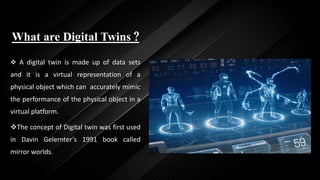
 A digital twin is made up of data sets
and it is a virtual representation of a
physical object which can accurately mimic
the performance of the physical object in a
virtual platform.
The concept of Digital twin was first used
in Davin Gelernter’s 1991 book called
mirror worlds.
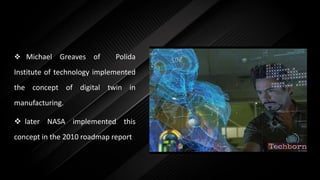
 Michael Greaves of Polida
Institute of technology implemented
the concept of digital twin in
manufacturing.
 later NASA implemented this
concept in the 2010 roadmap report
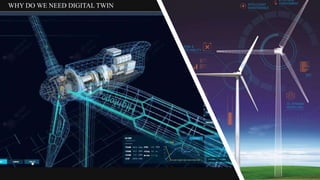
WHY DO WE NEED DIGITAL TWIN
According to the Wind Turbine
 It helps in designing and optimization part
 It helps to predict the aging effect
 It is capable of monitoring the performance of the
wind turbine throughout the whole life cycle
CHARACTERISTICS OF DIGITAL TWIN
Digital technologies have certain characteristics that distinguish them
from other technologies.
 Connectivity
 Homogenization
 Reprogrammable and Smart
 Digital Traces
 Modularity
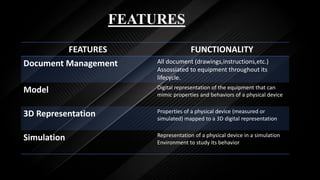
FEATURES
FEATURES FUNCTIONALITY
Document Management All document (drawings,instructions,etc.)
Assossiated to equipment throughout its
lifecycle.
Model Digital representation of the equipment that can
mimic properties and behaviors of a physical device
3D Representation Properties of a physical device (measured or
simulated) mapped to a 3D digital representation
Simulation Representation of a physical device in a simulation
Environment to study its behavior
FEATURES FUNCTIONALITY
Data Model Standardized data model for
connectivity,analytics and visualization
Visualization Graphical Representation of the object either
on a supervisory screen or personal device
Model Synchronization Alignment of a model with real world parameters
(potentially in real time)
Connected Analytics Algorithms and computational results based on
measured properties of a physical device
FEATURES Cont.…
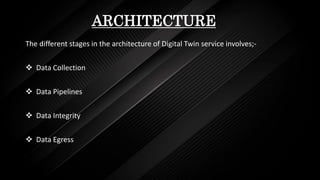
ARCHITECTURE
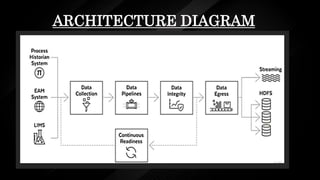
The different stages in the architecture of Digital Twin service involves;-
 Data Collection
 Data Pipelines
 Data Integrity
 Data Egress
ARCHITECTURE DIAGRAM
ADVANTAGES
 Improved design
 Improved build
 Better early detection and warnings
 New opportunities
 Aggregated data
 Post-manufacturing visibility of products
DISADVANTAGES
 The success of technology is dependent on internet connectivity.
 The security is at stake.
 The digital twins concept is based on 3D CAD models and not on 2D
drawings
 Digital twin will be required across entire supply chains.
 The challenges involved here include globalization and new
manufacturing techniques.
APPLICATIONS
Digital Twin technology eliminates the guesswork from determining the best course of
action to service critical physical assets. It’s applications are in following areas:
 Manufacturing
 Space
 Healthcare
 Smart Cities
 Automobiles
 Robotics
 Intelligent manufacturing
 Agriculture
 medicines
 Retail
UNDERLYING TECHNOLOGIES
Technology trends are developing in a complimentary way to enable digital
twins.
 Internet of Things
 API and Open Standards
 Artificial Intelligence
 Argumented,Mixed and Virtual Reality
 Data Mining
 Data Science
 Data storage
CONCLUSION
Combined with the latest machine learning and artificial intelligence
tools which helping companies across many industries reduce
operational costs, increase productivity, improve performance, and
change the way predictive maintenance is done. For product
manufacturers in particular, digital twin technology is crucial to
achieving more efficient production lines and faster time-to-market.
REFRENCES
httpswww.marketsandmarkets.comMarket-Reportsdigital-twin-
market-225269522.html
httpswww.gartner.comennewsroompress-releases2019-02-20-
gartner-survey-reveals-digital-twins-are-entering.html
https://www.gartner.com/doc/3873175
Thank You

DIGITAL_TWIN_final.pptx

  • 1.
    DIGITAL TWIN TECHNOLOGY BIJOY TMATHEW DEPARTMENT OF COMPUTER ENGINEERING NSS POLYTECHNIC COLLEGE, PANDALAM
  • 2.
    CONTENTS 1. What aredigital twins 2. Why do we need Digital twin 3. Characteristics of Digital twin 4. Features of Digital twin 5. Architecture 6. Architecture Diagram 7. Advantages and Disadvantages 8. Applications 9. Underlaying technologies 10. References 11. Conclusion
  • 3.
    What are DigitalTwins ?  A digital twin is made up of data sets and it is a virtual representation of a physical object which can accurately mimic the performance of the physical object in a virtual platform. The concept of Digital twin was first used in Davin Gelernter’s 1991 book called mirror worlds.
  • 4.
     Michael Greavesof Polida Institute of technology implemented the concept of digital twin in manufacturing.  later NASA implemented this concept in the 2010 roadmap report
  • 5.
    WHY DO WENEED DIGITAL TWIN
  • 6.
    According to theWind Turbine  It helps in designing and optimization part  It helps to predict the aging effect  It is capable of monitoring the performance of the wind turbine throughout the whole life cycle
  • 7.
    CHARACTERISTICS OF DIGITALTWIN Digital technologies have certain characteristics that distinguish them from other technologies.  Connectivity  Homogenization  Reprogrammable and Smart  Digital Traces  Modularity
  • 8.
    FEATURES FEATURES FUNCTIONALITY Document ManagementAll document (drawings,instructions,etc.) Assossiated to equipment throughout its lifecycle. Model Digital representation of the equipment that can mimic properties and behaviors of a physical device 3D Representation Properties of a physical device (measured or simulated) mapped to a 3D digital representation Simulation Representation of a physical device in a simulation Environment to study its behavior
  • 9.
    FEATURES FUNCTIONALITY Data ModelStandardized data model for connectivity,analytics and visualization Visualization Graphical Representation of the object either on a supervisory screen or personal device Model Synchronization Alignment of a model with real world parameters (potentially in real time) Connected Analytics Algorithms and computational results based on measured properties of a physical device FEATURES Cont.…
  • 10.
    ARCHITECTURE The different stagesin the architecture of Digital Twin service involves;-  Data Collection  Data Pipelines  Data Integrity  Data Egress
  • 11.
  • 12.
    ADVANTAGES  Improved design Improved build  Better early detection and warnings  New opportunities  Aggregated data  Post-manufacturing visibility of products
  • 13.
    DISADVANTAGES  The successof technology is dependent on internet connectivity.  The security is at stake.  The digital twins concept is based on 3D CAD models and not on 2D drawings  Digital twin will be required across entire supply chains.  The challenges involved here include globalization and new manufacturing techniques.
  • 14.
    APPLICATIONS Digital Twin technologyeliminates the guesswork from determining the best course of action to service critical physical assets. It’s applications are in following areas:  Manufacturing  Space  Healthcare  Smart Cities  Automobiles  Robotics  Intelligent manufacturing  Agriculture  medicines  Retail
  • 15.
    UNDERLYING TECHNOLOGIES Technology trendsare developing in a complimentary way to enable digital twins.  Internet of Things  API and Open Standards  Artificial Intelligence  Argumented,Mixed and Virtual Reality  Data Mining  Data Science  Data storage
  • 17.
    CONCLUSION Combined with thelatest machine learning and artificial intelligence tools which helping companies across many industries reduce operational costs, increase productivity, improve performance, and change the way predictive maintenance is done. For product manufacturers in particular, digital twin technology is crucial to achieving more efficient production lines and faster time-to-market.
  • 18.
  • 19.