A D A P T E D F R O M C H R I S T I N A M I G G E ’ S O R I G I N A L
P O W E R P O I N T L E C T U R E S A T T E S O R O H I G H
S C H O O L A N D C O N T A I N S O N L Y A P O R T I O N O F
T H E E N T I R E P R E S E N T A T I O N ( L E C T U R E N O T E S
T H A T A C C O M P A N Y T H I S W E R E M A D E B Y
M Y S E L F A N D A R E I N T E N D E D F O R T H E E N T I R E
C H A P T E R )
DIGITAL UNIT PLAN
SHANNON O’MALLEY
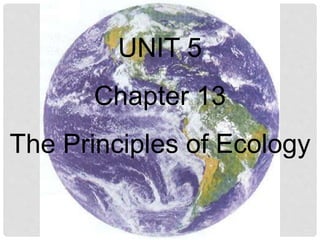
UNIT 5
Chapter 13
The Principles of Ecology
UNIT 5: ECOLOGY
Chapter 13: The Principles of Ecology
I. Ecologists Study Relationships (13.1)
A. Ecologists study environments at different
levels of organization
1. Ecology- study of the interactions
among living things and their
surroundings. From Greek
“oikos” meaning house.
In simpler terms: Ecology is the study of an
organism and how it interacts with it’s environment.
II. Biotic and Abiotic Factors (13.2)
A. An ecosystem includes both biotic and abiotic
factors
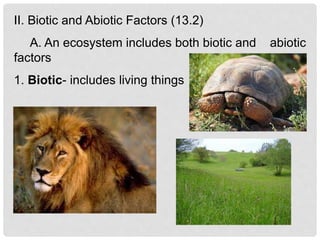
1. Biotic- includes living things
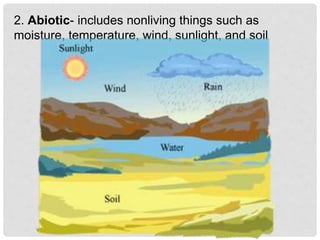
2. Abiotic- includes nonliving things such as
moisture, temperature, wind, sunlight, and soil
B. Changing one factor in an ecosystem can affect
many other factors
a. amount
depends on
many factors
b. tropical
rainforests
have large
biodiversity
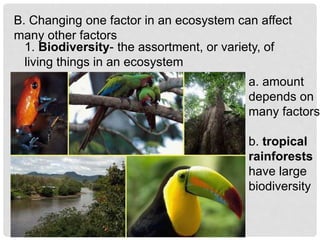
1. Biodiversity- the assortment, or variety, of
living things in an ecosystem
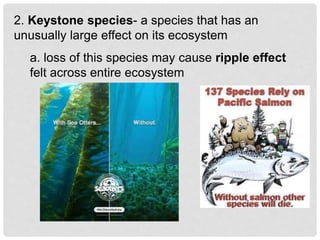
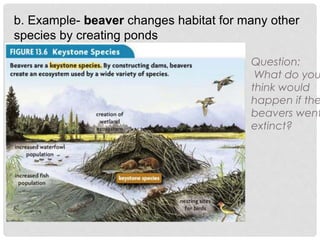
2. Keystone species- a species that has an
unusually large effect on its ecosystem
a. loss of this species may cause ripple effect
felt across entire ecosystem
b. Example- beaver changes habitat for many other
species by creating ponds
Question:
What do you
think would
happen if the
beavers went
extinct?
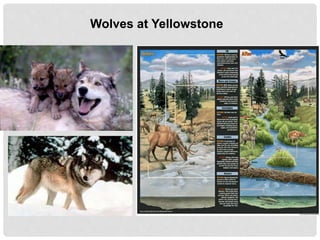
Wolves at Yellowstone
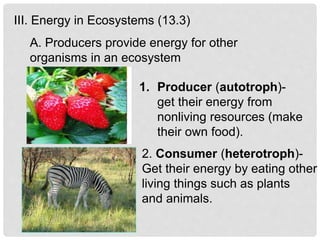
III. Energy in Ecosystems (13.3)
A. Producers provide energy for other
organisms in an ecosystem
1. Producer (autotroph)-
get their energy from
nonliving resources (make
their own food).
2. Consumer (heterotroph)-
Get their energy by eating other
living things such as plants
and animals.
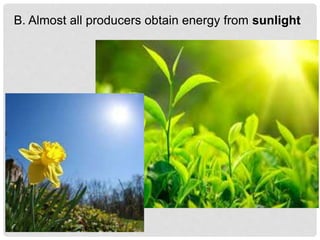
B. Almost all producers obtain energy from sunlight
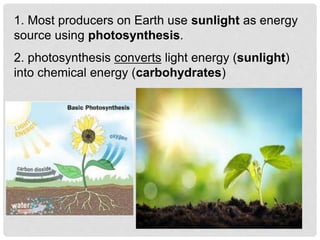
1. Most producers on Earth use sunlight as energy
source using photosynthesis.
2. photosynthesis converts light energy (sunlight)
into chemical energy (carbohydrates)
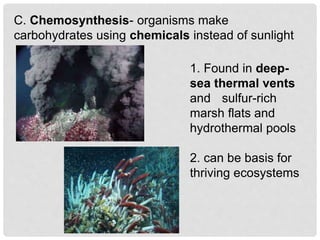
C. Chemosynthesis- organisms make
carbohydrates using chemicals instead of sunlight
1. Found in deep-
sea thermal vents
and sulfur-rich
marsh flats and
hydrothermal pools
2. can be basis for
thriving ecosystems
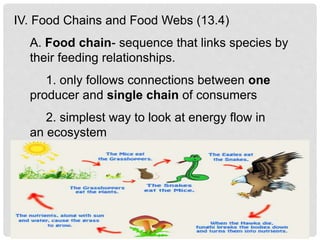
IV. Food Chains and Food Webs (13.4)
A. Food chain- sequence that links species by
their feeding relationships.
1. only follows connections between one
producer and single chain of consumers
2. simplest way to look at energy flow in
an ecosystem
CIRCLE OF LIFE
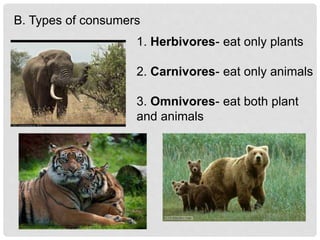
B. Types of consumers
1. Herbivores- eat only plants
2. Carnivores- eat only animals
3. Omnivores- eat both plant
and animals
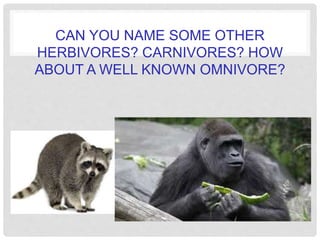
CAN YOU NAME SOME OTHER
HERBIVORES? CARNIVORES? HOW
ABOUT A WELL KNOWN OMNIVORE?
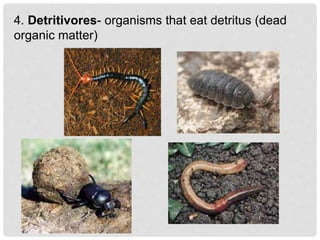
4. Detritivores- organisms that eat detritus (dead
organic matter)
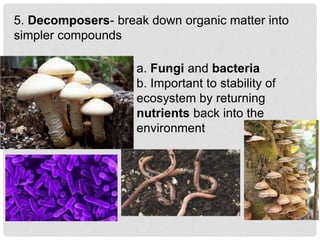
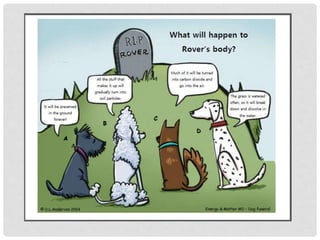
5. Decomposers- break down organic matter into
simpler compounds
a. Fungi and bacteria
b. Important to stability of
ecosystem by returning
nutrients back into the
environment
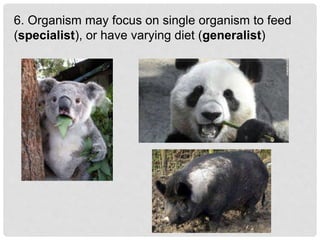
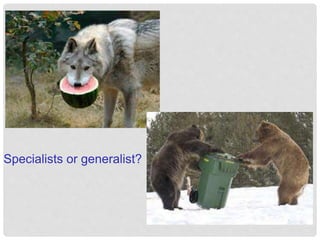
6. Organism may focus on single organism to feed
(specialist), or have varying diet (generalist)
Specialists or generalist?
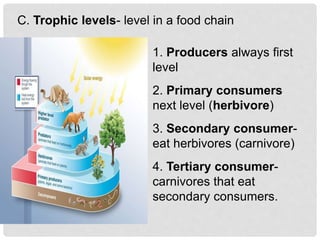
C. Trophic levels- level in a food chain
1. Producers always first
level
2. Primary consumers
next level (herbivore)
3. Secondary consumer-
eat herbivores (carnivore)
4. Tertiary consumer-
carnivores that eat
secondary consumers.
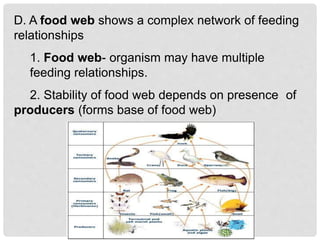
D. A food web shows a complex network of feeding
relationships
1. Food web- organism may have multiple
feeding relationships.
2. Stability of food web depends on presence of
producers (forms base of food web)
V. Cycling of Matter (13.5)
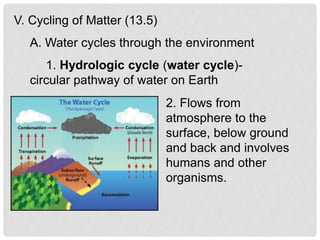
A. Water cycles through the environment
1. Hydrologic cycle (water cycle)-
circular pathway of water on Earth
2. Flows from
atmosphere to the
surface, below ground
and back and involves
humans and other
organisms.
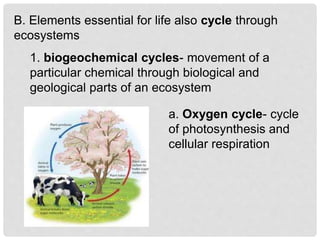
B. Elements essential for life also cycle through
ecosystems
1. biogeochemical cycles- movement of a
particular chemical through biological and
geological parts of an ecosystem
a. Oxygen cycle- cycle
of photosynthesis and
cellular respiration
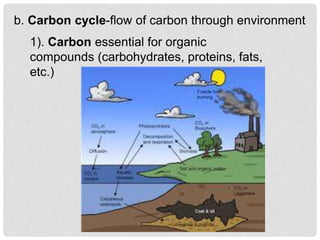
b. Carbon cycle-flow of carbon through environment
1). Carbon essential for organic
compounds (carbohydrates, proteins, fats,
etc.)
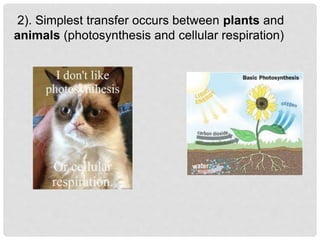
2). Simplest transfer occurs between plants and
animals (photosynthesis and cellular respiration)
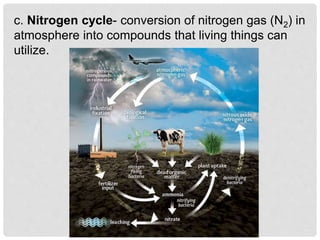
c. Nitrogen cycle- conversion of nitrogen gas (N2) in
atmosphere into compounds that living things can
utilize.
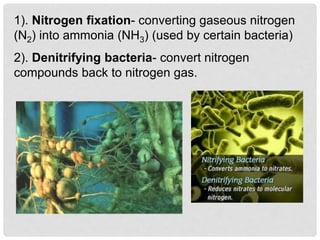
1). Nitrogen fixation- converting gaseous nitrogen
(N2) into ammonia (NH3) (used by certain bacteria)
2). Denitrifying bacteria- convert nitrogen
compounds back to nitrogen gas.
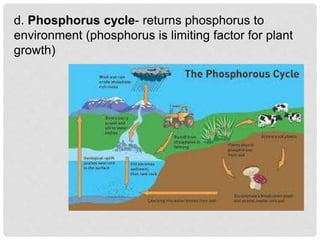
d. Phosphorus cycle- returns phosphorus to
environment (phosphorus is limiting factor for plant
growth)

Digital Unit Plan Lecture

  • 1.
    A D AP T E D F R O M C H R I S T I N A M I G G E ’ S O R I G I N A L P O W E R P O I N T L E C T U R E S A T T E S O R O H I G H S C H O O L A N D C O N T A I N S O N L Y A P O R T I O N O F T H E E N T I R E P R E S E N T A T I O N ( L E C T U R E N O T E S T H A T A C C O M P A N Y T H I S W E R E M A D E B Y M Y S E L F A N D A R E I N T E N D E D F O R T H E E N T I R E C H A P T E R ) DIGITAL UNIT PLAN SHANNON O’MALLEY
  • 2.
    UNIT 5 Chapter 13 ThePrinciples of Ecology
  • 4.
    UNIT 5: ECOLOGY Chapter13: The Principles of Ecology I. Ecologists Study Relationships (13.1) A. Ecologists study environments at different levels of organization 1. Ecology- study of the interactions among living things and their surroundings. From Greek “oikos” meaning house. In simpler terms: Ecology is the study of an organism and how it interacts with it’s environment.
  • 5.
    II. Biotic andAbiotic Factors (13.2) A. An ecosystem includes both biotic and abiotic factors 1. Biotic- includes living things
  • 6.
    2. Abiotic- includesnonliving things such as moisture, temperature, wind, sunlight, and soil
  • 7.
    B. Changing onefactor in an ecosystem can affect many other factors a. amount depends on many factors b. tropical rainforests have large biodiversity 1. Biodiversity- the assortment, or variety, of living things in an ecosystem
  • 8.
    2. Keystone species-a species that has an unusually large effect on its ecosystem a. loss of this species may cause ripple effect felt across entire ecosystem
  • 9.
    b. Example- beaverchanges habitat for many other species by creating ponds Question: What do you think would happen if the beavers went extinct?
  • 10.
  • 11.
    III. Energy inEcosystems (13.3) A. Producers provide energy for other organisms in an ecosystem 1. Producer (autotroph)- get their energy from nonliving resources (make their own food). 2. Consumer (heterotroph)- Get their energy by eating other living things such as plants and animals.
  • 12.
    B. Almost allproducers obtain energy from sunlight
  • 13.
    1. Most producerson Earth use sunlight as energy source using photosynthesis. 2. photosynthesis converts light energy (sunlight) into chemical energy (carbohydrates)
  • 14.
    C. Chemosynthesis- organismsmake carbohydrates using chemicals instead of sunlight 1. Found in deep- sea thermal vents and sulfur-rich marsh flats and hydrothermal pools 2. can be basis for thriving ecosystems
  • 16.
    IV. Food Chainsand Food Webs (13.4) A. Food chain- sequence that links species by their feeding relationships. 1. only follows connections between one producer and single chain of consumers 2. simplest way to look at energy flow in an ecosystem
  • 17.
  • 18.
    B. Types ofconsumers 1. Herbivores- eat only plants 2. Carnivores- eat only animals 3. Omnivores- eat both plant and animals
  • 19.
    CAN YOU NAMESOME OTHER HERBIVORES? CARNIVORES? HOW ABOUT A WELL KNOWN OMNIVORE?
  • 20.
    4. Detritivores- organismsthat eat detritus (dead organic matter)
  • 21.
    5. Decomposers- breakdown organic matter into simpler compounds a. Fungi and bacteria b. Important to stability of ecosystem by returning nutrients back into the environment
  • 22.
    6. Organism mayfocus on single organism to feed (specialist), or have varying diet (generalist)
  • 23.
  • 24.
    C. Trophic levels-level in a food chain 1. Producers always first level 2. Primary consumers next level (herbivore) 3. Secondary consumer- eat herbivores (carnivore) 4. Tertiary consumer- carnivores that eat secondary consumers.
  • 25.
    D. A foodweb shows a complex network of feeding relationships 1. Food web- organism may have multiple feeding relationships. 2. Stability of food web depends on presence of producers (forms base of food web)
  • 27.
    V. Cycling ofMatter (13.5) A. Water cycles through the environment 1. Hydrologic cycle (water cycle)- circular pathway of water on Earth 2. Flows from atmosphere to the surface, below ground and back and involves humans and other organisms.
  • 28.
    B. Elements essentialfor life also cycle through ecosystems 1. biogeochemical cycles- movement of a particular chemical through biological and geological parts of an ecosystem a. Oxygen cycle- cycle of photosynthesis and cellular respiration
  • 29.
    b. Carbon cycle-flowof carbon through environment 1). Carbon essential for organic compounds (carbohydrates, proteins, fats, etc.)
  • 30.
    2). Simplest transferoccurs between plants and animals (photosynthesis and cellular respiration)
  • 31.
    c. Nitrogen cycle-conversion of nitrogen gas (N2) in atmosphere into compounds that living things can utilize.
  • 32.
    1). Nitrogen fixation-converting gaseous nitrogen (N2) into ammonia (NH3) (used by certain bacteria) 2). Denitrifying bacteria- convert nitrogen compounds back to nitrogen gas.
  • 33.
    d. Phosphorus cycle-returns phosphorus to environment (phosphorus is limiting factor for plant growth)