selfexplanatory.2022
Hello
HI
नमस्ते
ْ‫م‬ُ‫ك‬ْ‫ي‬‫ا‬‫ل‬‫ا‬‫ع‬ ُ‫م‬ ‫ا‬
‫َل‬ َّ
‫الس‬
ِ َّ
‫ٱَّلل‬ ُ‫اة‬‫م‬ْ‫ح‬‫ا‬‫ر‬‫ا‬‫و‬
ُ‫ه‬ُ‫ت‬‫كا‬‫ا‬‫ر‬‫ا‬‫ب‬‫ا‬‫و‬
Saba Parvin Haque
M.Sc. Life Sciences
(Specialization in Neurobiology)
from “Sophia College”
(Autonomous), Mumbai.
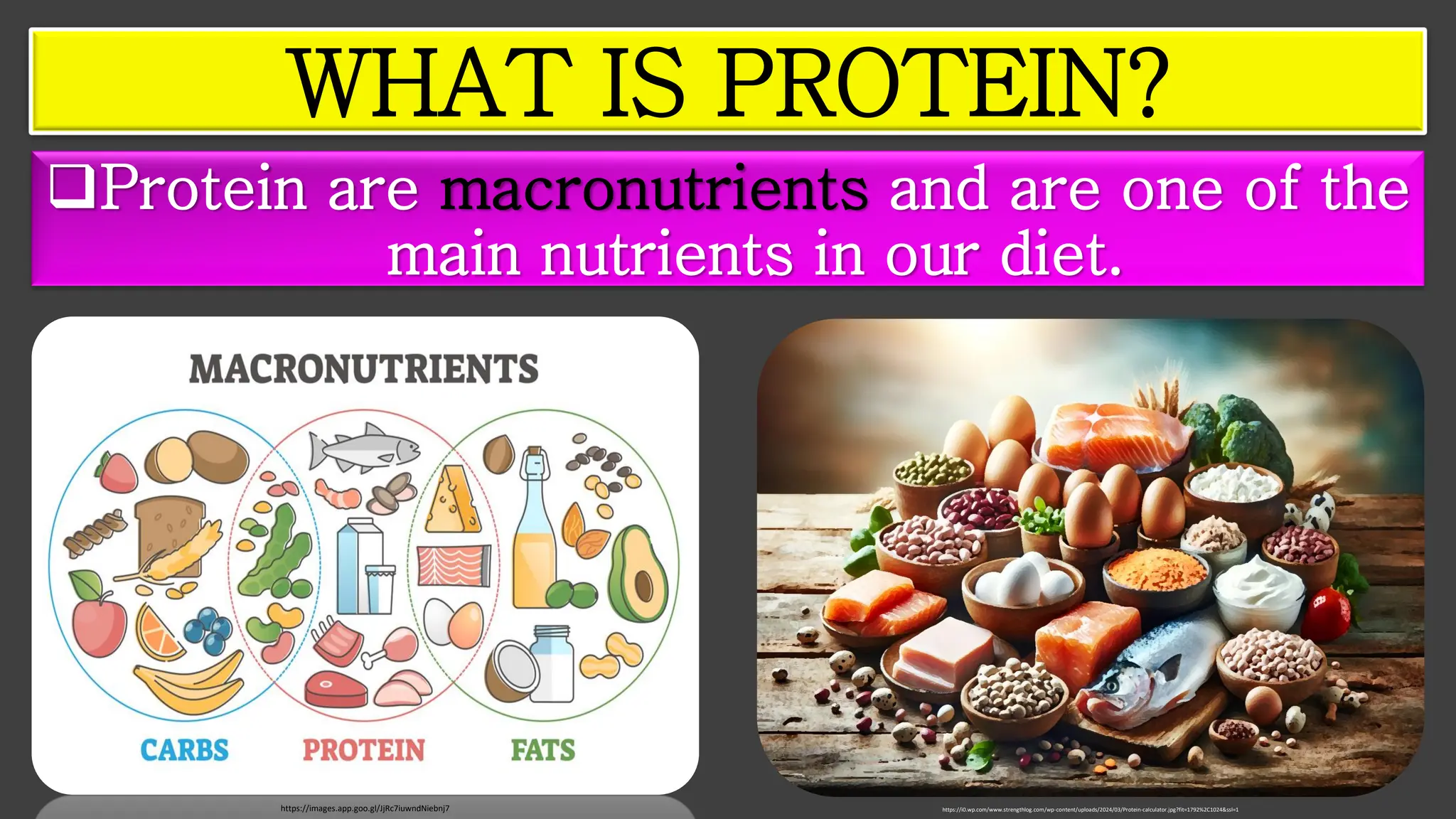
❑Protein are macronutrients and are one of the
main nutrients in our diet.
https://images.app.goo.gl/JjRc7iuwndNiebnj7
WHAT IS PROTEIN?
https://i0.wp.com/www.strengthlog.com/wp-content/uploads/2024/03/Protein-calculator.jpg?fit=1792%2C1024&ssl=1
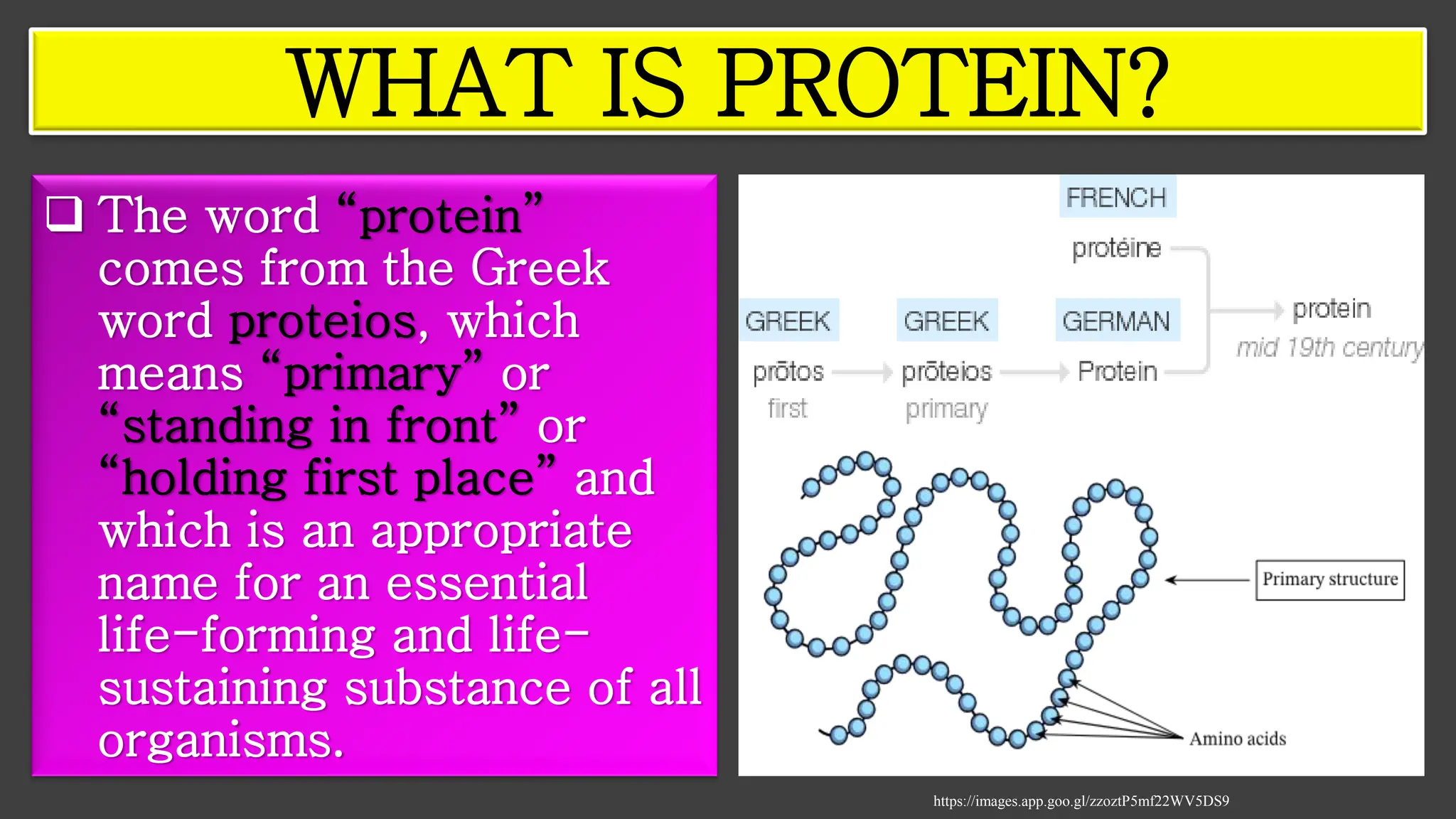
❑ The word “protein”
comes from the Greek
word proteios, which
means “primary” or
“standing in front” or
“holding first place” and
which is an appropriate
name for an essential
life-forming and life-
sustaining substance of all
organisms.
https://images.app.goo.gl/zzoztP5mf22WV5DS9
WHAT IS PROTEIN?
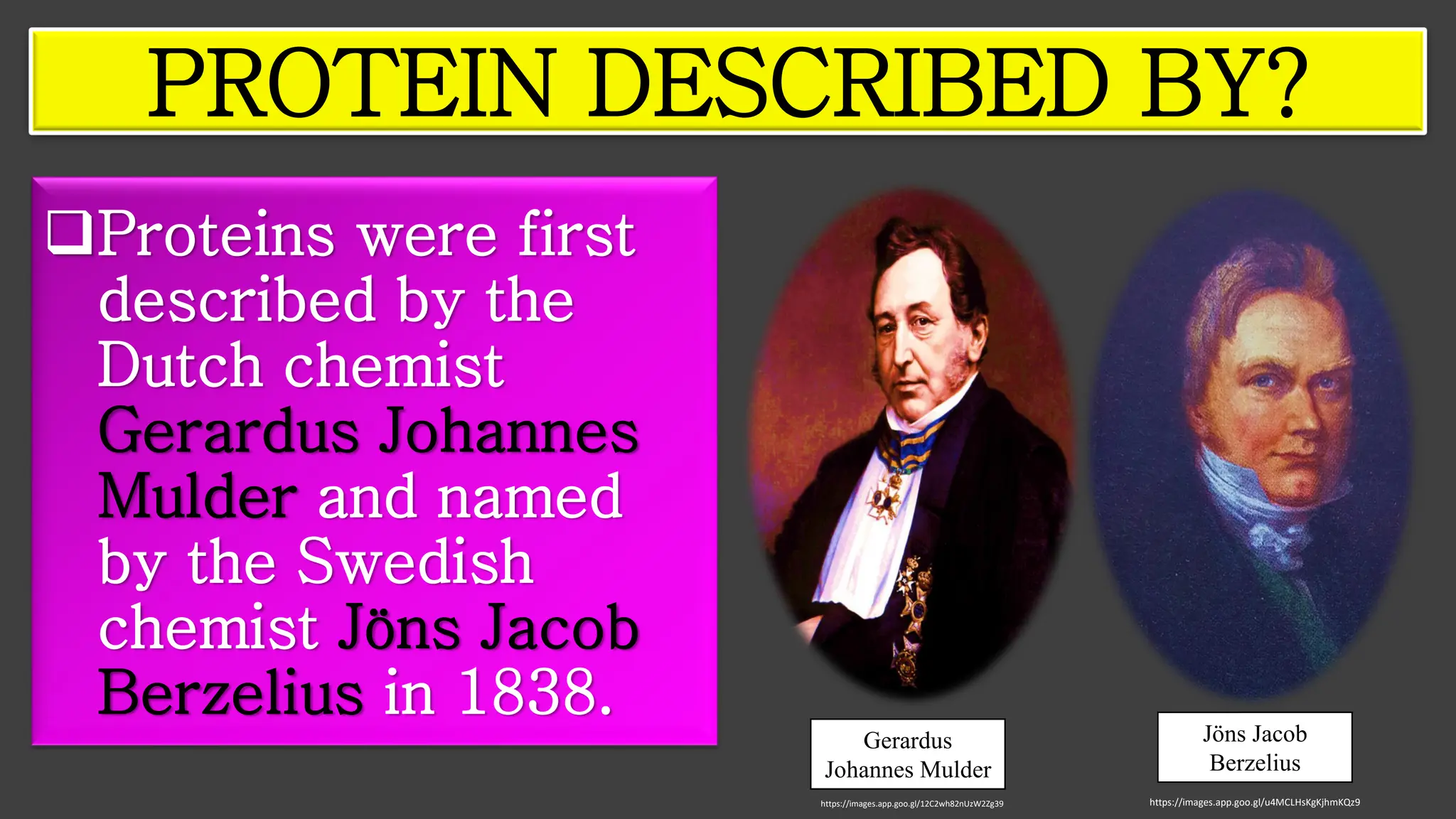
❑Proteins were first
described by the
Dutch chemist
Gerardus Johannes
Mulder and named
by the Swedish
chemist Jöns Jacob
Berzelius in 1838.
PROTEIN DESCRIBED BY?
Gerardus
Johannes Mulder
Jöns Jacob
Berzelius
https://images.app.goo.gl/u4MCLHsKgKjhmKQz9
https://images.app.goo.gl/12C2wh82nUzW2Zg39
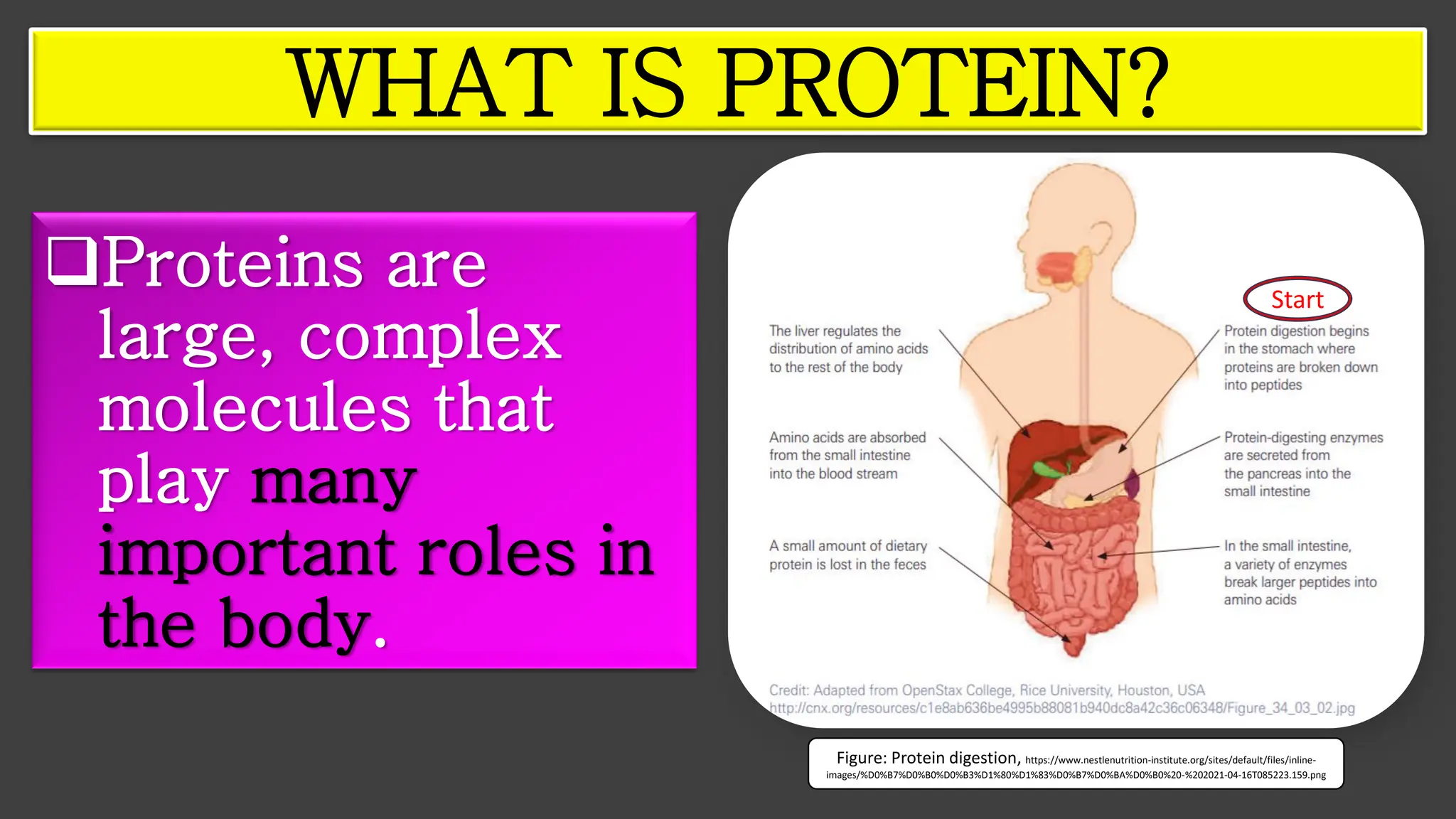
❑Proteins are
large, complex
molecules that
play many
important roles in
the body.
WHAT IS PROTEIN?
Figure: Protein digestion, https://www.nestlenutrition-institute.org/sites/default/files/inline-
images/%D0%B7%D0%B0%D0%B3%D1%80%D1%83%D0%B7%D0%BA%D0%B0%20-%202021-04-16T085223.159.png
Start
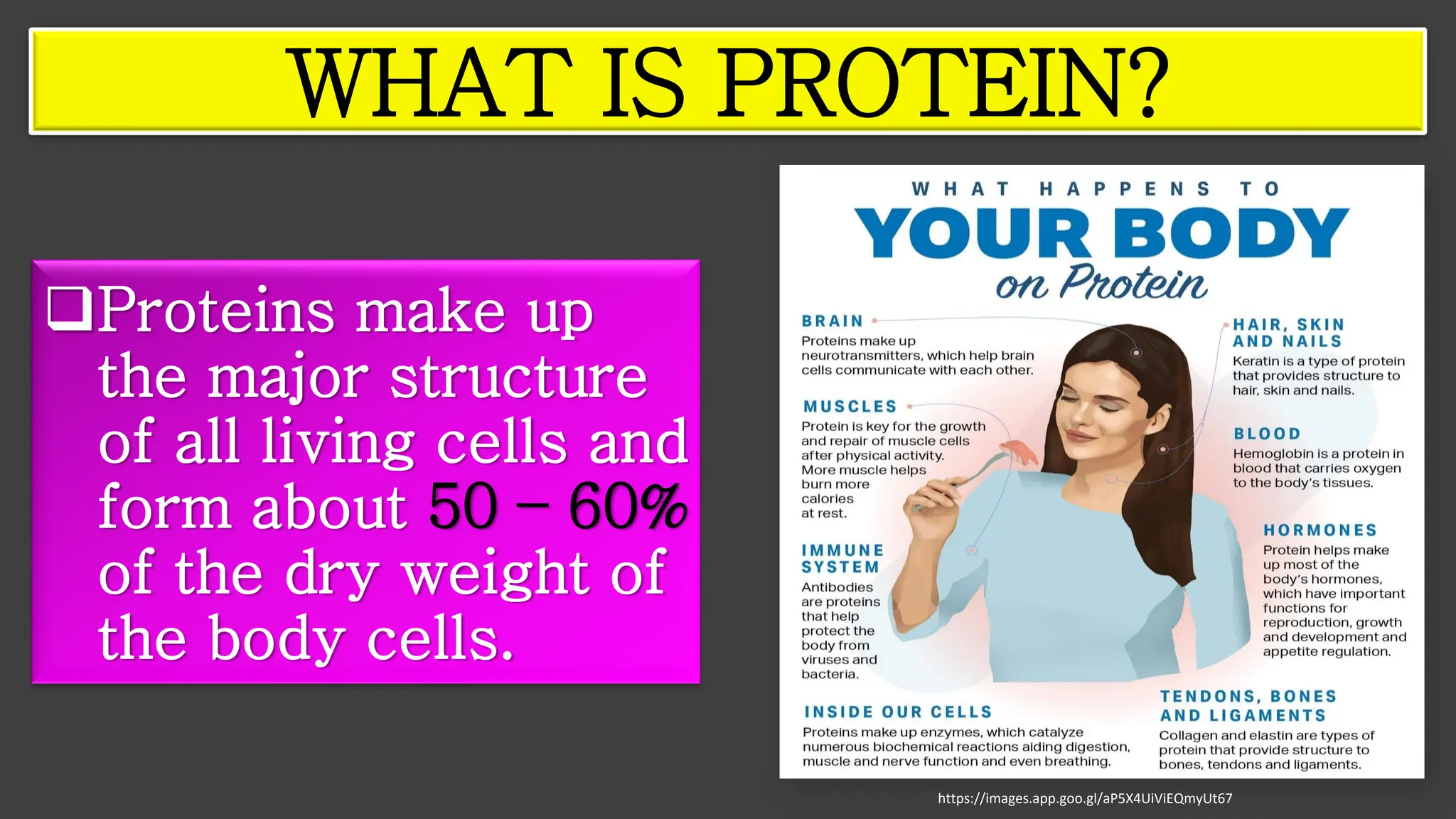
❑Proteins make up
the major structure
of all living cells and
form about 50 – 60%
of the dry weight of
the body cells.
WHAT IS PROTEIN?
https://images.app.goo.gl/aP5X4UiViEQmyUt67
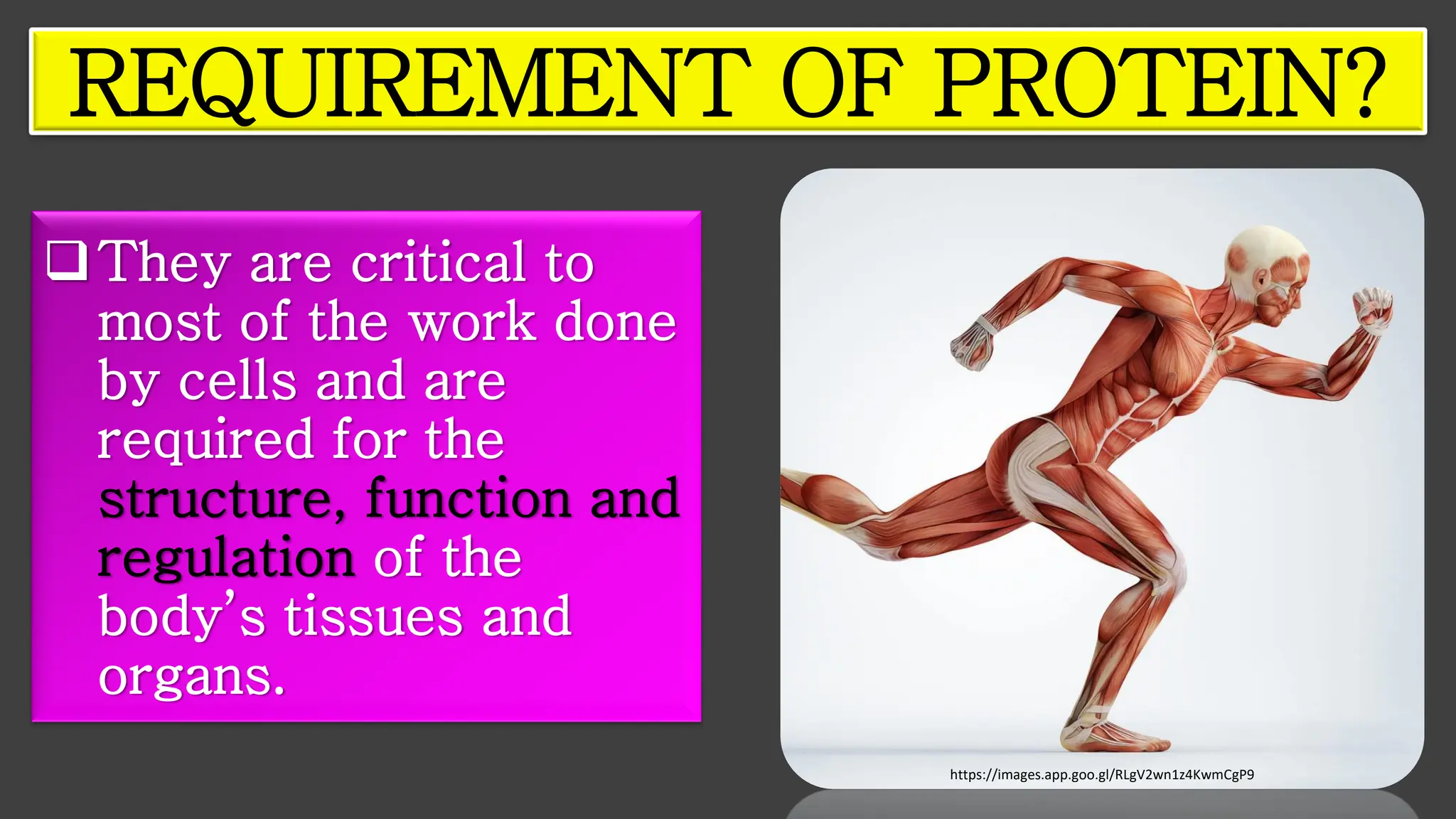
❑They are critical to
most of the work done
by cells and are
required for the
structure, function and
regulation of the
body’s tissues and
organs.
REQUIREMENT OF PROTEIN?
https://images.app.goo.gl/RLgV2wn1z4KwmCgP9
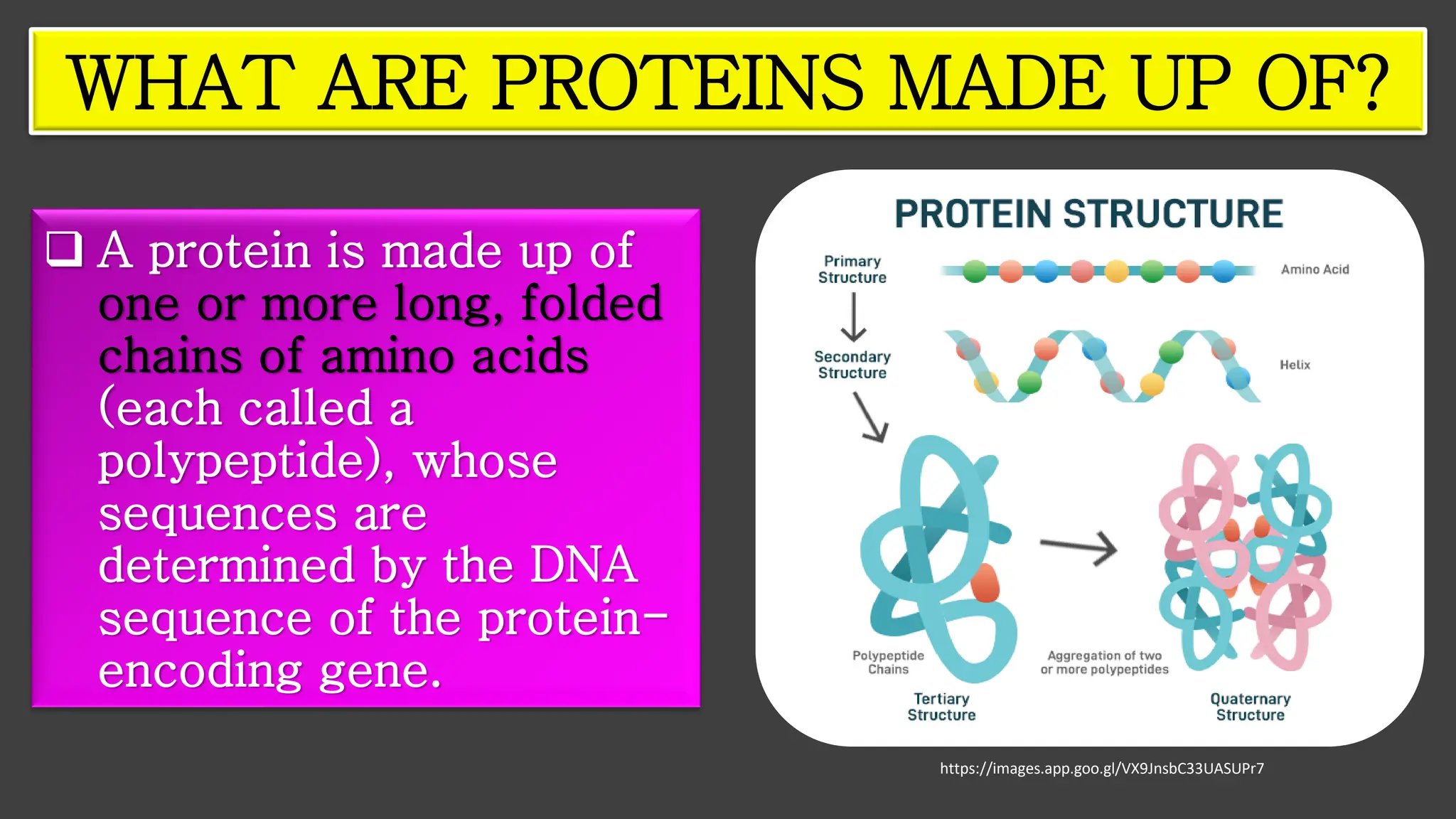
❑ A protein is made up of
one or more long, folded
chains of amino acids
(each called a
polypeptide), whose
sequences are
determined by the DNA
sequence of the protein-
encoding gene.
WHAT ARE PROTEINS MADE UP OF?
https://images.app.goo.gl/VX9JnsbC33UASUPr7
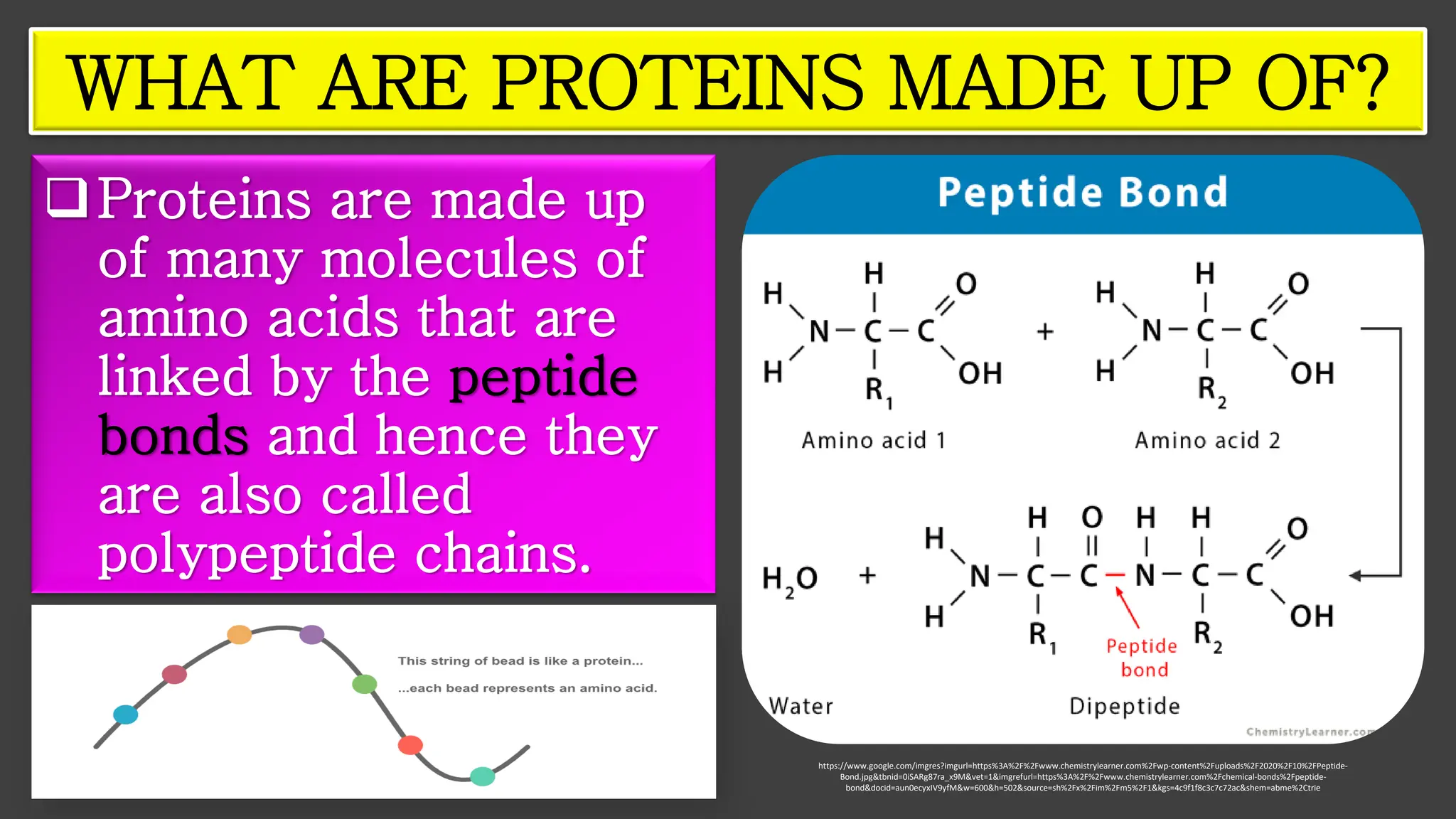
❑Proteins are made up
of many molecules of
amino acids that are
linked by the peptide
bonds and hence they
are also called
polypeptide chains.
WHAT ARE PROTEINS MADE UP OF?
https://www.google.com/imgres?imgurl=https%3A%2F%2Fwww.chemistrylearner.com%2Fwp-content%2Fuploads%2F2020%2F10%2FPeptide-
Bond.jpg&tbnid=0iSARg87ra_x9M&vet=1&imgrefurl=https%3A%2F%2Fwww.chemistrylearner.com%2Fchemical-bonds%2Fpeptide-
bond&docid=aun0ecyxIV9yfM&w=600&h=502&source=sh%2Fx%2Fim%2Fm5%2F1&kgs=4c9f1f8c3c7c72ac&shem=abme%2Ctrie
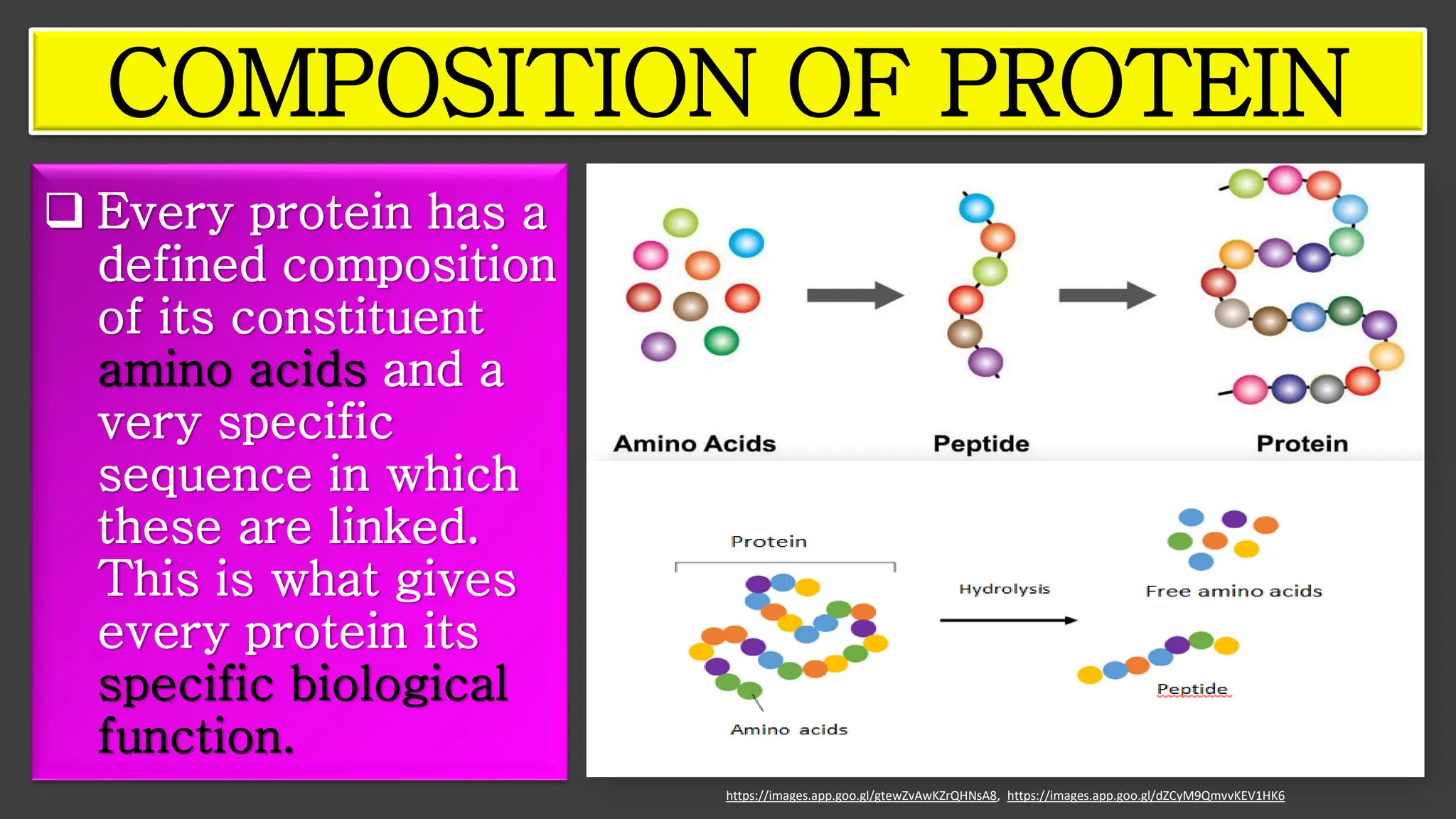
❑ Every protein has a
defined composition
of its constituent
amino acids and a
very specific
sequence in which
these are linked.
This is what gives
every protein its
specific biological
function.
COMPOSITION OF PROTEIN
https://images.app.goo.gl/gtewZvAwKZrQHNsA8, https://images.app.goo.gl/dZCyM9QmvvKEV1HK6
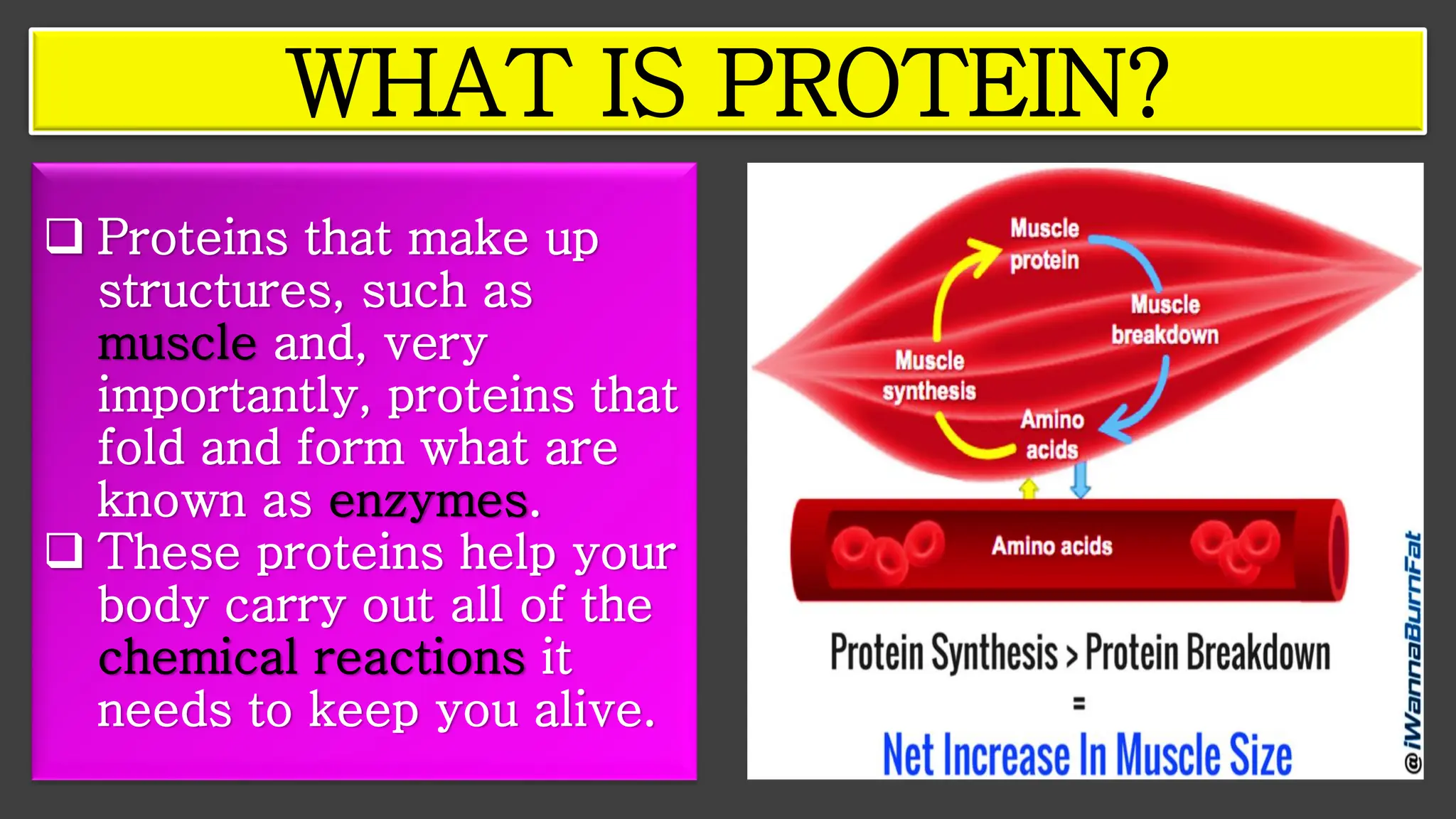
❑ Proteins that make up
structures, such as
muscle and, very
importantly, proteins that
fold and form what are
known as enzymes.
❑ These proteins help your
body carry out all of the
chemical reactions it
needs to keep you alive.
WHAT IS PROTEIN?
(Satyanarayana, 2017)
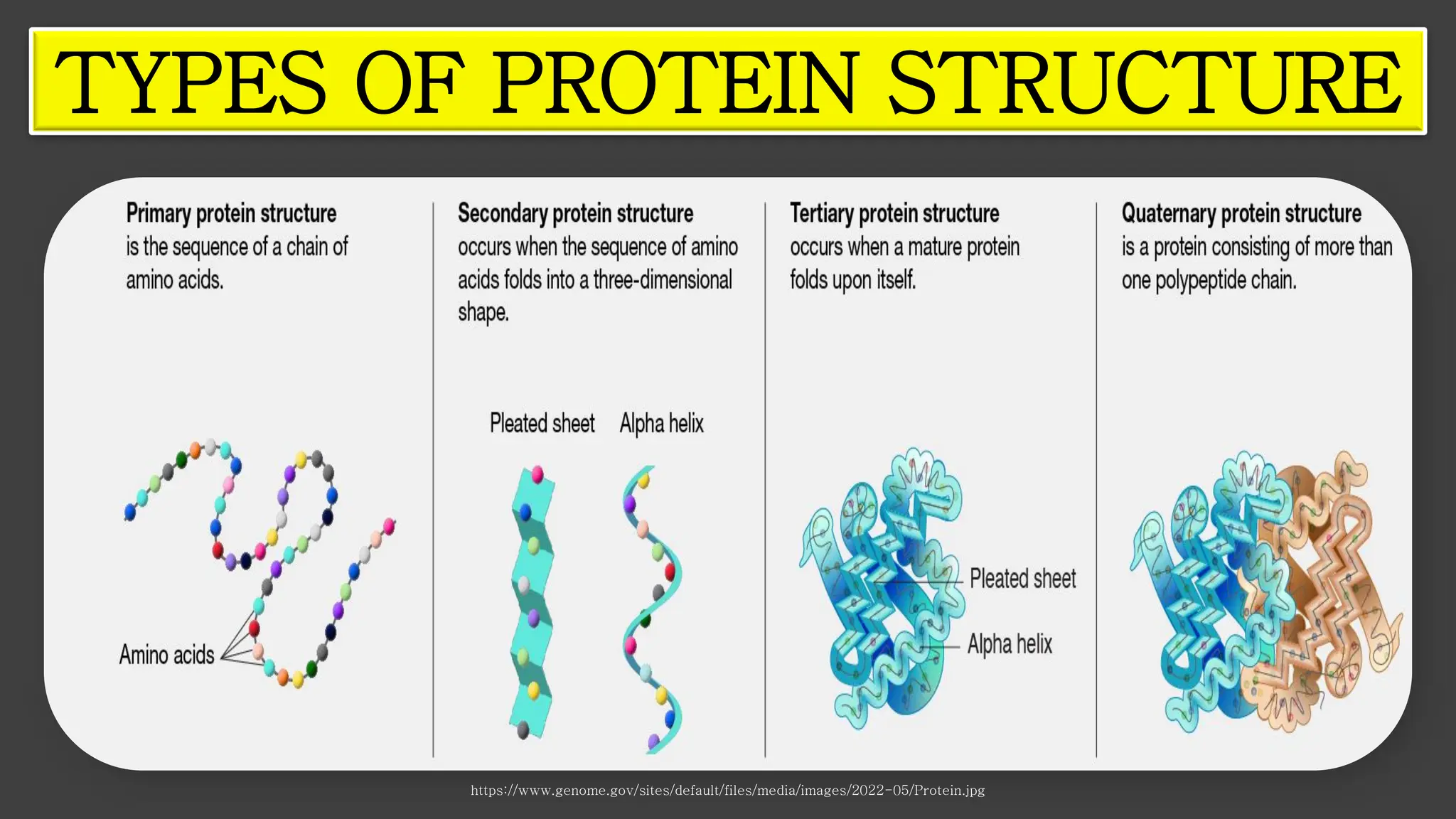
https://www.genome.gov/sites/default/files/media/images/2022-05/Protein.jpg
TYPES OF PROTEIN STRUCTURE
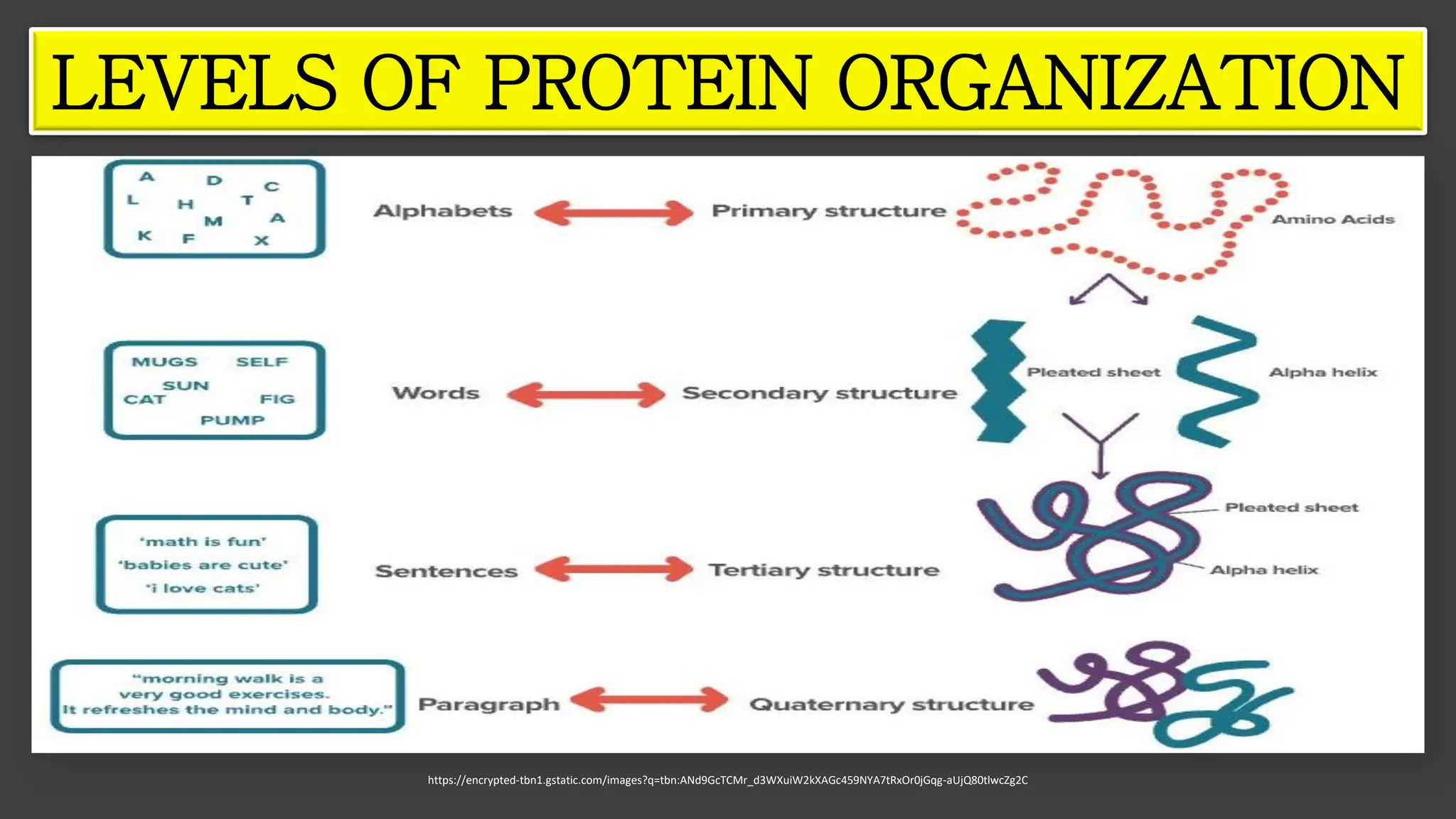
LEVELS OF PROTEIN ORGANIZATION
https://encrypted-tbn1.gstatic.com/images?q=tbn:ANd9GcTCMr_d3WXuiW2kXAGc459NYA7tRxOr0jGqg-aUjQ80tlwcZg2C
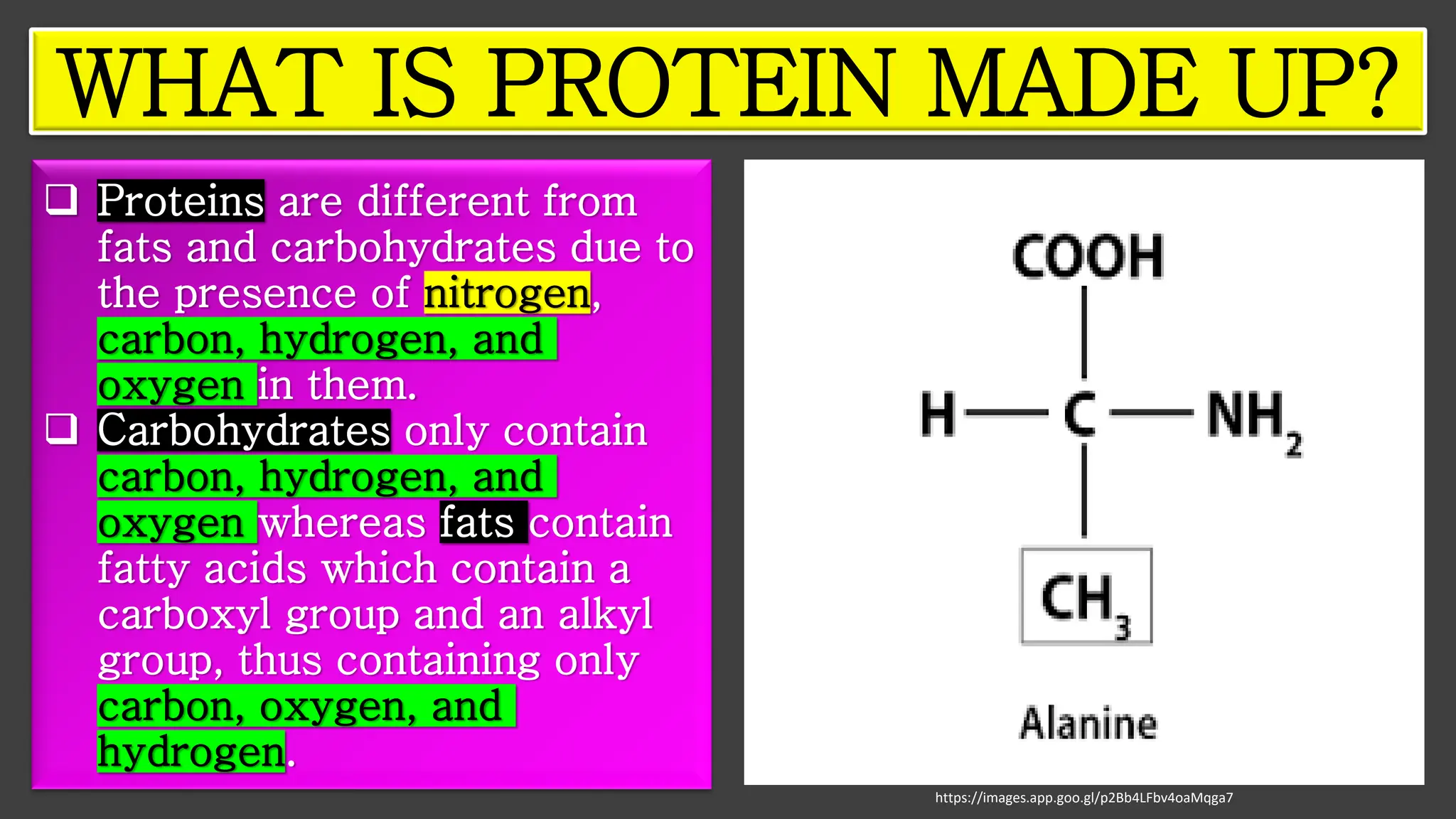
WHAT IS PROTEIN MADE UP?
❑ Proteins are different from
fats and carbohydrates due to
the presence of nitrogen,
carbon, hydrogen, and
oxygen in them.
❑ Carbohydrates only contain
carbon, hydrogen, and
oxygen whereas fats contain
fatty acids which contain a
carboxyl group and an alkyl
group, thus containing only
carbon, oxygen, and
hydrogen.
https://images.app.goo.gl/p2Bb4LFbv4oaMqga7
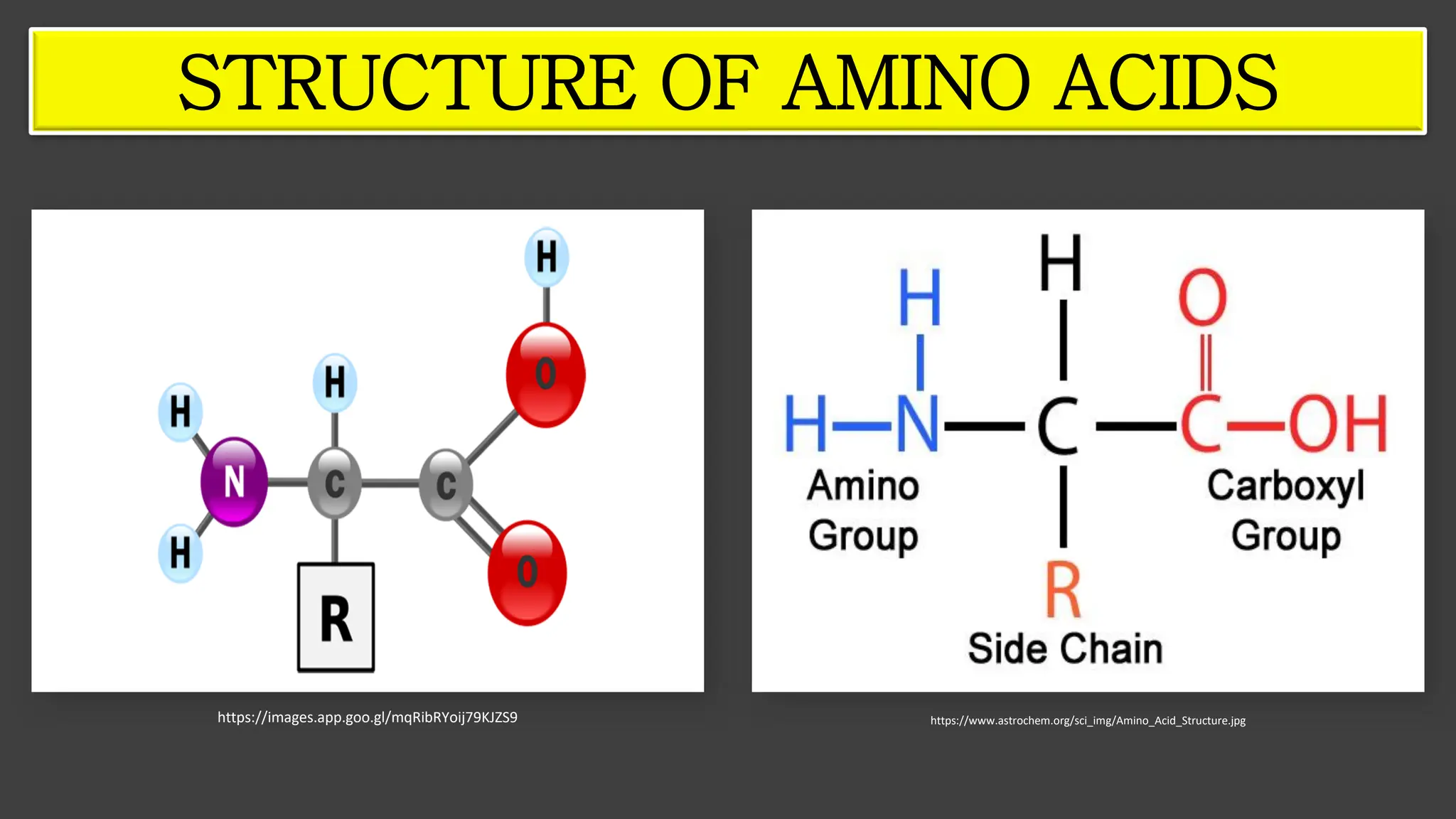
https://images.app.goo.gl/mqRibRYoij79KJZS9 https://www.astrochem.org/sci_img/Amino_Acid_Structure.jpg
STRUCTURE OF AMINO ACIDS
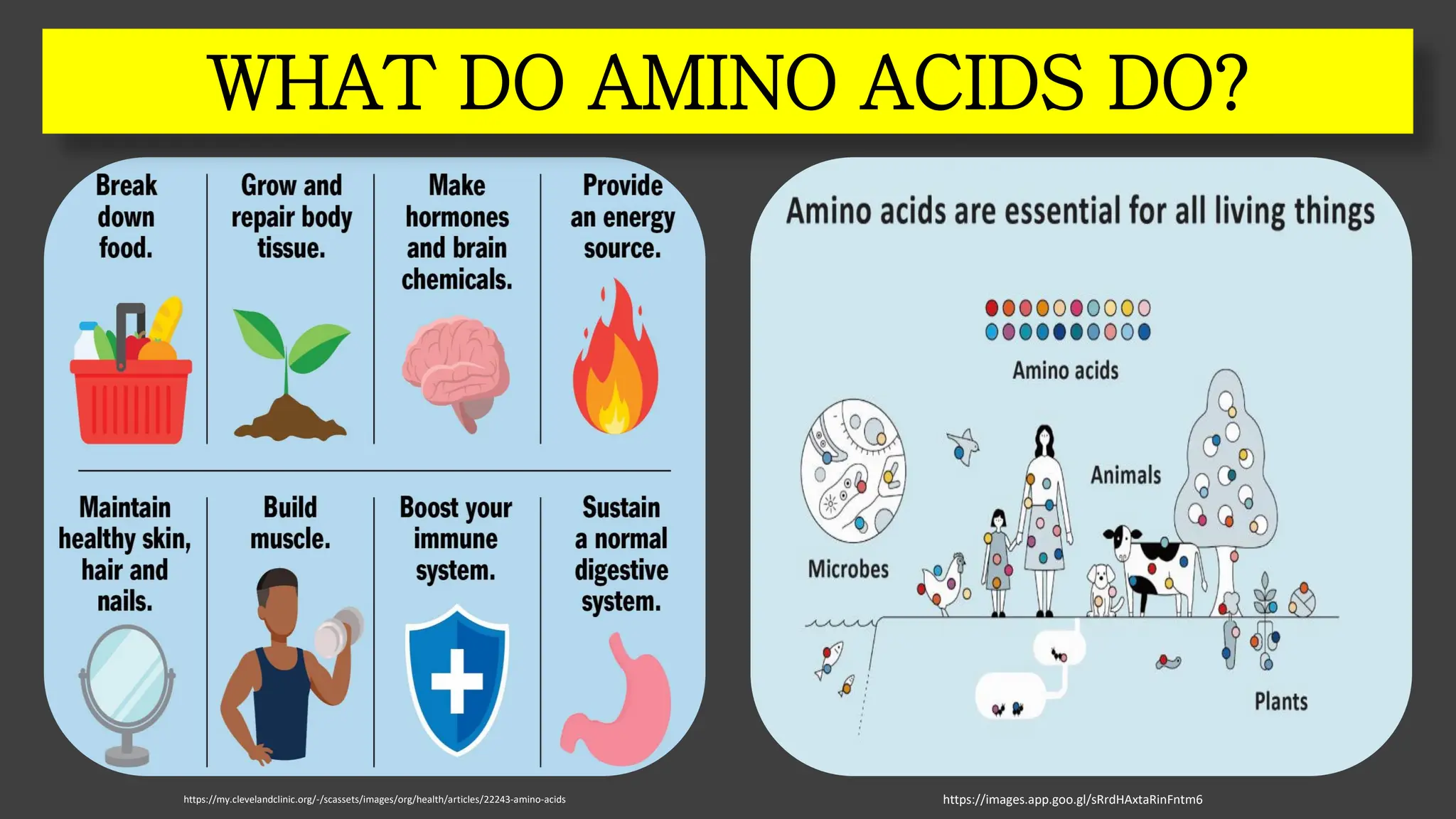
https://my.clevelandclinic.org/-/scassets/images/org/health/articles/22243-amino-acids
WHAT DO AMINO ACIDS DO?
https://images.app.goo.gl/sRrdHAxtaRinFntm6
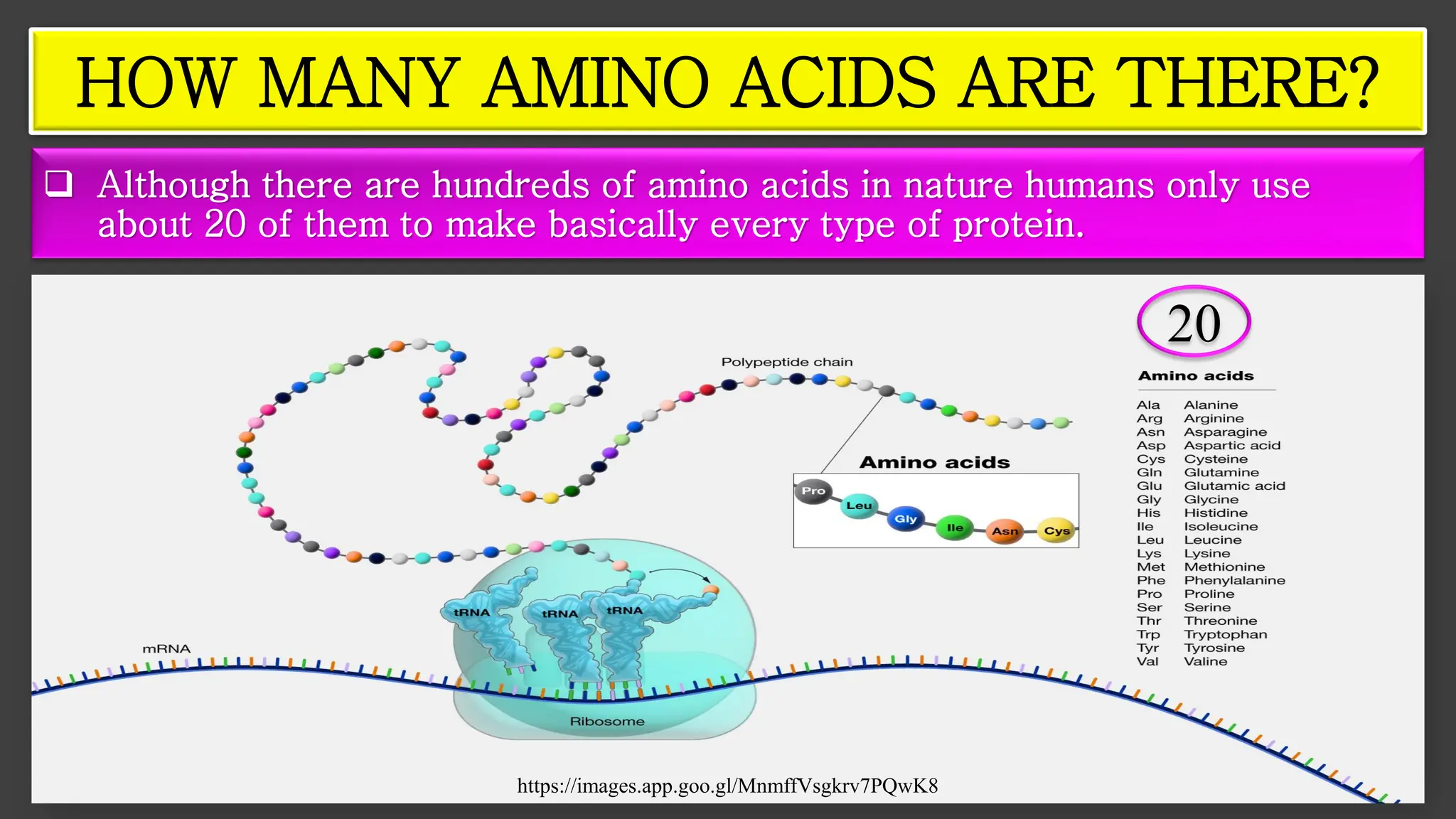
https://images.app.goo.gl/MnmffVsgkrv7PQwK8
HOW MANY AMINO ACIDS ARE THERE?
20
❑ Although there are hundreds of amino acids in nature humans only use
about 20 of them to make basically every type of protein.
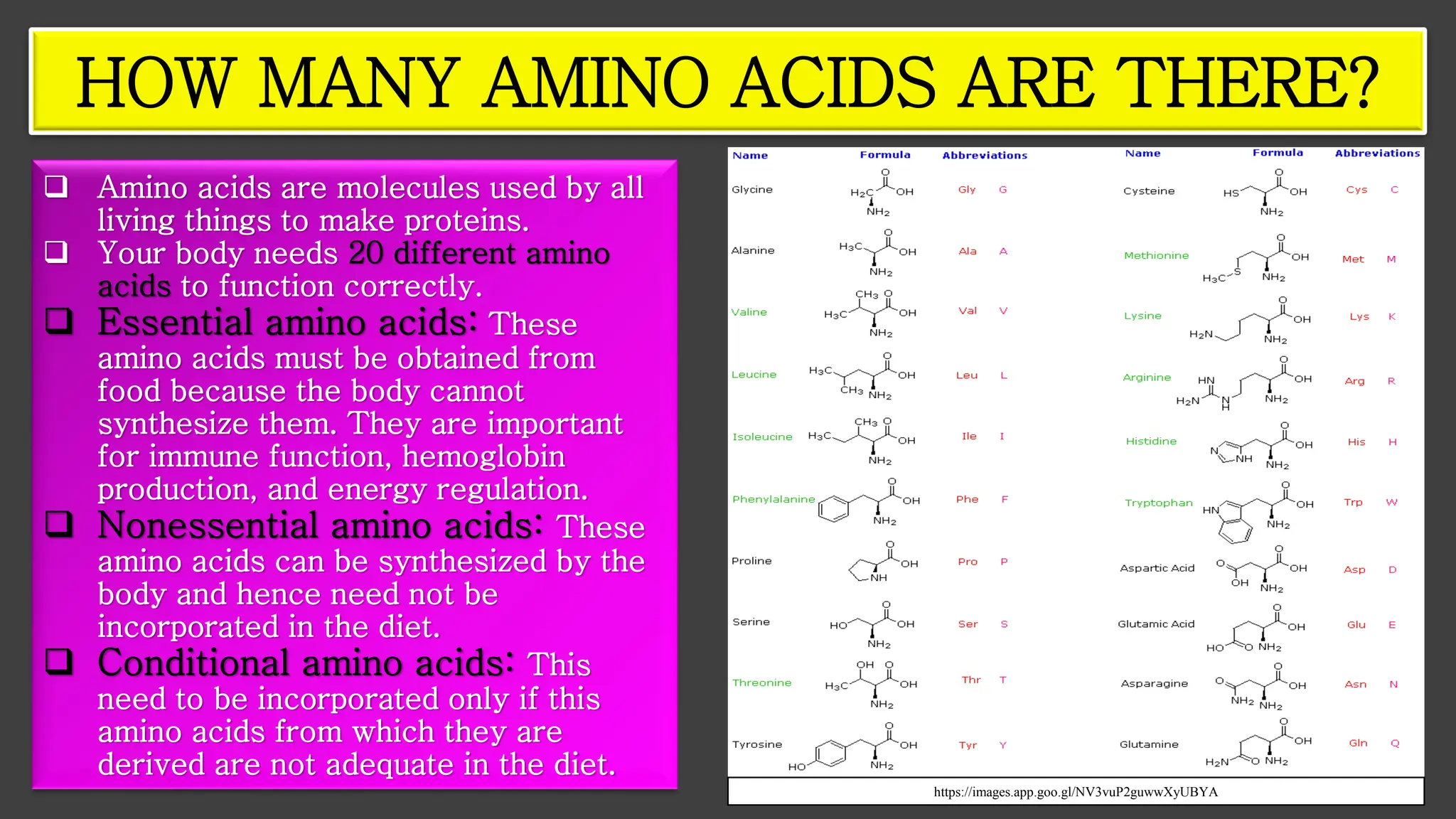
HOW MANY AMINO ACIDS ARE THERE?
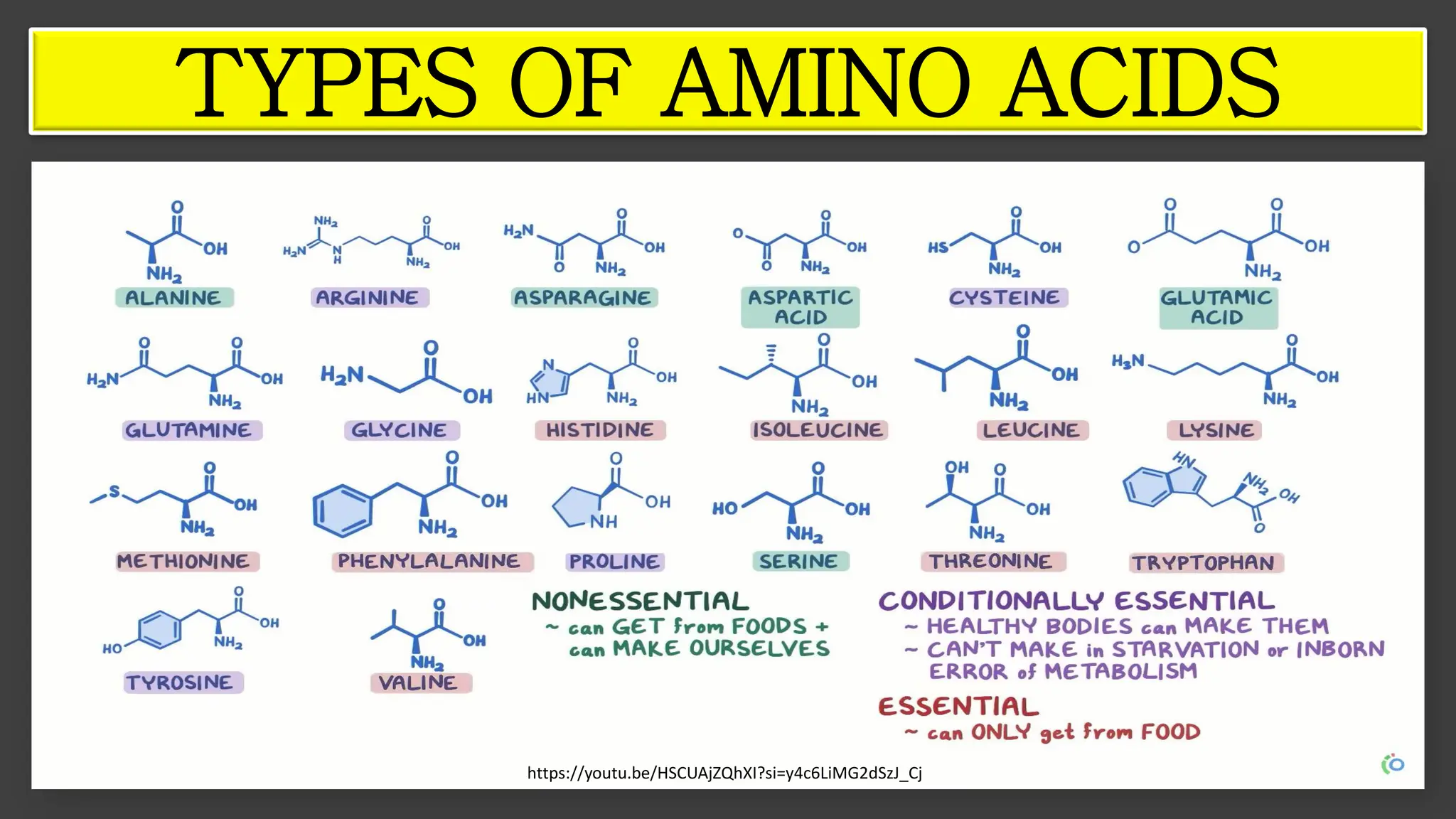
❑ Amino acids are molecules used by all
living things to make proteins.
❑ Your body needs 20 different amino
acids to function correctly.
❑ Essential amino acids: These
amino acids must be obtained from
food because the body cannot
synthesize them. They are important
for immune function, hemoglobin
production, and energy regulation.
❑ Nonessential amino acids: These
amino acids can be synthesized by the
body and hence need not be
incorporated in the diet.
❑ Conditional amino acids: This
need to be incorporated only if this
amino acids from which they are
derived are not adequate in the diet.
https://images.app.goo.gl/NV3vuP2guwwXyUBYA
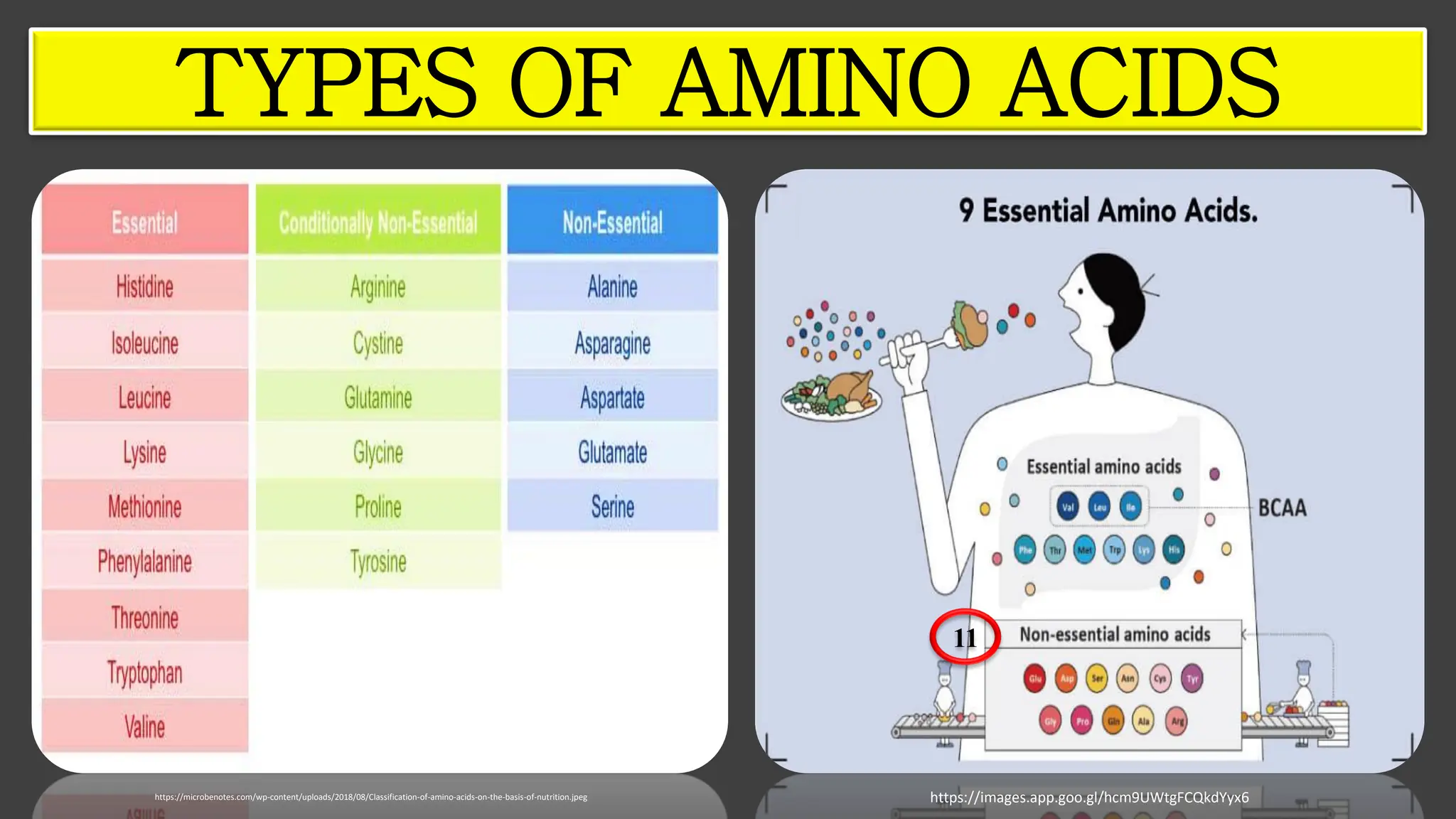
TYPES OF AMINO ACIDS
https://microbenotes.com/wp-content/uploads/2018/08/Classification-of-amino-acids-on-the-basis-of-nutrition.jpeg https://images.app.goo.gl/hcm9UWtgFCQkdYyx6
11
TYPES OF AMINO ACIDS
https://youtu.be/HSCUAjZQhXI?si=y4c6LiMG2dSzJ_Cj
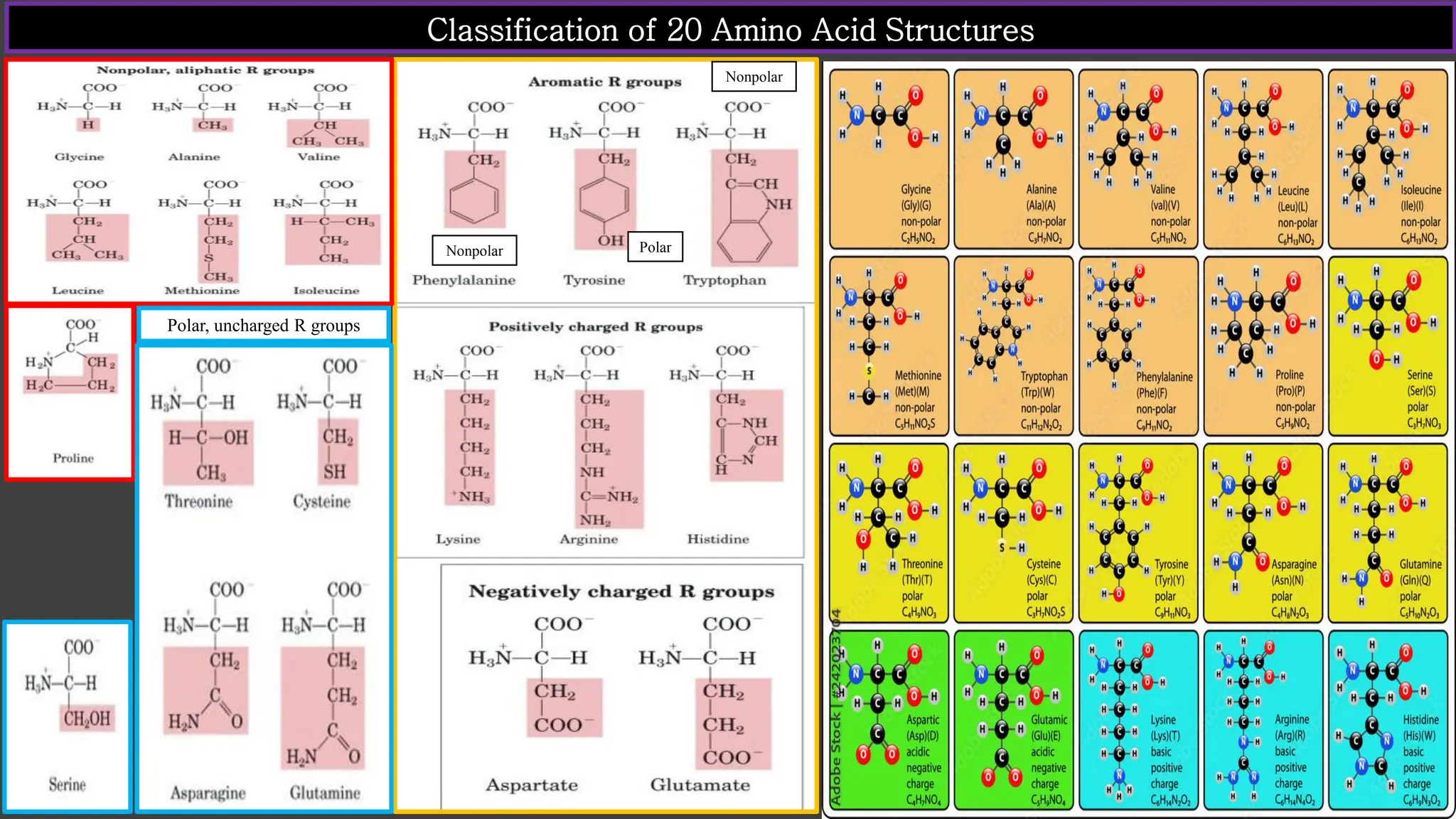
Polar, uncharged R groups
Classification of 20 Amino Acid Structures
Nonpolar
Nonpolar
Polar
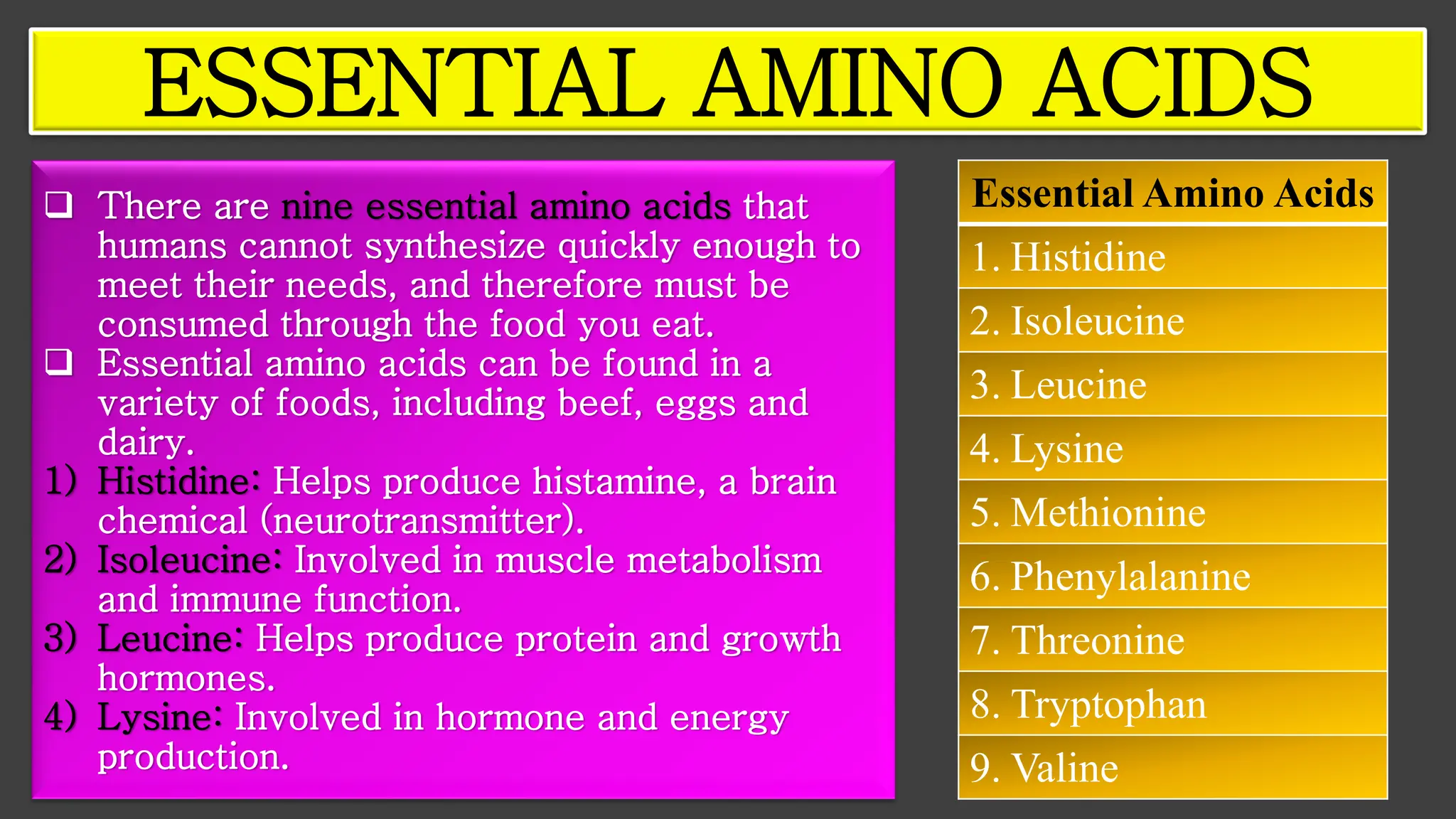
❑ There are nine essential amino acids that
humans cannot synthesize quickly enough to
meet their needs, and therefore must be
consumed through the food you eat.
❑ Essential amino acids can be found in a
variety of foods, including beef, eggs and
dairy.
1) Histidine: Helps produce histamine, a brain
chemical (neurotransmitter).
2) Isoleucine: Involved in muscle metabolism
and immune function.
3) Leucine: Helps produce protein and growth
hormones.
4) Lysine: Involved in hormone and energy
production.
ESSENTIAL AMINO ACIDS
Essential Amino Acids
1. Histidine
2. Isoleucine
3. Leucine
4. Lysine
5. Methionine
6. Phenylalanine
7. Threonine
8. Tryptophan
9. Valine
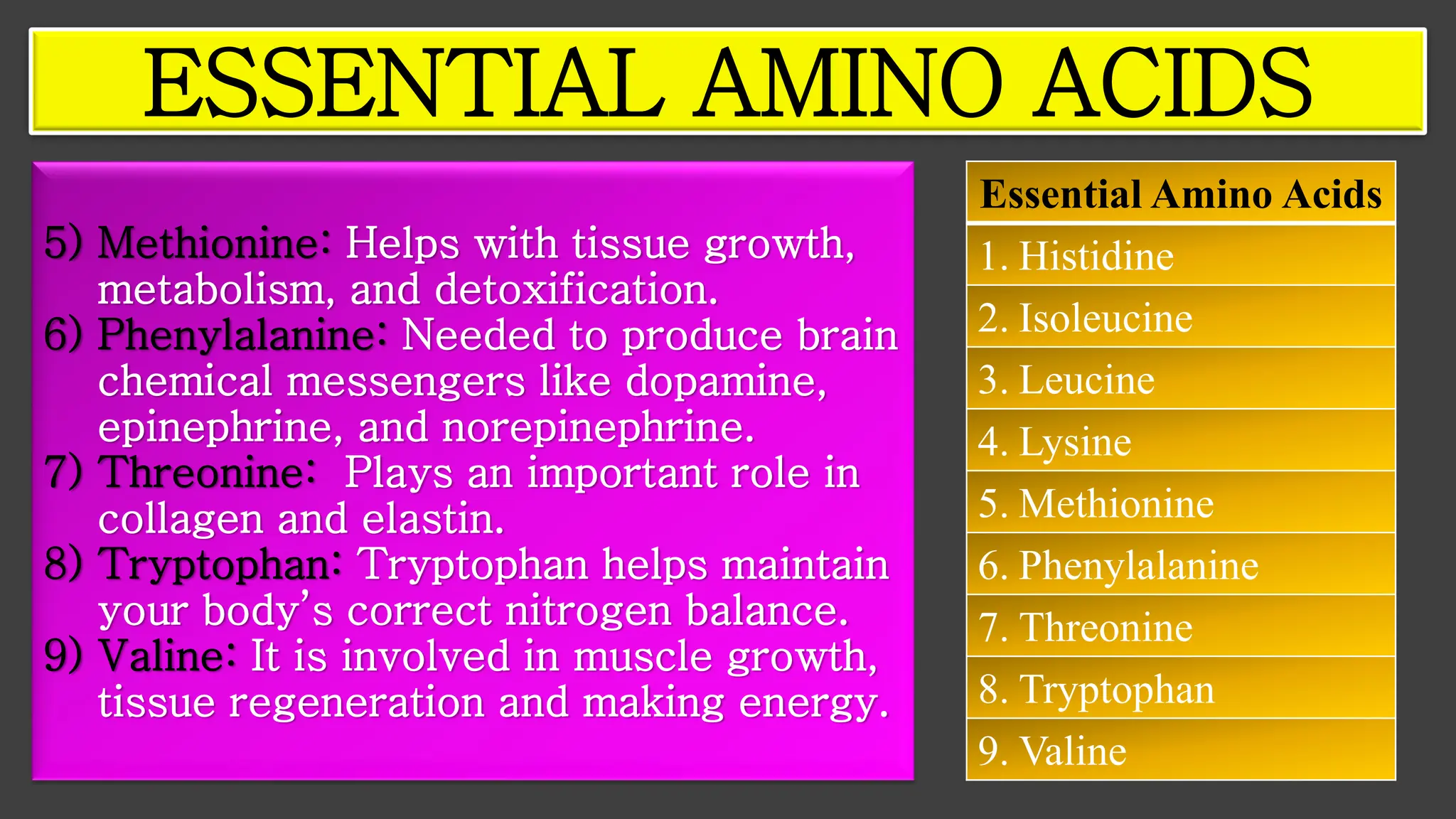
5) Methionine: Helps with tissue growth,
metabolism, and detoxification.
6) Phenylalanine: Needed to produce brain
chemical messengers like dopamine,
epinephrine, and norepinephrine.
7) Threonine: Plays an important role in
collagen and elastin.
8) Tryptophan: Tryptophan helps maintain
your body’s correct nitrogen balance.
9) Valine: It is involved in muscle growth,
tissue regeneration and making energy.
ESSENTIAL AMINO ACIDS
Essential Amino Acids
1. Histidine
2. Isoleucine
3. Leucine
4. Lysine
5. Methionine
6. Phenylalanine
7. Threonine
8. Tryptophan
9. Valine
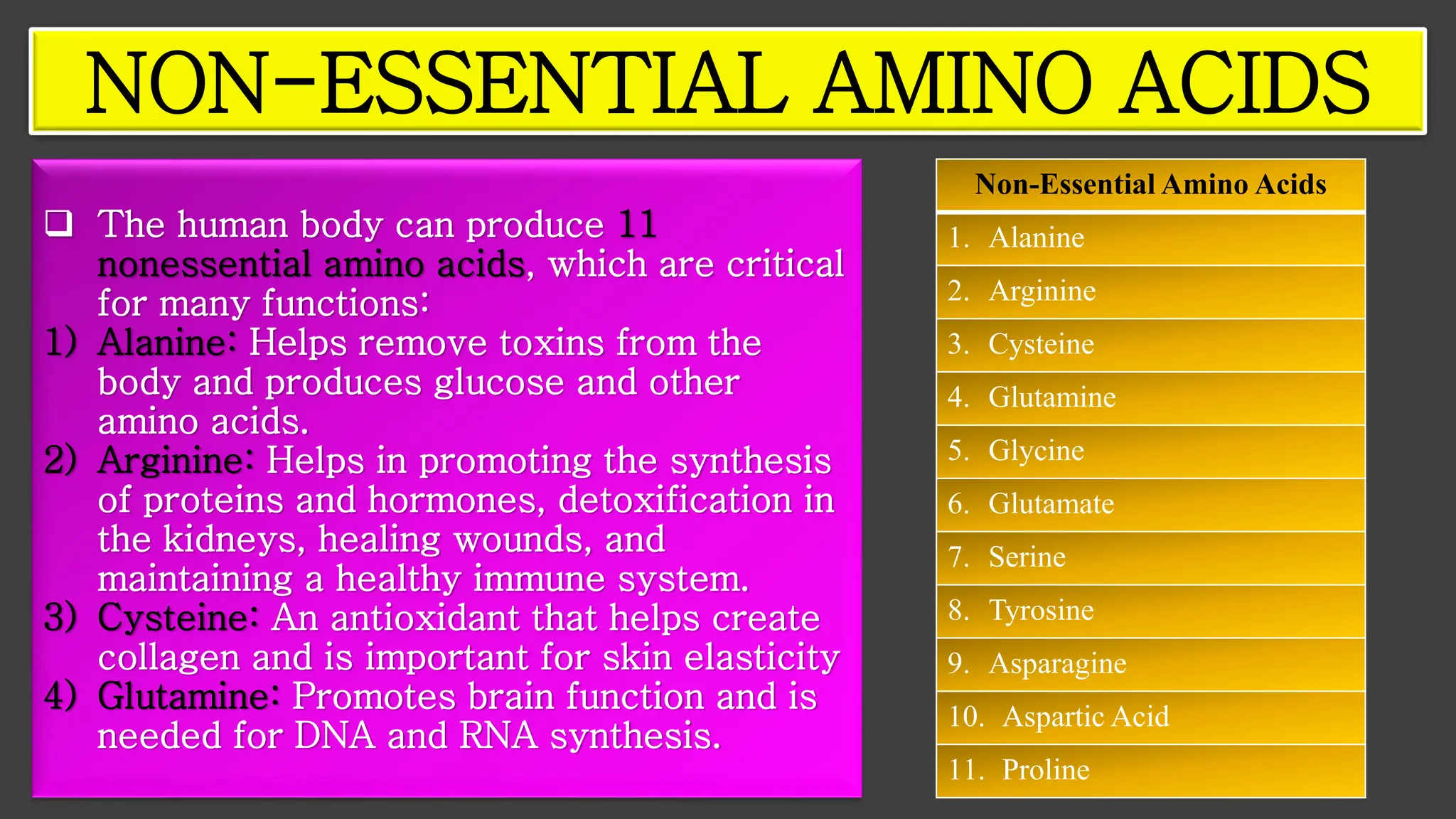
❑ The human body can produce 11
nonessential amino acids, which are critical
for many functions:
1) Alanine: Helps remove toxins from the
body and produces glucose and other
amino acids.
2) Arginine: Helps in promoting the synthesis
of proteins and hormones, detoxification in
the kidneys, healing wounds, and
maintaining a healthy immune system.
3) Cysteine: An antioxidant that helps create
collagen and is important for skin elasticity
4) Glutamine: Promotes brain function and is
needed for DNA and RNA synthesis.
NON-ESSENTIAL AMINO ACIDS
Non-Essential Amino Acids
1. Alanine
2. Arginine
3. Cysteine
4. Glutamine
5. Glycine
6. Glutamate
7. Serine
8. Tyrosine
9. Asparagine
10. Aspartic Acid
11. Proline
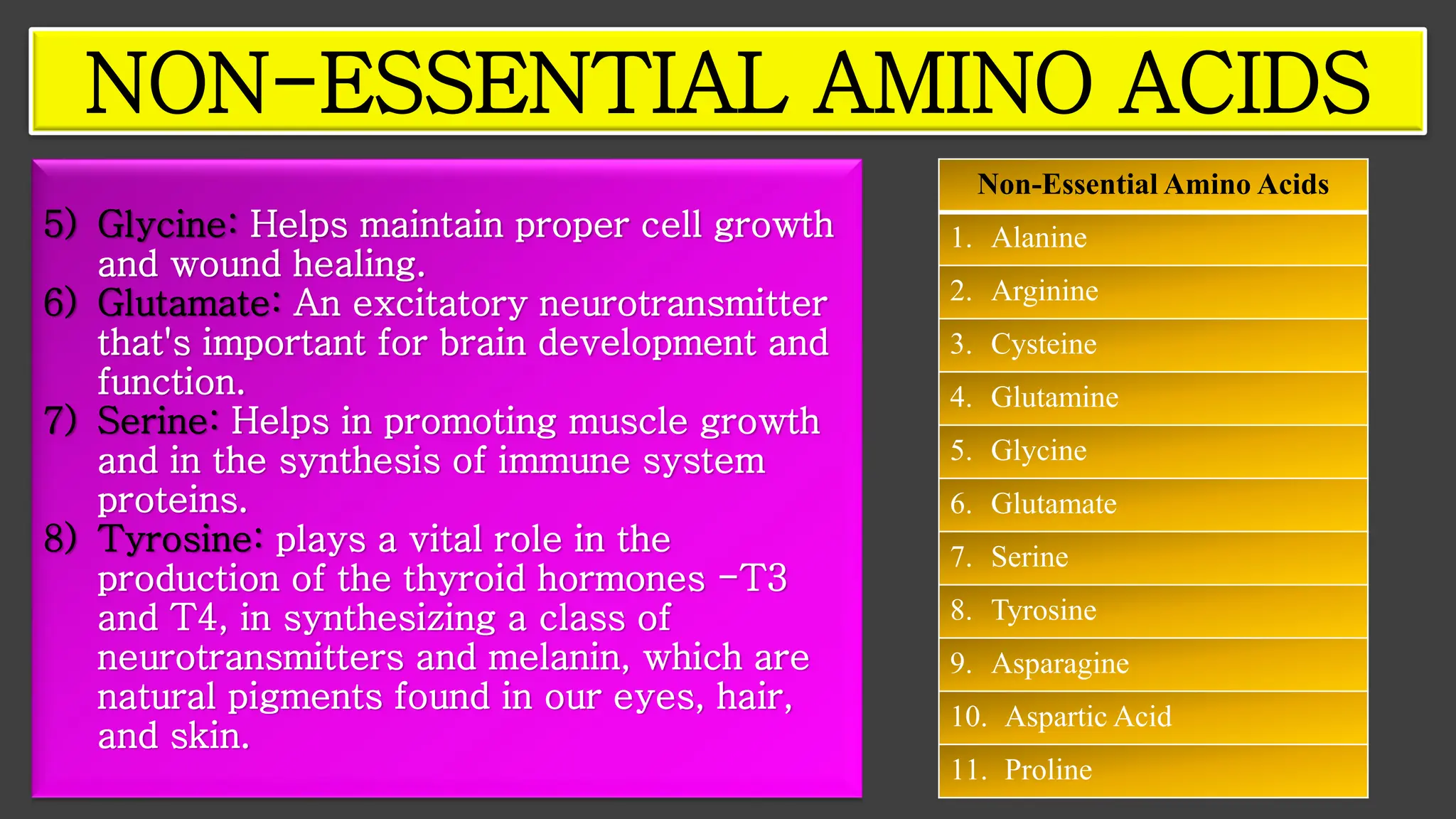
5) Glycine: Helps maintain proper cell growth
and wound healing.
6) Glutamate: An excitatory neurotransmitter
that's important for brain development and
function.
7) Serine: Helps in promoting muscle growth
and in the synthesis of immune system
proteins.
8) Tyrosine: plays a vital role in the
production of the thyroid hormones -T3
and T4, in synthesizing a class of
neurotransmitters and melanin, which are
natural pigments found in our eyes, hair,
and skin.
NON-ESSENTIAL AMINO ACIDS
Non-Essential Amino Acids
1. Alanine
2. Arginine
3. Cysteine
4. Glutamine
5. Glycine
6. Glutamate
7. Serine
8. Tyrosine
9. Asparagine
10. Aspartic Acid
11. Proline
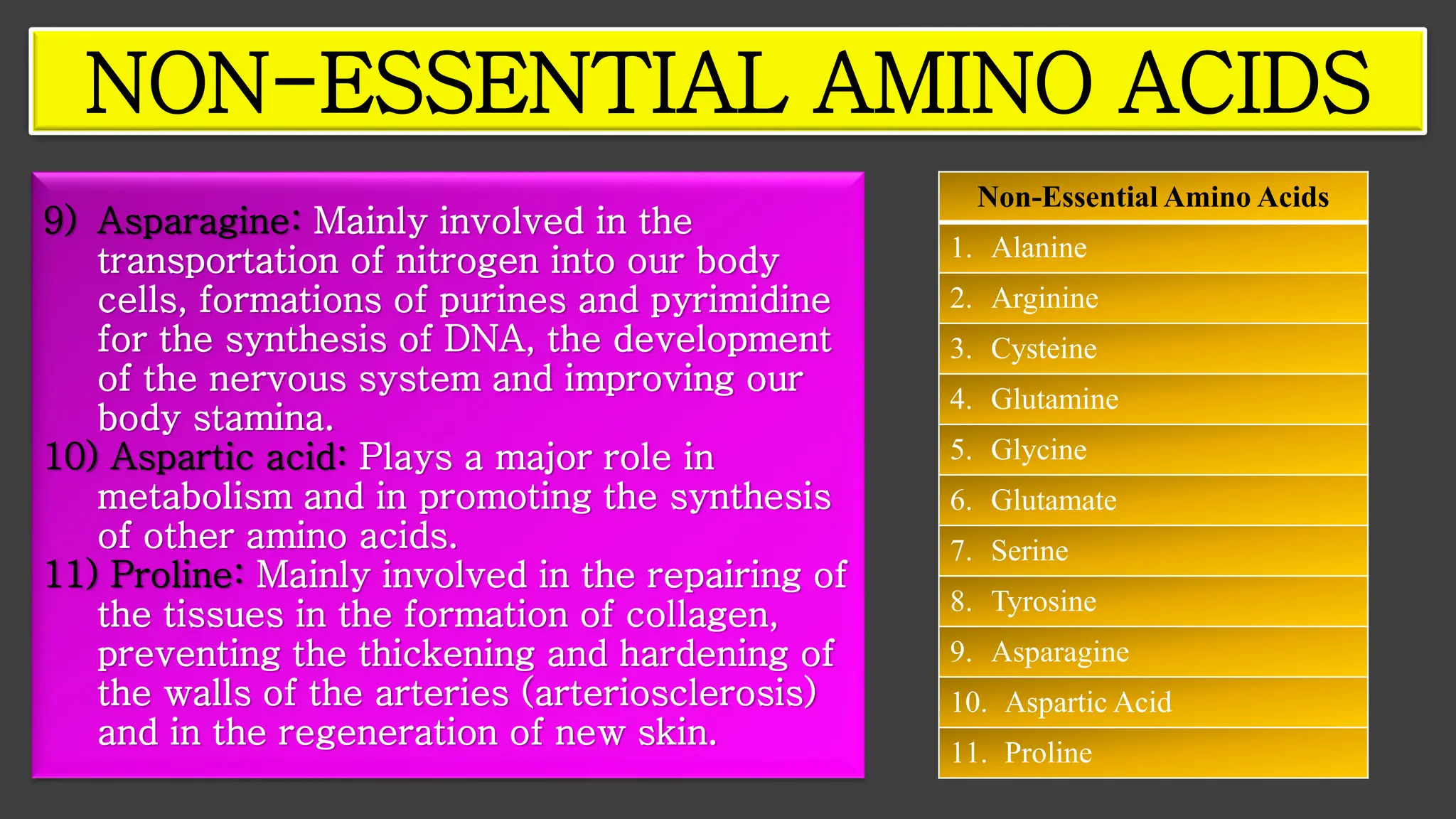
9) Asparagine: Mainly involved in the
transportation of nitrogen into our body
cells, formations of purines and pyrimidine
for the synthesis of DNA, the development
of the nervous system and improving our
body stamina.
10) Aspartic acid: Plays a major role in
metabolism and in promoting the synthesis
of other amino acids.
11) Proline: Mainly involved in the repairing of
the tissues in the formation of collagen,
preventing the thickening and hardening of
the walls of the arteries (arteriosclerosis)
and in the regeneration of new skin.
NON-ESSENTIAL AMINO ACIDS
Non-Essential Amino Acids
1. Alanine
2. Arginine
3. Cysteine
4. Glutamine
5. Glycine
6. Glutamate
7. Serine
8. Tyrosine
9. Asparagine
10. Aspartic Acid
11. Proline
https://images.app.goo.gl/aNK1d8yTfQ8694g96
FUNCTIONS OF PROTEINS
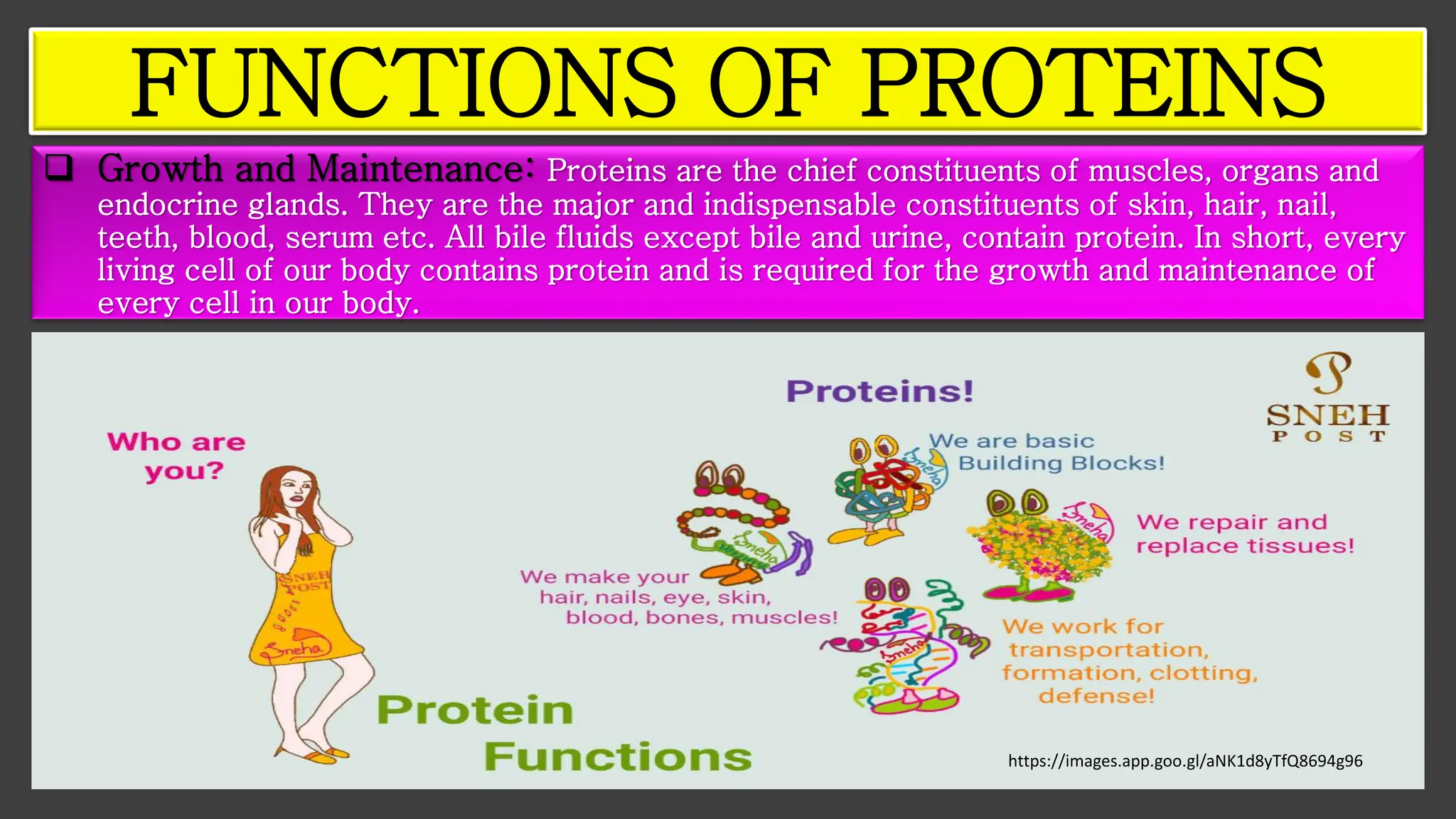
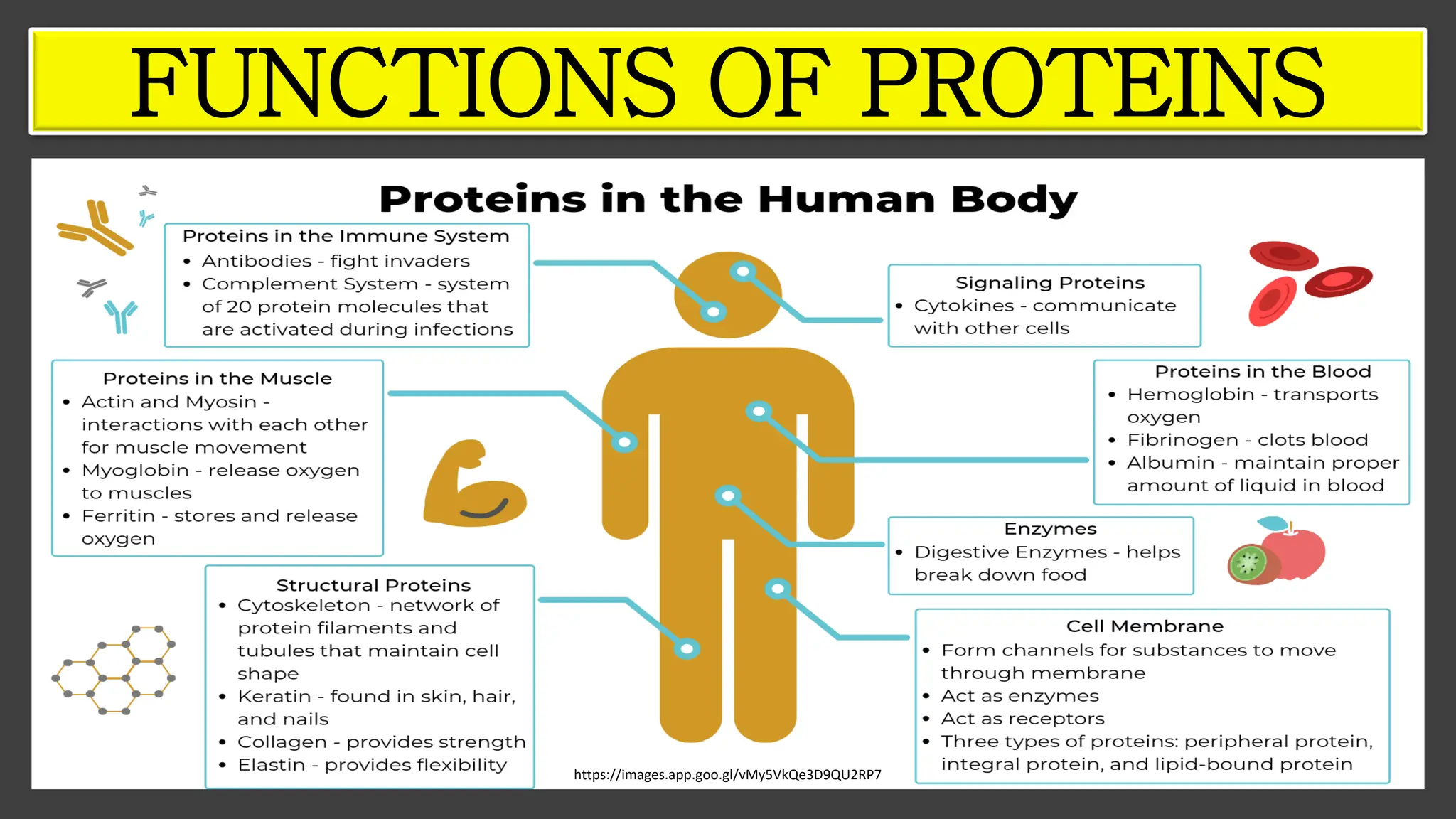
❑ Growth and Maintenance: Proteins are the chief constituents of muscles, organs and
endocrine glands. They are the major and indispensable constituents of skin, hair, nail,
teeth, blood, serum etc. All bile fluids except bile and urine, contain protein. In short, every
living cell of our body contains protein and is required for the growth and maintenance of
every cell in our body.
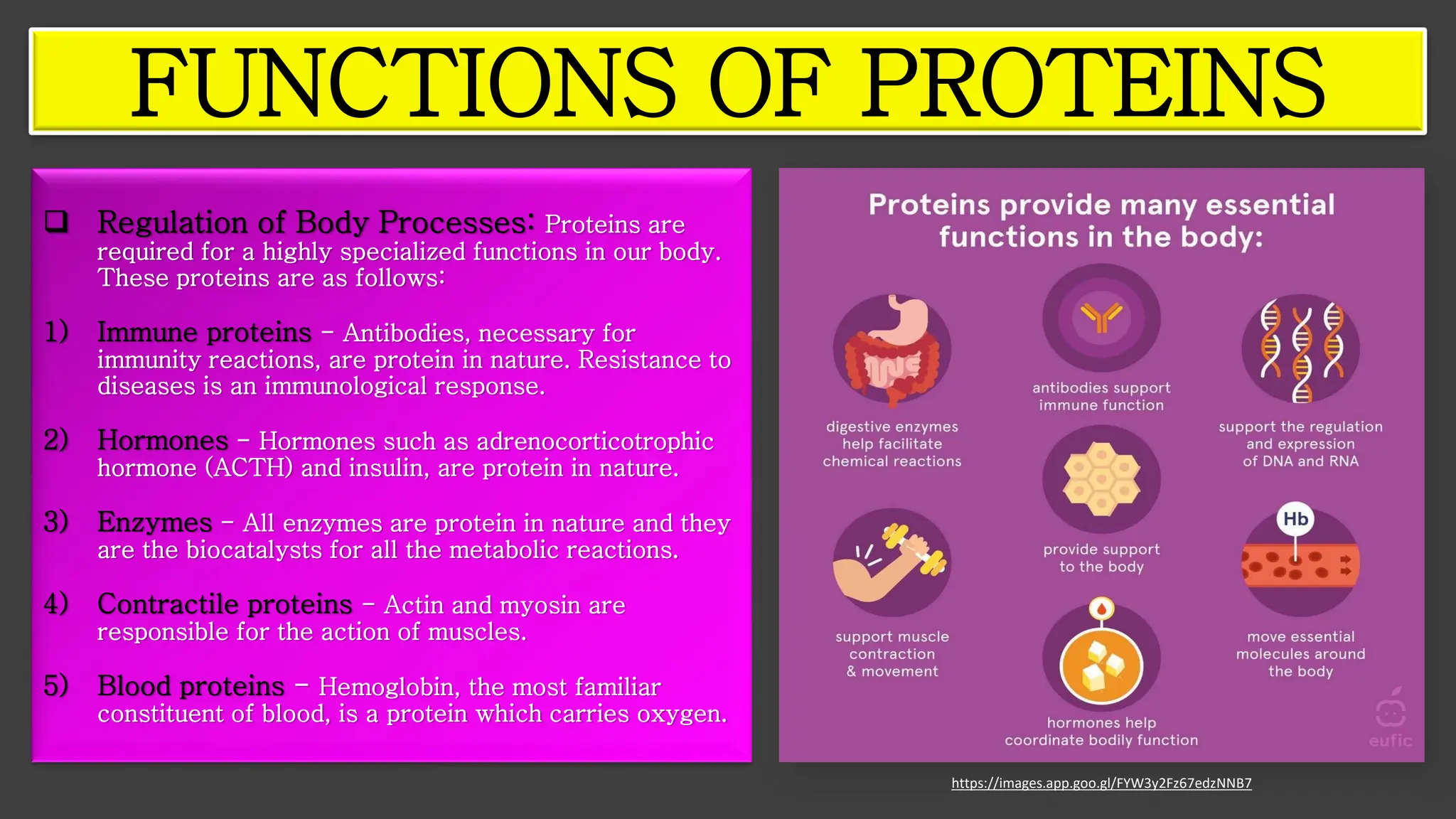
❑ Regulation of Body Processes: Proteins are
required for a highly specialized functions in our body.
These proteins are as follows:
1) Immune proteins - Antibodies, necessary for
immunity reactions, are protein in nature. Resistance to
diseases is an immunological response.
2) Hormones - Hormones such as adrenocorticotrophic
hormone (ACTH) and insulin, are protein in nature.
3) Enzymes - All enzymes are protein in nature and they
are the biocatalysts for all the metabolic reactions.
4) Contractile proteins - Actin and myosin are
responsible for the action of muscles.
5) Blood proteins - Hemoglobin, the most familiar
constituent of blood, is a protein which carries oxygen.
FUNCTIONS OF PROTEINS
https://images.app.goo.gl/FYW3y2Fz67edzNNB7
https://images.app.goo.gl/vMy5VkQe3D9QU2RP7
FUNCTIONS OF PROTEINS
https://images.app.goo.gl/np6LjZD7vsUZPu6V8
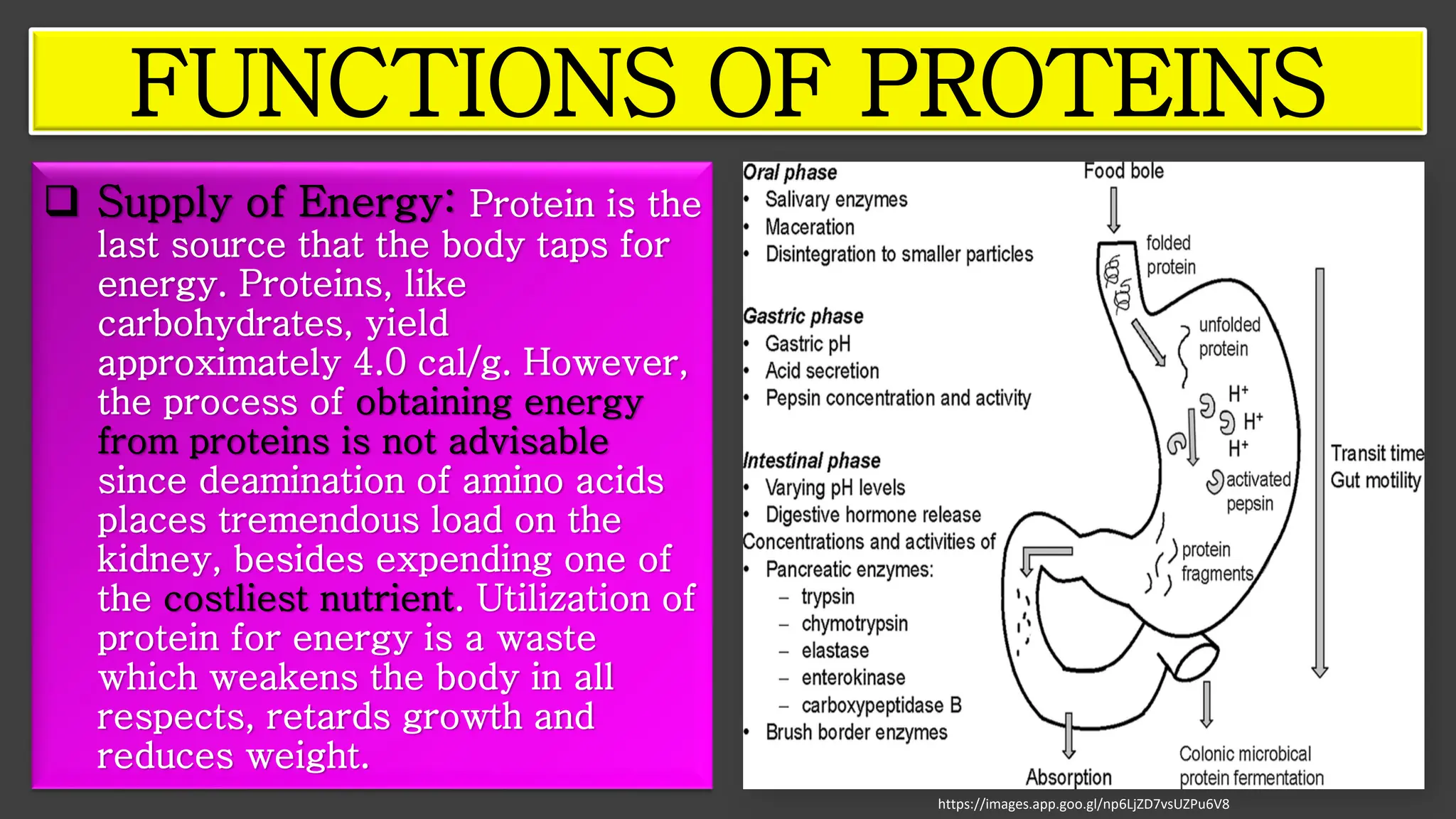
❑ Supply of Energy: Protein is the
last source that the body taps for
energy. Proteins, like
carbohydrates, yield
approximately 4.0 cal/g. However,
the process of obtaining energy
from proteins is not advisable
since deamination of amino acids
places tremendous load on the
kidney, besides expending one of
the costliest nutrient. Utilization of
protein for energy is a waste
which weakens the body in all
respects, retards growth and
reduces weight.
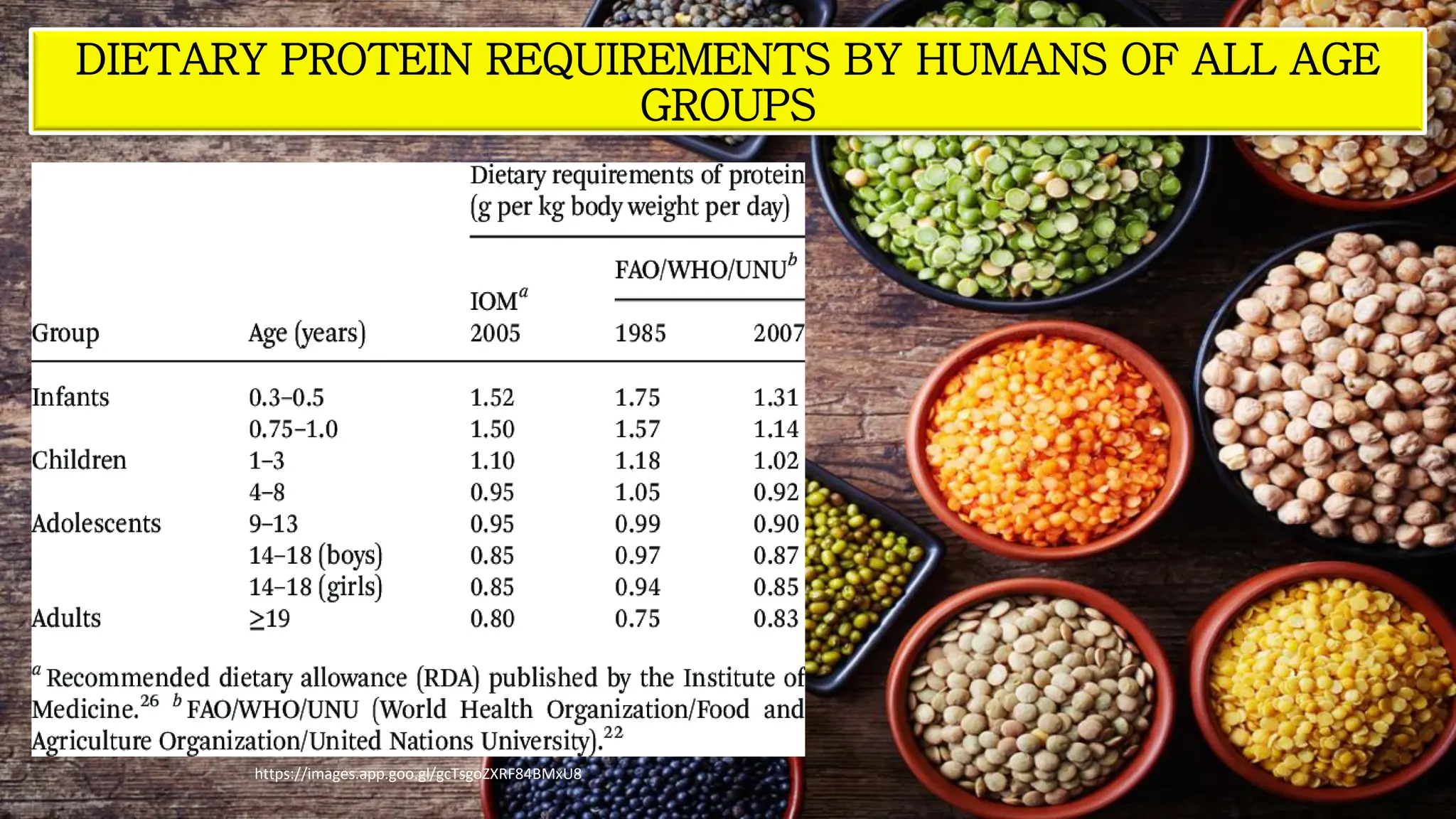
DIETARY PROTEIN REQUIREMENTS BY HUMANS OF ALL AGE
GROUPS
https://images.app.goo.gl/gcTsgoZXRF84BMxU8
REFERENCES
❑ Satyanarayana, U. (2017). Biochemistry - e-book. Elsevier Health Sciences.
❑ Protein. (n.d.). Genome.gov. https://www.genome.gov/genetics-glossary/Protein
❑ Protein: The facts. (2020, September 8). Nestlé Nutrition Institute. https://www.nestlenutrition-institute.org/publications/protein-facts
❑ National Research Council (US) Subcommittee on the Tenth Edition of the Recommended Dietary Allowances. Recommended Dietary Allowances: 10th
Edition. Washington (DC): National Academies Press (US); 1989. 6, Protein and Amino Acids. Available from:
https://www.ncbi.nlm.nih.gov/books/NBK234922/
❑ GeeksforGeeks. (2024a, February 27). Types of protein Structure, function and Classification. GeeksforGeeks.
https://www.geeksforgeeks.org/protein-definition-structure-levels-of-protein/
❑ https://medlineplus.gov/genetics/understanding/howgeneswork/protein/
❑ https://www.genome.gov/sites/default/files/media/images/tg/Protein_hero.png
❑ https://aiimsrishikesh.edu.in/newwebsite/wp-content/uploads/2019/01/1020_Class-1-Structures-of-Amino-Acids-Dr.-Kiran-Meena-30-8-2018.pdf
❑ https://images.app.goo.gl/zWLwdEfUsgkuQksU6
❑ https://content.dhhs.vic.gov.au/sites/default/files/2022-01/protein_0.jpg
❑ https://cdn.buttercms.com/TbC49fIqR36TjDnBLBbE
❑ https://www.vedantu.com/question-answer/proteins-differ-from-carbohydrates-and-lipids-in-class-11-biology-cbse-5fc88b42fc3d96537014eec3
❑ https://as2.ftcdn.net/v2/jpg/02/42/02/37/1000_F_242023704_dzTFXjw1SAkdBLqkr1mxxax0b087KIQn.jpg
❑ https://images.app.goo.gl/PcXQQ8wPiVGJrNDB9
THANK YOU
Please do Like and
Subscribe
My Channel…!!

Different types of Proteins and Amino Acids and its Structure with Function

  • 1.
    selfexplanatory.2022 Hello HI नमस्ते ْ‫م‬ُ‫ك‬ْ‫ي‬‫ا‬‫ل‬‫ا‬‫ع‬ ُ‫م‬ ‫ا‬ ‫َل‬َّ ‫الس‬ ِ َّ ‫ٱَّلل‬ ُ‫اة‬‫م‬ْ‫ح‬‫ا‬‫ر‬‫ا‬‫و‬ ُ‫ه‬ُ‫ت‬‫كا‬‫ا‬‫ر‬‫ا‬‫ب‬‫ا‬‫و‬ Saba Parvin Haque M.Sc. Life Sciences (Specialization in Neurobiology) from “Sophia College” (Autonomous), Mumbai.
  • 3.
    ❑Protein are macronutrientsand are one of the main nutrients in our diet. https://images.app.goo.gl/JjRc7iuwndNiebnj7 WHAT IS PROTEIN? https://i0.wp.com/www.strengthlog.com/wp-content/uploads/2024/03/Protein-calculator.jpg?fit=1792%2C1024&ssl=1
  • 4.
    ❑ The word“protein” comes from the Greek word proteios, which means “primary” or “standing in front” or “holding first place” and which is an appropriate name for an essential life-forming and life- sustaining substance of all organisms. https://images.app.goo.gl/zzoztP5mf22WV5DS9 WHAT IS PROTEIN?
  • 5.
    ❑Proteins were first describedby the Dutch chemist Gerardus Johannes Mulder and named by the Swedish chemist Jöns Jacob Berzelius in 1838. PROTEIN DESCRIBED BY? Gerardus Johannes Mulder Jöns Jacob Berzelius https://images.app.goo.gl/u4MCLHsKgKjhmKQz9 https://images.app.goo.gl/12C2wh82nUzW2Zg39
  • 6.
    ❑Proteins are large, complex moleculesthat play many important roles in the body. WHAT IS PROTEIN? Figure: Protein digestion, https://www.nestlenutrition-institute.org/sites/default/files/inline- images/%D0%B7%D0%B0%D0%B3%D1%80%D1%83%D0%B7%D0%BA%D0%B0%20-%202021-04-16T085223.159.png Start
  • 7.
    ❑Proteins make up themajor structure of all living cells and form about 50 – 60% of the dry weight of the body cells. WHAT IS PROTEIN? https://images.app.goo.gl/aP5X4UiViEQmyUt67
  • 8.
    ❑They are criticalto most of the work done by cells and are required for the structure, function and regulation of the body’s tissues and organs. REQUIREMENT OF PROTEIN? https://images.app.goo.gl/RLgV2wn1z4KwmCgP9
  • 9.
    ❑ A proteinis made up of one or more long, folded chains of amino acids (each called a polypeptide), whose sequences are determined by the DNA sequence of the protein- encoding gene. WHAT ARE PROTEINS MADE UP OF? https://images.app.goo.gl/VX9JnsbC33UASUPr7
  • 10.
    ❑Proteins are madeup of many molecules of amino acids that are linked by the peptide bonds and hence they are also called polypeptide chains. WHAT ARE PROTEINS MADE UP OF? https://www.google.com/imgres?imgurl=https%3A%2F%2Fwww.chemistrylearner.com%2Fwp-content%2Fuploads%2F2020%2F10%2FPeptide- Bond.jpg&tbnid=0iSARg87ra_x9M&vet=1&imgrefurl=https%3A%2F%2Fwww.chemistrylearner.com%2Fchemical-bonds%2Fpeptide- bond&docid=aun0ecyxIV9yfM&w=600&h=502&source=sh%2Fx%2Fim%2Fm5%2F1&kgs=4c9f1f8c3c7c72ac&shem=abme%2Ctrie
  • 11.
    ❑ Every proteinhas a defined composition of its constituent amino acids and a very specific sequence in which these are linked. This is what gives every protein its specific biological function. COMPOSITION OF PROTEIN https://images.app.goo.gl/gtewZvAwKZrQHNsA8, https://images.app.goo.gl/dZCyM9QmvvKEV1HK6
  • 12.
    ❑ Proteins thatmake up structures, such as muscle and, very importantly, proteins that fold and form what are known as enzymes. ❑ These proteins help your body carry out all of the chemical reactions it needs to keep you alive. WHAT IS PROTEIN?
  • 13.
  • 14.
  • 15.
    LEVELS OF PROTEINORGANIZATION https://encrypted-tbn1.gstatic.com/images?q=tbn:ANd9GcTCMr_d3WXuiW2kXAGc459NYA7tRxOr0jGqg-aUjQ80tlwcZg2C
  • 16.
    WHAT IS PROTEINMADE UP? ❑ Proteins are different from fats and carbohydrates due to the presence of nitrogen, carbon, hydrogen, and oxygen in them. ❑ Carbohydrates only contain carbon, hydrogen, and oxygen whereas fats contain fatty acids which contain a carboxyl group and an alkyl group, thus containing only carbon, oxygen, and hydrogen. https://images.app.goo.gl/p2Bb4LFbv4oaMqga7
  • 17.
  • 18.
  • 19.
    https://images.app.goo.gl/MnmffVsgkrv7PQwK8 HOW MANY AMINOACIDS ARE THERE? 20 ❑ Although there are hundreds of amino acids in nature humans only use about 20 of them to make basically every type of protein.
  • 20.
    HOW MANY AMINOACIDS ARE THERE? ❑ Amino acids are molecules used by all living things to make proteins. ❑ Your body needs 20 different amino acids to function correctly. ❑ Essential amino acids: These amino acids must be obtained from food because the body cannot synthesize them. They are important for immune function, hemoglobin production, and energy regulation. ❑ Nonessential amino acids: These amino acids can be synthesized by the body and hence need not be incorporated in the diet. ❑ Conditional amino acids: This need to be incorporated only if this amino acids from which they are derived are not adequate in the diet. https://images.app.goo.gl/NV3vuP2guwwXyUBYA
  • 21.
    TYPES OF AMINOACIDS https://microbenotes.com/wp-content/uploads/2018/08/Classification-of-amino-acids-on-the-basis-of-nutrition.jpeg https://images.app.goo.gl/hcm9UWtgFCQkdYyx6 11
  • 22.
    TYPES OF AMINOACIDS https://youtu.be/HSCUAjZQhXI?si=y4c6LiMG2dSzJ_Cj
  • 23.
    Polar, uncharged Rgroups Classification of 20 Amino Acid Structures Nonpolar Nonpolar Polar
  • 24.
    ❑ There arenine essential amino acids that humans cannot synthesize quickly enough to meet their needs, and therefore must be consumed through the food you eat. ❑ Essential amino acids can be found in a variety of foods, including beef, eggs and dairy. 1) Histidine: Helps produce histamine, a brain chemical (neurotransmitter). 2) Isoleucine: Involved in muscle metabolism and immune function. 3) Leucine: Helps produce protein and growth hormones. 4) Lysine: Involved in hormone and energy production. ESSENTIAL AMINO ACIDS Essential Amino Acids 1. Histidine 2. Isoleucine 3. Leucine 4. Lysine 5. Methionine 6. Phenylalanine 7. Threonine 8. Tryptophan 9. Valine
  • 25.
    5) Methionine: Helpswith tissue growth, metabolism, and detoxification. 6) Phenylalanine: Needed to produce brain chemical messengers like dopamine, epinephrine, and norepinephrine. 7) Threonine: Plays an important role in collagen and elastin. 8) Tryptophan: Tryptophan helps maintain your body’s correct nitrogen balance. 9) Valine: It is involved in muscle growth, tissue regeneration and making energy. ESSENTIAL AMINO ACIDS Essential Amino Acids 1. Histidine 2. Isoleucine 3. Leucine 4. Lysine 5. Methionine 6. Phenylalanine 7. Threonine 8. Tryptophan 9. Valine
  • 26.
    ❑ The humanbody can produce 11 nonessential amino acids, which are critical for many functions: 1) Alanine: Helps remove toxins from the body and produces glucose and other amino acids. 2) Arginine: Helps in promoting the synthesis of proteins and hormones, detoxification in the kidneys, healing wounds, and maintaining a healthy immune system. 3) Cysteine: An antioxidant that helps create collagen and is important for skin elasticity 4) Glutamine: Promotes brain function and is needed for DNA and RNA synthesis. NON-ESSENTIAL AMINO ACIDS Non-Essential Amino Acids 1. Alanine 2. Arginine 3. Cysteine 4. Glutamine 5. Glycine 6. Glutamate 7. Serine 8. Tyrosine 9. Asparagine 10. Aspartic Acid 11. Proline
  • 27.
    5) Glycine: Helpsmaintain proper cell growth and wound healing. 6) Glutamate: An excitatory neurotransmitter that's important for brain development and function. 7) Serine: Helps in promoting muscle growth and in the synthesis of immune system proteins. 8) Tyrosine: plays a vital role in the production of the thyroid hormones -T3 and T4, in synthesizing a class of neurotransmitters and melanin, which are natural pigments found in our eyes, hair, and skin. NON-ESSENTIAL AMINO ACIDS Non-Essential Amino Acids 1. Alanine 2. Arginine 3. Cysteine 4. Glutamine 5. Glycine 6. Glutamate 7. Serine 8. Tyrosine 9. Asparagine 10. Aspartic Acid 11. Proline
  • 28.
    9) Asparagine: Mainlyinvolved in the transportation of nitrogen into our body cells, formations of purines and pyrimidine for the synthesis of DNA, the development of the nervous system and improving our body stamina. 10) Aspartic acid: Plays a major role in metabolism and in promoting the synthesis of other amino acids. 11) Proline: Mainly involved in the repairing of the tissues in the formation of collagen, preventing the thickening and hardening of the walls of the arteries (arteriosclerosis) and in the regeneration of new skin. NON-ESSENTIAL AMINO ACIDS Non-Essential Amino Acids 1. Alanine 2. Arginine 3. Cysteine 4. Glutamine 5. Glycine 6. Glutamate 7. Serine 8. Tyrosine 9. Asparagine 10. Aspartic Acid 11. Proline
  • 29.
    https://images.app.goo.gl/aNK1d8yTfQ8694g96 FUNCTIONS OF PROTEINS ❑Growth and Maintenance: Proteins are the chief constituents of muscles, organs and endocrine glands. They are the major and indispensable constituents of skin, hair, nail, teeth, blood, serum etc. All bile fluids except bile and urine, contain protein. In short, every living cell of our body contains protein and is required for the growth and maintenance of every cell in our body.
  • 30.
    ❑ Regulation ofBody Processes: Proteins are required for a highly specialized functions in our body. These proteins are as follows: 1) Immune proteins - Antibodies, necessary for immunity reactions, are protein in nature. Resistance to diseases is an immunological response. 2) Hormones - Hormones such as adrenocorticotrophic hormone (ACTH) and insulin, are protein in nature. 3) Enzymes - All enzymes are protein in nature and they are the biocatalysts for all the metabolic reactions. 4) Contractile proteins - Actin and myosin are responsible for the action of muscles. 5) Blood proteins - Hemoglobin, the most familiar constituent of blood, is a protein which carries oxygen. FUNCTIONS OF PROTEINS https://images.app.goo.gl/FYW3y2Fz67edzNNB7
  • 31.
  • 32.
    FUNCTIONS OF PROTEINS https://images.app.goo.gl/np6LjZD7vsUZPu6V8 ❑Supply of Energy: Protein is the last source that the body taps for energy. Proteins, like carbohydrates, yield approximately 4.0 cal/g. However, the process of obtaining energy from proteins is not advisable since deamination of amino acids places tremendous load on the kidney, besides expending one of the costliest nutrient. Utilization of protein for energy is a waste which weakens the body in all respects, retards growth and reduces weight.
  • 33.
    DIETARY PROTEIN REQUIREMENTSBY HUMANS OF ALL AGE GROUPS https://images.app.goo.gl/gcTsgoZXRF84BMxU8
  • 34.
    REFERENCES ❑ Satyanarayana, U.(2017). Biochemistry - e-book. Elsevier Health Sciences. ❑ Protein. (n.d.). Genome.gov. https://www.genome.gov/genetics-glossary/Protein ❑ Protein: The facts. (2020, September 8). Nestlé Nutrition Institute. https://www.nestlenutrition-institute.org/publications/protein-facts ❑ National Research Council (US) Subcommittee on the Tenth Edition of the Recommended Dietary Allowances. Recommended Dietary Allowances: 10th Edition. Washington (DC): National Academies Press (US); 1989. 6, Protein and Amino Acids. Available from: https://www.ncbi.nlm.nih.gov/books/NBK234922/ ❑ GeeksforGeeks. (2024a, February 27). Types of protein Structure, function and Classification. GeeksforGeeks. https://www.geeksforgeeks.org/protein-definition-structure-levels-of-protein/ ❑ https://medlineplus.gov/genetics/understanding/howgeneswork/protein/ ❑ https://www.genome.gov/sites/default/files/media/images/tg/Protein_hero.png ❑ https://aiimsrishikesh.edu.in/newwebsite/wp-content/uploads/2019/01/1020_Class-1-Structures-of-Amino-Acids-Dr.-Kiran-Meena-30-8-2018.pdf ❑ https://images.app.goo.gl/zWLwdEfUsgkuQksU6 ❑ https://content.dhhs.vic.gov.au/sites/default/files/2022-01/protein_0.jpg ❑ https://cdn.buttercms.com/TbC49fIqR36TjDnBLBbE ❑ https://www.vedantu.com/question-answer/proteins-differ-from-carbohydrates-and-lipids-in-class-11-biology-cbse-5fc88b42fc3d96537014eec3 ❑ https://as2.ftcdn.net/v2/jpg/02/42/02/37/1000_F_242023704_dzTFXjw1SAkdBLqkr1mxxax0b087KIQn.jpg ❑ https://images.app.goo.gl/PcXQQ8wPiVGJrNDB9 THANK YOU Please do Like and Subscribe My Channel…!!