Push & Pull Marketing
Presented by: Ahmad Raza , M.Yaseen, Abdul Qadeer
& Mahbob Shah .
Market
A market is a place or system where buyers and sellers come together to exchange goods,
services, or information.
Markets can be physical locations, like a farmers' market or stock exchange, or digital platforms,
like e-commerce websites or online trading platforms.
.
.
Marketing
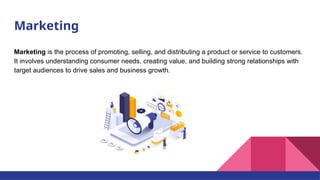
Marketing is the process of promoting, selling, and distributing a product or service to customers.
It involves understanding consumer needs, creating value, and building strong relationships with
target audiences to drive sales and business growth.
Types of Marketing
● Digital Marketing (SEO, social media, content marketing)
● Traditional Marketing (TV, radio, billboards, newspapers)
● Inbound Marketing (Content creation, blogs, SEO to attract customers)
● Outbound Marketing (Cold calls, direct emails, and ads)
● B2B & B2C Marketing (Business-to-business vs. business-to-consumer strategies)
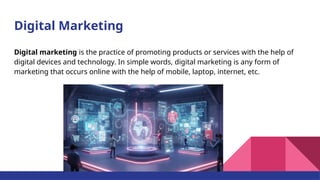
Digital Marketing
Digital marketing is the practice of promoting products or services with the help of
digital devices and technology. In simple words, digital marketing is any form of
marketing that occurs online with the help of mobile, laptop, internet, etc.
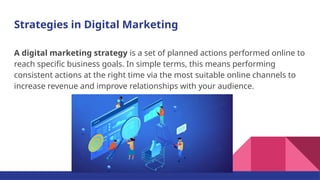
Strategies in Digital Marketing
A digital marketing strategy is a set of planned actions performed online to
reach specific business goals. In simple terms, this means performing
consistent actions at the right time via the most suitable online channels to
increase revenue and improve relationships with your audience.
.
.
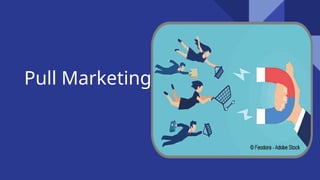
Pull Marketing
Pull Marketing
● What It Is:
○ Pull marketing is a way to get customers interested in a product or service naturally.
○ It "pulls" people in by making them curious or excited, instead of pushing products on them like push marketing does.
● How It’s Different from Push Marketing:
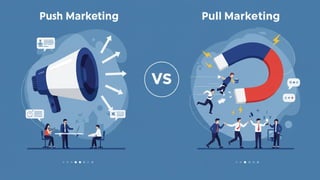
○ Push marketing is loud and direct (like sales people chasing you to buy).
○ Pull marketing is gentle—it makes you want to come to the product on your own.
● Main Idea:
○ It focuses on creating demand by showing value, building trust, and making the brand known.
○ Customers choose the product because they like it, not because they’re forced.
● Why It’s Big Today:
○ The internet, social media, and online tools make pull marketing super popular now.
○ It uses things like Google searches, fun posts, and influencers to grab attention.
How Pull Marketing Works
Step 1: Get Noticed:
Brands share cool stuff (like videos or tips) so people know they exist.They may Run ads.
Step 2: Spark Interest:
They tell stories or share helpful info to make you curious or happy.
Step 3: Let You Decide:
You go find the product yourself because you want it, not because they begged you.
Strategies (Ways to Do It)
● Content Marketing:
○ Share blogs, videos, or pics that teach or entertain .
● SEO (Search Engine Optimization):
○ Make sure the brand pops up when you search Google for something related.
● Social Media Fun:
○ Post stuff people love to like, share, or talk about online.
● Influencers:
○ Team up with famous people online to show off the product naturally.Like Podcasts.
● Good Stories:Word-of-Mouth or Brand Advocacy
○ Tell a brand story that makes you feel connected or excited.
Benefits for Brands
● Happy, Loyal Customers:
○ People stick with brands they trust and find on their own.
● Saves Money Over Time:
○ Good content spreads naturally, so less need for tons of ads.
● Looks Trustworthy:
○ People believe in brands they discover, not ones pushed hard.
● Reaches More People:
○ Online tricks like SEO or viral posts can go worldwide easily.
● Finds the Right People:
○ Attracts customers already interested, so they’re more likely to buy. Retargeting Ads by Using
Demographics. (i.e.Age,Gender,Location,time etc)
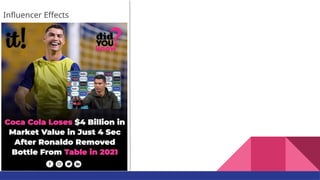
Influencer Effects
Daily-Life Examples (With Digital Twist)
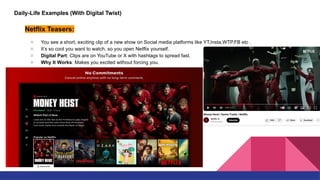
Netflix Teasers:
○ You see a short, exciting clip of a new show on Social media platforms like YT,Insta,WTP,FB etc .
○ It’s so cool you want to watch, so you open Netflix yourself.
○ Digital Part: Clips are on YouTube or X with hashtags to spread fast.
○ Why It Works: Makes you excited without forcing you.
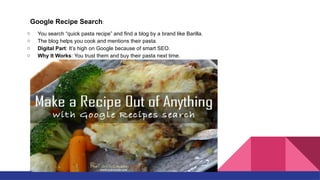
Google Recipe Search:
○ You search “quick pasta recipe” and find a blog by a brand like Barilla.
○ The blog helps you cook and mentions their pasta.
○ Digital Part: It’s high on Google because of smart SEO.
○ Why It Works: You trust them and buy their pasta next time.
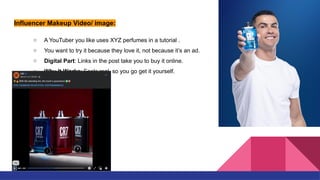
Influencer Makeup Video/ image:
○ A YouTuber you like uses XYZ perfumes in a tutorial .
○ You want to try it because they love it, not because it’s an ad.
○ Digital Part: Links in the post take you to buy it online.
○ Why It Works: Feels real, so you go get it yourself.
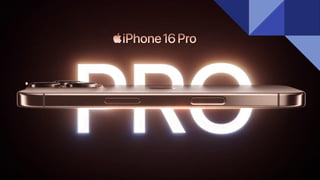
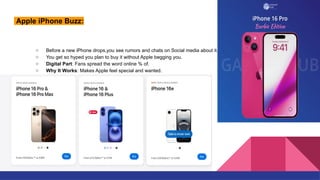
Apple iPhone Buzz:
○ Before a new iPhone drops,you see rumors and chats on Social media about it.
○ You get so hyped you plan to buy it without Apple begging you.
○ Digital Part: Fans spread the word online % of.
○ Why It Works: Makes Apple feel special and wanted.
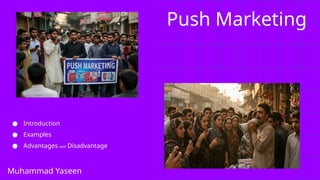
Push Marketing
● Introduction
● Examples
● Advantages and Disadvantage
Muhammad Yaseen
Types of Push Marketing
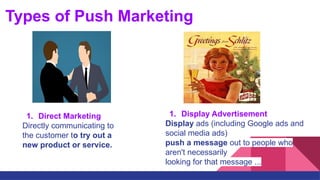
1. Direct Marketing
Directly communicating to
the customer to try out a
new product or service.
1. Display Advertisement
Display ads (including Google ads and
social media ads)
push a message out to people who
aren't necessarily
looking for that message ...
Goal or main focus
● To bring attention to their product or service.
● To increase monthly sales of that product
● To build a loyal customer base trust by informing them about your products
Push Marketing
When a company practices different types of activities and advertising strategies to
promote, sell, and distribute that product or service is called Push Marketing.
Email marketing
Direct selling
Retail promotions
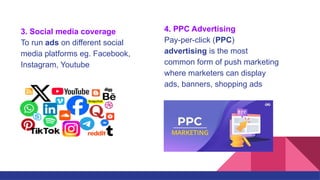
3. Social media coverage
To run ads on different social
media platforms eg. Facebook,
Instagram, Youtube
4. PPC Advertising
Pay-per-click (PPC)
advertising is the most
common form of push marketing
where marketers can display
ads, banners, shopping ads
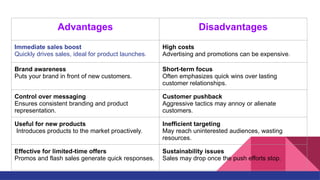
Advantages Disadvantages
Immediate sales boost
Quickly drives sales, ideal for product launches.
High costs
Advertising and promotions can be expensive.
Brand awareness
Puts your brand in front of new customers.
Short-term focus
Often emphasizes quick wins over lasting
customer relationships.
Control over messaging
Ensures consistent branding and product
representation.
Customer pushback
Aggressive tactics may annoy or alienate
customers.
Useful for new products
Introduces products to the market proactively.
Inefficient targeting
May reach uninterested audiences, wasting
resources.
Effective for limited-time offers
Promos and flash sales generate quick responses.
Sustainability issues
Sales may drop once the push efforts stop.
"Stop chasing the money and
start chasing the passion."
- Tony Hsieh
Quotation Of the Day.
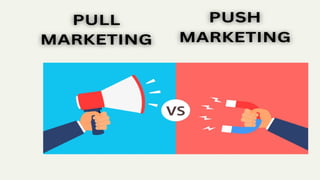
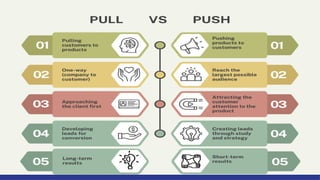
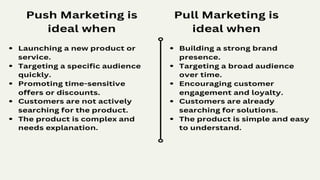
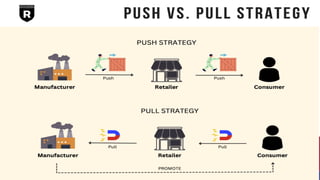
Difference Between Push & Pull Marketing

Difference Between Push & Pull Marketing

  • 1.
    Push & PullMarketing Presented by: Ahmad Raza , M.Yaseen, Abdul Qadeer & Mahbob Shah .
  • 3.
    Market A market isa place or system where buyers and sellers come together to exchange goods, services, or information. Markets can be physical locations, like a farmers' market or stock exchange, or digital platforms, like e-commerce websites or online trading platforms.
  • 4.
  • 5.
    Marketing Marketing is theprocess of promoting, selling, and distributing a product or service to customers. It involves understanding consumer needs, creating value, and building strong relationships with target audiences to drive sales and business growth.
  • 6.
    Types of Marketing ●Digital Marketing (SEO, social media, content marketing) ● Traditional Marketing (TV, radio, billboards, newspapers) ● Inbound Marketing (Content creation, blogs, SEO to attract customers) ● Outbound Marketing (Cold calls, direct emails, and ads) ● B2B & B2C Marketing (Business-to-business vs. business-to-consumer strategies)
  • 7.
    Digital Marketing Digital marketingis the practice of promoting products or services with the help of digital devices and technology. In simple words, digital marketing is any form of marketing that occurs online with the help of mobile, laptop, internet, etc.
  • 8.
    Strategies in DigitalMarketing A digital marketing strategy is a set of planned actions performed online to reach specific business goals. In simple terms, this means performing consistent actions at the right time via the most suitable online channels to increase revenue and improve relationships with your audience.
  • 11.
  • 12.
  • 13.
    Pull Marketing ● WhatIt Is: ○ Pull marketing is a way to get customers interested in a product or service naturally. ○ It "pulls" people in by making them curious or excited, instead of pushing products on them like push marketing does. ● How It’s Different from Push Marketing: ○ Push marketing is loud and direct (like sales people chasing you to buy). ○ Pull marketing is gentle—it makes you want to come to the product on your own. ● Main Idea: ○ It focuses on creating demand by showing value, building trust, and making the brand known. ○ Customers choose the product because they like it, not because they’re forced. ● Why It’s Big Today: ○ The internet, social media, and online tools make pull marketing super popular now. ○ It uses things like Google searches, fun posts, and influencers to grab attention.
  • 14.
    How Pull MarketingWorks Step 1: Get Noticed: Brands share cool stuff (like videos or tips) so people know they exist.They may Run ads. Step 2: Spark Interest: They tell stories or share helpful info to make you curious or happy. Step 3: Let You Decide: You go find the product yourself because you want it, not because they begged you.
  • 15.
    Strategies (Ways toDo It) ● Content Marketing: ○ Share blogs, videos, or pics that teach or entertain . ● SEO (Search Engine Optimization): ○ Make sure the brand pops up when you search Google for something related. ● Social Media Fun: ○ Post stuff people love to like, share, or talk about online. ● Influencers: ○ Team up with famous people online to show off the product naturally.Like Podcasts. ● Good Stories:Word-of-Mouth or Brand Advocacy ○ Tell a brand story that makes you feel connected or excited.
  • 16.
    Benefits for Brands ●Happy, Loyal Customers: ○ People stick with brands they trust and find on their own. ● Saves Money Over Time: ○ Good content spreads naturally, so less need for tons of ads. ● Looks Trustworthy: ○ People believe in brands they discover, not ones pushed hard. ● Reaches More People: ○ Online tricks like SEO or viral posts can go worldwide easily. ● Finds the Right People: ○ Attracts customers already interested, so they’re more likely to buy. Retargeting Ads by Using Demographics. (i.e.Age,Gender,Location,time etc)
  • 17.
  • 18.
    Daily-Life Examples (WithDigital Twist) Netflix Teasers: ○ You see a short, exciting clip of a new show on Social media platforms like YT,Insta,WTP,FB etc . ○ It’s so cool you want to watch, so you open Netflix yourself. ○ Digital Part: Clips are on YouTube or X with hashtags to spread fast. ○ Why It Works: Makes you excited without forcing you.
  • 19.
    Google Recipe Search: ○You search “quick pasta recipe” and find a blog by a brand like Barilla. ○ The blog helps you cook and mentions their pasta. ○ Digital Part: It’s high on Google because of smart SEO. ○ Why It Works: You trust them and buy their pasta next time.
  • 20.
    Influencer Makeup Video/image: ○ A YouTuber you like uses XYZ perfumes in a tutorial . ○ You want to try it because they love it, not because it’s an ad. ○ Digital Part: Links in the post take you to buy it online. ○ Why It Works: Feels real, so you go get it yourself.
  • 21.
    Apple iPhone Buzz: ○Before a new iPhone drops,you see rumors and chats on Social media about it. ○ You get so hyped you plan to buy it without Apple begging you. ○ Digital Part: Fans spread the word online % of. ○ Why It Works: Makes Apple feel special and wanted.
  • 22.
    Push Marketing ● Introduction ●Examples ● Advantages and Disadvantage Muhammad Yaseen
  • 23.
    Types of PushMarketing 1. Direct Marketing Directly communicating to the customer to try out a new product or service. 1. Display Advertisement Display ads (including Google ads and social media ads) push a message out to people who aren't necessarily looking for that message ...
  • 24.
    Goal or mainfocus ● To bring attention to their product or service. ● To increase monthly sales of that product ● To build a loyal customer base trust by informing them about your products Push Marketing When a company practices different types of activities and advertising strategies to promote, sell, and distribute that product or service is called Push Marketing. Email marketing Direct selling Retail promotions
  • 25.
    3. Social mediacoverage To run ads on different social media platforms eg. Facebook, Instagram, Youtube 4. PPC Advertising Pay-per-click (PPC) advertising is the most common form of push marketing where marketers can display ads, banners, shopping ads
  • 26.
    Advantages Disadvantages Immediate salesboost Quickly drives sales, ideal for product launches. High costs Advertising and promotions can be expensive. Brand awareness Puts your brand in front of new customers. Short-term focus Often emphasizes quick wins over lasting customer relationships. Control over messaging Ensures consistent branding and product representation. Customer pushback Aggressive tactics may annoy or alienate customers. Useful for new products Introduces products to the market proactively. Inefficient targeting May reach uninterested audiences, wasting resources. Effective for limited-time offers Promos and flash sales generate quick responses. Sustainability issues Sales may drop once the push efforts stop.
  • 31.
    "Stop chasing themoney and start chasing the passion." - Tony Hsieh Quotation Of the Day.