TECHNICAL USE MATERIALS I: WOOD
© Federico Fernández Herrera
ENGLISH BILINGUAL 2º E.S.O. TECHNOLOGY
DIDACTIC UNIT # 3
   
Index:
● Stone, Bronze, Iron Age. Nowadays' technical use
materials.
● Natural vs. artificial materials.
● Wood. Actual relevance. Parts. Processing. Features.
● Working with woods (measure, draw, fix, cut, smoothen,
drill, join, finish).
● Derivative products (cardboard, paper). Wood samples.
● Types of wood.
● Enviromental Impact.
   
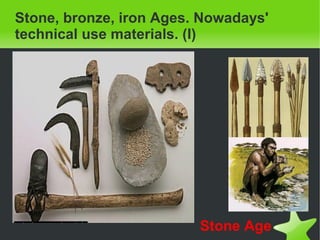
Stone, bronze, iron Ages. Nowadays'
technical use materials. (I)
Stone Age
   
Stone, bronze, iron Ages. Nowadays'
technical use materials. (II)
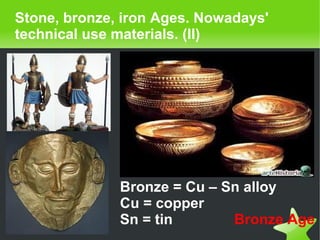
Bronze = Cu – Sn alloy
Cu = copper
Sn = tin Bronze Age
   
Stone, bronze, iron Ages. Nowadays'
technical use materials. (III)
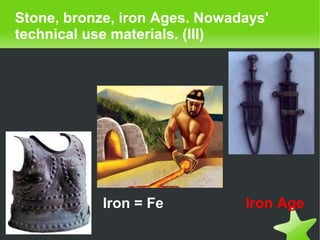
Iron = Fe Iron Age
   
Stone, bronze, iron Ages. Nowadays'
technical use materials. (IV)
Woods 2º E.S.O.
Metals (ferric, non ferric)
Plastics 3º E.S.O.
Ceramics
   
Natural vs. artificial materials.
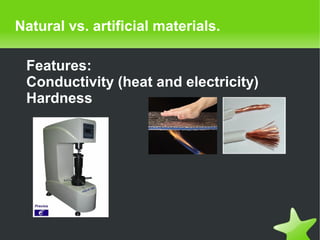
Features:
Conductivity (heat and electricity)
Hardness
   
Wood. Actual relevance. Parts.
Processing. Features. (I)
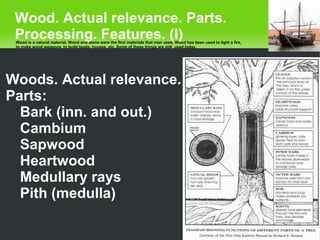
Woods. Actual relevance.
Parts:
Bark (inn. and out.)
Cambium
Sapwood
Heartwood
Medullary rays
Pith (medulla)
Wood is a natural material. Wood and stone were the first materials that man used. Wood has been used to light a fire,
to make wood weapons, to build boats, houses, etc. Some of these things are still used today.
   
Wood. Actual relevance. Parts.
Processing. Features. (II)
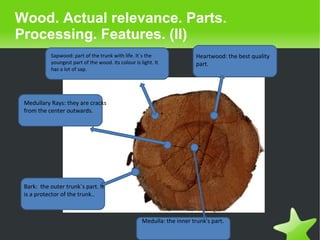
Bark: the outer trunk´s part. It
is a protector of the trunk..
Medullary Rays: they are cracks
from the center outwards.
Medulla: the inner trunk's part.
Heartwood: the best quality
part.
Sapwood: part of the trunk with life. It´s the
youngest part of the wood. Its colour is light. It
has a lot of sap.
   
Wood. Actual relevance. Parts.
Processing. Features. (III)
Features:
density d = m / V
hardness H
resistance to traction, compression and bending
T, C, F (fiber direction)
conductivity (th.&el.)
durability (moisture, hygroscopicity, fungus, rot)
   
Wood. Actual relevance. Parts.
Processing. Features. (III)
Processing:
http://www.youtube.com/watch?v=cwwkO7m4bpY&NR=1 CORTE EN EL BOSQUE
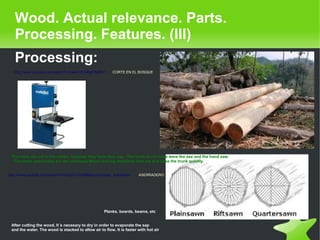
Planks, boards, beams, etc
After cutting the wood, It´s necesary to dry in order to evaporate the sap
and the water. The wood is stacked to allow air to flow. It is faster with hot air
The trees are cut in the winter, because they have less sap. •The tools to cut trees were the axe and the hand saw.
•The tools used today are the chainsaw Wood and big machines that cut and raise the trunk quickly.
http://www.youtube.com/watch?v=EAgCi1J7Hl0&feature=player_embedded ASERRADERO
   
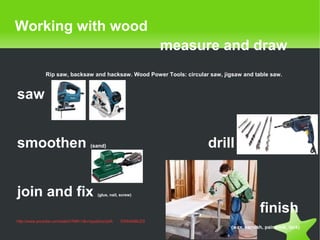
Working with wood
measure and draw
saw
smoothen (sand) drill
join and fix (glue, nail, screw)
finish
(wax, varnish, paint, ink, lack)
Rip saw, backsaw and hacksaw. Wood Power Tools: circular saw, jigsaw and table saw.
http://www.youtube.com/watch?NR=1&v=jzyaGrpUpIA ENSAMBLES
   
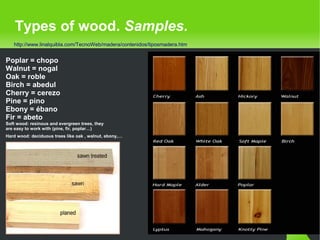
Types of wood. Samples.
Poplar = chopo
Walnut = nogal
Oak = roble
Birch = abedul
Cherry = cerezo
Pine = pino
Ebony = ébano
Fir = abeto
Soft wood: resinous and evergreen trees, they
are easy to work with (pine, fir, poplar…)
Hard wood: deciduous trees like oak , walnut, ebony,…
http://www.linalquibla.com/TecnoWeb/madera/contenidos/tiposmadera.htm
   
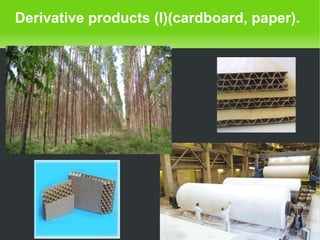
Derivative products (I)(cardboard, paper).
   
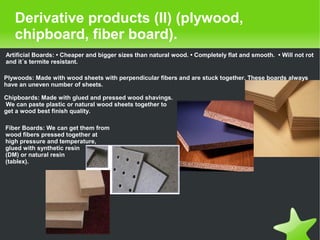
Derivative products (II) (plywood,
chipboard, fiber board).
Artificial Boards: • Cheaper and bigger sizes than natural wood. • Completely flat and smooth. • Will not rot
and it´s termite resistant.
Plywoods: Made with wood sheets with perpendicular fibers and are stuck together. These boards always
have an uneven number of sheets.
Chipboards: Made with glued and pressed wood shavings.
We can paste plastic or natural wood sheets together to
get a wood best finish quality.
Fiber Boards: We can get them from
wood fibers pressed together at
high pressure and temperature,
glued with synthetic resin
(DM) or natural resin
(tablex).
   
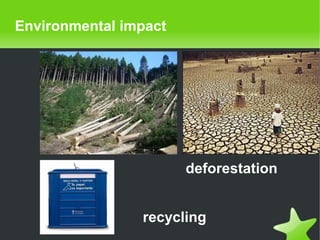
Environmental impact
deforestation
recycling

Didactic unit # 3 wood

  • 1.
        TECHNICAL USEMATERIALS I: WOOD © Federico Fernández Herrera ENGLISH BILINGUAL 2º E.S.O. TECHNOLOGY DIDACTIC UNIT # 3
  • 2.
        Index: ● Stone,Bronze, Iron Age. Nowadays' technical use materials. ● Natural vs. artificial materials. ● Wood. Actual relevance. Parts. Processing. Features. ● Working with woods (measure, draw, fix, cut, smoothen, drill, join, finish). ● Derivative products (cardboard, paper). Wood samples. ● Types of wood. ● Enviromental Impact.
  • 3.
        Stone, bronze,iron Ages. Nowadays' technical use materials. (I) Stone Age
  • 4.
        Stone, bronze,iron Ages. Nowadays' technical use materials. (II) Bronze = Cu – Sn alloy Cu = copper Sn = tin Bronze Age
  • 5.
        Stone, bronze,iron Ages. Nowadays' technical use materials. (III) Iron = Fe Iron Age
  • 6.
        Stone, bronze,iron Ages. Nowadays' technical use materials. (IV) Woods 2º E.S.O. Metals (ferric, non ferric) Plastics 3º E.S.O. Ceramics
  • 7.
        Natural vs.artificial materials. Features: Conductivity (heat and electricity) Hardness
  • 8.
        Wood. Actualrelevance. Parts. Processing. Features. (I) Woods. Actual relevance. Parts: Bark (inn. and out.) Cambium Sapwood Heartwood Medullary rays Pith (medulla) Wood is a natural material. Wood and stone were the first materials that man used. Wood has been used to light a fire, to make wood weapons, to build boats, houses, etc. Some of these things are still used today.
  • 9.
        Wood. Actualrelevance. Parts. Processing. Features. (II) Bark: the outer trunk´s part. It is a protector of the trunk.. Medullary Rays: they are cracks from the center outwards. Medulla: the inner trunk's part. Heartwood: the best quality part. Sapwood: part of the trunk with life. It´s the youngest part of the wood. Its colour is light. It has a lot of sap.
  • 10.
        Wood. Actualrelevance. Parts. Processing. Features. (III) Features: density d = m / V hardness H resistance to traction, compression and bending T, C, F (fiber direction) conductivity (th.&el.) durability (moisture, hygroscopicity, fungus, rot)
  • 11.
        Wood. Actualrelevance. Parts. Processing. Features. (III) Processing: http://www.youtube.com/watch?v=cwwkO7m4bpY&NR=1 CORTE EN EL BOSQUE Planks, boards, beams, etc After cutting the wood, It´s necesary to dry in order to evaporate the sap and the water. The wood is stacked to allow air to flow. It is faster with hot air The trees are cut in the winter, because they have less sap. •The tools to cut trees were the axe and the hand saw. •The tools used today are the chainsaw Wood and big machines that cut and raise the trunk quickly. http://www.youtube.com/watch?v=EAgCi1J7Hl0&feature=player_embedded ASERRADERO
  • 12.
        Working withwood measure and draw saw smoothen (sand) drill join and fix (glue, nail, screw) finish (wax, varnish, paint, ink, lack) Rip saw, backsaw and hacksaw. Wood Power Tools: circular saw, jigsaw and table saw. http://www.youtube.com/watch?NR=1&v=jzyaGrpUpIA ENSAMBLES
  • 13.
        Types ofwood. Samples. Poplar = chopo Walnut = nogal Oak = roble Birch = abedul Cherry = cerezo Pine = pino Ebony = ébano Fir = abeto Soft wood: resinous and evergreen trees, they are easy to work with (pine, fir, poplar…) Hard wood: deciduous trees like oak , walnut, ebony,… http://www.linalquibla.com/TecnoWeb/madera/contenidos/tiposmadera.htm
  • 14.
        Derivative products(I)(cardboard, paper).
  • 15.
        Derivative products(II) (plywood, chipboard, fiber board). Artificial Boards: • Cheaper and bigger sizes than natural wood. • Completely flat and smooth. • Will not rot and it´s termite resistant. Plywoods: Made with wood sheets with perpendicular fibers and are stuck together. These boards always have an uneven number of sheets. Chipboards: Made with glued and pressed wood shavings. We can paste plastic or natural wood sheets together to get a wood best finish quality. Fiber Boards: We can get them from wood fibers pressed together at high pressure and temperature, glued with synthetic resin (DM) or natural resin (tablex).
  • 16.