
786
         Shakib Afzal

        Semester#7th

      Reg#09PWMIN0581

        UET Peshawar

      19 December, 2012
Dichroscope
Dichroscope

  •To identify the gemstone
  •To inspect ploechroism in
  gemstones
  •To separate some common
  gemstone from each other
Types
        Two types

1:Calcite dichroscope
2:Polarizing dichroscope
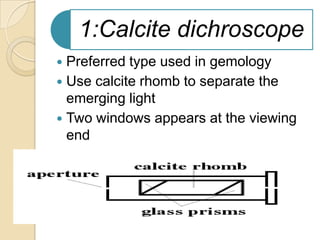
1:Calcite dichroscope
 Preferred type used in gemology
 Use calcite rhomb to separate the
  emerging light
 Two windows appears at the viewing
  end
2:Polarizing dichroscope
 Use polarizing filter to observe
  ploechroism
Disadvantage:
 You can see only one ploechroic
  colour at a time.
 Difficult to recognize changes in
  colour.
How to overcome this Problem?


   Place two polarizing filters close to each
    other at ‹90⁰
Dichroscope with two polarizing
                filters
 Economical
 Results obtains are less clear
 Stones with weak pleochroism are
  hard to determine
Better one?

 Calcite dichroscope?
               Or
 Polarizing dichroscope?
Answer is
   Calcite dichroscope


                          ok

We will discus the working principles of
 calcite dichroscope
Proper use and Working principles

    1st step:
 Hold the stone close to the apperture
 Provide strong light source behind the
  stone
 Look through the other end of the
  dichroscope
 Two windows will appear
 Examine the colours in the windows
2nd step
 Turn the dichroscope through 180⁰
  keeping the stone in fixed position
 Observe the changes in colours again
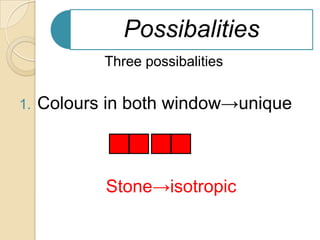
Possibalities
            Three possibalities


1.   Colours in both window→unique


            Stone→isotropic
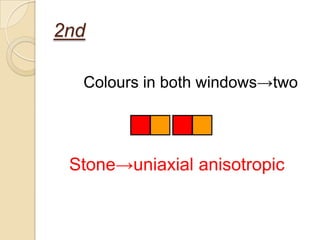
2nd

  Colours in both windows→two


 Stone→uniaxial anisotropic
3rd
  Colours in both windows→three


      Stone→biaxial anisotropic
The end…


        Any
     questions?
Then


          Thanks a lot
       Wish you good luck

Dichroscope

  • 1.
    786 Shakib Afzal Semester#7th Reg#09PWMIN0581 UET Peshawar 19 December, 2012
  • 2.
  • 3.
    Dichroscope •Toidentify the gemstone •To inspect ploechroism in gemstones •To separate some common gemstone from each other
  • 4.
    Types Two types 1:Calcite dichroscope 2:Polarizing dichroscope
  • 5.
    1:Calcite dichroscope  Preferredtype used in gemology  Use calcite rhomb to separate the emerging light  Two windows appears at the viewing end
  • 6.
    2:Polarizing dichroscope  Usepolarizing filter to observe ploechroism Disadvantage:  You can see only one ploechroic colour at a time.  Difficult to recognize changes in colour.
  • 7.
    How to overcomethis Problem?  Place two polarizing filters close to each other at ‹90⁰
  • 8.
    Dichroscope with twopolarizing filters  Economical  Results obtains are less clear  Stones with weak pleochroism are hard to determine
  • 9.
    Better one?  Calcitedichroscope? Or  Polarizing dichroscope?
  • 10.
    Answer is  Calcite dichroscope ok We will discus the working principles of calcite dichroscope
  • 11.
    Proper use andWorking principles 1st step:  Hold the stone close to the apperture  Provide strong light source behind the stone  Look through the other end of the dichroscope  Two windows will appear  Examine the colours in the windows
  • 12.
    2nd step  Turnthe dichroscope through 180⁰ keeping the stone in fixed position  Observe the changes in colours again
  • 13.
    Possibalities Three possibalities 1. Colours in both window→unique Stone→isotropic
  • 14.
    2nd Coloursin both windows→two Stone→uniaxial anisotropic
  • 15.
    3rd Coloursin both windows→three Stone→biaxial anisotropic
  • 16.
    The end… Any questions?
  • 17.
    Then Thanks a lot Wish you good luck