DIAGRAMING BASIC
SENTENCE PARTS
A PICTORIAL REPRESENTATION OF A
SENTENCE IS CALLED A DIAGRAM.
IT CAN HELP YOU VISUALIZE A
SENTENCE’S STRUCTURE.
SUBJECTS, VERBS, AND MODIFIERS
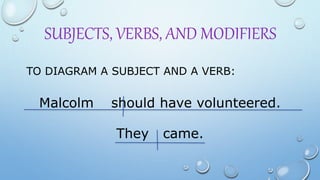
TO DIAGRAM A SUBJECT AND A VERB:
Malcolm should have volunteered.
They came.
ADJECTIVES AND ADVERBS
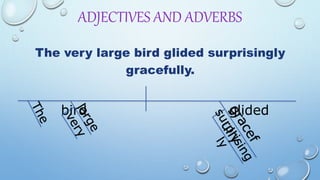
The very large bird glided surprisingly
gracefully.
bird glided
IMPERATIVE SENTENCE
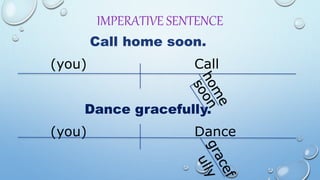
Call home soon.
(you) Call
Dance gracefully.
(you) Dance
INVERTED SENTENCES
Does Mark dance well?
Mark Does dance
Has Regina telephoned yet?
Regina Has telephoned
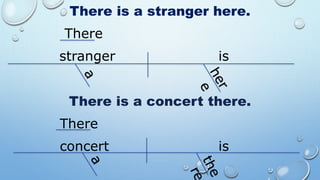
There is a stranger here.
There
stranger is
There is a concert there.
There
concert is
Hey, Diana, hurry up!
Hey
Diana
(you) hurry
INTERJECTIO
N
DIRECT
ADDRESS
My, Adrian, you look awesome!
My
Adrian
you look
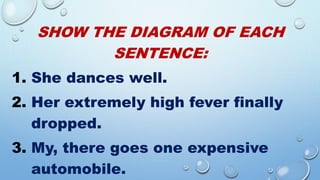
SHOW THE DIAGRAM OF EACH
SENTENCE:
1. She dances well.
2. Her extremely high fever finally
dropped.
3. My, there goes one expensive
automobile.
ADDING CONJUNCTIONS
Conjunctions are generally shown
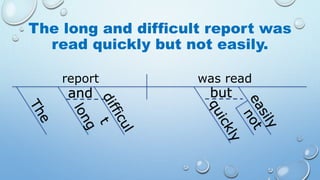
in a diagram on a dotted line between
the words which they connect.
The long and difficult report was
read quickly but not easily.
report was read
and but
Show the diagram:
The horses neighed
nervously and shied away.
SHOW THE DIAGRAM OF
EACH SENTENCE:
1.Is my notebook here?
2.The giant python slithered
silently.

Diagraming basic sentence parts

Editor's Notes

  • #3 Draw a horizontal line and place the subject on the left an the verb on the right. Separate the two with a vertical line.
  • #4 Adjectives and Adverbs sit on slanted lines beneath the words they modify.
  • #6 Inverted sentences – the subject often follows the verb or appears between a helping verb and the verb.
  • #7 If there or here functions as an adverb, diagram it below the verb. If there functions as an expletive, place it on a horizontal line above the subject. Also use the position of an expletive for interjections and nouns of direct address.
  • #8 Interjections and direct address is placed above the subject.
  • #12 In this sentence, conjunctions join both adjectives and adverbs.