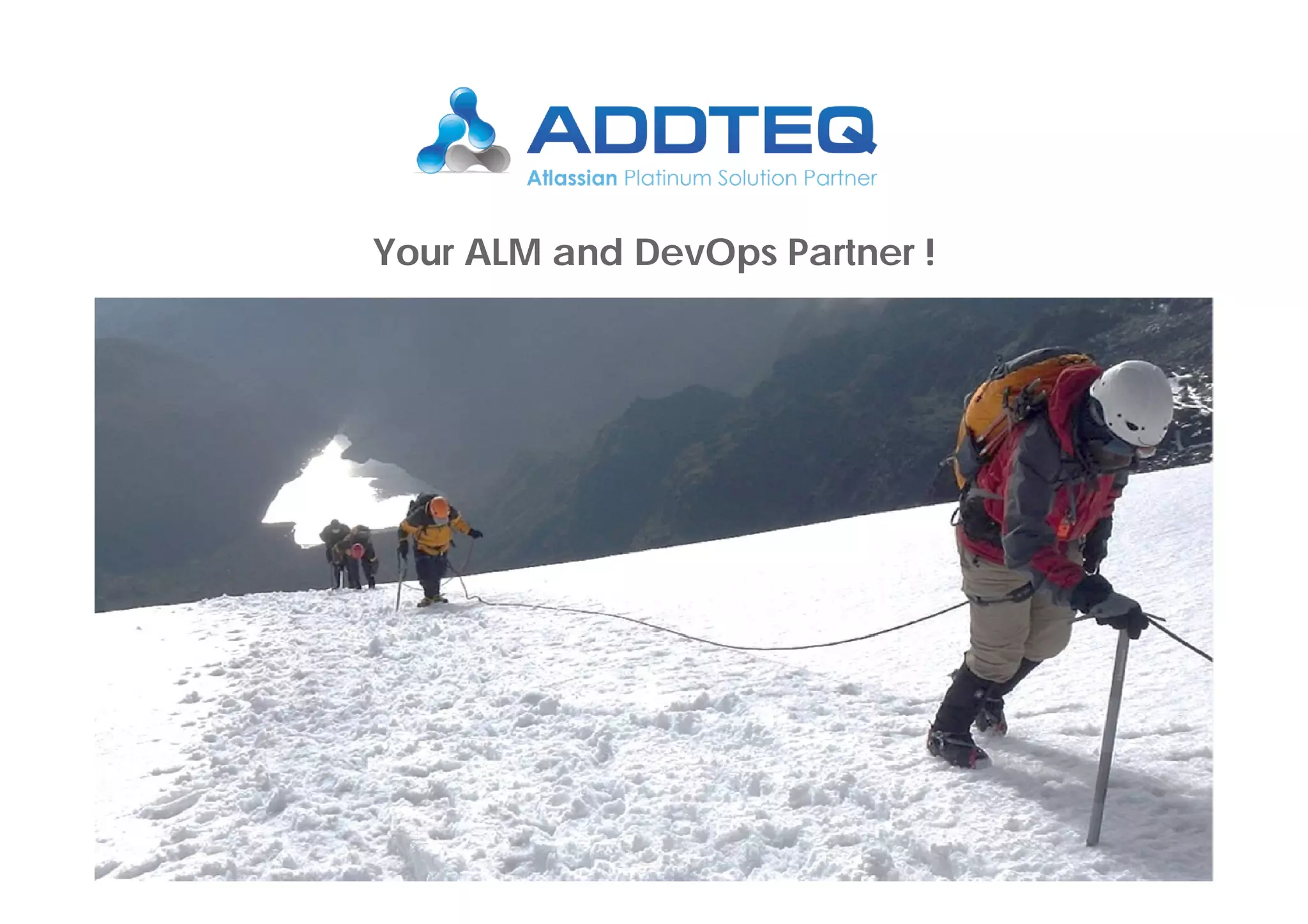
Your ALM and DevOps Partner !
DevOps Transformation
Approach
❖ Overall 16+ Yrs experience in Software Industry
❖ Executive MBA from SPJIMR
❖ Certified JIRA and JIRA Software Admin
❖ Certified Product Manager, SAFe Program Consultant, Kanban Trainer
❖ Favourite topics :
➢ Products, Process
➢ Automation
❖ Started career as J2EE Developer at Tata Steel ( 2003 )
❖ Moved to GE ( 2005 )
➢ Senior Developer
➢ Tech Lead
➢ Project Lead
➢ Project Manager
❖ Currently working as Digital Transformation Consultant at Addteq
(from 2013)
➢ ALM and DevOps Process Consulting
➢ Conceptualized solutions @ DevOps and ALM area
➢ Delivered various Atlassian Implementation Projects
https://in.linkedin.com/in/kvudaykumar
About Uday Kumar
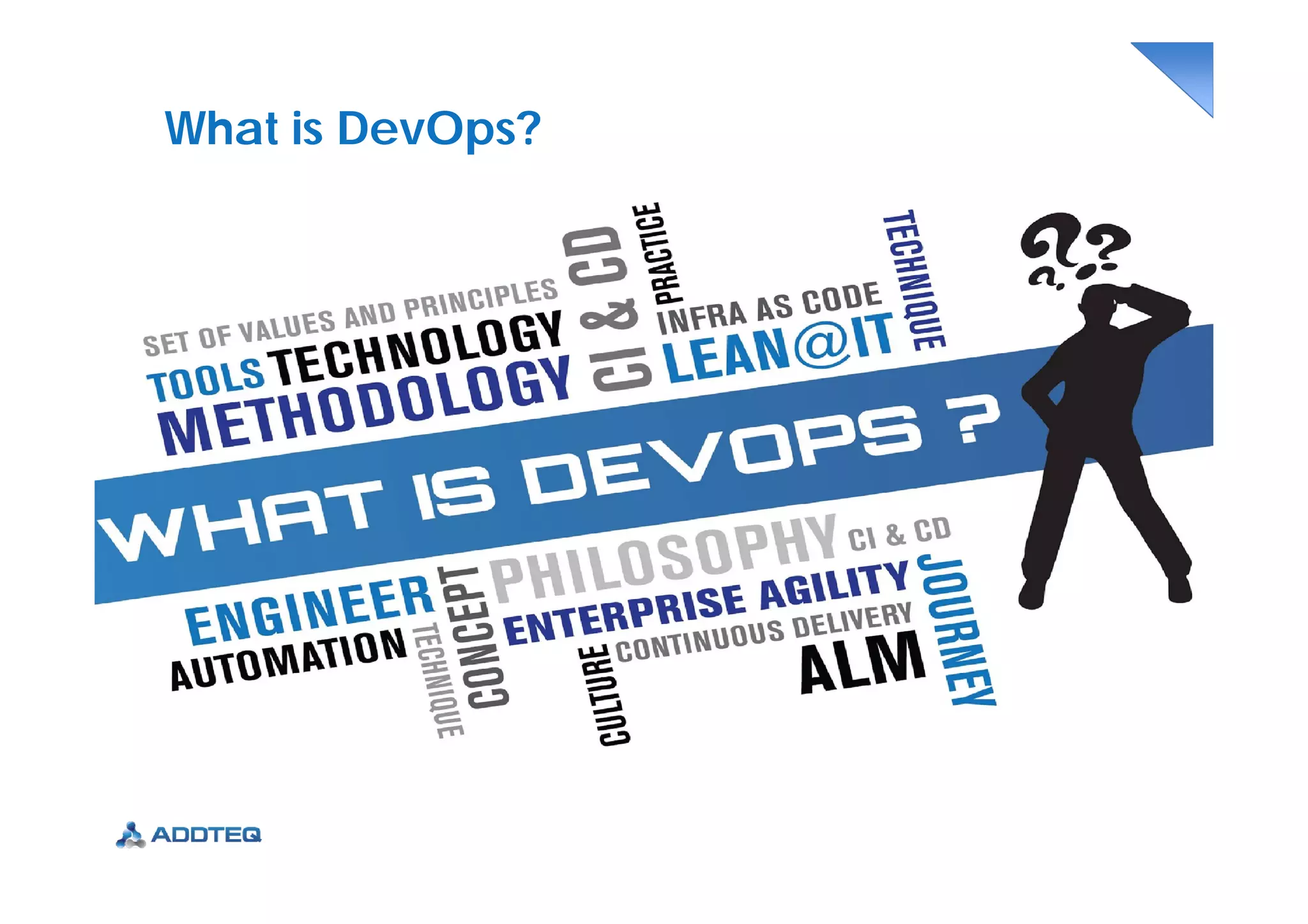
What is DevOps?
DevOps Drivers….
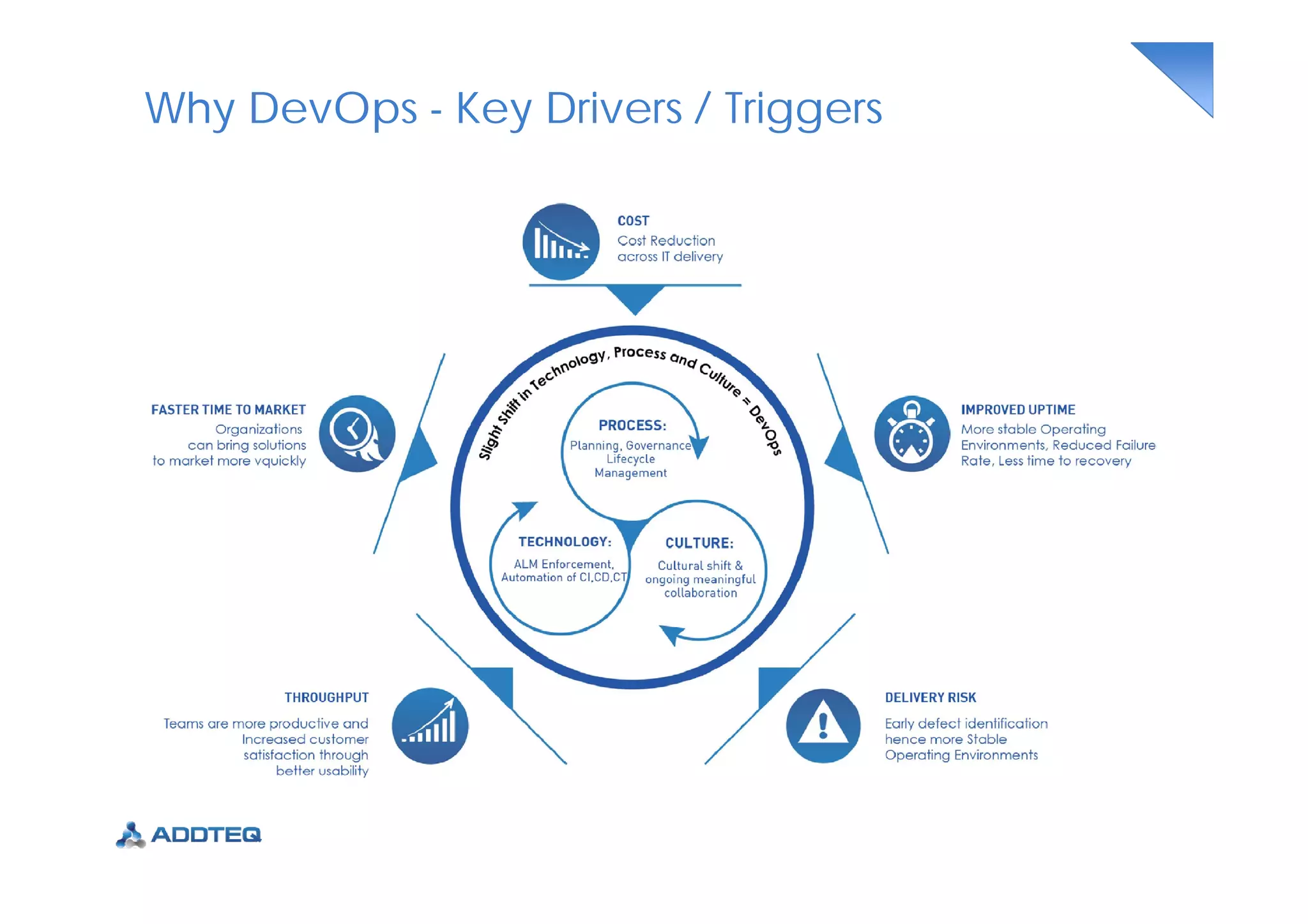
Why DevOps - Key Drivers / Triggers
Why Different DevOps
Strategy?
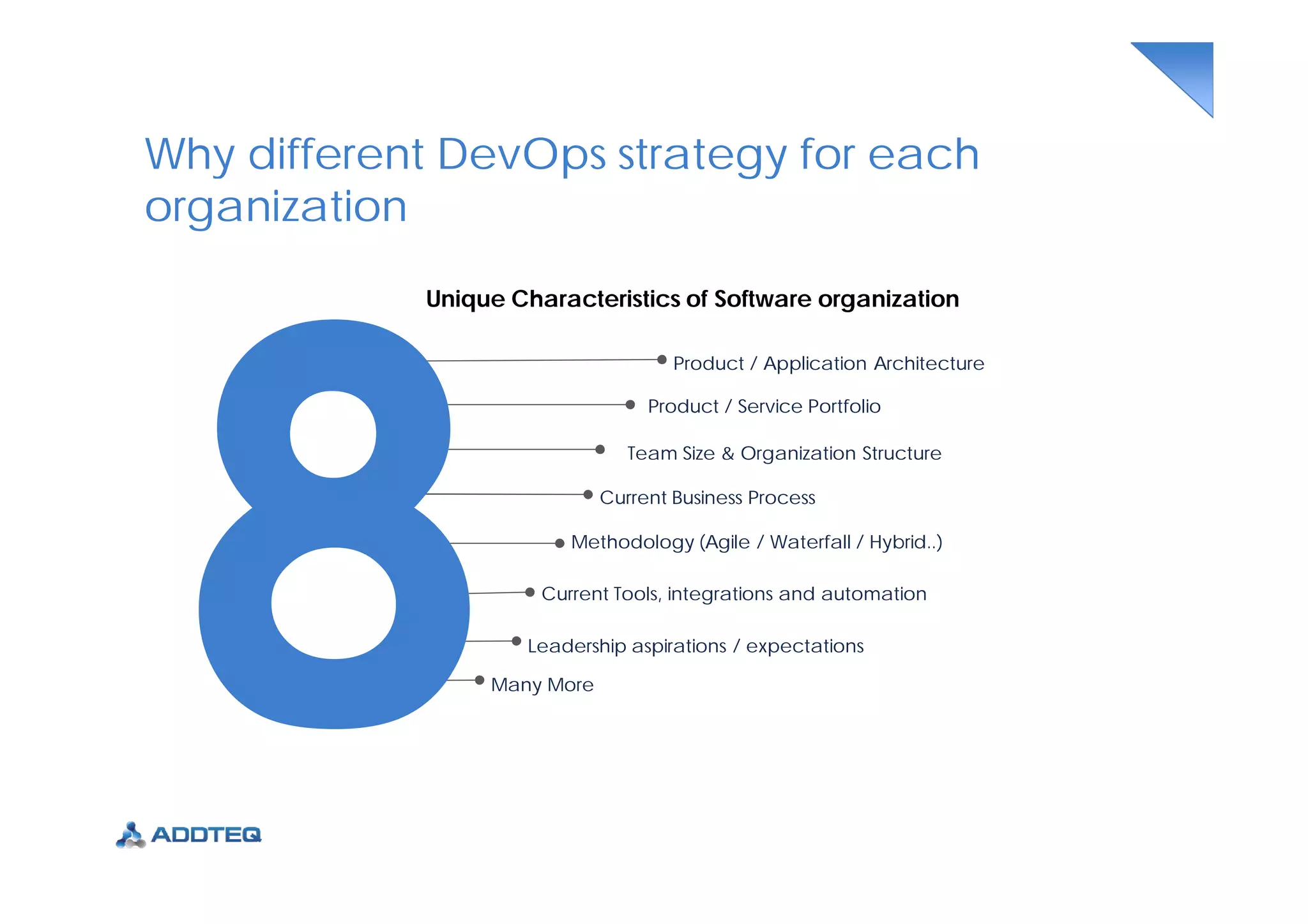
Why different DevOps strategy for each
organization
Leadership aspirations / expectations
Unique Characteristics of Software organization
Product / Application Architecture
Product / Service Portfolio
Current Business Process
Team Size & Organization Structure
Methodology (Agile / Waterfall / Hybrid..)
Current Tools, integrations and automation
Many More
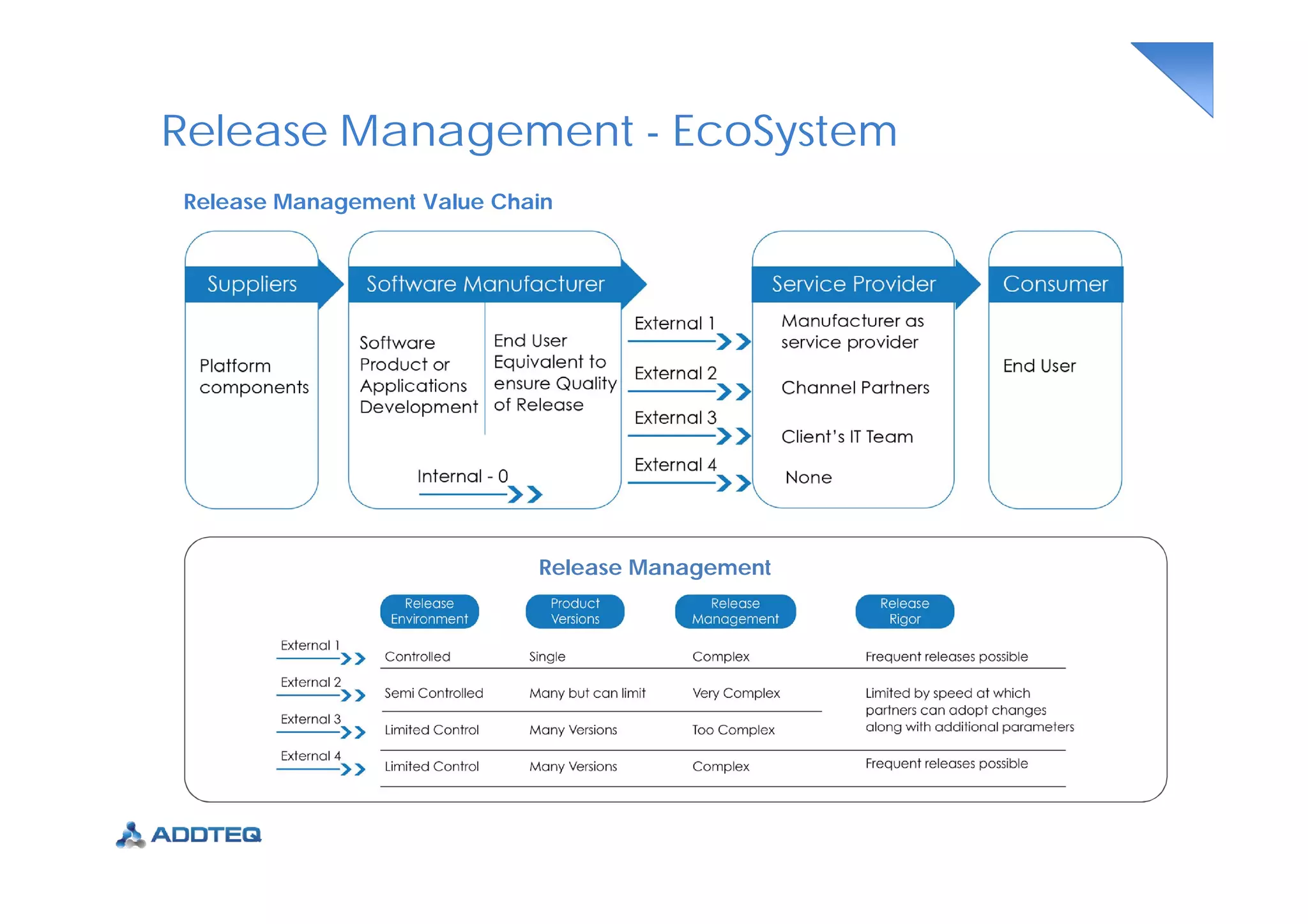
Release Management - EcoSystem
Release Management
Release Management Value Chain
DevOps Categories
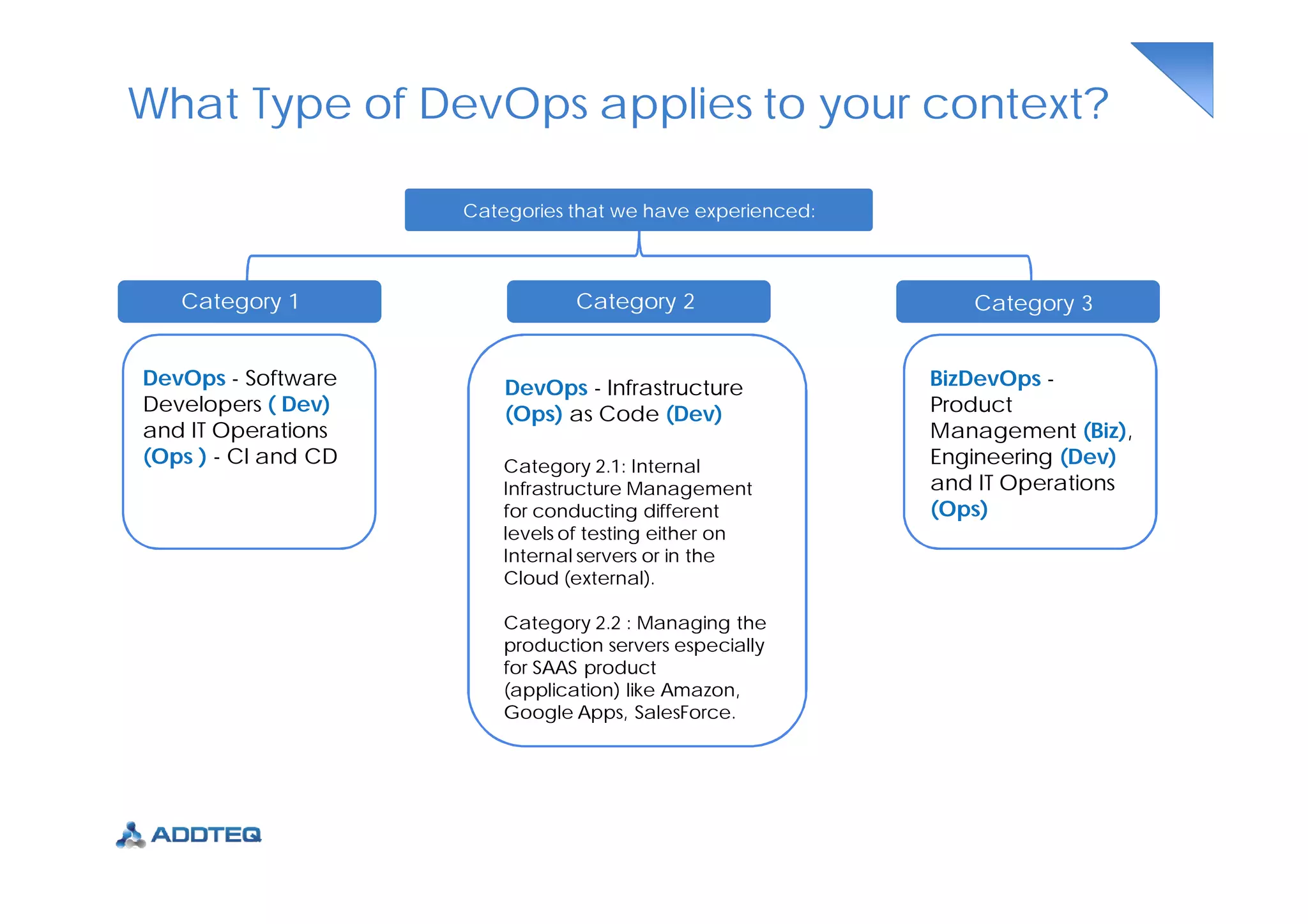
What Type of DevOps applies to your context?
Categories that we have experienced:
Category 1 Category 2 Category 3
DevOps - Software
Developers ( Dev)
and IT Operations
(Ops ) - CI and CD
DevOps - Infrastructure
(Ops) as Code (Dev)
Category 2.1: Internal
Infrastructure Management
for conducting different
levels of testing either on
Internal servers or in the
Cloud (external).
Category 2.2 : Managing the
production servers especially
for SAAS product
(application) like Amazon,
Google Apps, SalesForce.
BizDevOps -
Product
Management (Biz),
Engineering (Dev)
and IT Operations
(Ops)
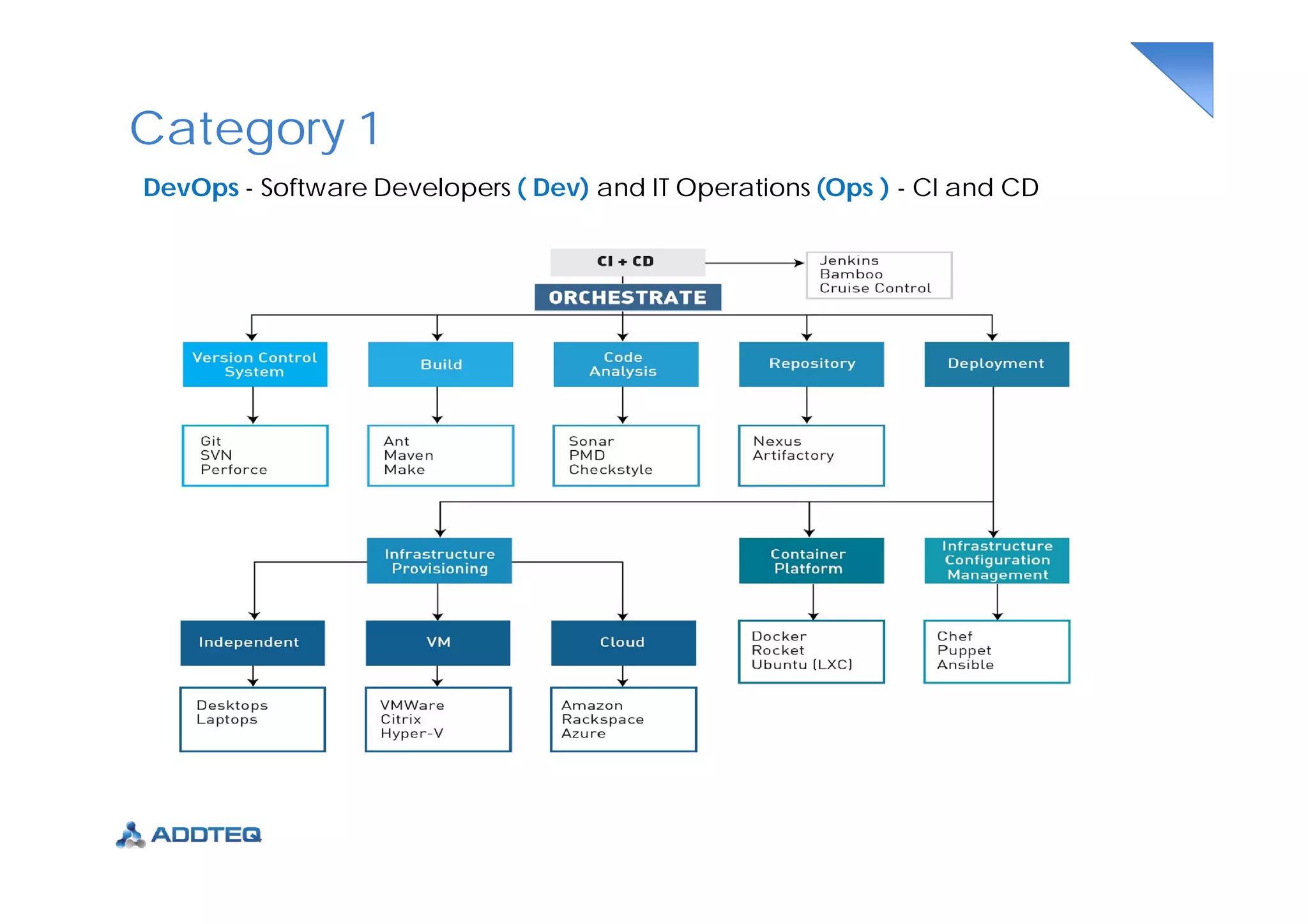
Category 1
DevOps - Software Developers ( Dev) and IT Operations (Ops ) - CI and CD
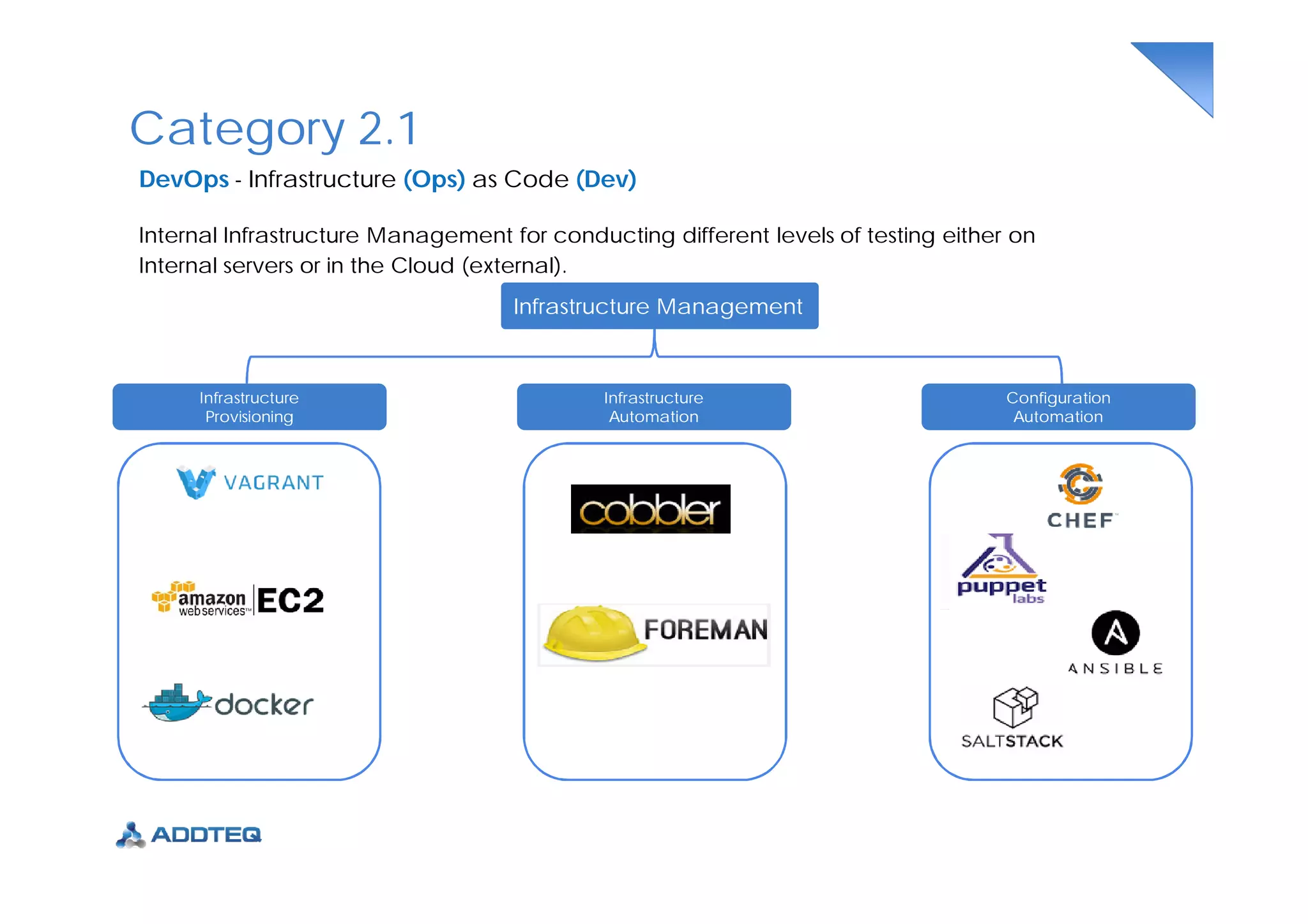
Category 2.1
DevOps - Infrastructure (Ops) as Code (Dev)
Internal Infrastructure Management for conducting different levels of testing either on
Internal servers or in the Cloud (external).
Configuration
Automation
Infrastructure
Automation
Infrastructure
Provisioning
Infrastructure Management
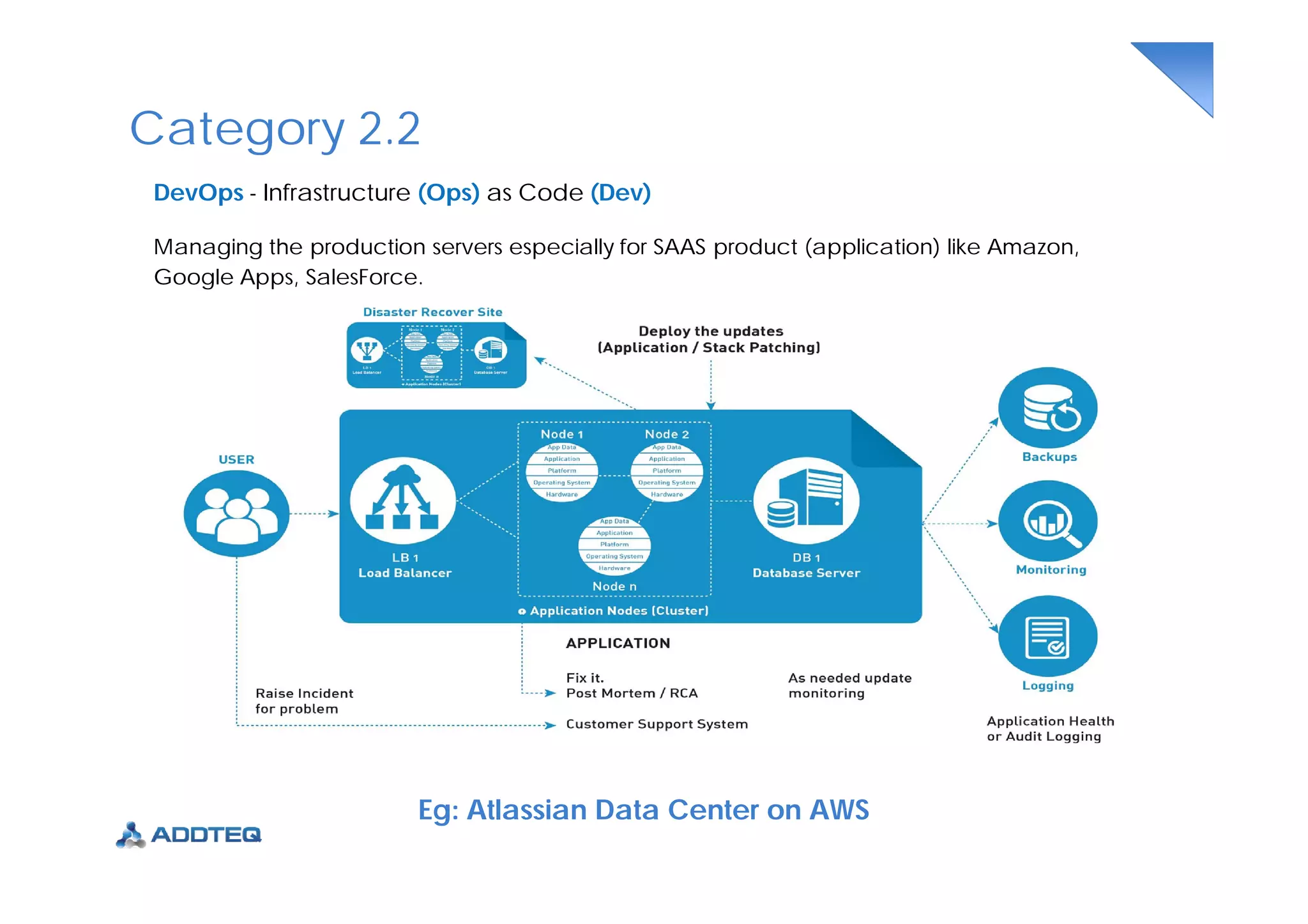
Category 2.2
DevOps - Infrastructure (Ops) as Code (Dev)
Managing the production servers especially for SAAS product (application) like Amazon,
Google Apps, SalesForce.
Eg: Atlassian Data Center on AWS
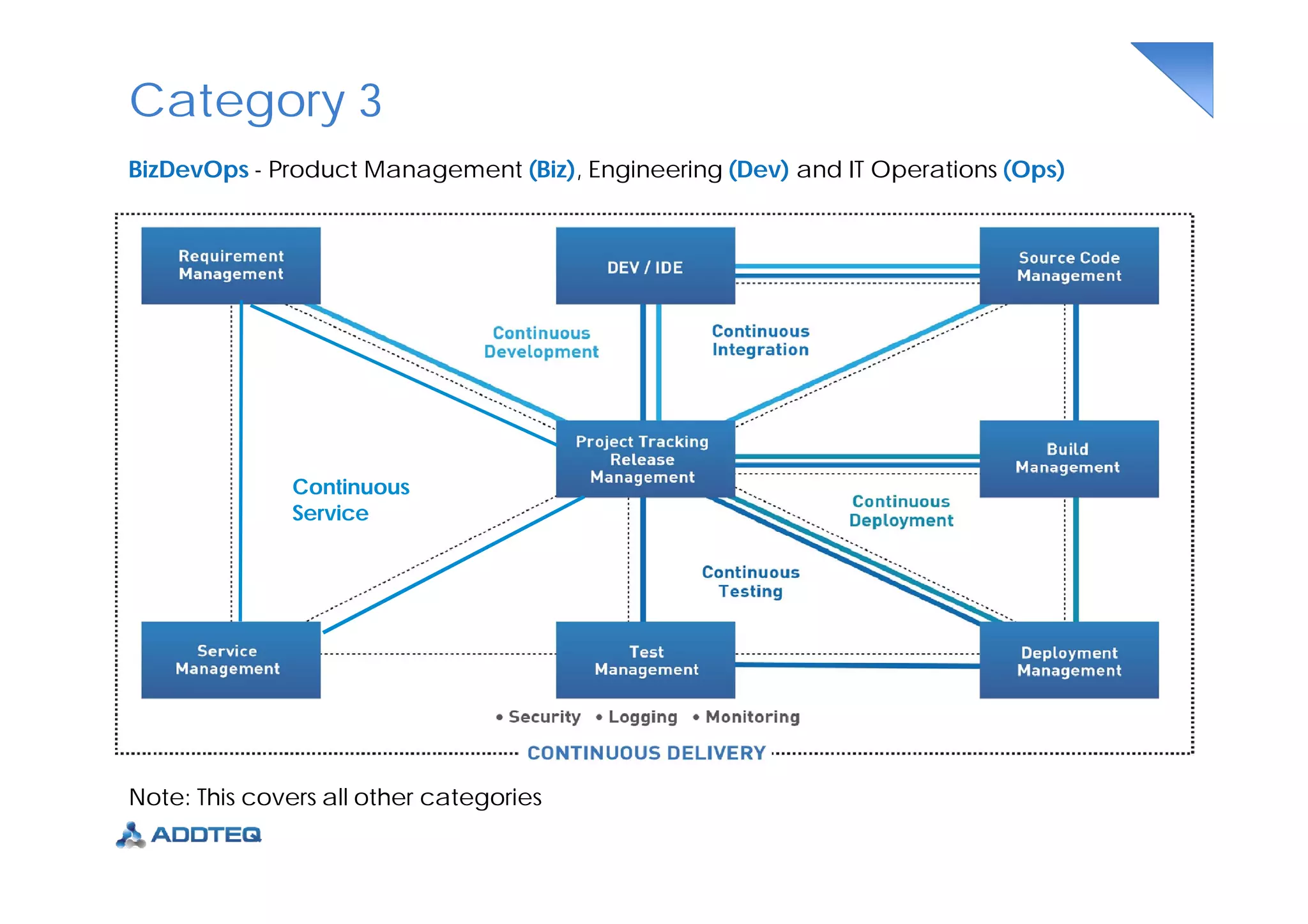
Category 3
BizDevOps - Product Management (Biz), Engineering (Dev) and IT Operations (Ops)
Continuous
Service
Note: This covers all other categories
Transformation Model
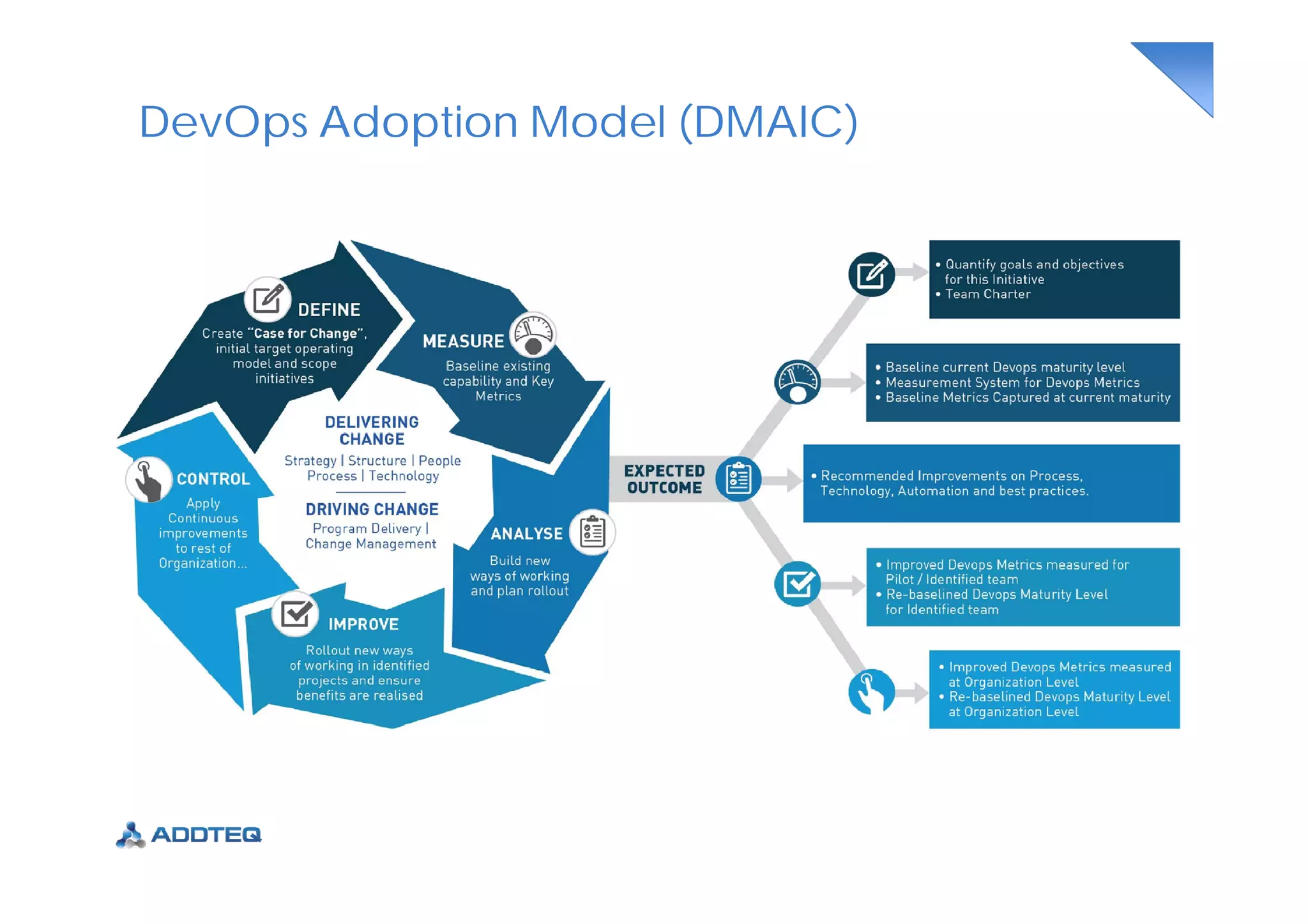
DevOps Adoption Model (DMAIC)
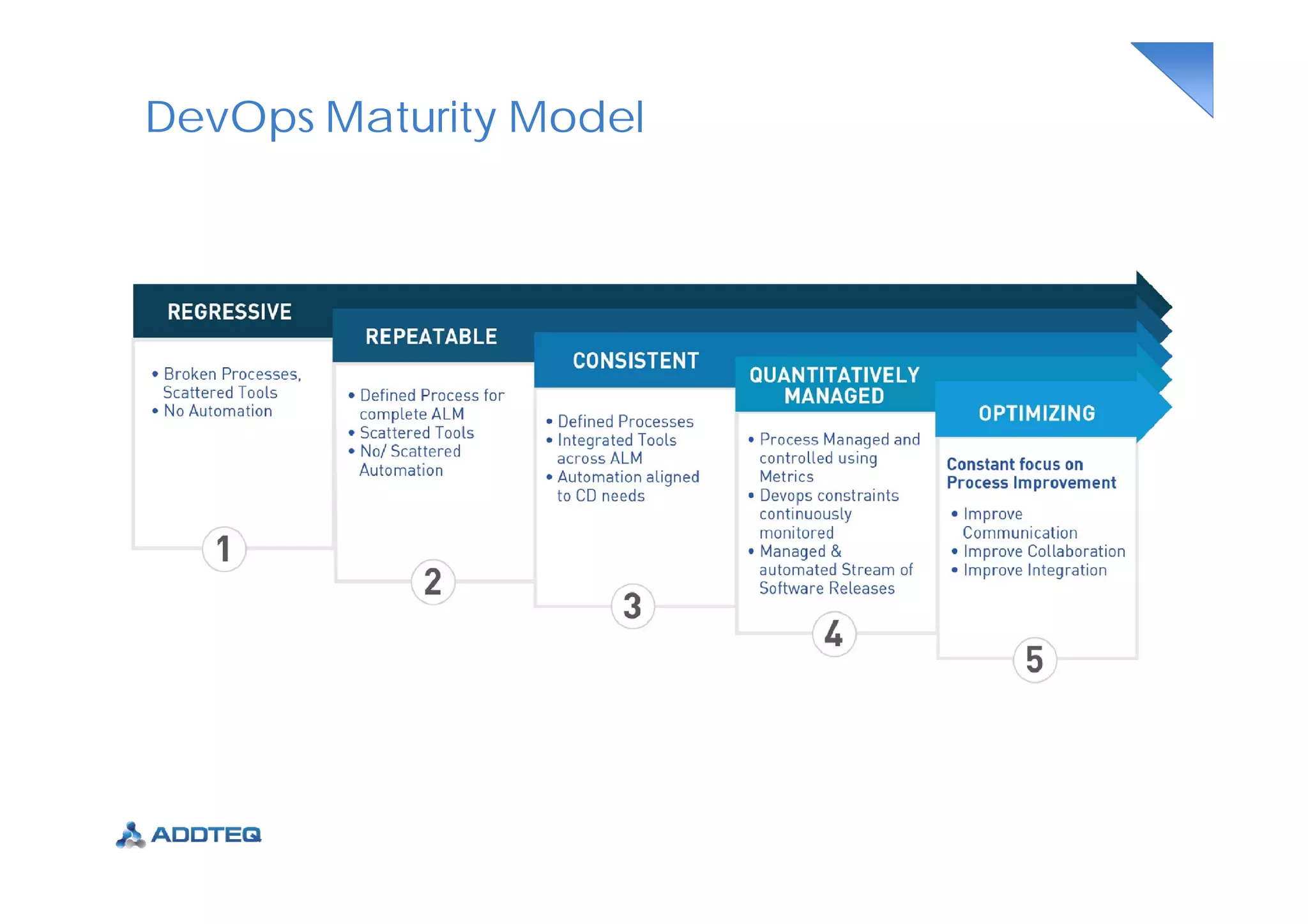
DevOps Maturity Model
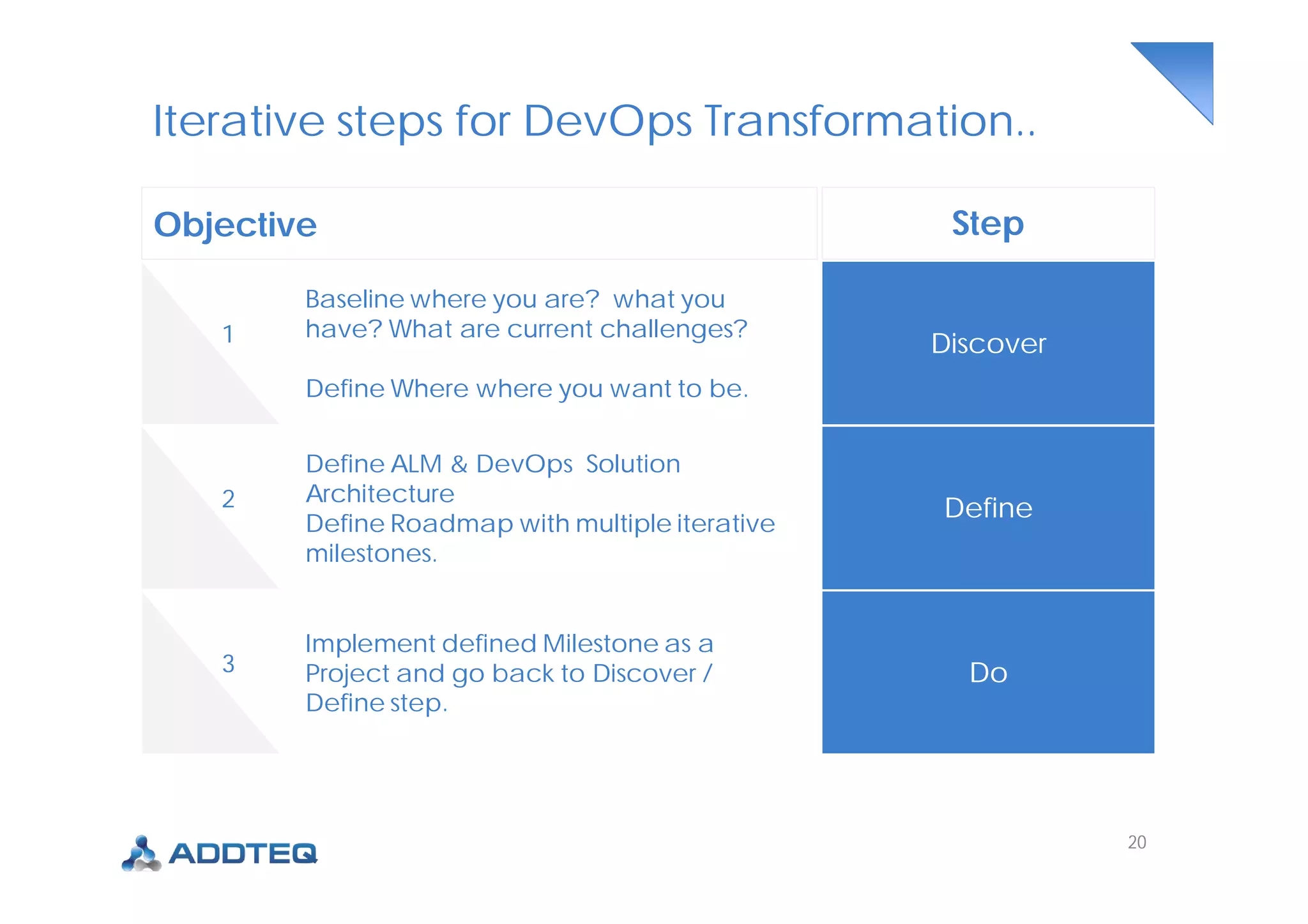
Iterative steps for DevOps Transformation..
Step
Objective
Discover
1
Baseline where you are? what you
have? What are current challenges?
Define Where where you want to be.
Define
2
Do
3
Implement defined Milestone as a
Project and go back to Discover /
Define step.
20
Define ALM & DevOps Solution
Architecture
Define Roadmap with multiple iterative
milestones.
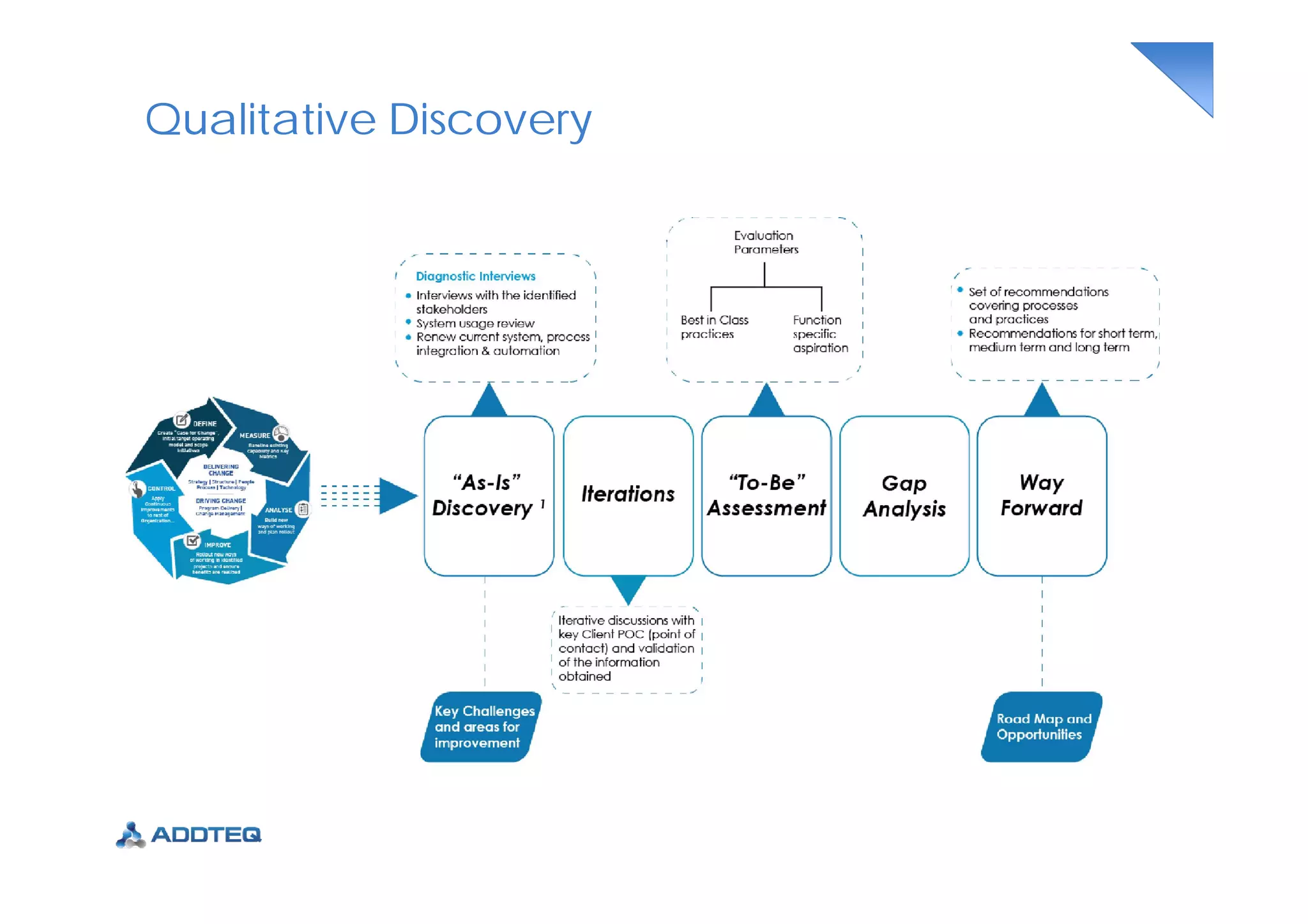
Qualitative Discovery
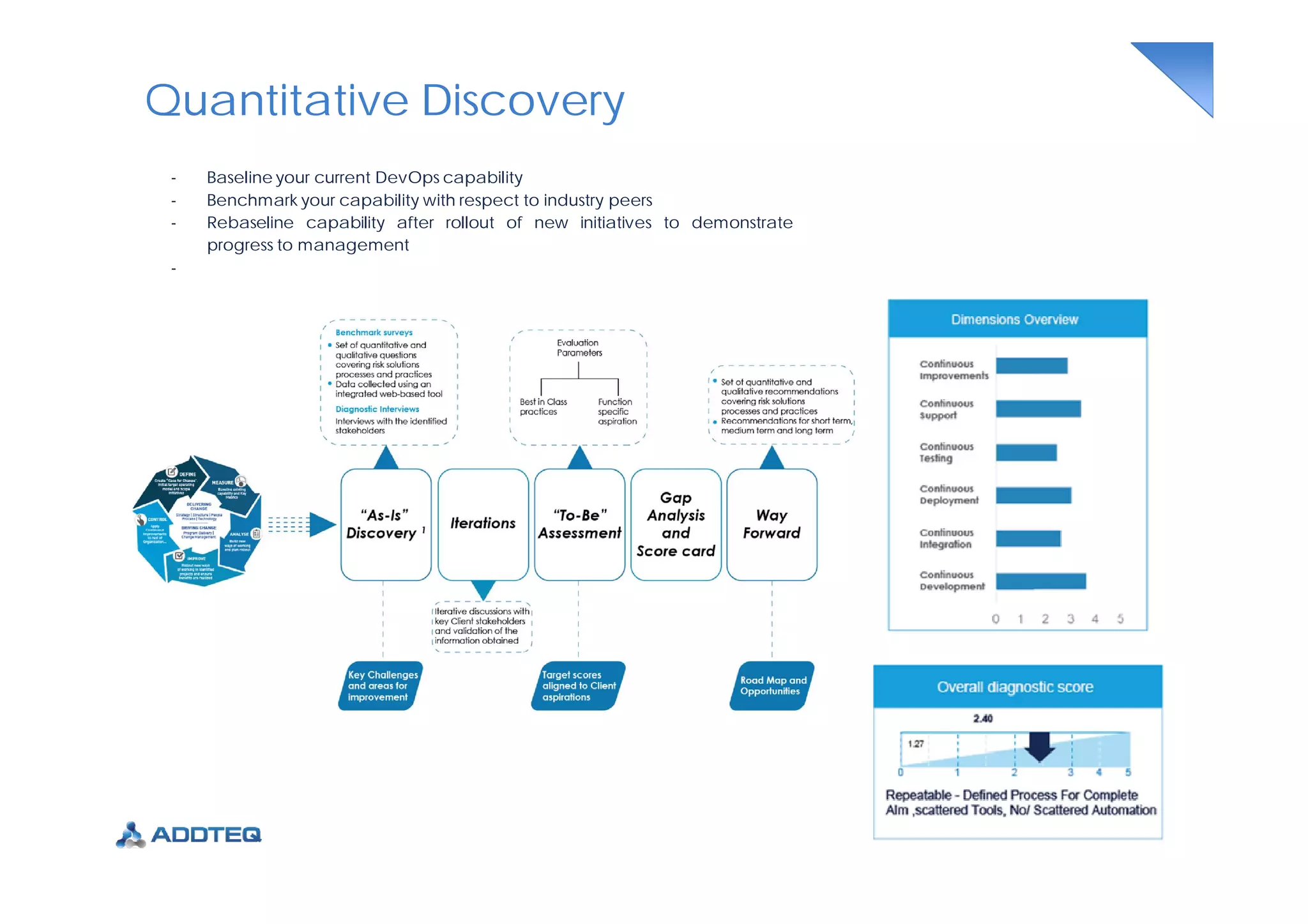
Quantitative Discovery
- Baseline your current DevOps capability
- Benchmark your capability with respect to industry peers
- Rebaseline capability after rollout of new initiatives to demonstrate
progress to management
-
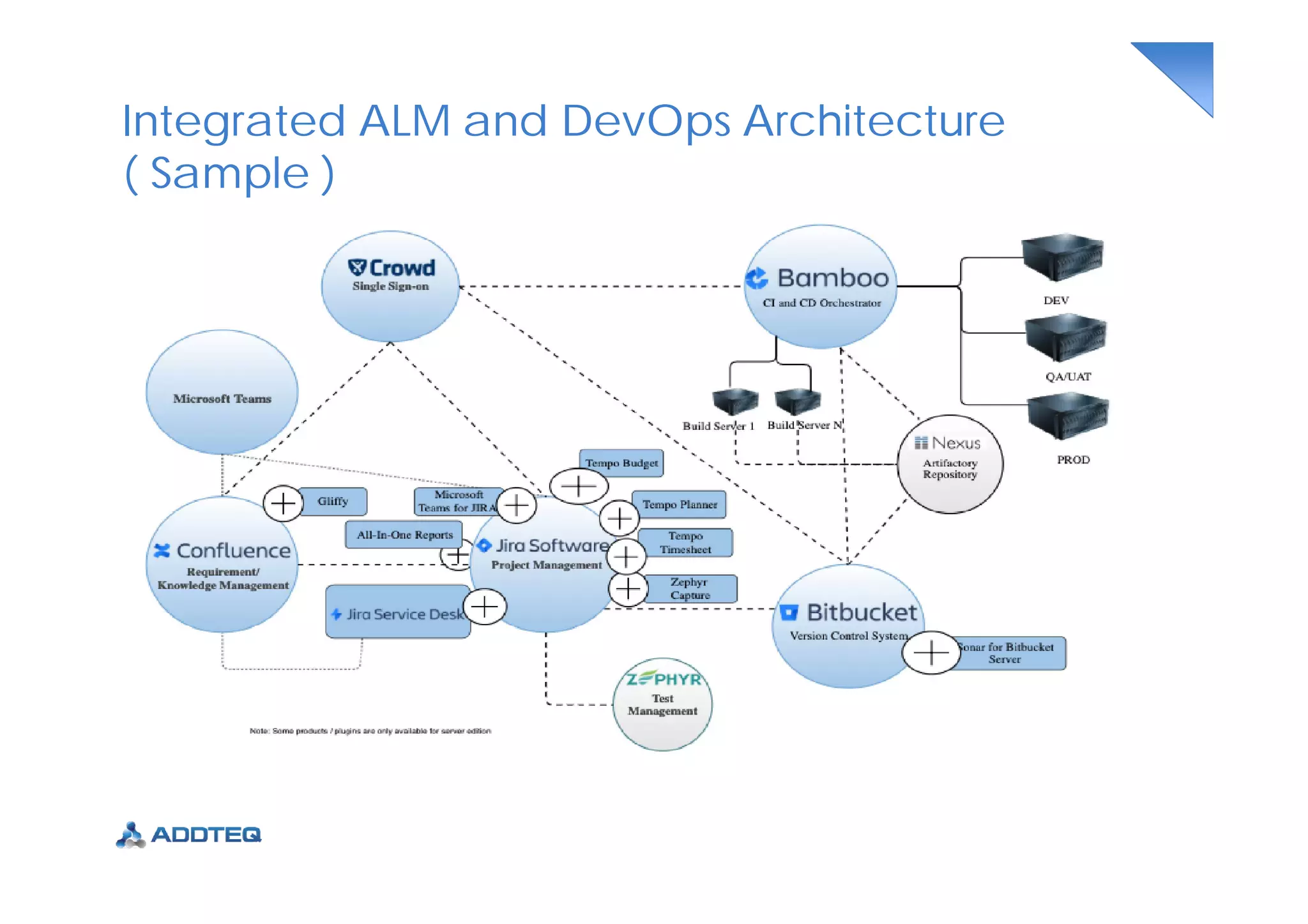
Integrated ALM and DevOps Architecture
( Sample )
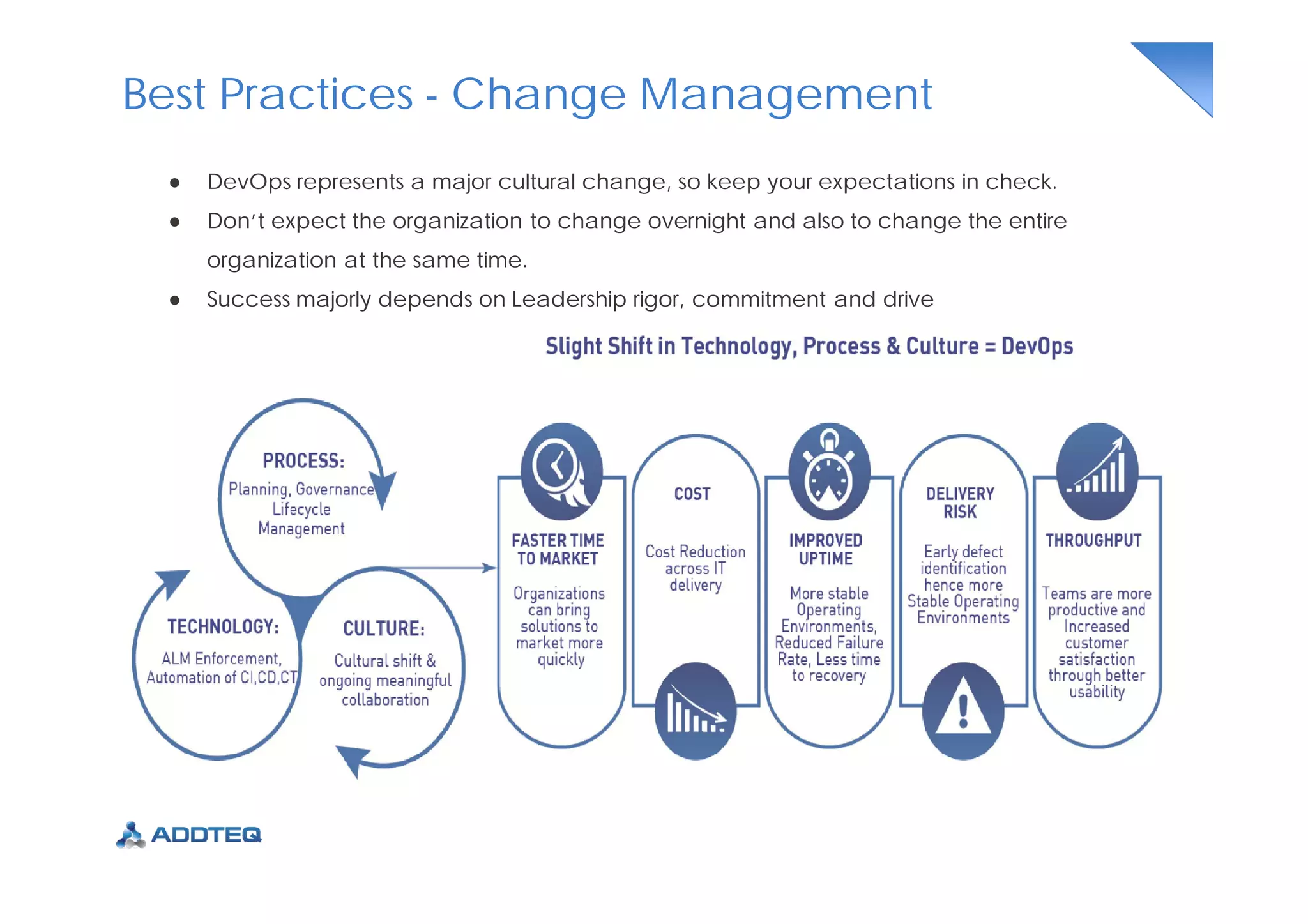
Best Practices - Change Management
● DevOps represents a major cultural change, so keep your expectations in check.
● Don’t expect the organization to change overnight and also to change the entire
organization at the same time.
● Success majorly depends on Leadership rigor, commitment and drive
Thank You
USA Headquarters
Princeton, NJ
1-888-923-3837
LOS Angeles, CA
1-888-923-3837
APAC
India - Pune,
Bangalore
1-860-500-1122
Singapore
+65-31634598
sales@addteq.com
Follow Us:
Addteq is a Global Leader and Atlassian Platinum Solution Partner helping
clients realize Optimum Productivity & Sustainable Competitive Advantage
through Operational Delivery Excellence

DevOps Transformation Approach - Addteq

  • 1.
    Your ALM andDevOps Partner !
  • 2.
  • 4.
    ❖ Overall 16+Yrs experience in Software Industry ❖ Executive MBA from SPJIMR ❖ Certified JIRA and JIRA Software Admin ❖ Certified Product Manager, SAFe Program Consultant, Kanban Trainer ❖ Favourite topics : ➢ Products, Process ➢ Automation ❖ Started career as J2EE Developer at Tata Steel ( 2003 ) ❖ Moved to GE ( 2005 ) ➢ Senior Developer ➢ Tech Lead ➢ Project Lead ➢ Project Manager ❖ Currently working as Digital Transformation Consultant at Addteq (from 2013) ➢ ALM and DevOps Process Consulting ➢ Conceptualized solutions @ DevOps and ALM area ➢ Delivered various Atlassian Implementation Projects https://in.linkedin.com/in/kvudaykumar About Uday Kumar
  • 5.
  • 6.
  • 7.
    Why DevOps -Key Drivers / Triggers
  • 8.
  • 9.
    Why different DevOpsstrategy for each organization Leadership aspirations / expectations Unique Characteristics of Software organization Product / Application Architecture Product / Service Portfolio Current Business Process Team Size & Organization Structure Methodology (Agile / Waterfall / Hybrid..) Current Tools, integrations and automation Many More
  • 10.
    Release Management -EcoSystem Release Management Release Management Value Chain
  • 11.
  • 12.
    What Type ofDevOps applies to your context? Categories that we have experienced: Category 1 Category 2 Category 3 DevOps - Software Developers ( Dev) and IT Operations (Ops ) - CI and CD DevOps - Infrastructure (Ops) as Code (Dev) Category 2.1: Internal Infrastructure Management for conducting different levels of testing either on Internal servers or in the Cloud (external). Category 2.2 : Managing the production servers especially for SAAS product (application) like Amazon, Google Apps, SalesForce. BizDevOps - Product Management (Biz), Engineering (Dev) and IT Operations (Ops)
  • 13.
    Category 1 DevOps -Software Developers ( Dev) and IT Operations (Ops ) - CI and CD
  • 14.
    Category 2.1 DevOps -Infrastructure (Ops) as Code (Dev) Internal Infrastructure Management for conducting different levels of testing either on Internal servers or in the Cloud (external). Configuration Automation Infrastructure Automation Infrastructure Provisioning Infrastructure Management
  • 15.
    Category 2.2 DevOps -Infrastructure (Ops) as Code (Dev) Managing the production servers especially for SAAS product (application) like Amazon, Google Apps, SalesForce. Eg: Atlassian Data Center on AWS
  • 16.
    Category 3 BizDevOps -Product Management (Biz), Engineering (Dev) and IT Operations (Ops) Continuous Service Note: This covers all other categories
  • 17.
  • 18.
  • 19.
  • 20.
    Iterative steps forDevOps Transformation.. Step Objective Discover 1 Baseline where you are? what you have? What are current challenges? Define Where where you want to be. Define 2 Do 3 Implement defined Milestone as a Project and go back to Discover / Define step. 20 Define ALM & DevOps Solution Architecture Define Roadmap with multiple iterative milestones.
  • 21.
  • 22.
    Quantitative Discovery - Baselineyour current DevOps capability - Benchmark your capability with respect to industry peers - Rebaseline capability after rollout of new initiatives to demonstrate progress to management -
  • 23.
    Integrated ALM andDevOps Architecture ( Sample )
  • 24.
    Best Practices -Change Management ● DevOps represents a major cultural change, so keep your expectations in check. ● Don’t expect the organization to change overnight and also to change the entire organization at the same time. ● Success majorly depends on Leadership rigor, commitment and drive
  • 25.
    Thank You USA Headquarters Princeton,NJ 1-888-923-3837 LOS Angeles, CA 1-888-923-3837 APAC India - Pune, Bangalore 1-860-500-1122 Singapore +65-31634598 sales@addteq.com Follow Us: Addteq is a Global Leader and Atlassian Platinum Solution Partner helping clients realize Optimum Productivity & Sustainable Competitive Advantage through Operational Delivery Excellence