About
In this slide deck I share my experience, journey and
thinking with working with a tech startup who needed
help with QA, Automation and CI.
What I gave them was DEVOPS
3
About me – Viresh Doshi
My background is in QA ( over 15 years exp.)
Specialize in delivery and change
I identify areas that need improvement and then
delivery solutions.
Still learning
Enjoys sharing experience and collaboration
4
About the tech startup
they provide software to ecommerce outfits that help
them better understand their and increase their
customers’ shopping experience. The goal being to
increase revenue.
5
Doesn’t make sense
A tech startup stuck in the 1980s.
How can that be?
Erm, not exactly sure…perhaps the existing
technology team don’t have new industry
experience…
6
What is wrong with the 80s?
The décor
The toys
The technology
The tv shows
The haircuts
OK, I secretly love the 1980s!
7
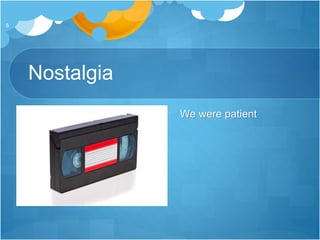
Nostalgia
We were patient
8
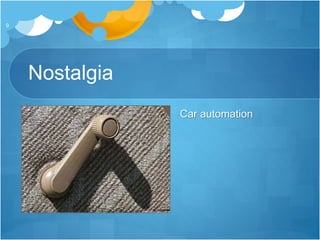
Nostalgia
Car automation
9
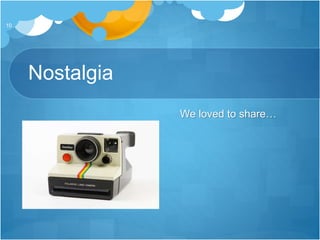
Nostalgia
We loved to share…
10
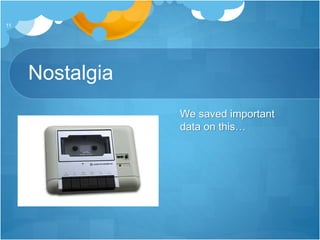
Nostalgia
We saved important
data on this…
11
What does it mean?
DevOps – A term that comes from Agile that is focused on
how businesses can embrace technology to delivery
better results and win.
Automation testing – use of special software to control the
execution of tests that compare actual outcomes with
predicted outcomes.
Continuous Delivery – engineering approach to reliably
produce software in short cycles.
12
My Approach
I initially work with their manual processes.
I learn and document their product, relevant business
areas and systems.
I work through at least two software cycles to
understand the end to end processes: Dev, test,
build, release, production, hot fix cycles.
13
My Approach
I then present my findings with solutions and
technology decisions to the sponsors and get their
buy in.
I start working on the jigsaw puzzle and
incrementally piece together using a CI approach.
I switch on systems and increase visibility.
14
No Agile/SCRUM
No Product owner
No Scrum master
No retrospectives or planning meetings
No triage
No Backlog grooming ( too many tickets)
16
No Agile/SCRUM
No statistics and reporting
No Daily standups ( well, a daily meeting that lasted
30 mins)
17
No Automated Builds
The builds were packaged manually from 3 separate
Code Repositories
Binaries compiled and manually placed.
The builds contained “rubbish”
The builds contained manual version numbers
Impossible to point out issues.
18
No automation testing
No regression testing
No functional testing
Test execution loosely conducted against a
development environment by developers and other
members in the business.
19
Untidy environments
Just the development environment and “staging
environment” which was built ad hoc and from
source code instead of the “build”
Never the latest version
20
Manual Release notes
The release notes are manually generated using a
word processor and then converted to a PDF and
manually added to the source code repository.
21
Too many silly mistakes
Incorrect versioning on document, database, front
end and packaged builds.
Missing items in the release
Incorrect software
Non tested database scripts that failed to execute
22
Developers focus
Senior developers doing basic repetitive tasks
instead of focusing on developing.
Unnecessary time taken away per cycle.
Everything was rushed and the quality suffered.
23
Office fit for David Brent
The office was located in a business park with no
access to a gym or decent coffee shops

24
Source Control
Binaries built manually and then stored in source
control.
25
No virtualized test
environments
Despite Virutalisation servers being available, they
were not used for test/dev/staging/CI environments.
26
JIRA tickets lacked info
Tickets contained very little information.
Too much haste and information lost in emails
27
Manual install to Production
Installation to production servers carried out
manually by developers.
28
Poor build management
Generally speaking, the function and ownership of
build management was neglected/non existent.
29
Challenges
Old school thinking and working
Lack of experience in new methods
Winning business and juggling installations
31
Client Challenges
Juggling two product deliveries.
Looking to expand the tech team
Existing development team are very clever
Time to learn and implement
32
My challenges
I interface with lots of different technologies which
means slower starts and quick learning.
Build momentum to increase efficiency.
Use the client’s technology stack ( don’t introduce
Java when the client is using PHP)
Stick to the vision
33
Vision and principles
Automate the journey from code check in to
production.
Eliminate all silly manual errors
Preserve manual test data for automation.
Use a BDD approach to test automation – embrace
Gherkin
34
Build contains more action
At the end of every monthly cycle, the build now
contains more fixes and more functionality than
before.
36
Developers don’t build
The build process has been automated and
completely taken away from the developers.
Code go through static analyzers
The final release zip is packaged and built
automatically for every code check in.
37
Eliminated silly errors
Silly errors were found only at the end of the release
cycle and on production such as wrong versions in
PDF documents. Incorrect binaries. Missing folders,
dev code e.t.c
38
Visibility into Dev work
The radiator view provided by Jenkins CI now allows
the business and sponsors to see progress and
status across the SDLC.
Green is good and Red is worrying.
Development Manger can see progress and inspect
code check-ins.
39
Automated deployment
Every code check is deployed to a virtualised
Staging CI environment where it is installed
automatically as it would be on a client site.
40
Smoke testing
An automated smoke test is executed for every code
check in to ensure that the integrity of the end to end
system is still in tact.
This provides confidence that nothing fundamental is
broken.
41
All test artifacts stored in GIT
GIT is used as a storage space for all test artifacts
created which massively increases the resuse.
42
Tools used in OPS
Tools created in QA and test are used in OPS to help
with automated deployment to production servers.
43
Start up and Tear down
concepts
Introduced a startup and tear down concepts to
create clean environments and settings and catch all
errors.
44
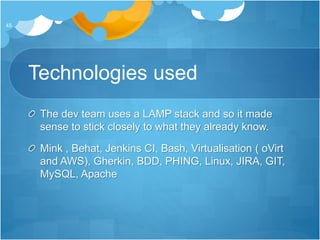
Technologies used
The dev team uses a LAMP stack and so it made
sense to stick closely to what they already know.
Mink , Behat, Jenkins CI, Bash, Virtualisation ( oVirt
and AWS), Gherkin, BDD, PHING, Linux, JIRA, GIT,
MySQL, Apache
45
Why behat and mink?
Provide BDD capabilities. Behat uses the Gherkin
language that uses natural language to express
system behavior which can be shared between
technical and non-technical people.
Mink is a library that interfaces with the browser.
46
Why BASH?
The Bash Scripting too opens up the doors to a
plethora of command line linux tools. It can process
huge amount of data and provide the important
return codes for pass or fail.
47
Why Jenkins CI?
Jenkins CI loves all sorts of jobs. It has 100s of
extensions that allow you automate just about
anything you want. It is CRON on steroids. It is
lightweight with SSH connectivity to other servers
and easy ability to execute SHELL commands.
48
Why PHING?
PHING is a build tool similar to the original ANT. It’s
primary usage is to neatly execute tasks by means of
targets to say BUILD, TEST, RELEASE e.t.c . PHING
compliments the LAMP stack.
49
Agile process
Unfortunately, the team have not embraced Agile and
it’s magic. This needs more culture and change
management!
51
Going forward
Move to 2 weekly release cycles – happy customers.
Move to fully automated deliver to production
Improve the Agile process
53
Going forward
Refactor the DevOps code and increase efficientcy
of the jobs
Automate the relese notes.
Overhead of new sytem maintenance need to be
factored.
Improve the eporting
54
The conclusions
Time and money saved per release cycle
Dev focus on development
Eliminated School boy errors found at the client site.
Faster feedback on regressions
Increased visibility on Dev activities
DevOps is about winning. This is the start and things can only
get better.
55
Still stuck in the 80s?
The real question:
Are they still wearing shoulder pads? Or have they
moved to the 90s with the advent of dialup modems
and the infamous Netscape browser?
56
The End
Get in touch
Vireshdoshi@time2test.co.uk
57

Devops Journey - internet tech startup

  • 3.
    About In this slidedeck I share my experience, journey and thinking with working with a tech startup who needed help with QA, Automation and CI. What I gave them was DEVOPS 3
  • 4.
    About me –Viresh Doshi My background is in QA ( over 15 years exp.) Specialize in delivery and change I identify areas that need improvement and then delivery solutions. Still learning Enjoys sharing experience and collaboration 4
  • 5.
    About the techstartup they provide software to ecommerce outfits that help them better understand their and increase their customers’ shopping experience. The goal being to increase revenue. 5
  • 6.
    Doesn’t make sense Atech startup stuck in the 1980s. How can that be? Erm, not exactly sure…perhaps the existing technology team don’t have new industry experience… 6
  • 7.
    What is wrongwith the 80s? The décor The toys The technology The tv shows The haircuts OK, I secretly love the 1980s! 7
  • 8.
  • 9.
  • 10.
  • 11.
  • 12.
    What does itmean? DevOps – A term that comes from Agile that is focused on how businesses can embrace technology to delivery better results and win. Automation testing – use of special software to control the execution of tests that compare actual outcomes with predicted outcomes. Continuous Delivery – engineering approach to reliably produce software in short cycles. 12
  • 13.
    My Approach I initiallywork with their manual processes. I learn and document their product, relevant business areas and systems. I work through at least two software cycles to understand the end to end processes: Dev, test, build, release, production, hot fix cycles. 13
  • 14.
    My Approach I thenpresent my findings with solutions and technology decisions to the sponsors and get their buy in. I start working on the jigsaw puzzle and incrementally piece together using a CI approach. I switch on systems and increase visibility. 14
  • 16.
    No Agile/SCRUM No Productowner No Scrum master No retrospectives or planning meetings No triage No Backlog grooming ( too many tickets) 16
  • 17.
    No Agile/SCRUM No statisticsand reporting No Daily standups ( well, a daily meeting that lasted 30 mins) 17
  • 18.
    No Automated Builds Thebuilds were packaged manually from 3 separate Code Repositories Binaries compiled and manually placed. The builds contained “rubbish” The builds contained manual version numbers Impossible to point out issues. 18
  • 19.
    No automation testing Noregression testing No functional testing Test execution loosely conducted against a development environment by developers and other members in the business. 19
  • 20.
    Untidy environments Just thedevelopment environment and “staging environment” which was built ad hoc and from source code instead of the “build” Never the latest version 20
  • 21.
    Manual Release notes Therelease notes are manually generated using a word processor and then converted to a PDF and manually added to the source code repository. 21
  • 22.
    Too many sillymistakes Incorrect versioning on document, database, front end and packaged builds. Missing items in the release Incorrect software Non tested database scripts that failed to execute 22
  • 23.
    Developers focus Senior developersdoing basic repetitive tasks instead of focusing on developing. Unnecessary time taken away per cycle. Everything was rushed and the quality suffered. 23
  • 24.
    Office fit forDavid Brent The office was located in a business park with no access to a gym or decent coffee shops  24
  • 25.
    Source Control Binaries builtmanually and then stored in source control. 25
  • 26.
    No virtualized test environments DespiteVirutalisation servers being available, they were not used for test/dev/staging/CI environments. 26
  • 27.
    JIRA tickets lackedinfo Tickets contained very little information. Too much haste and information lost in emails 27
  • 28.
    Manual install toProduction Installation to production servers carried out manually by developers. 28
  • 29.
    Poor build management Generallyspeaking, the function and ownership of build management was neglected/non existent. 29
  • 31.
    Challenges Old school thinkingand working Lack of experience in new methods Winning business and juggling installations 31
  • 32.
    Client Challenges Juggling twoproduct deliveries. Looking to expand the tech team Existing development team are very clever Time to learn and implement 32
  • 33.
    My challenges I interfacewith lots of different technologies which means slower starts and quick learning. Build momentum to increase efficiency. Use the client’s technology stack ( don’t introduce Java when the client is using PHP) Stick to the vision 33
  • 34.
    Vision and principles Automatethe journey from code check in to production. Eliminate all silly manual errors Preserve manual test data for automation. Use a BDD approach to test automation – embrace Gherkin 34
  • 36.
    Build contains moreaction At the end of every monthly cycle, the build now contains more fixes and more functionality than before. 36
  • 37.
    Developers don’t build Thebuild process has been automated and completely taken away from the developers. Code go through static analyzers The final release zip is packaged and built automatically for every code check in. 37
  • 38.
    Eliminated silly errors Sillyerrors were found only at the end of the release cycle and on production such as wrong versions in PDF documents. Incorrect binaries. Missing folders, dev code e.t.c 38
  • 39.
    Visibility into Devwork The radiator view provided by Jenkins CI now allows the business and sponsors to see progress and status across the SDLC. Green is good and Red is worrying. Development Manger can see progress and inspect code check-ins. 39
  • 40.
    Automated deployment Every codecheck is deployed to a virtualised Staging CI environment where it is installed automatically as it would be on a client site. 40
  • 41.
    Smoke testing An automatedsmoke test is executed for every code check in to ensure that the integrity of the end to end system is still in tact. This provides confidence that nothing fundamental is broken. 41
  • 42.
    All test artifactsstored in GIT GIT is used as a storage space for all test artifacts created which massively increases the resuse. 42
  • 43.
    Tools used inOPS Tools created in QA and test are used in OPS to help with automated deployment to production servers. 43
  • 44.
    Start up andTear down concepts Introduced a startup and tear down concepts to create clean environments and settings and catch all errors. 44
  • 45.
    Technologies used The devteam uses a LAMP stack and so it made sense to stick closely to what they already know. Mink , Behat, Jenkins CI, Bash, Virtualisation ( oVirt and AWS), Gherkin, BDD, PHING, Linux, JIRA, GIT, MySQL, Apache 45
  • 46.
    Why behat andmink? Provide BDD capabilities. Behat uses the Gherkin language that uses natural language to express system behavior which can be shared between technical and non-technical people. Mink is a library that interfaces with the browser. 46
  • 47.
    Why BASH? The BashScripting too opens up the doors to a plethora of command line linux tools. It can process huge amount of data and provide the important return codes for pass or fail. 47
  • 48.
    Why Jenkins CI? JenkinsCI loves all sorts of jobs. It has 100s of extensions that allow you automate just about anything you want. It is CRON on steroids. It is lightweight with SSH connectivity to other servers and easy ability to execute SHELL commands. 48
  • 49.
    Why PHING? PHING isa build tool similar to the original ANT. It’s primary usage is to neatly execute tasks by means of targets to say BUILD, TEST, RELEASE e.t.c . PHING compliments the LAMP stack. 49
  • 51.
    Agile process Unfortunately, theteam have not embraced Agile and it’s magic. This needs more culture and change management! 51
  • 53.
    Going forward Move to2 weekly release cycles – happy customers. Move to fully automated deliver to production Improve the Agile process 53
  • 54.
    Going forward Refactor theDevOps code and increase efficientcy of the jobs Automate the relese notes. Overhead of new sytem maintenance need to be factored. Improve the eporting 54
  • 55.
    The conclusions Time andmoney saved per release cycle Dev focus on development Eliminated School boy errors found at the client site. Faster feedback on regressions Increased visibility on Dev activities DevOps is about winning. This is the start and things can only get better. 55
  • 56.
    Still stuck inthe 80s? The real question: Are they still wearing shoulder pads? Or have they moved to the 90s with the advent of dialup modems and the infamous Netscape browser? 56
  • 57.
    The End Get intouch Vireshdoshi@time2test.co.uk 57

Editor's Notes

  • #4 To achieve Automation and CI, I had to tackle the wider SDLC issues. So, to successfully achieve test automation and CI, I needed to get initially tackle some of the other parts of the SDLC. Namely, build management , Source code repostiories and envrionments
  • #5 Agile, DevOps, BDD, Web, Selenium, Jenkins CI, Virtualistaion, Linux
  • #8 http://www.pastemagazine.com/blogs/lists/2014/11/the-80-best-tv-shows-of-the-1980s.html?a=1
  • #9 We had all the time in the world. We would get up of our back sides and walk to the video cassette player, wait for it to rewind and hit eject which would make the whirling noises and finally eject in 10 seconds.
  • #10 We had muscle power!
  • #11 We had muscle power!
  • #12 Year: 1984 One of the primary complaints about the Commodore computer line was its inability to save all data and programming when powered off. Those who couldn’t fork up the bread to purchase the 1541 floppy disk drive settled for the nearly similar and cost-efficient alternative in the 1531 cassette tape drive. Granted the compromise of running with the latter was a slower data transferring speed (50 bytes per second), it was a lifesaver for Commodore users who valued data.
  • #13 http://devops.com/2015/05/13/surprise-broad-agreement-on-the-definition-of-devops/
  • #17 The company methodology was very old skool.
  • #37 Less Fart more action
  • #38 Less Fart more action
  • #47 http://tooky.co.uk/this-gherkins-not-for-reading/ http://tooky.co.uk/ - cucmber api BDD hooks http://www.jimmycuadra.com/posts/please-don-t-use-cucumber/
  • #48 http://tooky.co.uk/this-gherkins-not-for-reading/ http://tooky.co.uk/ - cucmber api BDD hooks http://www.jimmycuadra.com/posts/please-don-t-use-cucumber/
  • #49 http://tooky.co.uk/this-gherkins-not-for-reading/ http://tooky.co.uk/ - cucmber api BDD hooks http://www.jimmycuadra.com/posts/please-don-t-use-cucumber/
  • #50 http://tooky.co.uk/this-gherkins-not-for-reading/ http://tooky.co.uk/ - cucmber api BDD hooks http://www.jimmycuadra.com/posts/please-don-t-use-cucumber/