Asim Ali
1
Carbon is an essential constituent of all organic compounds.
Hydrogen is also present in almost all organic compounds but
some of them may contain nitrogen Sulphur, and halogen,
Oxygen, Phosphorus and Metals.
2
 Detection of Carbon and Hydrogen
 Detection of Nitrogen, Sulphur and Halogens
Nitrogen Test
Sulphur Test
Halogen Test
 Detection of Oxygen
 Detection of Phosphorus
 Detection of Metals
3
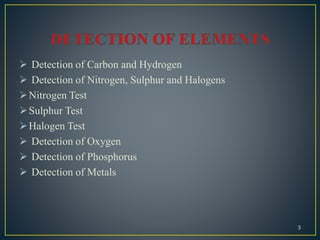
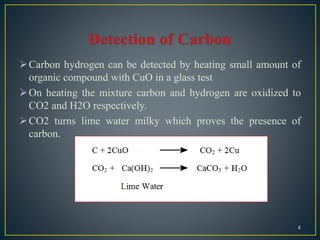
Carbon hydrogen can be detected by heating small amount of
organic compound with CuO in a glass test
On heating the mixture carbon and hydrogen are oxidized to
CO2 and H2O respectively.
CO2 turns lime water milky which proves the presence of
carbon.
4
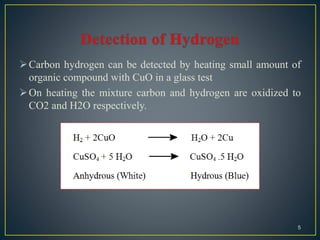
Carbon hydrogen can be detected by heating small amount of
organic compound with CuO in a glass test
On heating the mixture carbon and hydrogen are oxidized to
CO2 and H2O respectively.
5
6
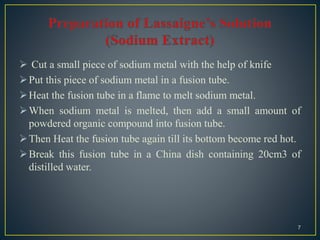
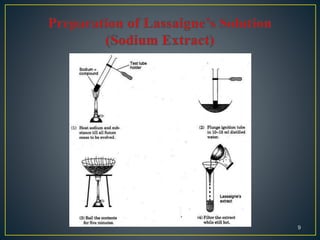
 Cut a small piece of sodium metal with the help of knife
Put this piece of sodium metal in a fusion tube.
Heat the fusion tube in a flame to melt sodium metal.
When sodium metal is melted, then add a small amount of
powdered organic compound into fusion tube.
Then Heat the fusion tube again till its bottom become red hot.
Break this fusion tube in a China dish containing 20cm3 of
distilled water.
7
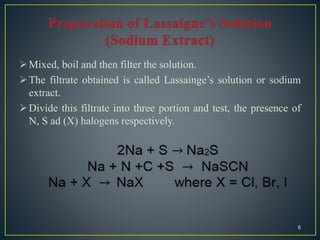
Mixed, boil and then filter the solution.
The filtrate obtained is called Lassainge’s solution or sodium
extract.
Divide this filtrate into three portion and test, the presence of
N, S ad (X) halogens respectively.
8
9
To one portion of Lassaigne’s filtrate a few drops of NaOH is
added to make it alkaline, then freshly prepared (FeSO4) solution
is added to it. The solution is boiled and a few drops of FeCl3
solution and HCl are added to it. The appearance of blue or
greenish blue (Prussian blue) color or ppt. proves the presence of
nitrogen in the organic compound.
10
If a blood red color is produced instead of Prussian blue color
then it proves that nitrogen and Sulphur both are present in the
organic compound.
11
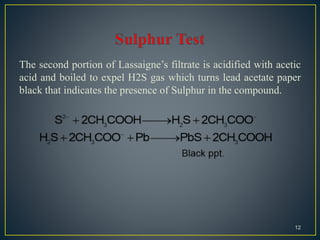
The second portion of Lassaigne’s filtrate is acidified with acetic
acid and boiled to expel H2S gas which turns lead acetate paper
black that indicates the presence of Sulphur in the compound.
12
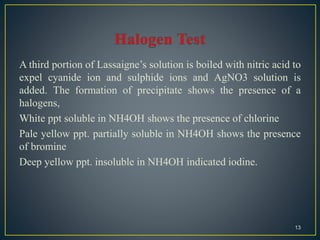
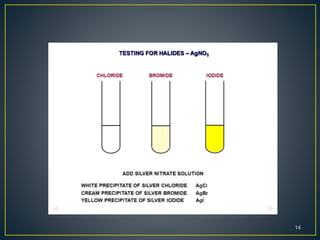
A third portion of Lassaigne’s solution is boiled with nitric acid to
expel cyanide ion and sulphide ions and AgNO3 solution is
added. The formation of precipitate shows the presence of a
halogens,
White ppt soluble in NH4OH shows the presence of chlorine
Pale yellow ppt. partially soluble in NH4OH shows the presence
of bromine
Deep yellow ppt. insoluble in NH4OH indicated iodine.
13
14
There is no conclusive test for oxygen, though its presence in
organic compounds is often inferred by indirect methods.
The substance is heated alone in a dry test-tube, preferably in
an atmosphere of nitrogen. Formation of droplets of water on
cooler parts of the tube obviously shows the presence of
oxygen. A negative result, however, does not necessarily show
the absence of oxygen.
15
The second method is to test for the presence of various
oxygen containing groups such as hydroxyl (OH), carboxyl
(COOH), aldehyde (CHO), nitro (NO2) etc. if any of these is
detected, the presence of oxygen is confirmed.
The sure test for oxygen depends on the determination of the
percentage of all other elements present in the given
compound. If the sum of these percentages fall short of
hundred the remainder gives the percentage of oxygen and thus
confirms.
16
The solid substance is heated strongly with an oxidizing agent
such as concentrated nitric acid and mixture of sodium
carbonate and potassium nitrate.
The phosphorus present in the substance has oxidized to
phosphate.
The residue is extracted with water, boiled with some nitric
acid, and
17
Heat solution of ammonium molydebate is added to it in
excess. A yellow coloration of precipitate indicated the
presence of phosphorus.
18
The substance is strongly heated in a crucible, preferably of
platinum, till all reaction ceases.
An incombustible residue indicated the presence of a metal in
the substance.
The residue is extracted with dilute acid and the solution is
tested for the presence of metallic radical by the usual scheme
employed for inorganic salts.
19

Detection of Element.pptx

  • 1.
  • 2.
    Carbon is anessential constituent of all organic compounds. Hydrogen is also present in almost all organic compounds but some of them may contain nitrogen Sulphur, and halogen, Oxygen, Phosphorus and Metals. 2
  • 3.
     Detection ofCarbon and Hydrogen  Detection of Nitrogen, Sulphur and Halogens Nitrogen Test Sulphur Test Halogen Test  Detection of Oxygen  Detection of Phosphorus  Detection of Metals 3
  • 4.
    Carbon hydrogen canbe detected by heating small amount of organic compound with CuO in a glass test On heating the mixture carbon and hydrogen are oxidized to CO2 and H2O respectively. CO2 turns lime water milky which proves the presence of carbon. 4
  • 5.
    Carbon hydrogen canbe detected by heating small amount of organic compound with CuO in a glass test On heating the mixture carbon and hydrogen are oxidized to CO2 and H2O respectively. 5
  • 6.
  • 7.
     Cut asmall piece of sodium metal with the help of knife Put this piece of sodium metal in a fusion tube. Heat the fusion tube in a flame to melt sodium metal. When sodium metal is melted, then add a small amount of powdered organic compound into fusion tube. Then Heat the fusion tube again till its bottom become red hot. Break this fusion tube in a China dish containing 20cm3 of distilled water. 7
  • 8.
    Mixed, boil andthen filter the solution. The filtrate obtained is called Lassainge’s solution or sodium extract. Divide this filtrate into three portion and test, the presence of N, S ad (X) halogens respectively. 8
  • 9.
  • 10.
    To one portionof Lassaigne’s filtrate a few drops of NaOH is added to make it alkaline, then freshly prepared (FeSO4) solution is added to it. The solution is boiled and a few drops of FeCl3 solution and HCl are added to it. The appearance of blue or greenish blue (Prussian blue) color or ppt. proves the presence of nitrogen in the organic compound. 10
  • 11.
    If a bloodred color is produced instead of Prussian blue color then it proves that nitrogen and Sulphur both are present in the organic compound. 11
  • 12.
    The second portionof Lassaigne’s filtrate is acidified with acetic acid and boiled to expel H2S gas which turns lead acetate paper black that indicates the presence of Sulphur in the compound. 12
  • 13.
    A third portionof Lassaigne’s solution is boiled with nitric acid to expel cyanide ion and sulphide ions and AgNO3 solution is added. The formation of precipitate shows the presence of a halogens, White ppt soluble in NH4OH shows the presence of chlorine Pale yellow ppt. partially soluble in NH4OH shows the presence of bromine Deep yellow ppt. insoluble in NH4OH indicated iodine. 13
  • 14.
  • 15.
    There is noconclusive test for oxygen, though its presence in organic compounds is often inferred by indirect methods. The substance is heated alone in a dry test-tube, preferably in an atmosphere of nitrogen. Formation of droplets of water on cooler parts of the tube obviously shows the presence of oxygen. A negative result, however, does not necessarily show the absence of oxygen. 15
  • 16.
    The second methodis to test for the presence of various oxygen containing groups such as hydroxyl (OH), carboxyl (COOH), aldehyde (CHO), nitro (NO2) etc. if any of these is detected, the presence of oxygen is confirmed. The sure test for oxygen depends on the determination of the percentage of all other elements present in the given compound. If the sum of these percentages fall short of hundred the remainder gives the percentage of oxygen and thus confirms. 16
  • 17.
    The solid substanceis heated strongly with an oxidizing agent such as concentrated nitric acid and mixture of sodium carbonate and potassium nitrate. The phosphorus present in the substance has oxidized to phosphate. The residue is extracted with water, boiled with some nitric acid, and 17
  • 18.
    Heat solution ofammonium molydebate is added to it in excess. A yellow coloration of precipitate indicated the presence of phosphorus. 18
  • 19.
    The substance isstrongly heated in a crucible, preferably of platinum, till all reaction ceases. An incombustible residue indicated the presence of a metal in the substance. The residue is extracted with dilute acid and the solution is tested for the presence of metallic radical by the usual scheme employed for inorganic salts. 19