DESTINATION
MARKETING &
DIGITAL PR
INTRODUCTION
• Think about the differences between PR and
advertising. Think about advantages and
disadvantages of PR and advertising.
• What is difference between the journalists and
bloggers?
• What do you expect from the class?
CONTENT
• What is the influencer marketing?
• How does it help the destination brand?
• How to find the right influencers?
• How to do the influencer marketing?
• How to evaluate the results?
• Workshop
WHAT IS THE INFLUENCER
MARKETING?
• Influencer marketing grew out of celebrity marketing. Celebrities
have promoted products for years – for a hefty endorsement fee.
Online celebrity marketing is still an example of influencer marketing,
but modern influencer marketing is so much more than a movie or
sports star pushing some unconnected product to his fans.
• Influencers have built reputations for being experts in particular
niches.
• They might have established a successful blog on the subject.
Perhaps they’ve made videos and uploaded them to a relevant
YouTube channel. Or more often, they have operated active and
popular social media accounts, where they give opinions, ideas,
and advice relating to their specialist topic.
WHAT IS THE INFLUENCER MARKETING?
7 PREDICTIONS ON THE FUTURE OF
INFLUENCER MARKETING
• 1. Status diversity. Today, if you want to get in touch with an influencer and have them
advocate for your brand, most people start targeting people with 100,000 followers
more. We’ll see influencers of all levels, including the high-follower elite and low-
follower newcomers, getting attention from brands.
• 2. Influencer cliques and groups. The nature of influencer marketing is interesting; if
you’re associated with an existing influencer, your reputation and authority will grow
by proxy. It’s a collective “rising tide” that affects all personal brands revolving around
• 4. Bigger barriers to entry. Marketers everywhere are flocking to influencer marketing
in droves, and accordingly, more individual personal brands are striving to become
influencers in their own right. This is leading to a surge in content production and
social media activity, which will make competition much fiercer if you want to earn
your place.
• 5. Transparency and regulatory crackdowns. In April of 2017, the FTC sent out several
letters and an official warning for influencers and brands to clearly disclose their
relationships.
• 6. Integrated functionality in platforms. With platforms like Facebook, Twitter,
LinkedIn, and Instagram noticing the potential of influencer marketing, we may start
see platform-based innovations that make influencer marketing and outreach more
convenient.
• 7. Qualitative assessment tools. Soon, it won’t be enough to have a large quantity of
followers on your account; marketers will also be looking to see how you engage
your followers, and what types of followers you have.
HOW DOES IT HELP THE
DESTINATION BRAND?
HOW DOES IT HELP THE DESTINATION
BRAND?
HOW DOES IT HELP THE DESTINATION
BRAND?
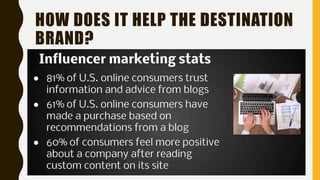
• According to a recent study by Nielsen, personal recommendations are considered the
most effective form of advertising,
• According to a joint study by Twitter and Annalect, 49% of people rely on influencers’
recommendations on Twitter, following closely behind friends’ recommendations (56%),
which came out on top.
• 40% of people have purchased an item online after they saw the item being used by an
influencer on Instagram or YouTube.
• According to a recent study by Defy Media, teens and young adults between the ages 13
and 24 described YouTubers as “just like me, understands me, someone I trust has the
best advice, genuine, someone I feel close to”.
• According to a survey by Chase Card Services, 44% millennial travelers searched for
opinions on social media while doing research about a planned trip.
HOW TO FIND THE RIGHT
INFLUENCERS?
HOW TO FIND THE RIGHT
INFLUENCERS?
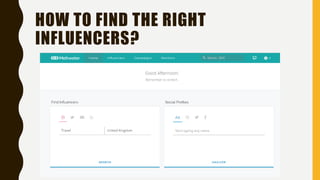
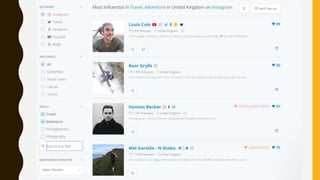
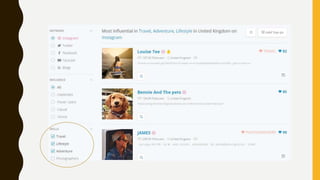
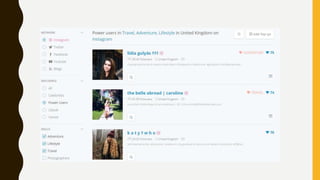
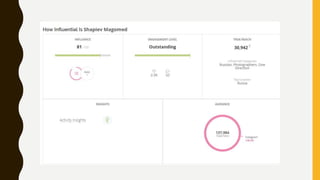
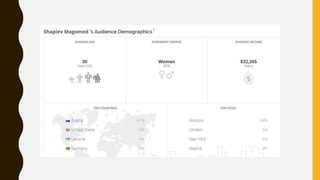
HOW TO FIND RIGHT INFLUENCERS
• https://influencermarketinghub.com/15-free-influencer-marketing-tools-to-find-
influencers/
• https://influencermarketinghub.com/instagram-money-calculator/
HOW TO DO THE
INFLUENCER MARKETING?
HOW TO DO THE INFLUENCER
MARKETING?
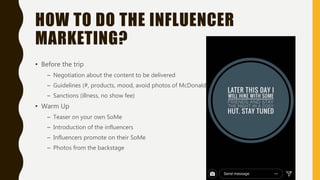
• Before the trip
– Negotiation about the content to be delivered
– Guidelines (#, products, mood, avoid photos of McDonalds)
– Sanctions (illness, no show fee)
• Warm Up
– Teaser on your own SoMe
– Introduction of the influencers
– Influencers promote on their SoMe
– Photos from the backstage
TRIP
• IG STORIES
• LIVE STREAMING
• TAKE OVER
HOW TO EVALUATE THE
RESULTS?
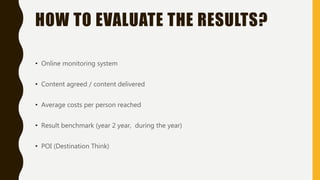
• Online monitoring system
• Content agreed / content delivered
• Average costs per person reached
• Result benchmark (year 2 year, during the year)
• POI (Destination Think)
HOW TO EVALUATE THE RESULTS?
POI – POTENTIAL OF INVESTMENT
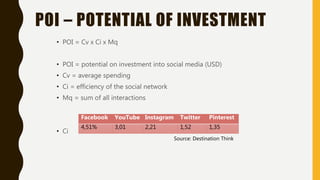
• POI = Cv x Ci x Mq
• POI = potential on investment into social media (USD)
• Cv = average spending
• Ci = efficiency of the social network
• Mq = sum of all interactions
• Ci
Facebook YouTube Instagram Twitter Pinterest
4,51% 3,01 2,21 1,52 1,35
Source: Destination Think
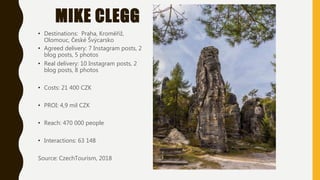
MIKE CLEGG
• Destinations: Praha, Kroměříž,
Olomouc, České Švýcarsko
• Agreed delivery: 7 Instagram posts, 2
blog posts, 5 photos
• Real delivery: 10 Instagram posts, 2
blog posts, 8 photos
• Costs: 21 400 CZK
• PROI: 4,9 mil CZK
• Reach: 470 000 people
• Interactions: 63 148
Source: CzechTourism, 2018
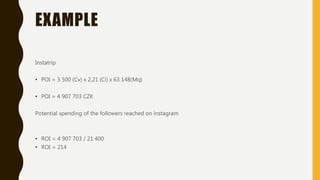
EXAMPLE
Instatrip
• POI = 3 500 (Cv) x 2,21 (Ci) x 63 148(Mq)
• POI = 4 907 703 CZK
Potential spending of the followers reached on instagram
• ROI = 4 907 703 / 21 400
• ROI = 214
WORKSHOP
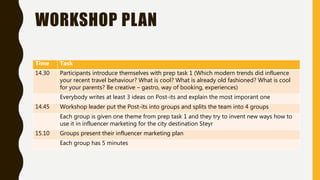
WORKSHOP PLAN
Time Task
14.30 Participants introduce themselves with prep task 1 (Which modern trends did influence
your recent travel behaviour? What is cool? What is already old fashioned? What is cool
for your parents? Be creative – gastro, way of booking, experiences)
Everybody writes at least 3 ideas on Post-its and explain the most imporant one
14.45 Workshop leader put the Post-its into groups and splits the team into 4 groups
Each group is given one theme from prep task 1 and they try to invent new ways how to
use it in influencer marketing for the city destination Steyr
15.10 Groups present their influencer marketing plan
Each group has 5 minutes
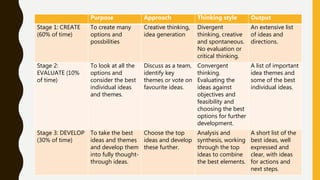
Purpose Approach Thinking style Output
Stage 1: CREATE
(60% of time)
To create many
options and
possbilities
Creative thinking,
idea generation
Divergent
thinking, creative
and spontaneous.
No evaluation or
critical thinking.
An extensive list
of ideas and
directions.
Stage 2:
EVALUATE (10%
of time)
To look at all the
options and
consider the best
individual ideas
and themes.
Discuss as a team,
identify key
themes or vote on
favourite ideas.
Convergent
thinking.
Evaluating the
ideas against
objectives and
feasibility and
choosing the best
options for further
development.
A list of important
idea themes and
some of the best
individual ideas.
Stage 3: DEVELOP
(30% of time)
To take the best
ideas and themes
and develop them
into fully thought-
through ideas.
Choose the top
ideas and develop
these further.
Analysis and
synthesis, working
through the top
ideas to combine
the best elements.
A short list of the
best ideas, well
expressed and
clear, with ideas
for actions and
next steps.
JAN HERGET
• https://www.linkedin.com/in/janherget/
• https://www.facebook.com/jan.herget
• janherget@hotmail.com

Destination marketing & digital pr

  • 1.
  • 2.
    INTRODUCTION • Think aboutthe differences between PR and advertising. Think about advantages and disadvantages of PR and advertising. • What is difference between the journalists and bloggers? • What do you expect from the class?
  • 3.
    CONTENT • What isthe influencer marketing? • How does it help the destination brand? • How to find the right influencers? • How to do the influencer marketing? • How to evaluate the results? • Workshop
  • 4.
    WHAT IS THEINFLUENCER MARKETING?
  • 5.
    • Influencer marketinggrew out of celebrity marketing. Celebrities have promoted products for years – for a hefty endorsement fee. Online celebrity marketing is still an example of influencer marketing, but modern influencer marketing is so much more than a movie or sports star pushing some unconnected product to his fans. • Influencers have built reputations for being experts in particular niches. • They might have established a successful blog on the subject. Perhaps they’ve made videos and uploaded them to a relevant YouTube channel. Or more often, they have operated active and popular social media accounts, where they give opinions, ideas, and advice relating to their specialist topic. WHAT IS THE INFLUENCER MARKETING?
  • 6.
    7 PREDICTIONS ONTHE FUTURE OF INFLUENCER MARKETING • 1. Status diversity. Today, if you want to get in touch with an influencer and have them advocate for your brand, most people start targeting people with 100,000 followers more. We’ll see influencers of all levels, including the high-follower elite and low- follower newcomers, getting attention from brands. • 2. Influencer cliques and groups. The nature of influencer marketing is interesting; if you’re associated with an existing influencer, your reputation and authority will grow by proxy. It’s a collective “rising tide” that affects all personal brands revolving around
  • 7.
    • 4. Biggerbarriers to entry. Marketers everywhere are flocking to influencer marketing in droves, and accordingly, more individual personal brands are striving to become influencers in their own right. This is leading to a surge in content production and social media activity, which will make competition much fiercer if you want to earn your place. • 5. Transparency and regulatory crackdowns. In April of 2017, the FTC sent out several letters and an official warning for influencers and brands to clearly disclose their relationships. • 6. Integrated functionality in platforms. With platforms like Facebook, Twitter, LinkedIn, and Instagram noticing the potential of influencer marketing, we may start see platform-based innovations that make influencer marketing and outreach more convenient. • 7. Qualitative assessment tools. Soon, it won’t be enough to have a large quantity of followers on your account; marketers will also be looking to see how you engage your followers, and what types of followers you have.
  • 8.
    HOW DOES ITHELP THE DESTINATION BRAND?
  • 9.
    HOW DOES ITHELP THE DESTINATION BRAND?
  • 10.
    HOW DOES ITHELP THE DESTINATION BRAND? • According to a recent study by Nielsen, personal recommendations are considered the most effective form of advertising, • According to a joint study by Twitter and Annalect, 49% of people rely on influencers’ recommendations on Twitter, following closely behind friends’ recommendations (56%), which came out on top. • 40% of people have purchased an item online after they saw the item being used by an influencer on Instagram or YouTube. • According to a recent study by Defy Media, teens and young adults between the ages 13 and 24 described YouTubers as “just like me, understands me, someone I trust has the best advice, genuine, someone I feel close to”. • According to a survey by Chase Card Services, 44% millennial travelers searched for opinions on social media while doing research about a planned trip.
  • 11.
    HOW TO FINDTHE RIGHT INFLUENCERS?
  • 12.
    HOW TO FINDTHE RIGHT INFLUENCERS?
  • 18.
    HOW TO FINDRIGHT INFLUENCERS • https://influencermarketinghub.com/15-free-influencer-marketing-tools-to-find- influencers/ • https://influencermarketinghub.com/instagram-money-calculator/
  • 19.
    HOW TO DOTHE INFLUENCER MARKETING?
  • 20.
    HOW TO DOTHE INFLUENCER MARKETING? • Before the trip – Negotiation about the content to be delivered – Guidelines (#, products, mood, avoid photos of McDonalds) – Sanctions (illness, no show fee) • Warm Up – Teaser on your own SoMe – Introduction of the influencers – Influencers promote on their SoMe – Photos from the backstage
  • 21.
    TRIP • IG STORIES •LIVE STREAMING • TAKE OVER
  • 22.
    HOW TO EVALUATETHE RESULTS?
  • 23.
    • Online monitoringsystem • Content agreed / content delivered • Average costs per person reached • Result benchmark (year 2 year, during the year) • POI (Destination Think) HOW TO EVALUATE THE RESULTS?
  • 24.
    POI – POTENTIALOF INVESTMENT • POI = Cv x Ci x Mq • POI = potential on investment into social media (USD) • Cv = average spending • Ci = efficiency of the social network • Mq = sum of all interactions • Ci Facebook YouTube Instagram Twitter Pinterest 4,51% 3,01 2,21 1,52 1,35 Source: Destination Think
  • 25.
    MIKE CLEGG • Destinations:Praha, Kroměříž, Olomouc, České Švýcarsko • Agreed delivery: 7 Instagram posts, 2 blog posts, 5 photos • Real delivery: 10 Instagram posts, 2 blog posts, 8 photos • Costs: 21 400 CZK • PROI: 4,9 mil CZK • Reach: 470 000 people • Interactions: 63 148 Source: CzechTourism, 2018
  • 26.
    EXAMPLE Instatrip • POI =3 500 (Cv) x 2,21 (Ci) x 63 148(Mq) • POI = 4 907 703 CZK Potential spending of the followers reached on instagram • ROI = 4 907 703 / 21 400 • ROI = 214
  • 27.
  • 28.
    WORKSHOP PLAN Time Task 14.30Participants introduce themselves with prep task 1 (Which modern trends did influence your recent travel behaviour? What is cool? What is already old fashioned? What is cool for your parents? Be creative – gastro, way of booking, experiences) Everybody writes at least 3 ideas on Post-its and explain the most imporant one 14.45 Workshop leader put the Post-its into groups and splits the team into 4 groups Each group is given one theme from prep task 1 and they try to invent new ways how to use it in influencer marketing for the city destination Steyr 15.10 Groups present their influencer marketing plan Each group has 5 minutes
  • 29.
    Purpose Approach Thinkingstyle Output Stage 1: CREATE (60% of time) To create many options and possbilities Creative thinking, idea generation Divergent thinking, creative and spontaneous. No evaluation or critical thinking. An extensive list of ideas and directions. Stage 2: EVALUATE (10% of time) To look at all the options and consider the best individual ideas and themes. Discuss as a team, identify key themes or vote on favourite ideas. Convergent thinking. Evaluating the ideas against objectives and feasibility and choosing the best options for further development. A list of important idea themes and some of the best individual ideas. Stage 3: DEVELOP (30% of time) To take the best ideas and themes and develop them into fully thought- through ideas. Choose the top ideas and develop these further. Analysis and synthesis, working through the top ideas to combine the best elements. A short list of the best ideas, well expressed and clear, with ideas for actions and next steps.
  • 30.
    JAN HERGET • https://www.linkedin.com/in/janherget/ •https://www.facebook.com/jan.herget • janherget@hotmail.com