International Journal of Advanced Engineering, Management
and Science (IJAEMS)
Peer-Reviewed Journal
ISSN: 2454-1311 | Vol-11, Issue-1; Jan-Feb, 2025
Journal Home Page: https://ijaems.com/
DOI: https://dx.doi.org/10.22161/ijaems.111.7
This article can be downloaded from here: www.ijaems.com 90
©2025 The Author(s). Published by Infogain Publication, This work is licensed under a Creative Commons Attribution 4.0
License. http://creativecommons.org/licenses/by/4.0/
Designing Flexible Scheduling Algorithm for 5G
Usama Aslam
usama.aslam@ptclgroup.com; awesomeusama920@gmail.com
Received: 18 Dec 2024; Received in revised form: 21 Jan 2025; Accepted: 30 Jan 2025; Available online: 09 Feb 2025
Abstract— Broad machine-type communication, ultra-reliable low-latency communication, and efficient
management of expanding mobile broadband traffic are now achievable with the advent of 5th-Generation
(5G) wireless mobile communication standards. One of the biggest challenges for 5G networks, meanwhile,
developing effective Radio Resource Management (RRM) and scheduling algorithms that meet quality of
service (QoS) requirements. Widely used Proportional Fair algorithm, which primarily gives priority to
customers served by a node depending on their flow rate, is the foundation of the current 5G scheduling
technology. The purpose of this project is to investigate methods for improving 5G network throughput and
to suggest novel scheduling schemes. This work advances the development of 5G and other mobile
communication technologies by adding data flow package latency as an extra priority parameter and using
MATLAB for simulation analysis. In the end, it offers a new scheduling technique that was developed
through the assessment of different radio resource scheduling approaches.
Keywords— 5G; Scheduling Schemes; Radio Resource Management.
I. BACKGROUND
By integrating fresh technological developments, the
5th Generation (5G) mobile communication system
expands on the developments of the 4G wireless
technology. In 5G networks, transmission
technologies including higher-order modulation and
orthogonal frequency division multiplexing are still
in use.
Fig.1: Evolution of Mobile Network Generations [43]
Furthermore, adaptive modulation and coding
(AMC) techniques, preemptive mechanisms, massive
multiple-input multiple-output (MIMO), hybrid
automatic repeat request (HARQ) with code block
group-based implementation and an increased
number of HARQ processes, and beam management
technology are all seamlessly integrated into 5G
systems. Beam management technique allows for the
transmission of signals through narrow beams in
high-frequency bands, significantly enhancing
system performance.
Fig.2: Multiple Input and Multiple Output (MIMO) [44]
5G system can provide a high level of system
throughput and a wide range of services because of
these improved capabilities. Nevertheless, Media
Aslam International Journal of Advanced Engineering, Management and Science, 11(1) -2025
This article can be downloaded from here: www.ijaems.com 91
©2025 The Author(s). Published by Infogain Publication, This work is licensed under a Creative Commons Attribution 4.0
License. http://creativecommons.org/licenses/by/4.0/
Access Control (MAC) layer scheduling algorithm is
under more strain as a result of the incorporation of
these cutting-edge technical characteristics. In order
to enhance network Key Performance Indicators
(KPIs), wireless features must be integrated into the
MAC layer scheduling algorithm to maximize the
utilization of wireless technologies and radio time-
frequency resources. In order to do this, resource
allocation must be optimized while taking QoS
needs, channel quality, user service queue status &
User Equipment (UE) resource consumption from
both the physical and MAC levels into account. In
addition to delivering dependable and constant
performance, the scheduling technique must also
adhere to practicality and computational complexity
limitations.
Both Standalone (SA) and Non-Standalone (NSA)
network topologies are used in 5G technology. The
scheduler on the eNodeB (or gNodeB) functions
independently in these topologies. Consequently, the
scheduling strategy covered in this study applies to
both NSA and SA designs.
Fig.3: Stand Alone and Non-Stand Alone 5G Basic
Architectures [45]
- Non-Standalone (NSA) Architecture
Technical Specification (TS) 38.300 states that Multi-
Radio Dual Connectivity (MRDC) can be supported
by 5G networks, which will enable a seamless
transition from 4G to 5G network deployment. Two
separate Radio Access Network (RAN) elements that
operate independently in the user plane and are each
outfitted with a separate scheduler for radio resource
allocation are the foundation of MR-DC network
topologies. User Equipment (UE) is set up to use
radio resources given by these two independent
schedulers, which are situated in separate Next
Generation (NG)-RAN elements within the
Standalone (SA) architecture, when Radio Resource
Control (RRC) is enabled.
A Radio Access Network (RAN) supporting SA 5G is
identified in the 5G Standalone (SA) network
architecture by its link to the 5G Core (5GC).
Operator network deployments of 4G will
progressively discontinue as 5G technology
advances. The gNB (5G New Radio Base Station) is in
charge of terminating control plane and user plane
protocols in the 5G network in the direction of the
User Equipment (UE) on the RAN side. According to
TS 23.501, the NG interfaces connect the gNBs to the
Access and Mobility Management Function (AMF)
network element in the 5GC [3].
- 5G Protocol Stack Architecture
User data transmission is handled by the user plane
protocol stack, and system control signaling is
handled by the control plane protocol stack.
Essentially, separate stacks handle distinct kinds of
data; the user plane stack handles user data, while the
control plane stack handles signaling messages. The
physical layer (PHY), medium access control (MAC),
radio link control (RLC), and packet data
convergence protocol (PDCP) are among the
common protocol layers shared by both planes. In
order to guarantee alignment between the protocol
stacks in the UPF and gNB, the gNB is connected to
the User Plane Function (UPF) network element in
the user plane via the NG-U interface. Radio
Resource Control (RRC) and Non-Access Stratum
(NAS) are the top two protocol levels in the 5G gNB
control plane protocol stack, same like in 4G. The
Access and Mobility Management Function (AMF)
network element in the 5G Core (5GC) receives
transparent NAS layer signaling over the gNB.
Aslam International Journal of Advanced Engineering, Management and Science, 11(1) -2025
This article can be downloaded from here: www.ijaems.com 92
©2025 The Author(s). Published by Infogain Publication, This work is licensed under a Creative Commons Attribution 4.0
License. http://creativecommons.org/licenses/by/4.0/
Fig.4: 5G Protocol Stack [9]
- Radio Resource Management (RRM)
Ensuring the quality of service for wireless User
Equipment (UE) in a network with constrained
bandwidth is the main goal of Radio Resource
Management (RRM). RRM attempts to handle
unequal network traffic distribution and changes in
channel characteristics brought on by fading and
interference by dynamically allocating and adjusting
resources within the wireless transmission and
network. The ultimate goals are to reduce the burden
from signaling transmission, avoid network
congestion, and maximize the use of wireless
spectrum. Quality of Service (QoS) factors are among
the core topics that the RRM module concentrates on.
Fig.5: Radio Resource Management [46]
- Channel State Information Reporting
Massive MIMO is a critical technology in the field of
5G. Acquiring accurate Channel State Information
(CSI) is critical to improving performance of a huge
MIMO system. Using Reference Signal (RS), user
estimates and quantizes the channel during
downlink MIMO data transfer. This procedure
provides two functions: demodulating transmission
data and providing quantized results to the gNB (5G
New Radio Base Station). The quantized CSI is used
by the gNB to identify the suitable precoding and
modulation coding method. CSI is a catch-all word
which includes more components than their 4G
equivalents.
Because it enables the gNB to evaluate the downlink
channel's quality, CQI reporting is crucial. Each CQI
represents a quantized and scaled version of the
user's Signal-to-Noise plus Interference Ratio (SINR).
The Radio Resource Management (RRM)
architecture's Adaptive Modulation and Coding
(AMC) module selects the appropriate modulation
and coding scheme based on the reported CQI in
order to maximize throughput. Several scheduling
algorithms, such as the one covered in this article,
leverage Channel State Information (CSI) to create
RRM allocation techniques.
- Conventional Scheduling Algorithms
Scheduling algorithms have been a recurring topic in
communication technology evolution [7].
o Round Robin (RR)
The RR algorithm is a straightforward technique that
doesn't require any difficult logical inferences. User
Equipment (UE) has equal access to radio resources
thanks to Radio Resource Management (RRM),
which distributes radio resources to users in RR
scheduling system in a first-in, first-served manner.
Because of this, regardless of channel state, customers
serviced by the same gNB are scheduled in the same
way. There is no need for abstract theory to
implement the RR system, making it easy to do so. It
offers excellent performance and equity to all users in
the near run. However, one disadvantage of this
approach is its inability to properly exploit the
wireless channel's time-varying properties in order to
maximize the system's multi-user diversity gain.
Fig.6: Channel State Information
Aslam International Journal of Advanced Engineering, Management and Science, 11(1) -2025
This article can be downloaded from here: www.ijaems.com 93
©2025 The Author(s). Published by Infogain Publication, This work is licensed under a Creative Commons Attribution 4.0
License. http://creativecommons.org/licenses/by/4.0/
o Best CQI
The Best Channel Quality Indicator (CQI) scheduling
strategy is another approach employed in the gNB.
When selecting a schedulable User Equipment (UE)
from among all UEs associated to a cell in the gNB,
only the UE with the best CQI is chosen. This
approach dynamically modifies the number of
concurrent users based on the transmission strategy,
efficiently adjusting to the wireless channel's time-
varying and fading characteristics to maximize
system throughput. Users with inferior channel
conditions, such as cell-edge users, have a decreased
likelihood of being scheduled in this scheduling
system [7]. While this strategy offers maximal multi-
user diversity gain, it is the least fair algorithm in
terms of fairness.
Figure 7: CQI prediction Module [10]
o Proportional Fair
In the industry, the Proportional Fair (PF) algorithm
is frequently employed. Radio Resource
Management (RRM) gives each user served by the
gNB a priority within this algorithm. The particular
measures employed in establishing these priorities
differ based on the architecture of the vendor. During
each scheduling period, users with higher priorities
are scheduled first. The choice of proper
measurements is critical for the PF algorithm since it
has a direct impact on network performance. The PF
scheduling algorithm successfully exploits the time-
varying properties of user channels while balancing
multi-user variety and fairness. It allocates radio
resources based on both historical user throughput
and experienced channel quality. The development
of the PF algorithm has resulted in considerable
advances in this discipline. The ratio between the
instantaneous flow available for the i-th flow and the
average flow seen at the preceding moment (k - 1) is
one metric utilized for priority in the PF algorithm
[8]:
𝑤𝑖,𝑗 =
𝑟𝑖,𝑗
𝑅𝑖
ri;j represents the flow rate assigned to the i-th flow
during the k-th Transmission Time Interval (TTI),
and Ri represents the expected average transmission
data rate. By utilizing the average data transmission
rate, the PF scheduling method efficiently addresses
long-term user fairness. It does not, however,
guarantee users' short-term fairness.
Fig. 8: Flow chart of Proportional Fair (PF) Scheduler
[11]
Problem Statement
5G wireless mobile standard has recently been made
public. Massive machine-type communication, ultra-
reliable low-latency communication, and improved
mobile broadband are just a few of the sorts of traffic
that 5G networks are designed to handle efficiently.
However, creating efficient Radio Resource
Management (RRM) techniques and scheduling
algorithms that can satisfy the various quality of
service needs is a key problem in the deployment of
5G networks.
Research Significance
Research is about new scheduling techniques and
Aslam International Journal of Advanced Engineering, Management and Science, 11(1) -2025
This article can be downloaded from here: www.ijaems.com 94
©2025 The Author(s). Published by Infogain Publication, This work is licensed under a Creative Commons Attribution 4.0
License. http://creativecommons.org/licenses/by/4.0/
look at ways to increase the throughput of 5G
networks. The study will include package delay of
data flow as a priority parameter in addition to
already existing metrics. The study will make use of
a MATLAB based modelling tool simulator.
According to the research, a brand-new scheduling
algorithm will be developed after being compared to
numerous radio resource scheduling plans.
Research Objectives
In order to improve the user experience for enhanced
mobile broadband, the researcher will evaluate
performance of scheduling algorithms, such as RR
(Radio Resource), PF (Proportional Fair), PF0
(Existing Proportional Fair Algorithm), and optimal
CQI (Channel Quality Information), under 5G
environment. The newly proposed scheduling
algorithm would exceed the best CQI, RR, and
traditional PF algorithms by providing higher
throughput, the researcher will attempt to
demonstrate through simulation using MATLAB.
This study's goals are to suggest new scheduling
strategies and look into ways to increase the
throughput of 5G networks. In this study, we'll use
the data flow's packet delay as a priority metric. By
examining existing radio resource scheduling
techniques, this research aims to develop a new
scheduling algorithm.
Research Questions
• Is it possible to evaluate the performance of
scheduling algorithms in a 5G context, such as
RR, PF, PF0, and best CQI, with the aim of
improving the user experience for enhanced
mobile broadband?
• Will proposed scheduling algorithm can come
up with higher throughput?
• What procedures can be used to increase the
throughput of 5G networks?
• Is it possible to suggest original schedule plans?
• Is it possible to develop a new scheduling
algorithm by examining multiple radio resource
scheduling plans?
II. LITERATURE REVIEW
Scheduling algorithms are critical in both current and
future wireless networks, ensuring effective and
equitable resource allocation [17]. These algorithms
are classified as either centralized or distributed [21].
To efficiently meet fairness and quality-of-service
(QoS) criteria, centralized algorithms are widely
utilized for downlink transmission. Distributed
algorithms, on the other hand, are commonly used in
ad hoc or uplink transmission settings where users
have control over channel access.
A scheduler needs certain parts in order to function
as well as possible over a wireless network.
Transmission time intervals (TTIs) should not be
assigned to sessions with poor link quality by the
algorithm, which should strive to maximize the
utilization of the available channel. While
maintaining long-term throughput guarantees for all
sessions, it should offer short-term throughput
guarantees for error-free sessions [21]. Cellular users
should redistribute resources fairly, accounting for
both long-term equities for error-prone sessions and
short-term equity for error-free sessions. The fairness
index, which assesses the greatest variation in
normalized service obtained by any two backlogged
sessions, is frequently employed for this reason.
Cutting down on the energy usage of cellular users is
another difficulty for the scheduler. This can be
achieved by enabling users to send and receive
messages continuously and by putting the device in
sleep mode while it is idle, which will use less energy
[14]. The scheduler should also restrict the amount of
simultaneous broadcasts in the network to reduce
excessive interference. In delay-sensitive
applications, the scheduler should be able to
guarantee specific session delay boundaries [17]. In
order to guarantee that the existing channel is
utilized efficiently as the user base expands,
scalability is essential. Furthermore, the scheduler
should be constructed with as minimal complexity as
possible because fast scheduling decisions are
essential in high-speed networks.
Schedulers play an important role in allocating
resource blocks (RB) to cellular customers based on
demand. These schedulers are commonly found at
the Evolved Node B (eNodeB) and are responsible for
allocating both uplink and downlink resources. At
each transmission time interval (TTI), the scheduling
algorithm assigns shared resources to each cellular
user. On a regular basis, the eNodeB receives channel
Aslam International Journal of Advanced Engineering, Management and Science, 11(1) -2025
This article can be downloaded from here: www.ijaems.com 95
©2025 The Author(s). Published by Infogain Publication, This work is licensed under a Creative Commons Attribution 4.0
License. http://creativecommons.org/licenses/by/4.0/
quality indicators (CQI) from users, with a higher
CQI value indicating better channel quality.
Round robin (RR), proportional fair (PF), fractional
frequency reuse (FFR), and best channel quality
indicator (BCQI) are the four main scheduling
strategies. An overview of the general operation of
some algorithms is given in this section.
The round robin scheduler is a non-aware scheduling
technique that starts with the first user and assigns
resources progressively to subsequent users. It does
not take into account the current channel conditions
[13]. While this technique improves user fairness, it
degrades speed. Because users may be allotted fading
channels, it can reduce overall system throughput.
Furthermore, because it does not consider the CQI
factor, it does not efficiently manage the overall
quantity of resources. Despite these disadvantages,
due to its ease of implementation, this scheduler is
frequently utilized in many systems [16].
The best CQI scheduler is in charge of allocating
resource blocks to users at each TTI based on their
radio connection conditions or channel quality.
Cellular users transmit their CQI to the eNodeB,
which utilizes it for scheduling. The eNodeB sends a
reference signal (downlink pilot) to users, who then
measure their own CQI. A higher CQI number
suggests that the channel is in better condition. While
this scheduler can boost individual cell throughput,
it lacks fairness among users, especially those at the
cell edge who may never be scheduled [16].
FFR scheduler is frequently employed when
minimizing interference between neighboring cells is
crucial [12]. Because of its flexibility and agility, it
enables the creation and implementation of various
schedulers. Users can share resource blocks in partial
reuse (PR) or full reuse (FR) modes. RBs can be
assigned according to priority and zone designation,
and the available frequency band can be partitioned
into many bands. While FFR has a higher average
throughput, giving some users priority over others
might not be fair.
By taking channel variations into account, the PF
scheduler improves spectral efficiency and provides
greater fairness. By combining CQI and fairness
criteria, it assigns resource blocks to users with the
best link quality. PF enables mobile users to achieve
optimal QoS by balancing fairness and maximum cell
throughput [16]. The throughput at a certain TTI and
the average throughput of the user are used to
calculate RB allocation using a weighted fair queuing
algorithm (WFQ).
There have been numerous studies done on
scheduling algorithms. [13] evaluated the
throughput and block error rate (BER) of the RR, best
CQI, and PF schedulers using a MATLAB-based
system level simulator. Although the optimal CQI
algorithm handled customers with poor channel
conditions unfairly, it had a better throughput. [12]
compared scheduling techniques with an emphasis
on QoS provisioning while conducting a thorough
evaluation of LTE downlink packet allocation
methodologies. After a thorough analysis, [23]
divided LTE uplink schedulers into three categories:
power-optimizing, QoS-based, and best-effort. A
simulation model comparing the best RR and CQI
scheduling strategies for LTE system throughput was
developed by [22].
Other research has compared various network setups
and performance measures. [18] examined downlink
performance measures for small cell networks
(ScNet) and heterogeneous networks (HetNet),
favoring HetNet for greater average UE throughput
in densely populated areas. [19] examined the packet
scheduling algorithms PF, MLWDF, and EXP/PF,
taking into account throughput, packet loss ratio
(PLR), latency, and fairness. [15] explored variable
packet scheduling methods (WFQ, PQ, and FIFO) in
various real-time and non-real-time applications to
provide the greatest QoS. [20] investigated RR, PF,
optimal CQI, Max-TP, and RF schedulers while
taking cell range expansion (CRE) and nearly blank
sub frame (ABS) methods into account in order to
optimize system performance and interference
towards cell edge users.
In existing mmWave standards, various scenarios
and use cases for 5G and beyond networks have been
introduced. However, no precise mechanism for
allocating radio resources has been described. Several
research papers have presented and addressed
scheduling techniques for 5G network
implementation. The authors of reference [24]
conducted a survey of radio resource management
(RRM) schemes in 5G and beyond networks. They
discussed and contrasted the procedures of different
Aslam International Journal of Advanced Engineering, Management and Science, 11(1) -2025
This article can be downloaded from here: www.ijaems.com 96
©2025 The Author(s). Published by Infogain Publication, This work is licensed under a Creative Commons Attribution 4.0
License. http://creativecommons.org/licenses/by/4.0/
scheduling algorithms. They also addressed the
reasons influencing the RRA decision and analyzed
the performance of the scheduling systems.
In reference [25], an improved broadband scheduler
based on the lean manufacturing technique was
developed. This scheduler combines the best channel
quality indicator (BCQI) and SPF (shortest path first)
algorithms. While this technique improves system
speed, it has a significant impact on UE fairness when
compared to the SPF and RR algorithms.
In reference [26], the authors presented a channel-
gain-based scheduling approach for huge multiple
input multiple output (MIMO) systems. This
technique increases throughput while ensuring UE
fairness.
Reference [27] investigated and compared the
performance of various scheduling algorithms in
time-division duplex (TDD) mode, including RR,
SPF, and BCQI. Voice over internet protocol (VoIP),
video streaming, and cloud storage were among the
traffic kinds studied. The study assessed the scheme's
throughput but did not include UE fairness and
satisfaction. Furthermore, each traffic type was
investigated independently, which is not a realistic
scenario in which several UEs request traffic at the
same time.
The influence of blockage probability in mmWave
networks on the performance of the SPF scheme in
terms of UE data rates and fairness was addressed
and compared in reference [28].
References [29-33] concentrated on adjusting the
exponential parameters of the priority function in the
SPF scheme based on specific circumstances to
increase throughput and fairness in various
communication systems. However, in their
procedures, these algorithms ignore UE
requirements.
Reference [34] advocated improving the SPF scheme
by boosting the priority of UEs with poor channel
circumstances, which proved effective in dealing
with mmWave channel variations in industrial
internet of things applications.
While these studies looked at well-known scheduling
methods or offered changes to improve scheduling
schemes, they did not take into account the influence
of UE demands on system performance.
Furthermore, they frequently assumed homogeneous
traffic across UEs, thinking that consumers require
the same data rate across all time frames. However,
in practice, UEs in 5G and beyond networks have
varying data rate demands dependent on their
individual eMBB applications, such as video
streaming and virtual reality. Thus, while
investigating and proposing scheduling algorithms
for UEs, taking non-homogeneous traffic into account
is a more realistic scenario.
The discrepancy between UE demands based on their
experienced applications and its effect on the
performance of the DPF (dynamic priority first)
scheduling strategy was examined in a previous
work [35]. However, the impact of obstruction on
total system performance was not considered in this
study. Furthermore, it anticipated an unrealistic
situation in which lower-demand apps were
experienced by more UEs. In addition, the work
utilized 3GPP standard channel models, whereas the
prior study used the MiWEBA channel model.
These studies emphasize the significance of
scheduling algorithms and their effects on system
performance, fairness, and QoS in a variety of
network settings.
III. RESEARCH METHODOLOGY
Benchmark for this research is the research done by
Wu, Junmin, Chuan Liu, Jing Tao, Shidong Liu, and
Wei Gao. (2023). "Hybrid Traffic Scheduling in 5G
and Time-Sensitive Networking Integrated
Networks for Communications of Virtual Power
Plants" Applied Sciences 13, no. 13: 7953.
https://doi.org/10.3390/app13137953.
- Simulation Parameters
The first parameter relates to the number of chunks.
The "number of chunks" in the context of a 5G network
simulation often refers to the partition of data or
information into smaller segments or pieces. To
improve efficiency and dependability, data in 5G
networks is frequently delivered in chunks. The
number of chunks in a 5G network simulation can
signify the total number of these segmented pieces of
data being simulated or analyzed. It can be used to
assess various network parameters such as
throughput, latency, and overall network
Aslam International Journal of Advanced Engineering, Management and Science, 11(1) -2025
This article can be downloaded from here: www.ijaems.com 97
©2025 The Author(s). Published by Infogain Publication, This work is licensed under a Creative Commons Attribution 4.0
License. http://creativecommons.org/licenses/by/4.0/
performance when handling and transmitting data in
smaller units. Number of chunks value is taken as “1”
for the simulation.
Fig.9: Number of Chunks
(Source: Made by Researcher)
"Slots per chunk" refers to the division of time in a
wireless communication system in the context of 5G
simulations. Time is divided into discrete intervals
called slots in 5G networks, which are used to
schedule and transmit data. The term "slots per chunk"
refers to the number of slots assigned to each
particular chunk of data during simulation. It denotes
the degree of granularity of time division inside a
chunk. Researchers and engineers can assess and
analyze the impact of alternative time allocation
schemes on the performance of the 5G network by
altering the number of slots per chunk. In practice, a
higher number of slots per chunk allows for finer-
grained time division, perhaps leading to more
efficient network resource use. However, the
increased signaling and control information required
for handling a larger number of slots may result in
increased overhead. A reduced number of slots per
chunk, on the other hand, may result in coarser time
division but lower signaling overhead. The optimal
number of slots per chunk is determined by the
individual simulation goals and desired trade-offs
between resource utilization and signaling overhead.
Slots per chunk are selected to be 100 [36].
"Time between chunks in slots (ms)" in 5G simulations
refers to the duration or gap between consecutive
chunks of data in the simulated network, measured in
milliseconds. This option sets the time interval
between the completion of one chunk's transmission
and the start of the following chunk's transmission. It
denotes the amount of time that elapses between
successive data transmissions. Researchers and
engineers can examine the influence of various inter-
chunk delays on the performance of the 5G network
by adjusting the time between chunks. The interval
between chunks in slots is a crucial component in
determining data transmission efficiency, throughput,
and latency in a 5G network. A shorter time interval
between chunks might result in more frequent data
transmissions, potentially increasing throughput but
also increasing overhead due to the signaling and
control information necessary for each transaction. A
longer interval between chunks, on the other hand,
can minimize signaling overhead but result in poorer
throughput and increased latency. The time between
chunks in slots for 5G simulations is determined by
the individual simulation goals, network conditions,
and trade-offs between throughput, latency, and
signaling overhead. In order to get maximum
efficiency and throughput, the value of time between
chunks in slots (ms) is taken as “0” [37].
Omnidirectional antennas have various advantages in
5G networks:
1. Omnidirectional antennas transmit signals in all
directions, resulting in a 360-degree coverage
pattern. This allows them to service a wide region
without requiring exact antenna alignment. It
simplifies network deployment and expands the
coverage of a 5G network, particularly in highly
populated locations.
2. Seamless Mobility: Omnidirectional antennas
enable 5G devices to move seamlessly. Because
the antennas broadcast signals in all directions,
they can keep moving devices connected
regardless of their orientation or location within
the service region. This is especially useful for
applications requiring high mobility, such as
driverless vehicles, public transportation, or
Internet of Things devices.
3. Flexibility and Scalability: Omnidirectional
antennas provide network designers with
flexibility and scalability. They can be used in a
variety of contexts, including congested urban
regions, rural locations, and interior settings.
Furthermore, using several omnidirectional
antennas in a network increases capacity and
coverage by enhancing signal distribution and
Aslam International Journal of Advanced Engineering, Management and Science, 11(1) -2025
This article can be downloaded from here: www.ijaems.com 98
©2025 The Author(s). Published by Infogain Publication, This work is licensed under a Creative Commons Attribution 4.0
License. http://creativecommons.org/licenses/by/4.0/
reducing dead zones.
4. Network Planning Simplified: Omnidirectional
antennas make network planning and
optimization easier. Because of their broad
coverage pattern, they may require fewer
antennas than directional antennas, decreasing
the complexity and expense of network
construction. It also simplifies network
management by reducing the frequency with
which antennas must be reoriented or adjusted.
5. Omnidirectional antennas improve user fairness
in 5G networks. Because they broadcast signals in
all directions, they enable equitable access to
network resources for all devices within their
service region. This contributes to the equal
distribution of network capacity and the
treatment of customers.
Fig.10: Omni Directional Antenna [47]
Overall, using omnidirectional antennas in 5G
networks improves coverage, allows for seamless
mobility, simplifies network planning, and promotes
user fairness. These benefits make them an excellent
alternative for a wide range of deployment scenarios
in 5G networks. This simulation hence uses an Omni
directional antenna. Number of receiving antennas is
chosen as “1” with transmitting antenna being four.
The transmitted power is taken as 40 w [38].
MATLAB was used to carry out the simulation. New
scheduling algorithm was added into the simulator for
evaluations. Using the four schedulers, we analyze
throughput performance. The simulator is used to
simulate four scheduling algorithms with identical
fundamental parameters one at a time. The MATLAB
(matrix laboratory) software platform is widely used
for numerical calculation, data analysis, visualization,
and algorithm creation. When it comes to simulation,
MATLAB has a plethora of tools and benefits to offer
[39].
1. Simulink: Simulink is a powerful graphical
simulation and modelling tool in MATLAB. Its
drag-and-drop interface allows users to create
block diagrams and models of dynamic systems.
Simulink covers a wide range of domains,
including control systems, communications,
signal processing, and others, making it useful for
a variety of simulation tasks.
2. Extensive Toolbox Support: MATLAB comes with
a plethora of toolboxes that help to extend its
simulation capabilities. These toolboxes include
specialized functions and algorithms for a variety
of disciplines, including signal processing,
communications, image processing, optimization,
and others. Users can use these toolboxes to
improve their simulation models and execute
complex simulations more effectively.
3. The interactive environment of MATLAB allows
users to iteratively develop and simulate models.
It has a command-line interface as well as a
graphical user interface (GUI) for interactive
simulation and real-time parameter adjustment.
This capability is very valuable for investigating
system behavior, analyzing simulation findings,
and making on-the-fly adjustments.
4. Simultaneous Simulation and Visualization:
MATLAB users can view simulation results in real
time. Users can obtain insights into their
simulation models by creating interactive plots,
animations, and 3D visualizations using its
plotting and visualization features. This power of
simultaneous simulation and visualization aids in
a more intuitive understanding of system
behavior.
5. Integration with Other Technologies: MATLAB
interfaces with other programming languages,
hardware devices, and software applications with
ease. It facilitates connecting with external devices
such as sensors and actuators, allowing
simulations to be integrated with real-world
systems. MATLAB also provides interfaces to
other programming languages like as C, C++, and
Python, allowing users to reuse existing code or
interact with external systems.
Aslam International Journal of Advanced Engineering, Management and Science, 11(1) -2025
This article can be downloaded from here: www.ijaems.com 99
©2025 The Author(s). Published by Infogain Publication, This work is licensed under a Creative Commons Attribution 4.0
License. http://creativecommons.org/licenses/by/4.0/
6. Extensive Documentation and Community
Support: MATLAB offers extensive
documentation, including help files, examples,
and tutorials, to make learning and utilizing its
simulation features easier. MATLAB also offers a
big and active user community where users may
get help, discuss ideas, and collaborate on
projects.
7. Reproducibility and Code Generation: MATLAB
enables users to write scripts and functions that
can be readily shared and replicated. It also allows
you to generate standalone executable files or
C/C++ code from MATLAB code, allowing
simulations to run on a variety of platforms or
embedded systems.
Because of these features and benefits, MATLAB is a
popular choice for simulation work in a variety of
areas, including engineering, physics, mathematics,
and computer science. Its adaptability, large
toolboxes, interactive interface, and integration
capabilities all contribute to its efficacy and efficiency
in modelling and analyzing complex systems.
- Conceptualized Scheduling Algorithm
The PF algorithm takes average rate and flow rate
into account, but other factors need to be assessed as
well to determine the model's priorities. Based on the
quality of the received Reference Signals (RS), the UE
reports the wireless channel quality to the base
station, which is reflected in the Channel Quality
Indicator (CQI). The base station schedules services
based on CQI response and other data. The temporal
lag that occurs when the UE transmits a data packet
is referred to as user delay. International
Telecommunication Union's (IMT)-2020 M.2410-0
(4.7.1) standard specifies the 1 ms delay threshold for
ultra-reliable low-latency communication in 5G
networks [40, 41, 42].
Reducing packet transmission delays is the
scheduling method's main objective. The scheduling
approach in 5G networks is based on the Quality of
Service (QoS) model, where the highest degree of
scheduling granularity is represented by the QoS
flow. In order to balance packet transfer latency,
average transmission rate, and channel quality, this
study uses the Proportional Fair (PF) scheduling
mechanism. Improving network performance while
maintaining equity among the scheduled User
Equipment (UEs) is the goal.
In wireless communication, "channel quality" refers
to the measurement of the signal quality or channel
conditions between a transmitter and receiver. It
represents the properties of the wireless media over
which the signal travels, such as signal strength,
interference, noise, fading, and other flaws. The
reliability and performance of the communication
link are directly affected by the channel quality. A
higher channel quality suggests a stronger, clearer,
and more dependable signal with less interference or
distortion, which results in improved data
transmission and reception. A lower channel quality,
on the other hand, signifies a weaker or noisy signal,
which might result in lower data rates, increased
error rates, and significant decline in communication
performance. Channel quality is often evaluated or
measured using various ways in wireless systems
such as 5G. CQI (Channel Quality Indicator) is a
popular mechanism in which the receiving device
(such as a user equipment or mobile device) provides
input to the transmitting base station regarding the
perceived quality of the received signal. The CQI
value assesses channel quality and aids in the
optimization of overall system performance through
adaptive modulation and coding schemes, power
control, and resource allocation decisions. Channel
quality monitoring and assessment are critical for
efficient and dependable wireless communication
systems. Network operators and algorithms can
dynamically change transmission settings and
distribute resources to maximize data rates, minimize
mistakes, and assure optimal performance under
fluctuating channel conditions by taking channel
quality into account.
The term "average transmission rate" refers to the
average rate at which data is sent through a
communication channel or link. On average, it
measures the quantity of data that may be effectively
transmitted per unit of time. The available
bandwidth, modulation and coding techniques,
signal quality, network congestion, and the
effectiveness of the communication protocol all have
an impact on the average transmission rate. In the
context of wireless communication systems such as
5G, the average transmission rate is a critical
performance indicator that represents the network's
overall capacity and efficiency. It denotes the average
Aslam International Journal of Advanced Engineering, Management and Science, 11(1) -2025
This article can be downloaded from here: www.ijaems.com 100
©2025 The Author(s). Published by Infogain Publication, This work is licensed under a Creative Commons Attribution 4.0
License. http://creativecommons.org/licenses/by/4.0/
amount of data that can be reliably transported from
a source to a destination in a given amount of time.
More average transmission rates reflect a network's
ability to send data more quickly, allowing for faster
data transfers, more throughput, and a better user
experience. Optimizing transmission parameters,
allocating appropriate bandwidth, applying modern
modulation and coding techniques, and
implementing efficient protocols can all lead to a
better average transmission rate. Monitoring and
optimizing the average transmission rate is critical
for fulfilling the demands of data-intensive
applications including video streaming, massive file
transfers, real-time communications, and internet of
things (IoT) devices. By increasing the average
transmission rate, network operators can improve the
network's overall performance and capacity,
allowing for faster and more efficient data
transmission.
"Packet transfer delay" is the amount of time it takes
for a data packet to be transported from a source to a
destination in a network. It represents the packet's
delay or latency as it travels across the network
architecture. Network congestion, distance between
the source and destination, processing time at
intermediate network devices (such as routers),
queuing delays, and transmission delays all have an
impact on packet transfer latency. A short packet
transfer delay in network communications is desired
since it implies that data packets are being delivered
swiftly and efficiently. This is especially critical for
low-latency real-time applications such as video
conferencing, online gaming, and voice over IP
(VoIP) services. A significant packet transfer delay in
such applications can cause obvious delays,
audio/video synchronization difficulties, and a
reduced user experience. By optimizing network
design, enhancing network infrastructure, adopting
efficient routing protocols, and utilizing congestion
control techniques, network engineers and
researchers hope to reduce packet transfer time.
These efforts aid in the reduction of queue delays, the
optimization of packet routing, and the prioritization
of time-sensitive traffic. Minimizing packet transfer
latency is especially important in 5G networks, where
ultra-reliable low-latency communication (URLLC) is
a critical goal. To ensure timely and efficient delivery
of data packets, the design of scheduling algorithms,
resource allocation, and quality of service (QoS)
procedures in 5G networks frequently takes packet
transfer latency into account.
The metric is calculated in this conceptualized
algorithm procedure as ratio of current available flow
for i-th flow to the medium flow, as stated in
preceding moment (k - 1).
Here:
𝒇𝟏(. ), 𝒇𝟐(. ) and 𝒇𝟑(. ) = Adjustable linear functions
which adapt to network performance requirements
The term "adjustable linear functions adapting to
network performance requirements" refers to a
mathematical model or approach that employs linear
functions that can be dynamically altered based on a
network's specific performance requirements. In this
application, "adjustable" denotes that the linear
functions' parameters or coefficients can be changed
or fine-tuned to fit changing network conditions or
performance goals. To ensure that the network fulfils
specified performance targets or standards,
modifications can be done in real time or on a regular
basis. The word "linear functions" denotes that the
relationship between the input variables and the
output is linear, as in a straight line. In mathematical
modelling, linear functions are frequently used to
explain many characteristics of a system or process.
By adapting these linear functions to network
performance requirements, it implies that the model
or technique can dynamically optimize or regulate
specific network parameters based on performance
goals or restrictions. This adaptability enables the
network to respond to and adjust to changing
conditions and requirements, hence improving its
performance and efficiency.
Average Rate = Average Transmission Rate of Packet
The phrase "Average Rate" refers to the average
speed or rate of anything over a given time period. It
denotes the average amount or quantity of a specific
event or phenomena that occurs per unit of time. The
average rate is calculated by dividing the total
quantity or amount by the time elapsed. It is often
used to define the average speed or frequency of
occurrences or processes in several domains,
including data transmission, economics, physics, and
statistics.
Aslam International Journal of Advanced Engineering, Management and Science, 11(1) -2025
This article can be downloaded from here: www.ijaems.com 101
©2025 The Author(s). Published by Infogain Publication, This work is licensed under a Creative Commons Attribution 4.0
License. http://creativecommons.org/licenses/by/4.0/
Signal to Noise plus Interference Ratio i =
Quantized Channel Quality Information of wireless
channel transmitting (i-th flow)
Signal-to-Noise plus Interference Ratio (SINR) is a
telecommunications and wireless communication
system measurement used to estimate the quality of
a received signal. It is the ratio of the required signal
strength to the total power of noise and interference
in the received signal. The signal is the intended
delivery of meaningful information, whereas noise is
the random oscillations and undesired signals that
might decrease the quality of the received signal. In
contrast, interference refers to undesired signals that
originate from sources other than the intended
emitter. A higher SINR value suggests better signal
quality, as it signifies that the required signal strength
is greater than the combined power of noise and
interference. Higher SINR generally results in greater
communication performance, such as higher data
rates, better call quality, and increased reliability. A
lower SINR, on the other hand, implies inferior signal
quality, which can lead to decreased communication
performance and probable signal deterioration.
Delay Threshold = It is threshold for transmission
delay (set according to network performance &
configurable in gNB)
A "Delay Threshold" is a predefined limit or
boundary for the amount of delay that is acceptable
in a system or network. It represents the system's
maximum acceptable delay for a certain activity,
procedure, or communication. It is typical to have
time-sensitive processes in numerous sectors, such as
telecommunications, computer networks, or real-
time systems, where delays might impair overall
performance or user experience. The delay threshold
is used as a criterion or benchmark to determine
whether the observed delay is excessive. In a network
communication scenario, for example, the delay
threshold can reflect the maximum allowable delay
for transferring data packets from a source to a
destination. If the actual latency exceeds the
predefined threshold, it may indicate a performance
issue or system degradation. The particular value of
the delay threshold is determined by system or
application's requirements and features. It is dictated
by elements such as task's nature, required response
time, user expectations, and the restrictions of the
underlying infrastructure. System administrators or
designers can ensure that system functions within
acceptable performance limitations by setting and
adhering to delay threshold. This enables efficient
and dependable operations.
The phrase "Packet Delay k-1" refers to the delay
suffered by packets during the previous
Transmission Time Interval if we consider current
scheduling time interval to be k-th Transmission
Time Interval. As a result, user equipment (UE) with
a high Signal-to-Noise-Plus-Interference Ratio
(SNIR) and a longer packet transmission delay are
more likely to be chosen for scheduling.
Simulation Results and Analysis
To develop a new proposed scheduling algorithm for
5G, the following steps were followed:
• Determine the goals: Determine the scheduling
algorithm's specific goals and objectives, such as
maximizing throughput, minimizing latency,
optimizing resource allocation, or improving
user experience.
• Understand 5G requirements: Learn about the
5G network's requirements and characteristics,
such as its architecture, radio access methods,
available resources, and quality-of-service
(QoS) metrics.
• Examine existing algorithms: Investigate and
evaluate the current scheduling techniques
utilized in 5G networks. Recognize their
strengths, weaknesses, and performance in
fulfilling the identified objectives.
• Identify gaps and difficulties: Identify the gaps
and challenges that need to be addressed in the
present algorithms. This can include taking into
account aspects like latency, fairness, load
balancing, user mobility, and specialized
network circumstances.
• Propose an algorithm design: Based on the gaps
and obstacles highlighted, create a new
scheduling algorithm that tackles these
concerns while also aligning with the indicated
objectives. Consider packet latency, user
priorities, channel quality data, traffic patterns,
and any other relevant aspects.
Aslam International Journal of Advanced Engineering, Management and Science, 11(1) -2025
This article can be downloaded from here: www.ijaems.com 102
©2025 The Author(s). Published by Infogain Publication, This work is licensed under a Creative Commons Attribution 4.0
License. http://creativecommons.org/licenses/by/4.0/
• Model and simulate: Create a simulation model
or use existing simulation platforms to test the
proposed algorithm's performance. To evaluate
its performance and compare it to existing
algorithms, run simulations under various
scenarios and traffic situations.
• Performance evaluation: Analyze the
simulation results and rate the proposed
algorithm's performance. Evaluate its influence
on throughput, latency, fairness, resource
utilization, and any other relevant metrics.
• Iterate and refine: Iterate and refine the
algorithm as needed based on the performance
evaluation. Consider using feedback, modifying
parameters, or making changes to improve its
performance or address any detected flaws.
• Validation and verification: If possible, validate
the method using real-world experiments or
testbeds. Test its performance in a real-world 5G
scenario and compare it to existing algorithms.
• Publish and disseminate findings: In a research
paper or technical report, document the
suggested scheduling algorithm, its design,
simulation results, and performance evaluation.
Share your findings with the research
community to help enhance 5G algorithms.
It is crucial to note that these procedures are intended
to serve as a broad guideline, and the actual method
may differ depending on the individual research
objectives, resources, and constraints.
Keeping in view the above guidelines and according
to the simulation findings, the newly proposed
scheduling algorithm outperforms the best Channel
Quality Information, Round Robin, and standard
methods in terms of throughput. Figure below shows
the simulation throughput results of four individual
scheduling algorithms i.e.
• Round Robin Algorithm
Software code for simulation in MATLAB for
Round Robin Algorithm is written below.
% Define the number of users and available resources
numUsers = 20; % Number of users
numResources = 100; % Total number of resources
available
% Initialize the throughput array
throughput = zeros(size(numUsers));
% Run the Round Robin algorithm for 20 users
for i = 1:length(numUsers)
% Calculate the resources per user
resourcesPerUser = floor(numResources /
numUsers(i));
% Calculate the throughput per user
throughputPerUser = resourcesPerUser;
% Calculate the total throughput
totalThroughput = throughputPerUser *
numUsers(i);
% Store the total throughput in the array
throughput(i) = totalThroughput;
end
% Plot the throughput vs. number of users
plot(numUsers, throughput, 'o-');
xlabel('Number of Users');
ylabel('Throughput');
title('Throughput vs. Number of Users (Round Robin
Algorithm)');
grid on;
• Best Channel Quality Information Algorithm
Software code for simulation in MATLAB for
Best Quality Information Algorithm is written
below.
% Define the number of users and available resources
numUsers = 20; % Number of users
numResources = 100; % Total number of resources
available
% Initialize the throughput array
throughput = zeros(size(numUsers));
% Run the CQI scheduling algorithm for 20 users
for i = 1:length(numUsers)
% Implement the CQI algorithm logic here
% Calculate the resources allocated to each user
based on CQI
% Calculate the throughput per user based on the
allocated resources
% Store the calculated throughput in the array
throughput(i) = totalThroughput;
Aslam International Journal of Advanced Engineering, Management and Science, 11(1) -2025
This article can be downloaded from here: www.ijaems.com 103
©2025 The Author(s). Published by Infogain Publication, This work is licensed under a Creative Commons Attribution 4.0
License. http://creativecommons.org/licenses/by/4.0/
end
% Plot the throughput vs. number of users
plot(numUsers, throughput, 'o-');
xlabel('Number of Users');
ylabel('Throughput');
title('Throughput vs. Number of Users (CQI
Scheduling Algorithm)');
grid on;
Existing Proportional Fair Algorithm
Software code for simulation in MATLAB for
Existing Proportional Fair Algorithm is written
below.
% Define the number of users and available resources
numUsers = 20; % Number of users
numResources = 100; % Total number of resources
available
% Initialize the throughput array
throughput = zeros(size(numUsers));
% Run the Proportional Fair scheduling algorithm for
20 users
for i = 1:length(numUsers)
% Implement the Proportional Fair algorithm logic
here
% Calculate the resources allocated to each user
based on fairness metric
% Calculate the throughput per user based on the
allocated resources
% Store the calculated throughput in the array
throughput(i) = totalThroughput;
end
% Plot the throughput vs. number of users
plot(numUsers, throughput, 'o-');
xlabel('Number of Users');
ylabel('Throughput');
title('Throughput vs. Number of Users (Proportional
Fair Scheduling Algorithm)');
grid on;
• New Proportional Fair Algorithm
% Define the number of users and available resources
numUsers = 20; % Number of users
numResources = 100; % Total number of resources
available
% Initialize the throughput array
throughput = zeros(size(numUsers));
% Run the new improved Proportional Fair
scheduling algorithm for 20 users
for i = 1:length(numUsers)
% Implement the new improved Proportional Fair
algorithm logic here
% Calculate the resources allocated to each user
based on the improved fairness metric
% Calculate the throughput per user based on the
allocated resources
% Store the calculated throughput in the array
throughput(i) = totalThroughput;
end
% Plot the throughput vs. number of users
plot(numUsers, throughput, 'o-');
xlabel('Number of Users');
ylabel('Throughput');
title('Throughput vs. Number of Users (Improved
Proportional Fair Scheduling Algorithm)');
grid on;
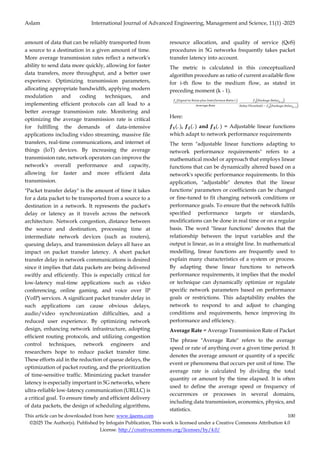
Fig.11: Mean Throughput results of four individual
Scheduling Algorithms
Aslam International Journal of Advanced Engineering, Management and Science, 11(1) -2025
This article can be downloaded from here: www.ijaems.com 104
©2025 The Author(s). Published by Infogain Publication, This work is licensed under a Creative Commons Attribution 4.0
License. http://creativecommons.org/licenses/by/4.0/
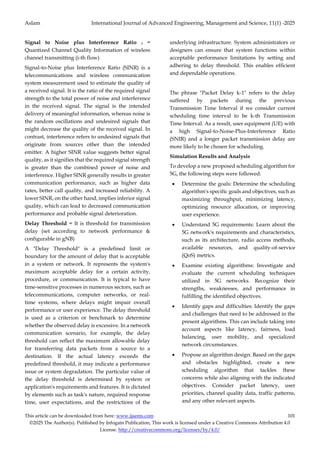
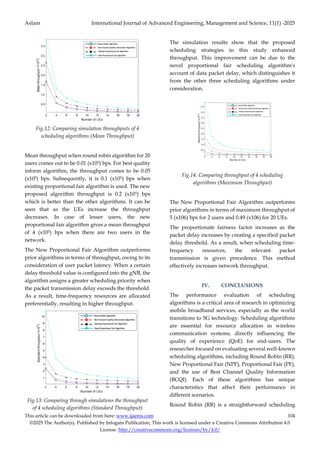
Fig.12: Comparing simulation throughputs of 4
scheduling algorithms (Mean Throughput)
Mean throughput when round robin algorithm for 20
users comes out to be 0.01 (x105) bps. For best quality
inform algorithm, the throughput comes to be 0.05
(x105) bps. Subsequently, it is 0.1 (x105) bps when
existing proportional fair algorithm is used. The new
proposed algorithm throughput is 0.2 (x105) bps
which is better than the other algorithms. It can be
seen that as the UEs increase the throughput
decreases. In case of lesser users, the new
proportional fair algorithm gives a mean throughput
of 4 (x105) bps when there are two users in the
network.
The New Proportional Fair Algorithm outperforms
prior algorithms in terms of throughput, owing to its
consideration of user packet latency. When a certain
delay threshold value is configured into the gNB, the
algorithm assigns a greater scheduling priority when
the packet transmission delay exceeds the threshold.
As a result, time-frequency resources are allocated
preferentially, resulting in higher throughput.
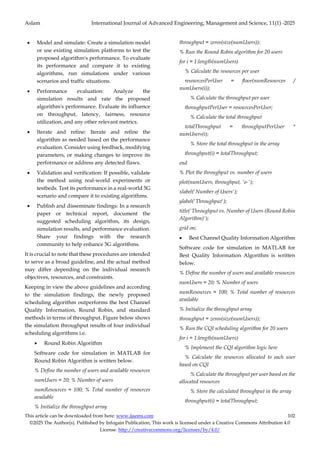
Fig.13: Comparing through simulations the throughput
of 4 scheduling algorithms (Standard Throughput)
The simulation results show that the proposed
scheduling strategies in this study enhanced
throughput. This improvement can be due to the
novel proportional fair scheduling algorithm's
account of data packet delay, which distinguishes it
from the other three scheduling algorithms under
consideration.
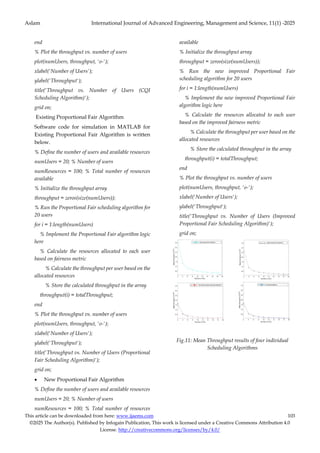
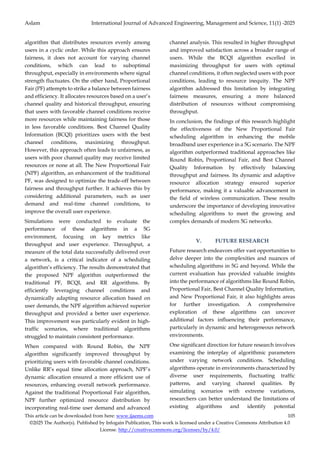
Fig.14: Comparing throughput of 4 scheduling
algorithms (Maximum Throughput)
The New Proportional Fair Algorithm outperforms
prior algorithms in terms of maximum throughput of
5 (x106) bps for 2 users and 0.49 (x106) for 20 UEs.
The proportionate fairness factor increases as the
packet delay increases by creating a specified packet
delay threshold. As a result, when scheduling time-
frequency resources, the relevant packet
transmission is given precedence. This method
effectively increases network throughput.
IV. CONCLUSIONS
The performance evaluation of scheduling
algorithms is a critical area of research in optimizing
mobile broadband services, especially as the world
transitions to 5G technology. Scheduling algorithms
are essential for resource allocation in wireless
communication systems, directly influencing the
quality of experience (QoE) for end-users. The
researcher focused on evaluating several well-known
scheduling algorithms, including Round Robin (RR),
New Proportional Fair (NPF), Proportional Fair (PF),
and the use of Best Channel Quality Information
(BCQI). Each of these algorithms has unique
characteristics that affect their performance in
different scenarios.
Round Robin (RR) is a straightforward scheduling
Aslam International Journal of Advanced Engineering, Management and Science, 11(1) -2025
This article can be downloaded from here: www.ijaems.com 105
©2025 The Author(s). Published by Infogain Publication, This work is licensed under a Creative Commons Attribution 4.0
License. http://creativecommons.org/licenses/by/4.0/
algorithm that distributes resources evenly among
users in a cyclic order. While this approach ensures
fairness, it does not account for varying channel
conditions, which can lead to suboptimal
throughput, especially in environments where signal
strength fluctuates. On the other hand, Proportional
Fair (PF) attempts to strike a balance between fairness
and efficiency. It allocates resources based on a user’s
channel quality and historical throughput, ensuring
that users with favorable channel conditions receive
more resources while maintaining fairness for those
in less favorable conditions. Best Channel Quality
Information (BCQI) prioritizes users with the best
channel conditions, maximizing throughput.
However, this approach often leads to unfairness, as
users with poor channel quality may receive limited
resources or none at all. The New Proportional Fair
(NPF) algorithm, an enhancement of the traditional
PF, was designed to optimize the trade-off between
fairness and throughput further. It achieves this by
considering additional parameters, such as user
demand and real-time channel conditions, to
improve the overall user experience.
Simulations were conducted to evaluate the
performance of these algorithms in a 5G
environment, focusing on key metrics like
throughput and user experience. Throughput, a
measure of the total data successfully delivered over
a network, is a critical indicator of a scheduling
algorithm’s efficiency. The results demonstrated that
the proposed NPF algorithm outperformed the
traditional PF, BCQI, and RR algorithms. By
efficiently leveraging channel conditions and
dynamically adapting resource allocation based on
user demands, the NPF algorithm achieved superior
throughput and provided a better user experience.
This improvement was particularly evident in high-
traffic scenarios, where traditional algorithms
struggled to maintain consistent performance.
When compared with Round Robin, the NPF
algorithm significantly improved throughput by
prioritizing users with favorable channel conditions.
Unlike RR’s equal time allocation approach, NPF’s
dynamic allocation ensured a more efficient use of
resources, enhancing overall network performance.
Against the traditional Proportional Fair algorithm,
NPF further optimized resource distribution by
incorporating real-time user demand and advanced
channel analysis. This resulted in higher throughput
and improved satisfaction across a broader range of
users. While the BCQI algorithm excelled in
maximizing throughput for users with optimal
channel conditions, it often neglected users with poor
conditions, leading to resource inequity. The NPF
algorithm addressed this limitation by integrating
fairness measures, ensuring a more balanced
distribution of resources without compromising
throughput.
In conclusion, the findings of this research highlight
the effectiveness of the New Proportional Fair
scheduling algorithm in enhancing the mobile
broadband user experience in a 5G scenario. The NPF
algorithm outperformed traditional approaches like
Round Robin, Proportional Fair, and Best Channel
Quality Information by effectively balancing
throughput and fairness. Its dynamic and adaptive
resource allocation strategy ensured superior
performance, making it a valuable advancement in
the field of wireless communication. These results
underscore the importance of developing innovative
scheduling algorithms to meet the growing and
complex demands of modern 5G networks.
V. FUTURE RESEARCH
Future research endeavors offer vast opportunities to
delve deeper into the complexities and nuances of
scheduling algorithms in 5G and beyond. While the
current evaluation has provided valuable insights
into the performance of algorithms like Round Robin,
Proportional Fair, Best Channel Quality Information,
and New Proportional Fair, it also highlights areas
for further investigation. A comprehensive
exploration of these algorithms can uncover
additional factors influencing their performance,
particularly in dynamic and heterogeneous network
environments.
One significant direction for future research involves
examining the interplay of algorithmic parameters
under varying network conditions. Scheduling
algorithms operate in environments characterized by
diverse user requirements, fluctuating traffic
patterns, and varying channel qualities. By
simulating scenarios with extreme variations,
researchers can better understand the limitations of
existing algorithms and identify potential
Aslam International Journal of Advanced Engineering, Management and Science, 11(1) -2025
This article can be downloaded from here: www.ijaems.com 106
©2025 The Author(s). Published by Infogain Publication, This work is licensed under a Creative Commons Attribution 4.0
License. http://creativecommons.org/licenses/by/4.0/
enhancements. For instance, future studies could
explore how different weightage factors in the New
Proportional Fair algorithm influence the balance
between fairness and throughput, especially in multi-
user scenarios with high mobility.
Another promising avenue for research is the
development and refinement of the mathematical
function 𝑓(.) used in scheduling decisions. This
function plays a critical role in determining resource
allocation, and its design significantly impacts an
algorithm's effectiveness. Expanding 𝑓(.) to include
more extensive elements, such as user quality of
service (QoS) requirements, latency constraints, and
energy efficiency metrics, could lead to more
sophisticated algorithms tailored to specific use
cases. This expansion, however, demands rigorous
simulation studies to validate the feasibility and
effectiveness of these modifications. Future research
could investigate the trade-offs introduced by
incorporating such elements, ensuring that the
resulting algorithms remain computationally
efficient while delivering improved performance.
Additionally, the integration of machine learning and
artificial intelligence (AI) in scheduling algorithms
represents an exciting frontier. Machine learning
models can analyze historical data to predict user
demand, channel conditions, and traffic patterns,
enabling more proactive and intelligent scheduling
decisions. Researchers could explore the feasibility of
hybrid algorithms that combine the principles of
traditional scheduling methods with the predictive
power of AI. For example, an algorithm could
dynamically adjust the parameters of f(.) based on
real-time predictions, enhancing its adaptability to
changing network conditions.
Another area worth exploring is the evaluation of
scheduling algorithms in specific 5G use cases, such
as ultra-reliable low-latency communication
(URLLC), massive machine-type communication
(mMTC), and enhanced mobile broadband (eMBB).
Each of these use cases presents unique challenges,
requiring tailored scheduling strategies to meet
stringent performance requirements. By focusing on
these scenarios, researchers can design algorithms
optimized for specific applications, further
advancing the field.
Moreover, future studies could investigate the
scalability of these algorithms in next-generation
networks, including 6G, where network densification
and the integration of satellite communications
introduce additional layers of complexity. These
scenarios demand algorithms capable of handling
larger numbers of users and devices while
maintaining efficiency and fairness. Researchers
might also explore the role of collaborative
scheduling across multiple network nodes to
improve overall system performance.
In conclusion, future research into scheduling
algorithms offers a rich landscape for innovation and
discovery. By examining their complexities, refining
key functions like f(.), and integrating emerging
technologies such as AI, researchers can push the
boundaries of what these algorithms can achieve.
Expanding simulations to include more diverse and
realistic scenarios will be critical to validating these
advancements. These efforts will not only enhance
the performance of existing 5G networks but also lay
the groundwork for the next generation of wireless
communication systems, addressing the ever-
growing demands of users and applications in a
connected world.
REFERENCES
[1] Overall Description, Stage-2, Version 15.9.0, 3GPP TS
38.300, NR, 2020.
[2] Multi-Connectivity, Overall Description, Stage-2,
Version 15.8.0, 3GPP TS 37.340, NR, 2020.
[3] System Architecture for the 5G System (5GS), Version
15.9.0, 3GPP TS 23.501, 2020.
[4] R. Agust´ı, Radio resource management in beyond 3G
systems, in Proc. 2006 IEEE Mediterranean
Electrotechnical Conf., Malaga, Spain, 2006, pp. 569–
574.
[5] Physical Layer Procedures for Data, Version 15.9.0,
3GPP TS 38.214, NR, 2020.
[6] R. Bruno, A. Masaracchia, and A. Passarella, Robust
adaptive modulation and coding (AMC) selection in
LTE systems using reinforcement learning, in Proc.
2014 IEEE 80th Vehicular Technology Conf. (VTC2014-
Fall), Vancouver, Canada, 2014, pp. 1–6.
[7] M. H. Habaebi, J. Chebil, A. G. Al-Sakkaf, and T. H.
Dahawi, Comparison between scheduling techniques
in long term evolution, IIUM Engineering Journal, vol.
14, no. 1. pp. 67–76, 2013.
[8] G. Piro, L. A. Grieco, G. Boggia, F. Capozzi, and P.
Camarda, Simulating LTE cellular systems: An open-
source framework, IEEE Transactions on Vehicular
Aslam International Journal of Advanced Engineering, Management and Science, 11(1) -2025
This article can be downloaded from here: www.ijaems.com 107
©2025 The Author(s). Published by Infogain Publication, This work is licensed under a Creative Commons Attribution 4.0
License. http://creativecommons.org/licenses/by/4.0/
Technology, vol. 60, no. 2, pp. 498–513, 2011.
[9] Khaturia, Meghna & Jha, Pranav & Karandikar, Abhay.
(2020). 5G-Flow: Flexible and Efficient 5G RAN
Architecture Using OpenFlow.
[10] Yin, H., Guo, X., Liu, P., Hei, X., & Gao, Y. (2020).
Predicting Channel Quality Indicators for 5G
Downlink Scheduling in a Deep Learning Approach.
ArXiv, abs/2008.01000.
[11] Habaebi, Mohamed & Chebil, Jalel & Al-Sakkaf,
Ahmed & Dahawi, Taha. (2013). Comparison between
Scheduling Techniques in Long Term Evolution.
International Islamic University Malaysia Engineering
Journal. 14. 10.31436/iiumej.v14i1.354.
[12] Capozzi F, Piro G, Grieco LA, Boggia G, Camarda P.
2013. Downlink packet scheduling in LTE cellular
networks: key design issues and a survey. IEEE
Communications Surveys & Tutorials 15(2):678 700
DOI 10.1109/SURV.2012.060912.00100.
[13] Habaebi MH, Chebil J, Al-Sakkaf AG, Dahawi TH.
2013. Comparison between scheduling techniques in
long term evolution. IIUMEJ 14(1).
[14] Lee N, Lin X, Andrews JG, Heath RW. 2015. Power
control for D2D under laid cellular networks:
modeling, algorithms, and analysis. IEEE Journal on
Selected Areas in Communications 33(1):1-13 DOI
10.1109/JSAC.2014.2369612.
[15] Mahdi ZH, Ali Yahiya T, Kirci P. 2019. Scheduling
algorithms comparison in HetNet based LTE-A. In:
2019 3rd International symposium on multi-
disciplinary studies and innovative technologies
(ISMSIT). Ankara, Turkey: DOI
10.1109/ISMSIT.2019.8932834.
[16] Mamane A, Ghazi ME, Barb G, Otestean M. 2019. 5G
heterogeneous networks: an overview on radio
resource management scheduling schemes. In: 2019
7th Mediterranean congress of telecommunications
(CMT). Fez, Morocco: 1-5, DOI
10.1109/CMT.2019.8931369.
[17] Moosavi R, Eriksson J, Larsson EG, Wiberg N, Frenger
P, Gunnarsson F. 2010. Comparison of strategies for
signaling of scheduling assignments in wireless
OFDMA. IEEE Transactions on Vehicular Technology
59(9):4527-4542, DOI 10.1109/TVT.2010.2066589.
[18] Shams AB, Abied SR, Hossain MF. 2016. Performance
comparison of network layouts with mobile users
under different resource scheduling techniques in
downlink LTE. In: 2016 5th international conference on
informatics, electronics and vision (ICIEV). Dhaka,
Bangladesh, 949-954 DOI
10.1109/ICIEV.2016.7760140.
[19] Subramanian R, Sandrasegaran K, Kong X. 2016.
Performance comparison of packet scheduling
algorithms in LTE-A HetNets. In: 2016 22nd Asia-
Pacific conference on communications (APCC).
Yogyakarta, Indonesia, 185-190, DOI
10.1109/APCC.2016.7581489.
[20] Thienthong P, Teerasuttakorn N, Nuanyai K,
Chantaraskul S. 2019. Comparative Study of
Scheduling Algorithms and Almost Blank Subframe
for LTE HetNets. In: 2019 7th international electrical
engineering congress (iEECON). Hua Hin, Thailand, 1-
4, DOI 10.1109/iEECON45304.2019.8938835.
[21] Yazdani O, Mirjalily G. 2017. A survey of distributed
resource allocation for device-to-device
communication in cellular networks. In: 2017 artificial
intelligence and signal processing conference (AISP).
Shiraz, Iran, 236 239 DOI 10.1109/AISP.2017.8324088.
[22] Zavyalova DV. 2015. Comparison of system capacity of
4G cellular networks for different scheduling
algorithms. In: 2015 international conference on
biomedical engineering and computational
technologies (SIBIRCON). Novosibirsk, Russia, 102-
103, DOI 10.1109/SIBIRCON.2015.7361860.
[23] Abu-Ali N, Taha AM, Salah M, Hassanein H. 2014.
Uplink scheduling in LTE and LTE-advanced: tutorial,
survey and evaluation framework. IEEE
Communications Surveys & Tutorials 16(3):1239 1265
DOI 10.1109/SURV.2013.1127.00161.
[24] Mamane, A.; Fattah, M.; El Ghazi, M.; El Bekkali, M.;
Balboul, Y.; Mazer, S. Scheduling Algorithms for 5G
Networks and Beyond: Classification and Survey.
IEEE Access 2022, 10, 51643–51661.
[25] Saglam, M.I.; Kartal, M. 5G Enhanced Mobile
Broadband Downlink Scheduler. In Proceedings of the
2019 11th International Conference on Electrical and
Electronics Engineering (ELECO), Bursa, Turkey, 28–
30 November 2019; pp. 687–692.
[26] Chataut, R.; Akl, R. Channel Gain Based User
Scheduling for 5G Massive MIMO Systems. In
Proceedings of the 2019 IEEE 16th International
Conference on Smart Cities: Improving Quality of Life
Using ICT & IoT and AI (HONET-ICT), Charlotte, NC,
USA, 6–9 October 2019.
[27] Mamane, A.; Fattah, M.; El Ghazi, M.; El Bekkali, M. 5G
Enhanced Mobile Broadband (eMBB): Evaluation of
Scheduling Algorithms Performances for Time-
Division Duplex Mode. Int. J. Interact. Mob. Technol.
2022, 16, 121.
[28] Nor, A.M.; Esmaiel, H.; Omer, A. Performance
evaluation of proportional fairness scheduling in
MmWave Network. In Proceedings of the 2019
International Conference on Computer and
Information Sciences (ICCIS), Sakaka, Saudi Arabia, 3–
4 April 2019; pp. 1–6.
[29] Kim, H.; Kim, K.; Han, Y.; Lee, J. An efficient
scheduling algorithm for QOS in wireless packet data
transmission. In Proceedings of the 13th IEEE
International Symposium on Personal, Indoor and
Aslam International Journal of Advanced Engineering, Management and Science, 11(1) -2025
This article can be downloaded from here: www.ijaems.com 108
©2025 The Author(s). Published by Infogain Publication, This work is licensed under a Creative Commons Attribution 4.0
License. http://creativecommons.org/licenses/by/4.0/
Mobile Radio Communications (PIMRC), Lisbon,
Portugal. 18 September 2002; Volume 5, pp. 2244–2248.
[30] Bechir, N.; Nasreddine, M.; Mahmoud, A.; Walid, H.;
Sofien, M. Novel scheduling algorithm for 3GPP
downlink LTE cellular network. Procedia Comput. Sci.
2014, 40, 116–122.
[31] Aniba, G.; Aïssa, S. Adaptive proportional fairness for
packet scheduling in HSDPA. In Proceedings of the In
IEEE Global Telecommunications Conference
GLOBECOM, Dallas, TX, USA, 29 November–3
December 2004; Volume 6.
[32] Yang, D.; Shen, D.; Shao, W.; Li, V.O.K. Towards
opportunistic fair scheduling in wireless networks. In
Proceedings of the IEEE International Conference on
Communications, Istanbul, Turkey, 11–15 June 2006;
Volume 11.
[33] Xu, N.; Guillaume, V.; Zhou, W.; Qiang, Y. A dynamic
PF scheduler to improve the cell edge performance. In
Proceedings of the 2008 IEEE 68th Vehicular
Technology Conference, Calgary, AB, Canada, 21–24
September 2008; pp. 1–5.
[34] Ma, J.; Aijaz, A.; Beach, M. Recent Results on
Proportional Fair Scheduling for mmWave-based
Industrial Wireless Networks. In Proceedings of the
IEEE Vehicular Technology Conference, Victoria, BC,
Canada, 18 November–16 December 2020.
[35] Nor, A.M.; Fratu, O.; Halunga, S.; Alyosef, A.; Zaharis,
Z.D.; Rizou, S.; Lazaridis, P.I. Demand based
Proportional Fairness Scheduling for 5G eMBB
Services. In Proceedings of the 2022 IEEE International
Black Sea Conference on Communications and
Networking, Sofia, Bulgaria, 6–9 June 2022; pp. 263–
268.
[36] Li, Lanlan & Shao, Wentao & Zhou, Xin. (2021). A
flexible scheduling algorithm for the 5th-generation
networks. Intelligent and Converged Networks. 2. 101-
107. 10.23919/ICN.2020.0017.
[37] Li L, Shao W, Zhou X. A flexible scheduling algorithm
for the 5th-generation networks. Intelligent and
Converged Networks, 2021, 2(2): 101-107.
https://doi.org/10.23919/ICN.2020.0017
[38] Lanlan Li, Wentao Shao, Xin Zhou. (2021). A flexible
scheduling algorithm for the 5th-generation networks.
Intelligent and Converged Networks 2021, 2(2): 101-
107.
[39] A. M. Jaradat, A. Naeem, M. I. Sağlam, M. Kartal and
H. Arslan. (2022). "Radar-Aided Communication
Scheduling Algorithm for 5G and Beyond Networks,"
in IEEE Access, vol. 10, pp. 96403-96413, doi:
10.1109/ACCESS.2022.3205641.
[40] Wu, Junmin, Chuan Liu, Jing Tao, Shidong Liu, and
Wei Gao. (2023). "Hybrid Traffic Scheduling in 5G and
Time-Sensitive Networking Integrated Networks for
Communications of Virtual Power Plants" Applied
Sciences 13, no. 13: 7953.
https://doi.org/10.3390/app13137953
[41] Li, J., Zhao, Y., Li, C., Li, Z., Shin, K. G., & Ai, B. (2023).
End-to-End Asynchronous Traffic Scheduling in
Converged 5G and Time-Sensitive Networks. arXiv
preprint arXiv:2312.10356. ARXIV
[42] Prasad, R., & Sunny, A. (2023). QoS-aware Scheduling
in 5G Wireless Base Stations. arXiv preprint
arXiv:2310.11206.
[43] Adhikari, Mainak & Hazra, Abhishek. (2022). 6G-
Enabled Ultra-Reliable Low-Latency Communication
in Edge Networks. IEEE Communications Standards
Magazine. 10.1109/MCOMSTD.0001.2100098.
[44] Dangi, Ramraj & Lalwani, Praveen & Choudhary,
Gaurav & You, Ilsun & Pau, Giovanni. (2021). Study
and Investigation on 5G Technology: A Systematic
Review. Sensors. 22. 26. 10.3390/s22010026
[45] Gavin Mitchell. 2021. Empirical
[46] Ali, A. & Nazir, Mohsin. (2017). Radio resource
management: The vital subject for evolution to 5G. 1-
7. 10.1109/ISWSN.2017.8250043)
[47] Larry Bellehumeur. March 29, 2023

Designing Flexible Scheduling Algorithm for 5G

  • 1.
    International Journal ofAdvanced Engineering, Management and Science (IJAEMS) Peer-Reviewed Journal ISSN: 2454-1311 | Vol-11, Issue-1; Jan-Feb, 2025 Journal Home Page: https://ijaems.com/ DOI: https://dx.doi.org/10.22161/ijaems.111.7 This article can be downloaded from here: www.ijaems.com 90 ©2025 The Author(s). Published by Infogain Publication, This work is licensed under a Creative Commons Attribution 4.0 License. http://creativecommons.org/licenses/by/4.0/ Designing Flexible Scheduling Algorithm for 5G Usama Aslam usama.aslam@ptclgroup.com; awesomeusama920@gmail.com Received: 18 Dec 2024; Received in revised form: 21 Jan 2025; Accepted: 30 Jan 2025; Available online: 09 Feb 2025 Abstract— Broad machine-type communication, ultra-reliable low-latency communication, and efficient management of expanding mobile broadband traffic are now achievable with the advent of 5th-Generation (5G) wireless mobile communication standards. One of the biggest challenges for 5G networks, meanwhile, developing effective Radio Resource Management (RRM) and scheduling algorithms that meet quality of service (QoS) requirements. Widely used Proportional Fair algorithm, which primarily gives priority to customers served by a node depending on their flow rate, is the foundation of the current 5G scheduling technology. The purpose of this project is to investigate methods for improving 5G network throughput and to suggest novel scheduling schemes. This work advances the development of 5G and other mobile communication technologies by adding data flow package latency as an extra priority parameter and using MATLAB for simulation analysis. In the end, it offers a new scheduling technique that was developed through the assessment of different radio resource scheduling approaches. Keywords— 5G; Scheduling Schemes; Radio Resource Management. I. BACKGROUND By integrating fresh technological developments, the 5th Generation (5G) mobile communication system expands on the developments of the 4G wireless technology. In 5G networks, transmission technologies including higher-order modulation and orthogonal frequency division multiplexing are still in use. Fig.1: Evolution of Mobile Network Generations [43] Furthermore, adaptive modulation and coding (AMC) techniques, preemptive mechanisms, massive multiple-input multiple-output (MIMO), hybrid automatic repeat request (HARQ) with code block group-based implementation and an increased number of HARQ processes, and beam management technology are all seamlessly integrated into 5G systems. Beam management technique allows for the transmission of signals through narrow beams in high-frequency bands, significantly enhancing system performance. Fig.2: Multiple Input and Multiple Output (MIMO) [44] 5G system can provide a high level of system throughput and a wide range of services because of these improved capabilities. Nevertheless, Media
  • 2.
    Aslam International Journalof Advanced Engineering, Management and Science, 11(1) -2025 This article can be downloaded from here: www.ijaems.com 91 ©2025 The Author(s). Published by Infogain Publication, This work is licensed under a Creative Commons Attribution 4.0 License. http://creativecommons.org/licenses/by/4.0/ Access Control (MAC) layer scheduling algorithm is under more strain as a result of the incorporation of these cutting-edge technical characteristics. In order to enhance network Key Performance Indicators (KPIs), wireless features must be integrated into the MAC layer scheduling algorithm to maximize the utilization of wireless technologies and radio time- frequency resources. In order to do this, resource allocation must be optimized while taking QoS needs, channel quality, user service queue status & User Equipment (UE) resource consumption from both the physical and MAC levels into account. In addition to delivering dependable and constant performance, the scheduling technique must also adhere to practicality and computational complexity limitations. Both Standalone (SA) and Non-Standalone (NSA) network topologies are used in 5G technology. The scheduler on the eNodeB (or gNodeB) functions independently in these topologies. Consequently, the scheduling strategy covered in this study applies to both NSA and SA designs. Fig.3: Stand Alone and Non-Stand Alone 5G Basic Architectures [45] - Non-Standalone (NSA) Architecture Technical Specification (TS) 38.300 states that Multi- Radio Dual Connectivity (MRDC) can be supported by 5G networks, which will enable a seamless transition from 4G to 5G network deployment. Two separate Radio Access Network (RAN) elements that operate independently in the user plane and are each outfitted with a separate scheduler for radio resource allocation are the foundation of MR-DC network topologies. User Equipment (UE) is set up to use radio resources given by these two independent schedulers, which are situated in separate Next Generation (NG)-RAN elements within the Standalone (SA) architecture, when Radio Resource Control (RRC) is enabled. A Radio Access Network (RAN) supporting SA 5G is identified in the 5G Standalone (SA) network architecture by its link to the 5G Core (5GC). Operator network deployments of 4G will progressively discontinue as 5G technology advances. The gNB (5G New Radio Base Station) is in charge of terminating control plane and user plane protocols in the 5G network in the direction of the User Equipment (UE) on the RAN side. According to TS 23.501, the NG interfaces connect the gNBs to the Access and Mobility Management Function (AMF) network element in the 5GC [3]. - 5G Protocol Stack Architecture User data transmission is handled by the user plane protocol stack, and system control signaling is handled by the control plane protocol stack. Essentially, separate stacks handle distinct kinds of data; the user plane stack handles user data, while the control plane stack handles signaling messages. The physical layer (PHY), medium access control (MAC), radio link control (RLC), and packet data convergence protocol (PDCP) are among the common protocol layers shared by both planes. In order to guarantee alignment between the protocol stacks in the UPF and gNB, the gNB is connected to the User Plane Function (UPF) network element in the user plane via the NG-U interface. Radio Resource Control (RRC) and Non-Access Stratum (NAS) are the top two protocol levels in the 5G gNB control plane protocol stack, same like in 4G. The Access and Mobility Management Function (AMF) network element in the 5G Core (5GC) receives transparent NAS layer signaling over the gNB.
  • 3.
    Aslam International Journalof Advanced Engineering, Management and Science, 11(1) -2025 This article can be downloaded from here: www.ijaems.com 92 ©2025 The Author(s). Published by Infogain Publication, This work is licensed under a Creative Commons Attribution 4.0 License. http://creativecommons.org/licenses/by/4.0/ Fig.4: 5G Protocol Stack [9] - Radio Resource Management (RRM) Ensuring the quality of service for wireless User Equipment (UE) in a network with constrained bandwidth is the main goal of Radio Resource Management (RRM). RRM attempts to handle unequal network traffic distribution and changes in channel characteristics brought on by fading and interference by dynamically allocating and adjusting resources within the wireless transmission and network. The ultimate goals are to reduce the burden from signaling transmission, avoid network congestion, and maximize the use of wireless spectrum. Quality of Service (QoS) factors are among the core topics that the RRM module concentrates on. Fig.5: Radio Resource Management [46] - Channel State Information Reporting Massive MIMO is a critical technology in the field of 5G. Acquiring accurate Channel State Information (CSI) is critical to improving performance of a huge MIMO system. Using Reference Signal (RS), user estimates and quantizes the channel during downlink MIMO data transfer. This procedure provides two functions: demodulating transmission data and providing quantized results to the gNB (5G New Radio Base Station). The quantized CSI is used by the gNB to identify the suitable precoding and modulation coding method. CSI is a catch-all word which includes more components than their 4G equivalents. Because it enables the gNB to evaluate the downlink channel's quality, CQI reporting is crucial. Each CQI represents a quantized and scaled version of the user's Signal-to-Noise plus Interference Ratio (SINR). The Radio Resource Management (RRM) architecture's Adaptive Modulation and Coding (AMC) module selects the appropriate modulation and coding scheme based on the reported CQI in order to maximize throughput. Several scheduling algorithms, such as the one covered in this article, leverage Channel State Information (CSI) to create RRM allocation techniques. - Conventional Scheduling Algorithms Scheduling algorithms have been a recurring topic in communication technology evolution [7]. o Round Robin (RR) The RR algorithm is a straightforward technique that doesn't require any difficult logical inferences. User Equipment (UE) has equal access to radio resources thanks to Radio Resource Management (RRM), which distributes radio resources to users in RR scheduling system in a first-in, first-served manner. Because of this, regardless of channel state, customers serviced by the same gNB are scheduled in the same way. There is no need for abstract theory to implement the RR system, making it easy to do so. It offers excellent performance and equity to all users in the near run. However, one disadvantage of this approach is its inability to properly exploit the wireless channel's time-varying properties in order to maximize the system's multi-user diversity gain. Fig.6: Channel State Information
  • 4.
    Aslam International Journalof Advanced Engineering, Management and Science, 11(1) -2025 This article can be downloaded from here: www.ijaems.com 93 ©2025 The Author(s). Published by Infogain Publication, This work is licensed under a Creative Commons Attribution 4.0 License. http://creativecommons.org/licenses/by/4.0/ o Best CQI The Best Channel Quality Indicator (CQI) scheduling strategy is another approach employed in the gNB. When selecting a schedulable User Equipment (UE) from among all UEs associated to a cell in the gNB, only the UE with the best CQI is chosen. This approach dynamically modifies the number of concurrent users based on the transmission strategy, efficiently adjusting to the wireless channel's time- varying and fading characteristics to maximize system throughput. Users with inferior channel conditions, such as cell-edge users, have a decreased likelihood of being scheduled in this scheduling system [7]. While this strategy offers maximal multi- user diversity gain, it is the least fair algorithm in terms of fairness. Figure 7: CQI prediction Module [10] o Proportional Fair In the industry, the Proportional Fair (PF) algorithm is frequently employed. Radio Resource Management (RRM) gives each user served by the gNB a priority within this algorithm. The particular measures employed in establishing these priorities differ based on the architecture of the vendor. During each scheduling period, users with higher priorities are scheduled first. The choice of proper measurements is critical for the PF algorithm since it has a direct impact on network performance. The PF scheduling algorithm successfully exploits the time- varying properties of user channels while balancing multi-user variety and fairness. It allocates radio resources based on both historical user throughput and experienced channel quality. The development of the PF algorithm has resulted in considerable advances in this discipline. The ratio between the instantaneous flow available for the i-th flow and the average flow seen at the preceding moment (k - 1) is one metric utilized for priority in the PF algorithm [8]: 𝑤𝑖,𝑗 = 𝑟𝑖,𝑗 𝑅𝑖 ri;j represents the flow rate assigned to the i-th flow during the k-th Transmission Time Interval (TTI), and Ri represents the expected average transmission data rate. By utilizing the average data transmission rate, the PF scheduling method efficiently addresses long-term user fairness. It does not, however, guarantee users' short-term fairness. Fig. 8: Flow chart of Proportional Fair (PF) Scheduler [11] Problem Statement 5G wireless mobile standard has recently been made public. Massive machine-type communication, ultra- reliable low-latency communication, and improved mobile broadband are just a few of the sorts of traffic that 5G networks are designed to handle efficiently. However, creating efficient Radio Resource Management (RRM) techniques and scheduling algorithms that can satisfy the various quality of service needs is a key problem in the deployment of 5G networks. Research Significance Research is about new scheduling techniques and
  • 5.
    Aslam International Journalof Advanced Engineering, Management and Science, 11(1) -2025 This article can be downloaded from here: www.ijaems.com 94 ©2025 The Author(s). Published by Infogain Publication, This work is licensed under a Creative Commons Attribution 4.0 License. http://creativecommons.org/licenses/by/4.0/ look at ways to increase the throughput of 5G networks. The study will include package delay of data flow as a priority parameter in addition to already existing metrics. The study will make use of a MATLAB based modelling tool simulator. According to the research, a brand-new scheduling algorithm will be developed after being compared to numerous radio resource scheduling plans. Research Objectives In order to improve the user experience for enhanced mobile broadband, the researcher will evaluate performance of scheduling algorithms, such as RR (Radio Resource), PF (Proportional Fair), PF0 (Existing Proportional Fair Algorithm), and optimal CQI (Channel Quality Information), under 5G environment. The newly proposed scheduling algorithm would exceed the best CQI, RR, and traditional PF algorithms by providing higher throughput, the researcher will attempt to demonstrate through simulation using MATLAB. This study's goals are to suggest new scheduling strategies and look into ways to increase the throughput of 5G networks. In this study, we'll use the data flow's packet delay as a priority metric. By examining existing radio resource scheduling techniques, this research aims to develop a new scheduling algorithm. Research Questions • Is it possible to evaluate the performance of scheduling algorithms in a 5G context, such as RR, PF, PF0, and best CQI, with the aim of improving the user experience for enhanced mobile broadband? • Will proposed scheduling algorithm can come up with higher throughput? • What procedures can be used to increase the throughput of 5G networks? • Is it possible to suggest original schedule plans? • Is it possible to develop a new scheduling algorithm by examining multiple radio resource scheduling plans? II. LITERATURE REVIEW Scheduling algorithms are critical in both current and future wireless networks, ensuring effective and equitable resource allocation [17]. These algorithms are classified as either centralized or distributed [21]. To efficiently meet fairness and quality-of-service (QoS) criteria, centralized algorithms are widely utilized for downlink transmission. Distributed algorithms, on the other hand, are commonly used in ad hoc or uplink transmission settings where users have control over channel access. A scheduler needs certain parts in order to function as well as possible over a wireless network. Transmission time intervals (TTIs) should not be assigned to sessions with poor link quality by the algorithm, which should strive to maximize the utilization of the available channel. While maintaining long-term throughput guarantees for all sessions, it should offer short-term throughput guarantees for error-free sessions [21]. Cellular users should redistribute resources fairly, accounting for both long-term equities for error-prone sessions and short-term equity for error-free sessions. The fairness index, which assesses the greatest variation in normalized service obtained by any two backlogged sessions, is frequently employed for this reason. Cutting down on the energy usage of cellular users is another difficulty for the scheduler. This can be achieved by enabling users to send and receive messages continuously and by putting the device in sleep mode while it is idle, which will use less energy [14]. The scheduler should also restrict the amount of simultaneous broadcasts in the network to reduce excessive interference. In delay-sensitive applications, the scheduler should be able to guarantee specific session delay boundaries [17]. In order to guarantee that the existing channel is utilized efficiently as the user base expands, scalability is essential. Furthermore, the scheduler should be constructed with as minimal complexity as possible because fast scheduling decisions are essential in high-speed networks. Schedulers play an important role in allocating resource blocks (RB) to cellular customers based on demand. These schedulers are commonly found at the Evolved Node B (eNodeB) and are responsible for allocating both uplink and downlink resources. At each transmission time interval (TTI), the scheduling algorithm assigns shared resources to each cellular user. On a regular basis, the eNodeB receives channel
  • 6.
    Aslam International Journalof Advanced Engineering, Management and Science, 11(1) -2025 This article can be downloaded from here: www.ijaems.com 95 ©2025 The Author(s). Published by Infogain Publication, This work is licensed under a Creative Commons Attribution 4.0 License. http://creativecommons.org/licenses/by/4.0/ quality indicators (CQI) from users, with a higher CQI value indicating better channel quality. Round robin (RR), proportional fair (PF), fractional frequency reuse (FFR), and best channel quality indicator (BCQI) are the four main scheduling strategies. An overview of the general operation of some algorithms is given in this section. The round robin scheduler is a non-aware scheduling technique that starts with the first user and assigns resources progressively to subsequent users. It does not take into account the current channel conditions [13]. While this technique improves user fairness, it degrades speed. Because users may be allotted fading channels, it can reduce overall system throughput. Furthermore, because it does not consider the CQI factor, it does not efficiently manage the overall quantity of resources. Despite these disadvantages, due to its ease of implementation, this scheduler is frequently utilized in many systems [16]. The best CQI scheduler is in charge of allocating resource blocks to users at each TTI based on their radio connection conditions or channel quality. Cellular users transmit their CQI to the eNodeB, which utilizes it for scheduling. The eNodeB sends a reference signal (downlink pilot) to users, who then measure their own CQI. A higher CQI number suggests that the channel is in better condition. While this scheduler can boost individual cell throughput, it lacks fairness among users, especially those at the cell edge who may never be scheduled [16]. FFR scheduler is frequently employed when minimizing interference between neighboring cells is crucial [12]. Because of its flexibility and agility, it enables the creation and implementation of various schedulers. Users can share resource blocks in partial reuse (PR) or full reuse (FR) modes. RBs can be assigned according to priority and zone designation, and the available frequency band can be partitioned into many bands. While FFR has a higher average throughput, giving some users priority over others might not be fair. By taking channel variations into account, the PF scheduler improves spectral efficiency and provides greater fairness. By combining CQI and fairness criteria, it assigns resource blocks to users with the best link quality. PF enables mobile users to achieve optimal QoS by balancing fairness and maximum cell throughput [16]. The throughput at a certain TTI and the average throughput of the user are used to calculate RB allocation using a weighted fair queuing algorithm (WFQ). There have been numerous studies done on scheduling algorithms. [13] evaluated the throughput and block error rate (BER) of the RR, best CQI, and PF schedulers using a MATLAB-based system level simulator. Although the optimal CQI algorithm handled customers with poor channel conditions unfairly, it had a better throughput. [12] compared scheduling techniques with an emphasis on QoS provisioning while conducting a thorough evaluation of LTE downlink packet allocation methodologies. After a thorough analysis, [23] divided LTE uplink schedulers into three categories: power-optimizing, QoS-based, and best-effort. A simulation model comparing the best RR and CQI scheduling strategies for LTE system throughput was developed by [22]. Other research has compared various network setups and performance measures. [18] examined downlink performance measures for small cell networks (ScNet) and heterogeneous networks (HetNet), favoring HetNet for greater average UE throughput in densely populated areas. [19] examined the packet scheduling algorithms PF, MLWDF, and EXP/PF, taking into account throughput, packet loss ratio (PLR), latency, and fairness. [15] explored variable packet scheduling methods (WFQ, PQ, and FIFO) in various real-time and non-real-time applications to provide the greatest QoS. [20] investigated RR, PF, optimal CQI, Max-TP, and RF schedulers while taking cell range expansion (CRE) and nearly blank sub frame (ABS) methods into account in order to optimize system performance and interference towards cell edge users. In existing mmWave standards, various scenarios and use cases for 5G and beyond networks have been introduced. However, no precise mechanism for allocating radio resources has been described. Several research papers have presented and addressed scheduling techniques for 5G network implementation. The authors of reference [24] conducted a survey of radio resource management (RRM) schemes in 5G and beyond networks. They discussed and contrasted the procedures of different
  • 7.
    Aslam International Journalof Advanced Engineering, Management and Science, 11(1) -2025 This article can be downloaded from here: www.ijaems.com 96 ©2025 The Author(s). Published by Infogain Publication, This work is licensed under a Creative Commons Attribution 4.0 License. http://creativecommons.org/licenses/by/4.0/ scheduling algorithms. They also addressed the reasons influencing the RRA decision and analyzed the performance of the scheduling systems. In reference [25], an improved broadband scheduler based on the lean manufacturing technique was developed. This scheduler combines the best channel quality indicator (BCQI) and SPF (shortest path first) algorithms. While this technique improves system speed, it has a significant impact on UE fairness when compared to the SPF and RR algorithms. In reference [26], the authors presented a channel- gain-based scheduling approach for huge multiple input multiple output (MIMO) systems. This technique increases throughput while ensuring UE fairness. Reference [27] investigated and compared the performance of various scheduling algorithms in time-division duplex (TDD) mode, including RR, SPF, and BCQI. Voice over internet protocol (VoIP), video streaming, and cloud storage were among the traffic kinds studied. The study assessed the scheme's throughput but did not include UE fairness and satisfaction. Furthermore, each traffic type was investigated independently, which is not a realistic scenario in which several UEs request traffic at the same time. The influence of blockage probability in mmWave networks on the performance of the SPF scheme in terms of UE data rates and fairness was addressed and compared in reference [28]. References [29-33] concentrated on adjusting the exponential parameters of the priority function in the SPF scheme based on specific circumstances to increase throughput and fairness in various communication systems. However, in their procedures, these algorithms ignore UE requirements. Reference [34] advocated improving the SPF scheme by boosting the priority of UEs with poor channel circumstances, which proved effective in dealing with mmWave channel variations in industrial internet of things applications. While these studies looked at well-known scheduling methods or offered changes to improve scheduling schemes, they did not take into account the influence of UE demands on system performance. Furthermore, they frequently assumed homogeneous traffic across UEs, thinking that consumers require the same data rate across all time frames. However, in practice, UEs in 5G and beyond networks have varying data rate demands dependent on their individual eMBB applications, such as video streaming and virtual reality. Thus, while investigating and proposing scheduling algorithms for UEs, taking non-homogeneous traffic into account is a more realistic scenario. The discrepancy between UE demands based on their experienced applications and its effect on the performance of the DPF (dynamic priority first) scheduling strategy was examined in a previous work [35]. However, the impact of obstruction on total system performance was not considered in this study. Furthermore, it anticipated an unrealistic situation in which lower-demand apps were experienced by more UEs. In addition, the work utilized 3GPP standard channel models, whereas the prior study used the MiWEBA channel model. These studies emphasize the significance of scheduling algorithms and their effects on system performance, fairness, and QoS in a variety of network settings. III. RESEARCH METHODOLOGY Benchmark for this research is the research done by Wu, Junmin, Chuan Liu, Jing Tao, Shidong Liu, and Wei Gao. (2023). "Hybrid Traffic Scheduling in 5G and Time-Sensitive Networking Integrated Networks for Communications of Virtual Power Plants" Applied Sciences 13, no. 13: 7953. https://doi.org/10.3390/app13137953. - Simulation Parameters The first parameter relates to the number of chunks. The "number of chunks" in the context of a 5G network simulation often refers to the partition of data or information into smaller segments or pieces. To improve efficiency and dependability, data in 5G networks is frequently delivered in chunks. The number of chunks in a 5G network simulation can signify the total number of these segmented pieces of data being simulated or analyzed. It can be used to assess various network parameters such as throughput, latency, and overall network
  • 8.
    Aslam International Journalof Advanced Engineering, Management and Science, 11(1) -2025 This article can be downloaded from here: www.ijaems.com 97 ©2025 The Author(s). Published by Infogain Publication, This work is licensed under a Creative Commons Attribution 4.0 License. http://creativecommons.org/licenses/by/4.0/ performance when handling and transmitting data in smaller units. Number of chunks value is taken as “1” for the simulation. Fig.9: Number of Chunks (Source: Made by Researcher) "Slots per chunk" refers to the division of time in a wireless communication system in the context of 5G simulations. Time is divided into discrete intervals called slots in 5G networks, which are used to schedule and transmit data. The term "slots per chunk" refers to the number of slots assigned to each particular chunk of data during simulation. It denotes the degree of granularity of time division inside a chunk. Researchers and engineers can assess and analyze the impact of alternative time allocation schemes on the performance of the 5G network by altering the number of slots per chunk. In practice, a higher number of slots per chunk allows for finer- grained time division, perhaps leading to more efficient network resource use. However, the increased signaling and control information required for handling a larger number of slots may result in increased overhead. A reduced number of slots per chunk, on the other hand, may result in coarser time division but lower signaling overhead. The optimal number of slots per chunk is determined by the individual simulation goals and desired trade-offs between resource utilization and signaling overhead. Slots per chunk are selected to be 100 [36]. "Time between chunks in slots (ms)" in 5G simulations refers to the duration or gap between consecutive chunks of data in the simulated network, measured in milliseconds. This option sets the time interval between the completion of one chunk's transmission and the start of the following chunk's transmission. It denotes the amount of time that elapses between successive data transmissions. Researchers and engineers can examine the influence of various inter- chunk delays on the performance of the 5G network by adjusting the time between chunks. The interval between chunks in slots is a crucial component in determining data transmission efficiency, throughput, and latency in a 5G network. A shorter time interval between chunks might result in more frequent data transmissions, potentially increasing throughput but also increasing overhead due to the signaling and control information necessary for each transaction. A longer interval between chunks, on the other hand, can minimize signaling overhead but result in poorer throughput and increased latency. The time between chunks in slots for 5G simulations is determined by the individual simulation goals, network conditions, and trade-offs between throughput, latency, and signaling overhead. In order to get maximum efficiency and throughput, the value of time between chunks in slots (ms) is taken as “0” [37]. Omnidirectional antennas have various advantages in 5G networks: 1. Omnidirectional antennas transmit signals in all directions, resulting in a 360-degree coverage pattern. This allows them to service a wide region without requiring exact antenna alignment. It simplifies network deployment and expands the coverage of a 5G network, particularly in highly populated locations. 2. Seamless Mobility: Omnidirectional antennas enable 5G devices to move seamlessly. Because the antennas broadcast signals in all directions, they can keep moving devices connected regardless of their orientation or location within the service region. This is especially useful for applications requiring high mobility, such as driverless vehicles, public transportation, or Internet of Things devices. 3. Flexibility and Scalability: Omnidirectional antennas provide network designers with flexibility and scalability. They can be used in a variety of contexts, including congested urban regions, rural locations, and interior settings. Furthermore, using several omnidirectional antennas in a network increases capacity and coverage by enhancing signal distribution and
  • 9.
    Aslam International Journalof Advanced Engineering, Management and Science, 11(1) -2025 This article can be downloaded from here: www.ijaems.com 98 ©2025 The Author(s). Published by Infogain Publication, This work is licensed under a Creative Commons Attribution 4.0 License. http://creativecommons.org/licenses/by/4.0/ reducing dead zones. 4. Network Planning Simplified: Omnidirectional antennas make network planning and optimization easier. Because of their broad coverage pattern, they may require fewer antennas than directional antennas, decreasing the complexity and expense of network construction. It also simplifies network management by reducing the frequency with which antennas must be reoriented or adjusted. 5. Omnidirectional antennas improve user fairness in 5G networks. Because they broadcast signals in all directions, they enable equitable access to network resources for all devices within their service region. This contributes to the equal distribution of network capacity and the treatment of customers. Fig.10: Omni Directional Antenna [47] Overall, using omnidirectional antennas in 5G networks improves coverage, allows for seamless mobility, simplifies network planning, and promotes user fairness. These benefits make them an excellent alternative for a wide range of deployment scenarios in 5G networks. This simulation hence uses an Omni directional antenna. Number of receiving antennas is chosen as “1” with transmitting antenna being four. The transmitted power is taken as 40 w [38]. MATLAB was used to carry out the simulation. New scheduling algorithm was added into the simulator for evaluations. Using the four schedulers, we analyze throughput performance. The simulator is used to simulate four scheduling algorithms with identical fundamental parameters one at a time. The MATLAB (matrix laboratory) software platform is widely used for numerical calculation, data analysis, visualization, and algorithm creation. When it comes to simulation, MATLAB has a plethora of tools and benefits to offer [39]. 1. Simulink: Simulink is a powerful graphical simulation and modelling tool in MATLAB. Its drag-and-drop interface allows users to create block diagrams and models of dynamic systems. Simulink covers a wide range of domains, including control systems, communications, signal processing, and others, making it useful for a variety of simulation tasks. 2. Extensive Toolbox Support: MATLAB comes with a plethora of toolboxes that help to extend its simulation capabilities. These toolboxes include specialized functions and algorithms for a variety of disciplines, including signal processing, communications, image processing, optimization, and others. Users can use these toolboxes to improve their simulation models and execute complex simulations more effectively. 3. The interactive environment of MATLAB allows users to iteratively develop and simulate models. It has a command-line interface as well as a graphical user interface (GUI) for interactive simulation and real-time parameter adjustment. This capability is very valuable for investigating system behavior, analyzing simulation findings, and making on-the-fly adjustments. 4. Simultaneous Simulation and Visualization: MATLAB users can view simulation results in real time. Users can obtain insights into their simulation models by creating interactive plots, animations, and 3D visualizations using its plotting and visualization features. This power of simultaneous simulation and visualization aids in a more intuitive understanding of system behavior. 5. Integration with Other Technologies: MATLAB interfaces with other programming languages, hardware devices, and software applications with ease. It facilitates connecting with external devices such as sensors and actuators, allowing simulations to be integrated with real-world systems. MATLAB also provides interfaces to other programming languages like as C, C++, and Python, allowing users to reuse existing code or interact with external systems.
  • 10.
    Aslam International Journalof Advanced Engineering, Management and Science, 11(1) -2025 This article can be downloaded from here: www.ijaems.com 99 ©2025 The Author(s). Published by Infogain Publication, This work is licensed under a Creative Commons Attribution 4.0 License. http://creativecommons.org/licenses/by/4.0/ 6. Extensive Documentation and Community Support: MATLAB offers extensive documentation, including help files, examples, and tutorials, to make learning and utilizing its simulation features easier. MATLAB also offers a big and active user community where users may get help, discuss ideas, and collaborate on projects. 7. Reproducibility and Code Generation: MATLAB enables users to write scripts and functions that can be readily shared and replicated. It also allows you to generate standalone executable files or C/C++ code from MATLAB code, allowing simulations to run on a variety of platforms or embedded systems. Because of these features and benefits, MATLAB is a popular choice for simulation work in a variety of areas, including engineering, physics, mathematics, and computer science. Its adaptability, large toolboxes, interactive interface, and integration capabilities all contribute to its efficacy and efficiency in modelling and analyzing complex systems. - Conceptualized Scheduling Algorithm The PF algorithm takes average rate and flow rate into account, but other factors need to be assessed as well to determine the model's priorities. Based on the quality of the received Reference Signals (RS), the UE reports the wireless channel quality to the base station, which is reflected in the Channel Quality Indicator (CQI). The base station schedules services based on CQI response and other data. The temporal lag that occurs when the UE transmits a data packet is referred to as user delay. International Telecommunication Union's (IMT)-2020 M.2410-0 (4.7.1) standard specifies the 1 ms delay threshold for ultra-reliable low-latency communication in 5G networks [40, 41, 42]. Reducing packet transmission delays is the scheduling method's main objective. The scheduling approach in 5G networks is based on the Quality of Service (QoS) model, where the highest degree of scheduling granularity is represented by the QoS flow. In order to balance packet transfer latency, average transmission rate, and channel quality, this study uses the Proportional Fair (PF) scheduling mechanism. Improving network performance while maintaining equity among the scheduled User Equipment (UEs) is the goal. In wireless communication, "channel quality" refers to the measurement of the signal quality or channel conditions between a transmitter and receiver. It represents the properties of the wireless media over which the signal travels, such as signal strength, interference, noise, fading, and other flaws. The reliability and performance of the communication link are directly affected by the channel quality. A higher channel quality suggests a stronger, clearer, and more dependable signal with less interference or distortion, which results in improved data transmission and reception. A lower channel quality, on the other hand, signifies a weaker or noisy signal, which might result in lower data rates, increased error rates, and significant decline in communication performance. Channel quality is often evaluated or measured using various ways in wireless systems such as 5G. CQI (Channel Quality Indicator) is a popular mechanism in which the receiving device (such as a user equipment or mobile device) provides input to the transmitting base station regarding the perceived quality of the received signal. The CQI value assesses channel quality and aids in the optimization of overall system performance through adaptive modulation and coding schemes, power control, and resource allocation decisions. Channel quality monitoring and assessment are critical for efficient and dependable wireless communication systems. Network operators and algorithms can dynamically change transmission settings and distribute resources to maximize data rates, minimize mistakes, and assure optimal performance under fluctuating channel conditions by taking channel quality into account. The term "average transmission rate" refers to the average rate at which data is sent through a communication channel or link. On average, it measures the quantity of data that may be effectively transmitted per unit of time. The available bandwidth, modulation and coding techniques, signal quality, network congestion, and the effectiveness of the communication protocol all have an impact on the average transmission rate. In the context of wireless communication systems such as 5G, the average transmission rate is a critical performance indicator that represents the network's overall capacity and efficiency. It denotes the average
  • 11.
    Aslam International Journalof Advanced Engineering, Management and Science, 11(1) -2025 This article can be downloaded from here: www.ijaems.com 100 ©2025 The Author(s). Published by Infogain Publication, This work is licensed under a Creative Commons Attribution 4.0 License. http://creativecommons.org/licenses/by/4.0/ amount of data that can be reliably transported from a source to a destination in a given amount of time. More average transmission rates reflect a network's ability to send data more quickly, allowing for faster data transfers, more throughput, and a better user experience. Optimizing transmission parameters, allocating appropriate bandwidth, applying modern modulation and coding techniques, and implementing efficient protocols can all lead to a better average transmission rate. Monitoring and optimizing the average transmission rate is critical for fulfilling the demands of data-intensive applications including video streaming, massive file transfers, real-time communications, and internet of things (IoT) devices. By increasing the average transmission rate, network operators can improve the network's overall performance and capacity, allowing for faster and more efficient data transmission. "Packet transfer delay" is the amount of time it takes for a data packet to be transported from a source to a destination in a network. It represents the packet's delay or latency as it travels across the network architecture. Network congestion, distance between the source and destination, processing time at intermediate network devices (such as routers), queuing delays, and transmission delays all have an impact on packet transfer latency. A short packet transfer delay in network communications is desired since it implies that data packets are being delivered swiftly and efficiently. This is especially critical for low-latency real-time applications such as video conferencing, online gaming, and voice over IP (VoIP) services. A significant packet transfer delay in such applications can cause obvious delays, audio/video synchronization difficulties, and a reduced user experience. By optimizing network design, enhancing network infrastructure, adopting efficient routing protocols, and utilizing congestion control techniques, network engineers and researchers hope to reduce packet transfer time. These efforts aid in the reduction of queue delays, the optimization of packet routing, and the prioritization of time-sensitive traffic. Minimizing packet transfer latency is especially important in 5G networks, where ultra-reliable low-latency communication (URLLC) is a critical goal. To ensure timely and efficient delivery of data packets, the design of scheduling algorithms, resource allocation, and quality of service (QoS) procedures in 5G networks frequently takes packet transfer latency into account. The metric is calculated in this conceptualized algorithm procedure as ratio of current available flow for i-th flow to the medium flow, as stated in preceding moment (k - 1). Here: 𝒇𝟏(. ), 𝒇𝟐(. ) and 𝒇𝟑(. ) = Adjustable linear functions which adapt to network performance requirements The term "adjustable linear functions adapting to network performance requirements" refers to a mathematical model or approach that employs linear functions that can be dynamically altered based on a network's specific performance requirements. In this application, "adjustable" denotes that the linear functions' parameters or coefficients can be changed or fine-tuned to fit changing network conditions or performance goals. To ensure that the network fulfils specified performance targets or standards, modifications can be done in real time or on a regular basis. The word "linear functions" denotes that the relationship between the input variables and the output is linear, as in a straight line. In mathematical modelling, linear functions are frequently used to explain many characteristics of a system or process. By adapting these linear functions to network performance requirements, it implies that the model or technique can dynamically optimize or regulate specific network parameters based on performance goals or restrictions. This adaptability enables the network to respond to and adjust to changing conditions and requirements, hence improving its performance and efficiency. Average Rate = Average Transmission Rate of Packet The phrase "Average Rate" refers to the average speed or rate of anything over a given time period. It denotes the average amount or quantity of a specific event or phenomena that occurs per unit of time. The average rate is calculated by dividing the total quantity or amount by the time elapsed. It is often used to define the average speed or frequency of occurrences or processes in several domains, including data transmission, economics, physics, and statistics.
  • 12.
    Aslam International Journalof Advanced Engineering, Management and Science, 11(1) -2025 This article can be downloaded from here: www.ijaems.com 101 ©2025 The Author(s). Published by Infogain Publication, This work is licensed under a Creative Commons Attribution 4.0 License. http://creativecommons.org/licenses/by/4.0/ Signal to Noise plus Interference Ratio i = Quantized Channel Quality Information of wireless channel transmitting (i-th flow) Signal-to-Noise plus Interference Ratio (SINR) is a telecommunications and wireless communication system measurement used to estimate the quality of a received signal. It is the ratio of the required signal strength to the total power of noise and interference in the received signal. The signal is the intended delivery of meaningful information, whereas noise is the random oscillations and undesired signals that might decrease the quality of the received signal. In contrast, interference refers to undesired signals that originate from sources other than the intended emitter. A higher SINR value suggests better signal quality, as it signifies that the required signal strength is greater than the combined power of noise and interference. Higher SINR generally results in greater communication performance, such as higher data rates, better call quality, and increased reliability. A lower SINR, on the other hand, implies inferior signal quality, which can lead to decreased communication performance and probable signal deterioration. Delay Threshold = It is threshold for transmission delay (set according to network performance & configurable in gNB) A "Delay Threshold" is a predefined limit or boundary for the amount of delay that is acceptable in a system or network. It represents the system's maximum acceptable delay for a certain activity, procedure, or communication. It is typical to have time-sensitive processes in numerous sectors, such as telecommunications, computer networks, or real- time systems, where delays might impair overall performance or user experience. The delay threshold is used as a criterion or benchmark to determine whether the observed delay is excessive. In a network communication scenario, for example, the delay threshold can reflect the maximum allowable delay for transferring data packets from a source to a destination. If the actual latency exceeds the predefined threshold, it may indicate a performance issue or system degradation. The particular value of the delay threshold is determined by system or application's requirements and features. It is dictated by elements such as task's nature, required response time, user expectations, and the restrictions of the underlying infrastructure. System administrators or designers can ensure that system functions within acceptable performance limitations by setting and adhering to delay threshold. This enables efficient and dependable operations. The phrase "Packet Delay k-1" refers to the delay suffered by packets during the previous Transmission Time Interval if we consider current scheduling time interval to be k-th Transmission Time Interval. As a result, user equipment (UE) with a high Signal-to-Noise-Plus-Interference Ratio (SNIR) and a longer packet transmission delay are more likely to be chosen for scheduling. Simulation Results and Analysis To develop a new proposed scheduling algorithm for 5G, the following steps were followed: • Determine the goals: Determine the scheduling algorithm's specific goals and objectives, such as maximizing throughput, minimizing latency, optimizing resource allocation, or improving user experience. • Understand 5G requirements: Learn about the 5G network's requirements and characteristics, such as its architecture, radio access methods, available resources, and quality-of-service (QoS) metrics. • Examine existing algorithms: Investigate and evaluate the current scheduling techniques utilized in 5G networks. Recognize their strengths, weaknesses, and performance in fulfilling the identified objectives. • Identify gaps and difficulties: Identify the gaps and challenges that need to be addressed in the present algorithms. This can include taking into account aspects like latency, fairness, load balancing, user mobility, and specialized network circumstances. • Propose an algorithm design: Based on the gaps and obstacles highlighted, create a new scheduling algorithm that tackles these concerns while also aligning with the indicated objectives. Consider packet latency, user priorities, channel quality data, traffic patterns, and any other relevant aspects.
  • 13.
    Aslam International Journalof Advanced Engineering, Management and Science, 11(1) -2025 This article can be downloaded from here: www.ijaems.com 102 ©2025 The Author(s). Published by Infogain Publication, This work is licensed under a Creative Commons Attribution 4.0 License. http://creativecommons.org/licenses/by/4.0/ • Model and simulate: Create a simulation model or use existing simulation platforms to test the proposed algorithm's performance. To evaluate its performance and compare it to existing algorithms, run simulations under various scenarios and traffic situations. • Performance evaluation: Analyze the simulation results and rate the proposed algorithm's performance. Evaluate its influence on throughput, latency, fairness, resource utilization, and any other relevant metrics. • Iterate and refine: Iterate and refine the algorithm as needed based on the performance evaluation. Consider using feedback, modifying parameters, or making changes to improve its performance or address any detected flaws. • Validation and verification: If possible, validate the method using real-world experiments or testbeds. Test its performance in a real-world 5G scenario and compare it to existing algorithms. • Publish and disseminate findings: In a research paper or technical report, document the suggested scheduling algorithm, its design, simulation results, and performance evaluation. Share your findings with the research community to help enhance 5G algorithms. It is crucial to note that these procedures are intended to serve as a broad guideline, and the actual method may differ depending on the individual research objectives, resources, and constraints. Keeping in view the above guidelines and according to the simulation findings, the newly proposed scheduling algorithm outperforms the best Channel Quality Information, Round Robin, and standard methods in terms of throughput. Figure below shows the simulation throughput results of four individual scheduling algorithms i.e. • Round Robin Algorithm Software code for simulation in MATLAB for Round Robin Algorithm is written below. % Define the number of users and available resources numUsers = 20; % Number of users numResources = 100; % Total number of resources available % Initialize the throughput array throughput = zeros(size(numUsers)); % Run the Round Robin algorithm for 20 users for i = 1:length(numUsers) % Calculate the resources per user resourcesPerUser = floor(numResources / numUsers(i)); % Calculate the throughput per user throughputPerUser = resourcesPerUser; % Calculate the total throughput totalThroughput = throughputPerUser * numUsers(i); % Store the total throughput in the array throughput(i) = totalThroughput; end % Plot the throughput vs. number of users plot(numUsers, throughput, 'o-'); xlabel('Number of Users'); ylabel('Throughput'); title('Throughput vs. Number of Users (Round Robin Algorithm)'); grid on; • Best Channel Quality Information Algorithm Software code for simulation in MATLAB for Best Quality Information Algorithm is written below. % Define the number of users and available resources numUsers = 20; % Number of users numResources = 100; % Total number of resources available % Initialize the throughput array throughput = zeros(size(numUsers)); % Run the CQI scheduling algorithm for 20 users for i = 1:length(numUsers) % Implement the CQI algorithm logic here % Calculate the resources allocated to each user based on CQI % Calculate the throughput per user based on the allocated resources % Store the calculated throughput in the array throughput(i) = totalThroughput;
  • 14.
    Aslam International Journalof Advanced Engineering, Management and Science, 11(1) -2025 This article can be downloaded from here: www.ijaems.com 103 ©2025 The Author(s). Published by Infogain Publication, This work is licensed under a Creative Commons Attribution 4.0 License. http://creativecommons.org/licenses/by/4.0/ end % Plot the throughput vs. number of users plot(numUsers, throughput, 'o-'); xlabel('Number of Users'); ylabel('Throughput'); title('Throughput vs. Number of Users (CQI Scheduling Algorithm)'); grid on; Existing Proportional Fair Algorithm Software code for simulation in MATLAB for Existing Proportional Fair Algorithm is written below. % Define the number of users and available resources numUsers = 20; % Number of users numResources = 100; % Total number of resources available % Initialize the throughput array throughput = zeros(size(numUsers)); % Run the Proportional Fair scheduling algorithm for 20 users for i = 1:length(numUsers) % Implement the Proportional Fair algorithm logic here % Calculate the resources allocated to each user based on fairness metric % Calculate the throughput per user based on the allocated resources % Store the calculated throughput in the array throughput(i) = totalThroughput; end % Plot the throughput vs. number of users plot(numUsers, throughput, 'o-'); xlabel('Number of Users'); ylabel('Throughput'); title('Throughput vs. Number of Users (Proportional Fair Scheduling Algorithm)'); grid on; • New Proportional Fair Algorithm % Define the number of users and available resources numUsers = 20; % Number of users numResources = 100; % Total number of resources available % Initialize the throughput array throughput = zeros(size(numUsers)); % Run the new improved Proportional Fair scheduling algorithm for 20 users for i = 1:length(numUsers) % Implement the new improved Proportional Fair algorithm logic here % Calculate the resources allocated to each user based on the improved fairness metric % Calculate the throughput per user based on the allocated resources % Store the calculated throughput in the array throughput(i) = totalThroughput; end % Plot the throughput vs. number of users plot(numUsers, throughput, 'o-'); xlabel('Number of Users'); ylabel('Throughput'); title('Throughput vs. Number of Users (Improved Proportional Fair Scheduling Algorithm)'); grid on; Fig.11: Mean Throughput results of four individual Scheduling Algorithms
  • 15.
    Aslam International Journalof Advanced Engineering, Management and Science, 11(1) -2025 This article can be downloaded from here: www.ijaems.com 104 ©2025 The Author(s). Published by Infogain Publication, This work is licensed under a Creative Commons Attribution 4.0 License. http://creativecommons.org/licenses/by/4.0/ Fig.12: Comparing simulation throughputs of 4 scheduling algorithms (Mean Throughput) Mean throughput when round robin algorithm for 20 users comes out to be 0.01 (x105) bps. For best quality inform algorithm, the throughput comes to be 0.05 (x105) bps. Subsequently, it is 0.1 (x105) bps when existing proportional fair algorithm is used. The new proposed algorithm throughput is 0.2 (x105) bps which is better than the other algorithms. It can be seen that as the UEs increase the throughput decreases. In case of lesser users, the new proportional fair algorithm gives a mean throughput of 4 (x105) bps when there are two users in the network. The New Proportional Fair Algorithm outperforms prior algorithms in terms of throughput, owing to its consideration of user packet latency. When a certain delay threshold value is configured into the gNB, the algorithm assigns a greater scheduling priority when the packet transmission delay exceeds the threshold. As a result, time-frequency resources are allocated preferentially, resulting in higher throughput. Fig.13: Comparing through simulations the throughput of 4 scheduling algorithms (Standard Throughput) The simulation results show that the proposed scheduling strategies in this study enhanced throughput. This improvement can be due to the novel proportional fair scheduling algorithm's account of data packet delay, which distinguishes it from the other three scheduling algorithms under consideration. Fig.14: Comparing throughput of 4 scheduling algorithms (Maximum Throughput) The New Proportional Fair Algorithm outperforms prior algorithms in terms of maximum throughput of 5 (x106) bps for 2 users and 0.49 (x106) for 20 UEs. The proportionate fairness factor increases as the packet delay increases by creating a specified packet delay threshold. As a result, when scheduling time- frequency resources, the relevant packet transmission is given precedence. This method effectively increases network throughput. IV. CONCLUSIONS The performance evaluation of scheduling algorithms is a critical area of research in optimizing mobile broadband services, especially as the world transitions to 5G technology. Scheduling algorithms are essential for resource allocation in wireless communication systems, directly influencing the quality of experience (QoE) for end-users. The researcher focused on evaluating several well-known scheduling algorithms, including Round Robin (RR), New Proportional Fair (NPF), Proportional Fair (PF), and the use of Best Channel Quality Information (BCQI). Each of these algorithms has unique characteristics that affect their performance in different scenarios. Round Robin (RR) is a straightforward scheduling
  • 16.
    Aslam International Journalof Advanced Engineering, Management and Science, 11(1) -2025 This article can be downloaded from here: www.ijaems.com 105 ©2025 The Author(s). Published by Infogain Publication, This work is licensed under a Creative Commons Attribution 4.0 License. http://creativecommons.org/licenses/by/4.0/ algorithm that distributes resources evenly among users in a cyclic order. While this approach ensures fairness, it does not account for varying channel conditions, which can lead to suboptimal throughput, especially in environments where signal strength fluctuates. On the other hand, Proportional Fair (PF) attempts to strike a balance between fairness and efficiency. It allocates resources based on a user’s channel quality and historical throughput, ensuring that users with favorable channel conditions receive more resources while maintaining fairness for those in less favorable conditions. Best Channel Quality Information (BCQI) prioritizes users with the best channel conditions, maximizing throughput. However, this approach often leads to unfairness, as users with poor channel quality may receive limited resources or none at all. The New Proportional Fair (NPF) algorithm, an enhancement of the traditional PF, was designed to optimize the trade-off between fairness and throughput further. It achieves this by considering additional parameters, such as user demand and real-time channel conditions, to improve the overall user experience. Simulations were conducted to evaluate the performance of these algorithms in a 5G environment, focusing on key metrics like throughput and user experience. Throughput, a measure of the total data successfully delivered over a network, is a critical indicator of a scheduling algorithm’s efficiency. The results demonstrated that the proposed NPF algorithm outperformed the traditional PF, BCQI, and RR algorithms. By efficiently leveraging channel conditions and dynamically adapting resource allocation based on user demands, the NPF algorithm achieved superior throughput and provided a better user experience. This improvement was particularly evident in high- traffic scenarios, where traditional algorithms struggled to maintain consistent performance. When compared with Round Robin, the NPF algorithm significantly improved throughput by prioritizing users with favorable channel conditions. Unlike RR’s equal time allocation approach, NPF’s dynamic allocation ensured a more efficient use of resources, enhancing overall network performance. Against the traditional Proportional Fair algorithm, NPF further optimized resource distribution by incorporating real-time user demand and advanced channel analysis. This resulted in higher throughput and improved satisfaction across a broader range of users. While the BCQI algorithm excelled in maximizing throughput for users with optimal channel conditions, it often neglected users with poor conditions, leading to resource inequity. The NPF algorithm addressed this limitation by integrating fairness measures, ensuring a more balanced distribution of resources without compromising throughput. In conclusion, the findings of this research highlight the effectiveness of the New Proportional Fair scheduling algorithm in enhancing the mobile broadband user experience in a 5G scenario. The NPF algorithm outperformed traditional approaches like Round Robin, Proportional Fair, and Best Channel Quality Information by effectively balancing throughput and fairness. Its dynamic and adaptive resource allocation strategy ensured superior performance, making it a valuable advancement in the field of wireless communication. These results underscore the importance of developing innovative scheduling algorithms to meet the growing and complex demands of modern 5G networks. V. FUTURE RESEARCH Future research endeavors offer vast opportunities to delve deeper into the complexities and nuances of scheduling algorithms in 5G and beyond. While the current evaluation has provided valuable insights into the performance of algorithms like Round Robin, Proportional Fair, Best Channel Quality Information, and New Proportional Fair, it also highlights areas for further investigation. A comprehensive exploration of these algorithms can uncover additional factors influencing their performance, particularly in dynamic and heterogeneous network environments. One significant direction for future research involves examining the interplay of algorithmic parameters under varying network conditions. Scheduling algorithms operate in environments characterized by diverse user requirements, fluctuating traffic patterns, and varying channel qualities. By simulating scenarios with extreme variations, researchers can better understand the limitations of existing algorithms and identify potential
  • 17.
    Aslam International Journalof Advanced Engineering, Management and Science, 11(1) -2025 This article can be downloaded from here: www.ijaems.com 106 ©2025 The Author(s). Published by Infogain Publication, This work is licensed under a Creative Commons Attribution 4.0 License. http://creativecommons.org/licenses/by/4.0/ enhancements. For instance, future studies could explore how different weightage factors in the New Proportional Fair algorithm influence the balance between fairness and throughput, especially in multi- user scenarios with high mobility. Another promising avenue for research is the development and refinement of the mathematical function 𝑓(.) used in scheduling decisions. This function plays a critical role in determining resource allocation, and its design significantly impacts an algorithm's effectiveness. Expanding 𝑓(.) to include more extensive elements, such as user quality of service (QoS) requirements, latency constraints, and energy efficiency metrics, could lead to more sophisticated algorithms tailored to specific use cases. This expansion, however, demands rigorous simulation studies to validate the feasibility and effectiveness of these modifications. Future research could investigate the trade-offs introduced by incorporating such elements, ensuring that the resulting algorithms remain computationally efficient while delivering improved performance. Additionally, the integration of machine learning and artificial intelligence (AI) in scheduling algorithms represents an exciting frontier. Machine learning models can analyze historical data to predict user demand, channel conditions, and traffic patterns, enabling more proactive and intelligent scheduling decisions. Researchers could explore the feasibility of hybrid algorithms that combine the principles of traditional scheduling methods with the predictive power of AI. For example, an algorithm could dynamically adjust the parameters of f(.) based on real-time predictions, enhancing its adaptability to changing network conditions. Another area worth exploring is the evaluation of scheduling algorithms in specific 5G use cases, such as ultra-reliable low-latency communication (URLLC), massive machine-type communication (mMTC), and enhanced mobile broadband (eMBB). Each of these use cases presents unique challenges, requiring tailored scheduling strategies to meet stringent performance requirements. By focusing on these scenarios, researchers can design algorithms optimized for specific applications, further advancing the field. Moreover, future studies could investigate the scalability of these algorithms in next-generation networks, including 6G, where network densification and the integration of satellite communications introduce additional layers of complexity. These scenarios demand algorithms capable of handling larger numbers of users and devices while maintaining efficiency and fairness. Researchers might also explore the role of collaborative scheduling across multiple network nodes to improve overall system performance. In conclusion, future research into scheduling algorithms offers a rich landscape for innovation and discovery. By examining their complexities, refining key functions like f(.), and integrating emerging technologies such as AI, researchers can push the boundaries of what these algorithms can achieve. Expanding simulations to include more diverse and realistic scenarios will be critical to validating these advancements. These efforts will not only enhance the performance of existing 5G networks but also lay the groundwork for the next generation of wireless communication systems, addressing the ever- growing demands of users and applications in a connected world. REFERENCES [1] Overall Description, Stage-2, Version 15.9.0, 3GPP TS 38.300, NR, 2020. [2] Multi-Connectivity, Overall Description, Stage-2, Version 15.8.0, 3GPP TS 37.340, NR, 2020. [3] System Architecture for the 5G System (5GS), Version 15.9.0, 3GPP TS 23.501, 2020. [4] R. Agust´ı, Radio resource management in beyond 3G systems, in Proc. 2006 IEEE Mediterranean Electrotechnical Conf., Malaga, Spain, 2006, pp. 569– 574. [5] Physical Layer Procedures for Data, Version 15.9.0, 3GPP TS 38.214, NR, 2020. [6] R. Bruno, A. Masaracchia, and A. Passarella, Robust adaptive modulation and coding (AMC) selection in LTE systems using reinforcement learning, in Proc. 2014 IEEE 80th Vehicular Technology Conf. (VTC2014- Fall), Vancouver, Canada, 2014, pp. 1–6. [7] M. H. Habaebi, J. Chebil, A. G. Al-Sakkaf, and T. H. Dahawi, Comparison between scheduling techniques in long term evolution, IIUM Engineering Journal, vol. 14, no. 1. pp. 67–76, 2013. [8] G. Piro, L. A. Grieco, G. Boggia, F. Capozzi, and P. Camarda, Simulating LTE cellular systems: An open- source framework, IEEE Transactions on Vehicular
  • 18.
    Aslam International Journalof Advanced Engineering, Management and Science, 11(1) -2025 This article can be downloaded from here: www.ijaems.com 107 ©2025 The Author(s). Published by Infogain Publication, This work is licensed under a Creative Commons Attribution 4.0 License. http://creativecommons.org/licenses/by/4.0/ Technology, vol. 60, no. 2, pp. 498–513, 2011. [9] Khaturia, Meghna & Jha, Pranav & Karandikar, Abhay. (2020). 5G-Flow: Flexible and Efficient 5G RAN Architecture Using OpenFlow. [10] Yin, H., Guo, X., Liu, P., Hei, X., & Gao, Y. (2020). Predicting Channel Quality Indicators for 5G Downlink Scheduling in a Deep Learning Approach. ArXiv, abs/2008.01000. [11] Habaebi, Mohamed & Chebil, Jalel & Al-Sakkaf, Ahmed & Dahawi, Taha. (2013). Comparison between Scheduling Techniques in Long Term Evolution. International Islamic University Malaysia Engineering Journal. 14. 10.31436/iiumej.v14i1.354. [12] Capozzi F, Piro G, Grieco LA, Boggia G, Camarda P. 2013. Downlink packet scheduling in LTE cellular networks: key design issues and a survey. IEEE Communications Surveys & Tutorials 15(2):678 700 DOI 10.1109/SURV.2012.060912.00100. [13] Habaebi MH, Chebil J, Al-Sakkaf AG, Dahawi TH. 2013. Comparison between scheduling techniques in long term evolution. IIUMEJ 14(1). [14] Lee N, Lin X, Andrews JG, Heath RW. 2015. Power control for D2D under laid cellular networks: modeling, algorithms, and analysis. IEEE Journal on Selected Areas in Communications 33(1):1-13 DOI 10.1109/JSAC.2014.2369612. [15] Mahdi ZH, Ali Yahiya T, Kirci P. 2019. Scheduling algorithms comparison in HetNet based LTE-A. In: 2019 3rd International symposium on multi- disciplinary studies and innovative technologies (ISMSIT). Ankara, Turkey: DOI 10.1109/ISMSIT.2019.8932834. [16] Mamane A, Ghazi ME, Barb G, Otestean M. 2019. 5G heterogeneous networks: an overview on radio resource management scheduling schemes. In: 2019 7th Mediterranean congress of telecommunications (CMT). Fez, Morocco: 1-5, DOI 10.1109/CMT.2019.8931369. [17] Moosavi R, Eriksson J, Larsson EG, Wiberg N, Frenger P, Gunnarsson F. 2010. Comparison of strategies for signaling of scheduling assignments in wireless OFDMA. IEEE Transactions on Vehicular Technology 59(9):4527-4542, DOI 10.1109/TVT.2010.2066589. [18] Shams AB, Abied SR, Hossain MF. 2016. Performance comparison of network layouts with mobile users under different resource scheduling techniques in downlink LTE. In: 2016 5th international conference on informatics, electronics and vision (ICIEV). Dhaka, Bangladesh, 949-954 DOI 10.1109/ICIEV.2016.7760140. [19] Subramanian R, Sandrasegaran K, Kong X. 2016. Performance comparison of packet scheduling algorithms in LTE-A HetNets. In: 2016 22nd Asia- Pacific conference on communications (APCC). Yogyakarta, Indonesia, 185-190, DOI 10.1109/APCC.2016.7581489. [20] Thienthong P, Teerasuttakorn N, Nuanyai K, Chantaraskul S. 2019. Comparative Study of Scheduling Algorithms and Almost Blank Subframe for LTE HetNets. In: 2019 7th international electrical engineering congress (iEECON). Hua Hin, Thailand, 1- 4, DOI 10.1109/iEECON45304.2019.8938835. [21] Yazdani O, Mirjalily G. 2017. A survey of distributed resource allocation for device-to-device communication in cellular networks. In: 2017 artificial intelligence and signal processing conference (AISP). Shiraz, Iran, 236 239 DOI 10.1109/AISP.2017.8324088. [22] Zavyalova DV. 2015. Comparison of system capacity of 4G cellular networks for different scheduling algorithms. In: 2015 international conference on biomedical engineering and computational technologies (SIBIRCON). Novosibirsk, Russia, 102- 103, DOI 10.1109/SIBIRCON.2015.7361860. [23] Abu-Ali N, Taha AM, Salah M, Hassanein H. 2014. Uplink scheduling in LTE and LTE-advanced: tutorial, survey and evaluation framework. IEEE Communications Surveys & Tutorials 16(3):1239 1265 DOI 10.1109/SURV.2013.1127.00161. [24] Mamane, A.; Fattah, M.; El Ghazi, M.; El Bekkali, M.; Balboul, Y.; Mazer, S. Scheduling Algorithms for 5G Networks and Beyond: Classification and Survey. IEEE Access 2022, 10, 51643–51661. [25] Saglam, M.I.; Kartal, M. 5G Enhanced Mobile Broadband Downlink Scheduler. In Proceedings of the 2019 11th International Conference on Electrical and Electronics Engineering (ELECO), Bursa, Turkey, 28– 30 November 2019; pp. 687–692. [26] Chataut, R.; Akl, R. Channel Gain Based User Scheduling for 5G Massive MIMO Systems. In Proceedings of the 2019 IEEE 16th International Conference on Smart Cities: Improving Quality of Life Using ICT & IoT and AI (HONET-ICT), Charlotte, NC, USA, 6–9 October 2019. [27] Mamane, A.; Fattah, M.; El Ghazi, M.; El Bekkali, M. 5G Enhanced Mobile Broadband (eMBB): Evaluation of Scheduling Algorithms Performances for Time- Division Duplex Mode. Int. J. Interact. Mob. Technol. 2022, 16, 121. [28] Nor, A.M.; Esmaiel, H.; Omer, A. Performance evaluation of proportional fairness scheduling in MmWave Network. In Proceedings of the 2019 International Conference on Computer and Information Sciences (ICCIS), Sakaka, Saudi Arabia, 3– 4 April 2019; pp. 1–6. [29] Kim, H.; Kim, K.; Han, Y.; Lee, J. An efficient scheduling algorithm for QOS in wireless packet data transmission. In Proceedings of the 13th IEEE International Symposium on Personal, Indoor and
  • 19.
    Aslam International Journalof Advanced Engineering, Management and Science, 11(1) -2025 This article can be downloaded from here: www.ijaems.com 108 ©2025 The Author(s). Published by Infogain Publication, This work is licensed under a Creative Commons Attribution 4.0 License. http://creativecommons.org/licenses/by/4.0/ Mobile Radio Communications (PIMRC), Lisbon, Portugal. 18 September 2002; Volume 5, pp. 2244–2248. [30] Bechir, N.; Nasreddine, M.; Mahmoud, A.; Walid, H.; Sofien, M. Novel scheduling algorithm for 3GPP downlink LTE cellular network. Procedia Comput. Sci. 2014, 40, 116–122. [31] Aniba, G.; Aïssa, S. Adaptive proportional fairness for packet scheduling in HSDPA. In Proceedings of the In IEEE Global Telecommunications Conference GLOBECOM, Dallas, TX, USA, 29 November–3 December 2004; Volume 6. [32] Yang, D.; Shen, D.; Shao, W.; Li, V.O.K. Towards opportunistic fair scheduling in wireless networks. In Proceedings of the IEEE International Conference on Communications, Istanbul, Turkey, 11–15 June 2006; Volume 11. [33] Xu, N.; Guillaume, V.; Zhou, W.; Qiang, Y. A dynamic PF scheduler to improve the cell edge performance. In Proceedings of the 2008 IEEE 68th Vehicular Technology Conference, Calgary, AB, Canada, 21–24 September 2008; pp. 1–5. [34] Ma, J.; Aijaz, A.; Beach, M. Recent Results on Proportional Fair Scheduling for mmWave-based Industrial Wireless Networks. In Proceedings of the IEEE Vehicular Technology Conference, Victoria, BC, Canada, 18 November–16 December 2020. [35] Nor, A.M.; Fratu, O.; Halunga, S.; Alyosef, A.; Zaharis, Z.D.; Rizou, S.; Lazaridis, P.I. Demand based Proportional Fairness Scheduling for 5G eMBB Services. In Proceedings of the 2022 IEEE International Black Sea Conference on Communications and Networking, Sofia, Bulgaria, 6–9 June 2022; pp. 263– 268. [36] Li, Lanlan & Shao, Wentao & Zhou, Xin. (2021). A flexible scheduling algorithm for the 5th-generation networks. Intelligent and Converged Networks. 2. 101- 107. 10.23919/ICN.2020.0017. [37] Li L, Shao W, Zhou X. A flexible scheduling algorithm for the 5th-generation networks. Intelligent and Converged Networks, 2021, 2(2): 101-107. https://doi.org/10.23919/ICN.2020.0017 [38] Lanlan Li, Wentao Shao, Xin Zhou. (2021). A flexible scheduling algorithm for the 5th-generation networks. Intelligent and Converged Networks 2021, 2(2): 101- 107. [39] A. M. Jaradat, A. Naeem, M. I. Sağlam, M. Kartal and H. Arslan. (2022). "Radar-Aided Communication Scheduling Algorithm for 5G and Beyond Networks," in IEEE Access, vol. 10, pp. 96403-96413, doi: 10.1109/ACCESS.2022.3205641. [40] Wu, Junmin, Chuan Liu, Jing Tao, Shidong Liu, and Wei Gao. (2023). "Hybrid Traffic Scheduling in 5G and Time-Sensitive Networking Integrated Networks for Communications of Virtual Power Plants" Applied Sciences 13, no. 13: 7953. https://doi.org/10.3390/app13137953 [41] Li, J., Zhao, Y., Li, C., Li, Z., Shin, K. G., & Ai, B. (2023). End-to-End Asynchronous Traffic Scheduling in Converged 5G and Time-Sensitive Networks. arXiv preprint arXiv:2312.10356. ARXIV [42] Prasad, R., & Sunny, A. (2023). QoS-aware Scheduling in 5G Wireless Base Stations. arXiv preprint arXiv:2310.11206. [43] Adhikari, Mainak & Hazra, Abhishek. (2022). 6G- Enabled Ultra-Reliable Low-Latency Communication in Edge Networks. IEEE Communications Standards Magazine. 10.1109/MCOMSTD.0001.2100098. [44] Dangi, Ramraj & Lalwani, Praveen & Choudhary, Gaurav & You, Ilsun & Pau, Giovanni. (2021). Study and Investigation on 5G Technology: A Systematic Review. Sensors. 22. 26. 10.3390/s22010026 [45] Gavin Mitchell. 2021. Empirical [46] Ali, A. & Nazir, Mohsin. (2017). Radio resource management: The vital subject for evolution to 5G. 1- 7. 10.1109/ISWSN.2017.8250043) [47] Larry Bellehumeur. March 29, 2023