Download as PDF, PPTX










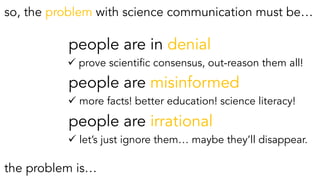






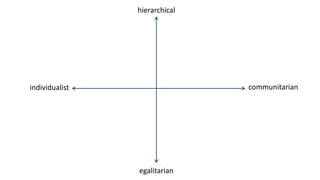











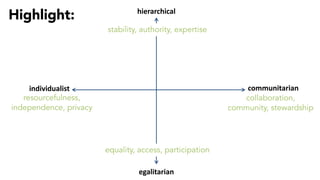


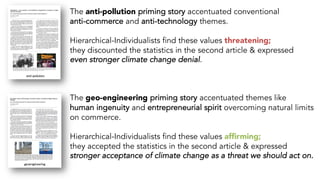



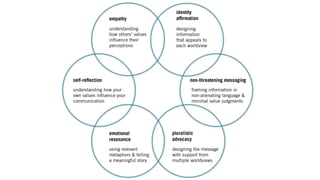


This document discusses effective science communication strategies for polarized audiences. It argues that simply providing more facts or claiming scientific consensus will not change attitudes that are shaped by cultural values. People process information through an identity-protective lens that aligns their views with their social groups. The document advocates for empathizing with different worldviews and framing messages in culturally affirming ways to avoid triggering resistance. It presents a case study showing that priming audiences with identity-affirming themes before scientific information can mitigate polarization. The key is designing communication that judges less and affirms diverse perspectives.


