Expertise, lay membership and the
politics of engagement


Alan Irwin
Phillips Report into BSE
(2000)
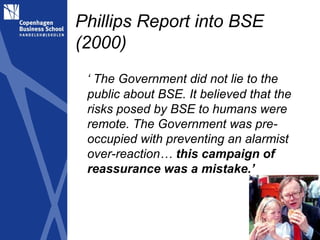
 ‘ The Government did not lie to the
 public about BSE. It believed that the
 risks posed by BSE to humans were
 remote. The Government was pre-
 occupied with preventing an alarmist
 over-reaction… this campaign of
 reassurance was a mistake.’
Openness and
     transparency

• ‘Openness requires recognition of uncertainty,
    where it exists’
•   ‘The public should be trusted to respond
    rationally to openness’
•   ‘Scientific investigation of risk should be open
    and transparent’
•   ‘Trust can only be generated by openness’
•   ‘The advice and reasoning of advisory
    committees should be made public’
                               Lord Phillips, 2000
Performing engagement
• Greater transparency and openness
• Public consultation exercises
• Consensus Conferences
• Science Shops
• Constructive Technology Assessment
• ’Lay’ membership on scientific advisory
  bodies
• Debate installations
• Large-scale public debates
• Upstream activities
GM Nation?
• Agriculture and Environment
  Biotechnology Commission as social
  innovation
• Public debate: 3rd June – 18th July,
  2003
• Focus groups, open meetings,
  interactive web site, closed groups ->
  steering board final report (September
  2003)
• 37,000 feedback forms, 2.9 million
  website hits, 600 meetings
• 41 in-depth telephone interviews
  with stakeholders
• 160 members of the public
• 4 regional groups, each with 40
  people
• 3 workshops per group
‘the U.K. experience was prolonged,
 costly, and cantankerous. It did not touch
 the broad mass of the public. It suffered
 from agenda manipulation and did not
 reach conclusions that were seen as
 clear-cut or legitimate. It informed
 policies, but it did not guide them.’

Walls, Rogers-Hayden, Mohr and O’Riordan, Environment. Sept
2005, p.29
Tom Wakeford and Jackie Haq, New
Scientist. June 23, 2010

  ’serious flaws…in the way the dialogue
  was commissioned and conducted’


• Commercial market-research
  approach
• Discussions held in private
• Scientific fear of the ’ignorant mob’
• Absence of real dialogue
Irwin, Elgaard Jensen and Jones, Social Studies of
Science 43(1) 2013: 118-135


  ’PES studies regularly conclude that the
  issues put to the publics are limited, that
  the actual involvement of the public is
  marginal and that institutional actors
  resist engagement by insisting that both
  science and innovation should remain
  unquestioned and beyond serious
  democratic control.’
Double Engagement
Impasse

• STS scholarship: ’case study
  followed by critical assessment’

• Policymakers: over-loaded
  expectations leading to frustration
  and marginalisation
Public engagement waza
•   Move One : contesting representativeness – who are these people to
    speak for ‘the public’?

•   Move Two: contesting communication and articulation – can participants
    articulate their views in a proper and meaningful manner?

•   Move Three: contesting impacts and outcomes – does the exercise lead
    to tangible and significant outcomes?

•   Move Four: Contesting democracy – is this engagement or legitimation?
•   Move One : contesting
    representativeness        ‘the U.K. experience was
                             prolonged, costly, and
                             cantankerous. It did not
•   Move Two: contesting     touch the broad mass of
    communication and        the public. It suffered
    articulation             from agenda
                             manipulation and did not
•   Move Three: contesting   reach conclusions that
    impacts and outcomes     were seen as clear-cut or
                             legitimate. It informed
•                            policies, but it did not
    Move Four: Contesting
                             guide them.’
    democracy
Irwin, Elgaard Jensen and Jones (2013)

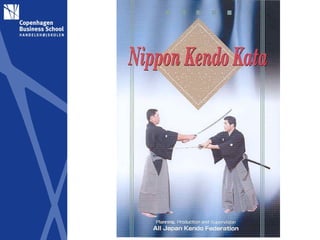
  ‘ PES proponents and their critics do not engage in
  kendo kata, and yet we find it plausible that their form of
  adversarial interaction contains some of the same
  aspects: a bounded pattern of critical moves, certain
  opportunities to anticipate criticism and characteristic
  sequences that arise out of the interaction between the
  opponents as they attempt to counter one another’s
  moves.’
Lay membership on Scientific
Advisory Committees (GB)
’Lay members can make the work of SACs
more transparent and aware of the social and
policy issues surrounding their work. Lay
members can provide some common sense.
Where committees get into really esoteric
things that are frightfully interesting, but maybe
have no real relevance to the great majority of
people in so far as they are affected, then there
is a role to play there.’
’ There’s a danger then of having fourteen non-
  representational people who were there to
  communicate the science and only one
  representational person who is there to
  represent the general public.’
‘Everybody brings to this committee baggage. If
you’re here long enough you will soon see
some assumptions coming out of some people
fairly consistently. Some members are overtly
conservative for example.’
‘I do think that there might be a, a kind of
fundamental problem here which is if the political
establishment is interested in having lay people
on scientific committees, then their interest in
doing that is presumably grounded upon the idea
that they should be representative. This actually
goes against the fundamental principles of any
SAC – that people are not representative apart
from representing their disciplines as it were; that
they’re bringing their expertise.’
• Not all moves carry equal weight
• Not claiming a complete typology
• Challenging notion that engagement
  leads inevitably to consensus
• Drawing attention to the disagreement
  and critique that is often a key
  constituent of action
• Discussion following discursively-familiar
  tracks (cf ’closing down’, Andy Stirling: ’rationality or
  ritual’, Brian Wynne)
Expertise, lay membership and the
politics of engagement

• Engagement as an over-burdened
  activity (asking too much)
• Significance of contextual sense-
  making
• Institutional insularity
• ’Waza’ are relatively content-free
• Are PES scholars following old
  tracks or scouting new routes?

Alan Irwin, Copenhagen Business School - #steps13

  • 1.
    Expertise, lay membershipand the politics of engagement Alan Irwin
  • 2.
    Phillips Report intoBSE (2000) ‘ The Government did not lie to the public about BSE. It believed that the risks posed by BSE to humans were remote. The Government was pre- occupied with preventing an alarmist over-reaction… this campaign of reassurance was a mistake.’
  • 3.
    Openness and transparency • ‘Openness requires recognition of uncertainty, where it exists’ • ‘The public should be trusted to respond rationally to openness’ • ‘Scientific investigation of risk should be open and transparent’ • ‘Trust can only be generated by openness’ • ‘The advice and reasoning of advisory committees should be made public’ Lord Phillips, 2000
  • 4.
    Performing engagement • Greatertransparency and openness • Public consultation exercises • Consensus Conferences • Science Shops • Constructive Technology Assessment • ’Lay’ membership on scientific advisory bodies • Debate installations • Large-scale public debates • Upstream activities
  • 5.
    GM Nation? • Agricultureand Environment Biotechnology Commission as social innovation • Public debate: 3rd June – 18th July, 2003 • Focus groups, open meetings, interactive web site, closed groups -> steering board final report (September 2003) • 37,000 feedback forms, 2.9 million website hits, 600 meetings
  • 6.
    • 41 in-depthtelephone interviews with stakeholders • 160 members of the public • 4 regional groups, each with 40 people • 3 workshops per group
  • 7.
    ‘the U.K. experiencewas prolonged, costly, and cantankerous. It did not touch the broad mass of the public. It suffered from agenda manipulation and did not reach conclusions that were seen as clear-cut or legitimate. It informed policies, but it did not guide them.’ Walls, Rogers-Hayden, Mohr and O’Riordan, Environment. Sept 2005, p.29
  • 8.
    Tom Wakeford andJackie Haq, New Scientist. June 23, 2010 ’serious flaws…in the way the dialogue was commissioned and conducted’ • Commercial market-research approach • Discussions held in private • Scientific fear of the ’ignorant mob’ • Absence of real dialogue
  • 9.
    Irwin, Elgaard Jensenand Jones, Social Studies of Science 43(1) 2013: 118-135 ’PES studies regularly conclude that the issues put to the publics are limited, that the actual involvement of the public is marginal and that institutional actors resist engagement by insisting that both science and innovation should remain unquestioned and beyond serious democratic control.’
  • 10.
    Double Engagement Impasse • STSscholarship: ’case study followed by critical assessment’ • Policymakers: over-loaded expectations leading to frustration and marginalisation
  • 12.
    Public engagement waza • Move One : contesting representativeness – who are these people to speak for ‘the public’? • Move Two: contesting communication and articulation – can participants articulate their views in a proper and meaningful manner? • Move Three: contesting impacts and outcomes – does the exercise lead to tangible and significant outcomes? • Move Four: Contesting democracy – is this engagement or legitimation?
  • 13.
    Move One : contesting representativeness ‘the U.K. experience was prolonged, costly, and cantankerous. It did not • Move Two: contesting touch the broad mass of communication and the public. It suffered articulation from agenda manipulation and did not • Move Three: contesting reach conclusions that impacts and outcomes were seen as clear-cut or legitimate. It informed • policies, but it did not Move Four: Contesting guide them.’ democracy
  • 14.
    Irwin, Elgaard Jensenand Jones (2013) ‘ PES proponents and their critics do not engage in kendo kata, and yet we find it plausible that their form of adversarial interaction contains some of the same aspects: a bounded pattern of critical moves, certain opportunities to anticipate criticism and characteristic sequences that arise out of the interaction between the opponents as they attempt to counter one another’s moves.’
  • 15.
    Lay membership onScientific Advisory Committees (GB)
  • 16.
    ’Lay members canmake the work of SACs more transparent and aware of the social and policy issues surrounding their work. Lay members can provide some common sense. Where committees get into really esoteric things that are frightfully interesting, but maybe have no real relevance to the great majority of people in so far as they are affected, then there is a role to play there.’
  • 17.
    ’ There’s adanger then of having fourteen non- representational people who were there to communicate the science and only one representational person who is there to represent the general public.’
  • 18.
    ‘Everybody brings tothis committee baggage. If you’re here long enough you will soon see some assumptions coming out of some people fairly consistently. Some members are overtly conservative for example.’
  • 19.
    ‘I do thinkthat there might be a, a kind of fundamental problem here which is if the political establishment is interested in having lay people on scientific committees, then their interest in doing that is presumably grounded upon the idea that they should be representative. This actually goes against the fundamental principles of any SAC – that people are not representative apart from representing their disciplines as it were; that they’re bringing their expertise.’
  • 20.
    • Not allmoves carry equal weight • Not claiming a complete typology • Challenging notion that engagement leads inevitably to consensus • Drawing attention to the disagreement and critique that is often a key constituent of action • Discussion following discursively-familiar tracks (cf ’closing down’, Andy Stirling: ’rationality or ritual’, Brian Wynne)
  • 21.
    Expertise, lay membershipand the politics of engagement • Engagement as an over-burdened activity (asking too much) • Significance of contextual sense- making • Institutional insularity • ’Waza’ are relatively content-free • Are PES scholars following old tracks or scouting new routes?