V. Rajaratnam (VR), A. Kaur (AK), J. Kovilpillai (JK), F Raza(FR).
DESIGN, DEVELOPMENT, AND VALIDATION OF AN
AI-POWERED ACADEMIC WRITING MODULE:
AN E-CONTENT APPROACH
VR - Senior Consultant Hand Surgeon, KTPH , Adjunct Professor, Innovative Digital Learning, APU
AK – Professor, Innovative Digital Learning, APU
JK - Program Manager, APU
FR – Doctoral Research Fellow, APU
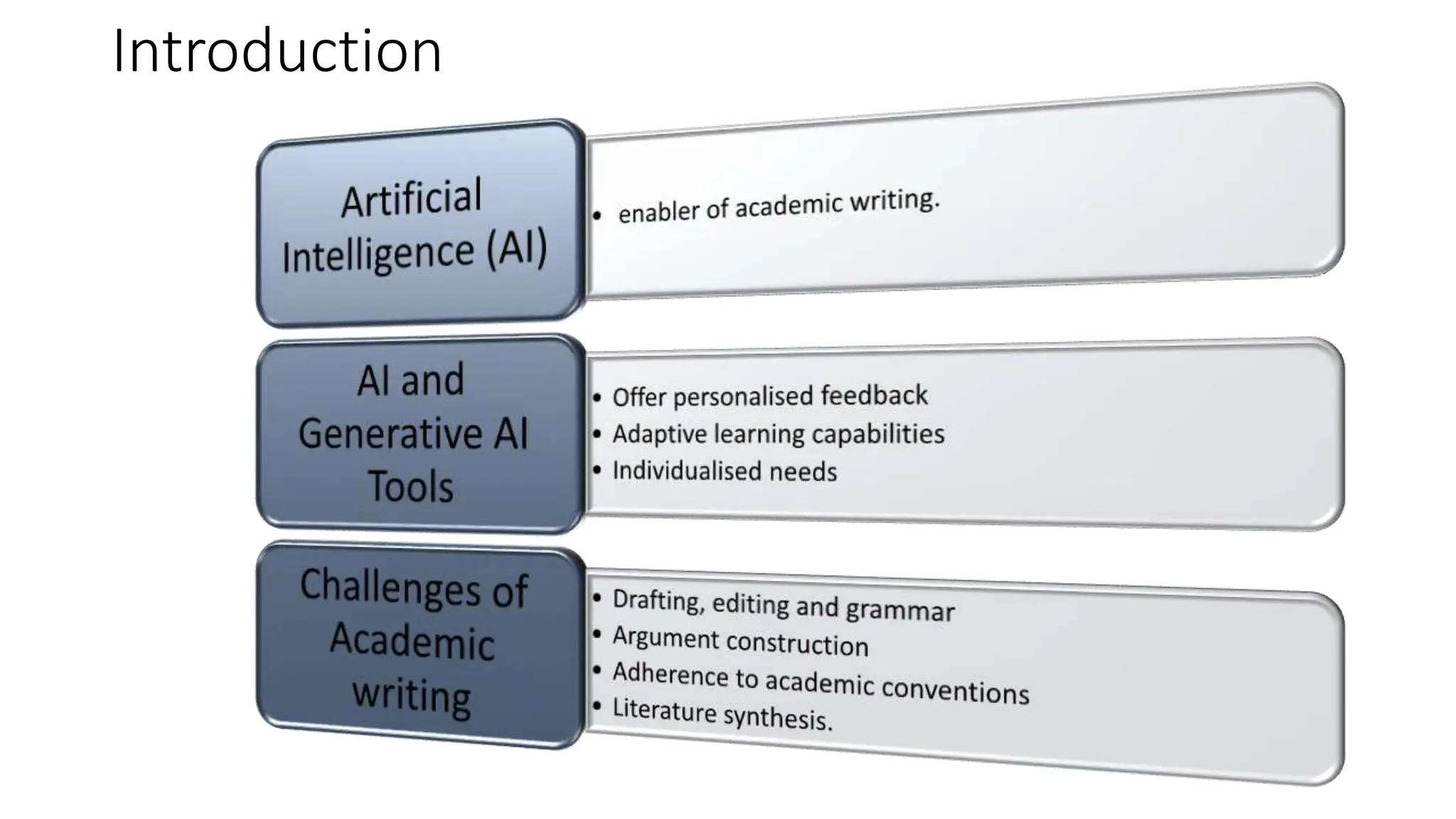
Introduction
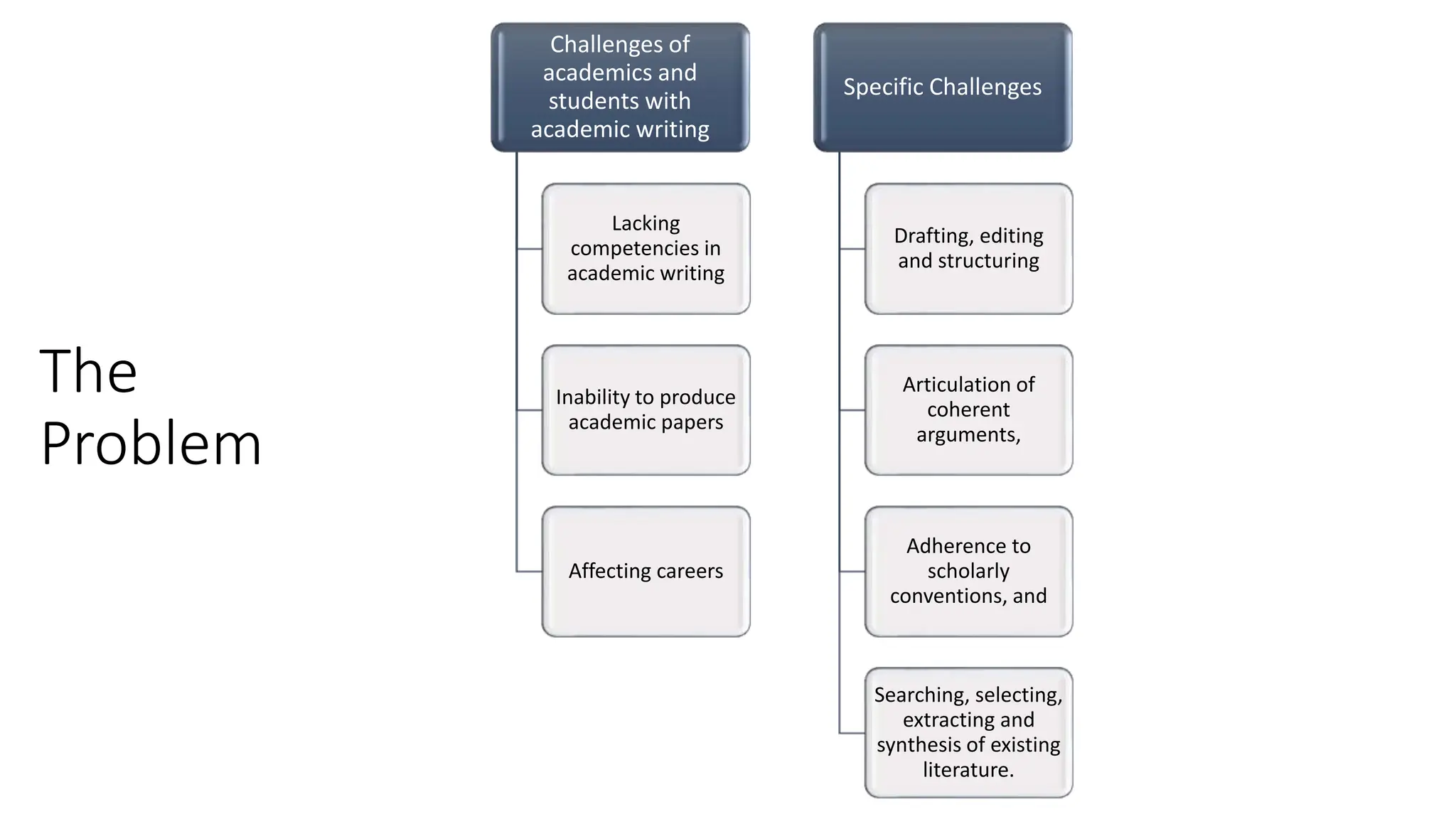
The
Problem
Challenges of
academics and
students with
academic writing
Lacking
competencies in
academic writing
Inability to produce
academic papers
Affecting careers
Specific Challenges
Drafting, editing
and structuring
Articulation of
coherent
arguments,
Adherence to
scholarly
conventions, and
Searching, selecting,
extracting and
synthesis of existing
literature.
Methodology
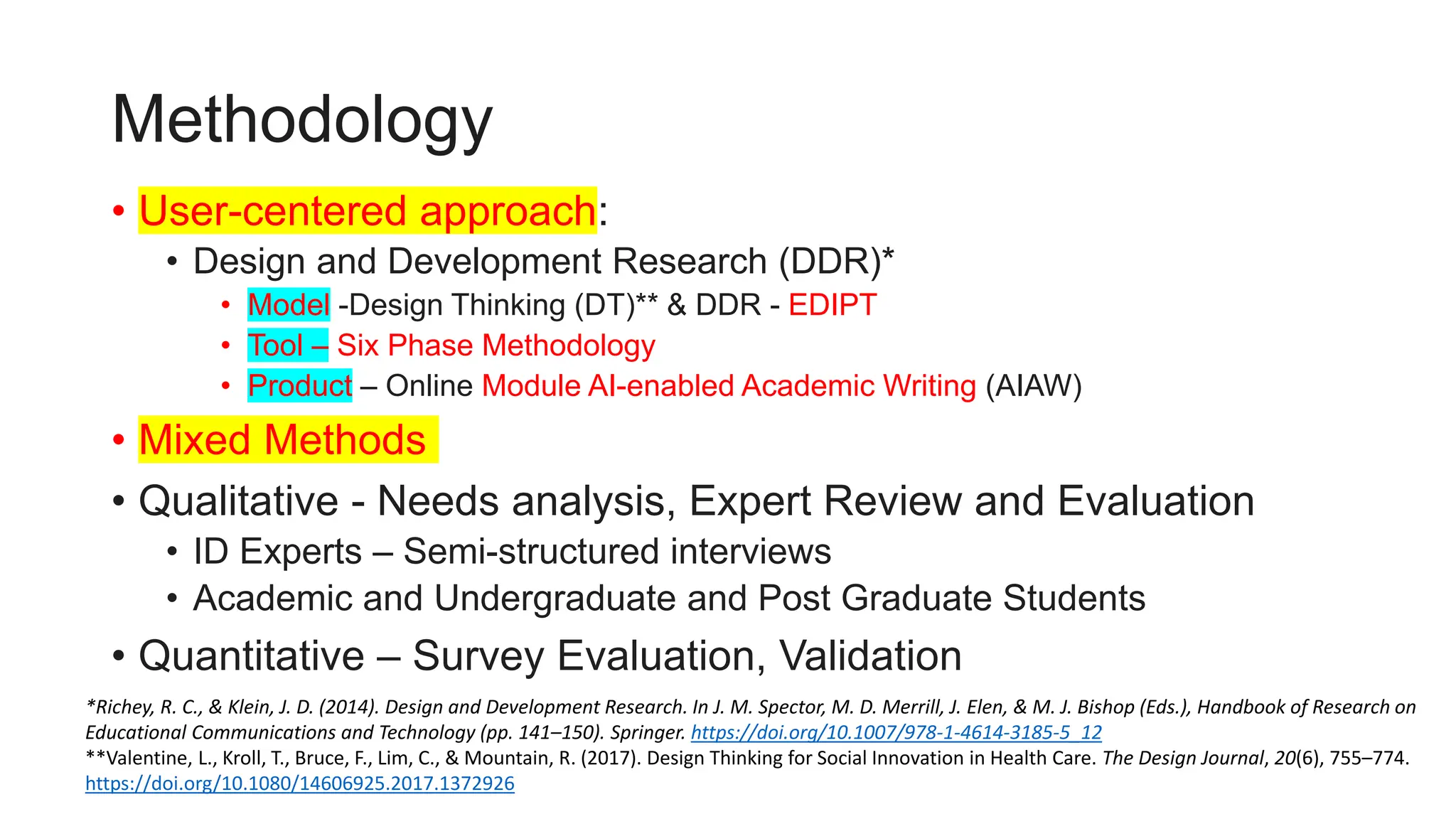
• User-centered approach:
• Design and Development Research (DDR)*
• Model -Design Thinking (DT)** & DDR - EDIPT
• Tool – Six Phase Methodology
• Product – Online Module AI-enabled Academic Writing (AIAW)
• Mixed Methods
• Qualitative - Needs analysis, Expert Review and Evaluation
• ID Experts – Semi-structured interviews
• Academic and Undergraduate and Post Graduate Students
• Quantitative – Survey Evaluation, Validation
*Richey, R. C., & Klein, J. D. (2014). Design and Development Research. In J. M. Spector, M. D. Merrill, J. Elen, & M. J. Bishop (Eds.), Handbook of Research on
Educational Communications and Technology (pp. 141–150). Springer. https://doi.org/10.1007/978-1-4614-3185-5_12
**Valentine, L., Kroll, T., Bruce, F., Lim, C., & Mountain, R. (2017). Design Thinking for Social Innovation in Health Care. The Design Journal, 20(6), 755–774.
https://doi.org/10.1080/14606925.2017.1372926
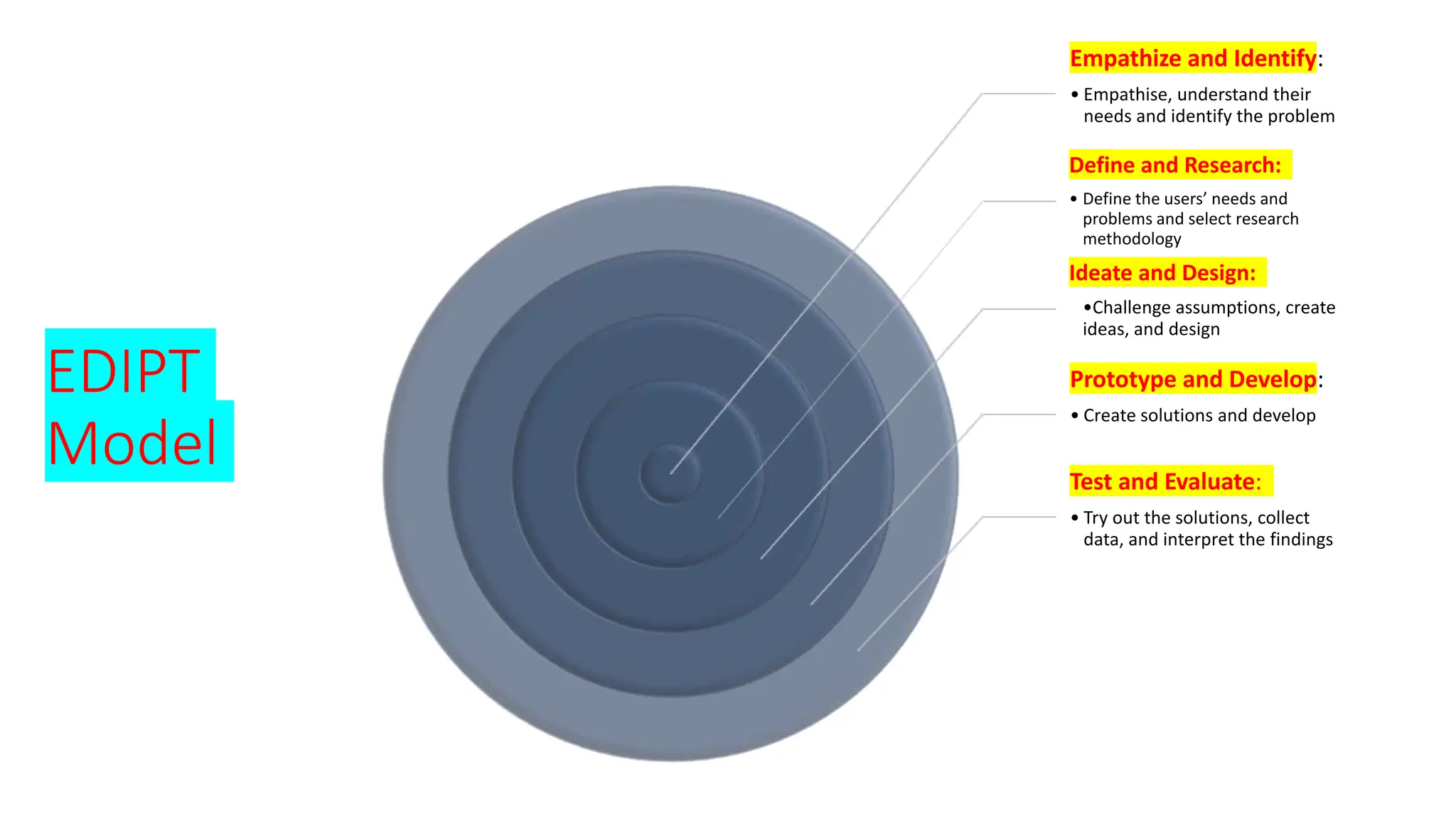
EDIPT
Model
Empathize and Identify:
• Empathise, understand their
needs and identify the problem
Define and Research:
• Define the users’ needs and
problems and select research
methodology
Ideate and Design:
•Challenge assumptions, create
ideas, and design
Prototype and Develop:
• Create solutions and develop
Test and Evaluate:
• Try out the solutions, collect
data, and interpret the findings
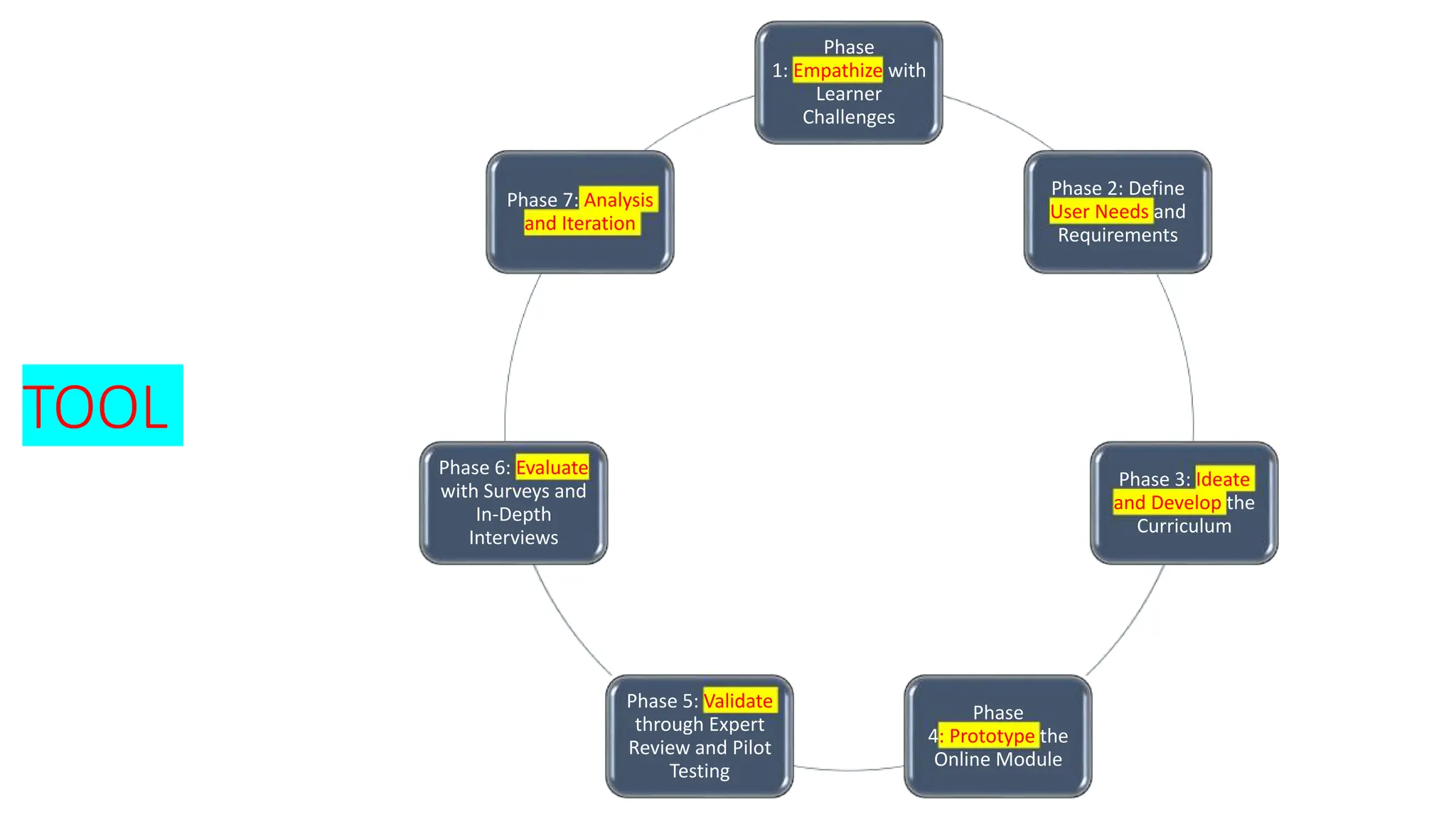
TOOL
Phase
1: Empathize with
Learner
Challenges
Phase 2: Define
User Needs and
Requirements
Phase 3: Ideate
and Develop the
Curriculum
Phase
4: Prototype the
Online Module
Phase 5: Validate
through Expert
Review and Pilot
Testing
Phase 6: Evaluate
with Surveys and
In-Depth
Interviews
Phase 7: Analysis
and Iteration
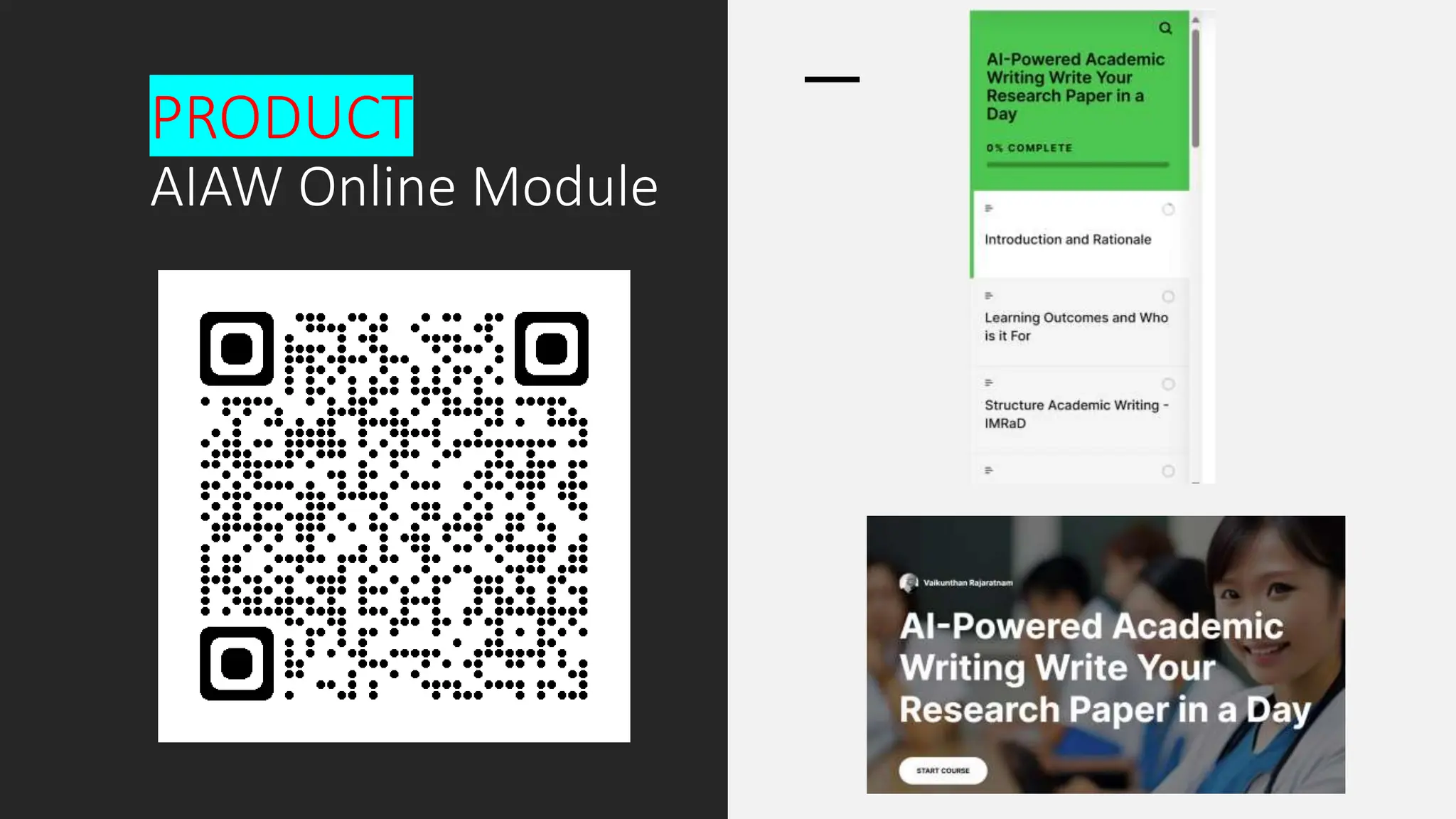
PRODUCT
AIAW Online Module
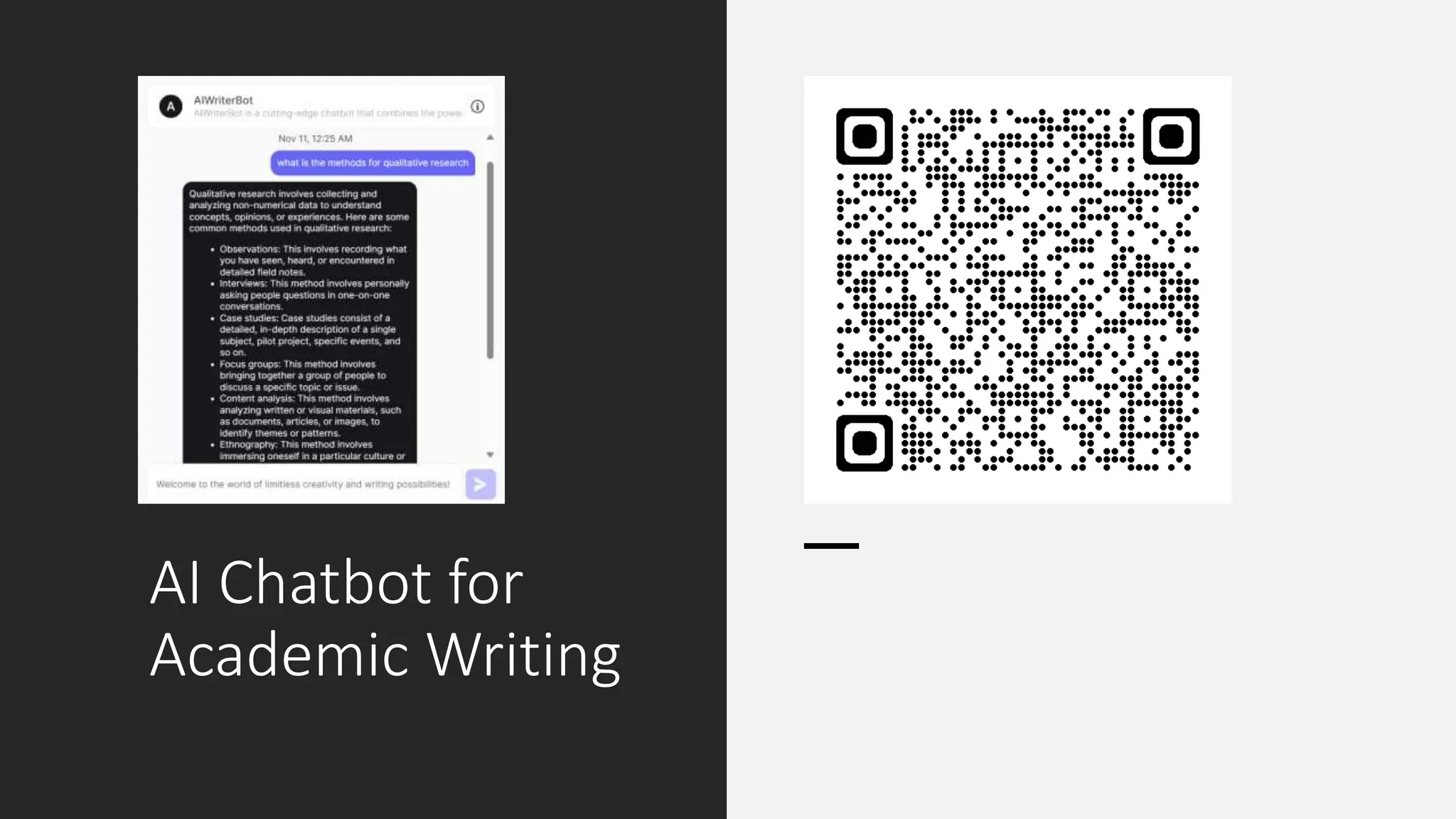
AI Chatbot for
Academic Writing
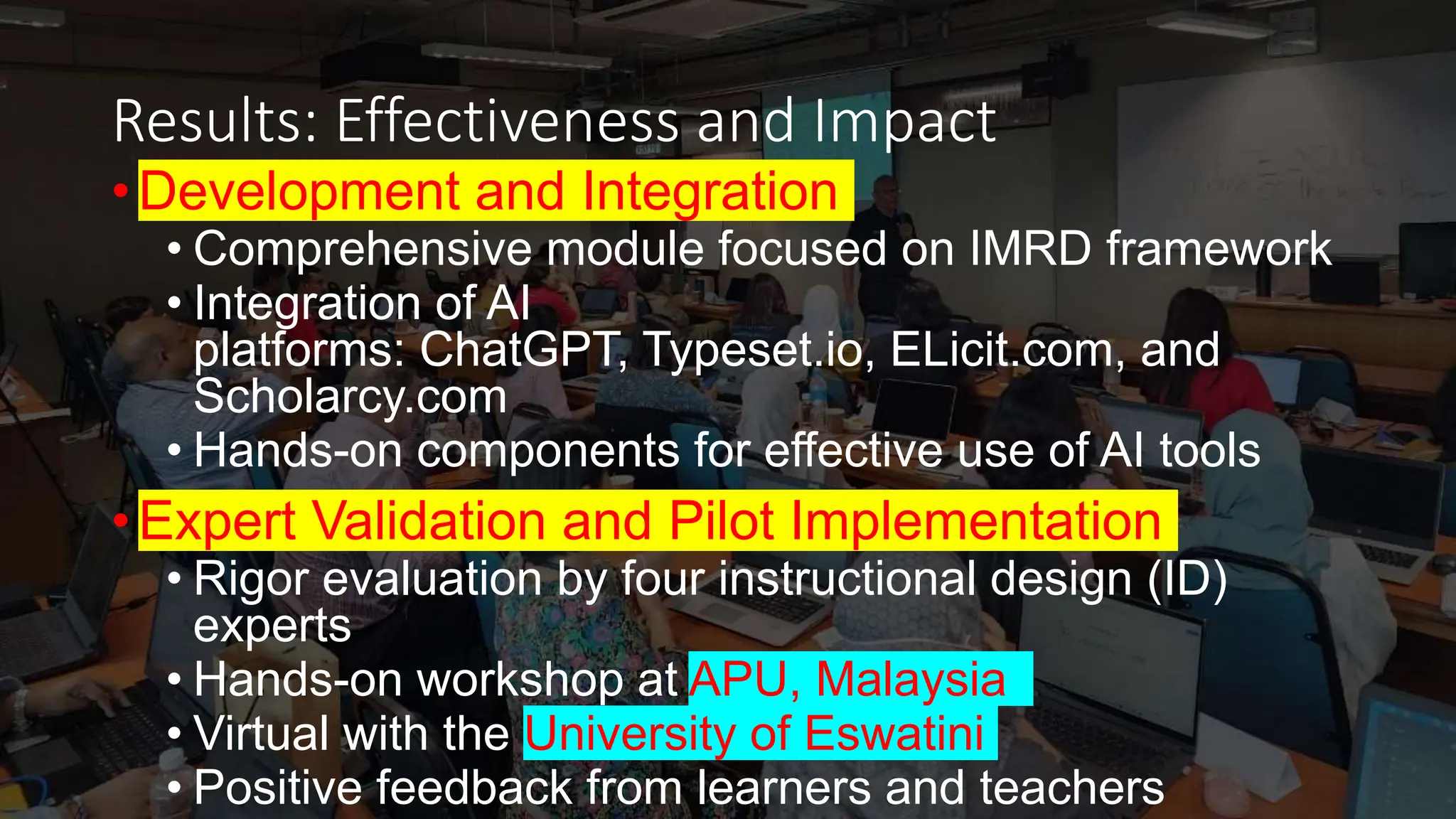
Results: Effectiveness and Impact
• Development and Integration
• Comprehensive module focused on IMRD framework
• Integration of AI
platforms: ChatGPT, Typeset.io, ELicit.com, and
Scholarcy.com
• Hands-on components for effective use of AI tools
• Expert Validation and Pilot Implementation
• Rigor evaluation by four instructional design (ID)
experts
• Hands-on workshop at APU, Malaysia
• Virtual with the University of Eswatini
• Positive feedback from learners and teachers
Analysis
• Quantitative and qualitative methods:
• Survey: Writing skills
• Semi structured interviews: User experiences and feedback
• Data analysis: Module's effectiveness and insights for
refinement
• Themes from qualitative feedback: Categorized and quantified
for future iterations
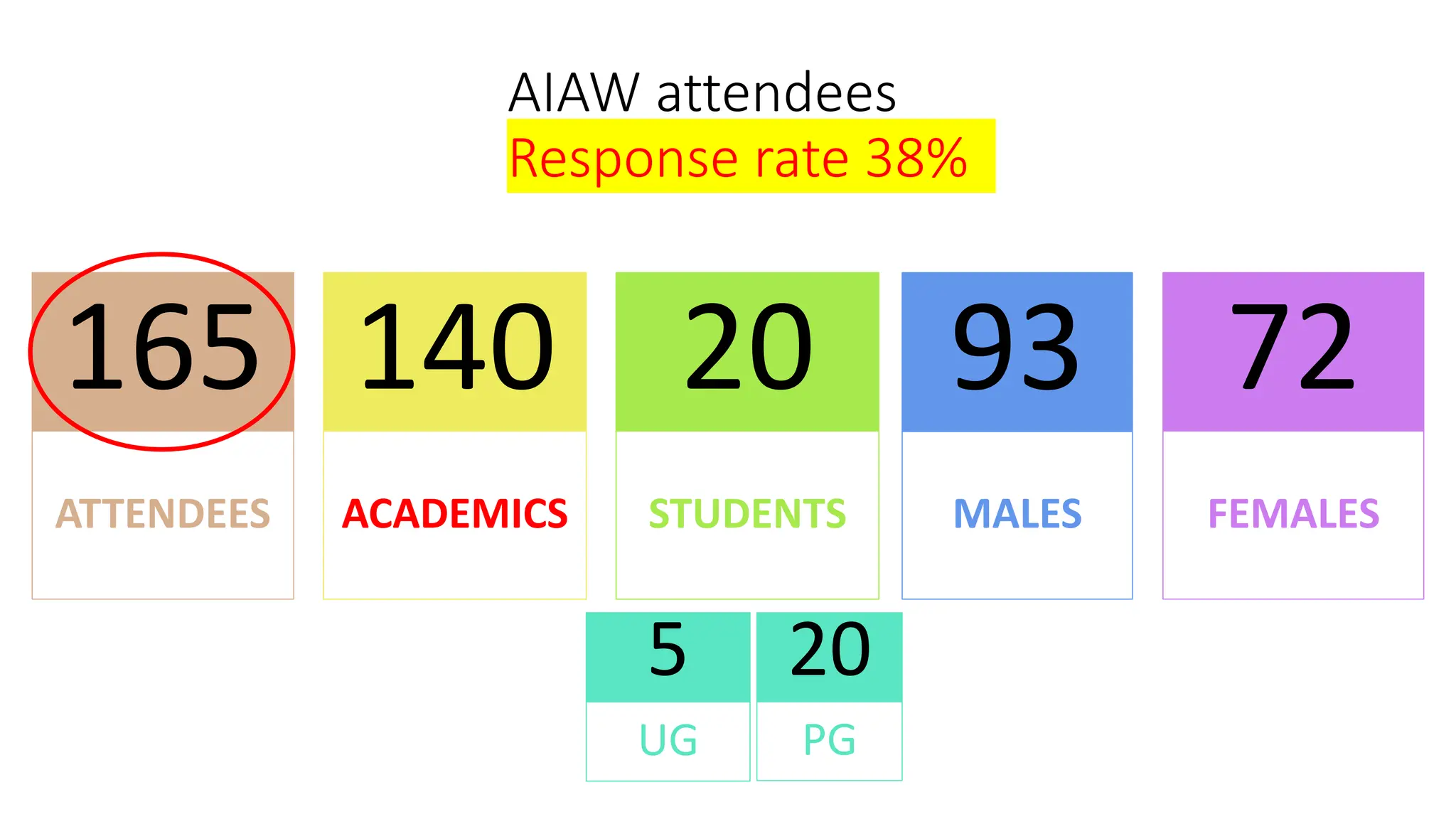
AIAW attendees
Response rate 38%
165
ATTENDEES
140
ACADEMICS
20
STUDENTS
5
UG
93
MALES
72
FEMALES
20
PG
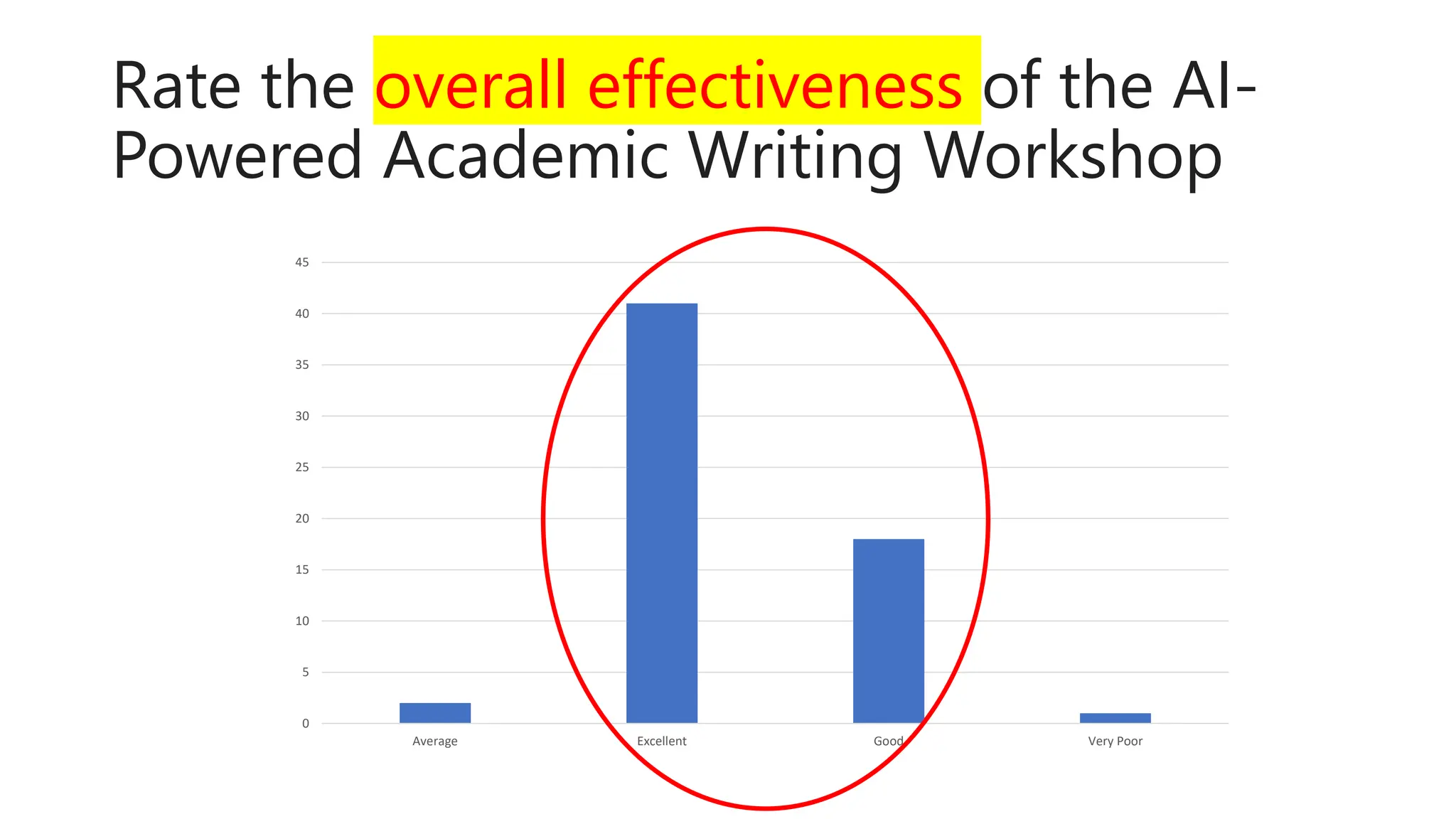
Rate the overall effectiveness of the AI-
Powered Academic Writing Workshop
0
5
10
15
20
25
30
35
40
45
Average Excellent Good Very Poor
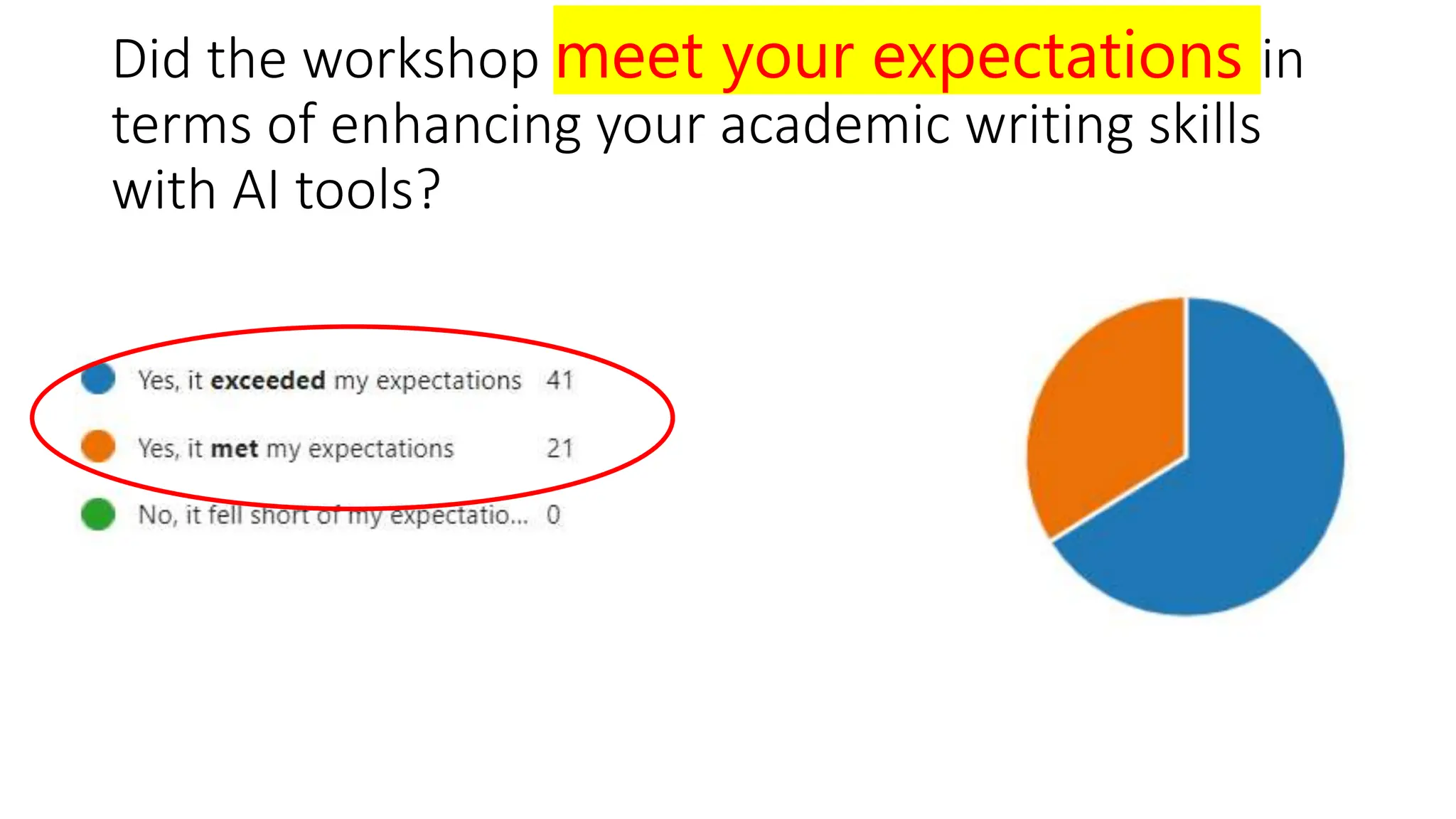
Did the workshop meet your expectations in
terms of enhancing your academic writing skills
with AI tools?
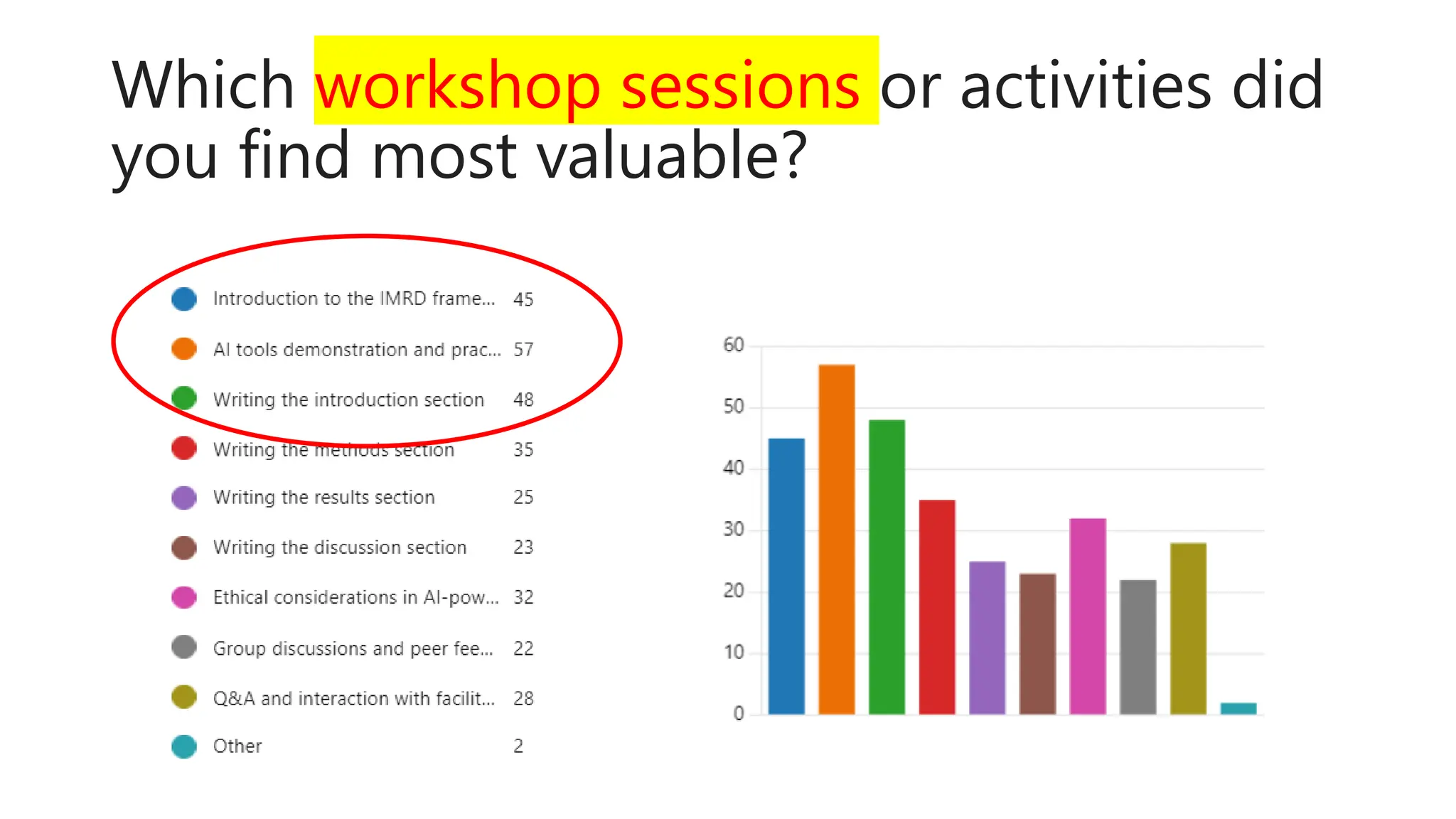
Which workshop sessions or activities did
you find most valuable?
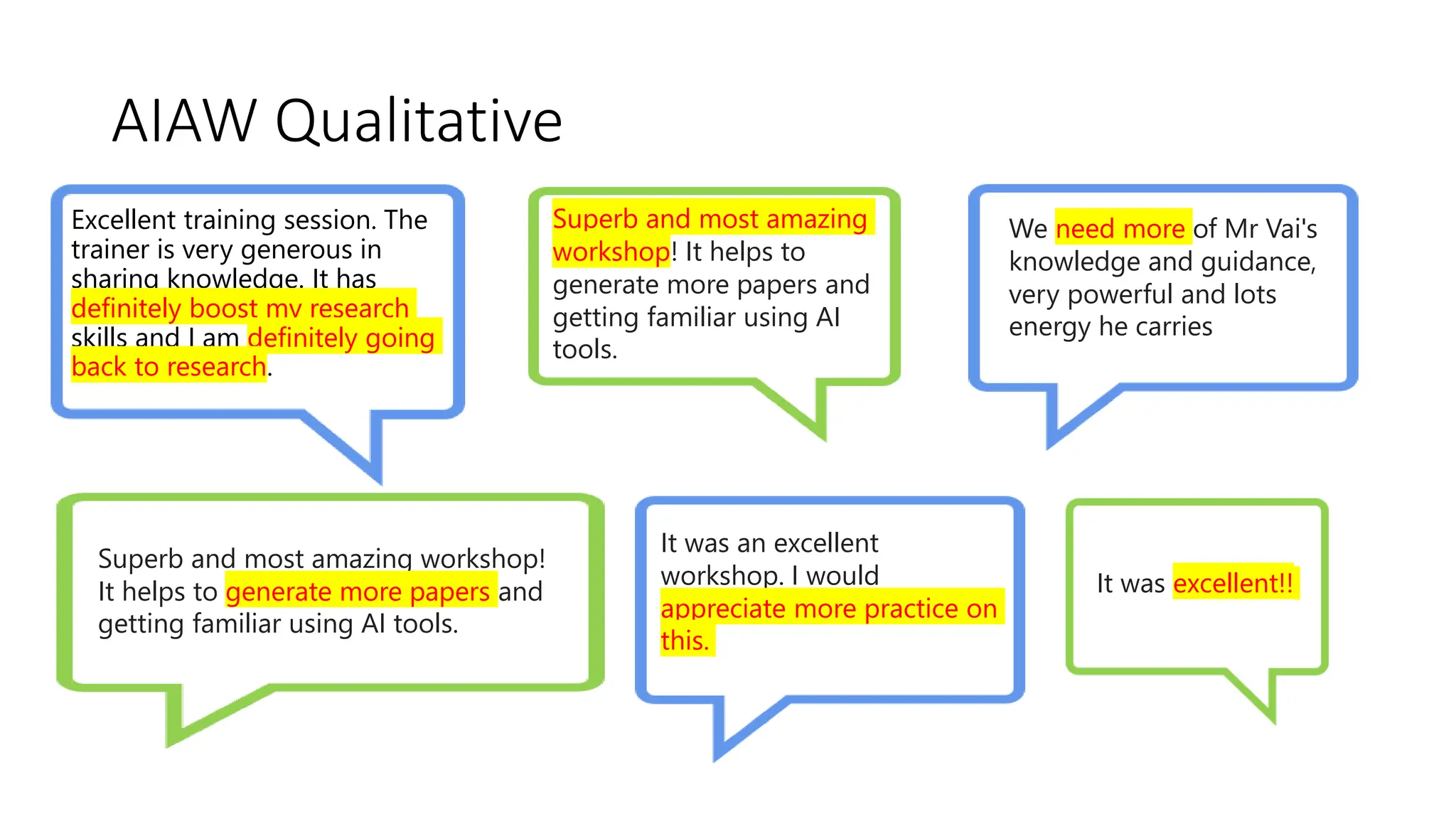
AIAW Qualitative
Excellent training session. The
trainer is very generous in
sharing knowledge. It has
definitely boost my research
skills and I am definitely going
back to research.
We need more of Mr Vai's
knowledge and guidance,
very powerful and lots
energy he carries
Superb and most amazing workshop!
It helps to generate more papers and
getting familiar using AI tools.
It was excellent!!
It was an excellent
workshop. I would
appreciate more practice on
this.
Superb and most amazing
workshop! It helps to
generate more papers and
getting familiar using AI
tools.
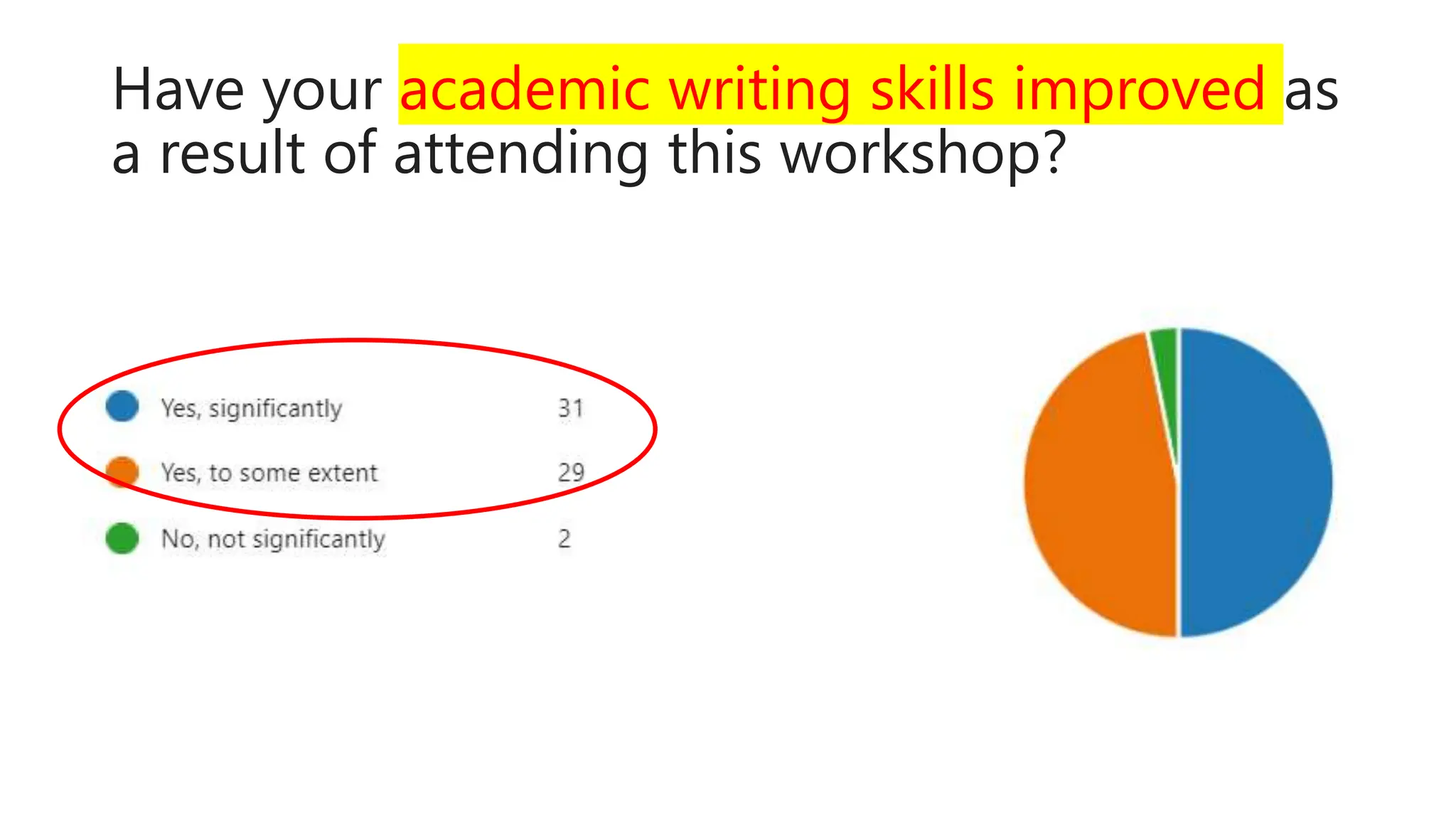
Have your academic writing skills improved as
a result of attending this workshop?
Key Findings
•Enhanced understanding of IMRD framework
•Improved writing skills and confidence
•Time savings with AI assistance
•Change in perception of AI in education
Discussion
• Module Validation and Implementation
• Successful validation through the DDR framework and
participant feedback
• Strategic incorporation of Generative AI tools
• Conversion into SCORM-compliant format and OER
(RISE 360)
• Chatbot Integration for Support
• Real-time, universal, and accessible support for learners
• Virtual assistant for addressing queries and fostering an
interactive learning environment
• Crucial for self-directed learners and those with limited
access to direct instructional support
Limitations
and Future
Directions
• Limited implementation at two
institutions, requiring broader application
• Sustainability and long-term impact of
acquired skills warrant longitudinal research
• Chatbot effectiveness and integration require
further investigation
• Further Research
• Adaptability and efficacy across different cultures
and educational frameworks
• Extending AI integration to areas beyond academic
writing
• Expanding AI toolset to include emerging
technologies
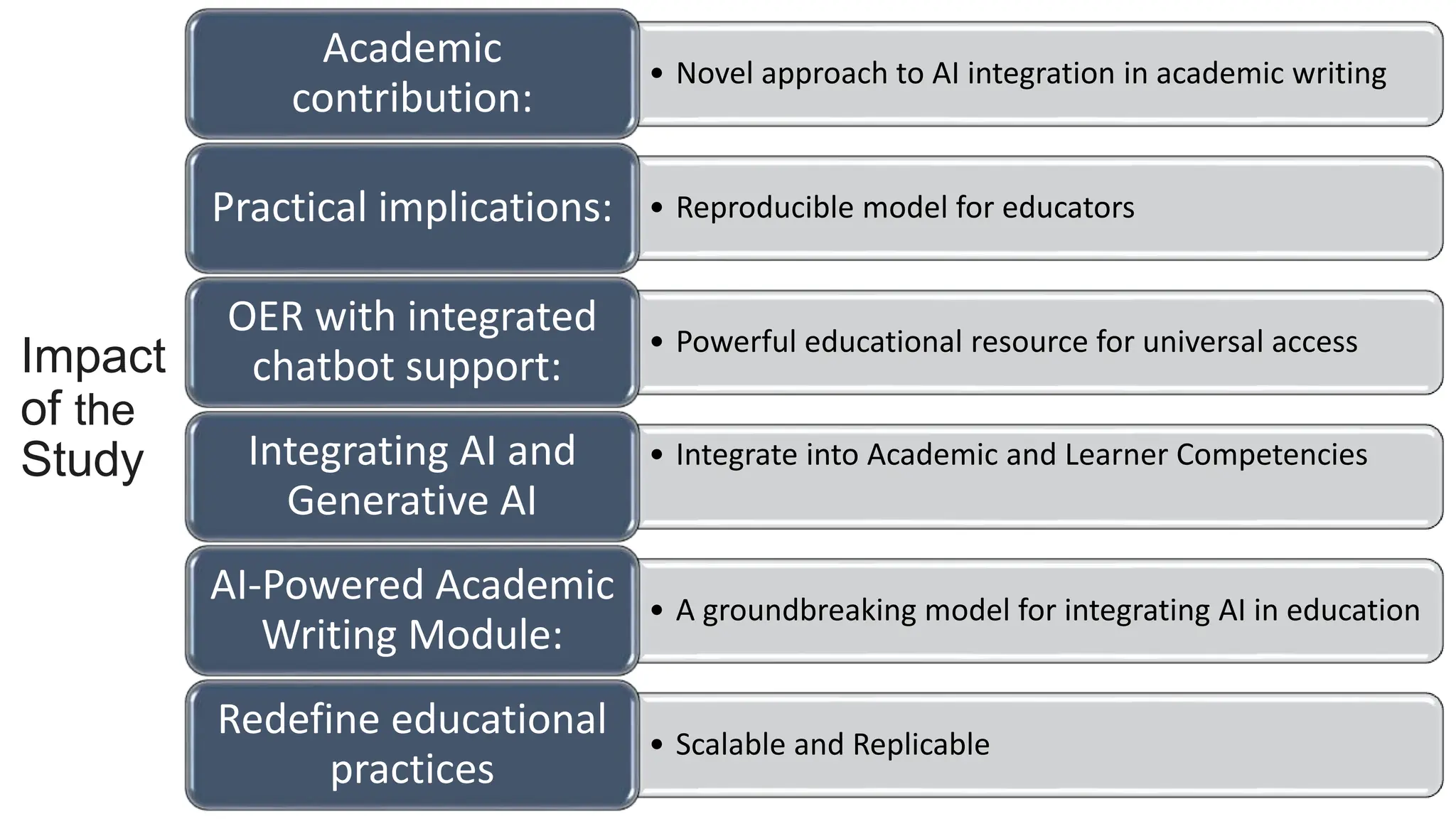
Impact
of the
Study
• Novel approach to AI integration in academic writing
Academic
contribution:
• Reproducible model for educators
Practical implications:
• Powerful educational resource for universal access
OER with integrated
chatbot support:
• Integrate into Academic and Learner Competencies
Integrating AI and
Generative AI
• A groundbreaking model for integrating AI in education
AI-Powered Academic
Writing Module:
• Scalable and Replicable
Redefine educational
practices

Design, Development and Delivery of an AI empowered Academic Writing e leanring module

  • 1.
    V. Rajaratnam (VR),A. Kaur (AK), J. Kovilpillai (JK), F Raza(FR). DESIGN, DEVELOPMENT, AND VALIDATION OF AN AI-POWERED ACADEMIC WRITING MODULE: AN E-CONTENT APPROACH VR - Senior Consultant Hand Surgeon, KTPH , Adjunct Professor, Innovative Digital Learning, APU AK – Professor, Innovative Digital Learning, APU JK - Program Manager, APU FR – Doctoral Research Fellow, APU
  • 2.
  • 3.
    The Problem Challenges of academics and studentswith academic writing Lacking competencies in academic writing Inability to produce academic papers Affecting careers Specific Challenges Drafting, editing and structuring Articulation of coherent arguments, Adherence to scholarly conventions, and Searching, selecting, extracting and synthesis of existing literature.
  • 4.
    Methodology • User-centered approach: •Design and Development Research (DDR)* • Model -Design Thinking (DT)** & DDR - EDIPT • Tool – Six Phase Methodology • Product – Online Module AI-enabled Academic Writing (AIAW) • Mixed Methods • Qualitative - Needs analysis, Expert Review and Evaluation • ID Experts – Semi-structured interviews • Academic and Undergraduate and Post Graduate Students • Quantitative – Survey Evaluation, Validation *Richey, R. C., & Klein, J. D. (2014). Design and Development Research. In J. M. Spector, M. D. Merrill, J. Elen, & M. J. Bishop (Eds.), Handbook of Research on Educational Communications and Technology (pp. 141–150). Springer. https://doi.org/10.1007/978-1-4614-3185-5_12 **Valentine, L., Kroll, T., Bruce, F., Lim, C., & Mountain, R. (2017). Design Thinking for Social Innovation in Health Care. The Design Journal, 20(6), 755–774. https://doi.org/10.1080/14606925.2017.1372926
  • 5.
    EDIPT Model Empathize and Identify: •Empathise, understand their needs and identify the problem Define and Research: • Define the users’ needs and problems and select research methodology Ideate and Design: •Challenge assumptions, create ideas, and design Prototype and Develop: • Create solutions and develop Test and Evaluate: • Try out the solutions, collect data, and interpret the findings
  • 6.
    TOOL Phase 1: Empathize with Learner Challenges Phase2: Define User Needs and Requirements Phase 3: Ideate and Develop the Curriculum Phase 4: Prototype the Online Module Phase 5: Validate through Expert Review and Pilot Testing Phase 6: Evaluate with Surveys and In-Depth Interviews Phase 7: Analysis and Iteration
  • 7.
  • 8.
  • 9.
    Results: Effectiveness andImpact • Development and Integration • Comprehensive module focused on IMRD framework • Integration of AI platforms: ChatGPT, Typeset.io, ELicit.com, and Scholarcy.com • Hands-on components for effective use of AI tools • Expert Validation and Pilot Implementation • Rigor evaluation by four instructional design (ID) experts • Hands-on workshop at APU, Malaysia • Virtual with the University of Eswatini • Positive feedback from learners and teachers
  • 10.
    Analysis • Quantitative andqualitative methods: • Survey: Writing skills • Semi structured interviews: User experiences and feedback • Data analysis: Module's effectiveness and insights for refinement • Themes from qualitative feedback: Categorized and quantified for future iterations
  • 11.
    AIAW attendees Response rate38% 165 ATTENDEES 140 ACADEMICS 20 STUDENTS 5 UG 93 MALES 72 FEMALES 20 PG
  • 12.
    Rate the overalleffectiveness of the AI- Powered Academic Writing Workshop 0 5 10 15 20 25 30 35 40 45 Average Excellent Good Very Poor
  • 13.
    Did the workshopmeet your expectations in terms of enhancing your academic writing skills with AI tools?
  • 14.
    Which workshop sessionsor activities did you find most valuable?
  • 15.
    AIAW Qualitative Excellent trainingsession. The trainer is very generous in sharing knowledge. It has definitely boost my research skills and I am definitely going back to research. We need more of Mr Vai's knowledge and guidance, very powerful and lots energy he carries Superb and most amazing workshop! It helps to generate more papers and getting familiar using AI tools. It was excellent!! It was an excellent workshop. I would appreciate more practice on this. Superb and most amazing workshop! It helps to generate more papers and getting familiar using AI tools.
  • 16.
    Have your academicwriting skills improved as a result of attending this workshop?
  • 17.
    Key Findings •Enhanced understandingof IMRD framework •Improved writing skills and confidence •Time savings with AI assistance •Change in perception of AI in education
  • 18.
    Discussion • Module Validationand Implementation • Successful validation through the DDR framework and participant feedback • Strategic incorporation of Generative AI tools • Conversion into SCORM-compliant format and OER (RISE 360) • Chatbot Integration for Support • Real-time, universal, and accessible support for learners • Virtual assistant for addressing queries and fostering an interactive learning environment • Crucial for self-directed learners and those with limited access to direct instructional support
  • 19.
    Limitations and Future Directions • Limitedimplementation at two institutions, requiring broader application • Sustainability and long-term impact of acquired skills warrant longitudinal research • Chatbot effectiveness and integration require further investigation • Further Research • Adaptability and efficacy across different cultures and educational frameworks • Extending AI integration to areas beyond academic writing • Expanding AI toolset to include emerging technologies
  • 20.
    Impact of the Study • Novelapproach to AI integration in academic writing Academic contribution: • Reproducible model for educators Practical implications: • Powerful educational resource for universal access OER with integrated chatbot support: • Integrate into Academic and Learner Competencies Integrating AI and Generative AI • A groundbreaking model for integrating AI in education AI-Powered Academic Writing Module: • Scalable and Replicable Redefine educational practices