DESIGN AND OPTIMIZATION OF
DOSAGE REGIMEN
By
Dr. Faraza Javaid
Dosage Regimen
 To initiate drug therapy a dosage regimen is
administered either by continuous infusion or in
intervals of time and dose
 The regimen depends on various drug and patient
factors including how rapidly a steady state must
be achieved.
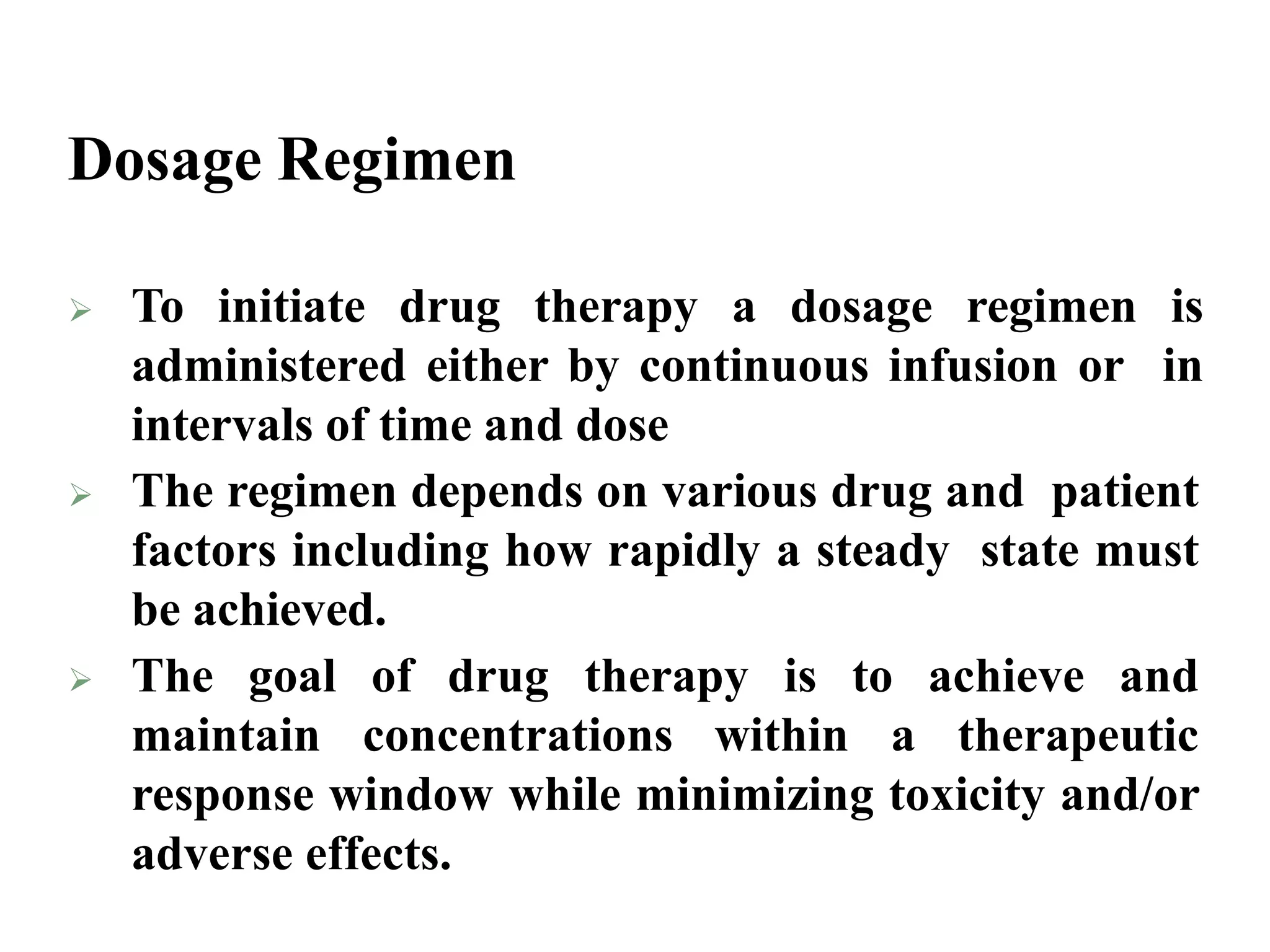
 The goal of drug therapy is to achieve and
maintain concentrations within a therapeutic
response window while minimizing toxicity and/or
adverse effects.
Steady State Concentration
The concentration around which the drug
concentration consistently stays is known as the
steady-state concentration.
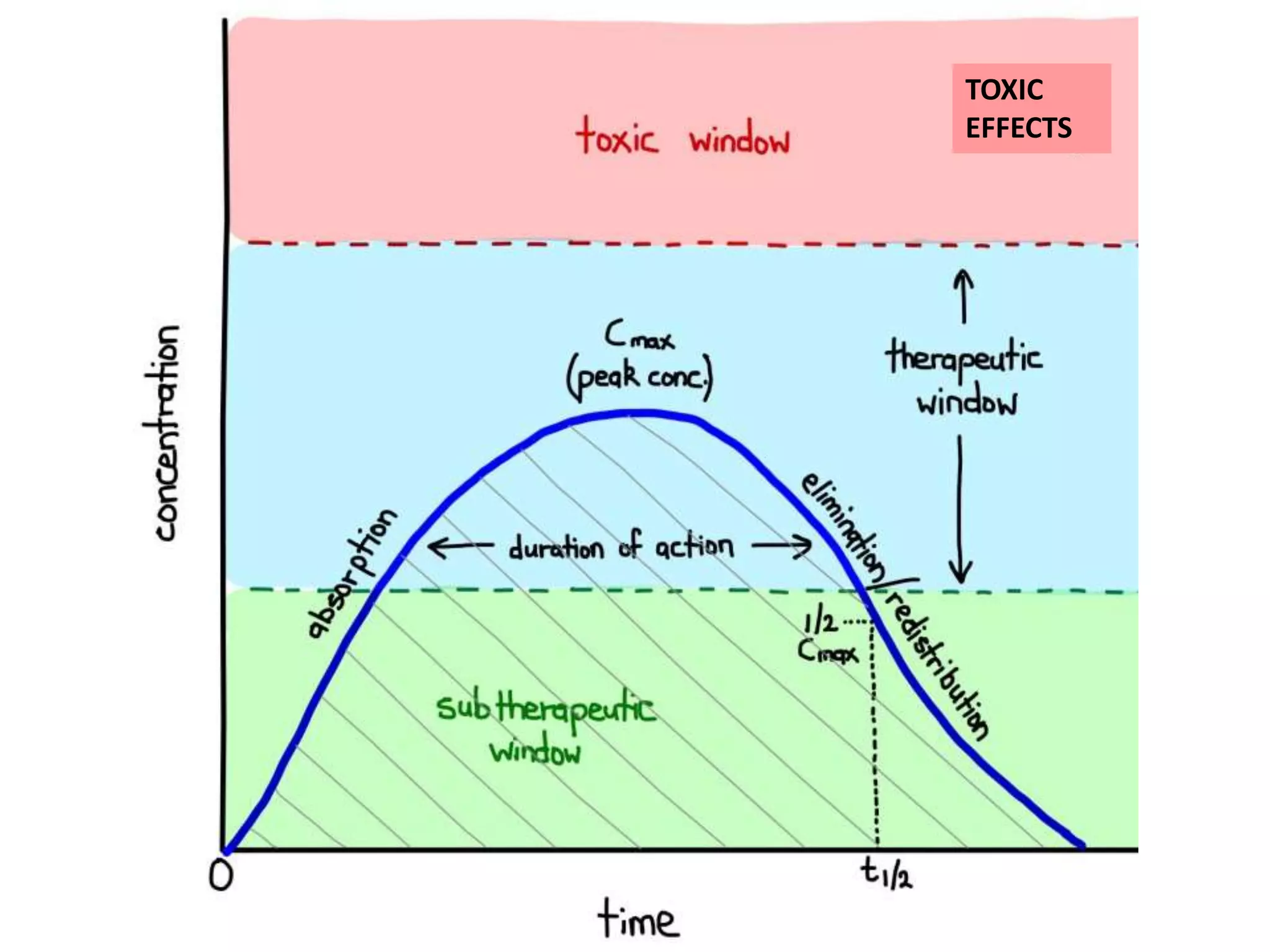
Therapeutic Window
The dose range of a drug that provides safe and
effective therapy with minimal adverse effects.
Generally, at low concentrations, a drug runs the risk of
being ineffective; at high concentrations, the risk of
adverse effects is increased.
TOXIC
EFFECTS
Drug administration:
◦ Single dose
◦ Continuous administration
 IV infusion
 Fixed-dose/fixed time interval regimens
Continuous Infusion Regimen
 IV infusion or oral fixed-dose/fixed time interval
regimens
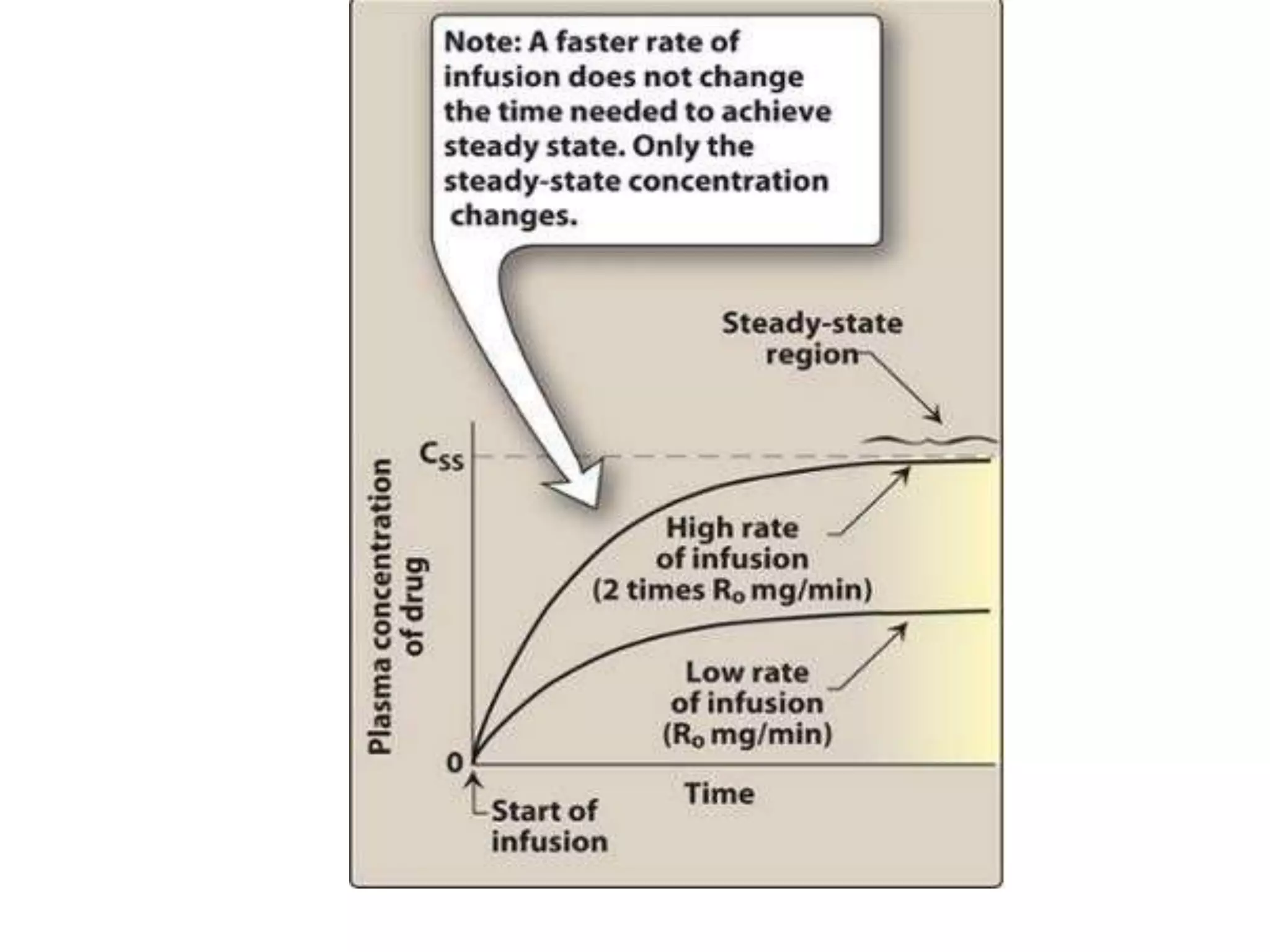
 The drug accumulates until a steady state occurs
 At steady state the amount of drug administered
equals the amount being eliminated
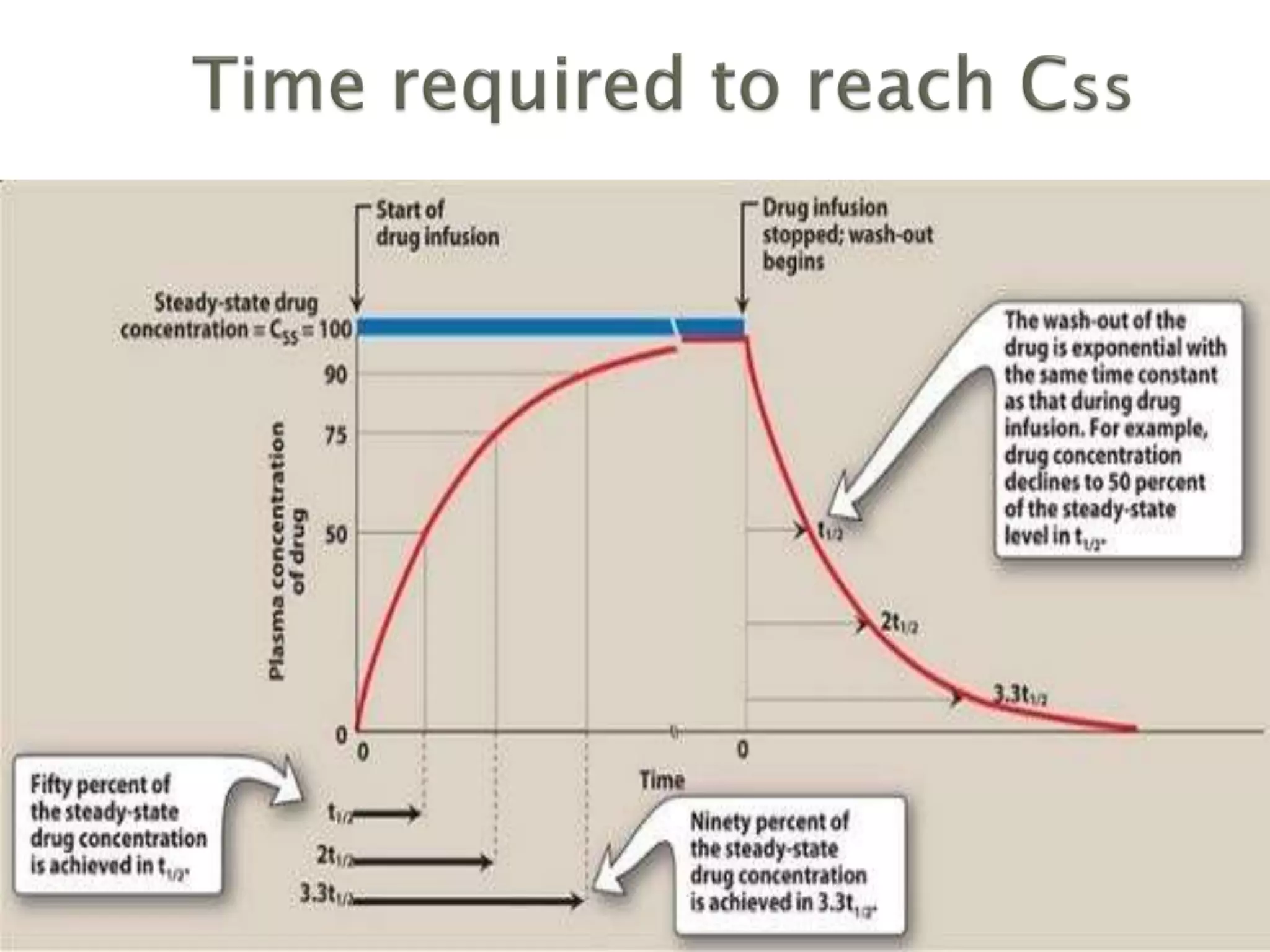
Following initiation of IV infusion the
plasma concentration of drug rises until
the rate of drug eliminated from the
body balances the input rate.
Assuming the drug elimination is first order
 Administration of drug by fixed doses is more
convenient than continuous infusion
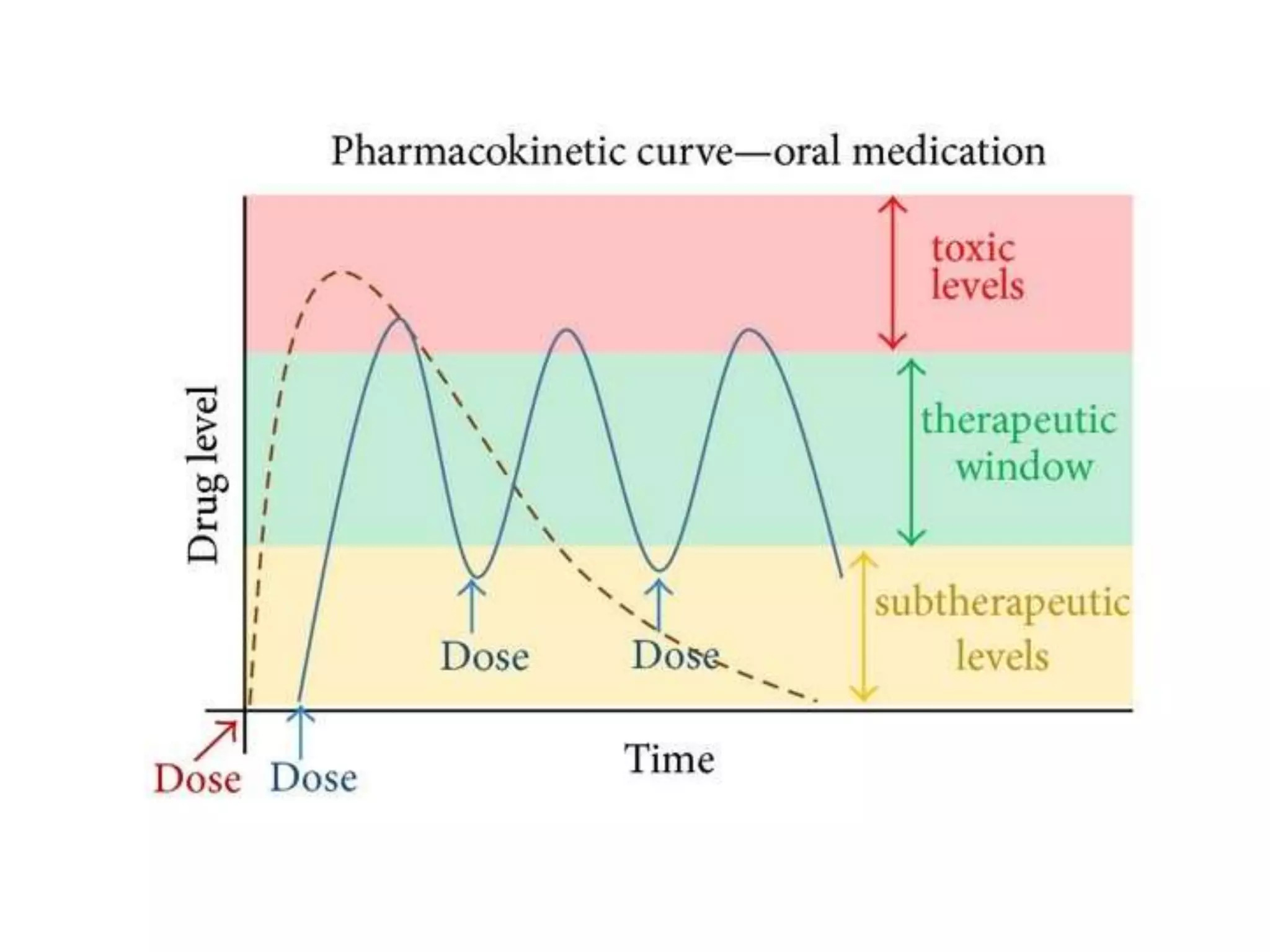
 Fixed doses administered by fixed time intervals
results in fluctuations in drug levels
Fixed dose regimens
◦ Multiple IV injections
◦ Multiple oral administrations
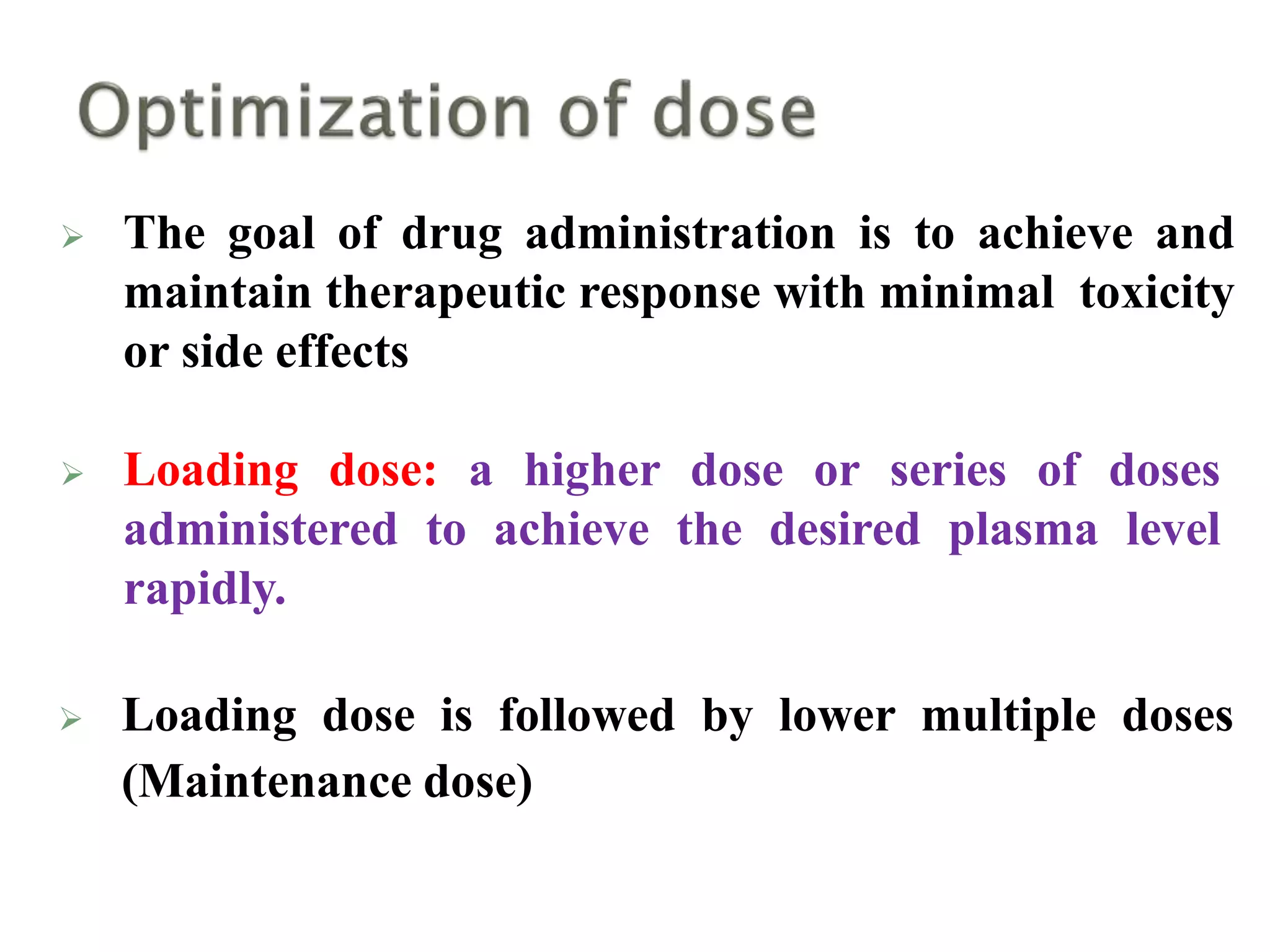
 The goal of drug administration is to achieve and
maintain therapeutic response with minimal toxicity
or side effects
 Loading dose: a higher dose or series of doses
administered to achieve the desired plasma level
rapidly.
 Loading dose is followed by lower multiple doses
(Maintenance dose)
 Loading dose = (Vd)(desired Css)/F
 For IV
Loading dose = (Vd)(desired Css)
 Loading dose might be associated with risk of drug
toxicity
 Loading dose is useful for drugs eliminated from the
body slowly, and hence require lower maintenance
dose to keep the drug at a therapeutic concentration
 Without an initial higher dose, it would take longer to
reach Css.
THANK YOU

Design and Dose Optimization.pptx

  • 1.
    DESIGN AND OPTIMIZATIONOF DOSAGE REGIMEN By Dr. Faraza Javaid
  • 2.
    Dosage Regimen  Toinitiate drug therapy a dosage regimen is administered either by continuous infusion or in intervals of time and dose  The regimen depends on various drug and patient factors including how rapidly a steady state must be achieved.  The goal of drug therapy is to achieve and maintain concentrations within a therapeutic response window while minimizing toxicity and/or adverse effects.
  • 3.
    Steady State Concentration Theconcentration around which the drug concentration consistently stays is known as the steady-state concentration. Therapeutic Window The dose range of a drug that provides safe and effective therapy with minimal adverse effects. Generally, at low concentrations, a drug runs the risk of being ineffective; at high concentrations, the risk of adverse effects is increased.
  • 5.
  • 7.
    Drug administration: ◦ Singledose ◦ Continuous administration  IV infusion  Fixed-dose/fixed time interval regimens
  • 8.
    Continuous Infusion Regimen IV infusion or oral fixed-dose/fixed time interval regimens  The drug accumulates until a steady state occurs  At steady state the amount of drug administered equals the amount being eliminated
  • 9.
    Following initiation ofIV infusion the plasma concentration of drug rises until the rate of drug eliminated from the body balances the input rate. Assuming the drug elimination is first order
  • 12.
     Administration ofdrug by fixed doses is more convenient than continuous infusion  Fixed doses administered by fixed time intervals results in fluctuations in drug levels Fixed dose regimens ◦ Multiple IV injections ◦ Multiple oral administrations
  • 15.
     The goalof drug administration is to achieve and maintain therapeutic response with minimal toxicity or side effects  Loading dose: a higher dose or series of doses administered to achieve the desired plasma level rapidly.  Loading dose is followed by lower multiple doses (Maintenance dose)
  • 16.
     Loading dose= (Vd)(desired Css)/F  For IV Loading dose = (Vd)(desired Css)  Loading dose might be associated with risk of drug toxicity  Loading dose is useful for drugs eliminated from the body slowly, and hence require lower maintenance dose to keep the drug at a therapeutic concentration  Without an initial higher dose, it would take longer to reach Css.
  • 19.