Viticultural and Enological Services
Our tendency is to be
interested in something that
is growing in the garden,
not in the bare soil itself.
But if you want to have a
good harvest, the most
important thing is to make
the soil rich and cultivate it
well.

Shunryu Suzuki
 Thirty years wine industry experience in sonoma and mendocino
  counties
 Agricultural PEST CONTROL ADVISER #75457
 International CERTIFIED CROP ADVISER #28786
 member: american Association of Applied IPM Ecologists, american
  society of Agronomy

 Environmental biologist
 M.S. Biology
  Indiana University of Pennsylvania, 1979
 B.S. Biology
  Pennsylvania State University, 1975
 Soil and tissue analysis is the basis of sound fertilizer recommendations that
  result in higher fruit quality.
 Pest and disease severity is reduced when vines are in a healthy
  physiological condition.
 Proper and appropriate fertilization results in wine grapes and wines that
  have a deeper character and expression of the site.
 Cultural practices performed throughout the growing season are equally
  important. An emphasis on the biological cycles and relationships occurring
  between the plants and soil constituents is the basis of “terroir”.
 Site selection, as well as rootstock /scion selections, also play a significant
  part in the expression of distinctive regional flavor characteristics. The
  primary objective is to fine-tune the above to achieve the highest quality
  wine grapes possible for a particular site.
 Integrated Pest and Disease management
 Soil and tissue analyses
 Fertilizer recommendations
 Quality-focused cultural practices
 Rootstock and scion selection
 Organic and sustainable farming practices that
  protect watersheds
 Site selection including environmental assessments
  and biological surveys of sensitive species and
  critical habitats
 Achieving a full expression of fruit flavors and the distinctiveness of
  regional differences is the goal of winemaking.
 The utilization of appropriate fermentation techniques will result in
  wines showing their full potential . Blending strategies as well as
  barrel selection will further enhance the complete wine.
 Also included in our services are practical suggestions on purchasing
  affordable equipment as well as packaging designs that make sense.
 Winery design considerations can be made to facilitate the
  winemaking process and avoid unnecessary overruns. The overall
  strategy for the particular winery will be considered to best fit the
  desires and vision of the client.
 FRUIT AND TERROIR EXPRESSION
 FERMENTATION STRATEGIES
 BARREL SELECTION
 BLENDING STRATEGIES
 PACKAGING CONCEPTS
 EQUIPMENT SELECTION
 WINERY DESIGN CONSIDERATIONS
 Specializing in producing small personal lots of wine for
  growers to showcase their fruit and vineyards
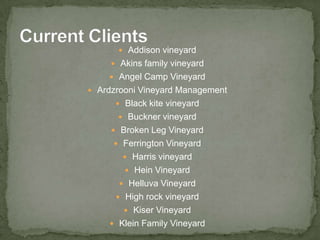
 Addison vineyard
      Akins family vineyard
     Angel Camp Vineyard
 Ardzrooni Vineyard Management
       Black kite vineyard
       Buckner vineyard
      Broken Leg Vineyard
      Ferrington Vineyard
        Harris vineyard
         Hein Vineyard
        Helluva Vineyard
       High rock vineyard
         Kiser Vineyard
     Klein Family Vineyard
 Klindt Vineyard
    Lee Family Vineyard
 Lloyd vineyard management
       Londer Vineyard
     Marguerite vineyard
  Monument Tree Vineyard
   Morning Dew Vineyard
     Nelson Hill Vineyard
      Petersen Vineyard
    Philo Ridge Vineyard
       Savoy Vineyards
    Upper ranch vineyard
       Valenti vineyard
     Zicherman Vineyard
 “Our vines have flourished under his care and the quality of our grapes
  has continued to improve.”- Bob & Linda Klein (Klein Family Vineyard)

 “In the early 1990’s I had the opportunity to begin working with Deny
  Dudzik; walking vineyards, asking and answering questions, to get the
  winemaker’s perspective on what they wanted and what needed to be
  accomplished in the vineyard. He knew wine quality, I knew soils, pests
  and diseases, and we both knew that soil quality is paramount. For over
  15 years we combined our knowledge to produce many fine wines,
  using sustainable or organic methods. There are many who know
  viticulture, and many who know winemaking, but few with Deny’s
  knowledge of both. ’’- Gregg Young, CPAg
 American Society of Agronomy
 Association of Applied IPM Ecologists
 California Agricultural Production Consultants
 California Dept of Pesticide Regulations
 California Plant Health Association
 Mendocino Winegrowers Alliance
 Sonoma County Grape Growers Association
 University of California Statewide Integrated Pest
  Management Project
 University of California Fruit and Nut Research and
  Information Center
 Yorkville Highlands Growers and Vintners Association
DENY DUDZIK CONSULTING
        PO BOX 15
    YORKVILLE, CA 95494

 Office and Fax (707) 894-3171
     Mobile (707) 621-1653
deny@denydudzikconsulting.com
     Deny Dudzik Consulting

    © 2009 Deny Dudzik Consulting

Deny Dudzik Consulting

  • 1.
  • 2.
    Our tendency isto be interested in something that is growing in the garden, not in the bare soil itself. But if you want to have a good harvest, the most important thing is to make the soil rich and cultivate it well. Shunryu Suzuki
  • 3.
     Thirty yearswine industry experience in sonoma and mendocino counties  Agricultural PEST CONTROL ADVISER #75457  International CERTIFIED CROP ADVISER #28786  member: american Association of Applied IPM Ecologists, american society of Agronomy  Environmental biologist  M.S. Biology Indiana University of Pennsylvania, 1979  B.S. Biology Pennsylvania State University, 1975
  • 4.
     Soil andtissue analysis is the basis of sound fertilizer recommendations that result in higher fruit quality.  Pest and disease severity is reduced when vines are in a healthy physiological condition.  Proper and appropriate fertilization results in wine grapes and wines that have a deeper character and expression of the site.  Cultural practices performed throughout the growing season are equally important. An emphasis on the biological cycles and relationships occurring between the plants and soil constituents is the basis of “terroir”.  Site selection, as well as rootstock /scion selections, also play a significant part in the expression of distinctive regional flavor characteristics. The primary objective is to fine-tune the above to achieve the highest quality wine grapes possible for a particular site.
  • 5.
     Integrated Pestand Disease management  Soil and tissue analyses  Fertilizer recommendations  Quality-focused cultural practices  Rootstock and scion selection  Organic and sustainable farming practices that protect watersheds  Site selection including environmental assessments and biological surveys of sensitive species and critical habitats
  • 6.
     Achieving afull expression of fruit flavors and the distinctiveness of regional differences is the goal of winemaking.  The utilization of appropriate fermentation techniques will result in wines showing their full potential . Blending strategies as well as barrel selection will further enhance the complete wine.  Also included in our services are practical suggestions on purchasing affordable equipment as well as packaging designs that make sense.  Winery design considerations can be made to facilitate the winemaking process and avoid unnecessary overruns. The overall strategy for the particular winery will be considered to best fit the desires and vision of the client.
  • 7.
     FRUIT ANDTERROIR EXPRESSION  FERMENTATION STRATEGIES  BARREL SELECTION  BLENDING STRATEGIES  PACKAGING CONCEPTS  EQUIPMENT SELECTION  WINERY DESIGN CONSIDERATIONS  Specializing in producing small personal lots of wine for growers to showcase their fruit and vineyards
  • 8.
     Addison vineyard  Akins family vineyard  Angel Camp Vineyard  Ardzrooni Vineyard Management  Black kite vineyard  Buckner vineyard  Broken Leg Vineyard  Ferrington Vineyard  Harris vineyard  Hein Vineyard  Helluva Vineyard  High rock vineyard  Kiser Vineyard  Klein Family Vineyard
  • 9.
     Klindt Vineyard  Lee Family Vineyard  Lloyd vineyard management  Londer Vineyard  Marguerite vineyard  Monument Tree Vineyard  Morning Dew Vineyard  Nelson Hill Vineyard  Petersen Vineyard  Philo Ridge Vineyard  Savoy Vineyards  Upper ranch vineyard  Valenti vineyard  Zicherman Vineyard
  • 10.
     “Our vineshave flourished under his care and the quality of our grapes has continued to improve.”- Bob & Linda Klein (Klein Family Vineyard)  “In the early 1990’s I had the opportunity to begin working with Deny Dudzik; walking vineyards, asking and answering questions, to get the winemaker’s perspective on what they wanted and what needed to be accomplished in the vineyard. He knew wine quality, I knew soils, pests and diseases, and we both knew that soil quality is paramount. For over 15 years we combined our knowledge to produce many fine wines, using sustainable or organic methods. There are many who know viticulture, and many who know winemaking, but few with Deny’s knowledge of both. ’’- Gregg Young, CPAg
  • 11.
     American Societyof Agronomy  Association of Applied IPM Ecologists  California Agricultural Production Consultants  California Dept of Pesticide Regulations  California Plant Health Association  Mendocino Winegrowers Alliance  Sonoma County Grape Growers Association  University of California Statewide Integrated Pest Management Project  University of California Fruit and Nut Research and Information Center  Yorkville Highlands Growers and Vintners Association
  • 12.
    DENY DUDZIK CONSULTING PO BOX 15 YORKVILLE, CA 95494 Office and Fax (707) 894-3171  Mobile (707) 621-1653 deny@denydudzikconsulting.com Deny Dudzik Consulting  © 2009 Deny Dudzik Consulting