DEMYSTIFYING
Qian Jin | @bonbonking | 2016 Course EPF
Image Credit: 4virtus
About Me
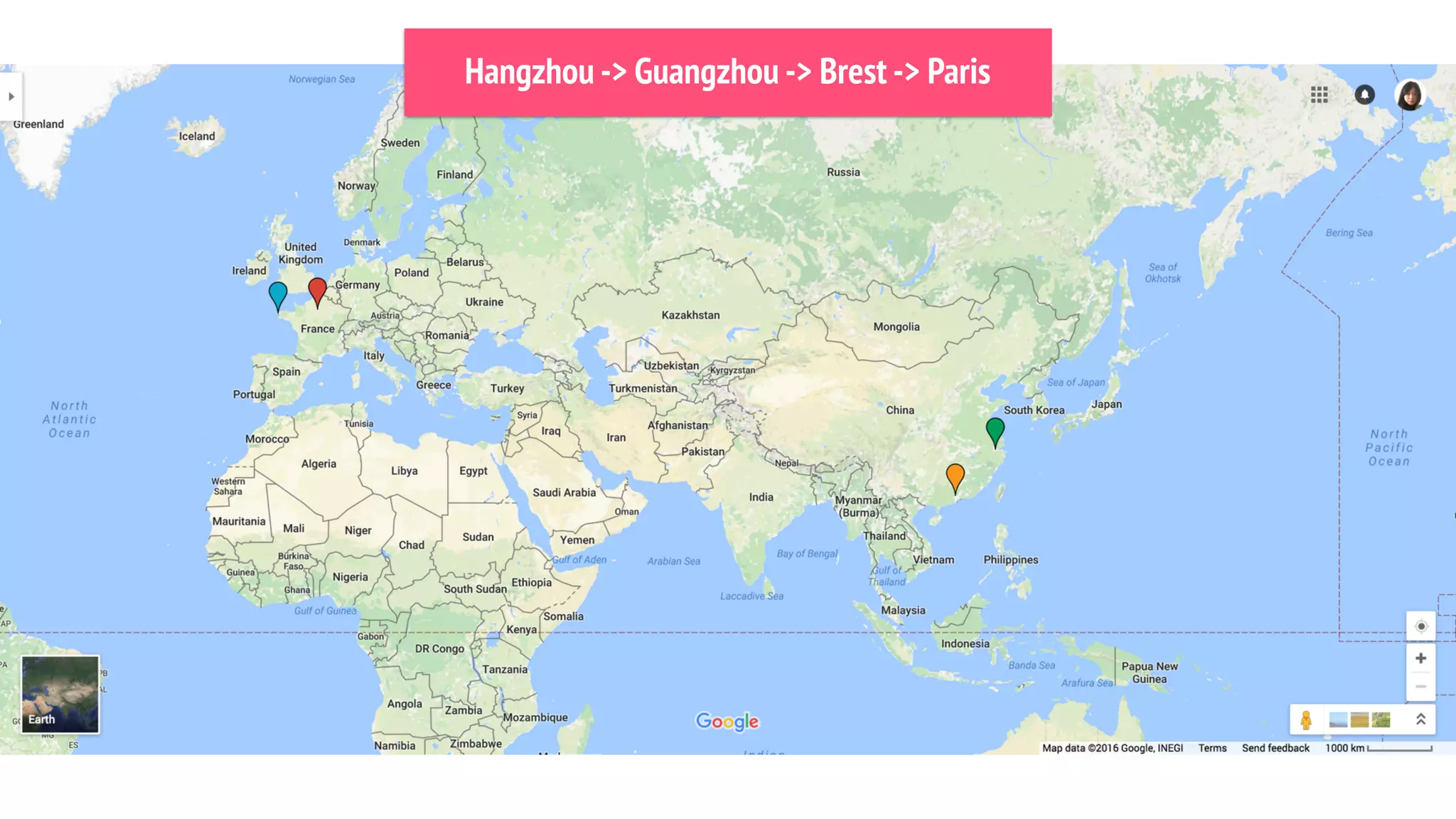
Hangzhou -> Guangzhou -> Brest -> Paris
+
Agenda
Preface: Ubiquitous Computing
What’s IoT?
How-To: IoT for Dummies
IoT Hardware Guide
An Example: Smart Studio
Criticism and controversies
Takeaways: The future of IoT
*Bonus Chapter: The Physical Web
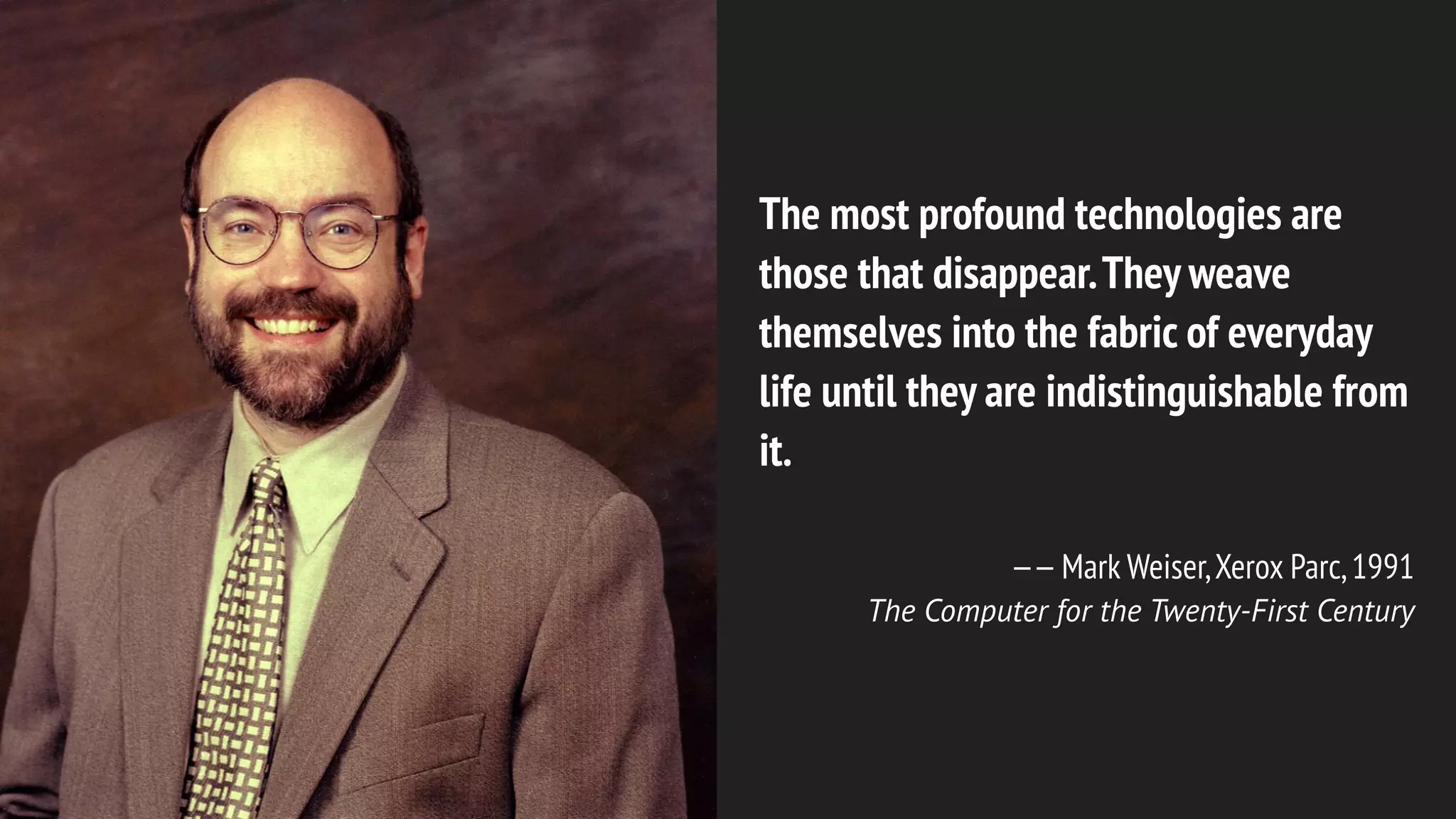
Ubiquitous Computing
The most profound technologies are
those that disappear.They weave
themselves into the fabric of everyday
life until they are indistinguishable from
it.
——Mark Weiser,Xerox Parc,1991
The Computer for the Twenty-First Century
• Ubiquitous computing names the third wave in computing,just
now beginning.First were mainframes,each shared by lots of
people.Now we are in the personal computing era,person and
machine staring uneasily at each other across the desktop.Next
comes ubiquitous computing,or the age of calm technology,
when technology recedes into the background of our lives.
• The purpose of a computer is to help you do something else.
• The best computer is a quiet,invisible servant.
• The more you can do by intuition the smarter you are; the
computer should extend your unconscious.
• Technology should create calm.
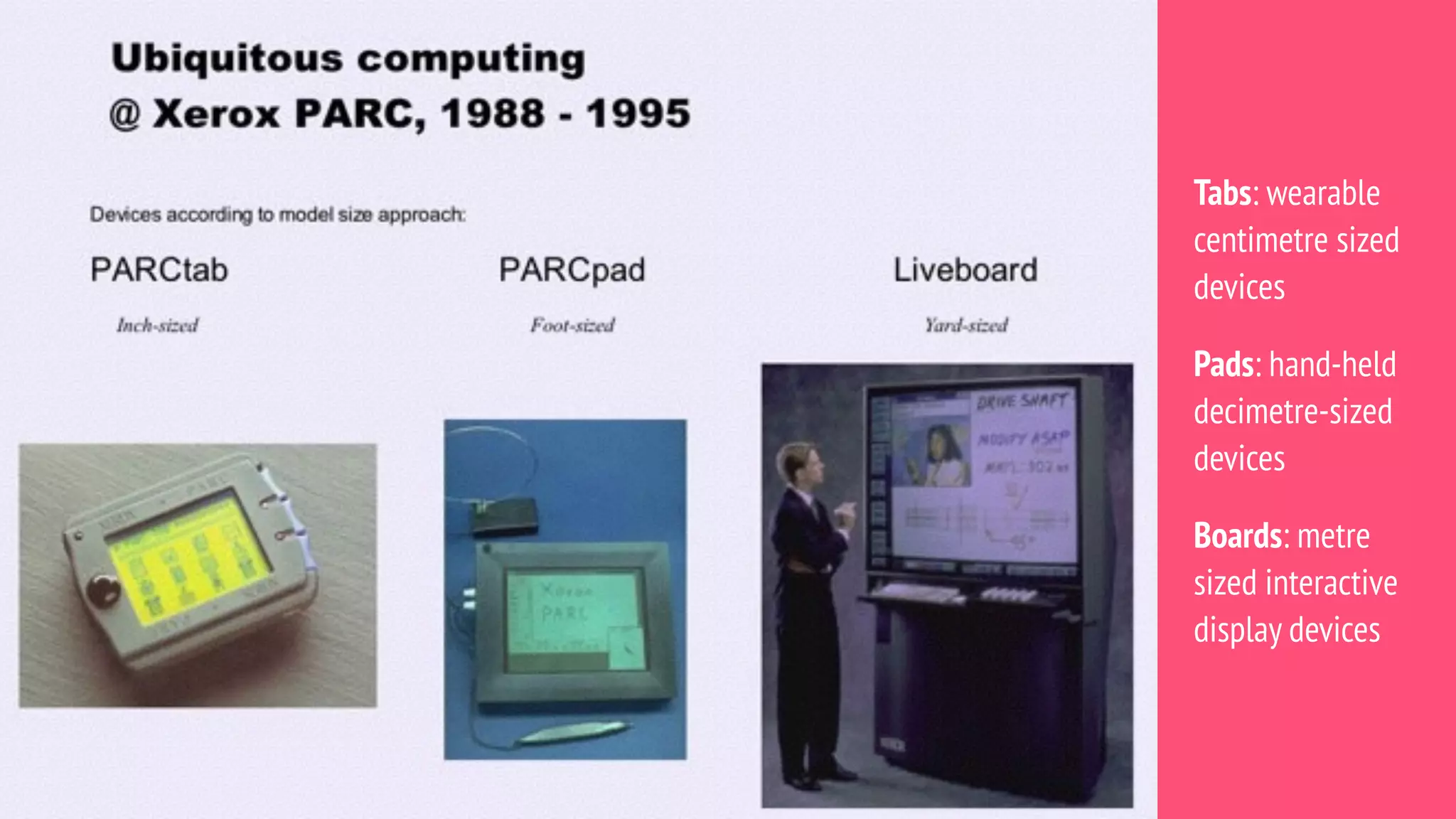
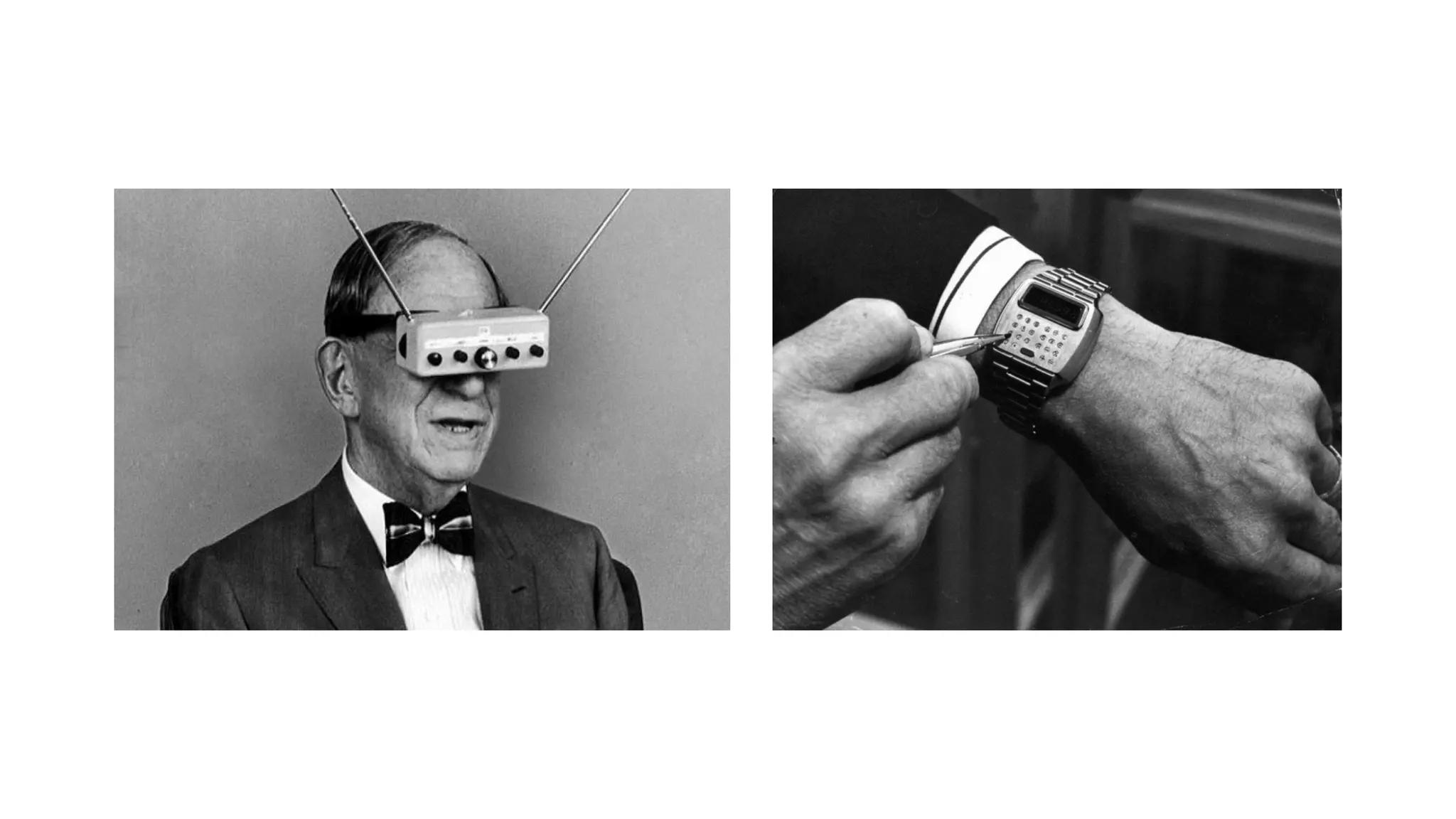
Tabs: wearable
centimetre sized
devices
Pads: hand-held
decimetre-sized
devices
Boards: metre
sized interactive
display devices
• Synonyms: Pervasive computing,Ambient Intelligence,physical
computing,the Internet of Things,haptic computing,and "things
that think”
• Research topics: distributed computing,mobile computing,location
computing,mobile networking,context-aware computing,sensor
networks,human-computer interaction,and artificial intelligence.
What’s IoT?
What is IoT?
A buzz word
The Evolution of IoT
Ecosystem
A Buzz Word
In·ter·net of Things
The network of physical devices,vehicles,buildings and
other items—embedded with electronics,software,
sensors,actuators,and network connectivity that enable
these objects to collect and exchange data.
2013 the Global Standards Initiative on
Internet of Things (IoT-GSI) defined the IoT as
"the infrastructure of the information society."
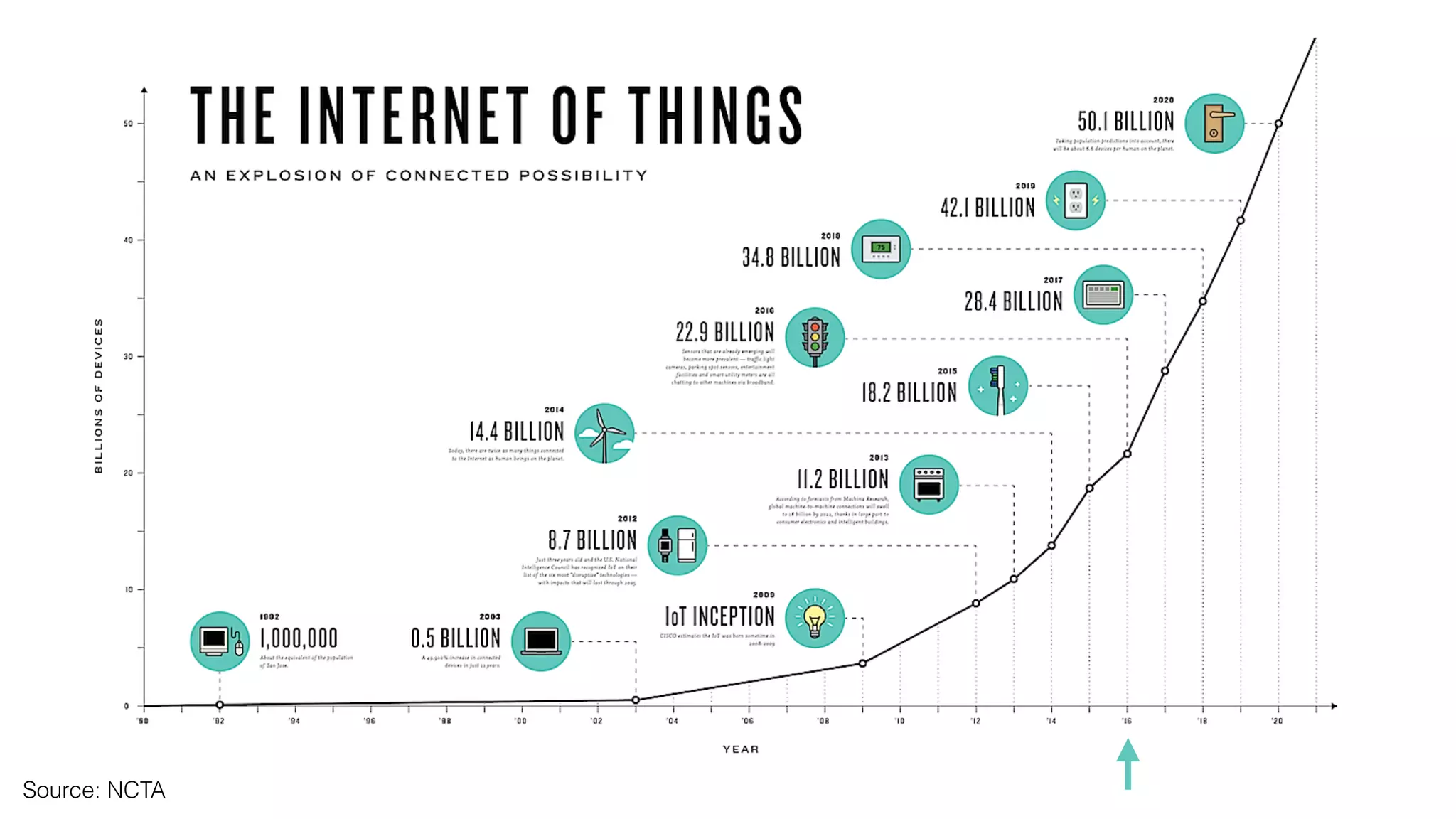
The Evolution
Source: NCTA
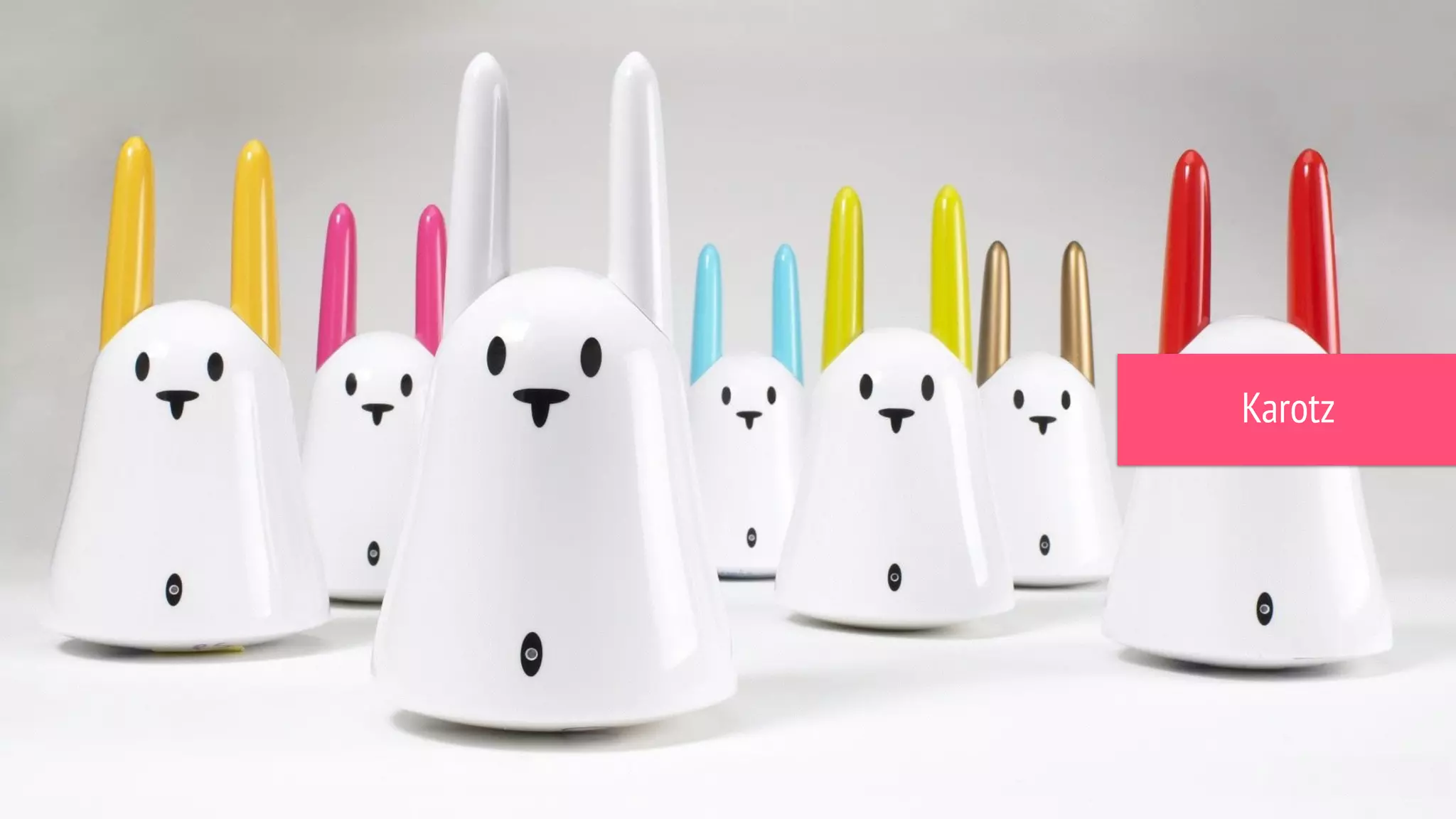
Nabaztag
Karotz
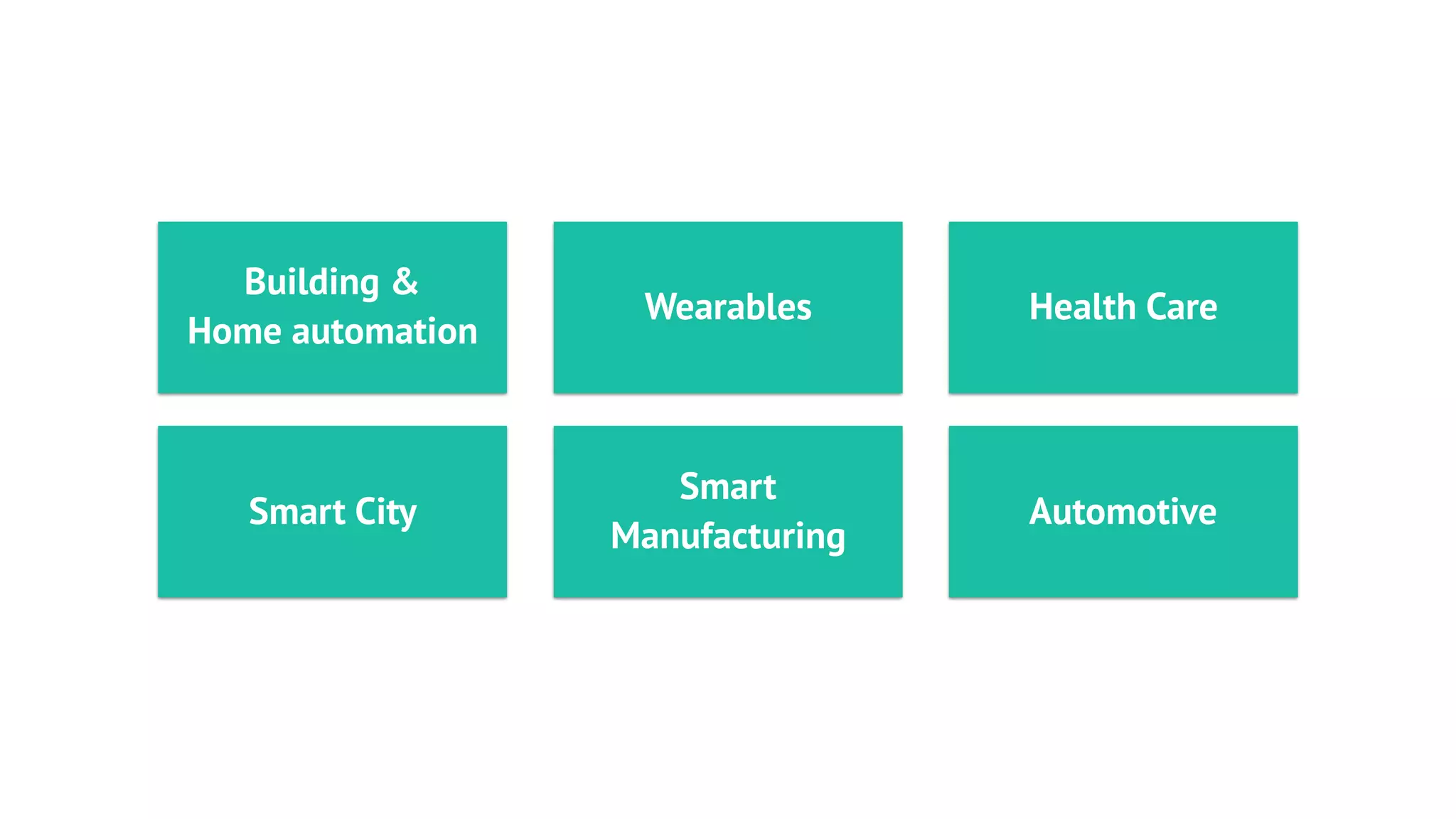
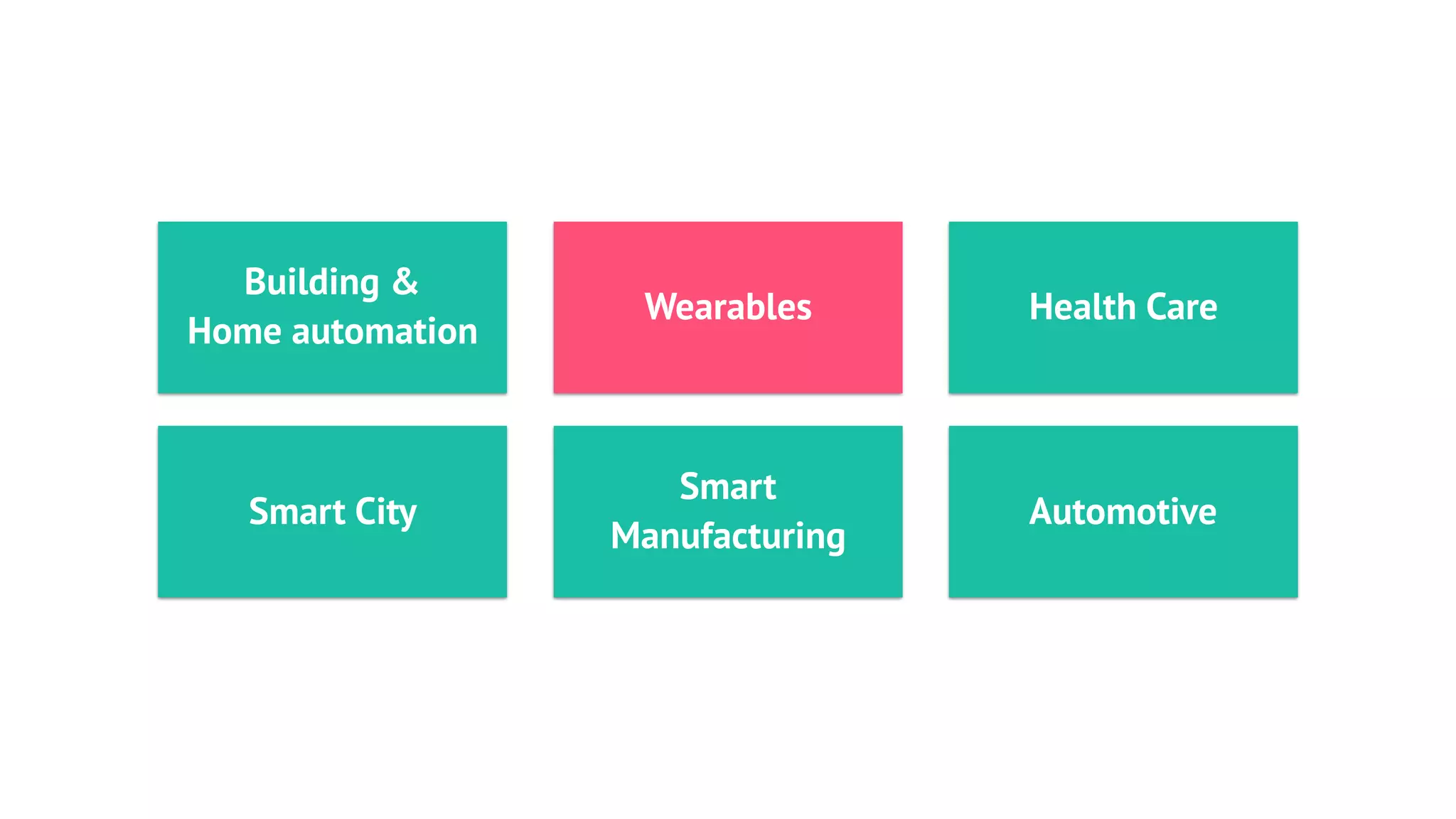
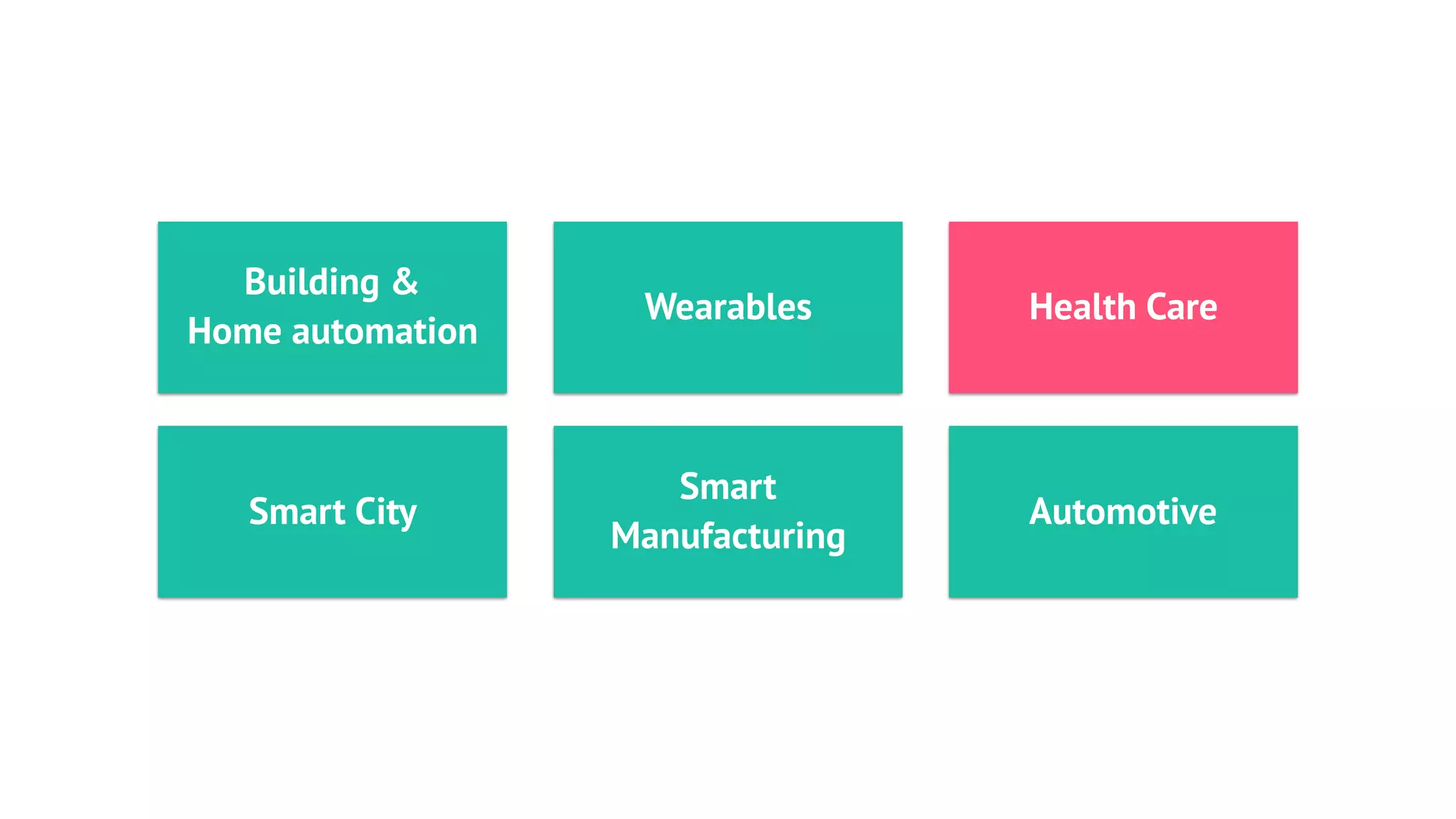
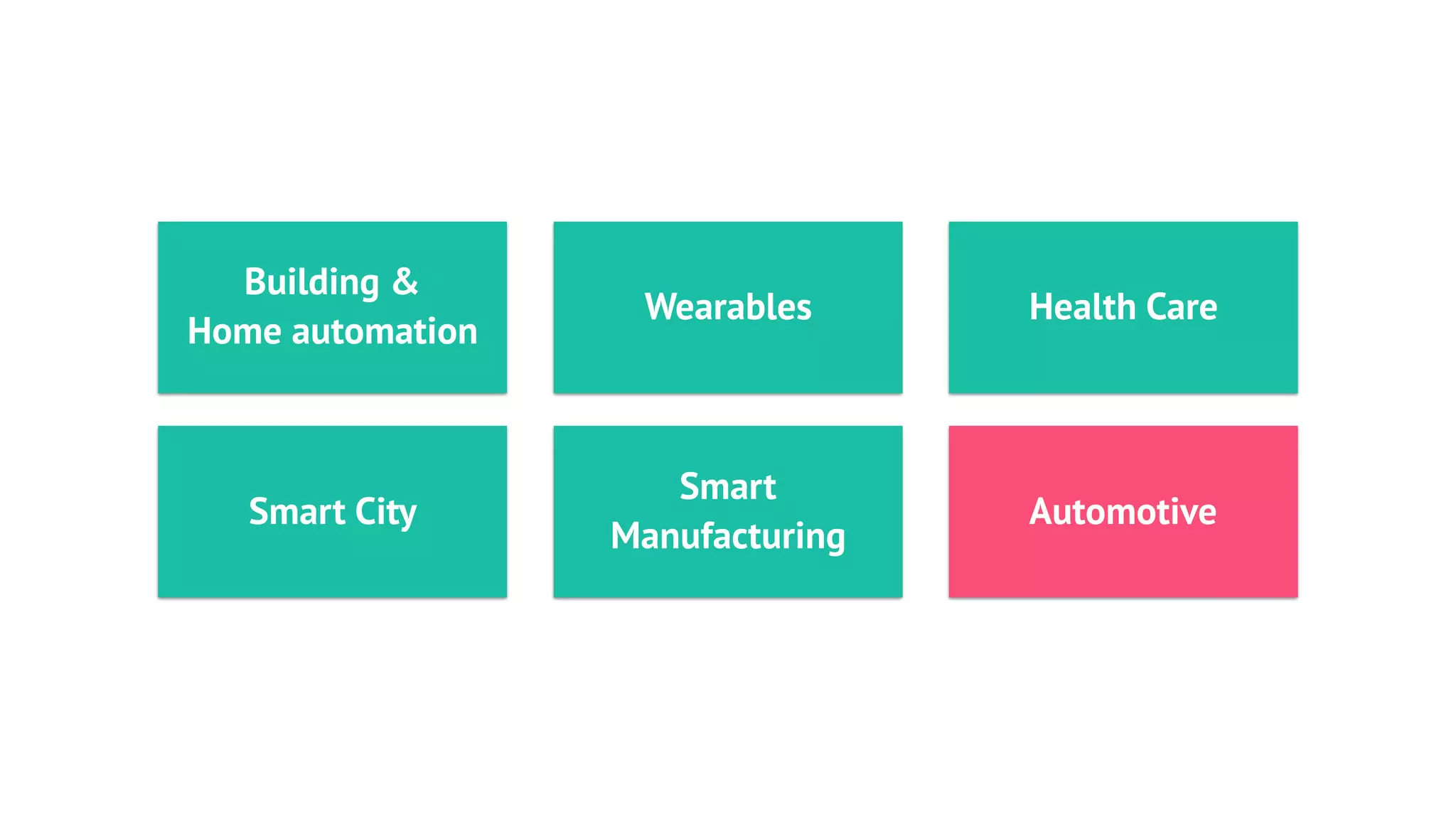
IoT Ecosystem
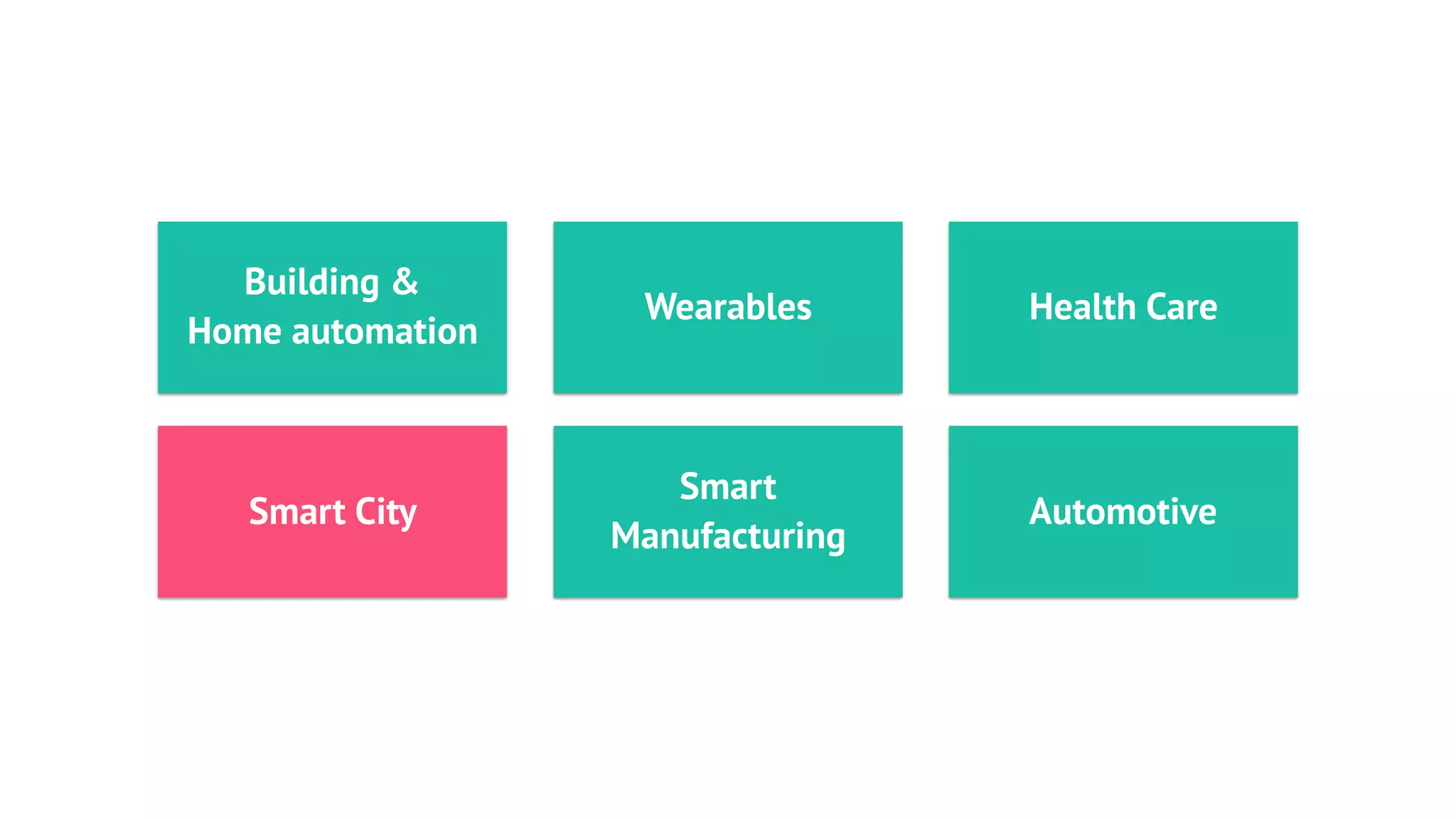
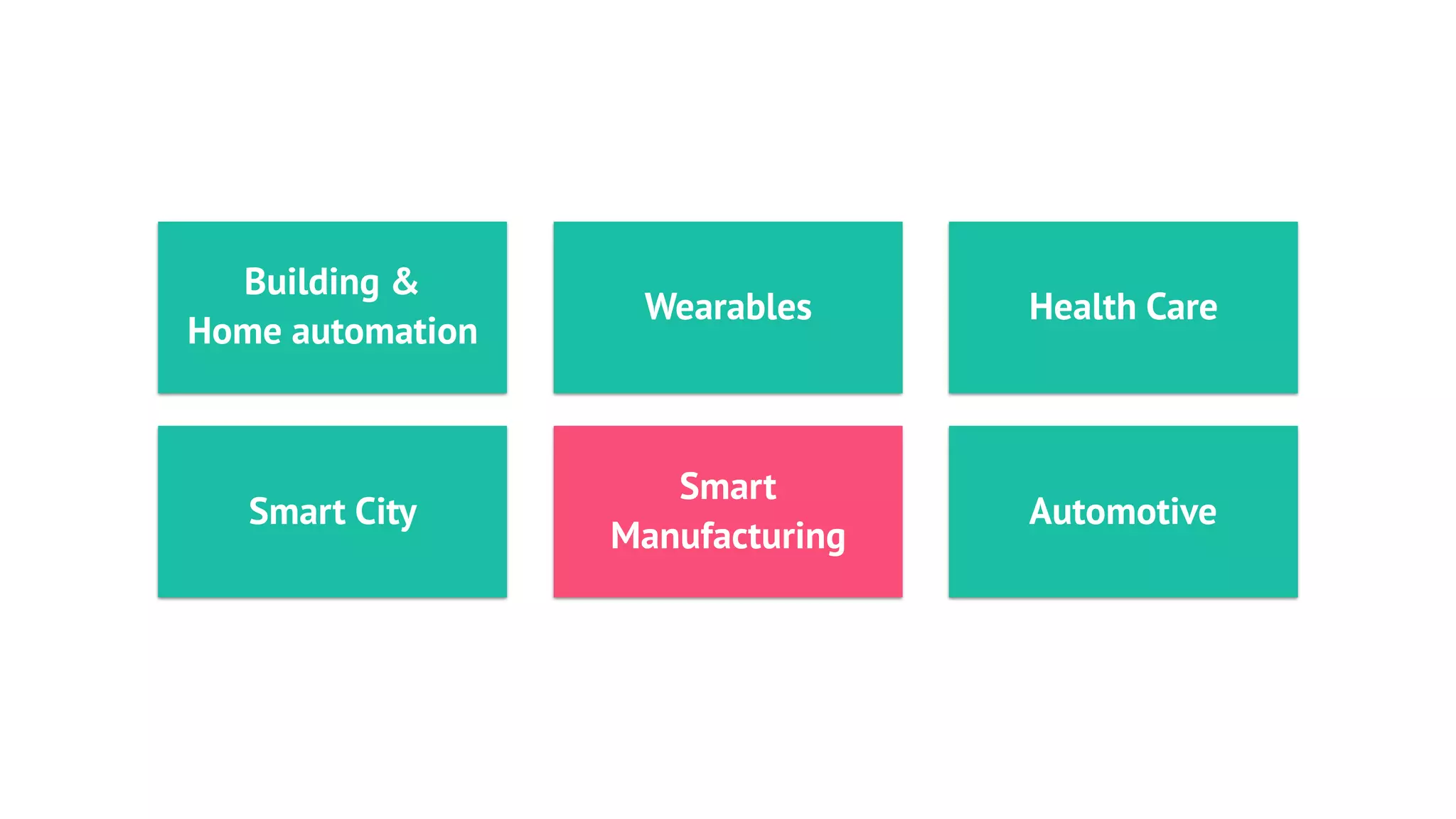
Building &
Home automation
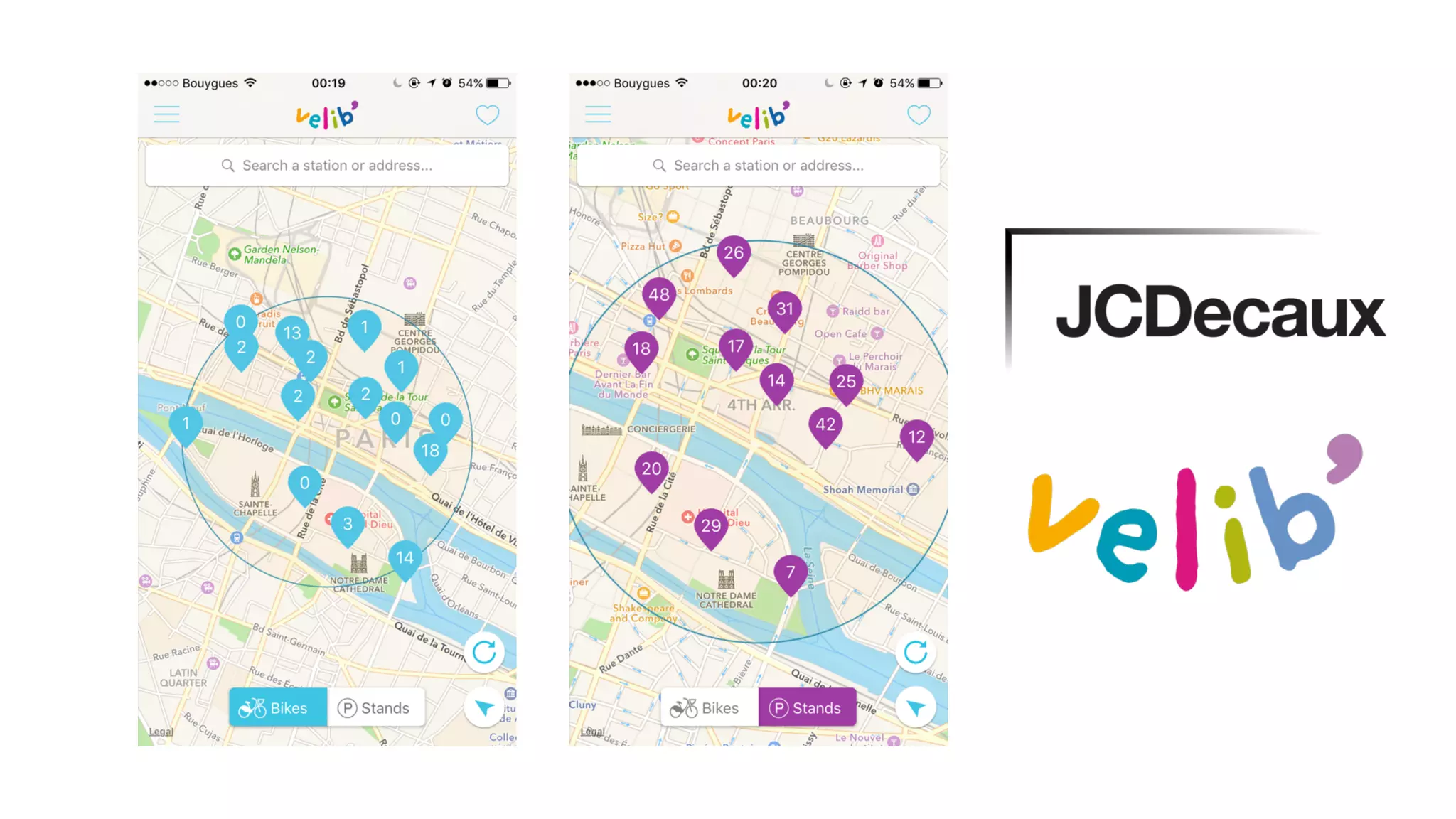
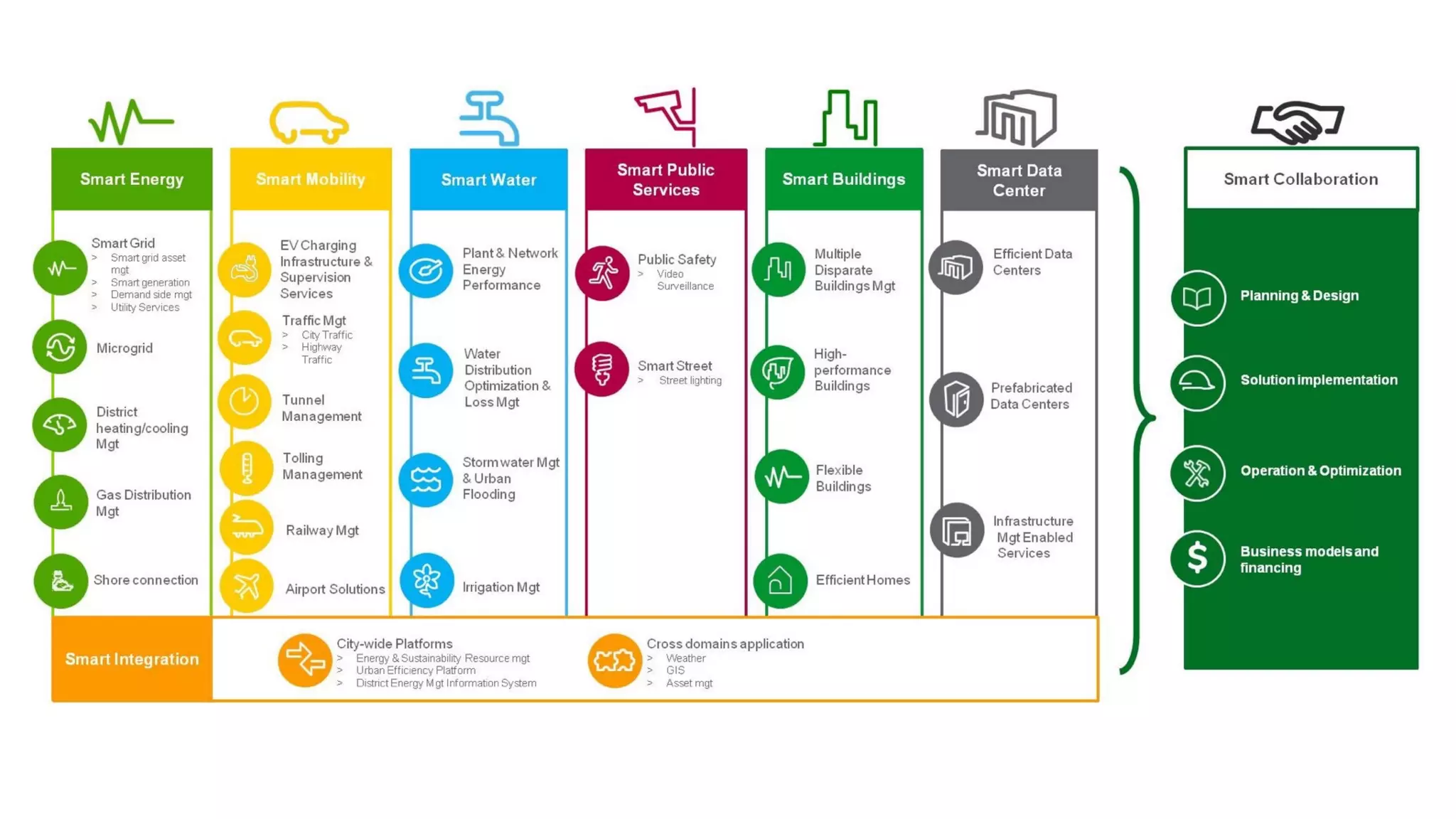
Smart City
Smart
Manufacturing
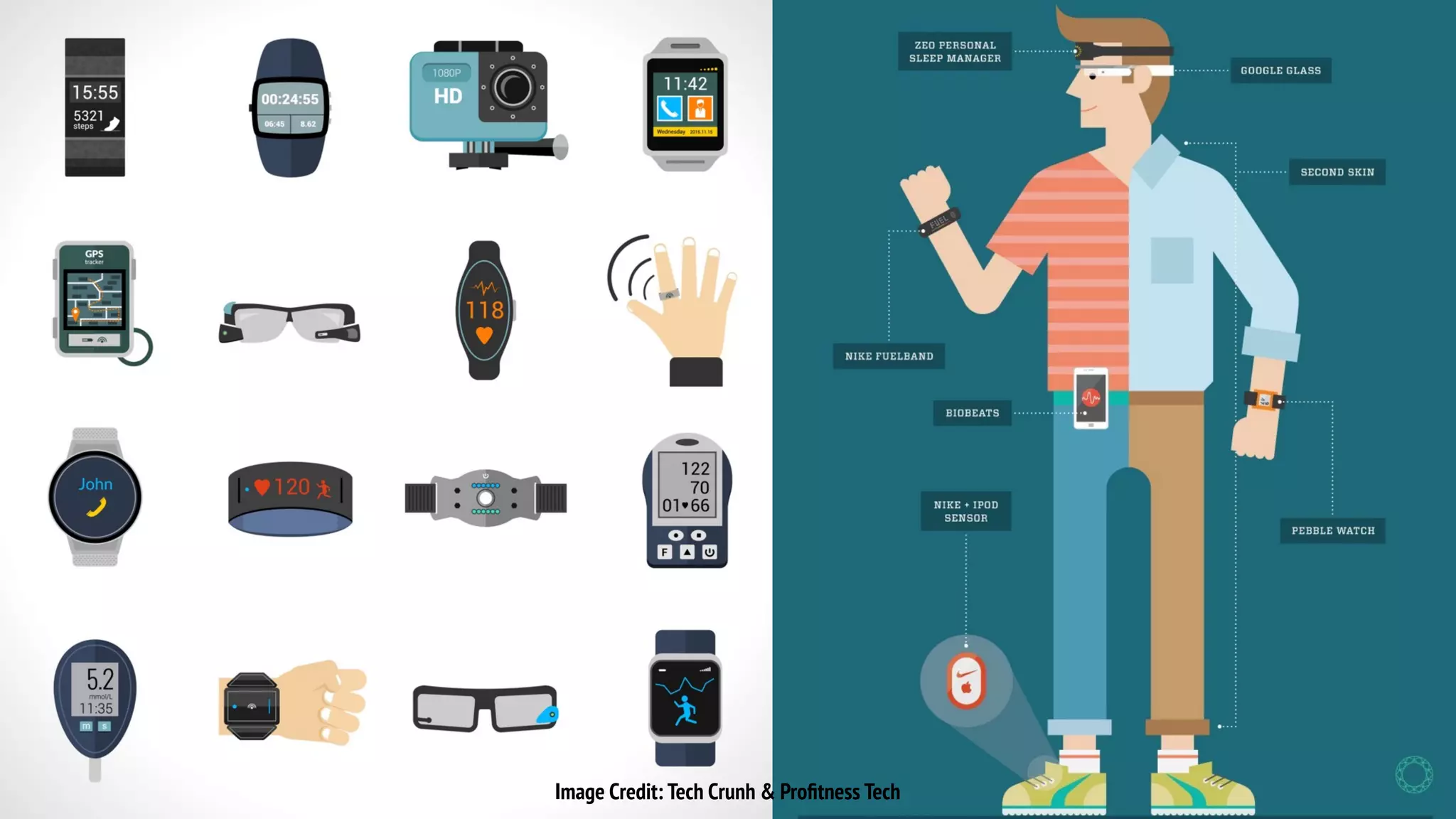
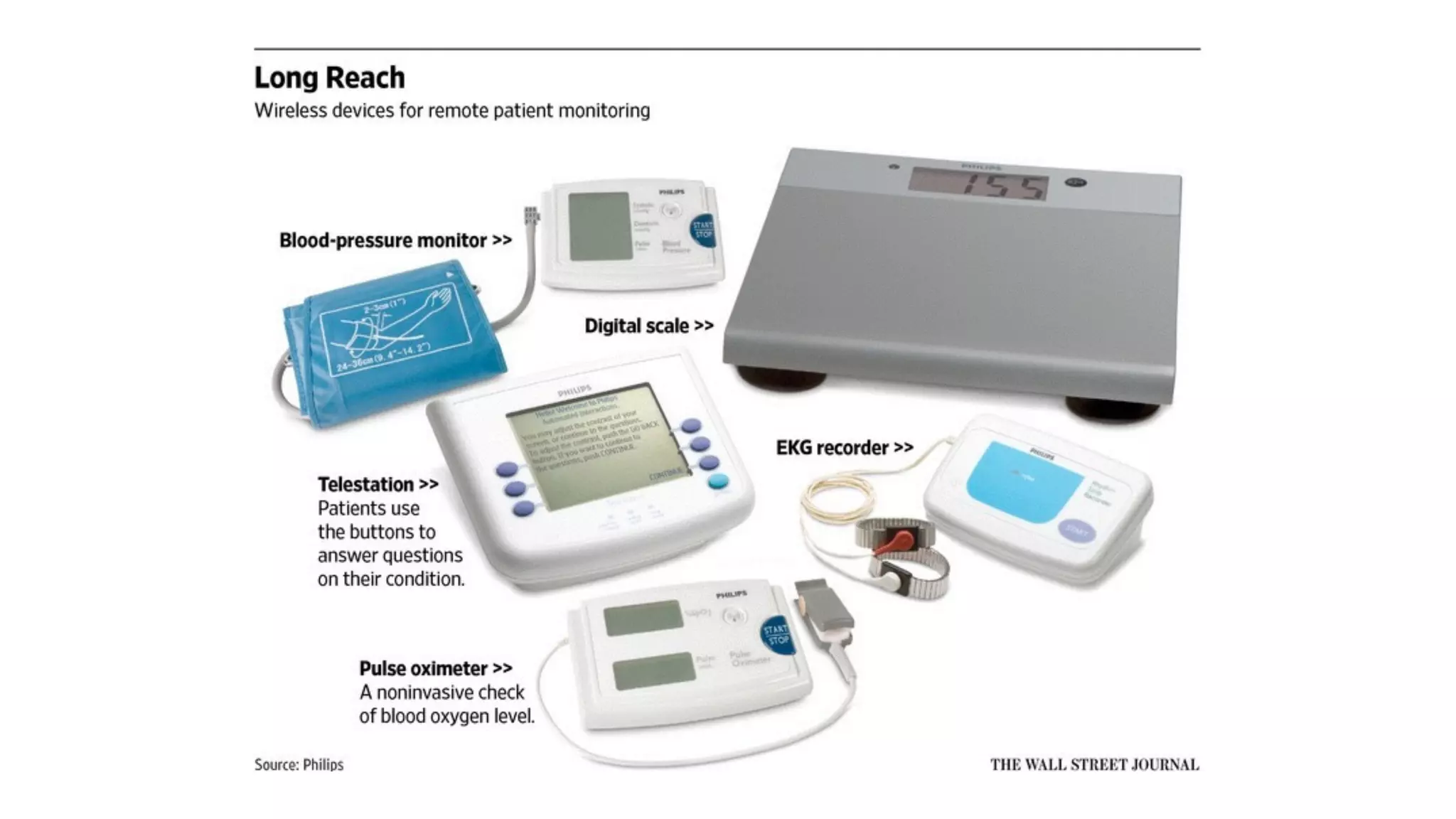
Wearables Health Care
Automotive
Building &
Home automation
Smart City
Smart
Manufacturing
Wearables Health Care
Automotive
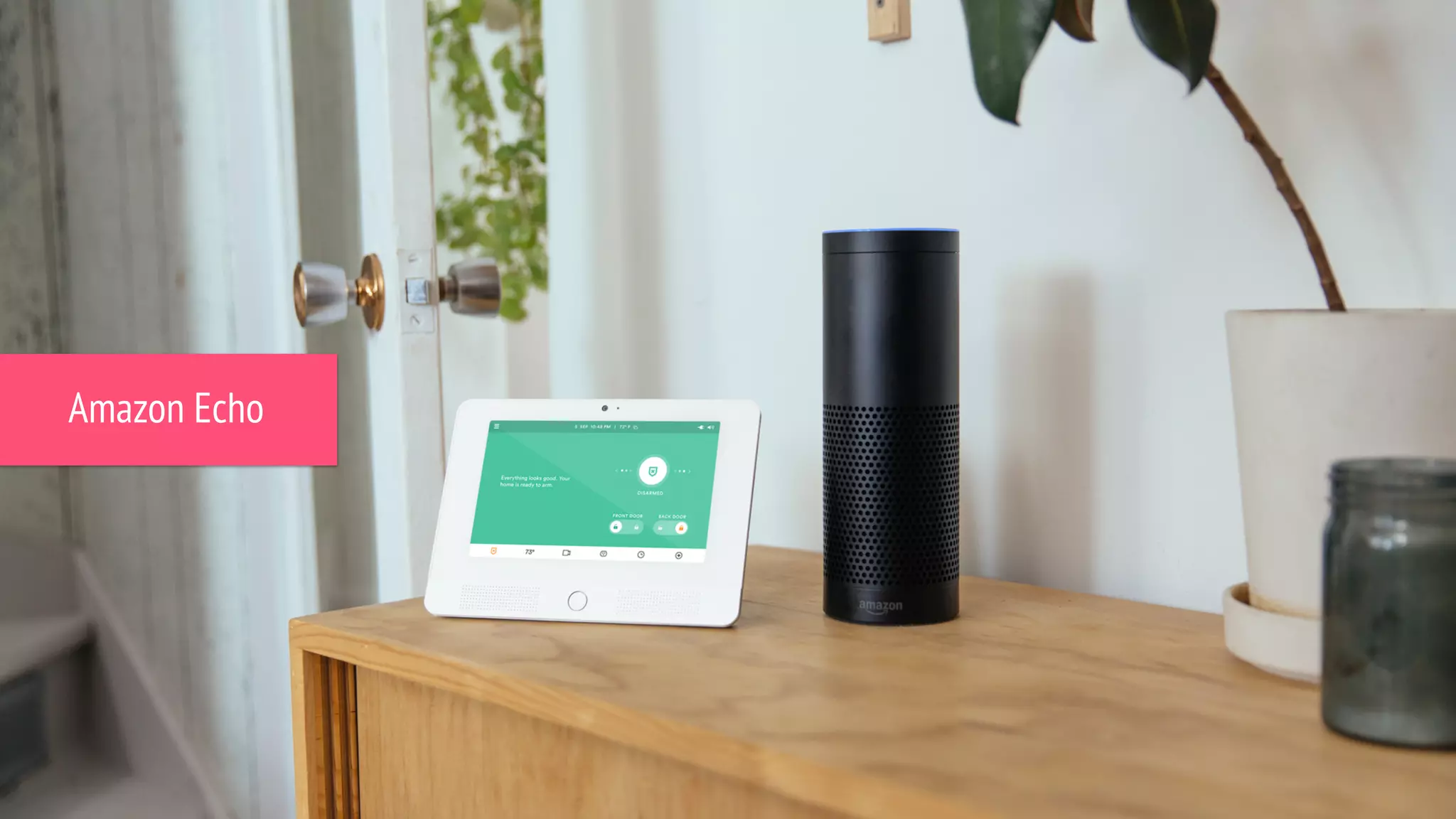
Amazon Echo
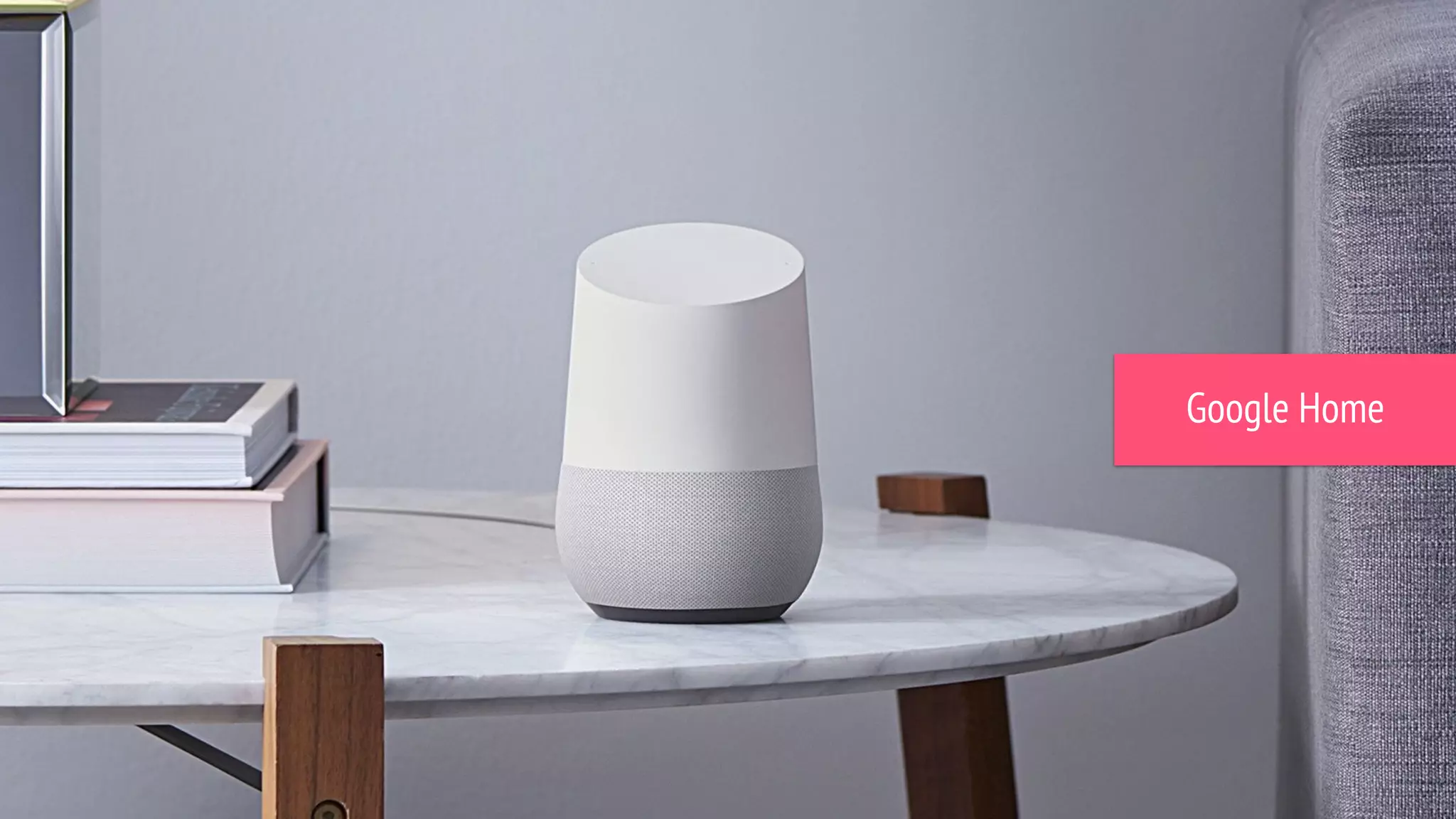
Google Home
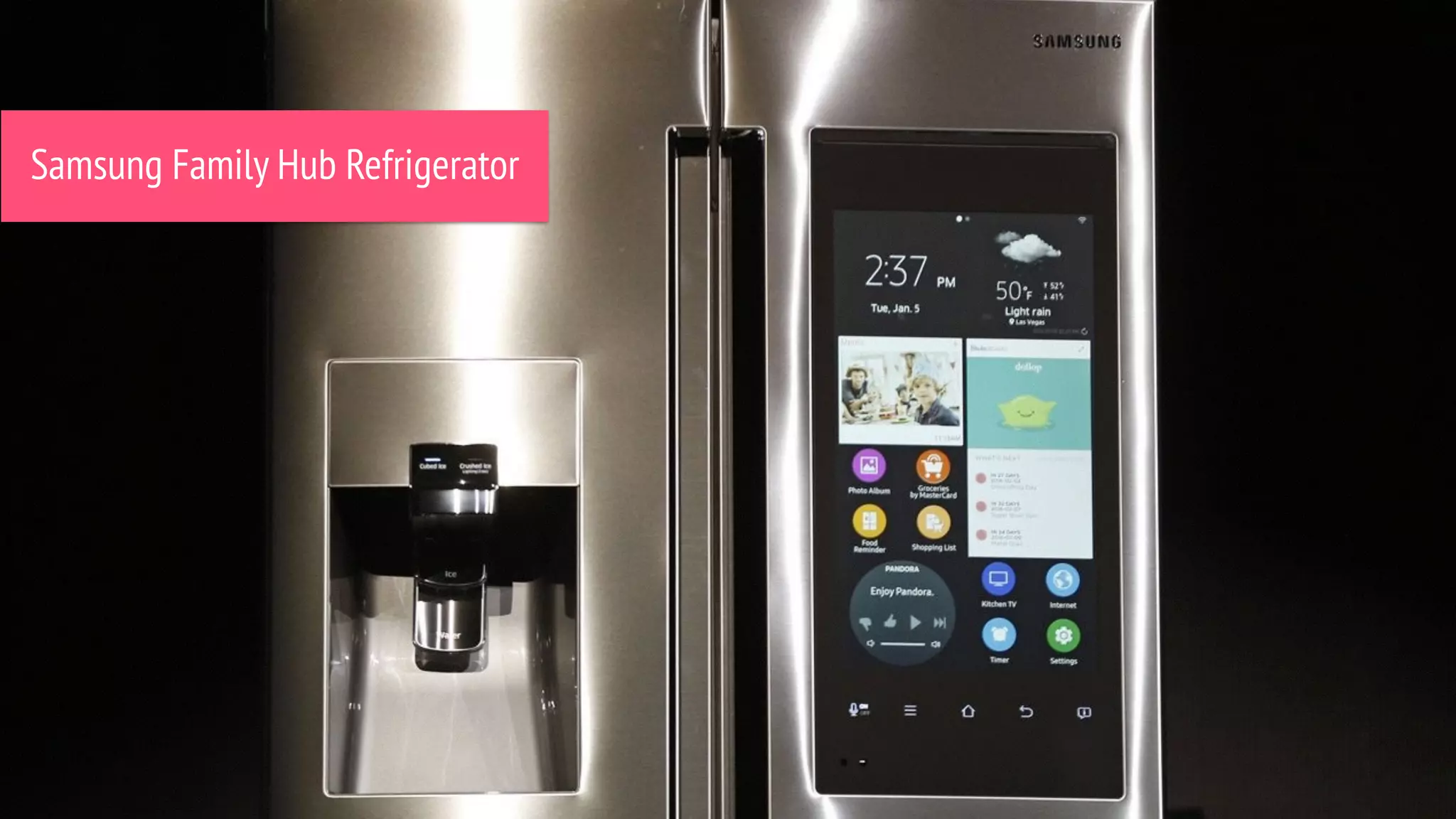
Samsung Family Hub Refrigerator
Belkin WeMo Insight Switch
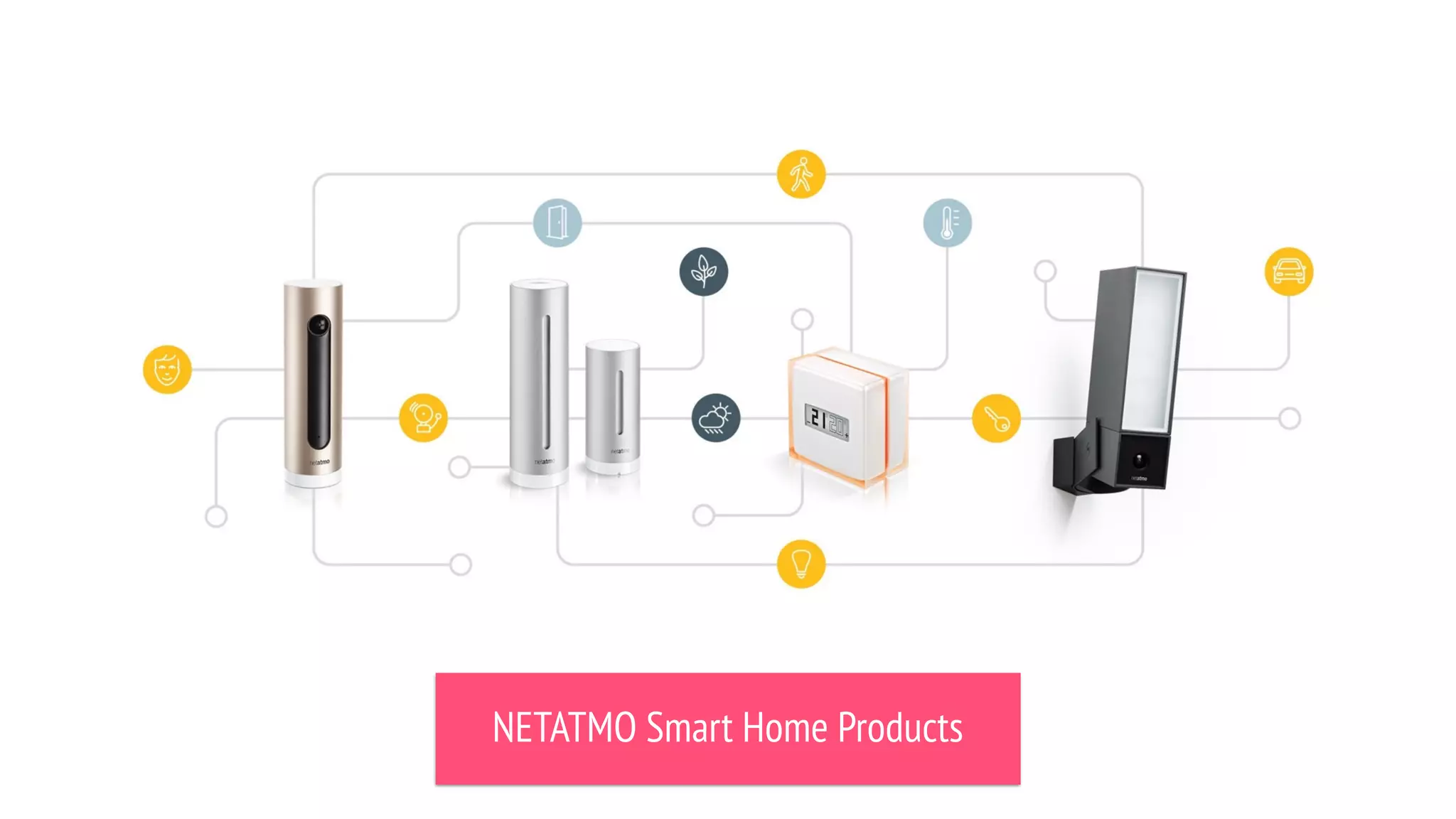
NETATMO Smart Home Products
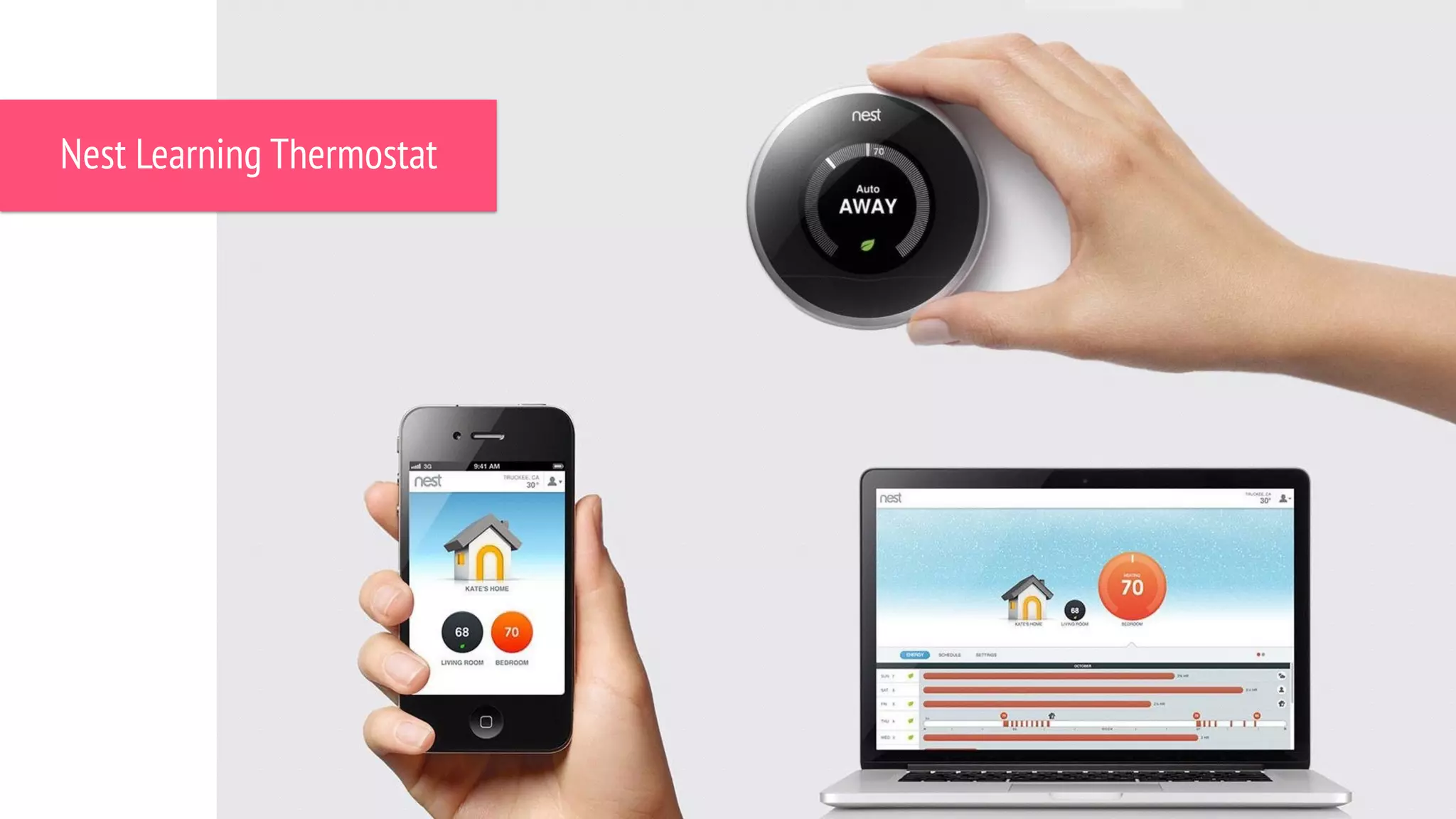
Nest Learning Thermostat
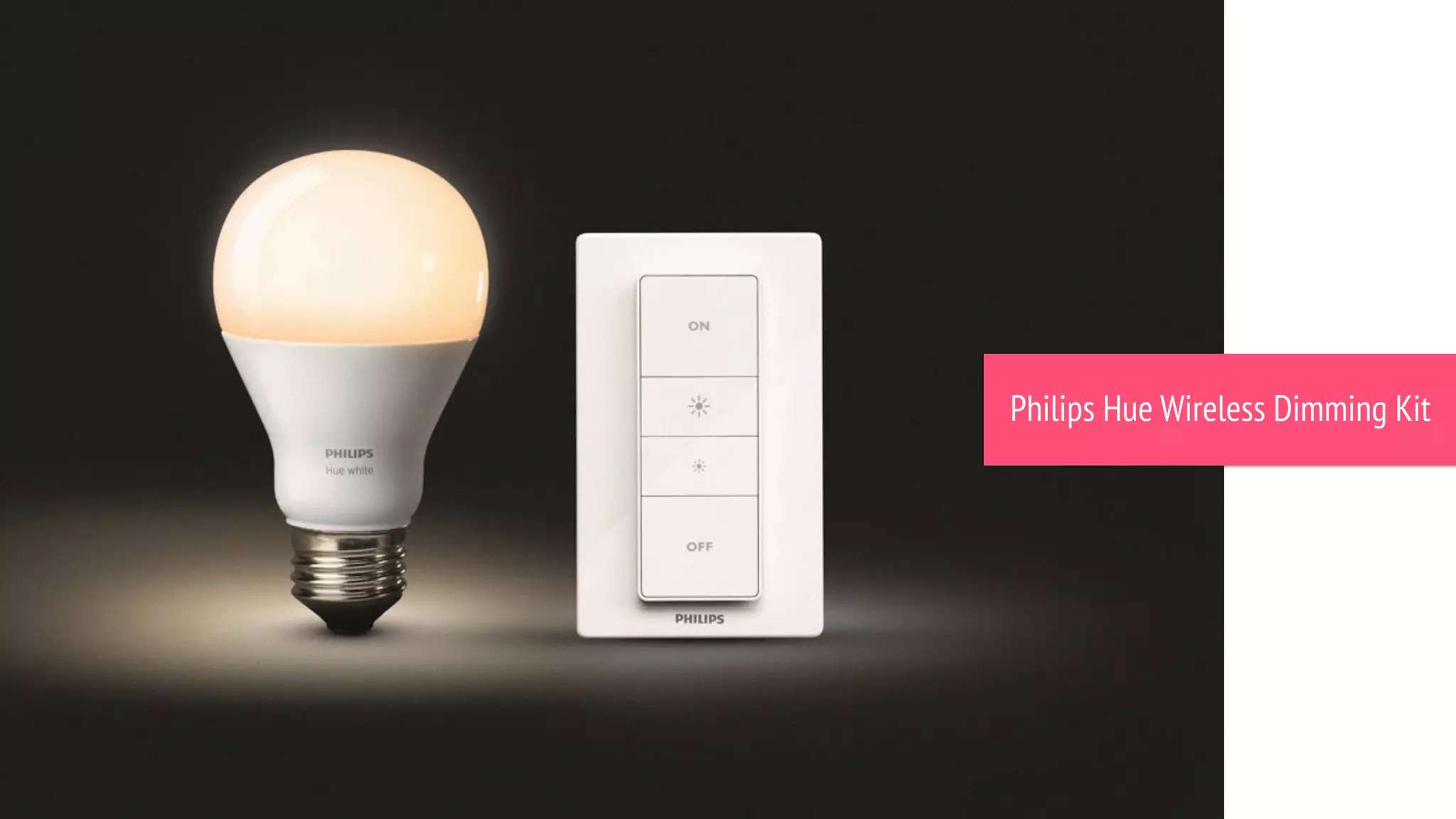
Philips Hue Wireless Dimming Kit
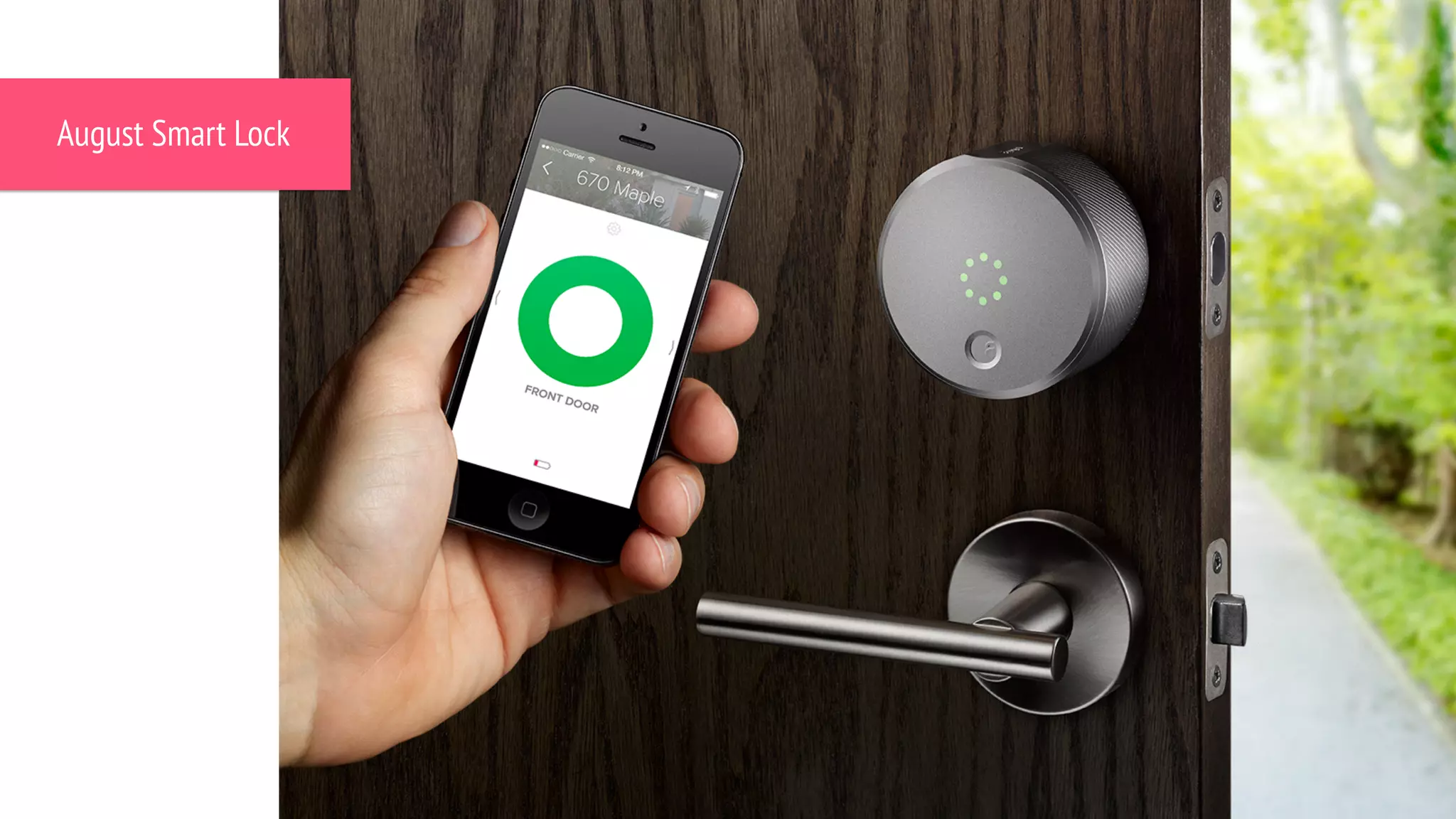
August Smart Lock
Building &
Home automation
Smart City
Smart
Manufacturing
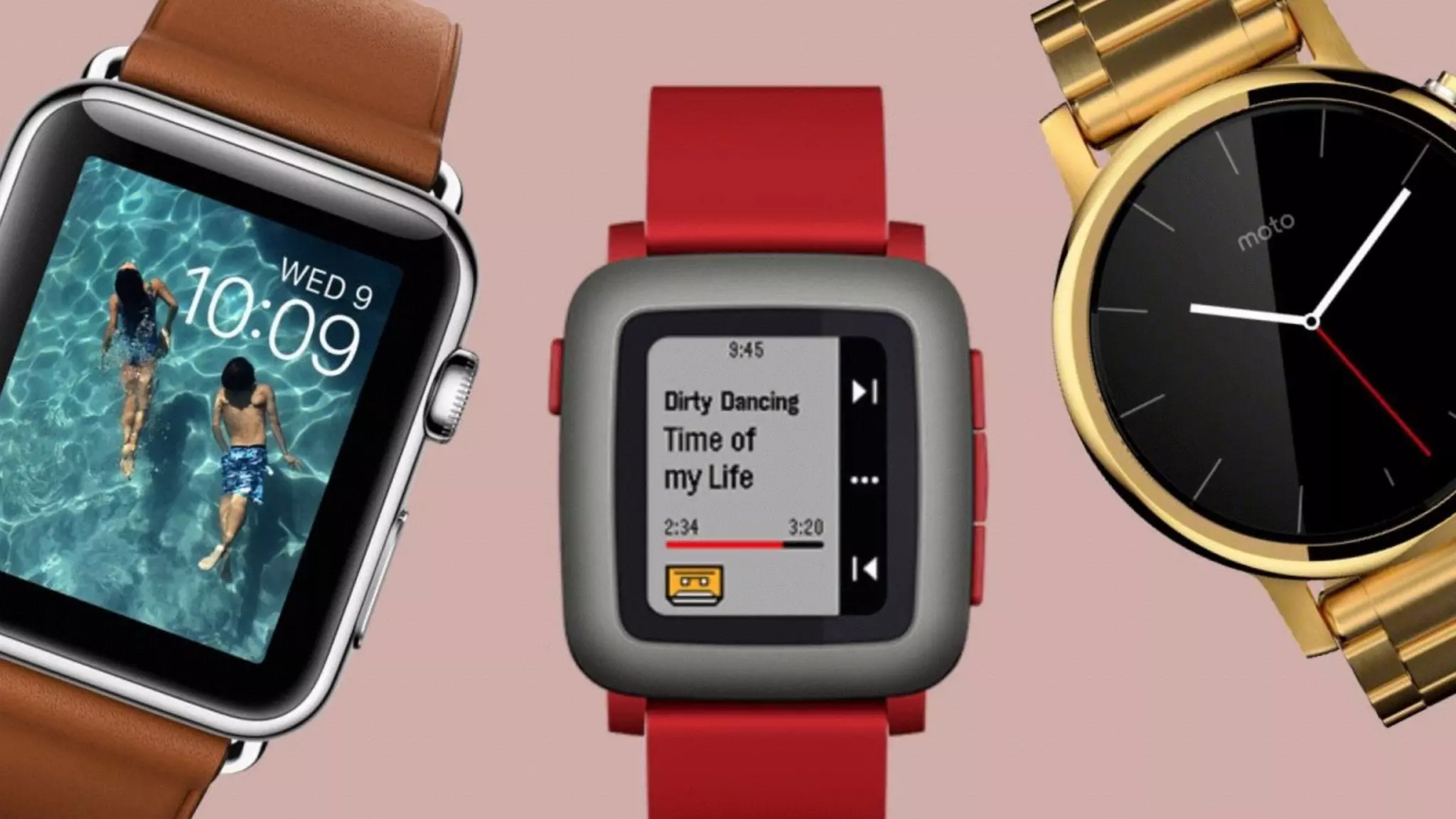
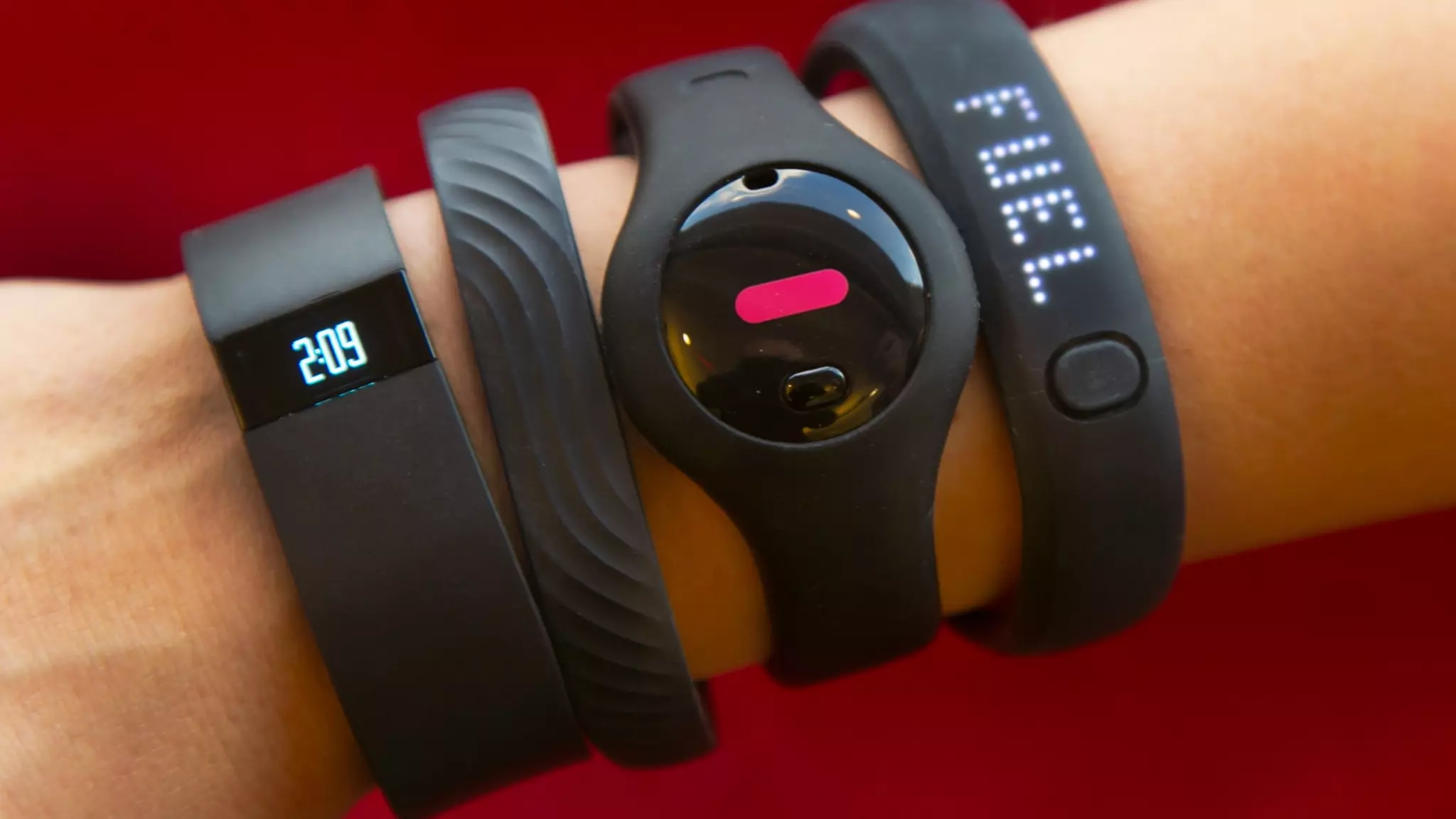
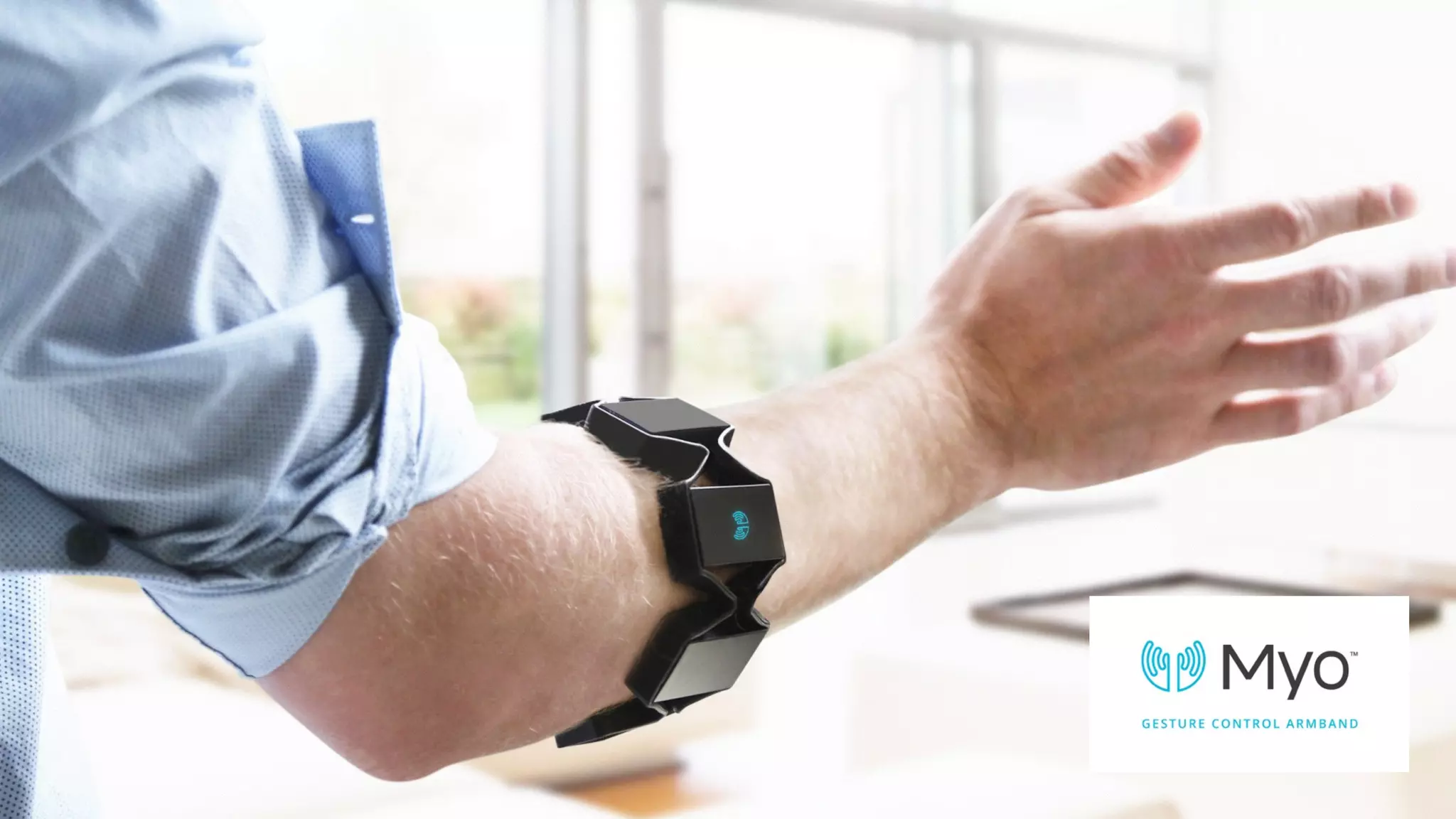
Wearables Health Care
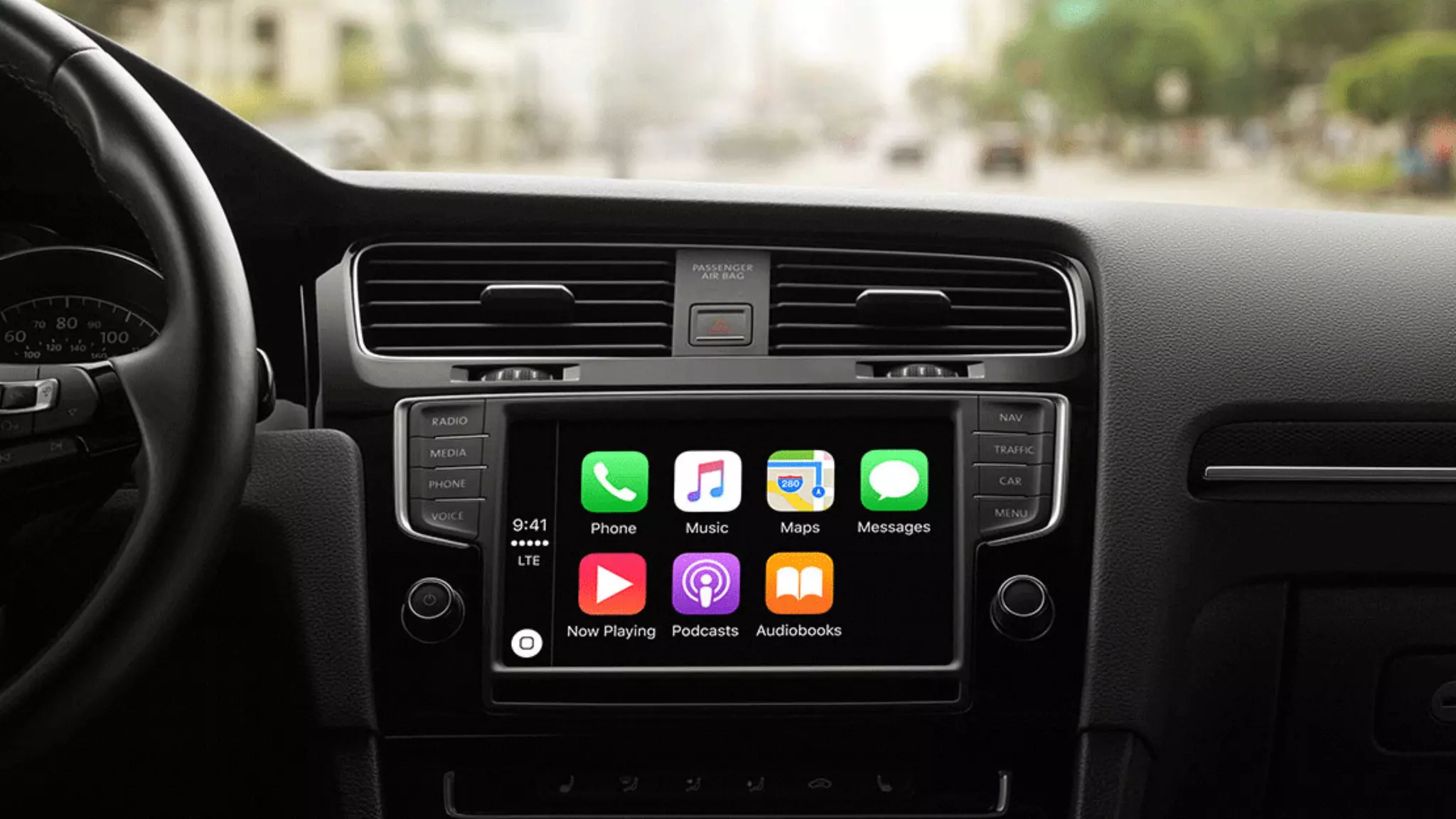
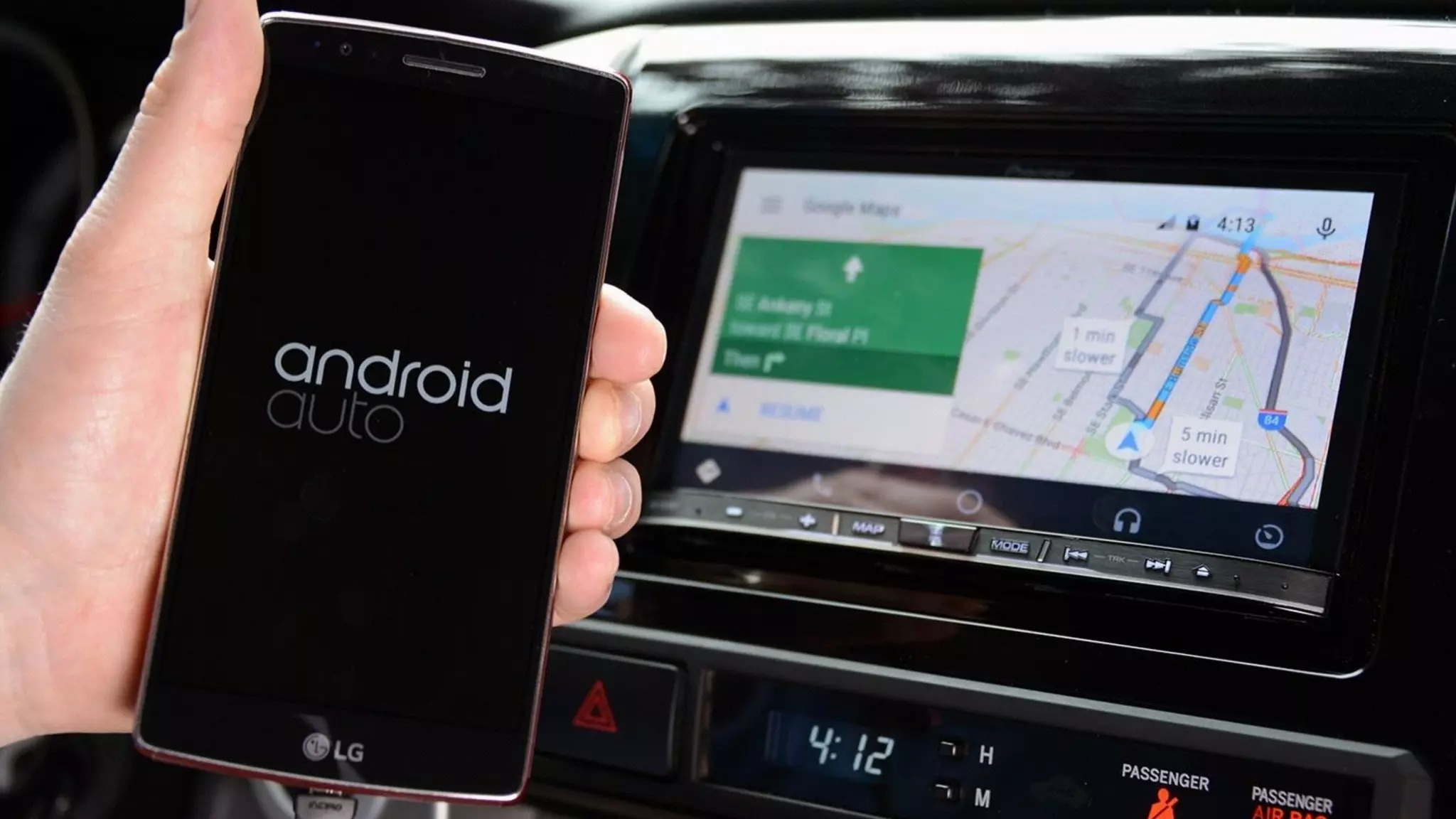
Automotive
Image Credit: Tech Crunh & Profitness Tech
Thync
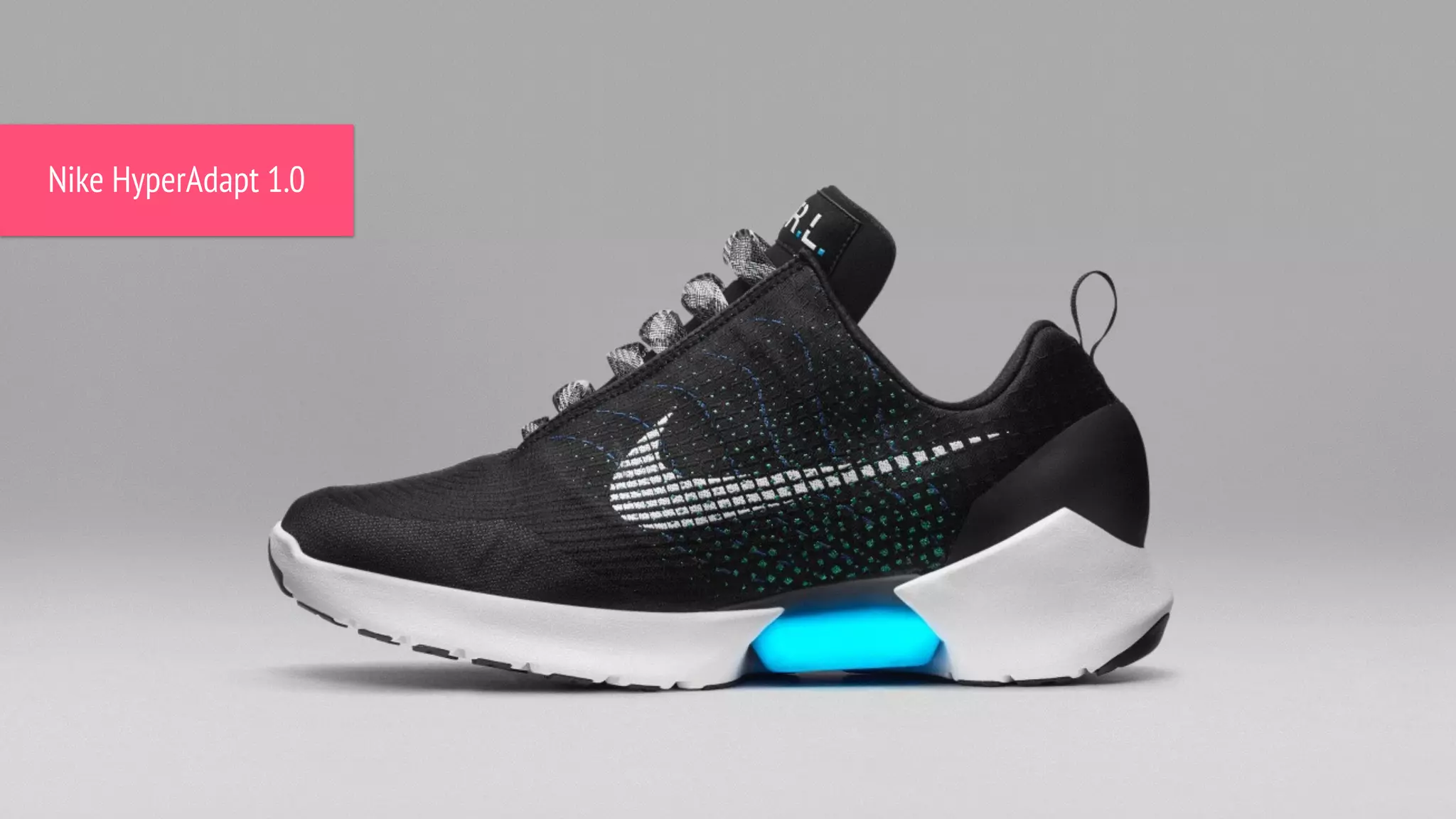
Nike HyperAdapt 1.0
Building &
Home automation
Smart City
Smart
Manufacturing
Wearables Health Care
Automotive
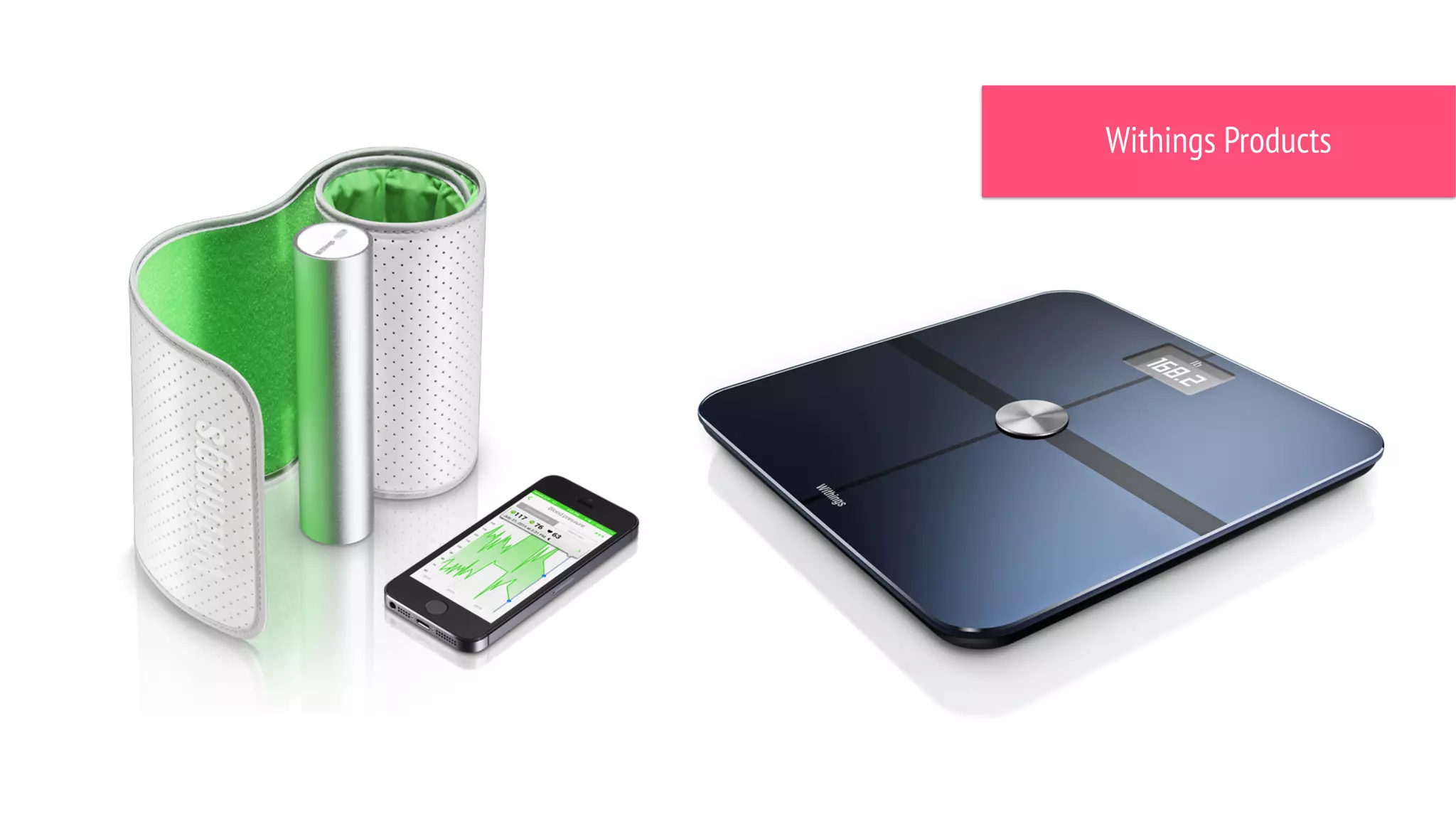
Withings Products
Building &
Home automation
Smart City
Smart
Manufacturing
Wearables Health Care
Automotive
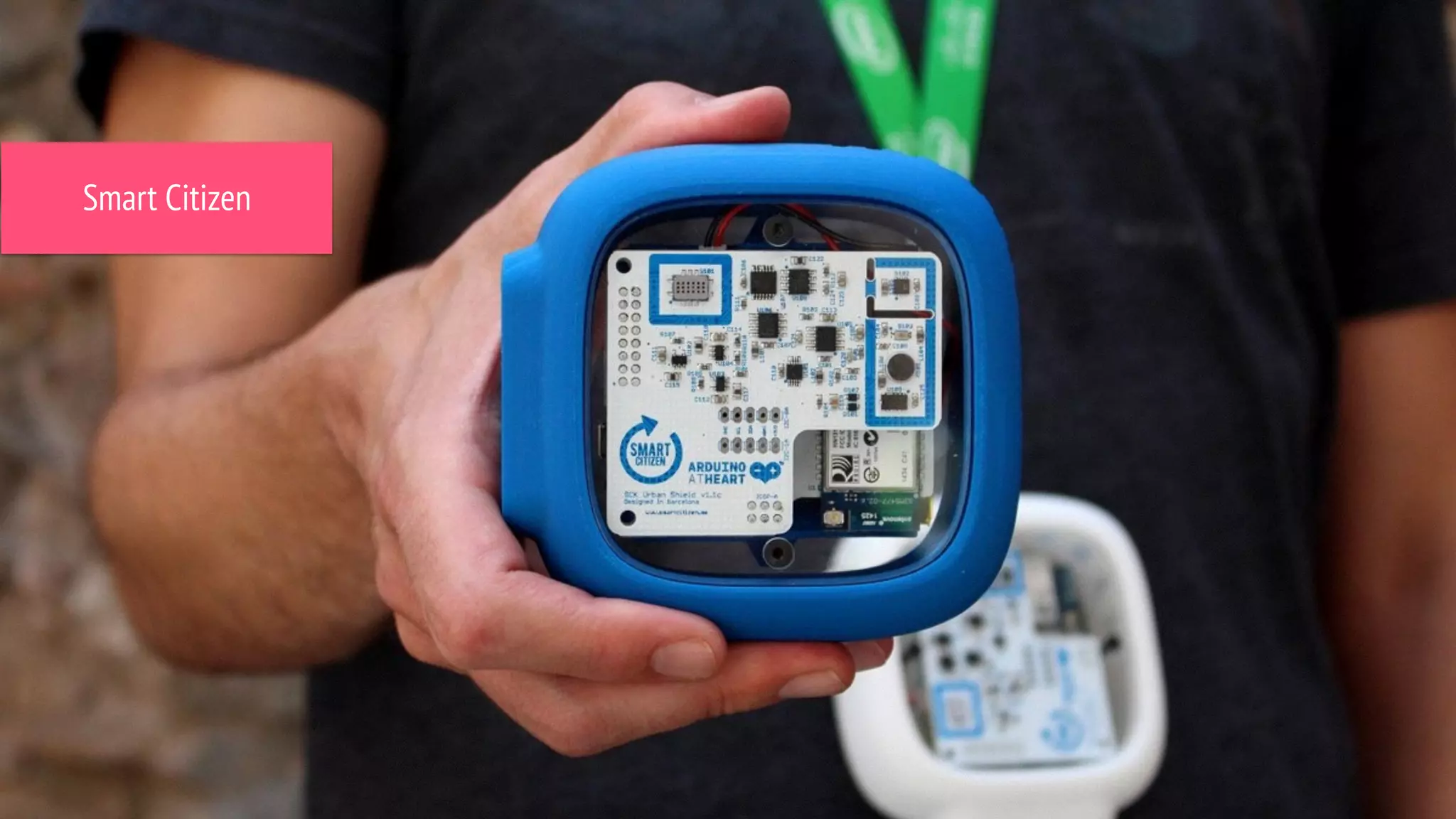
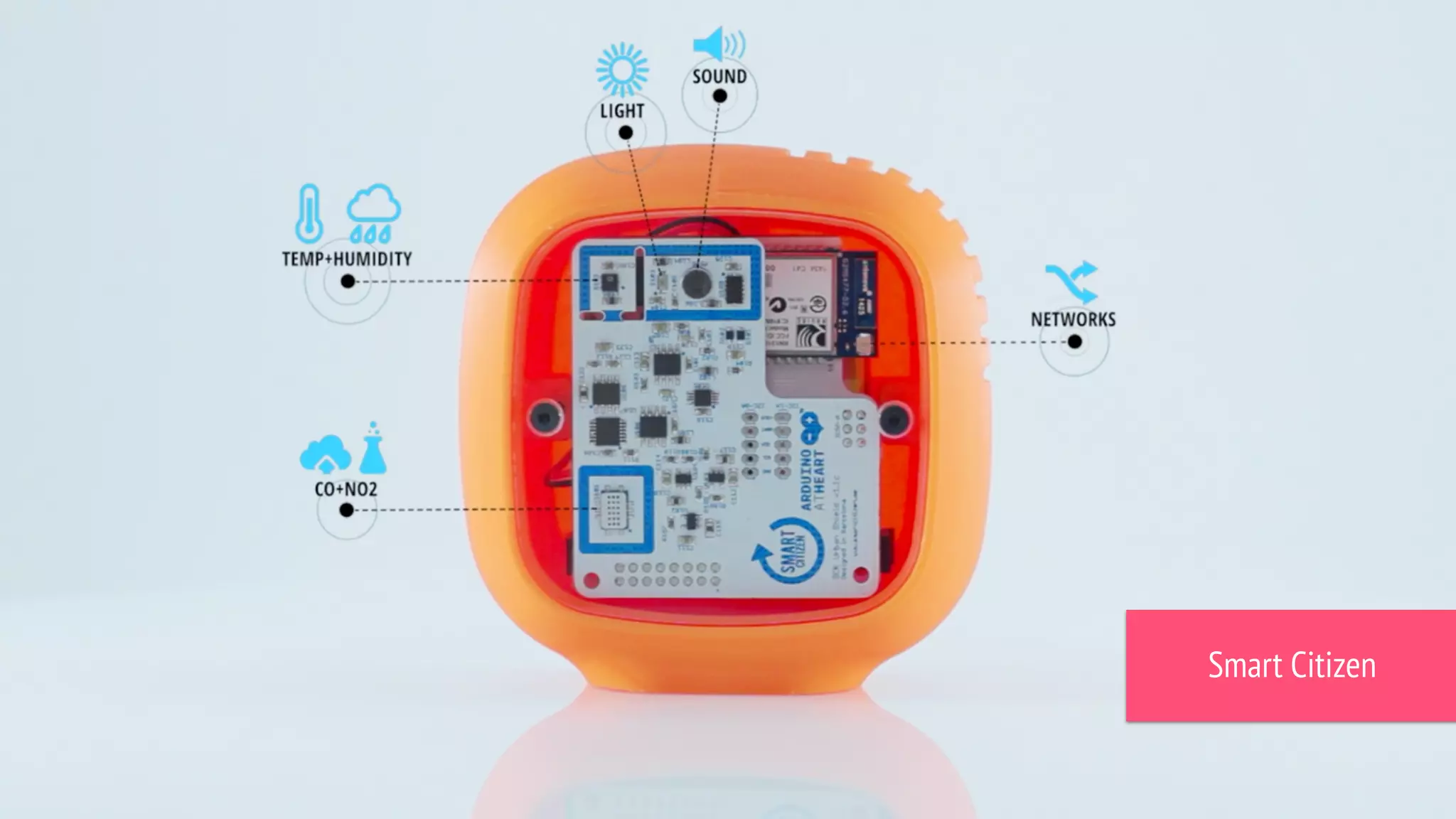
Smart Citizen
Smart Citizen
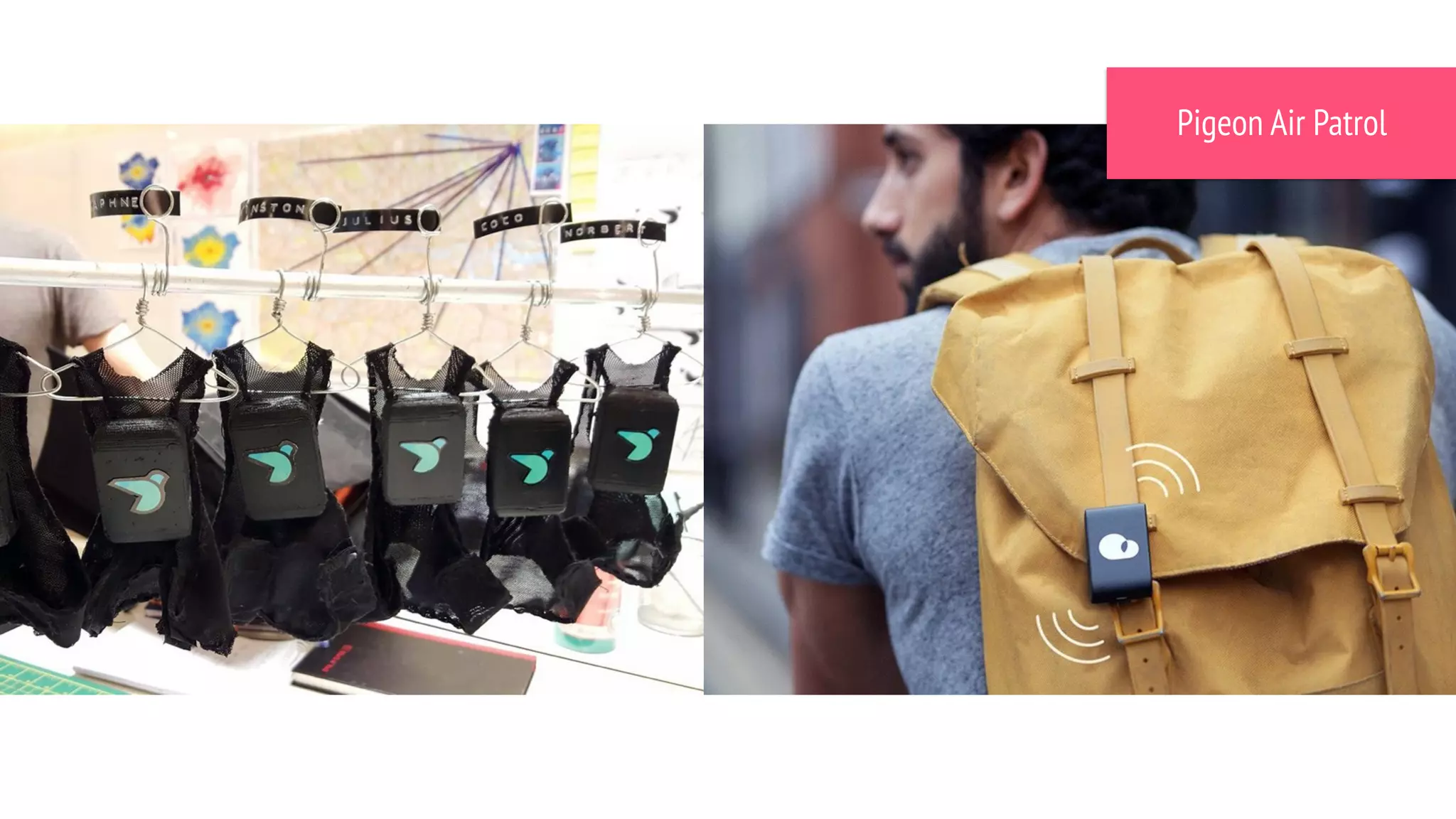
Pigeon Air Patrol
Pigeon Air Patrol
Building &
Home automation
Smart City
Smart
Manufacturing
Wearables Health Care
Automotive
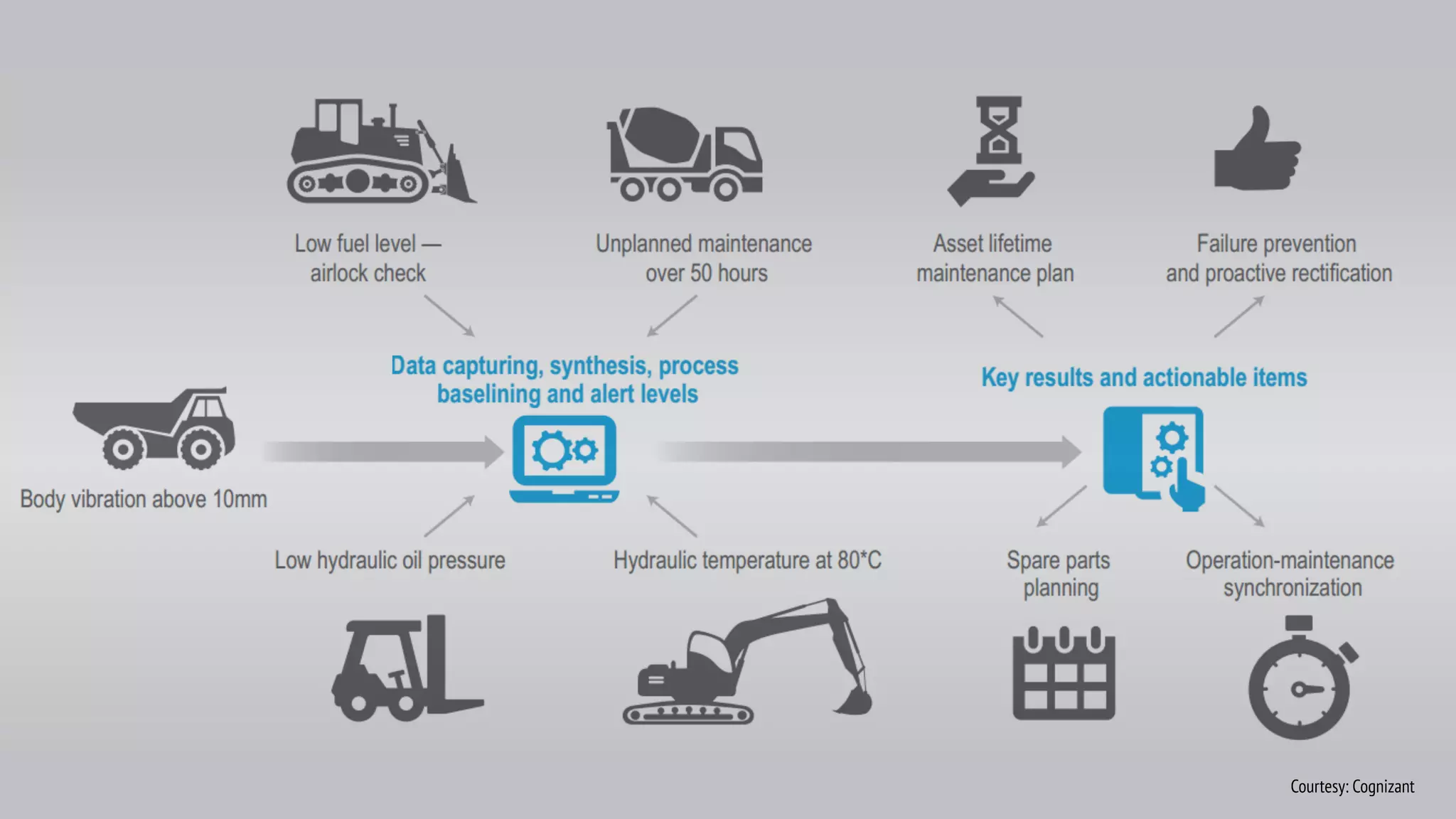
Courtesy: Cognizant
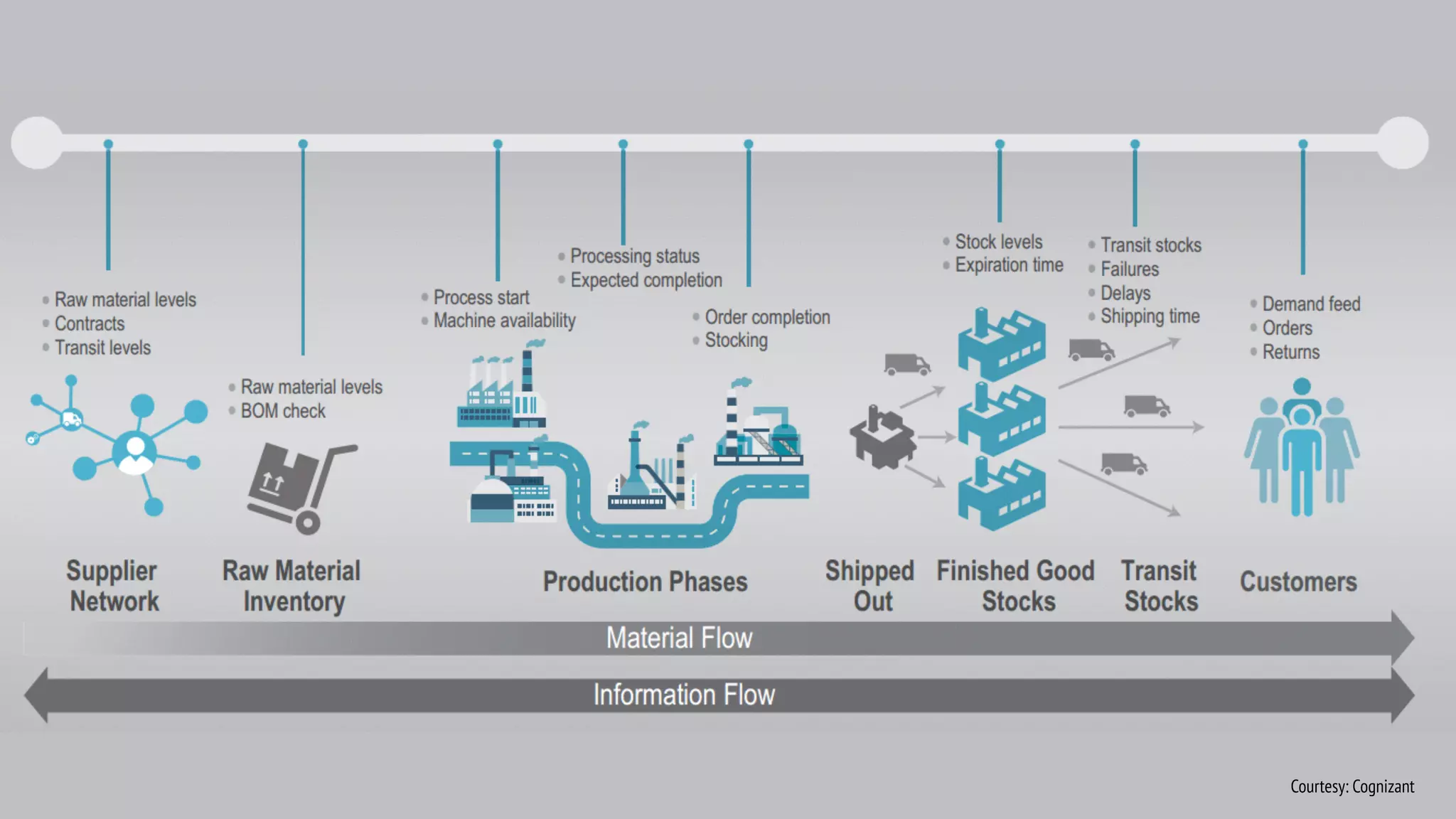
Courtesy: Cognizant
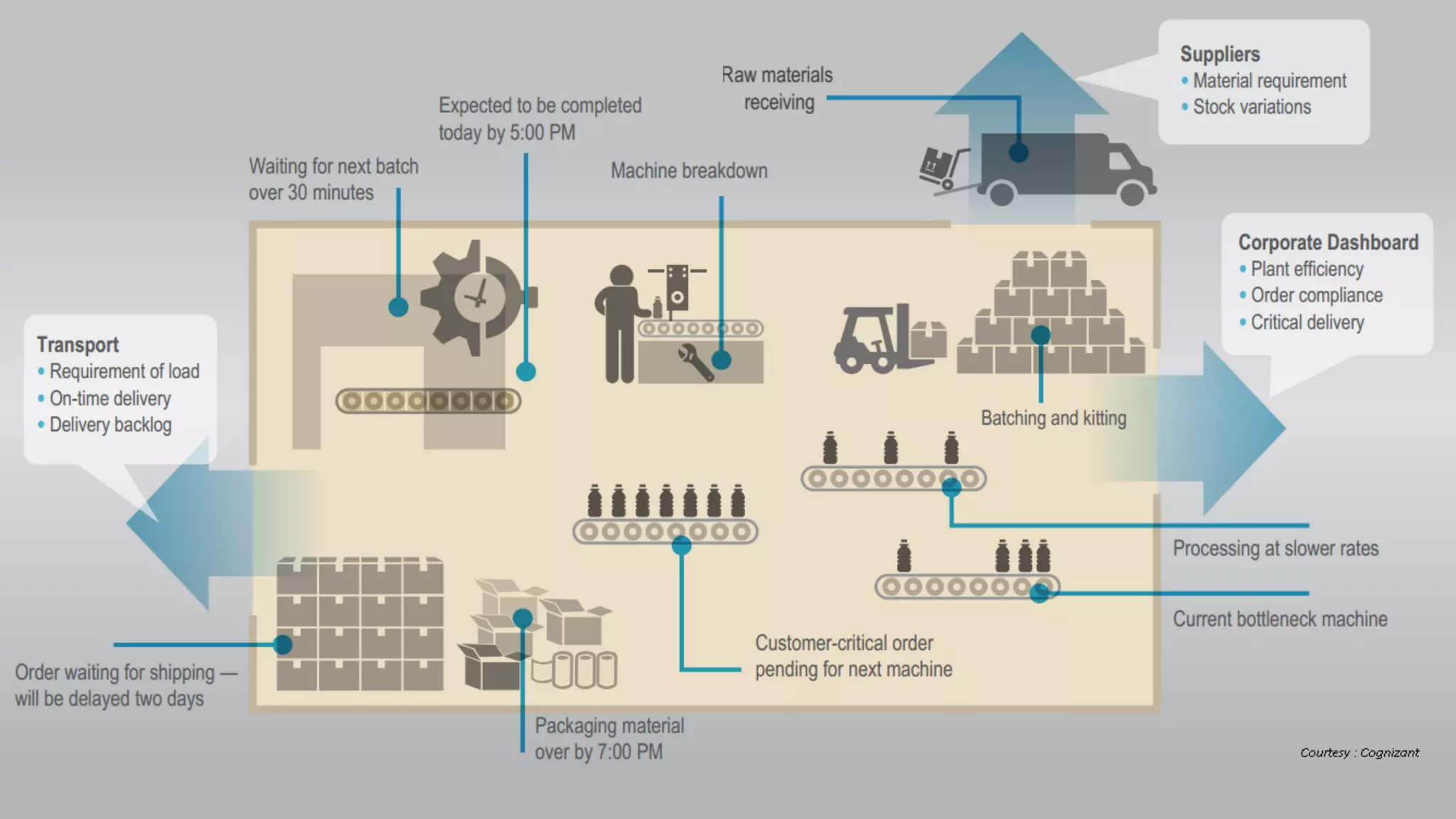
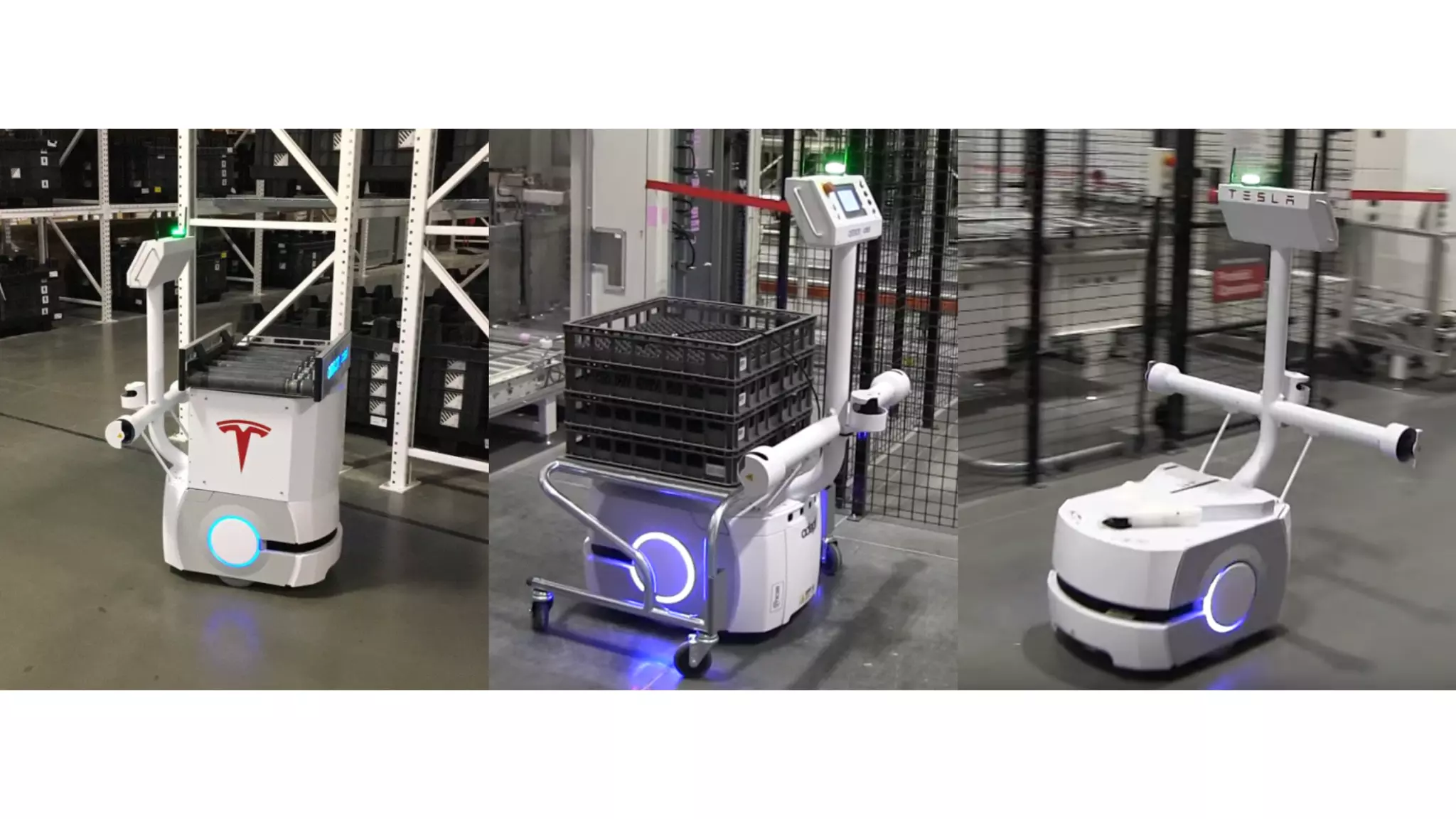
Tesla Gigafactory
Building &
Home automation
Smart City
Smart
Manufacturing
Wearables Health Care
Automotive
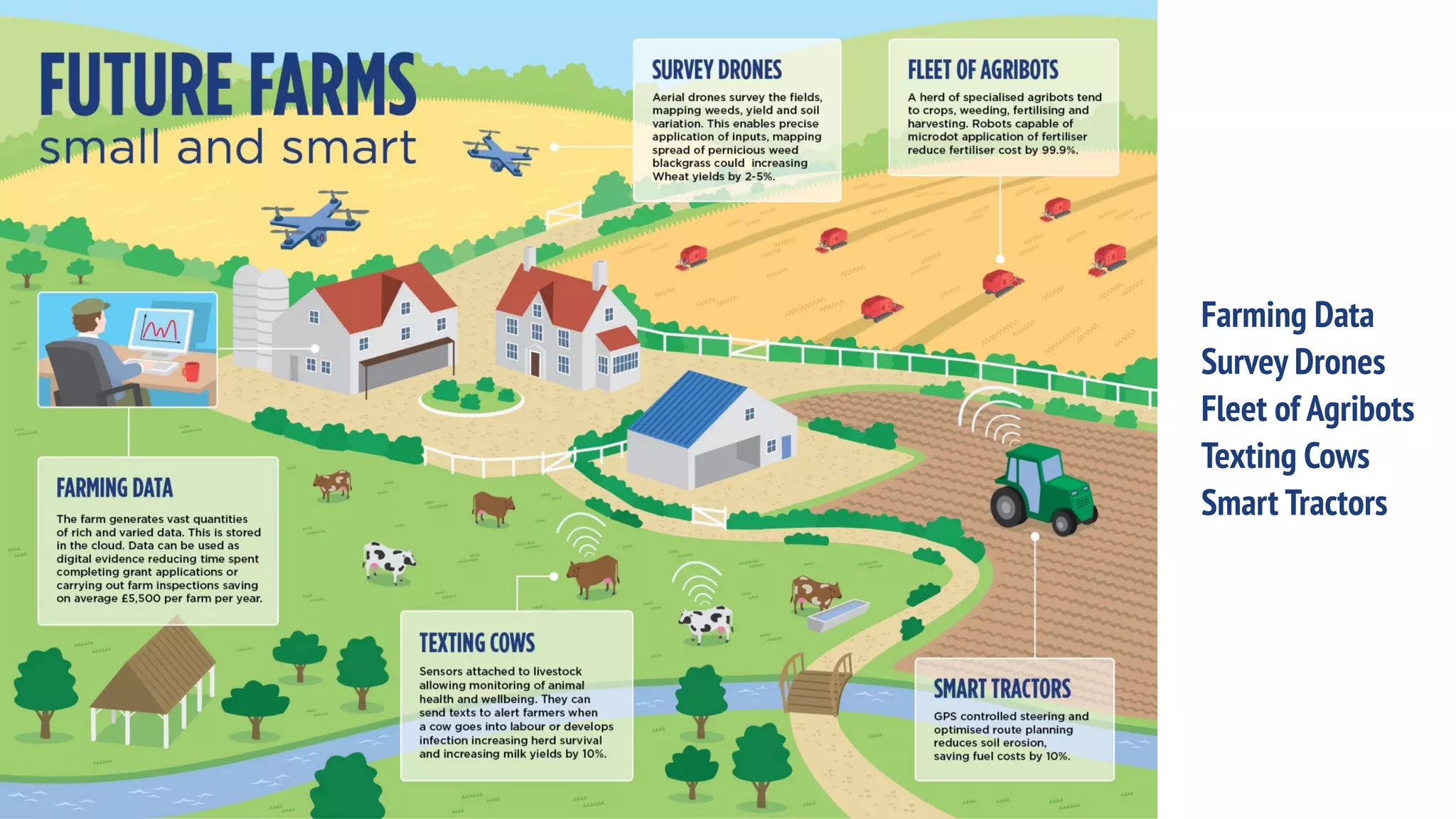
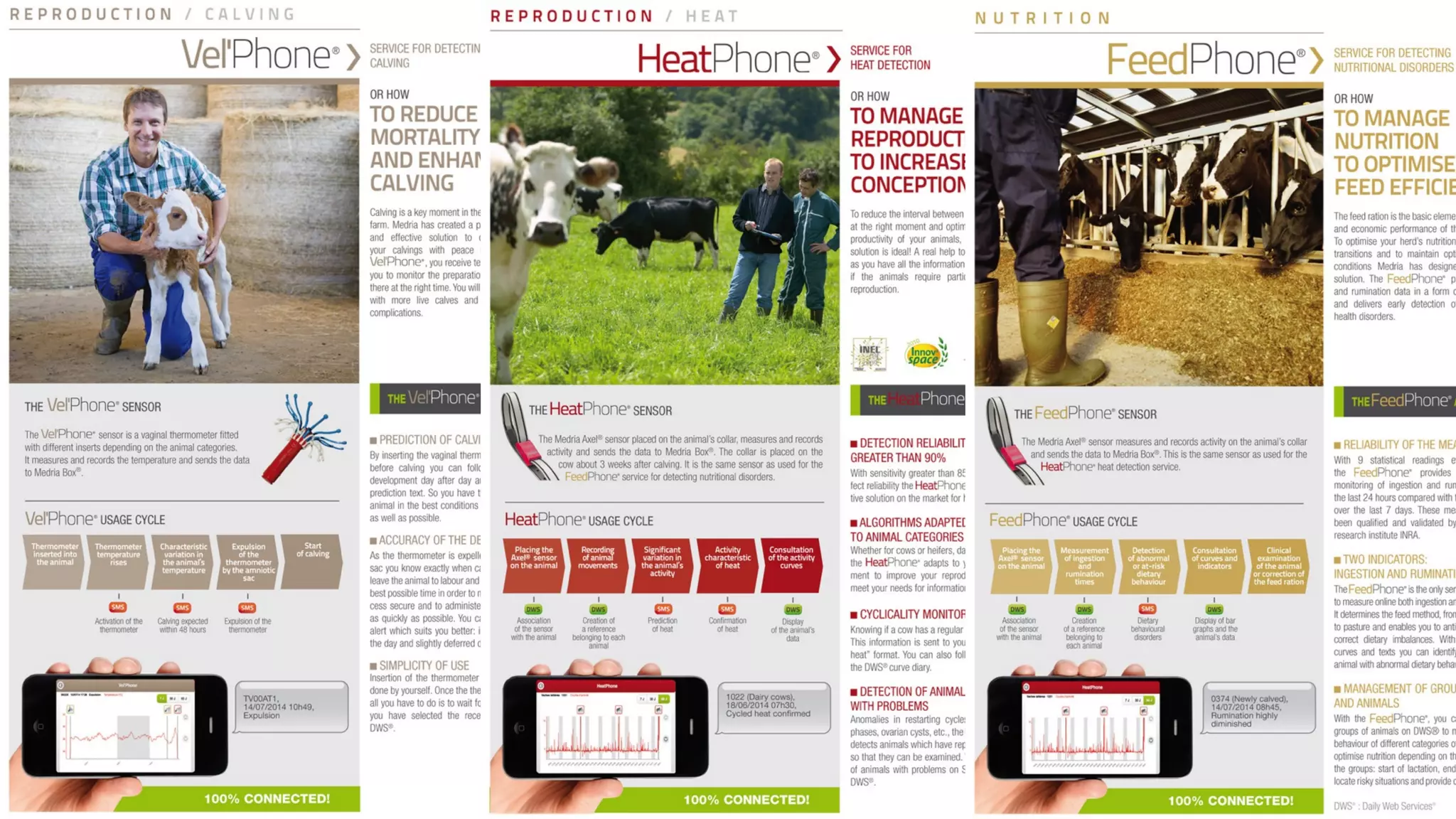
And More…
Farming Data
Survey Drones
Fleet of Agribots
Texting Cows
Smart Tractors
How-To: IoT for Dummies
How-To
IoT Solution Life Cycle
Connectivity Options
M2M Data Protocols: MQTT,CoAP,XMPP
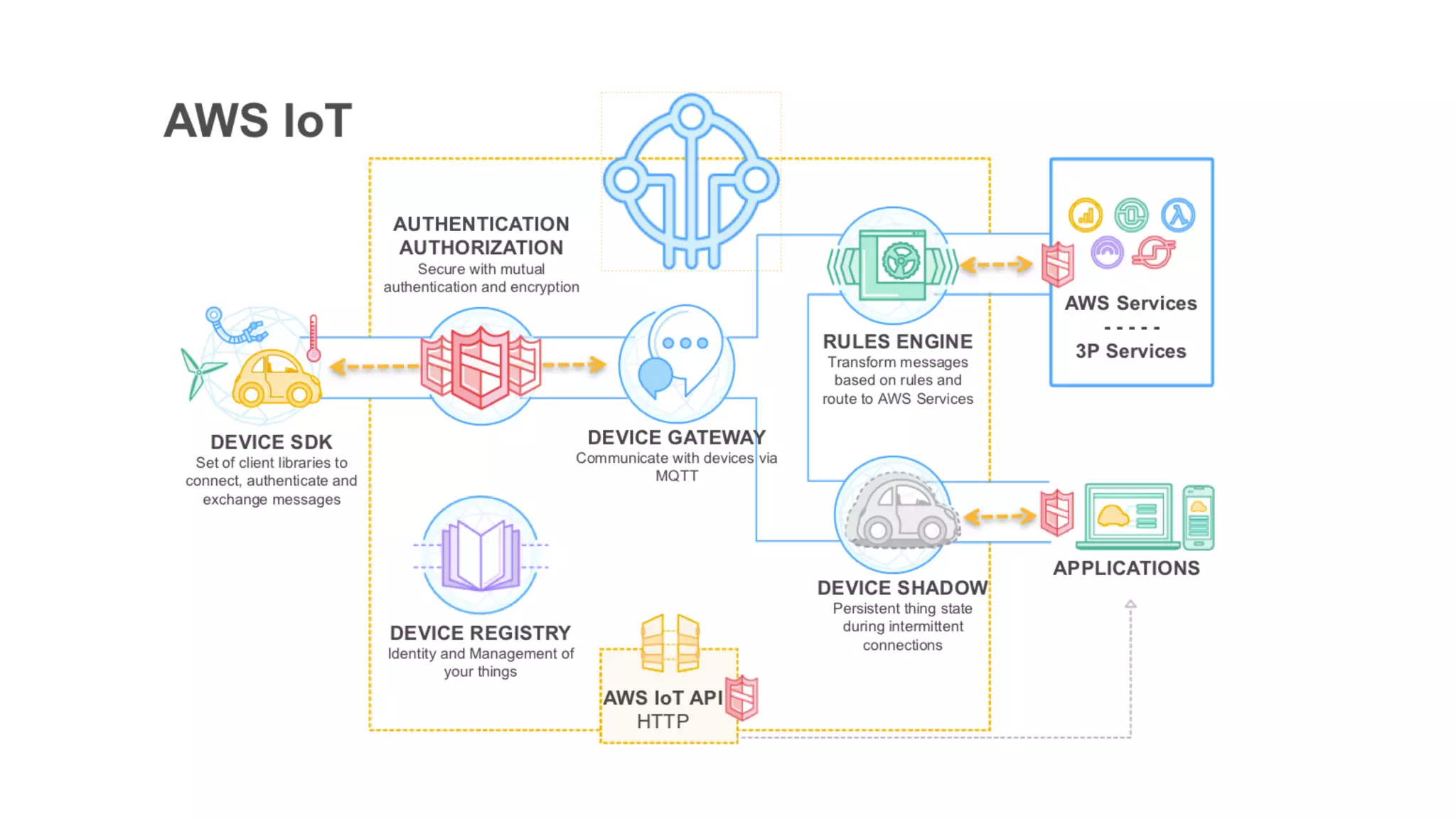
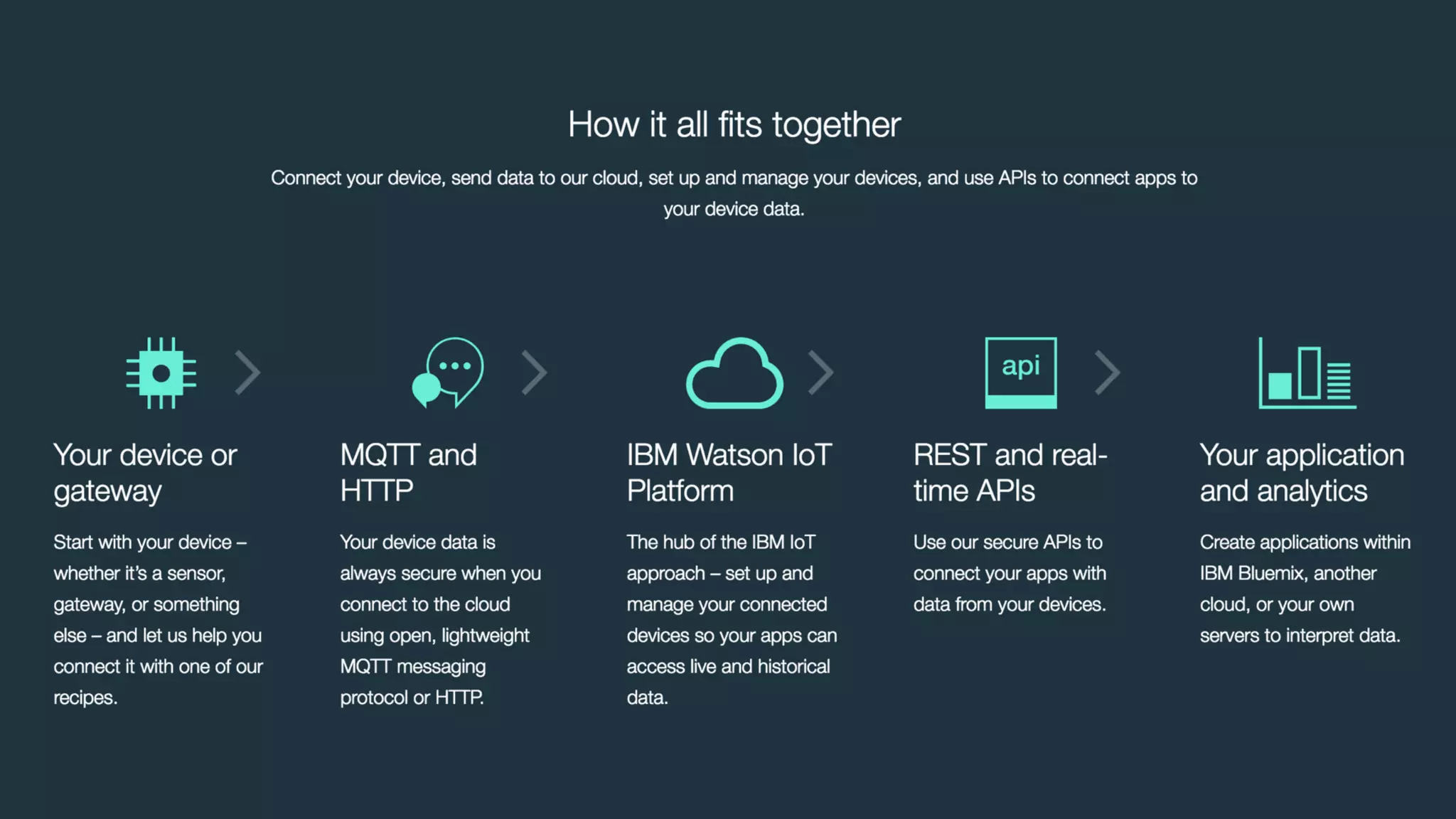
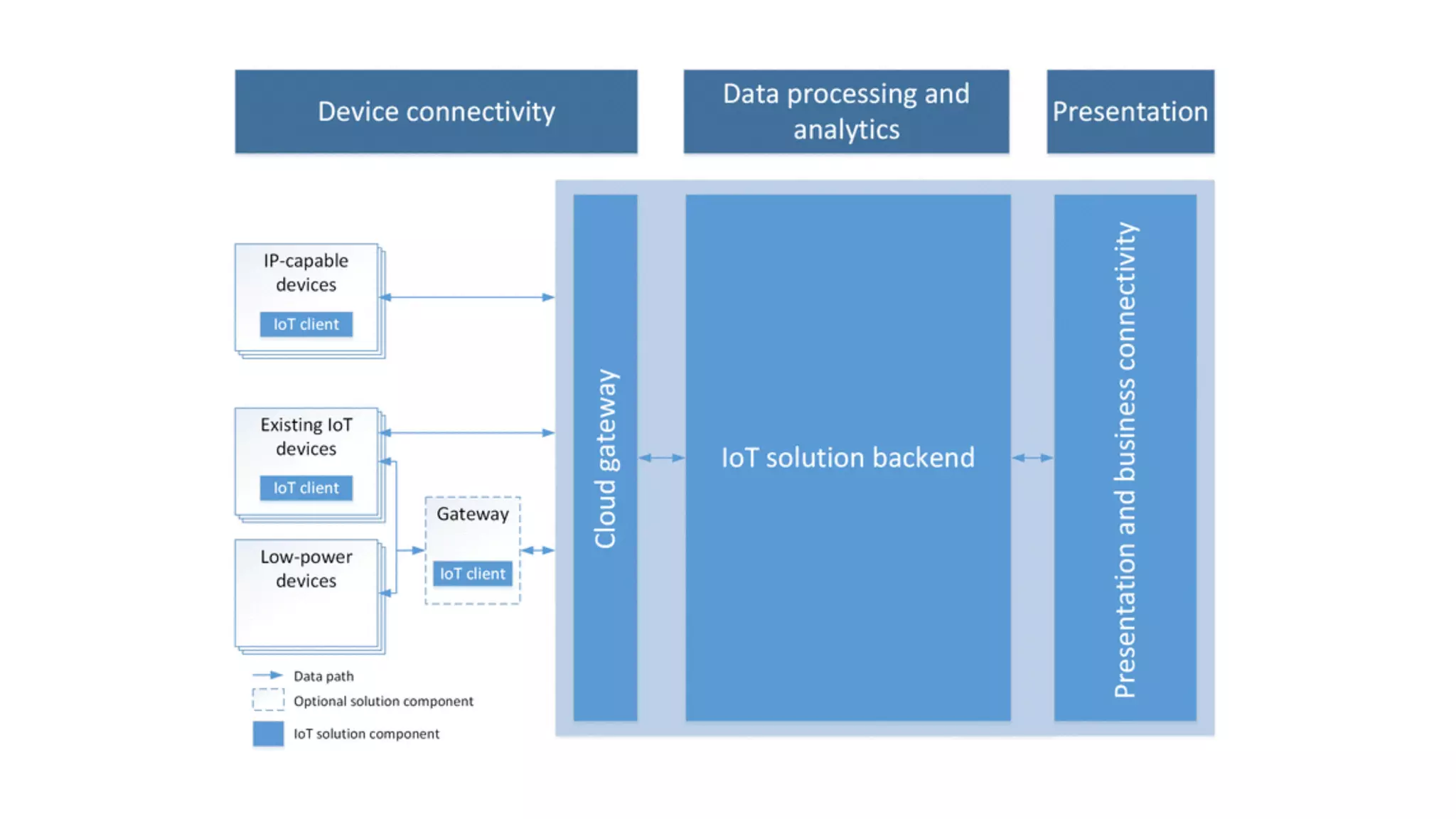
Entreprise IoT Platform
Big Data & IoT
IoT Solution Life Cycle
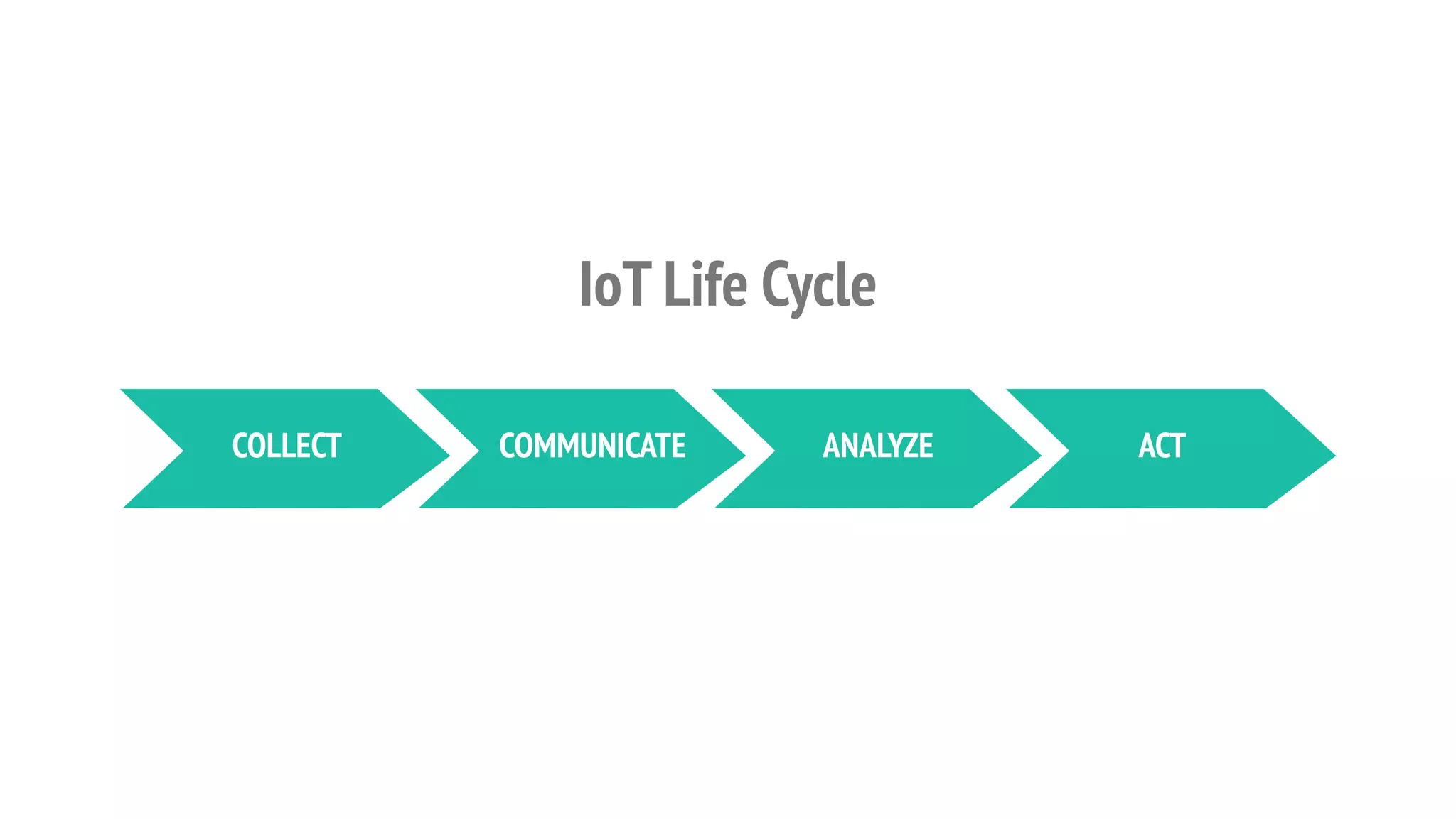
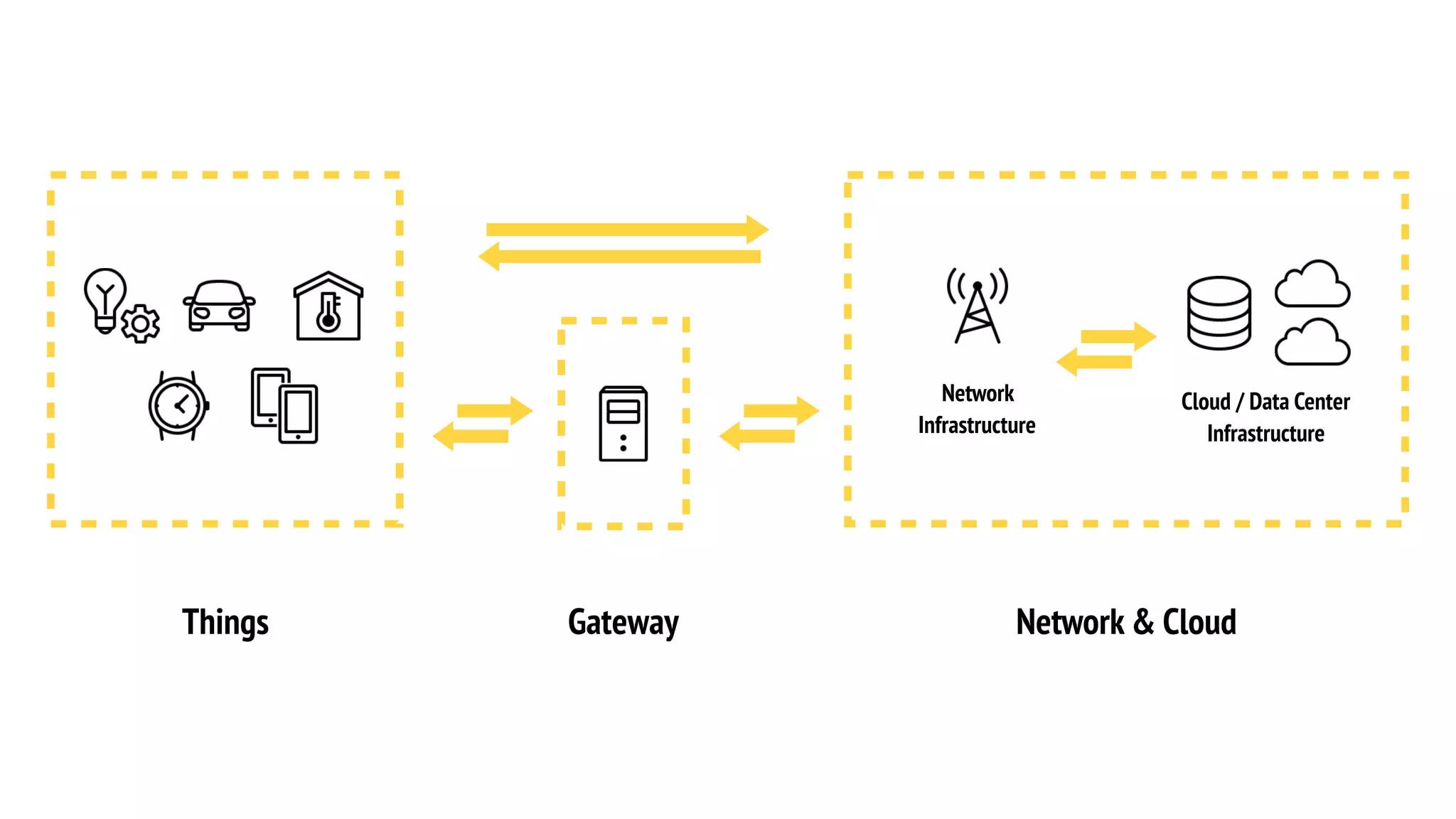
COLLECT COMMUNICATE ANALYZE ACT
IoT Life Cycle
Things Gateway Network & Cloud
Network
Infrastructure
Cloud / Data Center
Infrastructure
Why do we need a Gateway?
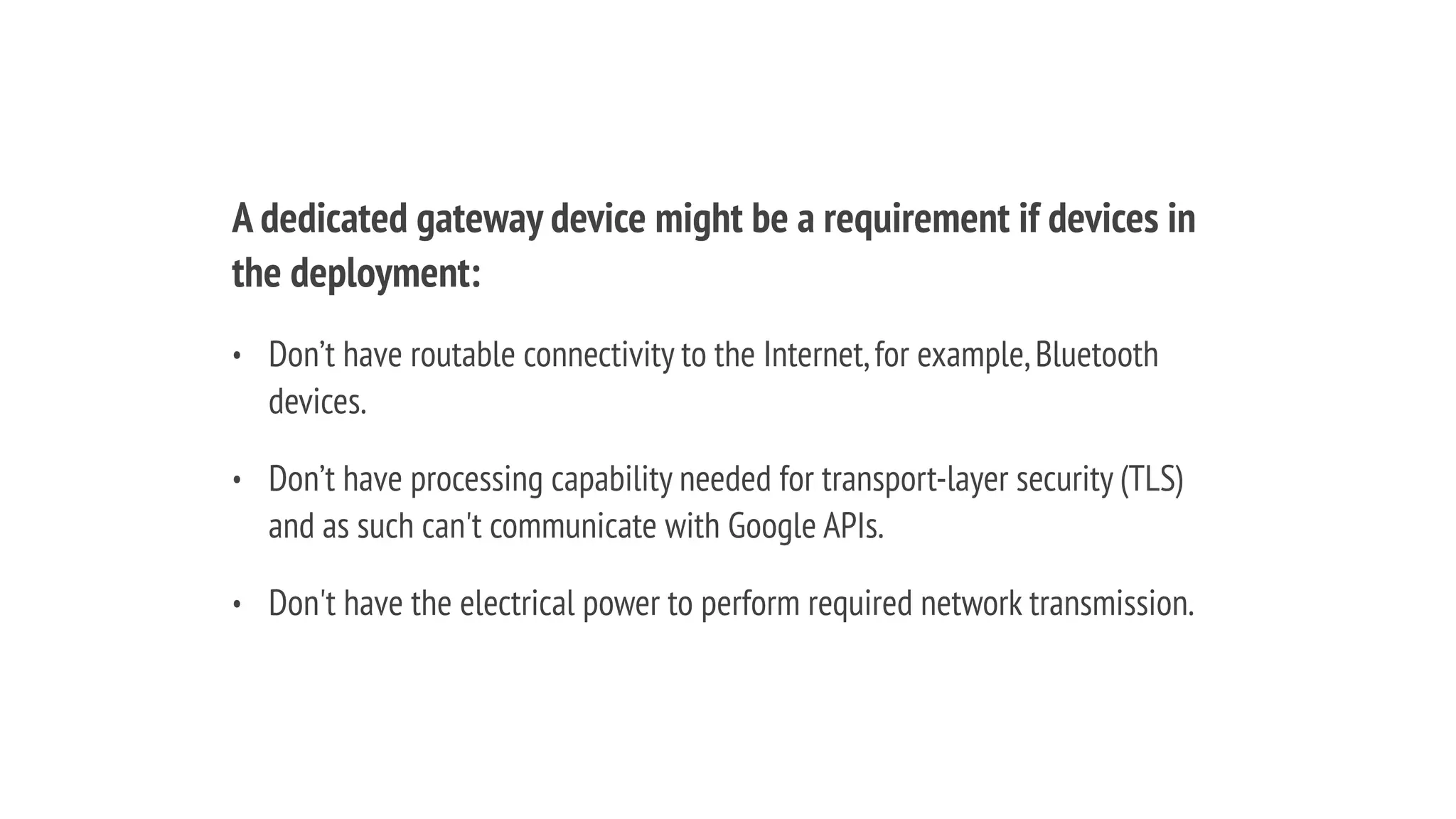
A dedicated gateway device might be a requirement if devices in
the deployment:
• Don’t have routable connectivity to the Internet,for example,Bluetooth
devices.
• Don’t have processing capability needed for transport-layer security (TLS)
and as such can't communicate with Google APIs.
• Don't have the electrical power to perform required network transmission.
A gateway device might be used even when the participating devices
are capable of communicating without one,in order to:
• Condensing data
• Cache data
• Manage Timestamps
• IPV6 to IPV4 translation
• Ingesting and uploading other flat-file-based data
• Firmware updates
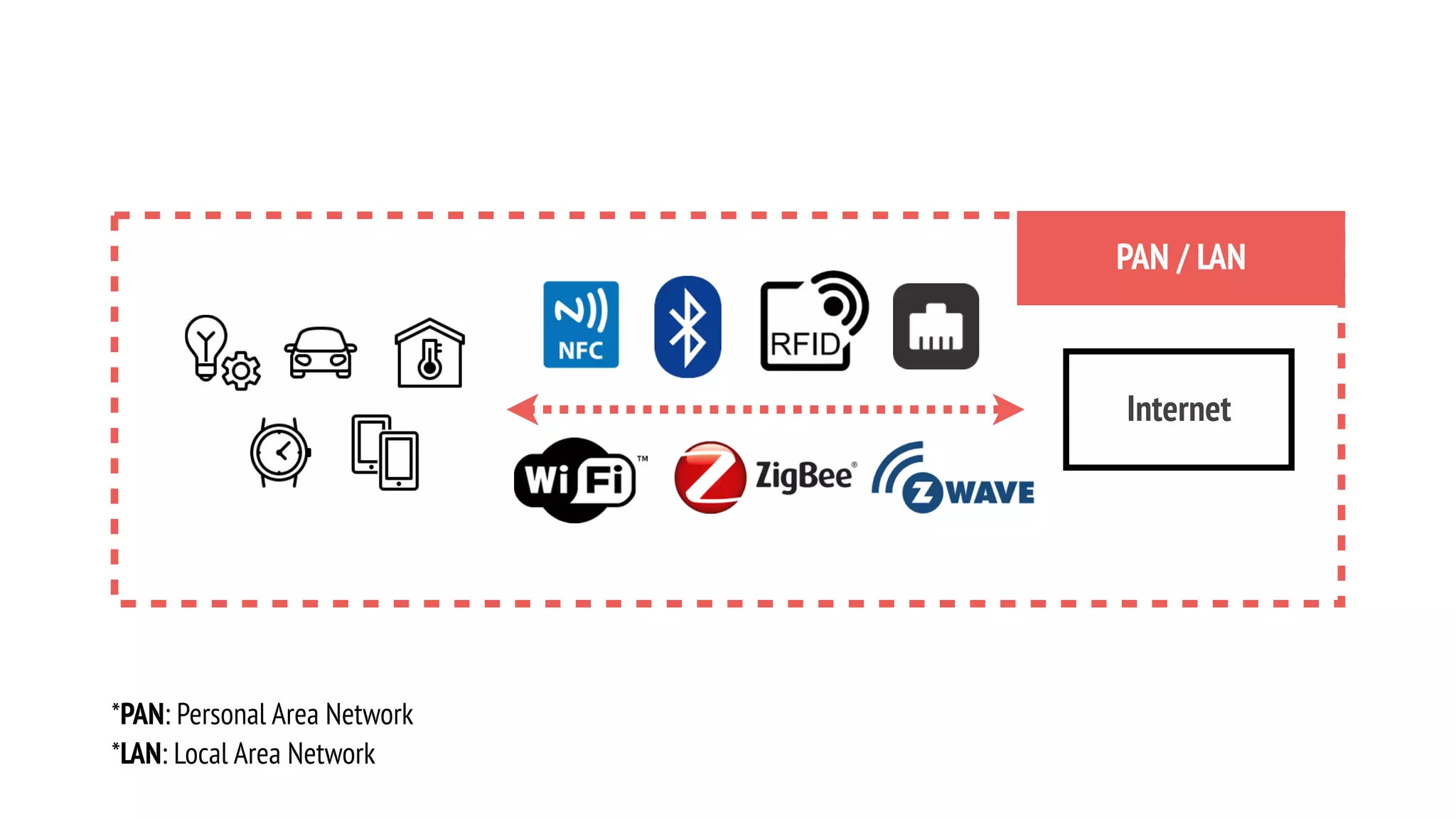
Connectivity Options
Internet
PAN / LAN
*PAN: Personal Area Network
*LAN: Local Area Network
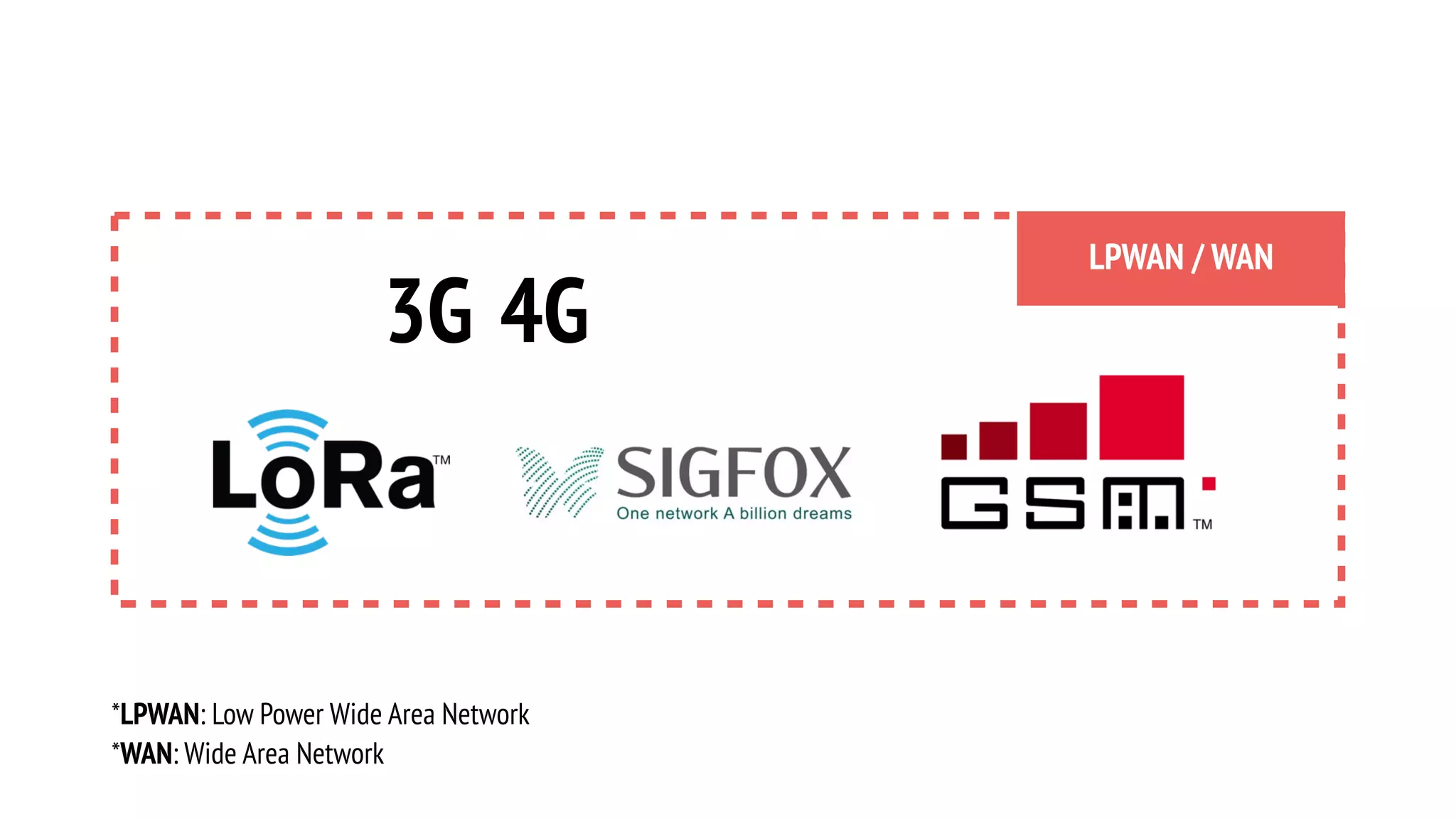
3G 4G
LPWAN / WAN
*LPWAN: Low Power Wide Area Network
*WAN: Wide Area Network
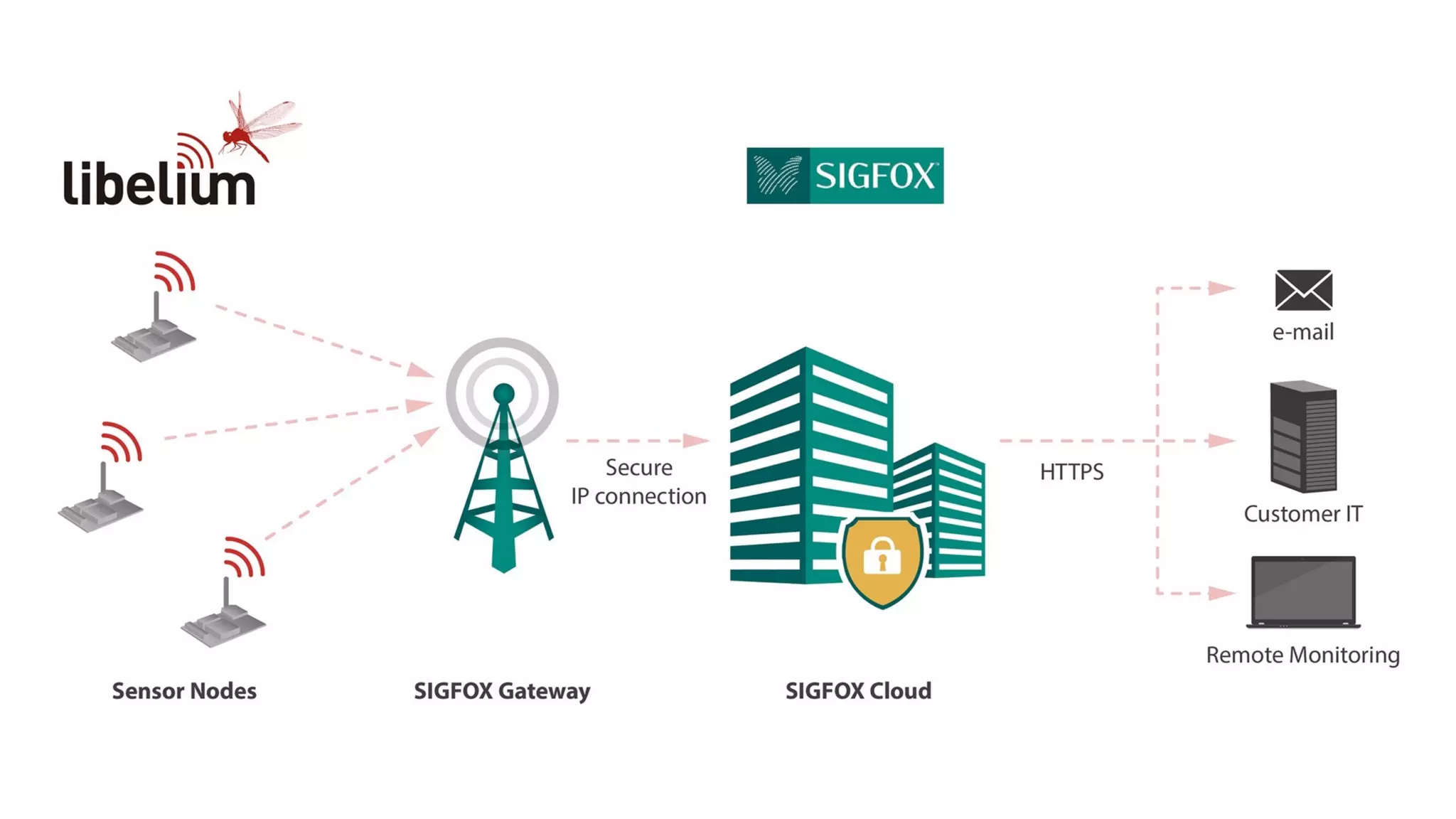
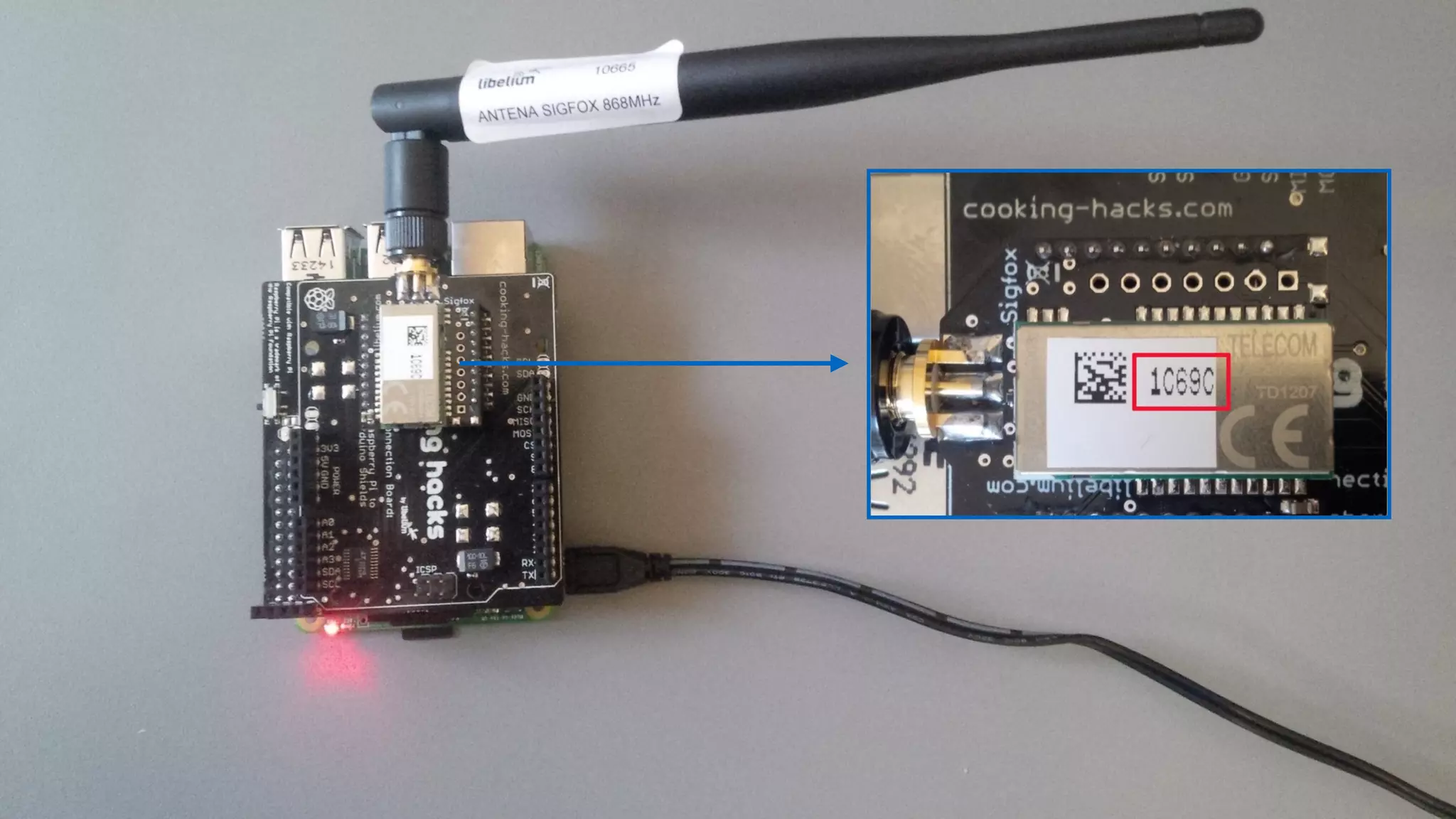
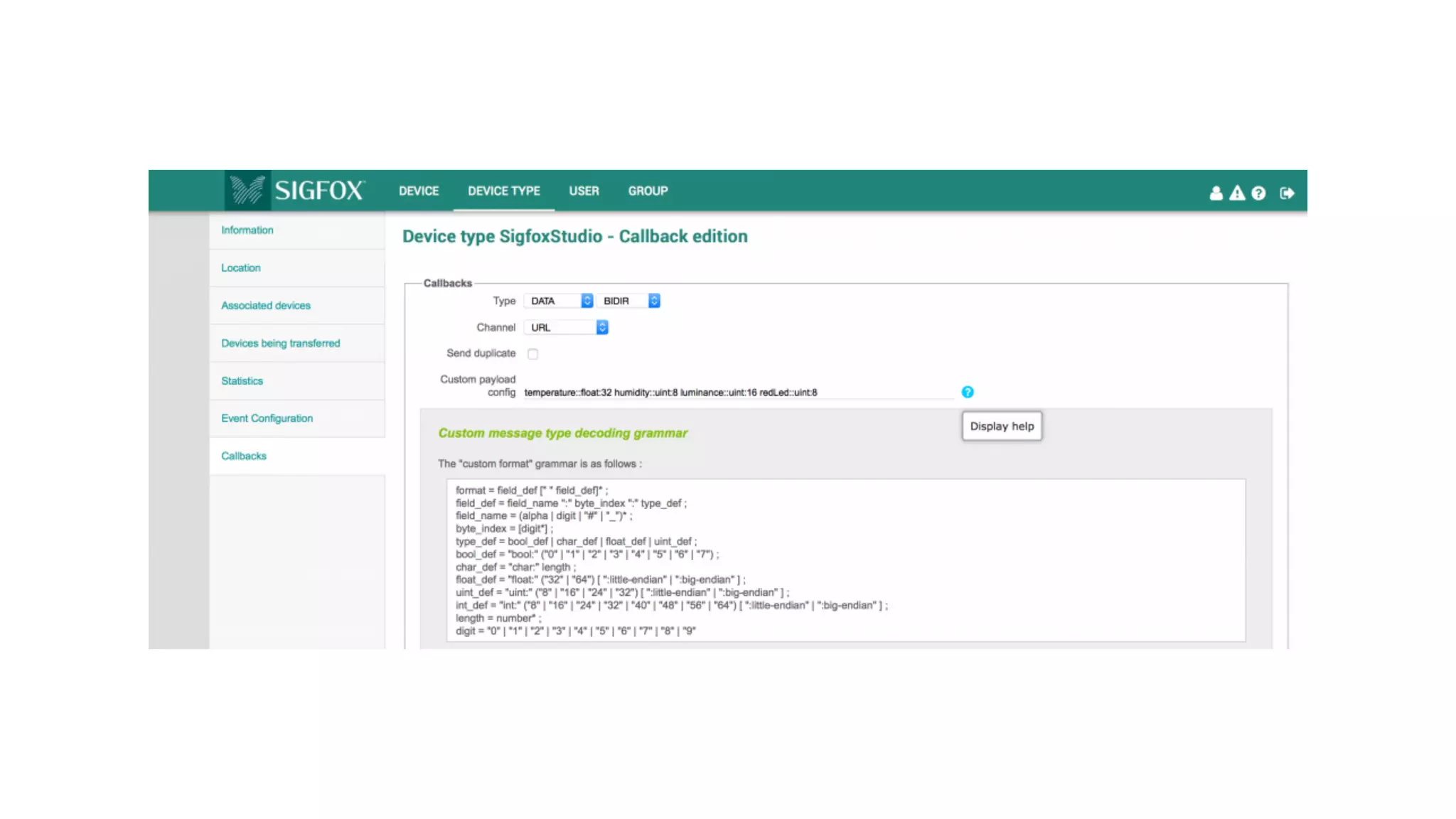
• SIGFOX employs a cellular style system that enables
remote devices to connect using ultra-narrow band (UNB)
technology,the same used for submarine communications
during World War I.
M2M Data Protocols
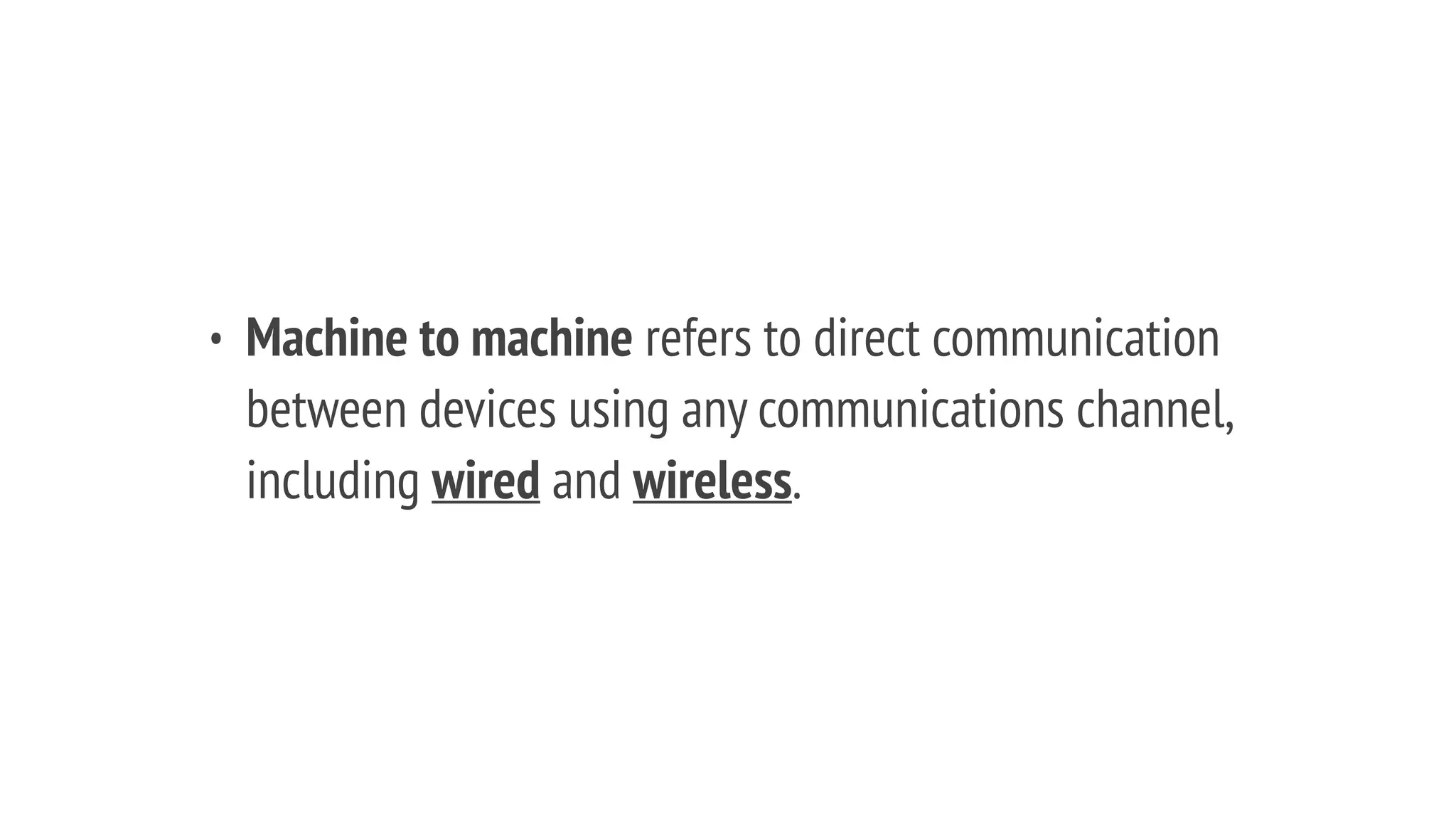
• Machine to machine refers to direct communication
between devices using any communications channel,
including wired and wireless.
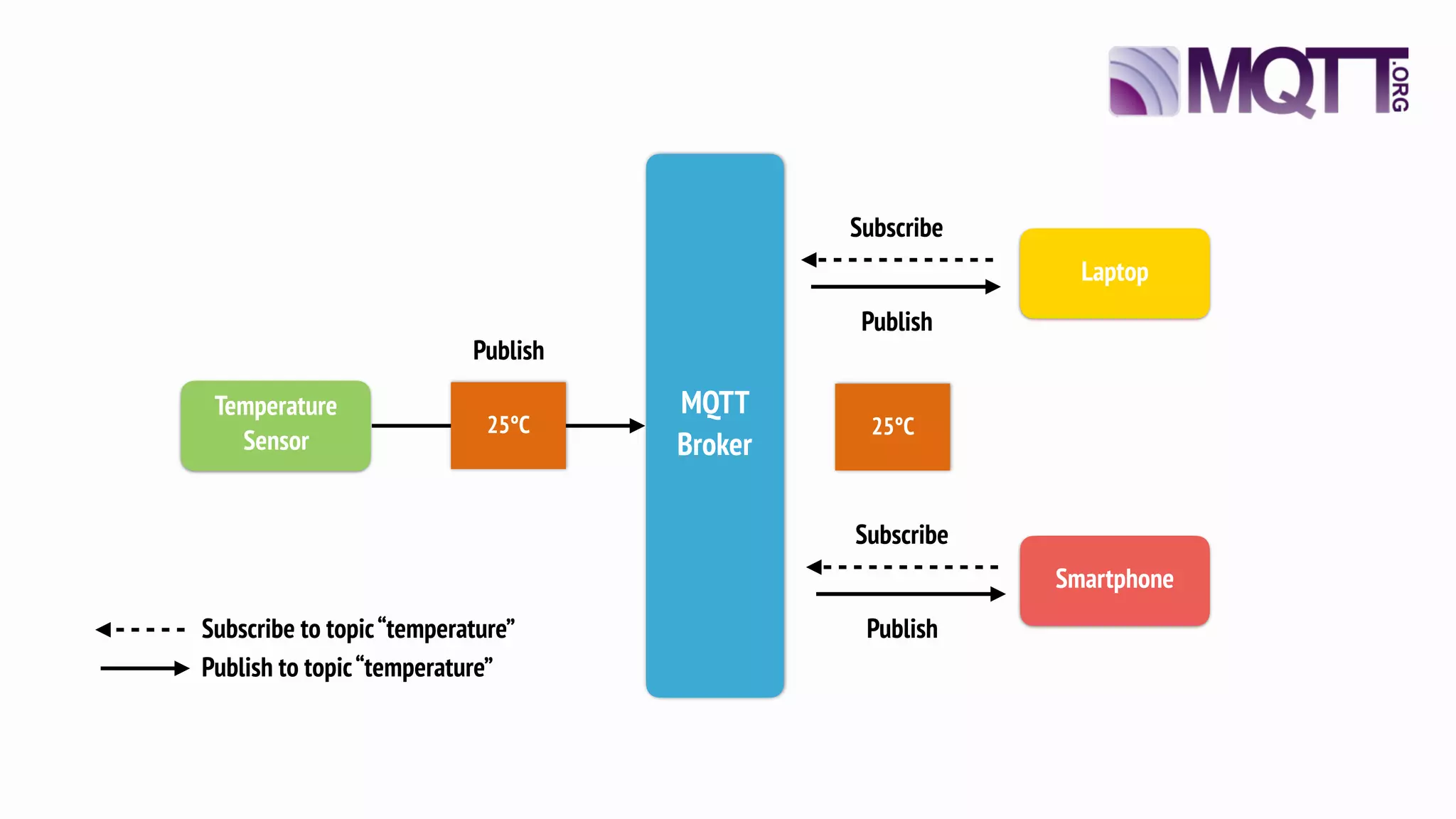
• MQTT stands for MQ TelemetryTransport.
• It is a publish/subscribe,extremely simple and lightweight
messaging protocol,designed for constrained devices and
low-bandwidth,high-latency or unreliable networks.
Temperature
Sensor
Laptop
Smartphone
MQTT
Broker
25°C
Publish
Subscribe
25°C
Publish
Subscribe
PublishSubscribe to topic“temperature”
Publish to topic“temperature”
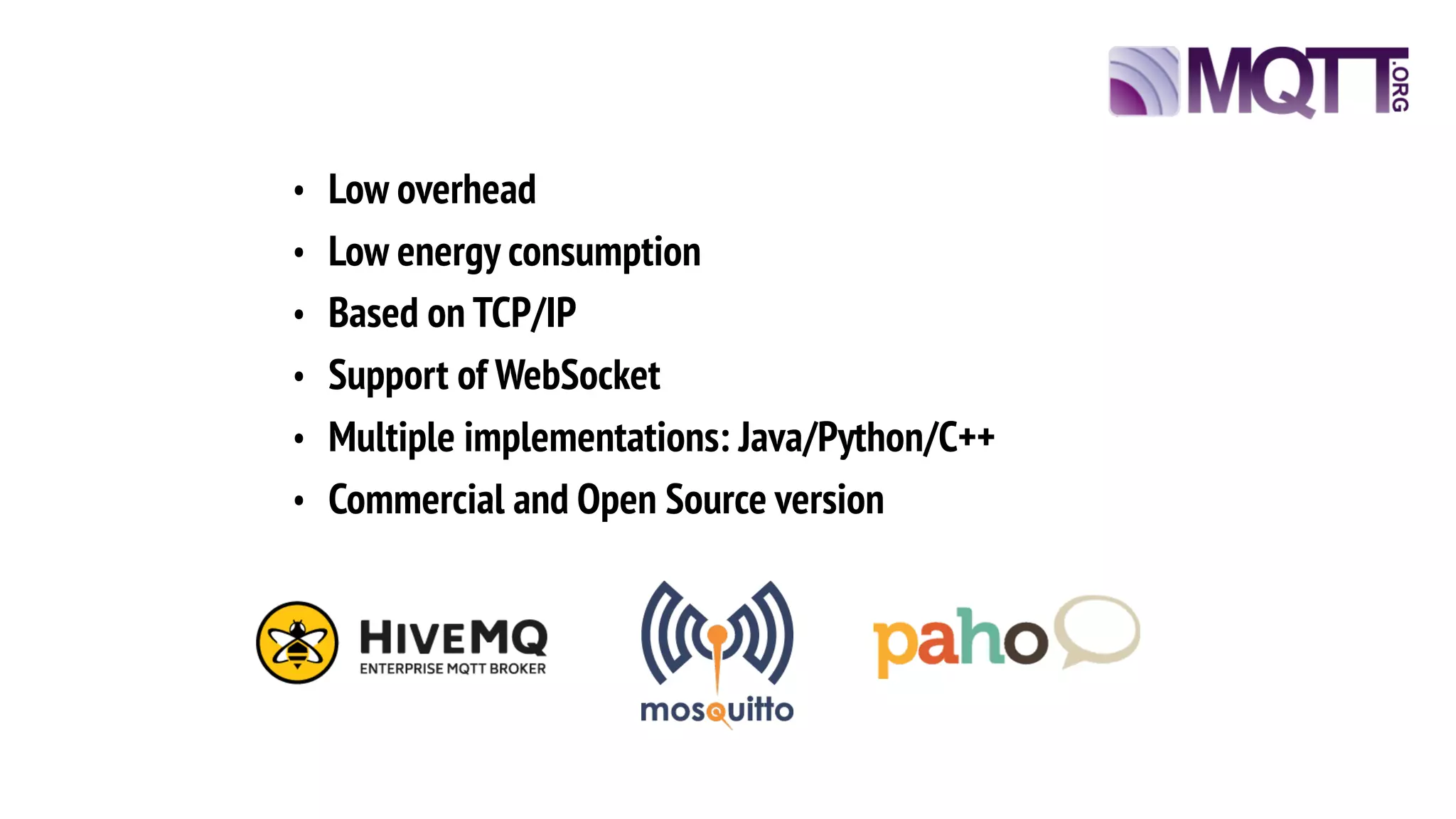
• Low overhead
• Low energy consumption
• Based on TCP/IP
• Support of WebSocket
• Multiple implementations: Java/Python/C++
• Commercial and Open Source version
Live Demo
Local Mosquitto Broker
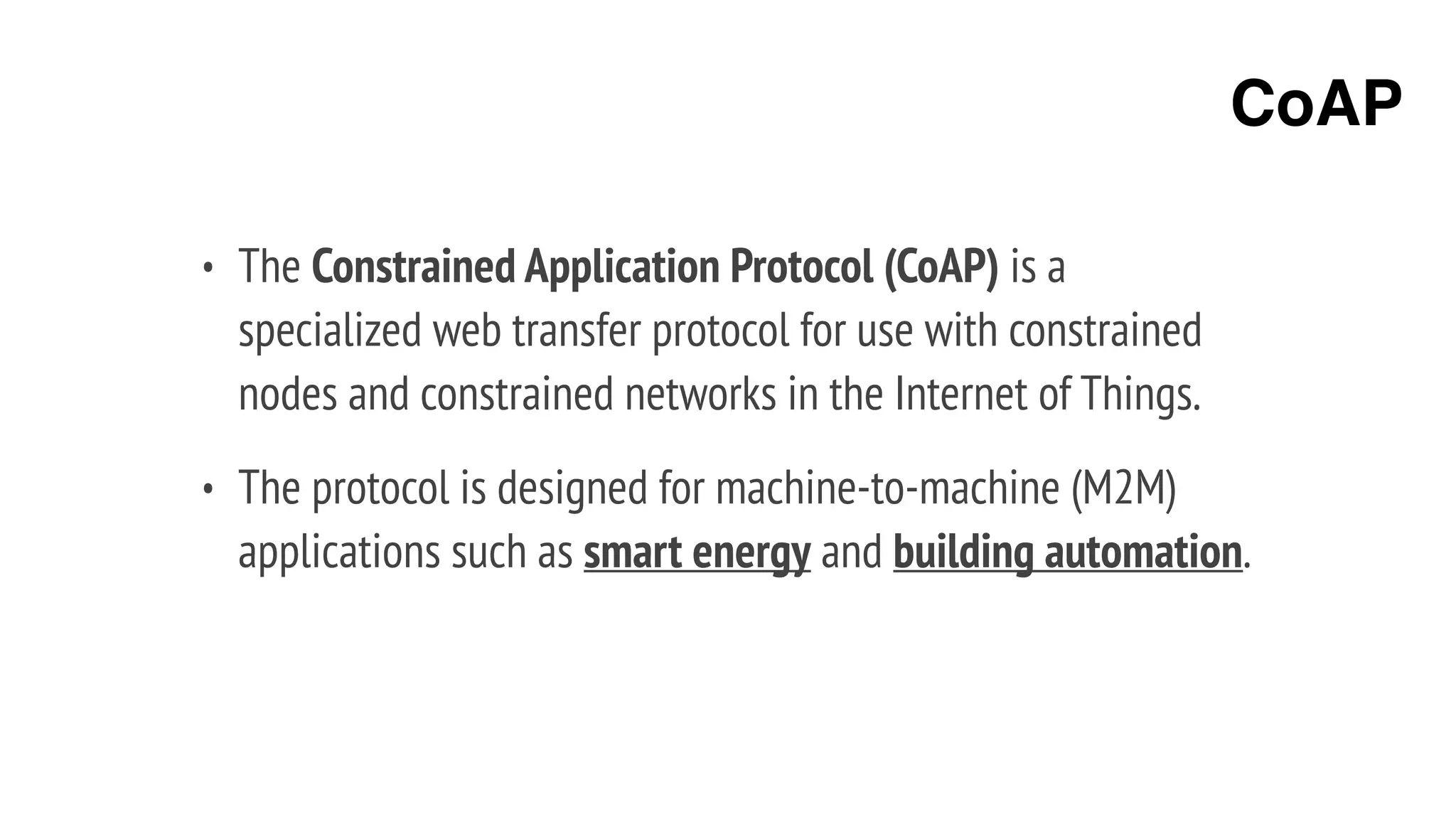
• The Constrained Application Protocol (CoAP) is a
specialized web transfer protocol for use with constrained
nodes and constrained networks in the Internet of Things.
• The protocol is designed for machine-to-machine (M2M)
applications such as smart energy and building automation.
CoAP
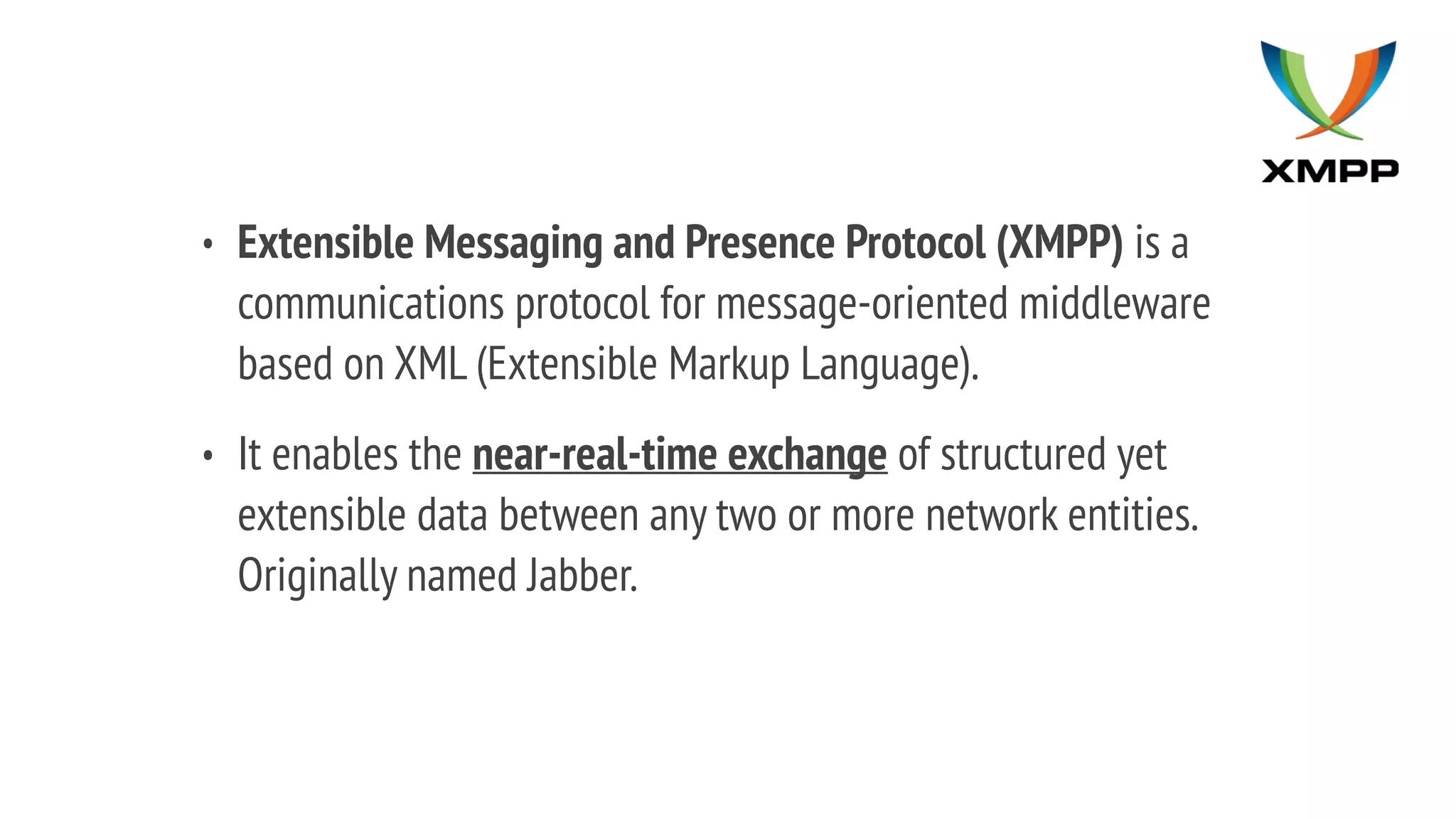
• Extensible Messaging and Presence Protocol (XMPP) is a
communications protocol for message-oriented middleware
based on XML (Extensible Markup Language).
• It enables the near-real-time exchange of structured yet
extensible data between any two or more network entities.
Originally named Jabber.
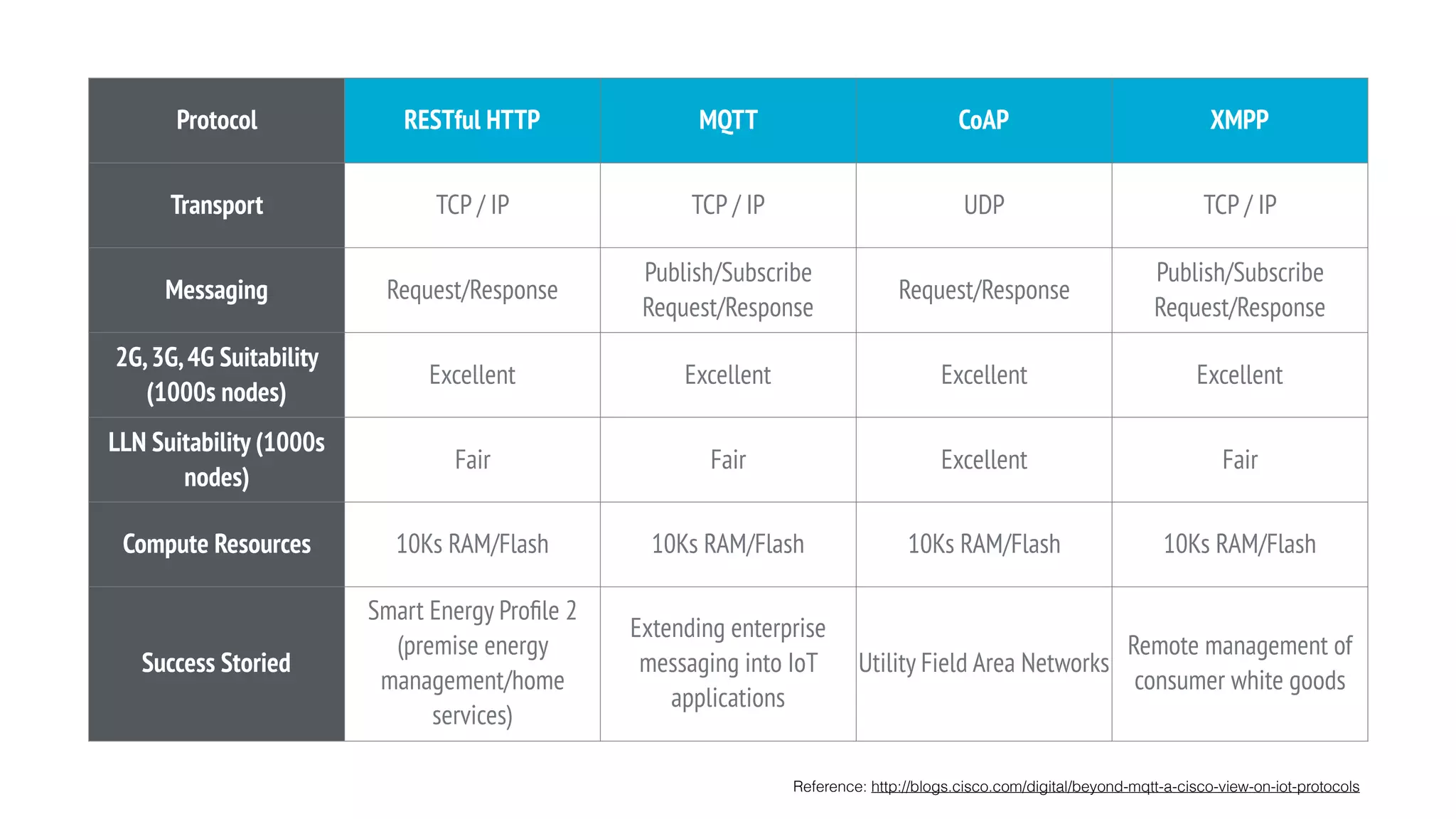
Protocol RESTful HTTP MQTT CoAP XMPP
Transport TCP / IP TCP / IP UDP TCP / IP
Messaging Request/Response
Publish/Subscribe
Request/Response
Request/Response
Publish/Subscribe
Request/Response
2G,3G,4G Suitability
(1000s nodes)
Excellent Excellent Excellent Excellent
LLN Suitability (1000s
nodes)
Fair Fair Excellent Fair
Compute Resources 10Ks RAM/Flash 10Ks RAM/Flash 10Ks RAM/Flash 10Ks RAM/Flash
Success Storied
Smart Energy Profile 2
(premise energy
management/home
services)
Extending enterprise
messaging into IoT
applications
Utility Field Area Networks
Remote management of
consumer white goods
Reference: http://blogs.cisco.com/digital/beyond-mqtt-a-cisco-view-on-iot-protocols
Entreprise IoT Solution
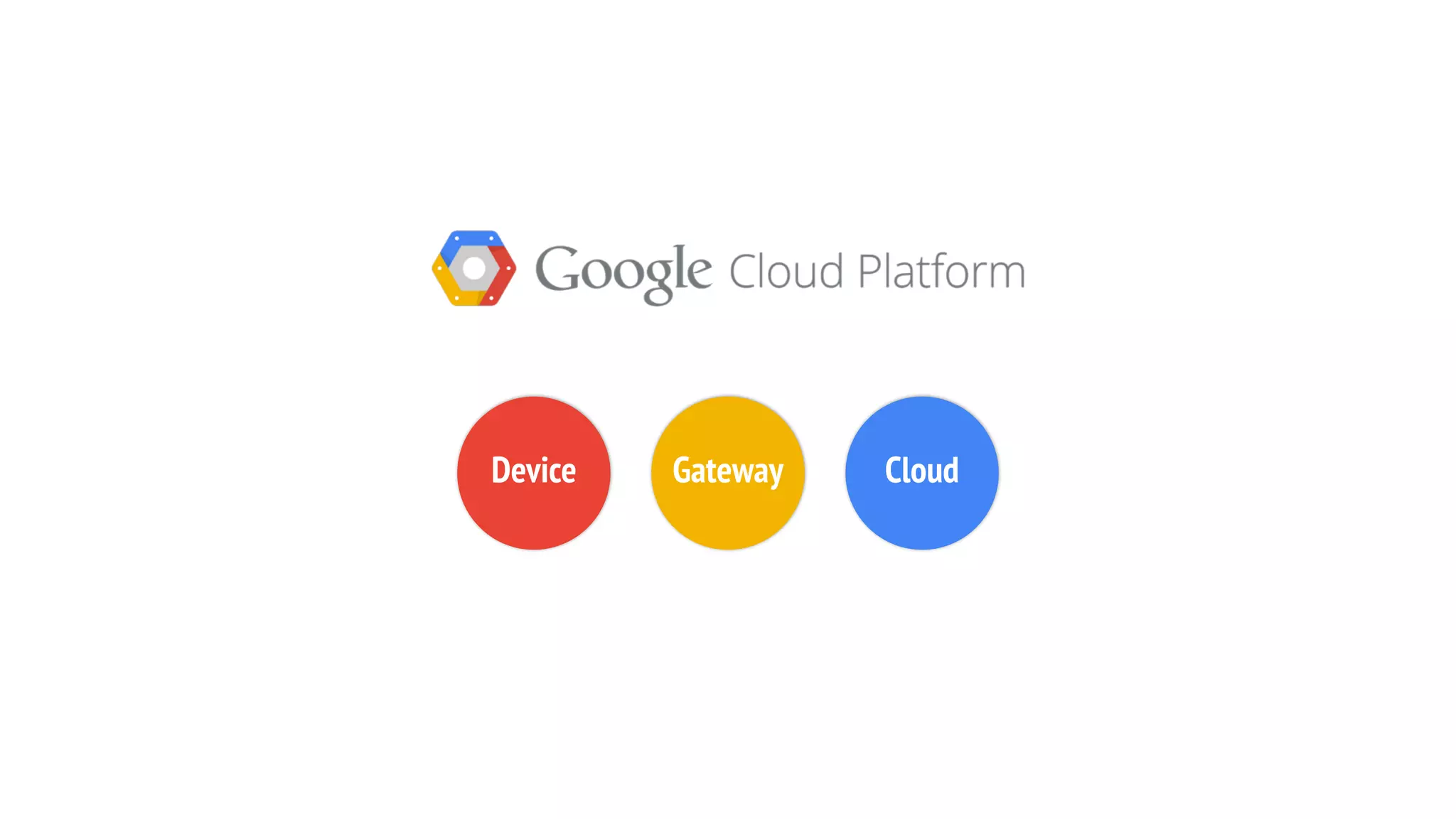
Device Gateway Cloud
IoT & Big Data
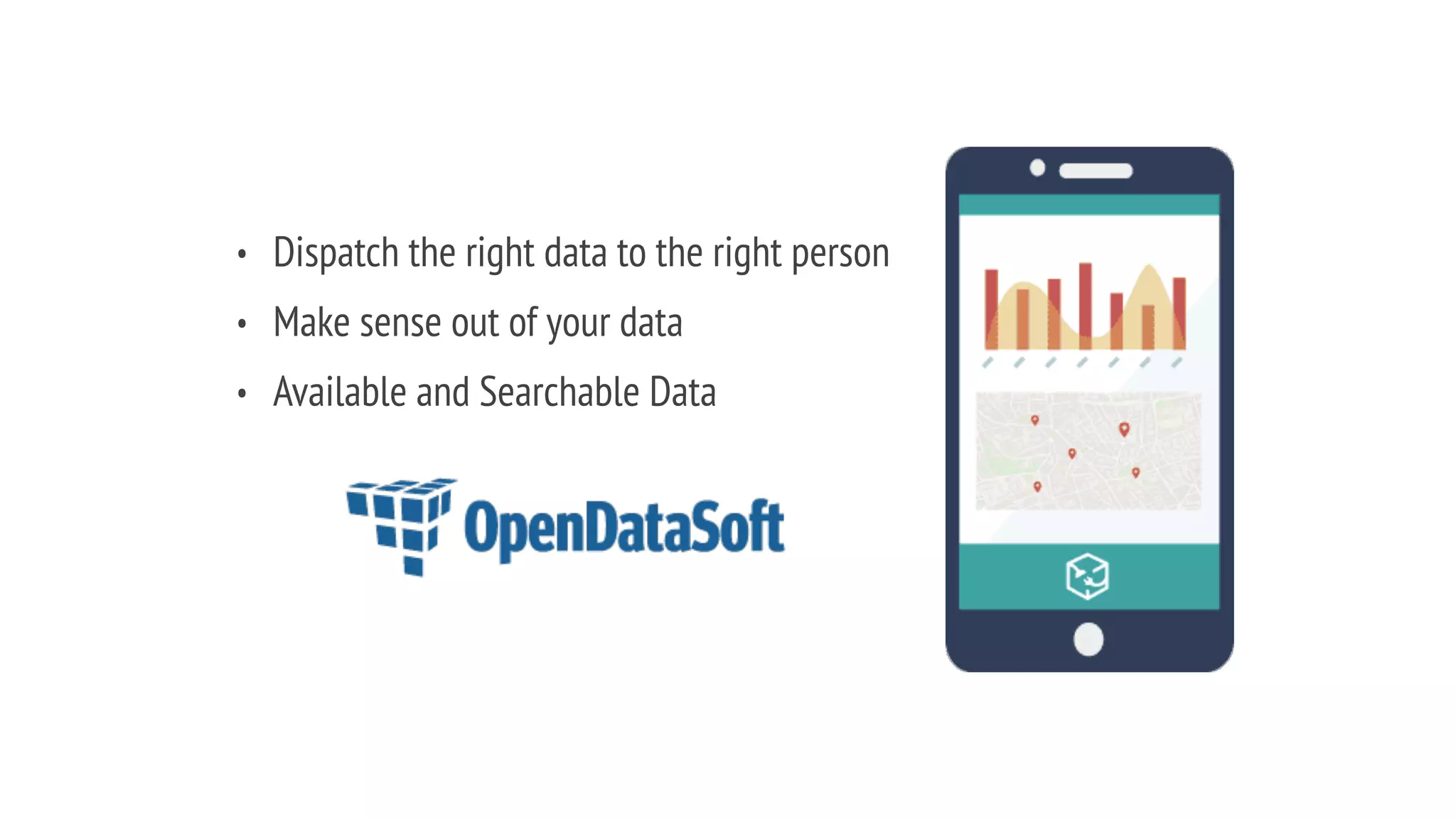
• Dispatch the right data to the right person
• Make sense out of your data
• Available and Searchable Data
IoT Hardware Guide
Hardware Guide
Electronic Components
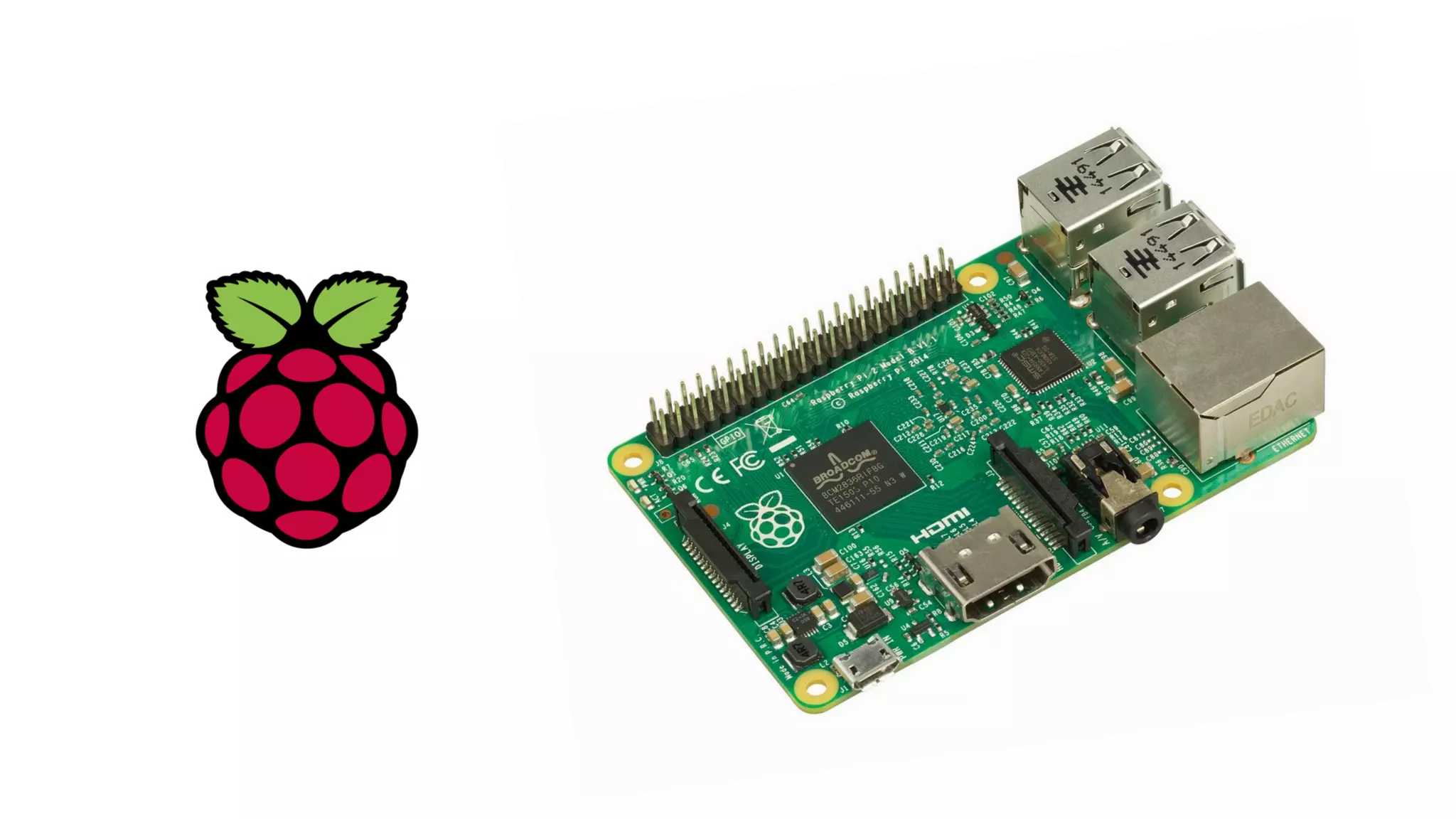
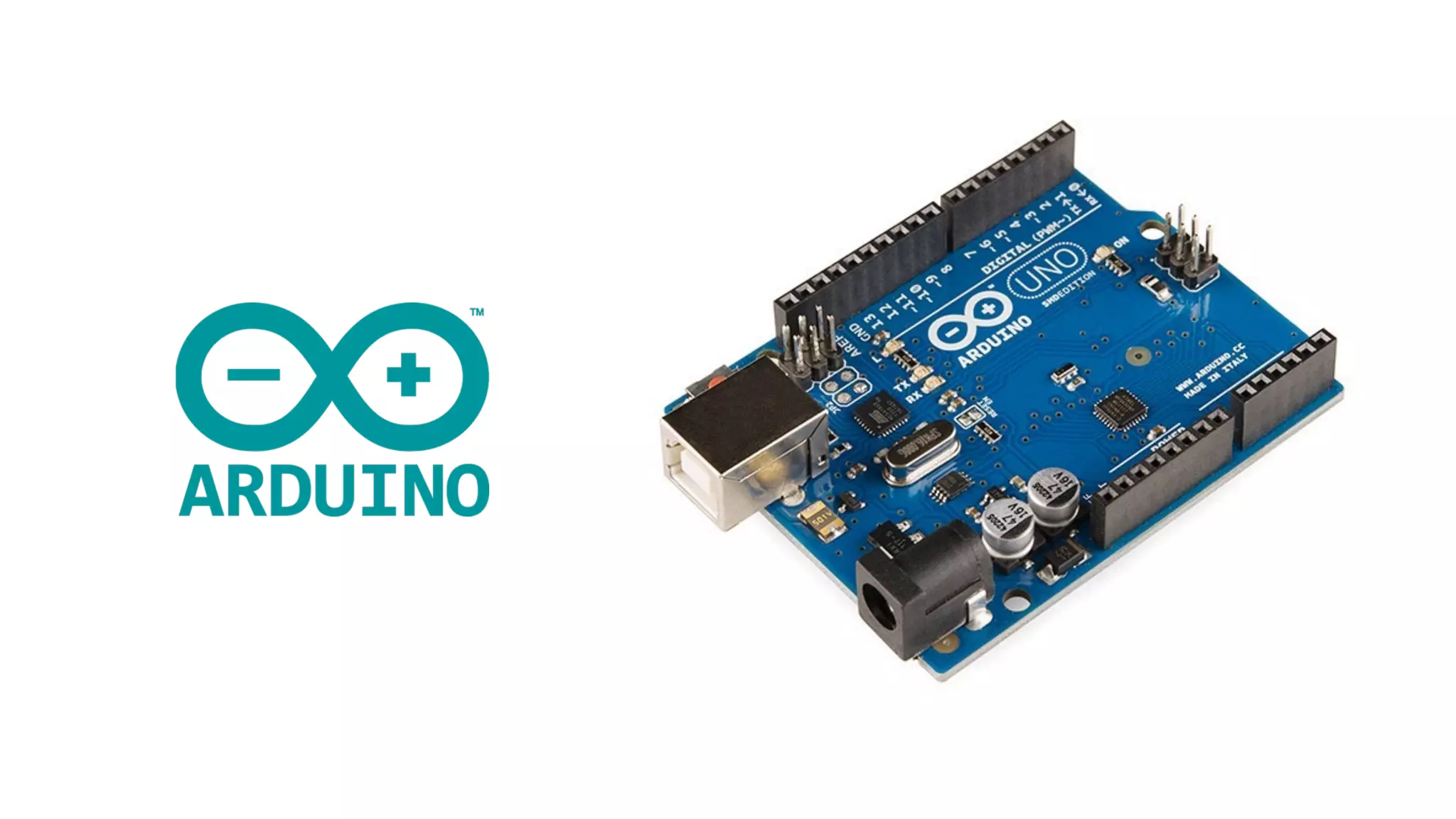
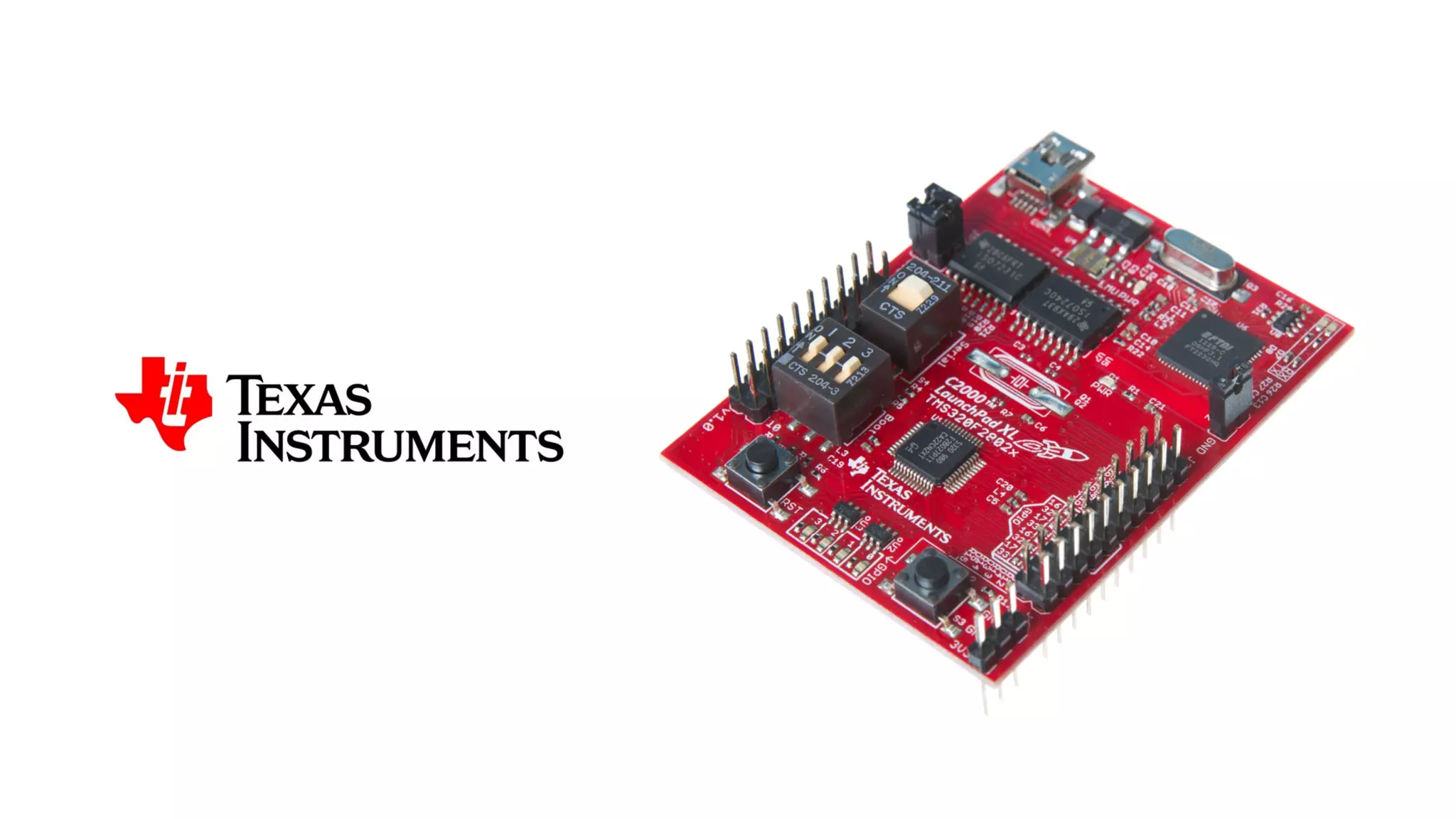
Microcontroller vs.Microcomputer
Hardware Ecosystem
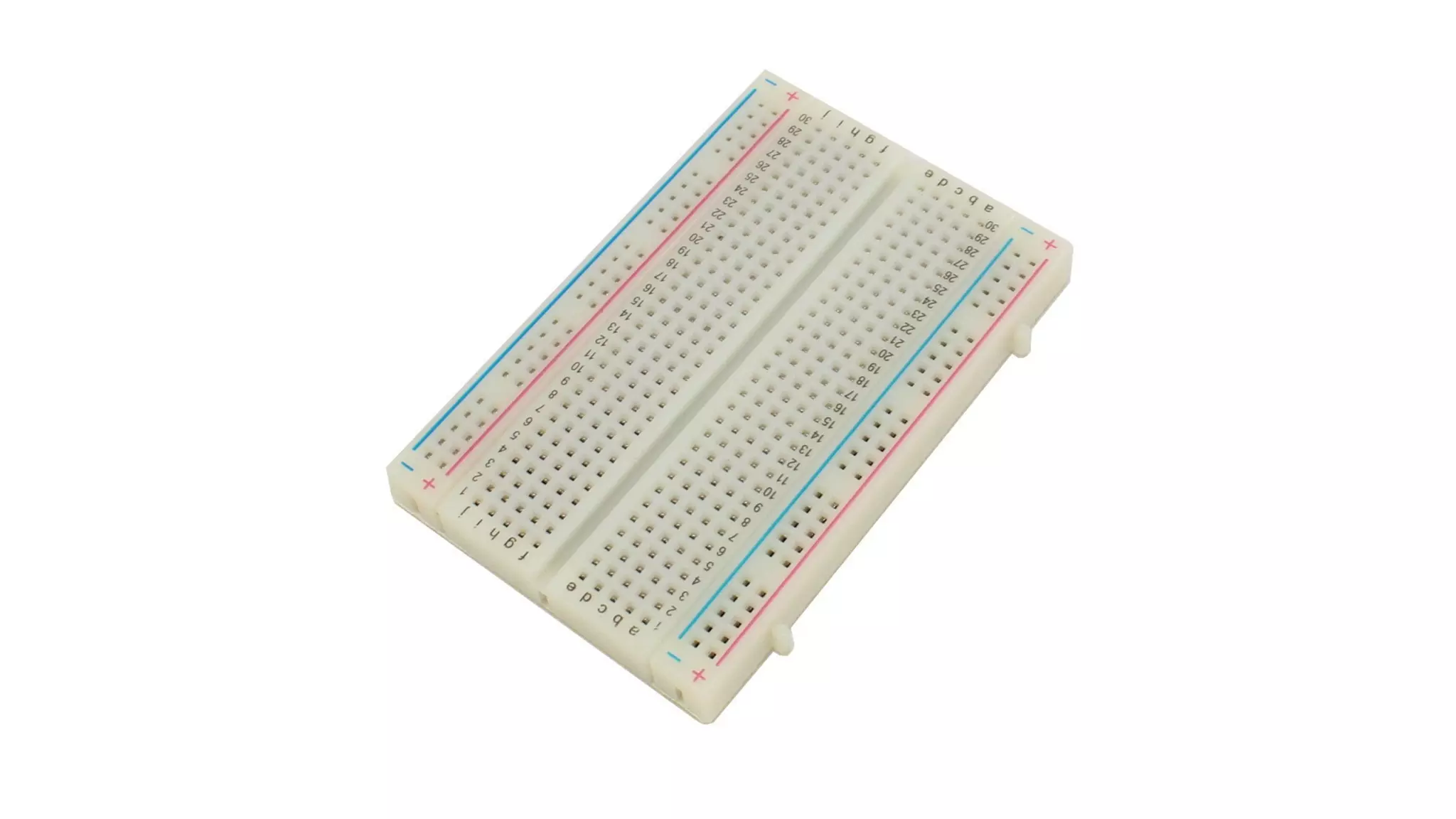
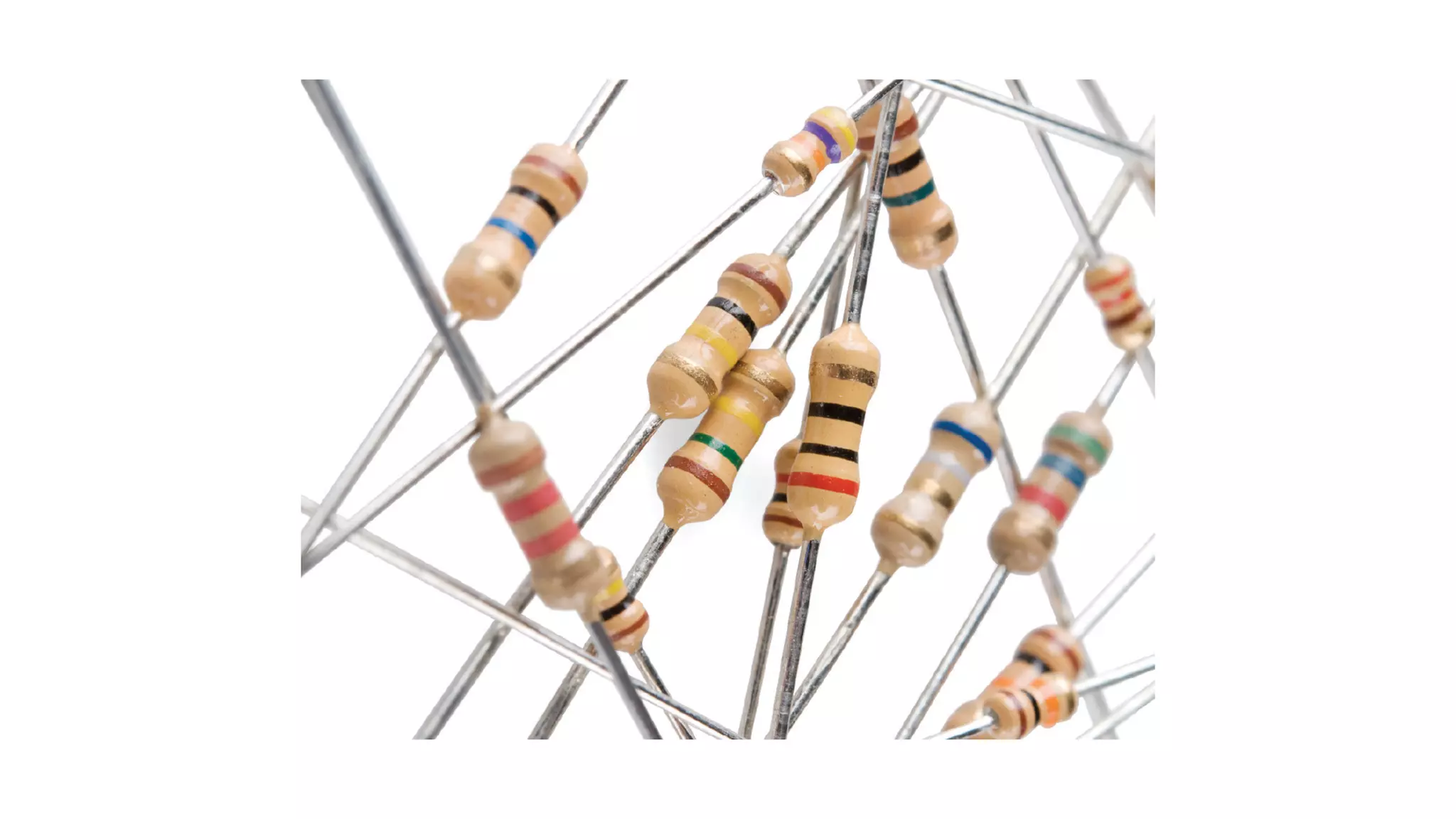
Electronic Components
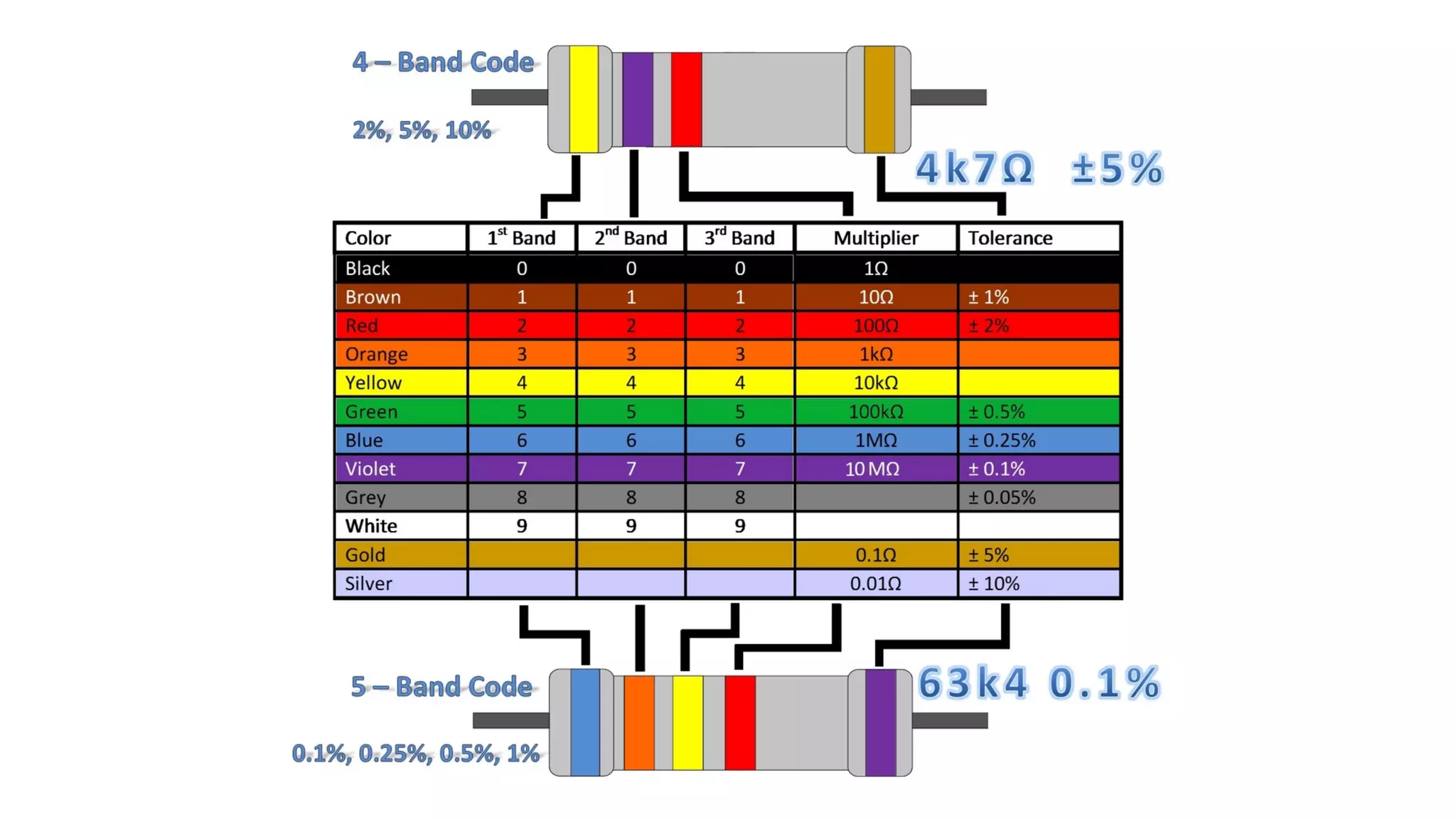
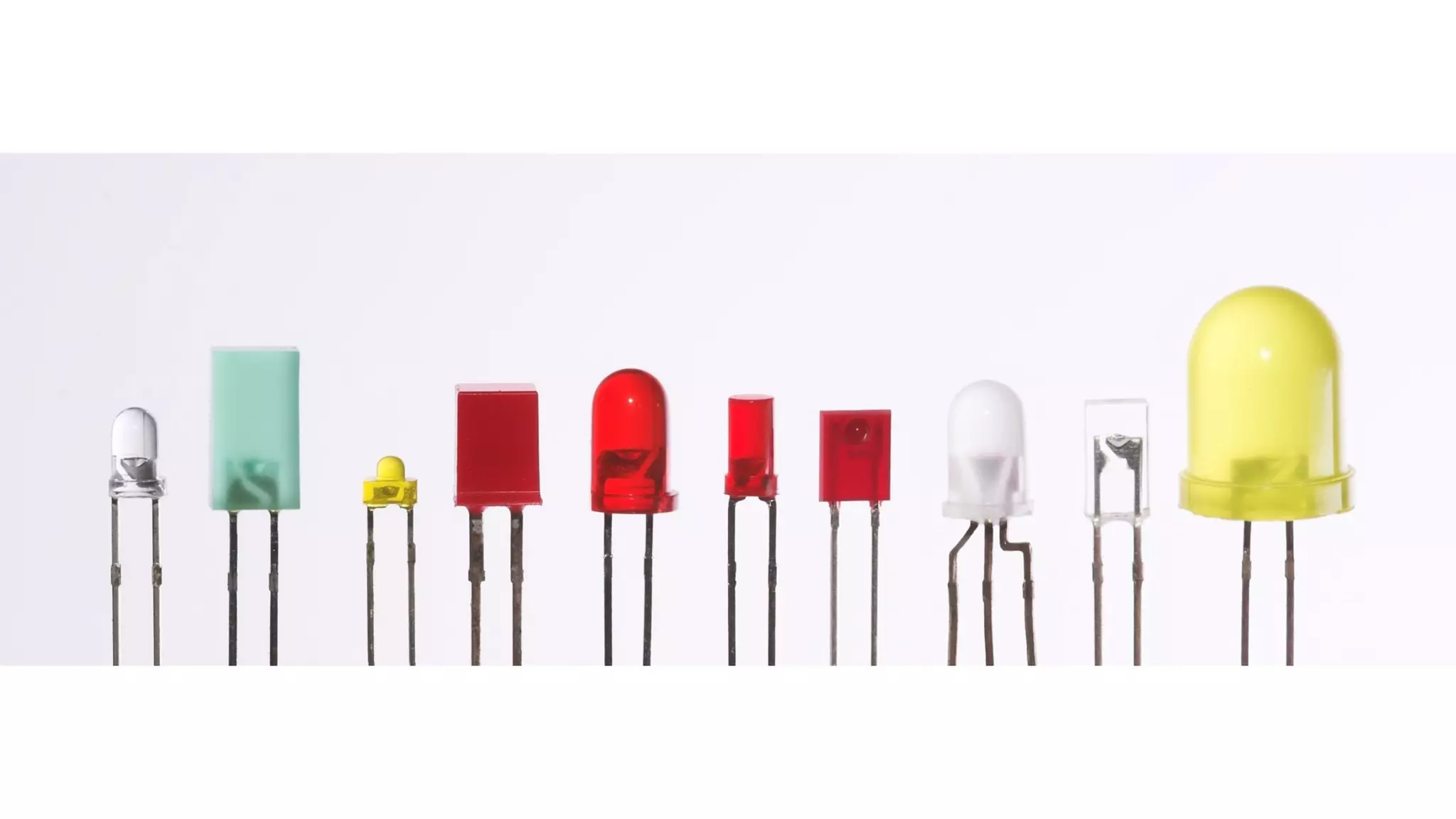
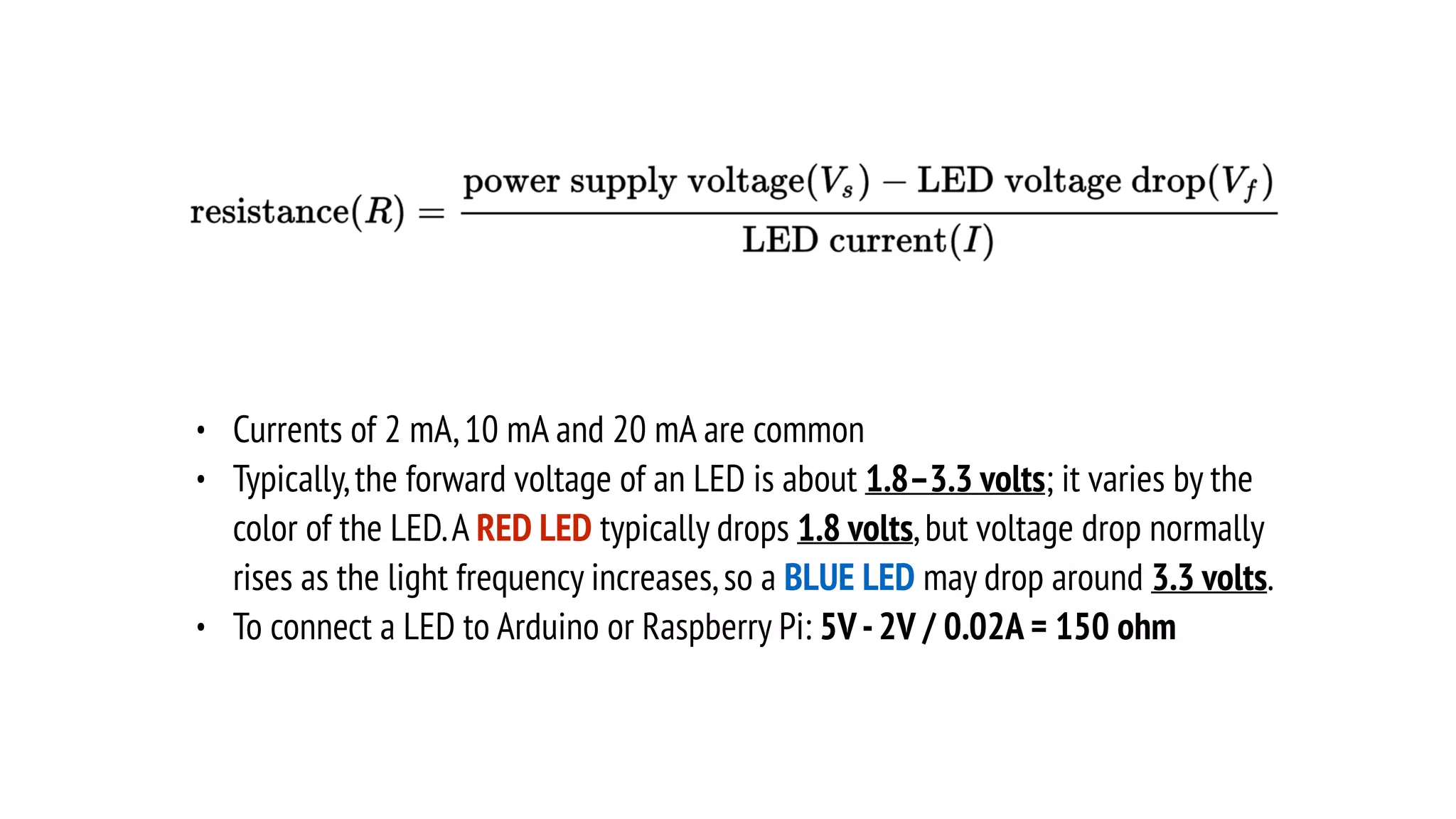
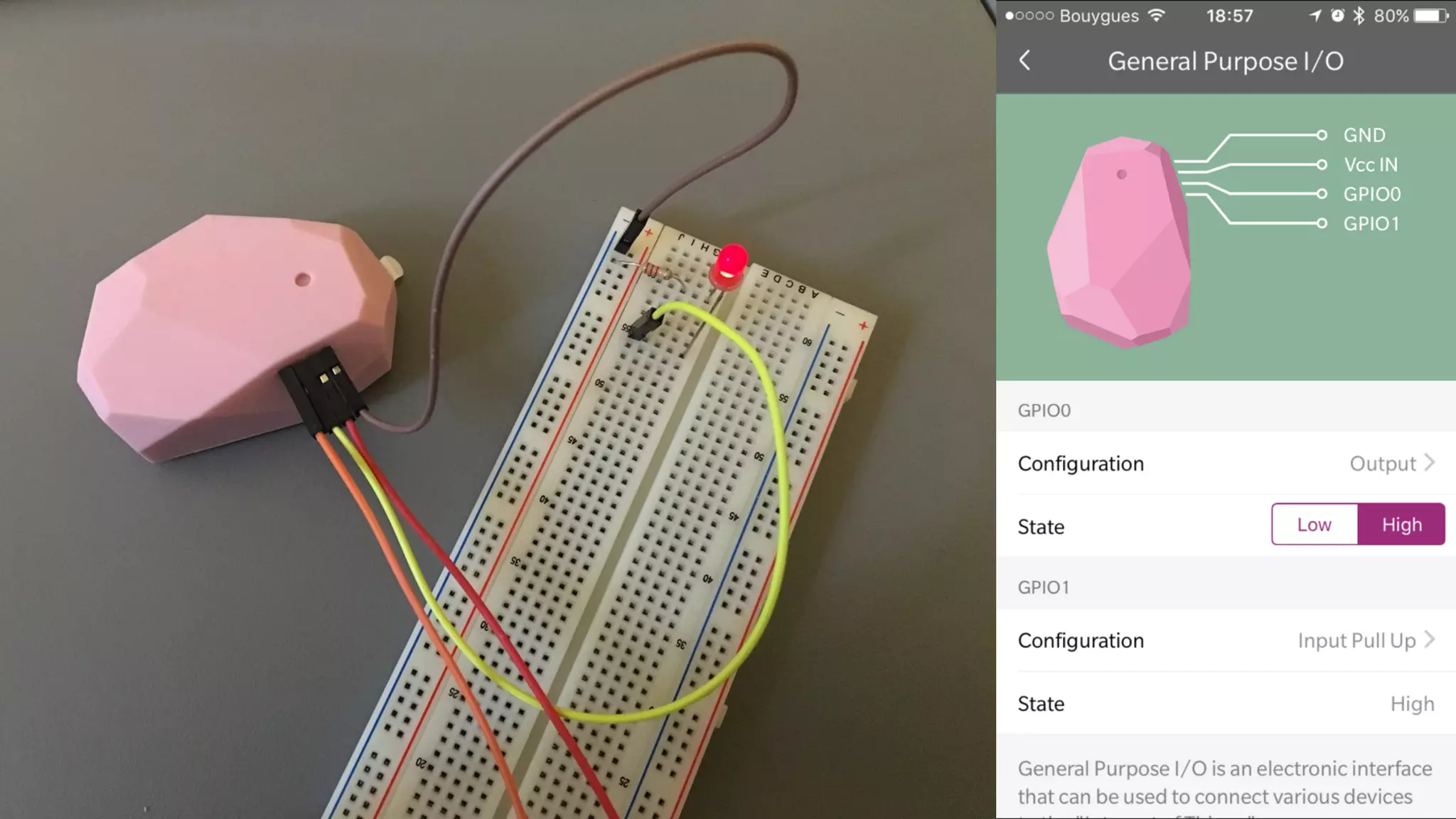
• Currents of 2 mA,10 mA and 20 mA are common
• Typically,the forward voltage of an LED is about 1.8–3.3 volts; it varies by the
color of the LED.A RED LED typically drops 1.8 volts,but voltage drop normally
rises as the light frequency increases,so a BLUE LED may drop around 3.3 volts.
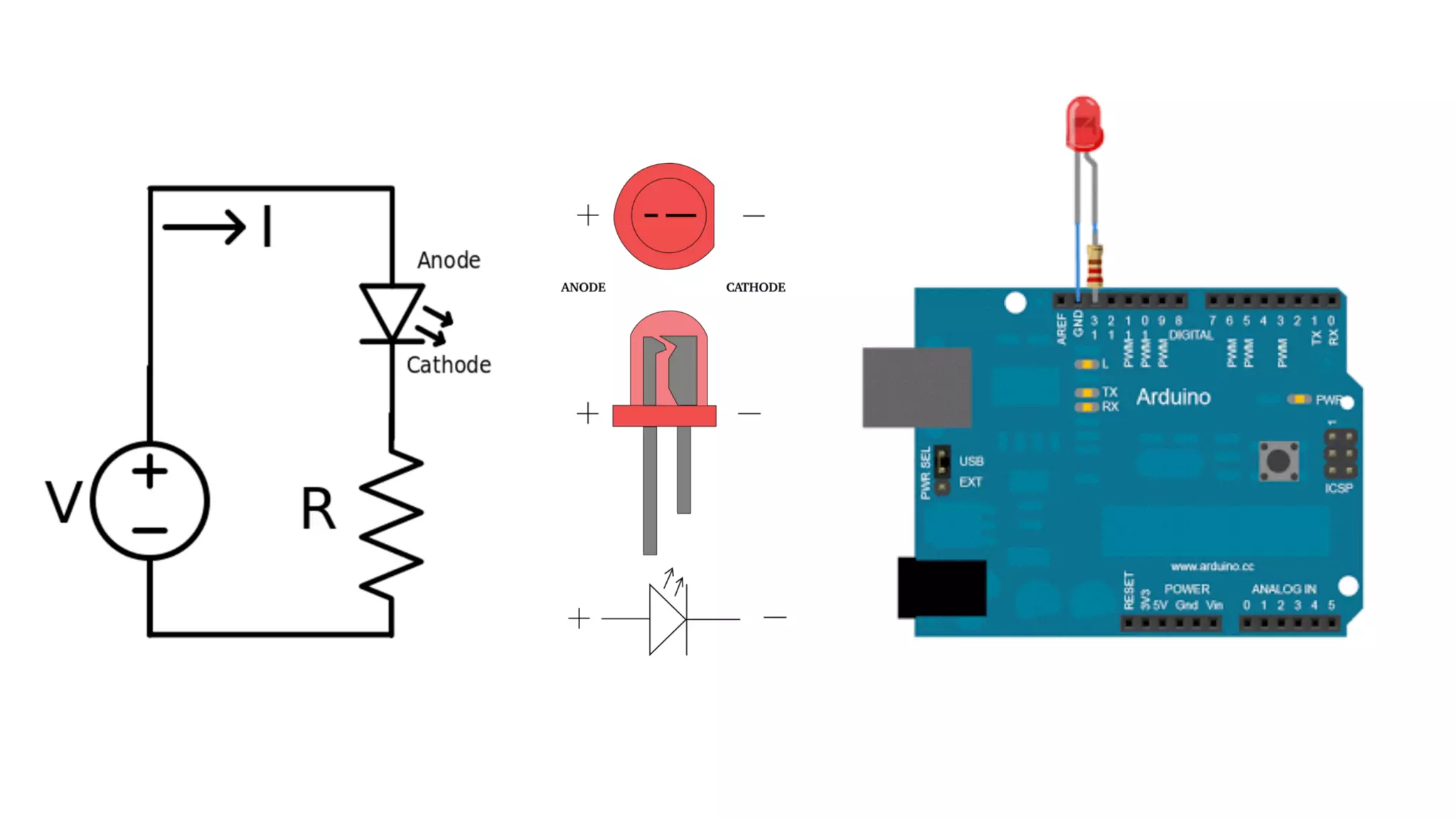
• To connect a LED to Arduino or Raspberry Pi: 5V-2V / 0.02A = 150 ohm
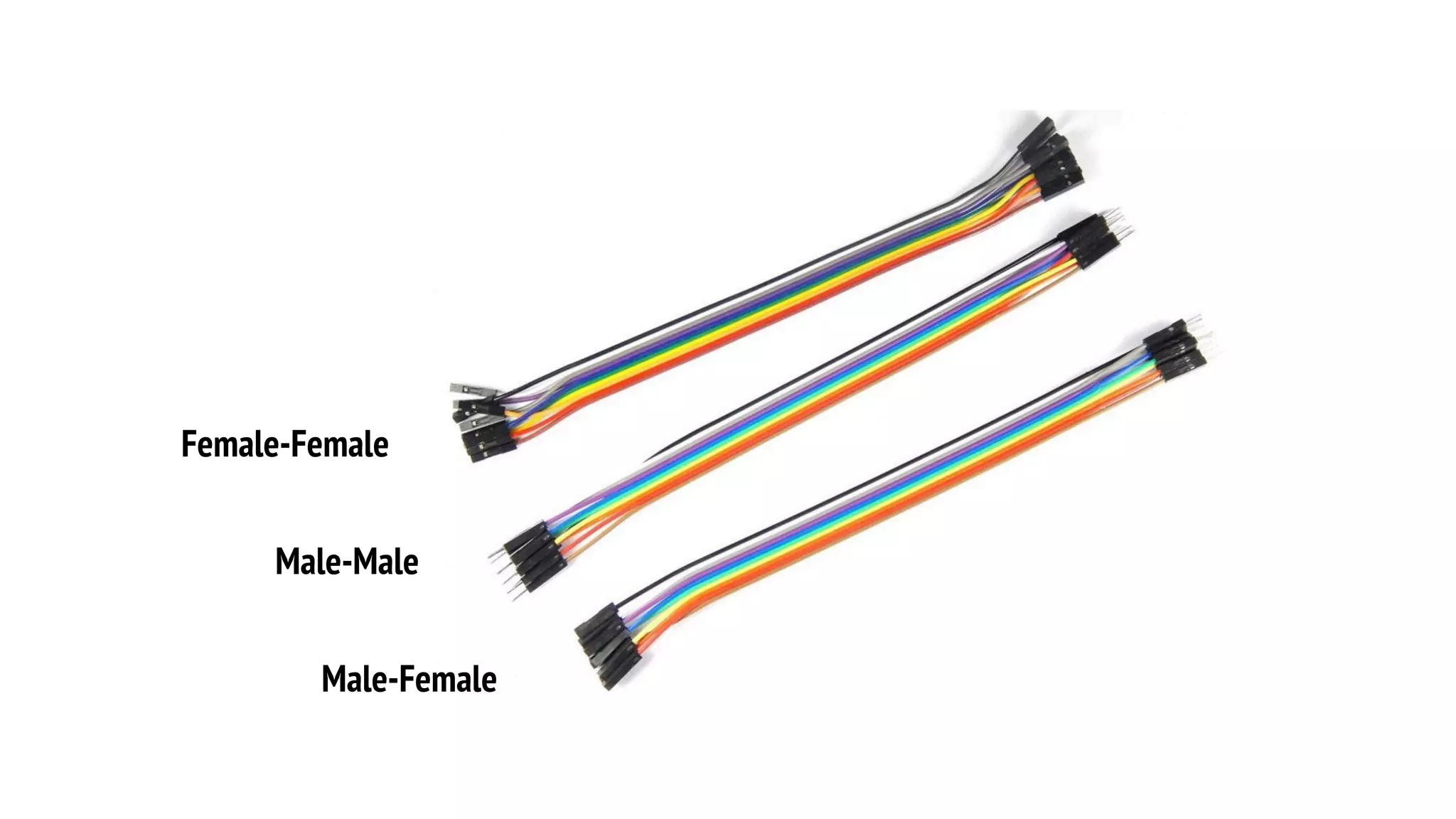
Male-Male
Female-Female
Male-Female
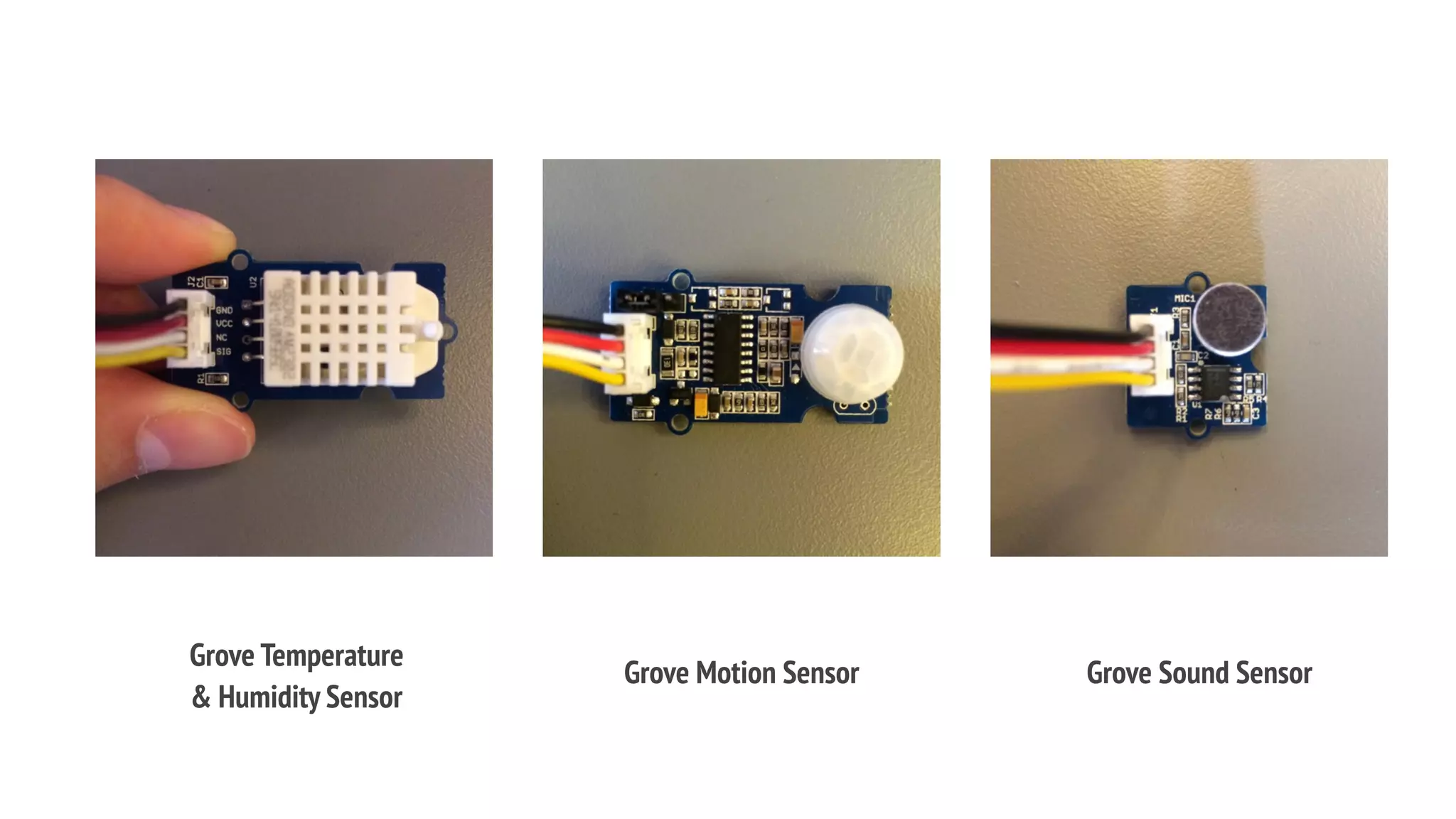
Grove Temperature
& Humidity Sensor
Grove Motion Sensor Grove Sound Sensor
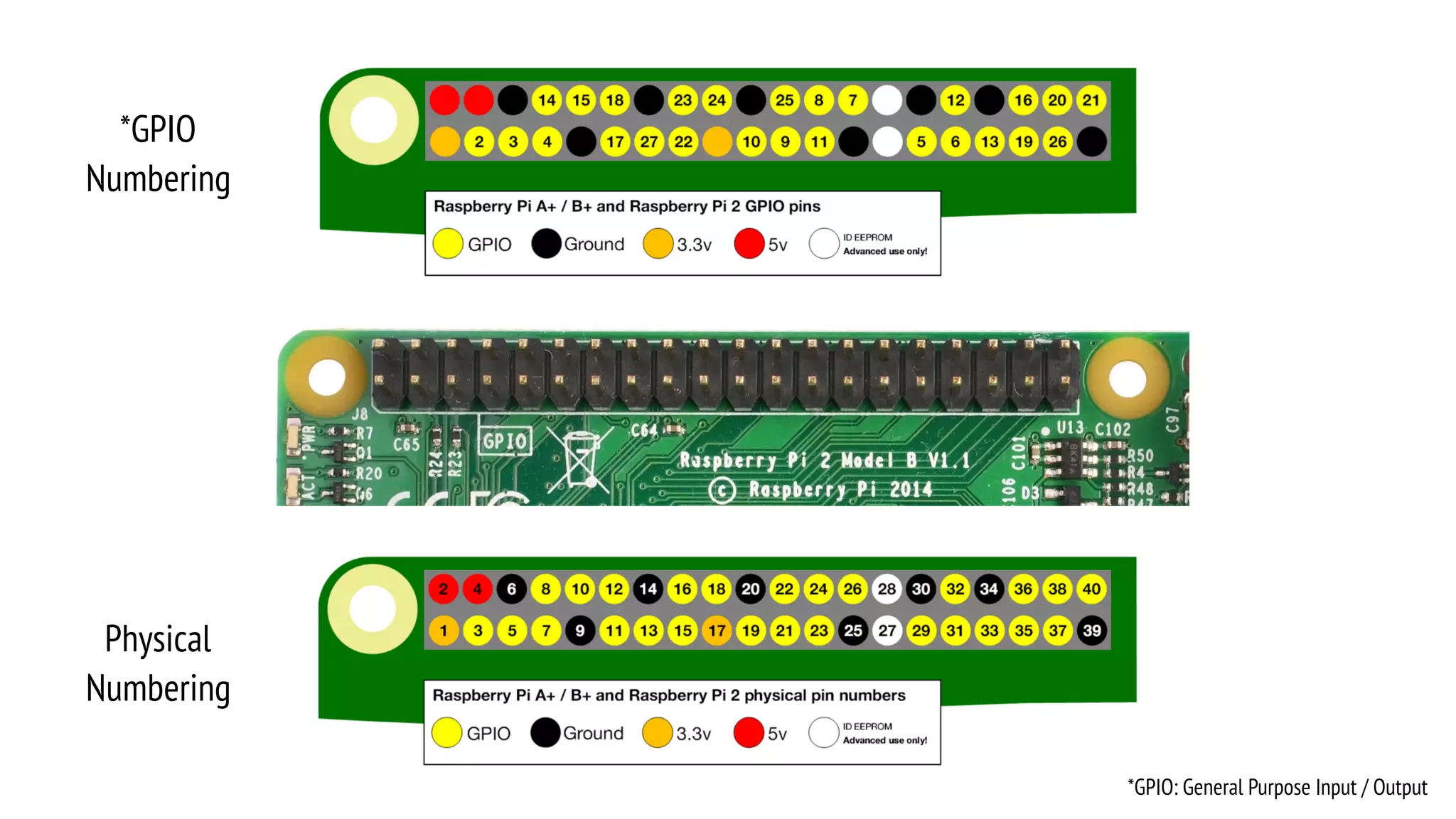
*GPIO
Numbering
Physical
Numbering
*GPIO: General Purpose Input / Output
Microcontroller
vs.
Microcomputer
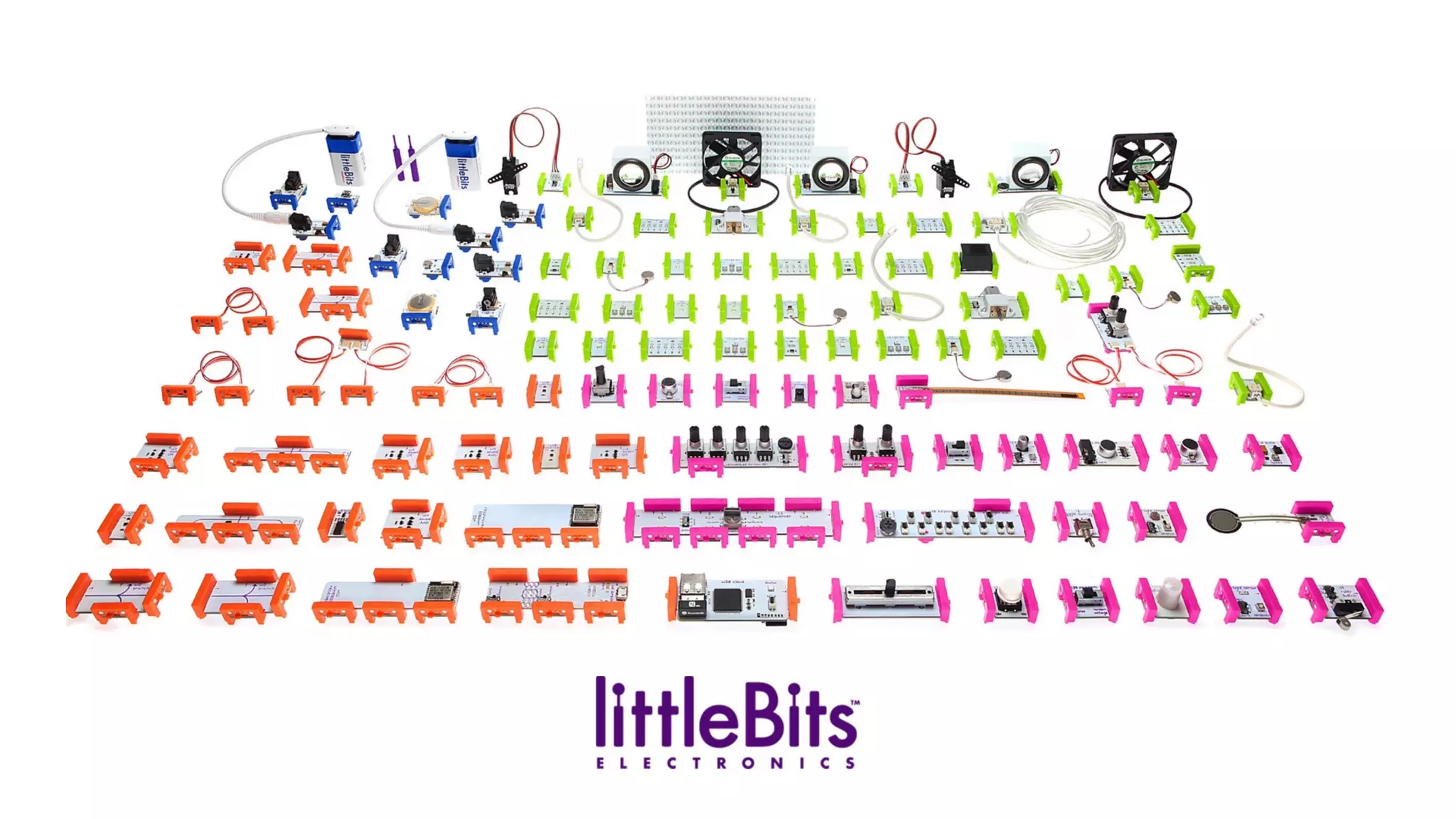
Hareware Ecosystem
An Example: Smart Studio
Criticism & Controversies
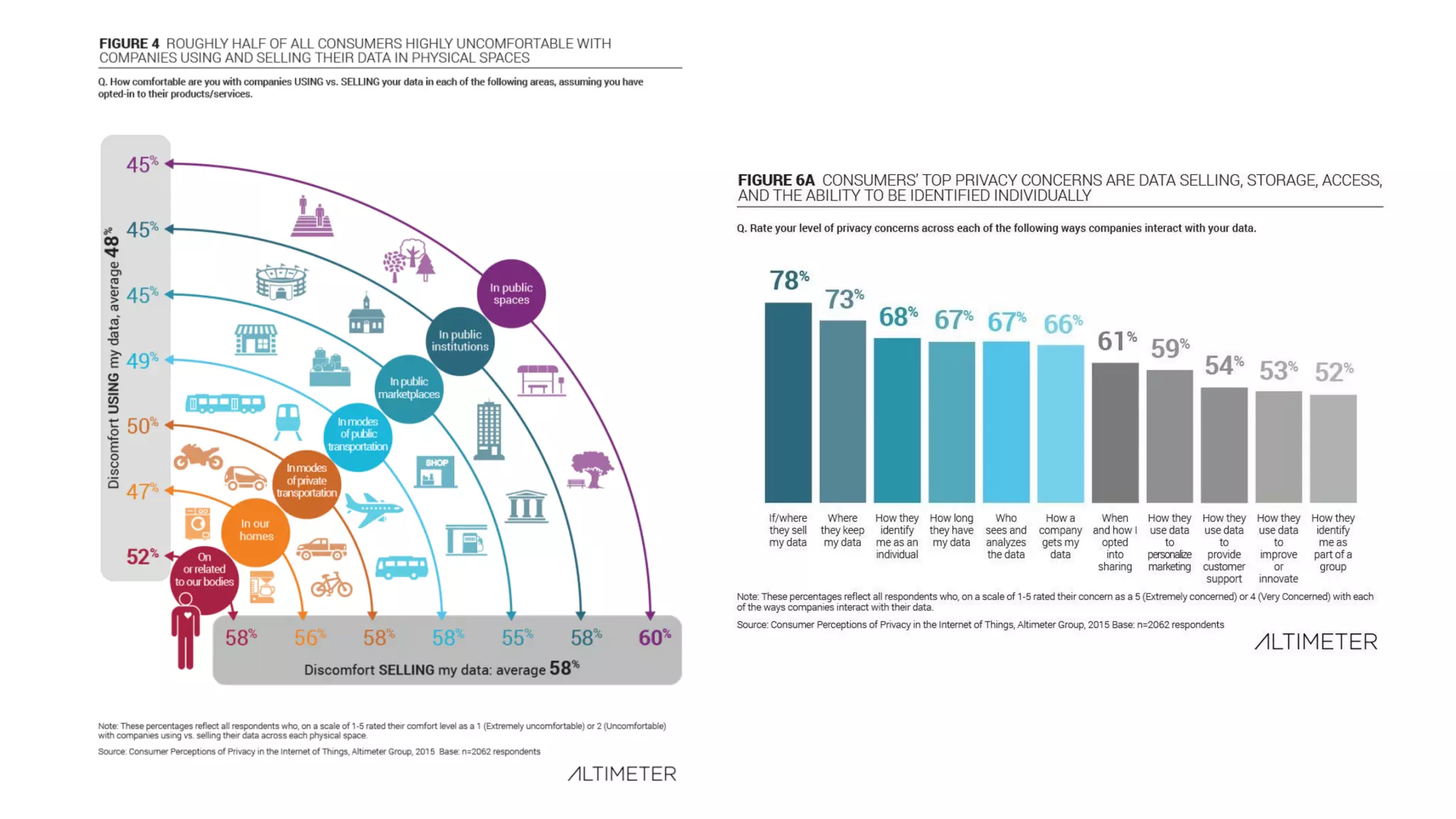
Privacy
Security
Other Concerns
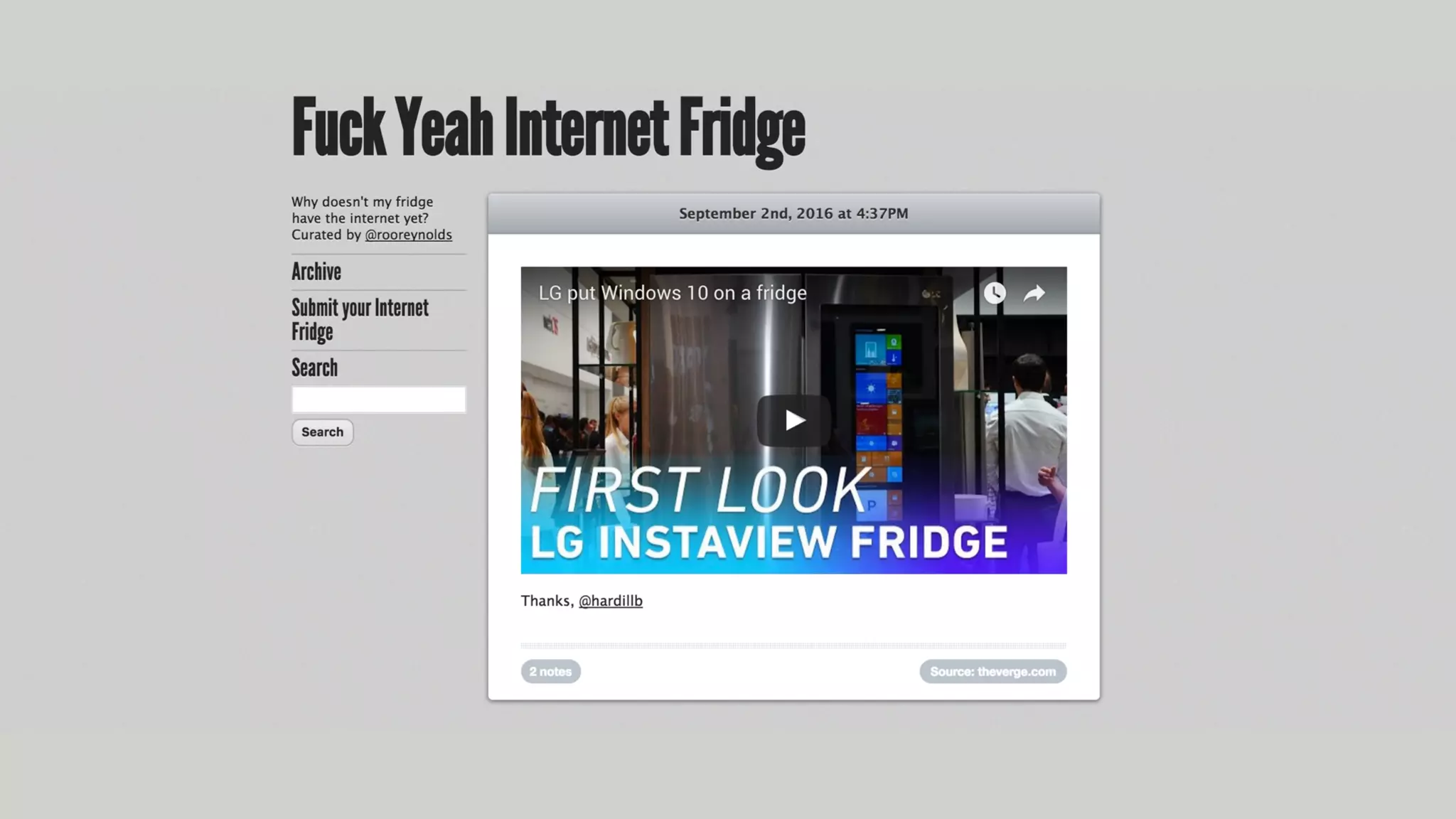
Privacy
Security
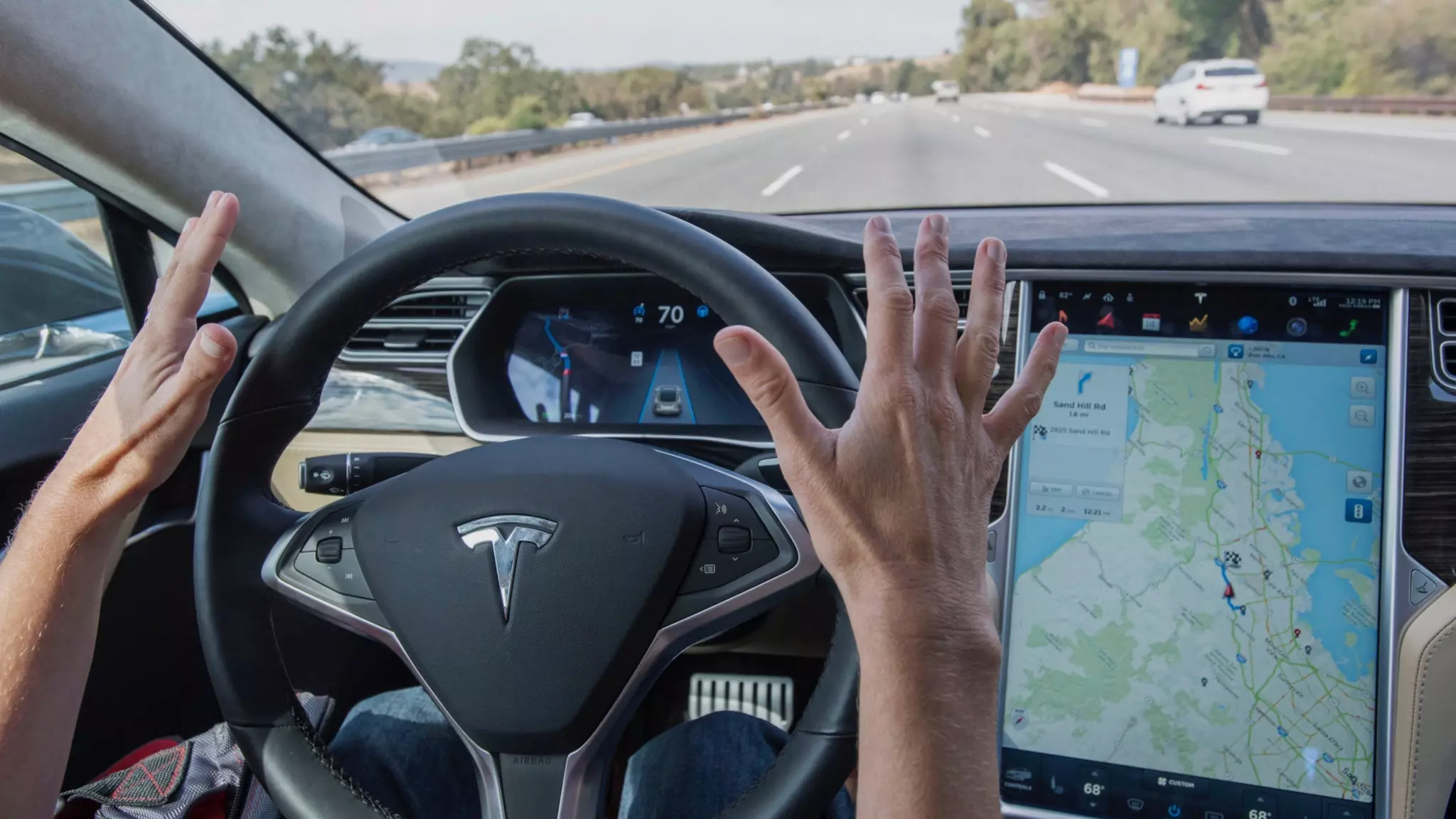
Hackers Remotely Kill a Jeep on the Highway—With Me in It
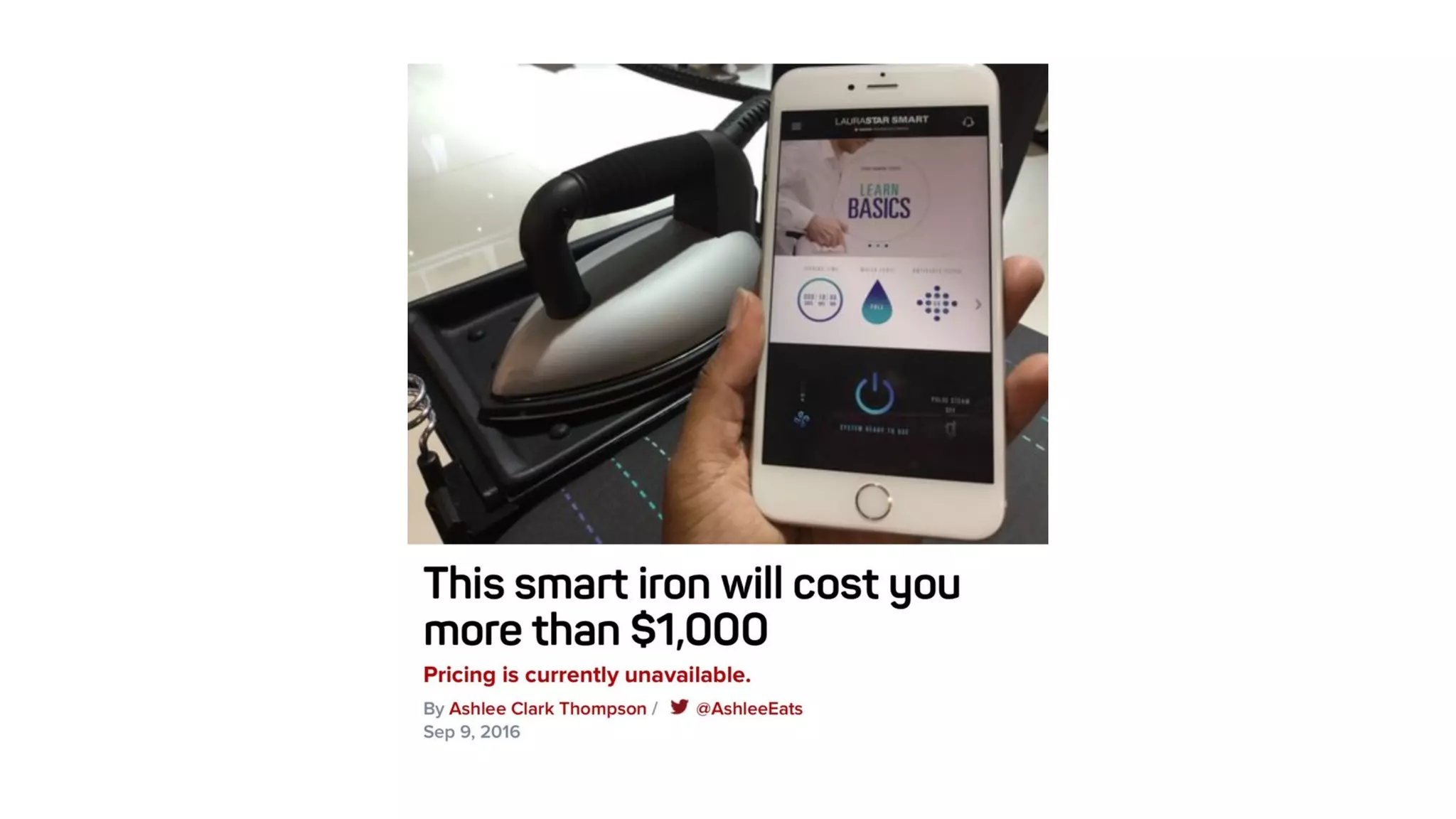
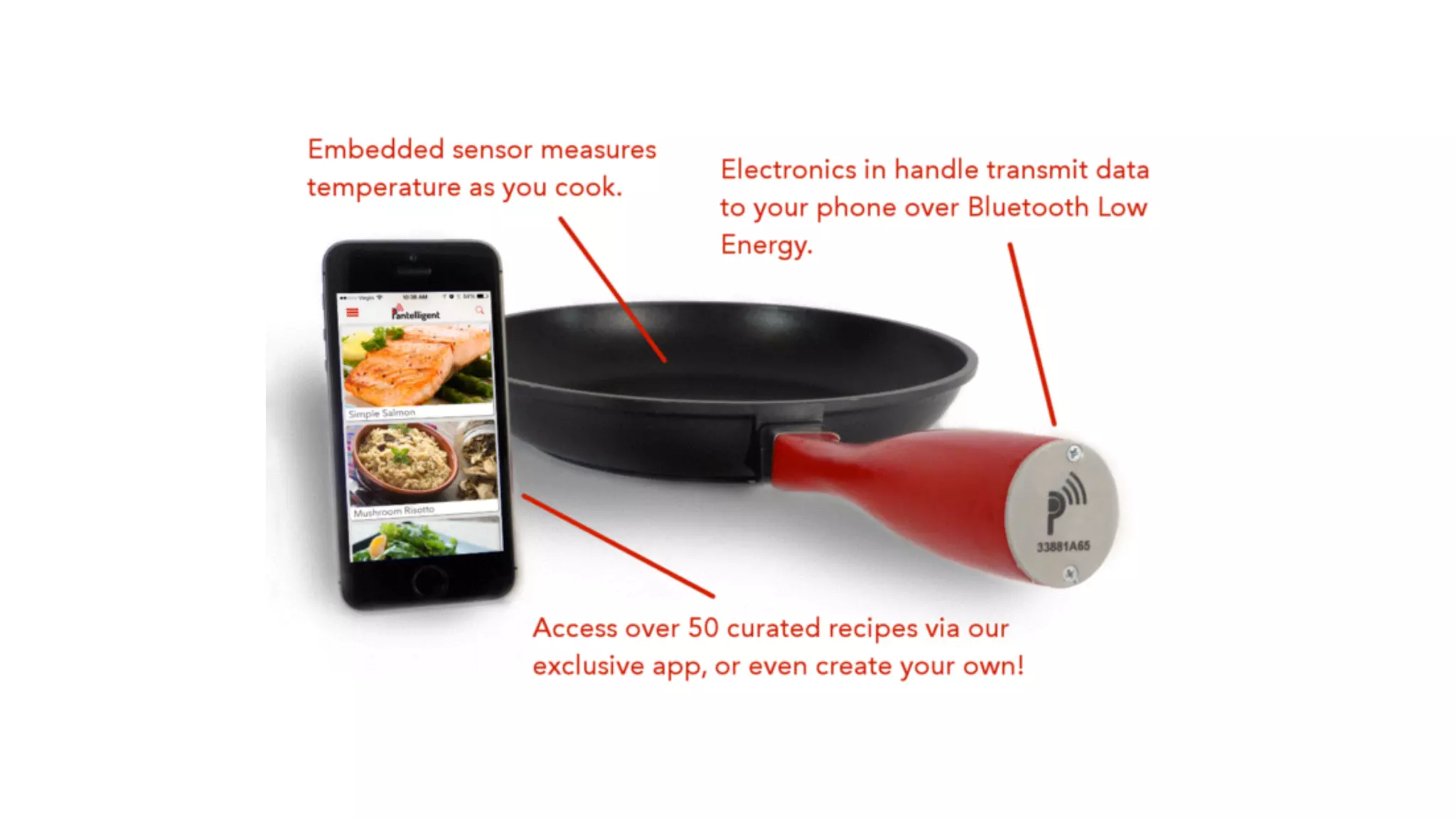
Other Concerns
Interface Design,lack of standards
Environmental sustainability impact
Intentional obsolescence of devices
Future of IoT
Future of IoT
Biohacking & Transhumanism
The Ethics of Enhancement
*Bonus Chapter:
The Physical Web
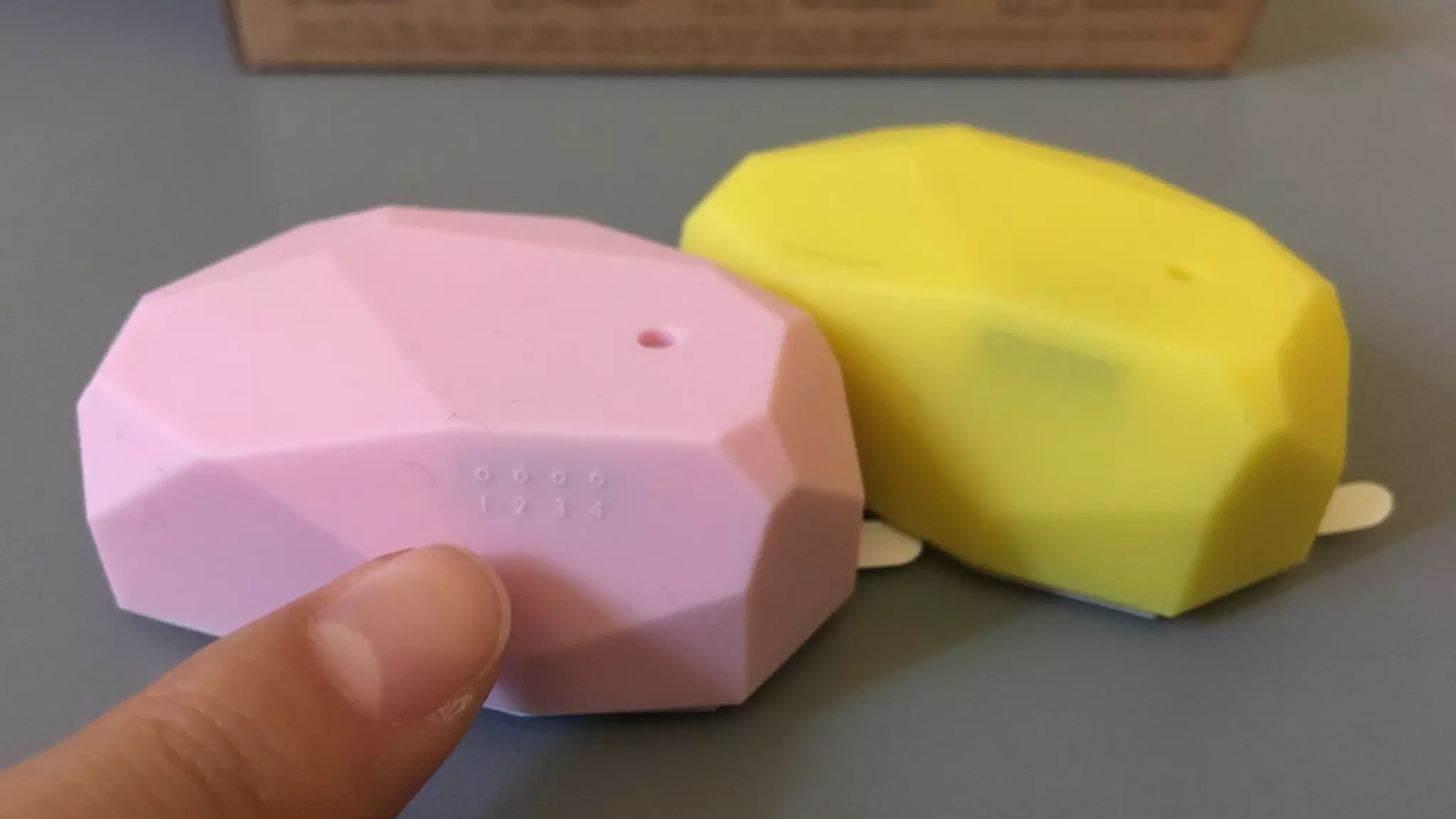
Walk Up And Use Everything
Thank you :)
Twitter: @bonbonking
Email: qjin@xebia.fr
Time to Get Your Hands Dirty
http://bit.ly/2cCuAhu

Demystifying Internet of Things