Democracy and Constitution
Development in Nepal
Presentation
Team
 Sejal Bhandari
 Smriti Bashyal
 Siddhant Pandey
 Sandhya Gubhaju
 Saurav Pokhrel
Democracy is “government of, by and for
the people”
~ Abraham Lincoln
 Derived from the Greek words: demo (people) and kratia (power).
 It is a type of political system in which power lies in the hands of
people such as choosing their representatives (i.e. govt )through
periodic elections.
 e.g. Nepal, India
What is Democracy?
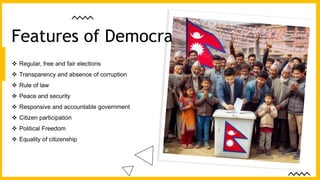
 Regular, free and fair elections
 Transparency and absence of corruption
 Rule of law
 Peace and security
 Responsive and accountable government
 Citizen participation
 Political Freedom
 Equality of citizenship
Features of Democracy
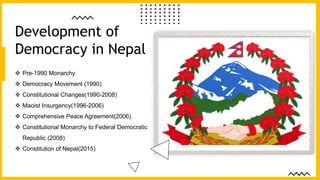
 Pre-1990 Monarchy
 Democracy Movement (1990)
 Constitutional Changes(1990-2008)
 Maoist Insurgency(1996-2006)
 Comprehensive Peace Agreement(2006)
 Constitutional Monarchy to Federal Democratic
Republic (2008)
 Constitution of Nepal(2015)
Development of
Democracy in Nepal
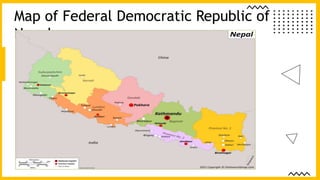
Map of Federal Democratic Republic of
Nepal
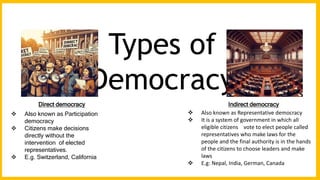
Types of
Democracy
 Also known as Participation
democracy
 Citizens make decisions
directly without the
intervention of elected
representatives.
 E.g. Switzerland, California
 Also known as Representative democracy
 It is a system of government in which all
eligible citizens vote to elect people called
representatives who make laws for the
people and the final authority is in the hands
of the citizens to choose leaders and make
laws
 E.g: Nepal, India, German, Canada
Direct democracy Indirect democracy
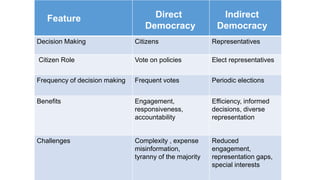
Feature Direct
Democracy
Indirect
Democracy
Decision Making Citizens Representatives
Citizen Role Vote on policies Elect representatives
Frequency of decision making Frequent votes Periodic elections
Benefits Engagement,
responsiveness,
accountability
Efficiency, informed
decisions, diverse
representation
Challenges Complexity , expense
misinformation,
tyranny of the majority
Reduced
engagement,
representation gaps,
special interests
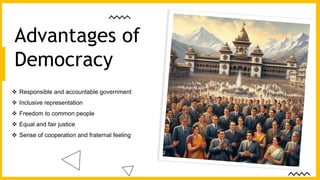
 Responsible and accountable government
 Inclusive representation
 Freedom to common people
 Equal and fair justice
 Sense of cooperation and fraternal feeling
Advantages of
Democracy
 Personal interest over national interest
 Lack of educated and experienced voters
 Corruption
 Delay in decision making process
 Family/Dynastic politics
 Chances of unqualified person as leader
Disadvantages
of Democracy
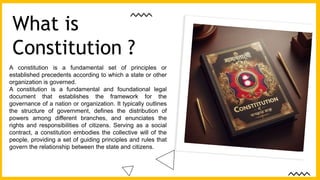
A constitution is a fundamental set of principles or
established precedents according to which a state or other
organization is governed.
A constitution is a fundamental and foundational legal
document that establishes the framework for the
governance of a nation or organization. It typically outlines
the structure of government, defines the distribution of
powers among different branches, and enunciates the
rights and responsibilities of citizens. Serving as a social
contract, a constitution embodies the collective will of the
people, providing a set of guiding principles and rules that
govern the relationship between the state and citizens.
What is
Constitution ?
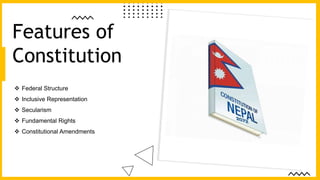
 Federal Structure
 Inclusive Representation
 Secularism
 Fundamental Rights
 Constitutional Amendments
Features of
Constitution
 Clarity and Precision
 Protection of Fundamental Rights
 Separation of Powers
 Rule of Law
 Inclusivity and Diversity
Essential for a
Good
Constitution
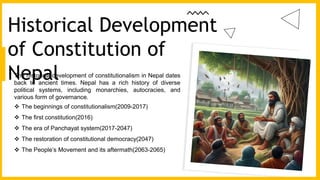
The historical development of constitutionalism in Nepal dates
back to ancient times. Nepal has a rich history of diverse
political systems, including monarchies, autocracies, and
various form of governance.
 The beginnings of constitutionalism(2009-2017)
 The first constitution(2016)
 The era of Panchayat system(2017-2047)
 The restoration of constitutional democracy(2047)
 The People’s Movement and its aftermath(2063-2065)
Historical Development
of Constitution of
Nepal
Background:
 Post-2006 People’s Movement.
 Transitional phase towards democracy.
 Adopted on January 15, 2007.
Key Elements:
 Interim Government Formation
 Rights and Liberties Emphasized
 Transition from Monarchy to Republic
 State Restructuring
 Formation of Constituent Assembly
Interim Constitution
2063 Significance:
 Transitional framework toward federal democracy.
 Paved the way for drafting a permanent constitution.
 Focused on inclusivity and representation.
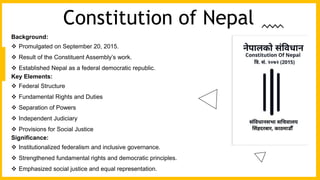
Background:
 Promulgated on September 20, 2015.
 Result of the Constituent Assembly’s work.
 Established Nepal as a federal democratic republic.
Key Elements:
 Federal Structure
 Fundamental Rights and Duties
 Separation of Powers
 Independent Judiciary
 Provisions for Social Justice
Significance:
 Institutionalized federalism and inclusive governance.
 Strengthened fundamental rights and democratic principles.
 Emphasized social justice and equal representation.
Constitution of Nepal
 Political Instability
 Ethnic and Regional Diversity
 Demand for Inclusion and Social Justice
 Peace Process and Conflict Resolution
 External Influences
Causes of Frequent change of
constitution in Nepal
2063
 Crucial in Nepal’s transition towards democracy.
 Paved the way for a permanent constitution.
2072:
 Institutionalized Nepal’s federal democratic republic.
 Represents a significant milestone in Nepal’s constitutional history.
Conclusion
“नेपाली हामी रह ौँला कहाौँ नेपालै नरहे”
~ माधव प्रसाद घिघमरे
“The Constitution of Monaco
is the shortest constitution in
the world with only 3,814
words in it.”
Did You Know?

Democracy and Constitution Development in Nepal

  • 1.
  • 2.
    Presentation Team  Sejal Bhandari Smriti Bashyal  Siddhant Pandey  Sandhya Gubhaju  Saurav Pokhrel
  • 3.
    Democracy is “governmentof, by and for the people” ~ Abraham Lincoln
  • 4.
     Derived fromthe Greek words: demo (people) and kratia (power).  It is a type of political system in which power lies in the hands of people such as choosing their representatives (i.e. govt )through periodic elections.  e.g. Nepal, India What is Democracy?
  • 5.
     Regular, freeand fair elections  Transparency and absence of corruption  Rule of law  Peace and security  Responsive and accountable government  Citizen participation  Political Freedom  Equality of citizenship Features of Democracy
  • 6.
     Pre-1990 Monarchy Democracy Movement (1990)  Constitutional Changes(1990-2008)  Maoist Insurgency(1996-2006)  Comprehensive Peace Agreement(2006)  Constitutional Monarchy to Federal Democratic Republic (2008)  Constitution of Nepal(2015) Development of Democracy in Nepal
  • 7.
    Map of FederalDemocratic Republic of Nepal
  • 8.
    Types of Democracy  Alsoknown as Participation democracy  Citizens make decisions directly without the intervention of elected representatives.  E.g. Switzerland, California  Also known as Representative democracy  It is a system of government in which all eligible citizens vote to elect people called representatives who make laws for the people and the final authority is in the hands of the citizens to choose leaders and make laws  E.g: Nepal, India, German, Canada Direct democracy Indirect democracy
  • 9.
    Feature Direct Democracy Indirect Democracy Decision MakingCitizens Representatives Citizen Role Vote on policies Elect representatives Frequency of decision making Frequent votes Periodic elections Benefits Engagement, responsiveness, accountability Efficiency, informed decisions, diverse representation Challenges Complexity , expense misinformation, tyranny of the majority Reduced engagement, representation gaps, special interests
  • 10.
     Responsible andaccountable government  Inclusive representation  Freedom to common people  Equal and fair justice  Sense of cooperation and fraternal feeling Advantages of Democracy
  • 11.
     Personal interestover national interest  Lack of educated and experienced voters  Corruption  Delay in decision making process  Family/Dynastic politics  Chances of unqualified person as leader Disadvantages of Democracy
  • 12.
    A constitution isa fundamental set of principles or established precedents according to which a state or other organization is governed. A constitution is a fundamental and foundational legal document that establishes the framework for the governance of a nation or organization. It typically outlines the structure of government, defines the distribution of powers among different branches, and enunciates the rights and responsibilities of citizens. Serving as a social contract, a constitution embodies the collective will of the people, providing a set of guiding principles and rules that govern the relationship between the state and citizens. What is Constitution ?
  • 13.
     Federal Structure Inclusive Representation  Secularism  Fundamental Rights  Constitutional Amendments Features of Constitution
  • 14.
     Clarity andPrecision  Protection of Fundamental Rights  Separation of Powers  Rule of Law  Inclusivity and Diversity Essential for a Good Constitution
  • 15.
    The historical developmentof constitutionalism in Nepal dates back to ancient times. Nepal has a rich history of diverse political systems, including monarchies, autocracies, and various form of governance.  The beginnings of constitutionalism(2009-2017)  The first constitution(2016)  The era of Panchayat system(2017-2047)  The restoration of constitutional democracy(2047)  The People’s Movement and its aftermath(2063-2065) Historical Development of Constitution of Nepal
  • 16.
    Background:  Post-2006 People’sMovement.  Transitional phase towards democracy.  Adopted on January 15, 2007. Key Elements:  Interim Government Formation  Rights and Liberties Emphasized  Transition from Monarchy to Republic  State Restructuring  Formation of Constituent Assembly Interim Constitution 2063 Significance:  Transitional framework toward federal democracy.  Paved the way for drafting a permanent constitution.  Focused on inclusivity and representation.
  • 17.
    Background:  Promulgated onSeptember 20, 2015.  Result of the Constituent Assembly’s work.  Established Nepal as a federal democratic republic. Key Elements:  Federal Structure  Fundamental Rights and Duties  Separation of Powers  Independent Judiciary  Provisions for Social Justice Significance:  Institutionalized federalism and inclusive governance.  Strengthened fundamental rights and democratic principles.  Emphasized social justice and equal representation. Constitution of Nepal
  • 18.
     Political Instability Ethnic and Regional Diversity  Demand for Inclusion and Social Justice  Peace Process and Conflict Resolution  External Influences Causes of Frequent change of constitution in Nepal
  • 19.
    2063  Crucial inNepal’s transition towards democracy.  Paved the way for a permanent constitution. 2072:  Institutionalized Nepal’s federal democratic republic.  Represents a significant milestone in Nepal’s constitutional history. Conclusion
  • 20.
    “नेपाली हामी रहौँला कहाौँ नेपालै नरहे” ~ माधव प्रसाद घिघमरे
  • 21.
    “The Constitution ofMonaco is the shortest constitution in the world with only 3,814 words in it.” Did You Know?