Demand Planning
Process in Supply
Chain
Chetan Chauhan
Thankyou
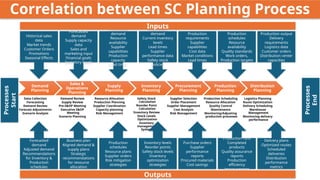
Correlation between SC Planning Process
Demand
Planning
Data Collection
Forecasting
Demand Review
Forecast Adjustments
Scenario Analysis
Sales &
Operations
Planning
Demand Review
Supply Review
Pre-S&OP Meeting
Executive S&OP
Meeting
Scenario Planning
Supply
Planning
Resource Allocation
Production Planning
Supplier Coordination
Capacity planning
Risk Management
Inventory
Planning
Safety Stock
Calculation
Reorder Point
Calculation
Inventory Review
Stock Levels
Optimization
Inventory
management
Systems
Procurement
Planning
Supplier Selection
Order Placement
Supplier Management
Cost Analysis
Risk Management
Production
Planning
Production Scheduling
Resource Allocation
Quality Control
Maintenance
Monitoring/Adjusting
production processes
Distribution
Planning
Logistics Planning
Route Optimization
Delivery Scheduling
Warehouse
Management
Monitoring delivery
performance
Historical sales
data
Market trends
Customer Orders
Promotions
Seasonal Effects
Forecasted
demand
Supply capacity
data
Sales and
marketing input
Financial goals
Inventory levels
Forecasted
demand
Resource
availability
Supplier
capabilities
Production
capacity
Lead times
Forecasted
demand
Current inventory
levels
Lead times
Supplier
performance data
Safety stock
policies
Production
requirements
Supplier
capabilities
Cost data
Market conditions
Lead times
Production
schedules
Resource
availability
Quality standards
Work orders,
Production targets
Production output
Delivery
requirements
Logistics data
Customer orders
Distribution center
capacities
Forecasted
demand
Adjusted demand
Recommendations
for Inventory &
Production
schedules
Business plan
Aligned demand &
supply plans
Strategic
recommendations
for resource
allocation
Production
schedules
Resource plans
Supplier orders
Risk mitigation
strategies
Inventory levels
Reorder points
Safety stock levels
Inventory
optimization
strategies
Purchase orders
Supplier
performance
reports
Procured materials
Cost savings
Production runs
Completed
products
Quality assurance
reports
Production
efficiency
improvements
Delivery plans
Optimized routes
Scheduled
deliveries
Distribution
performance
metrics
Inputs
Outputs
Processes
Start
Processes
End
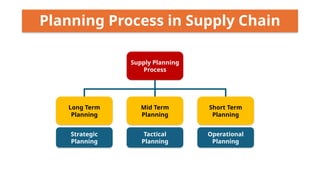
Planning Process in Supply Chain
Supply Planning
Process
Long Term
Planning
Strategic
Planning
Mid Term
Planning
Tactical
Planning
Short Term
Planning
Operational
Planning
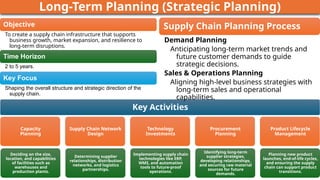
Long-Term Planning (Strategic Planning)
Key Activities
Capacity
Planning
Deciding on the size,
location, and capabilities
of facilities such as
warehouses and
production plants.
Supply Chain Network
Design
Determining supplier
relationships, distribution
networks, and logistics
partnerships.
Technology
Investments
Implementing supply chain
technologies like ERP,
WMS, and automation
tools to future-proof
operations.
Procurement
Planning
Identifying long-term
supplier strategies,
developing relationships,
and securing raw material
sources for future
demands.
Product Lifecycle
Management
Planning new product
launches, end-of-life cycles,
and ensuring the supply
chain can support product
transitions.
Objective
To create a supply chain infrastructure that supports
business growth, market expansion, and resilience to
long-term disruptions.
Time Horizon
2 to 5 years.
Key Focus
Shaping the overall structure and strategic direction of the
supply chain.
Supply Chain Planning Process
Demand Planning
Anticipating long-term market trends and
future customer demands to guide
strategic decisions.
Sales & Operations Planning
Aligning high-level business strategies with
long-term sales and operational
capabilities.
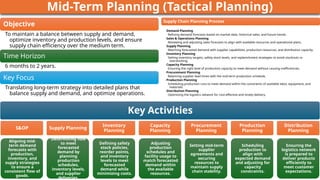
Mid-Term Planning (Tactical Planning)
Key Activities
S&OP
Aligning mid-
term demand
forecasts with
production,
inventory, and
supply strategies
to ensure a
consistent flow of
goods.
Supply Planning
Determining how
to meet
forecasted
demand by
planning
production
schedules,
inventory levels,
and supplier
deliveries.
Inventory
Planning
Defining safety
stock policies,
reorder points,
and inventory
levels to meet
forecasted
demand while
minimizing costs.
Capacity
Planning
Adjusting
production
schedules and
facility usage to
match forecasted
demand within
the available
resources.
Procurement
Planning
Setting mid-term
supplier
agreements and
securing
resources to
maintain supply
chain stability.
Production
Planning
Scheduling
production to
align with
expected demand
and adjusting for
capacity
constraints.
Distribution
Planning
Ensuring the
logistics network
is prepared to
deliver products
efficiently to
meet customer
expectations.
Objective
To maintain a balance between supply and demand,
optimize inventory and production levels, and ensure
supply chain efficiency over the medium term.
Time Horizon
6 months to 2 years.
Key Focus
Translating long-term strategy into detailed plans that
balance supply and demand, and optimize operations.
Supply Chain Planning Process
Demand Planning
Refining demand forecasts based on market data, historical sales, and future trends.
Sales & Operations Planning
Reviewing and adjusting sales forecasts to align with available resources and operational plans.
Supply Planning
Matching forecasted demand with supplier capabilities, production resources, and distribution capacity.
Inventory Planning
Setting inventory targets, safety stock levels, and replenishment strategies to avoid stockouts or
overstocking.
Capacity Planning
Ensuring the right level of production capacity to meet demand without causing inefficiencies.
Procurement Planning
Balancing supplier lead times with the mid-term production schedule.
Production Planning
Scheduling production runs to meet demand within the constraints of available labor, equipment, and
materials.
Distribution Planning
Optimizing the logistics network for cost-effective and timely delivery.
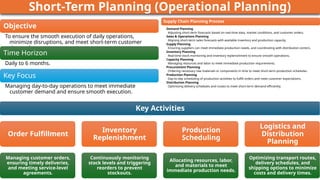
Short-Term Planning (Operational Planning)
Key Activities
Order Fulfillment
Managing customer orders,
ensuring timely deliveries,
and meeting service-level
agreements.
Inventory
Replenishment
Continuously monitoring
stock levels and triggering
reorders to prevent
stockouts.
Production
Scheduling
Allocating resources, labor,
and materials to meet
immediate production needs.
Logistics and
Distribution
Planning
Optimizing transport routes,
delivery schedules, and
shipping options to minimize
costs and delivery times.
Objective
To ensure the smooth execution of daily operations,
minimize disruptions, and meet short-term customer
demand.
Time Horizon
Daily to 6 months.
Key Focus
Managing day-to-day operations to meet immediate
customer demand and ensure smooth execution.
Supply Chain Planning Process
Demand Planning
Adjusting short-term forecasts based on real-time data, market conditions, and customer orders.
Sales & Operations Planning
Aligning short-term sales forecasts with available inventory and production capacity.
Supply Planning
Ensuring suppliers can meet immediate production needs, and coordinating with distribution centers.
Inventory Planning
Real-time stock monitoring and inventory replenishment to ensure smooth operations.
Capacity Planning
Managing resources and labor to meet immediate production requirements.
Procurement Planning
Ordering necessary raw materials or components in time to meet short-term production schedules.
Production Planning
Day-to-day scheduling of production activities to fulfill orders and meet customer expectations.
Distribution Planning
Optimizing delivery schedules and routes to meet short-term demand efficiently.

Demand Planning Process in Supply Chain Management.pptx

  • 1.
    Demand Planning Process inSupply Chain Chetan Chauhan
  • 2.
  • 3.
    Correlation between SCPlanning Process Demand Planning Data Collection Forecasting Demand Review Forecast Adjustments Scenario Analysis Sales & Operations Planning Demand Review Supply Review Pre-S&OP Meeting Executive S&OP Meeting Scenario Planning Supply Planning Resource Allocation Production Planning Supplier Coordination Capacity planning Risk Management Inventory Planning Safety Stock Calculation Reorder Point Calculation Inventory Review Stock Levels Optimization Inventory management Systems Procurement Planning Supplier Selection Order Placement Supplier Management Cost Analysis Risk Management Production Planning Production Scheduling Resource Allocation Quality Control Maintenance Monitoring/Adjusting production processes Distribution Planning Logistics Planning Route Optimization Delivery Scheduling Warehouse Management Monitoring delivery performance Historical sales data Market trends Customer Orders Promotions Seasonal Effects Forecasted demand Supply capacity data Sales and marketing input Financial goals Inventory levels Forecasted demand Resource availability Supplier capabilities Production capacity Lead times Forecasted demand Current inventory levels Lead times Supplier performance data Safety stock policies Production requirements Supplier capabilities Cost data Market conditions Lead times Production schedules Resource availability Quality standards Work orders, Production targets Production output Delivery requirements Logistics data Customer orders Distribution center capacities Forecasted demand Adjusted demand Recommendations for Inventory & Production schedules Business plan Aligned demand & supply plans Strategic recommendations for resource allocation Production schedules Resource plans Supplier orders Risk mitigation strategies Inventory levels Reorder points Safety stock levels Inventory optimization strategies Purchase orders Supplier performance reports Procured materials Cost savings Production runs Completed products Quality assurance reports Production efficiency improvements Delivery plans Optimized routes Scheduled deliveries Distribution performance metrics Inputs Outputs Processes Start Processes End
  • 4.
    Planning Process inSupply Chain Supply Planning Process Long Term Planning Strategic Planning Mid Term Planning Tactical Planning Short Term Planning Operational Planning
  • 5.
    Long-Term Planning (StrategicPlanning) Key Activities Capacity Planning Deciding on the size, location, and capabilities of facilities such as warehouses and production plants. Supply Chain Network Design Determining supplier relationships, distribution networks, and logistics partnerships. Technology Investments Implementing supply chain technologies like ERP, WMS, and automation tools to future-proof operations. Procurement Planning Identifying long-term supplier strategies, developing relationships, and securing raw material sources for future demands. Product Lifecycle Management Planning new product launches, end-of-life cycles, and ensuring the supply chain can support product transitions. Objective To create a supply chain infrastructure that supports business growth, market expansion, and resilience to long-term disruptions. Time Horizon 2 to 5 years. Key Focus Shaping the overall structure and strategic direction of the supply chain. Supply Chain Planning Process Demand Planning Anticipating long-term market trends and future customer demands to guide strategic decisions. Sales & Operations Planning Aligning high-level business strategies with long-term sales and operational capabilities.
  • 6.
    Mid-Term Planning (TacticalPlanning) Key Activities S&OP Aligning mid- term demand forecasts with production, inventory, and supply strategies to ensure a consistent flow of goods. Supply Planning Determining how to meet forecasted demand by planning production schedules, inventory levels, and supplier deliveries. Inventory Planning Defining safety stock policies, reorder points, and inventory levels to meet forecasted demand while minimizing costs. Capacity Planning Adjusting production schedules and facility usage to match forecasted demand within the available resources. Procurement Planning Setting mid-term supplier agreements and securing resources to maintain supply chain stability. Production Planning Scheduling production to align with expected demand and adjusting for capacity constraints. Distribution Planning Ensuring the logistics network is prepared to deliver products efficiently to meet customer expectations. Objective To maintain a balance between supply and demand, optimize inventory and production levels, and ensure supply chain efficiency over the medium term. Time Horizon 6 months to 2 years. Key Focus Translating long-term strategy into detailed plans that balance supply and demand, and optimize operations. Supply Chain Planning Process Demand Planning Refining demand forecasts based on market data, historical sales, and future trends. Sales & Operations Planning Reviewing and adjusting sales forecasts to align with available resources and operational plans. Supply Planning Matching forecasted demand with supplier capabilities, production resources, and distribution capacity. Inventory Planning Setting inventory targets, safety stock levels, and replenishment strategies to avoid stockouts or overstocking. Capacity Planning Ensuring the right level of production capacity to meet demand without causing inefficiencies. Procurement Planning Balancing supplier lead times with the mid-term production schedule. Production Planning Scheduling production runs to meet demand within the constraints of available labor, equipment, and materials. Distribution Planning Optimizing the logistics network for cost-effective and timely delivery.
  • 7.
    Short-Term Planning (OperationalPlanning) Key Activities Order Fulfillment Managing customer orders, ensuring timely deliveries, and meeting service-level agreements. Inventory Replenishment Continuously monitoring stock levels and triggering reorders to prevent stockouts. Production Scheduling Allocating resources, labor, and materials to meet immediate production needs. Logistics and Distribution Planning Optimizing transport routes, delivery schedules, and shipping options to minimize costs and delivery times. Objective To ensure the smooth execution of daily operations, minimize disruptions, and meet short-term customer demand. Time Horizon Daily to 6 months. Key Focus Managing day-to-day operations to meet immediate customer demand and ensure smooth execution. Supply Chain Planning Process Demand Planning Adjusting short-term forecasts based on real-time data, market conditions, and customer orders. Sales & Operations Planning Aligning short-term sales forecasts with available inventory and production capacity. Supply Planning Ensuring suppliers can meet immediate production needs, and coordinating with distribution centers. Inventory Planning Real-time stock monitoring and inventory replenishment to ensure smooth operations. Capacity Planning Managing resources and labor to meet immediate production requirements. Procurement Planning Ordering necessary raw materials or components in time to meet short-term production schedules. Production Planning Day-to-day scheduling of production activities to fulfill orders and meet customer expectations. Distribution Planning Optimizing delivery schedules and routes to meet short-term demand efficiently.