Degree of Centralization
By
“The Organization Consultants”
Introduction
“Architecture does not create extraordinary organizations by
collecting extraordinary people. It does so by enabling very
ordinary people to perform in extraordinary ways”
John Kay
Author:- “Foundations Of Corporate Success: How Business Strategies Add Value”
(Oxford University Press - ISBN: 9780198289883)
Introduction
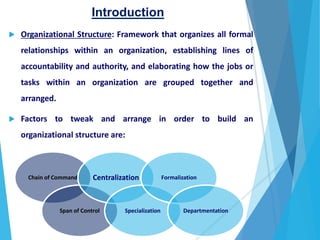
 Organizational Structure: Framework that organizes all formal
relationships within an organization, establishing lines of
accountability and authority, and elaborating how the jobs or
tasks within an organization are grouped together and
arranged.
 Factors to tweak and arrange in order to build an
organizational structure are:
Chain of Command
Span of Control
Centralization
Specialization
Formalization
Departmentation
Aim
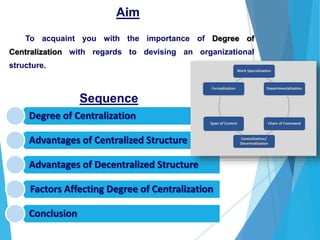
To acquaint you with the importance of Degree of
Centralization with regards to devising an organizational
structure.
Sequence
Degree of Centralization
Advantages of Centralized Structure
Advantages of Decentralized Structure
Factors Affecting Degree of Centralization
Conclusion
Degree of Centralization
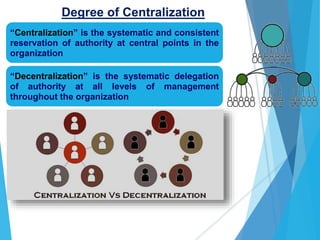
“Centralization” is the systematic and consistent
reservation of authority at central points in the
organization
“Decentralization” is the systematic delegation
of authority at all levels of management
throughout the organization
Degree of Centralization
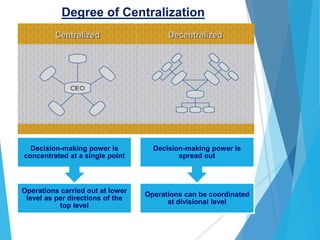
Operations carried out at lower
level as per directions of the
top level
Decision-making power is
concentrated at a single point
Operations can be coordinated
at divisional level
Decision-making power is
spread out
Degree of Centralization
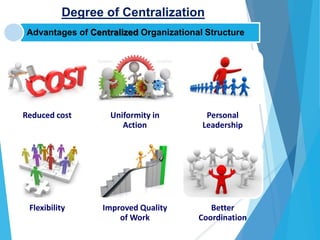
Advantages of Centralized Organizational Structure
Reduced cost Uniformity in
Action
Personal
Leadership
Flexibility Improved Quality
of Work
Better
Coordination
Degree of Centralization
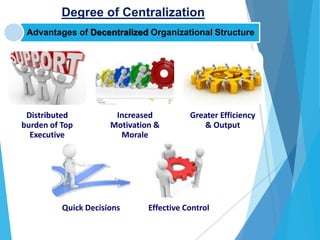
Advantages of Decentralized Organizational Structure
Distributed
burden of Top
Executive
Increased
Motivation &
Morale
Greater Efficiency
& Output
Quick Decisions Effective Control
Degree of Centralization
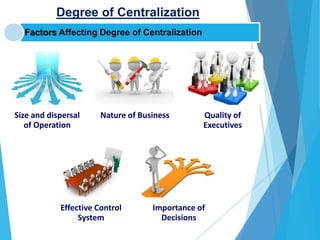
Factors Affecting Degree of Centralization
Size and dispersal
of Operation
Nature of Business Quality of
Executives
Effective Control
System
Importance of
Decisions
Degree of Centralization
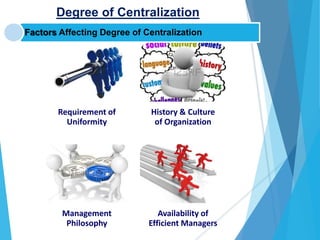
Factors Affecting Degree of Centralization
Requirement of
Uniformity
History & Culture
of Organization
Management
Philosophy
Availability of
Efficient Managers
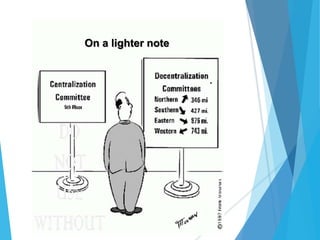
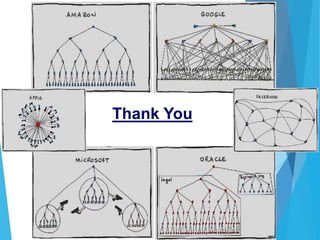
On a lighter note
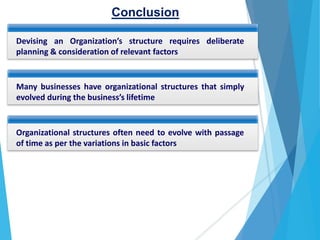
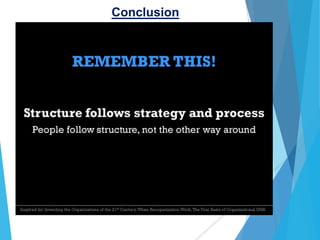
Conclusion
Many businesses have organizational structures that simply
evolved during the business’s lifetime
Organizational structures often need to evolve with passage
of time as per the variations in basic factors
Devising an Organization’s structure requires deliberate
planning & consideration of relevant factors
Conclusion
Thank You

Degree of centralization

  • 1.
    Degree of Centralization By “TheOrganization Consultants”
  • 2.
    Introduction “Architecture does notcreate extraordinary organizations by collecting extraordinary people. It does so by enabling very ordinary people to perform in extraordinary ways” John Kay Author:- “Foundations Of Corporate Success: How Business Strategies Add Value” (Oxford University Press - ISBN: 9780198289883)
  • 3.
    Introduction  Organizational Structure:Framework that organizes all formal relationships within an organization, establishing lines of accountability and authority, and elaborating how the jobs or tasks within an organization are grouped together and arranged.  Factors to tweak and arrange in order to build an organizational structure are: Chain of Command Span of Control Centralization Specialization Formalization Departmentation
  • 4.
    Aim To acquaint youwith the importance of Degree of Centralization with regards to devising an organizational structure. Sequence Degree of Centralization Advantages of Centralized Structure Advantages of Decentralized Structure Factors Affecting Degree of Centralization Conclusion
  • 5.
    Degree of Centralization “Centralization”is the systematic and consistent reservation of authority at central points in the organization “Decentralization” is the systematic delegation of authority at all levels of management throughout the organization
  • 6.
    Degree of Centralization Operationscarried out at lower level as per directions of the top level Decision-making power is concentrated at a single point Operations can be coordinated at divisional level Decision-making power is spread out
  • 7.
    Degree of Centralization Advantagesof Centralized Organizational Structure Reduced cost Uniformity in Action Personal Leadership Flexibility Improved Quality of Work Better Coordination
  • 8.
    Degree of Centralization Advantagesof Decentralized Organizational Structure Distributed burden of Top Executive Increased Motivation & Morale Greater Efficiency & Output Quick Decisions Effective Control
  • 9.
    Degree of Centralization FactorsAffecting Degree of Centralization Size and dispersal of Operation Nature of Business Quality of Executives Effective Control System Importance of Decisions
  • 10.
    Degree of Centralization FactorsAffecting Degree of Centralization Requirement of Uniformity History & Culture of Organization Management Philosophy Availability of Efficient Managers
  • 11.
  • 12.
    Conclusion Many businesses haveorganizational structures that simply evolved during the business’s lifetime Organizational structures often need to evolve with passage of time as per the variations in basic factors Devising an Organization’s structure requires deliberate planning & consideration of relevant factors
  • 13.
  • 14.