Overzicht
1.   Representatieve Democratie ideaal versus werkelijkheid

2.   Waarom representatieve democratie ALTIJD afglijdt
     naar particratie

3.   Benchmarking the Best in Class

4.   Verklaring van de performantieverschillen

5.   Grondoorzaak de vergeten basiswaarden

6.   Aanbevolen ordening van de samenleving

7.   Quantificatie van de winst

8.   Een nieuwe en andere rol voor politici
Quantification of the
      savings
Public Sector Efficiency
    An International
       Comparison

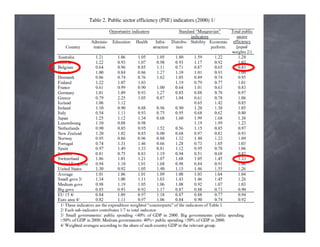
     ECB working paper number 242, July 2003 "Public
        Sector Efficiency_An International
        Comparison“ by Afonso, Schuknecht and Tanzi
        http://www.pedz.uni-
        mannheim.de/daten/edz-ki/ezb/03/w-
        paper/ecbwp242.pdf
Benchmarking Belgium versus
                  Switzerland
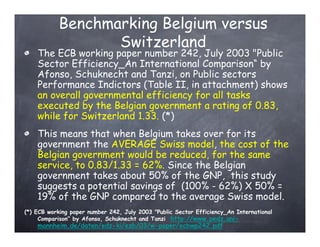
    The ECB working paper number 242, July 2003 "Public
    Sector Efficiency_An International Comparison“ by
    Afonso, Schuknecht and Tanzi, on Public sectors
    Performance Indictors (Table II, in attachment) shows
    an overall governmental efficiency for all tasks
    executed by the Belgian government a rating of 0.83,
    while for Switzerland 1.33. (*)
    This means that when Belgium takes over for its
    government the AVERAGE Swiss model, the cost of the
    Belgian government would be reduced, for the same
    service, to 0.83/1.33 = 62%. Since the Belgian
    government takes about 50% of the GNP, this study
    suggests a potential savings of (100% - 62%) X 50% =
    19% of the GNP compared to the average Swiss model.
(*) ECB working paper number 242, July 2003 "Public Sector Efficiency_An International
     Comparison“ by Afonso, Schuknecht and Tanzi http://www.pedz.uni-
    mannheim.de/daten/edz-ki/ezb/03/w-paper/ecbwp242.pdf
Bijkomende efficiecientieverhoging
   door automatische Financiele
           Referenda ?


  Lars P. Feld, John G. Matsusaka, "Budget referendums and
  government spending: evidence from Swiss cantons“ Journal
  of Public Economics 87 (2003) 2703– 2724

  Lars Feld and Gebhard Kirchgasser, "Local fiscal Referenda:
  The dampening effect on taxes and spending",Economic
  Policy, 2001
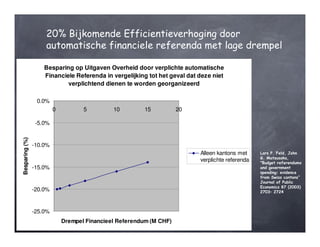
20% Bijkomende Efficientieverhoging door
                    automatische financiele referenda met lage drempel

                    Besparing op Uitgaven Overheid door verplichte automatische
                    Financiele Referenda in vergelijking tot het geval dat deze niet
                            verplichtend dienen te worden georganizeerd

                 0.0%
                         0          5         10        15           20

                 -5.0%
Besparing (%)


                -10.0%
                                                                           Alleen kantons met     Lars P. Feld, John
                                                                                                  G. Matsusaka,
                                                                           verplichte referenda   "Budget referendums
                -15.0%                                                                            and government
                                                                                                  spending: evidence
                                                                                                  from Swiss cantons“
                                                                                                  Journal of Public
                                                                                                  Economics 87 (2003)
                -20.0%                                                                            2703– 2724


                -25.0%
                             Drempel Financieel Referendum (M CHF)
Bijkomende efficientieverhoging door
    Automatische finciele referenda

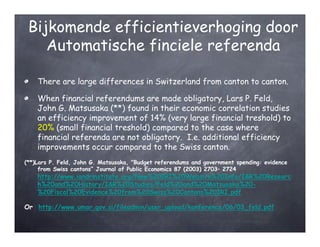
    There are large differences in Switzerland from canton to canton.

    When financial referendums are made obligatory, Lars P. Feld,
    John G. Matsusaka (**) found in their economic correlation studies
    an efficiency improvement of 14% (very large financial treshold) to
    20% (small financial treshold) compared to the case where
    financial referenda are not obligatory. I.e. additional efficiency
    improvements occur compared to the Swiss canton.
(**)Lars P. Feld, John G. Matsusaka, "Budget referendums and government spending: evidence
     from Swiss cantons“ Journal of Public Economics 87 (2003) 2703– 2724
    http://www.iandrinstitute.org/New%20IRI%20Website%20Info/I&R%20Researc
    h%20and%20History/I&R%20Studies/Feld%20and%20Matsusaka%20-
    %20Fiscal%20Evidence%20from%20Swiss%20Cantons%20IRI.pdf

Or http://www.umar.gov.si/fileadmin/user_upload/konference/06/03_feld.pdf
Bijkomende efficientieverhoging door
   Automatische finciele referenda


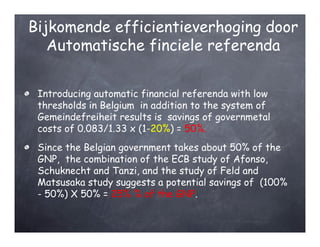
 Introducing automatic financial referenda with low
 thresholds in Belgium in addition to the system of
 Gemeindefreiheit results is savings of governmetal
 costs of 0.083/1.33 x (1-20%) = 50%.
 Since the Belgian government takes about 50% of the
 GNP, the combination of the ECB study of Afonso,
 Schuknecht and Tanzi, and the study of Feld and
 Matsusaka study suggests a potential savings of (100%
 - 50%) X 50% = 25% % of the GNP.
Libertarian View on
        Savings Possible
        David R Barker
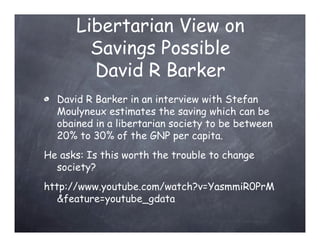
  David R Barker in an interview with Stefan
  Moulyneux estimates the saving which can be
  obained in a libertarian society to be between
  20% to 30% of the GNP per capita.
He asks: Is this worth the trouble to change
  society?
http://www.youtube.com/watch?v=YasmmiR0PrM
   &feature=youtube_gdata
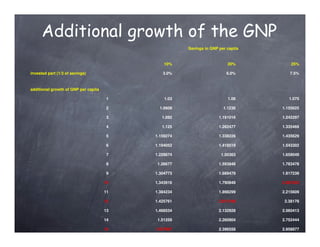
Additional growth of the GNP
                                                      Savings in GNP per capita


                                               10%                       20%          25%

invested part (1/3 of savings)                3.0%                       6.0%        7.5%


additional growth of GNP per capita

                                      1        1.03                      1.06        1.075

                                      2      1.0609                    1.1236     1.155625

                                      3       1.092                  1.191016     1.242297

                                      4       1.125                  1.262477     1.335469

                                      5    1.159274                  1.338226     1.435629

                                      6    1.194052                  1.418519     1.543302

                                      7    1.229874                   1.50363     1.659049

                                      8     1.26677                  1.593848     1.783478

                                      9    1.304773                  1.689479     1.917239

                                      10   1.343916                  1.790848     2.061032

                                      11   1.384234                  1.898299     2.215609

                                      12   1.425761                  2.012196      2.38178

                                      13   1.468534                  2.132928     2.560413

                                      14    1.51259                  2.260904     2.752444

                                      15   1.557967                  2.396558     2.958877

Deel 7 quantificatie van de winst

  • 1.
    Overzicht 1. Representatieve Democratie ideaal versus werkelijkheid 2. Waarom representatieve democratie ALTIJD afglijdt naar particratie 3. Benchmarking the Best in Class 4. Verklaring van de performantieverschillen 5. Grondoorzaak de vergeten basiswaarden 6. Aanbevolen ordening van de samenleving 7. Quantificatie van de winst 8. Een nieuwe en andere rol voor politici
  • 2.
  • 3.
    Public Sector Efficiency An International Comparison ECB working paper number 242, July 2003 "Public Sector Efficiency_An International Comparison“ by Afonso, Schuknecht and Tanzi http://www.pedz.uni- mannheim.de/daten/edz-ki/ezb/03/w- paper/ecbwp242.pdf
  • 5.
    Benchmarking Belgium versus Switzerland The ECB working paper number 242, July 2003 "Public Sector Efficiency_An International Comparison“ by Afonso, Schuknecht and Tanzi, on Public sectors Performance Indictors (Table II, in attachment) shows an overall governmental efficiency for all tasks executed by the Belgian government a rating of 0.83, while for Switzerland 1.33. (*) This means that when Belgium takes over for its government the AVERAGE Swiss model, the cost of the Belgian government would be reduced, for the same service, to 0.83/1.33 = 62%. Since the Belgian government takes about 50% of the GNP, this study suggests a potential savings of (100% - 62%) X 50% = 19% of the GNP compared to the average Swiss model. (*) ECB working paper number 242, July 2003 "Public Sector Efficiency_An International Comparison“ by Afonso, Schuknecht and Tanzi http://www.pedz.uni- mannheim.de/daten/edz-ki/ezb/03/w-paper/ecbwp242.pdf
  • 6.
    Bijkomende efficiecientieverhoging door automatische Financiele Referenda ? Lars P. Feld, John G. Matsusaka, "Budget referendums and government spending: evidence from Swiss cantons“ Journal of Public Economics 87 (2003) 2703– 2724 Lars Feld and Gebhard Kirchgasser, "Local fiscal Referenda: The dampening effect on taxes and spending",Economic Policy, 2001
  • 7.
    20% Bijkomende Efficientieverhogingdoor automatische financiele referenda met lage drempel Besparing op Uitgaven Overheid door verplichte automatische Financiele Referenda in vergelijking tot het geval dat deze niet verplichtend dienen te worden georganizeerd 0.0% 0 5 10 15 20 -5.0% Besparing (%) -10.0% Alleen kantons met Lars P. Feld, John G. Matsusaka, verplichte referenda "Budget referendums -15.0% and government spending: evidence from Swiss cantons“ Journal of Public Economics 87 (2003) -20.0% 2703– 2724 -25.0% Drempel Financieel Referendum (M CHF)
  • 8.
    Bijkomende efficientieverhoging door Automatische finciele referenda There are large differences in Switzerland from canton to canton. When financial referendums are made obligatory, Lars P. Feld, John G. Matsusaka (**) found in their economic correlation studies an efficiency improvement of 14% (very large financial treshold) to 20% (small financial treshold) compared to the case where financial referenda are not obligatory. I.e. additional efficiency improvements occur compared to the Swiss canton. (**)Lars P. Feld, John G. Matsusaka, "Budget referendums and government spending: evidence from Swiss cantons“ Journal of Public Economics 87 (2003) 2703– 2724 http://www.iandrinstitute.org/New%20IRI%20Website%20Info/I&R%20Researc h%20and%20History/I&R%20Studies/Feld%20and%20Matsusaka%20- %20Fiscal%20Evidence%20from%20Swiss%20Cantons%20IRI.pdf Or http://www.umar.gov.si/fileadmin/user_upload/konference/06/03_feld.pdf
  • 9.
    Bijkomende efficientieverhoging door Automatische finciele referenda Introducing automatic financial referenda with low thresholds in Belgium in addition to the system of Gemeindefreiheit results is savings of governmetal costs of 0.083/1.33 x (1-20%) = 50%. Since the Belgian government takes about 50% of the GNP, the combination of the ECB study of Afonso, Schuknecht and Tanzi, and the study of Feld and Matsusaka study suggests a potential savings of (100% - 50%) X 50% = 25% % of the GNP.
  • 10.
    Libertarian View on Savings Possible David R Barker David R Barker in an interview with Stefan Moulyneux estimates the saving which can be obained in a libertarian society to be between 20% to 30% of the GNP per capita. He asks: Is this worth the trouble to change society? http://www.youtube.com/watch?v=YasmmiR0PrM &feature=youtube_gdata
  • 11.
    Additional growth ofthe GNP Savings in GNP per capita 10% 20% 25% invested part (1/3 of savings) 3.0% 6.0% 7.5% additional growth of GNP per capita 1 1.03 1.06 1.075 2 1.0609 1.1236 1.155625 3 1.092 1.191016 1.242297 4 1.125 1.262477 1.335469 5 1.159274 1.338226 1.435629 6 1.194052 1.418519 1.543302 7 1.229874 1.50363 1.659049 8 1.26677 1.593848 1.783478 9 1.304773 1.689479 1.917239 10 1.343916 1.790848 2.061032 11 1.384234 1.898299 2.215609 12 1.425761 2.012196 2.38178 13 1.468534 2.132928 2.560413 14 1.51259 2.260904 2.752444 15 1.557967 2.396558 2.958877