Chapter 1
Introduction to Databases
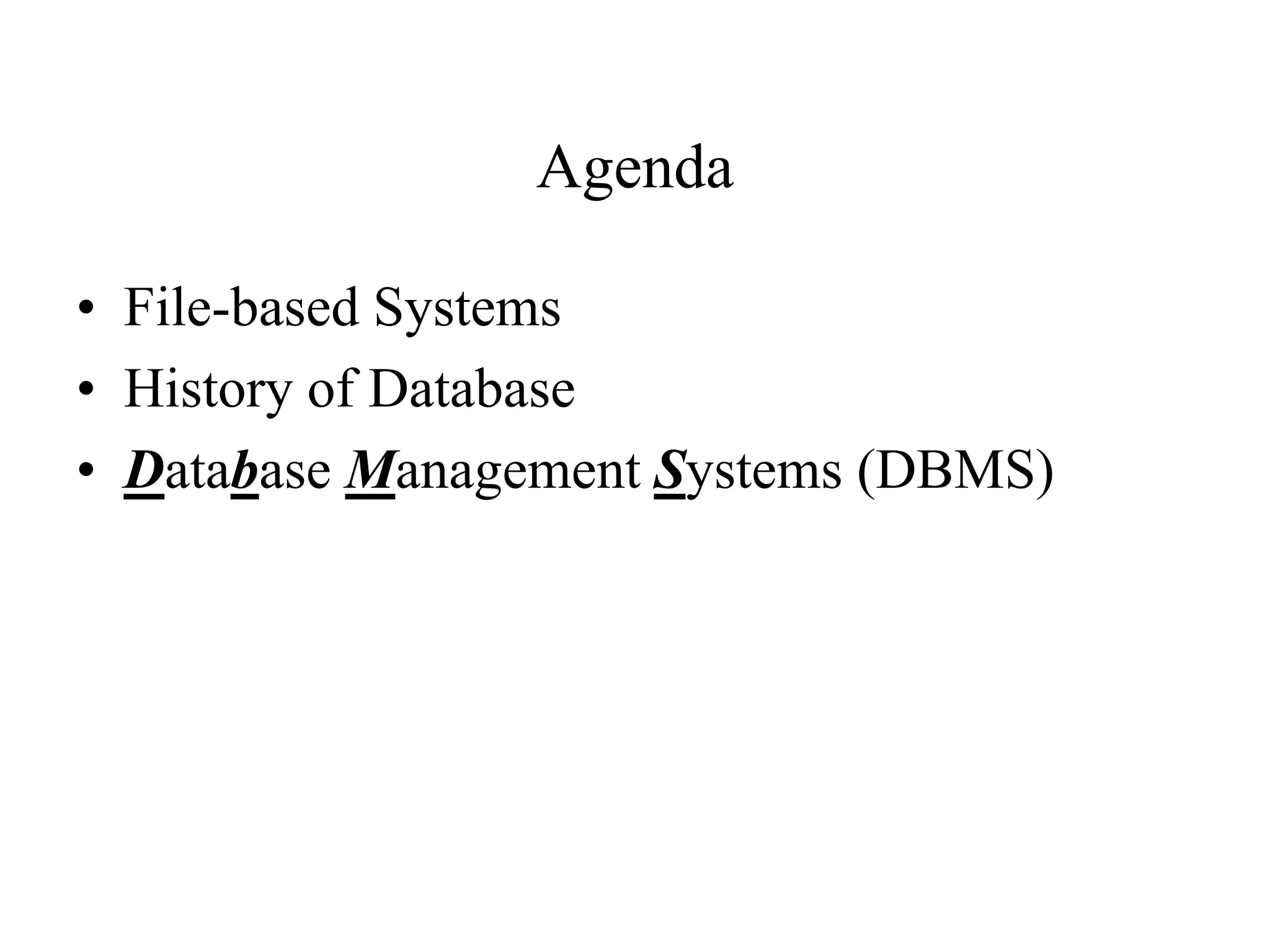
Agenda
• File-based Systems
• History of Database
• Database Management Systems (DBMS)
File-based Definition
• Program defines and manages it’s own data
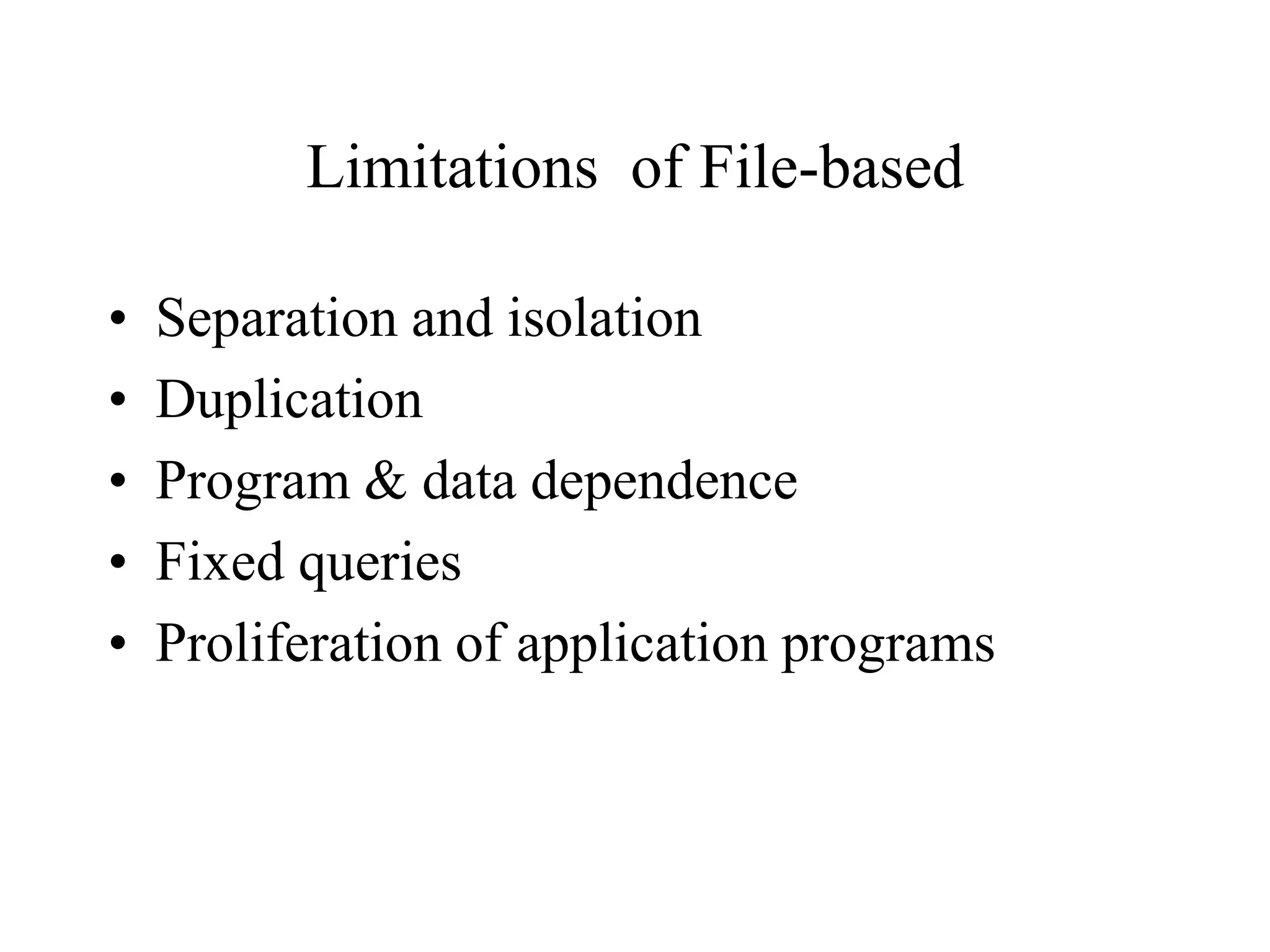
Limitations of File-based
• Separation and isolation
• Duplication
• Program & data dependence
• Fixed queries
• Proliferation of application programs
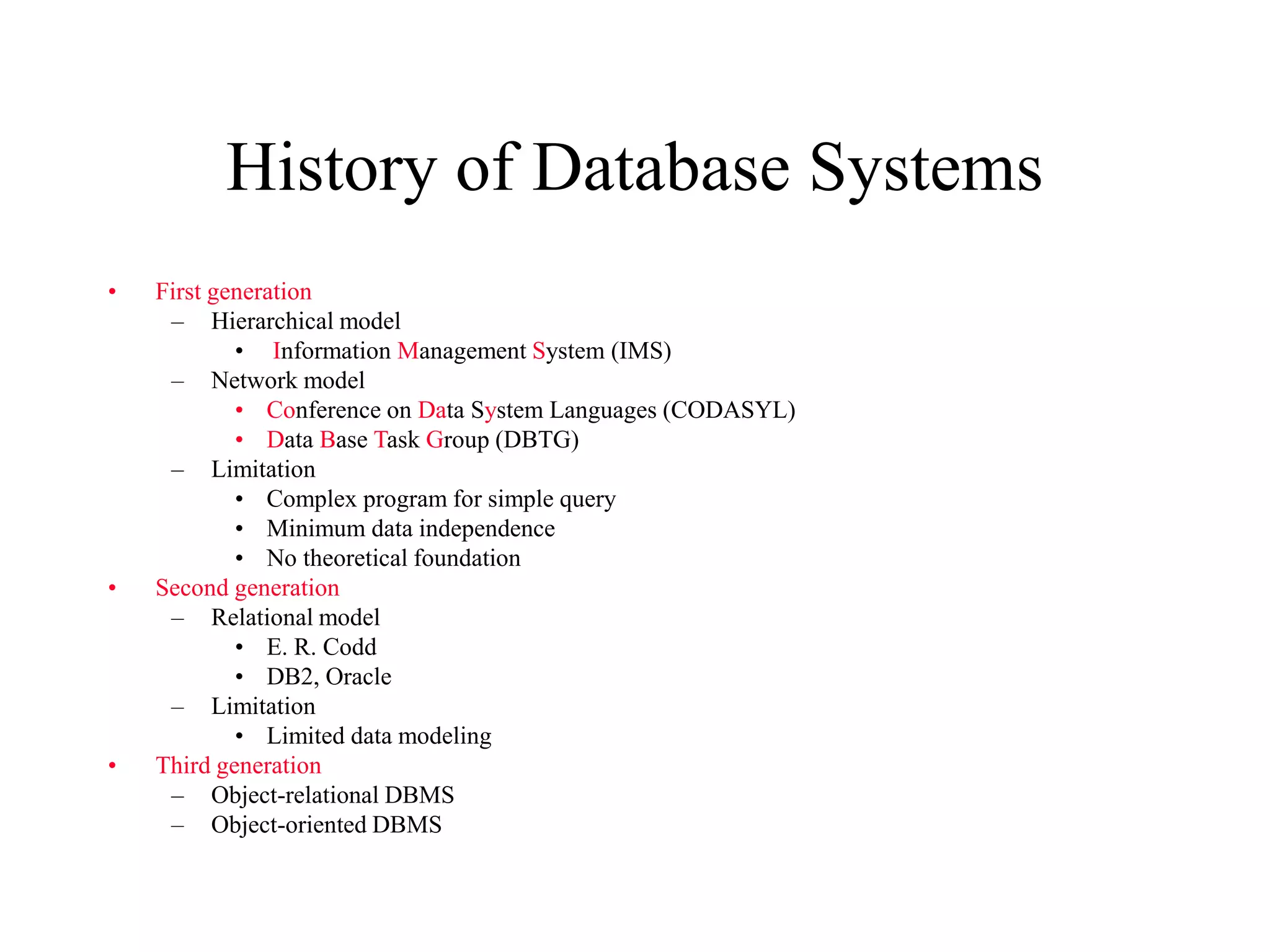
History of Database Systems
• First generation
– Hierarchical model
• Information Management System (IMS)
– Network model
• Conference on Data System Languages (CODASYL)
• Data Base Task Group (DBTG)
– Limitation
• Complex program for simple query
• Minimum data independence
• No theoretical foundation
• Second generation
– Relational model
• E. R. Codd
• DB2, Oracle
– Limitation
• Limited data modeling
• Third generation
– Object-relational DBMS
– Object-oriented DBMS
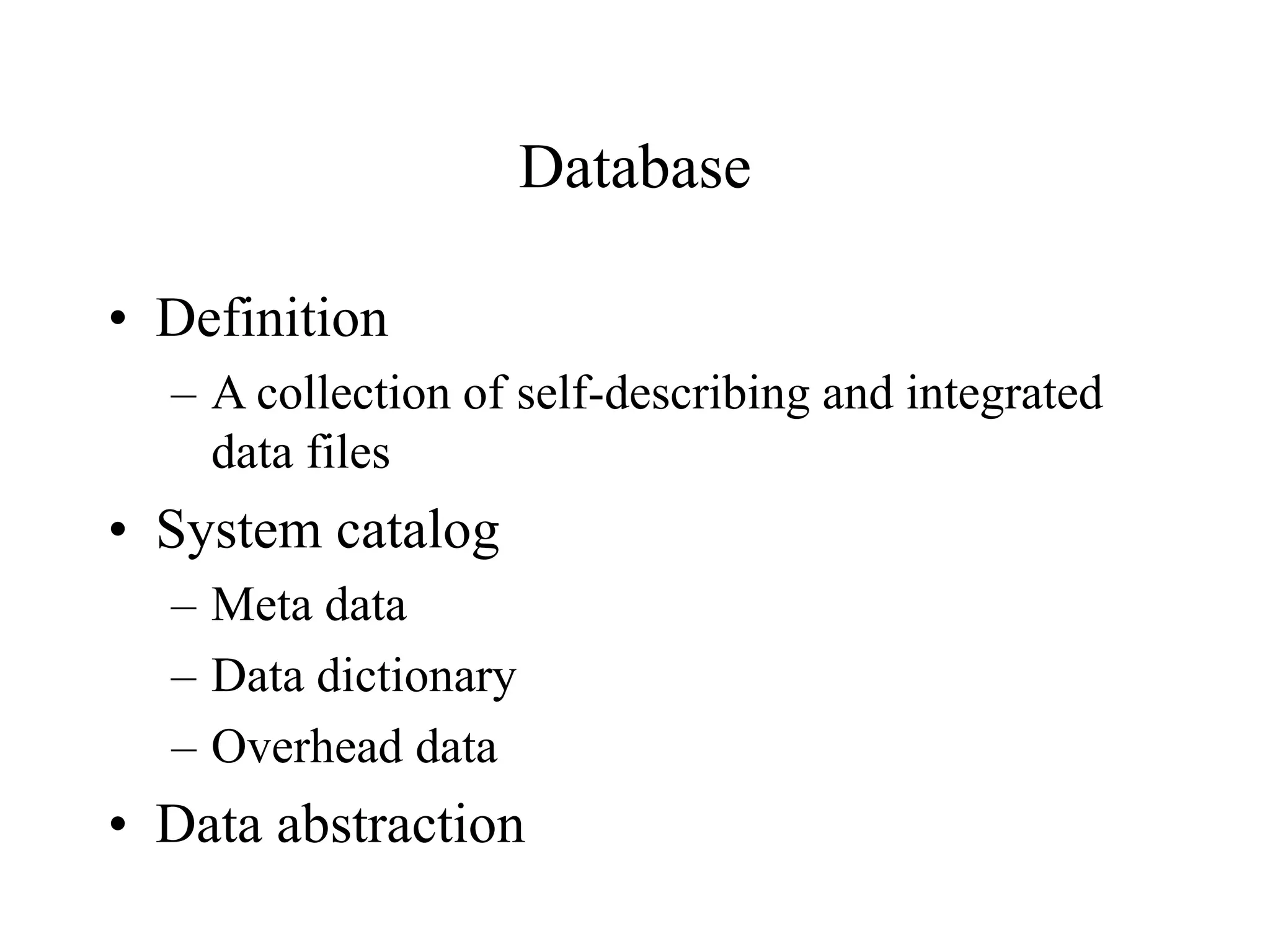
Database
• Definition
– A collection of self-describing and integrated
data files
• System catalog
– Meta data
– Data dictionary
– Overhead data
• Data abstraction
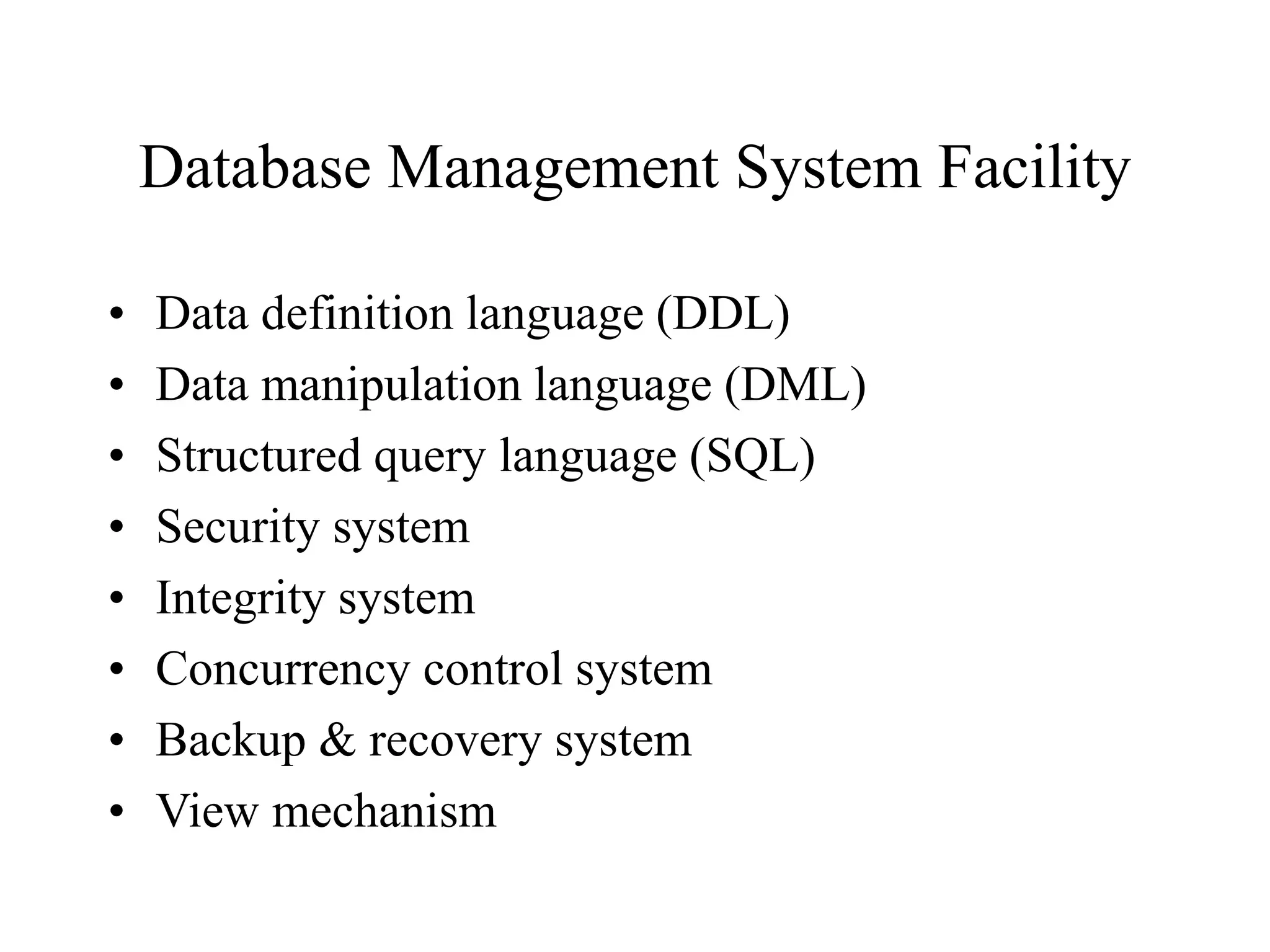
Database Management System Facility
• Data definition language (DDL)
• Data manipulation language (DML)
• Structured query language (SQL)
• Security system
• Integrity system
• Concurrency control system
• Backup & recovery system
• View mechanism
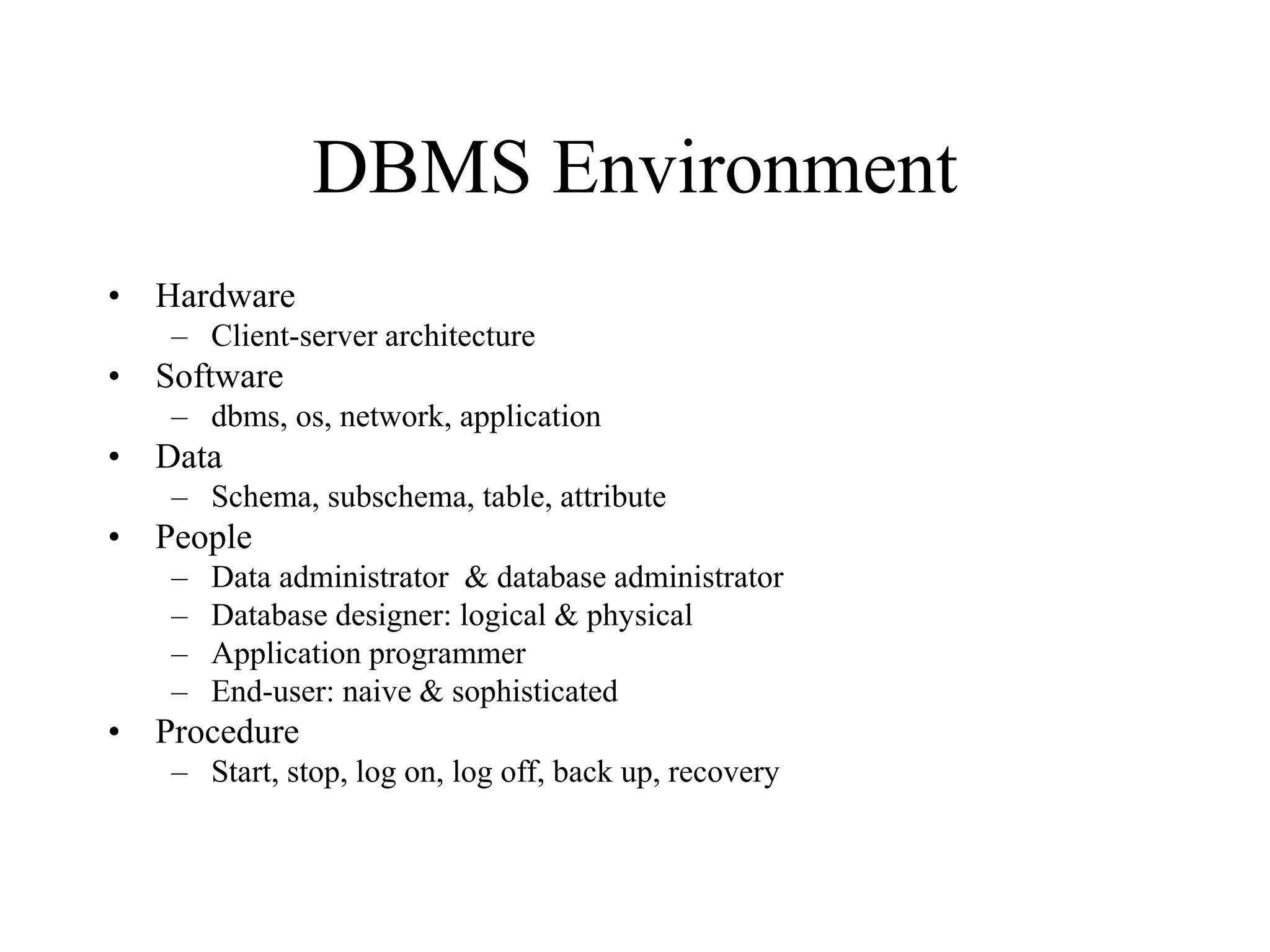
DBMS Environment
• Hardware
– Client-server architecture
• Software
– dbms, os, network, application
• Data
– Schema, subschema, table, attribute
• People
– Data administrator & database administrator
– Database designer: logical & physical
– Application programmer
– End-user: naive & sophisticated
• Procedure
– Start, stop, log on, log off, back up, recovery
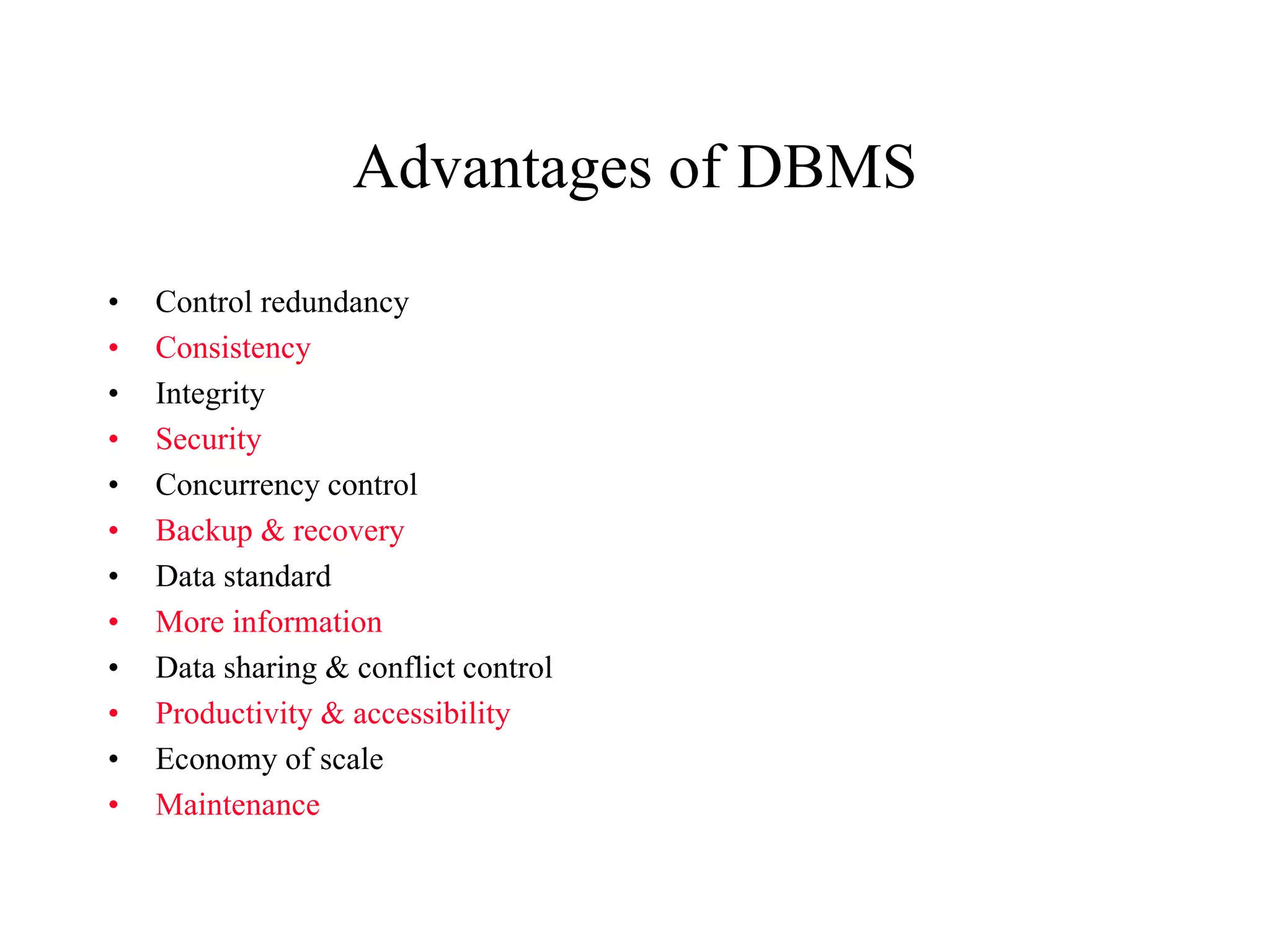
Advantages of DBMS
• Control redundancy
• Consistency
• Integrity
• Security
• Concurrency control
• Backup & recovery
• Data standard
• More information
• Data sharing & conflict control
• Productivity & accessibility
• Economy of scale
• Maintenance
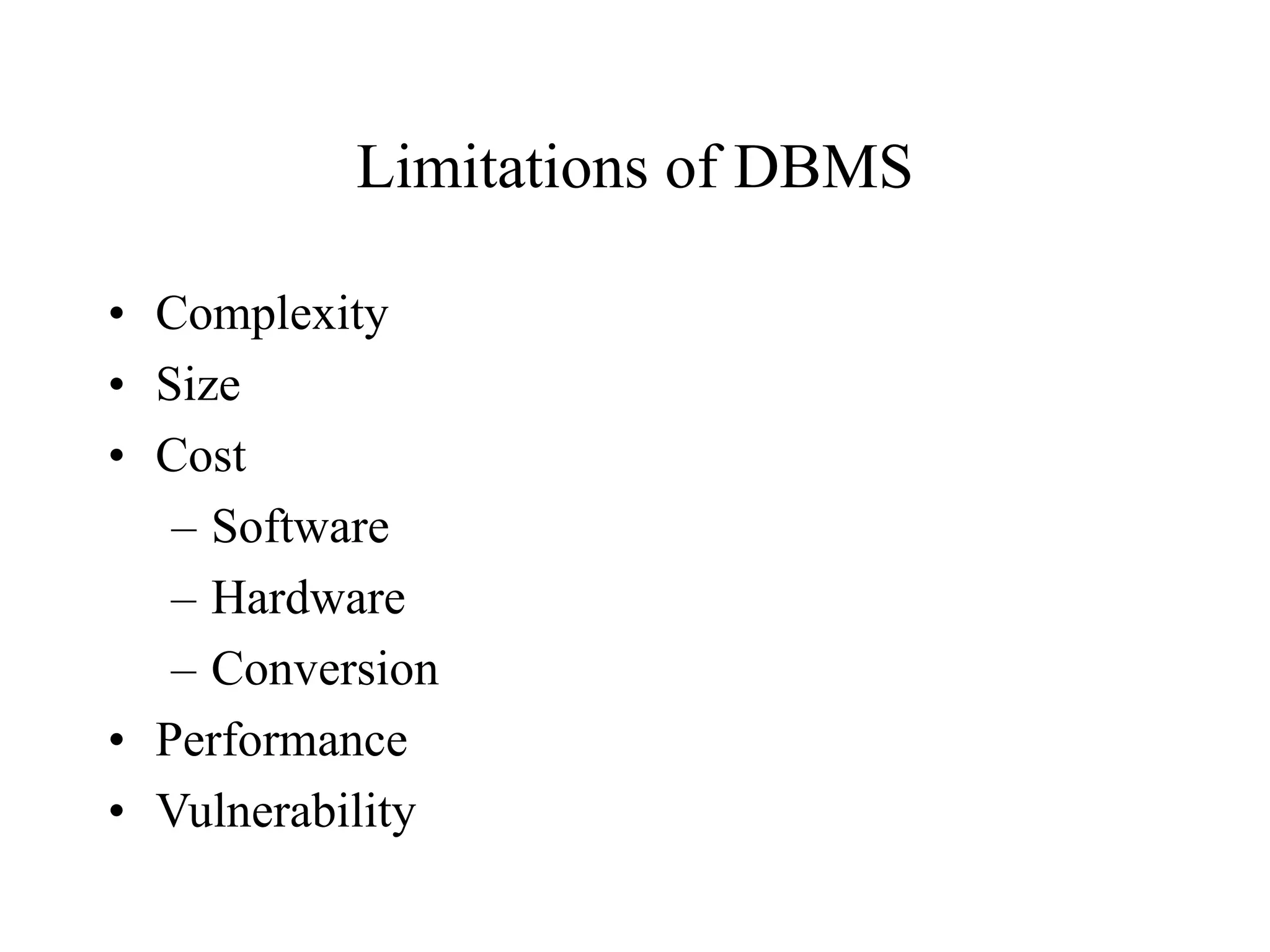
Limitations of DBMS
• Complexity
• Size
• Cost
– Software
– Hardware
– Conversion
• Performance
• Vulnerability
Points to Remember
• File-based Systems
• History of Database
• Database Management Systems (DBMS)
Assignment
• Review Chapter 1
• Read appendix C
• Turn in your group list: (due 9/18/07) before
class starts (1 point for on time roster, 0 for
late one)

DB 1

  • 1.
  • 2.
    Agenda • File-based Systems •History of Database • Database Management Systems (DBMS)
  • 3.
    File-based Definition • Programdefines and manages it’s own data
  • 4.
    Limitations of File-based •Separation and isolation • Duplication • Program & data dependence • Fixed queries • Proliferation of application programs
  • 5.
    History of DatabaseSystems • First generation – Hierarchical model • Information Management System (IMS) – Network model • Conference on Data System Languages (CODASYL) • Data Base Task Group (DBTG) – Limitation • Complex program for simple query • Minimum data independence • No theoretical foundation • Second generation – Relational model • E. R. Codd • DB2, Oracle – Limitation • Limited data modeling • Third generation – Object-relational DBMS – Object-oriented DBMS
  • 6.
    Database • Definition – Acollection of self-describing and integrated data files • System catalog – Meta data – Data dictionary – Overhead data • Data abstraction
  • 7.
    Database Management SystemFacility • Data definition language (DDL) • Data manipulation language (DML) • Structured query language (SQL) • Security system • Integrity system • Concurrency control system • Backup & recovery system • View mechanism
  • 8.
    DBMS Environment • Hardware –Client-server architecture • Software – dbms, os, network, application • Data – Schema, subschema, table, attribute • People – Data administrator & database administrator – Database designer: logical & physical – Application programmer – End-user: naive & sophisticated • Procedure – Start, stop, log on, log off, back up, recovery
  • 9.
    Advantages of DBMS •Control redundancy • Consistency • Integrity • Security • Concurrency control • Backup & recovery • Data standard • More information • Data sharing & conflict control • Productivity & accessibility • Economy of scale • Maintenance
  • 10.
    Limitations of DBMS •Complexity • Size • Cost – Software – Hardware – Conversion • Performance • Vulnerability
  • 11.
    Points to Remember •File-based Systems • History of Database • Database Management Systems (DBMS)
  • 12.
    Assignment • Review Chapter1 • Read appendix C • Turn in your group list: (due 9/18/07) before class starts (1 point for on time roster, 0 for late one)