Towards Digital & Mobile Africa
Mortimer Hope, Director of Africa, GSMA
Connect 2 Connect: Affordable Infrastructure Development, South Africa
19th -21st July, 2016
• About the GSMA
• The potential of mobile broadband in Africa
• Mobile Infrastructure
• Example of Mobile industry collaborative
initiative
• Considerations for Policymakers &
Regulators
Outline
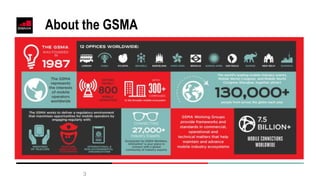
About the GSMA
3
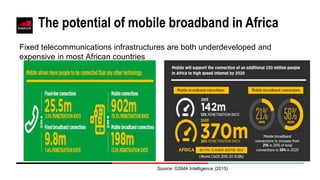
Source: GSMA Intelligence (2015)
The potential of mobile broadband in Africa
Fixed telecommunications infrastructures are both underdeveloped and
expensive in most African countries
CONFIDENTIAL
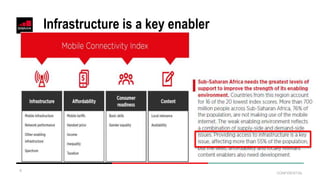
Infrastructure is a key enabler
5
6
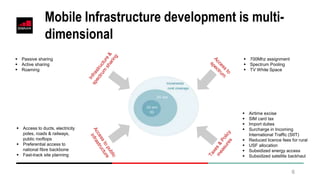
Mobile Infrastructure development is multi-
dimensional
 Airtime excise
 SIM card tax
 Import duties
 Surcharge in Incoming
International Traffic (SIIT)
 Reduced licence fees for rural
 USF allocation
 Subsidized energy access
 Subsidized satellite backhaul
 Passive sharing
 Active sharing
 Roaming
 Access to ducts, electricity
poles, roads & railways,
public rooftops
 Preferential access to
national fibre backbone
 Fast-track site planning
 700Mhz assignment
 Spectrum Pooling
 TV White Space
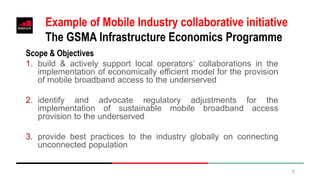
Scope & Objectives
1. build & actively support local operators’ collaborations in the
implementation of economically efficient model for the provision
of mobile broadband access to the underserved
2. identify and advocate regulatory adjustments for the
implementation of sustainable mobile broadband access
provision to the underserved
3. provide best practices to the industry globally on connecting
unconnected population
7
Example of Mobile Industry collaborative initiative
The GSMA Infrastructure Economics Programme
8
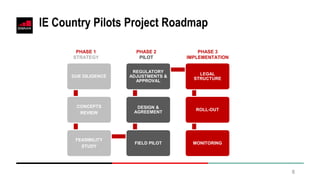
IE Country Pilots Project Roadmap
DUE DILIGENCE
CONCEPTS
REVIEW
FEASIBILITY
STUDY
FIELD PILOT
DESIGN &
AGREEMENT
REGULATORY
ADJUSTMENTS &
APPROVAL
LEGAL
STRUCTURE
ROLL-OUT
MONITORING
PHASE 1
STRATEGY
PHASE 2
PILOT
PHASE 3
IMPLEMENTATION
CONFIDENTIAL
Figures & Forecasts
 Operator CAPEX is up to USD 78bn between 2015-
20, largely driven by data growth
 The mobile industry is projected to invest USD 900bn
between 2016 and 2020 into mobile infrastructure to
continue to fuel its growth, and Africa will be a big part
of this
9
Source: GSMA Intelligence (2015)
Source: gsma.com/betterfuture
CONFIDENTIAL
Considerations for Policymakers & Regulators
1. The GSMA supports infrastructure sharing as an industry
approach to address national/regional broadband objectives
2. There is opportunity for government to lend support to
infrastructure initiatives of operators by phasing out USFs and
discontinue collection of USF levies
3. Introduction of Single Wholesale Networks (SWN) as an
infrastructure alternative for network may lead to worse outcomes
for consumers in terms of availability and quality of service
4. Co-existence between the existing mobile networks and the SWN
is also likely to increase uncertainty which will have a dampening
effect on investment in mobile broadband services
10
Thank you for your attention
11
Mortimer Hope - Director Africa, GSMA
mhope@gsma.com

Day 3 - Gsma presentation 2

  • 1.
    Towards Digital &Mobile Africa Mortimer Hope, Director of Africa, GSMA Connect 2 Connect: Affordable Infrastructure Development, South Africa 19th -21st July, 2016
  • 2.
    • About theGSMA • The potential of mobile broadband in Africa • Mobile Infrastructure • Example of Mobile industry collaborative initiative • Considerations for Policymakers & Regulators Outline
  • 3.
  • 4.
    Source: GSMA Intelligence(2015) The potential of mobile broadband in Africa Fixed telecommunications infrastructures are both underdeveloped and expensive in most African countries
  • 5.
  • 6.
    6 Mobile Infrastructure developmentis multi- dimensional  Airtime excise  SIM card tax  Import duties  Surcharge in Incoming International Traffic (SIIT)  Reduced licence fees for rural  USF allocation  Subsidized energy access  Subsidized satellite backhaul  Passive sharing  Active sharing  Roaming  Access to ducts, electricity poles, roads & railways, public rooftops  Preferential access to national fibre backbone  Fast-track site planning  700Mhz assignment  Spectrum Pooling  TV White Space
  • 7.
    Scope & Objectives 1.build & actively support local operators’ collaborations in the implementation of economically efficient model for the provision of mobile broadband access to the underserved 2. identify and advocate regulatory adjustments for the implementation of sustainable mobile broadband access provision to the underserved 3. provide best practices to the industry globally on connecting unconnected population 7 Example of Mobile Industry collaborative initiative The GSMA Infrastructure Economics Programme
  • 8.
    8 IE Country PilotsProject Roadmap DUE DILIGENCE CONCEPTS REVIEW FEASIBILITY STUDY FIELD PILOT DESIGN & AGREEMENT REGULATORY ADJUSTMENTS & APPROVAL LEGAL STRUCTURE ROLL-OUT MONITORING PHASE 1 STRATEGY PHASE 2 PILOT PHASE 3 IMPLEMENTATION
  • 9.
    CONFIDENTIAL Figures & Forecasts Operator CAPEX is up to USD 78bn between 2015- 20, largely driven by data growth  The mobile industry is projected to invest USD 900bn between 2016 and 2020 into mobile infrastructure to continue to fuel its growth, and Africa will be a big part of this 9 Source: GSMA Intelligence (2015) Source: gsma.com/betterfuture
  • 10.
    CONFIDENTIAL Considerations for Policymakers& Regulators 1. The GSMA supports infrastructure sharing as an industry approach to address national/regional broadband objectives 2. There is opportunity for government to lend support to infrastructure initiatives of operators by phasing out USFs and discontinue collection of USF levies 3. Introduction of Single Wholesale Networks (SWN) as an infrastructure alternative for network may lead to worse outcomes for consumers in terms of availability and quality of service 4. Co-existence between the existing mobile networks and the SWN is also likely to increase uncertainty which will have a dampening effect on investment in mobile broadband services 10
  • 11.
    Thank you foryour attention 11 Mortimer Hope - Director Africa, GSMA mhope@gsma.com

Editor's Notes

  • #11 USF -There is little evidence that USFs are an effective way to achieve the universal goals and may have, in fact, been counterproductive, because they tax communications customers, including in rural areas, and therefore raise the barrier to rural investment. -USF that already exist should be targeted, time-bound and managed transparently. The funds should be allocated in a competitive and technically neutral way, in consultation with the industry. SWNs The evidence suggests that the design, financing and implementation of SWNs are likely to prove challenging and that there is significant risk of failure. Infrastructure sharing -- Site sharing increases competition by giving operators access to key sites necessary to compete on quality of service and coverage. - Access to government-owned trunk assets should be available on non-discriminatory commercial terms, at a reasonable market rate.