D A T A B A S E
S E C U R I T Y
P R E S E N T E D B Y : M D . K A M R U Z Z A M A N
I N T A K E : 5 0
S E C T I O N : 0 6
I D : 2 2 2 3 4 1 0 3 1 6 7
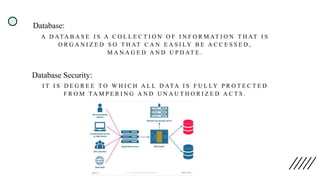
A D ATA B A S E I S A C O L L E C T I O N O F I N F O R M AT I O N T H AT I S
O R G A N I Z E D S O T H AT C A N E A S I LY B E A C C E S S E D ,
M A N A G E D A N D U P D AT E .
Database Security:
Database:
I T I S D E G R E E T O W H I C H A L L D ATA I S F U L LY P R O T E C T E D
F R O M TA M P E R I N G A N D U N A U T H O R I Z E D A C T S .
DATABASE
SECURITY:
• • Database security refers to the
collective measures used to protect and
secure a database or database
management software from illegitimate
use and malicious cyber threats and
attacks.
• • Database security procedures are
aimed at protecting not just the data
inside the database, but the database
management system and all the
applications that access it from intrusion,
misuse of data, and damage.
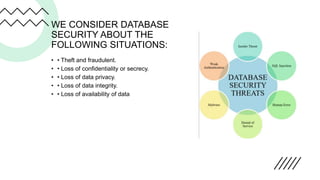
WE CONSIDER DATABASE
SECURITY ABOUT THE
FOLLOWING SITUATIONS:
• • Theft and fraudulent.
• • Loss of confidentiality or secrecy.
• • Loss of data privacy.
• • Loss of data integrity.
• • Loss of availability of data
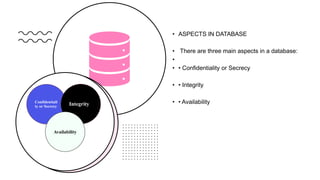
• ASPECTS IN DATABASE
• There are three main aspects in a database:
•
• • Confidentiality or Secrecy
• • Integrity
• • Availability
Confidentiali
ty or Secrecy Integrity
Availability
INTEGRITY
• Protecting the database from authorized user.
• Ensure that what user are trying to do is allowed or not.
For Example: . An employee should be able to modify his
or her own information.
SECRECY OR
CONFIDENTIALIT
Y
• It is protecting the
database from
unauthorized
users.
• Ensure that users
can do things they
are trying to do.
Encryption: • Encryption is a
technique or a
process by which
data is encoded in
such a way that
only that authorized
user can read the
data
• AVAILABILITY:
• • Database must have not unplanned downtime.
• • To ensure this, the following steps should be taken
• • Restrict the amount of storage space given to each
user In the database
• • Limit the number of concurrent sessions made
available to each database user.
• • Back up the data at periodic intervals to ensure
data recovery in case of application users.no
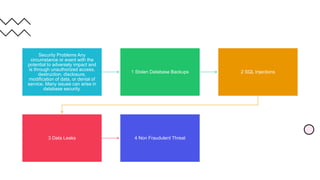
Security Problems Any
circumstance or event with the
potential to adversely impact and
is through unauthorized access,
destruction, disclosure,
modification of data, or denial of
service. Many issues can arise in
database security.
1 Stolen Database Backups 2 SQL Injections
3 Data Leaks 4 Non Fraudulent Threat
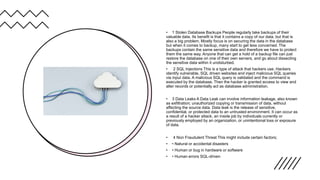
• 1 Stolen Database Backups People regularly take backups of their
valuable data. Its benefit is that it contains a copy of our data, but that is
also a big problem. Mostly focus is on securing the data in the database
but when it comes to backup, many start to get less concerned. The
backups contain the same sensitive data and therefore we have to protect
them the same way. Anyone that can get a hold of a backup file can just
restore the database on one of their own servers, and go about dissecting
the sensitive data within it undisturbed.
• 2 SQL Injections This is a type of attack that hackers use. Hackers
identify vulnerable, SQL driven websites and inject malicious SQL queries
via input data. A malicious SQL query is validated and the command is
executed by the database. Then the hacker is granted access to view and
alter records or potentially act as database administration.
• 3 Data Leaks A Data Leak can involve information leakage, also known
as exfiltration; unauthorized copying or transmission of data, without
affecting the source data. Data leak is the release of sensitive,
confidential, or protected data to an untrusted environment. It can occur as
a result of a hacker attack, an inside job by individuals currently or
previously employed by an organization, or unintentional loss or exposure
of data.
• 4 Non Fraudulent Threat This might include certain factors;
• • Natural or accidental disasters
• • Human or bug in hardware or software
• • Human errors SQL-driven
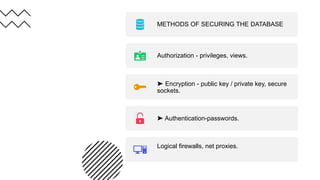
METHODS OF SECURING THE DATABASE
Authorization - privileges, views.
➤ Encryption - public key / private key, secure
sockets.
➤ Authentication-passwords.
Logical firewalls, net proxies.
• DATABASE FIREWALL
• Database Firewalls are a type of Web Application Firewalls
that monitor databases to identify and protect against database-
specific attacks.
• Purpose:- It mostly seeks to access sensitive information
stored in the databases.
• SECURITY OF THE DATABASE THROUGH
ABSTRACTION:
• Data encryption enables to encrypt of sensitive data, such
as credit card numbers, stored in table columns. Encrypted data
is decrypted for a database user who has access to the data.
Data encryption helps protect data stored on media if the
storage media or data file gets stolen.
T H A N K
Y O U

Database Security Presentation Why database Security is important

  • 1.
    D A TA B A S E S E C U R I T Y P R E S E N T E D B Y : M D . K A M R U Z Z A M A N I N T A K E : 5 0 S E C T I O N : 0 6 I D : 2 2 2 3 4 1 0 3 1 6 7
  • 2.
    A D ATAB A S E I S A C O L L E C T I O N O F I N F O R M AT I O N T H AT I S O R G A N I Z E D S O T H AT C A N E A S I LY B E A C C E S S E D , M A N A G E D A N D U P D AT E . Database Security: Database: I T I S D E G R E E T O W H I C H A L L D ATA I S F U L LY P R O T E C T E D F R O M TA M P E R I N G A N D U N A U T H O R I Z E D A C T S .
  • 3.
    DATABASE SECURITY: • • Databasesecurity refers to the collective measures used to protect and secure a database or database management software from illegitimate use and malicious cyber threats and attacks. • • Database security procedures are aimed at protecting not just the data inside the database, but the database management system and all the applications that access it from intrusion, misuse of data, and damage.
  • 4.
    WE CONSIDER DATABASE SECURITYABOUT THE FOLLOWING SITUATIONS: • • Theft and fraudulent. • • Loss of confidentiality or secrecy. • • Loss of data privacy. • • Loss of data integrity. • • Loss of availability of data
  • 5.
    • ASPECTS INDATABASE • There are three main aspects in a database: • • • Confidentiality or Secrecy • • Integrity • • Availability Confidentiali ty or Secrecy Integrity Availability
  • 6.
    INTEGRITY • Protecting thedatabase from authorized user. • Ensure that what user are trying to do is allowed or not. For Example: . An employee should be able to modify his or her own information. SECRECY OR CONFIDENTIALIT Y • It is protecting the database from unauthorized users. • Ensure that users can do things they are trying to do. Encryption: • Encryption is a technique or a process by which data is encoded in such a way that only that authorized user can read the data
  • 7.
    • AVAILABILITY: • •Database must have not unplanned downtime. • • To ensure this, the following steps should be taken • • Restrict the amount of storage space given to each user In the database • • Limit the number of concurrent sessions made available to each database user. • • Back up the data at periodic intervals to ensure data recovery in case of application users.no
  • 8.
    Security Problems Any circumstanceor event with the potential to adversely impact and is through unauthorized access, destruction, disclosure, modification of data, or denial of service. Many issues can arise in database security. 1 Stolen Database Backups 2 SQL Injections 3 Data Leaks 4 Non Fraudulent Threat
  • 9.
    • 1 StolenDatabase Backups People regularly take backups of their valuable data. Its benefit is that it contains a copy of our data, but that is also a big problem. Mostly focus is on securing the data in the database but when it comes to backup, many start to get less concerned. The backups contain the same sensitive data and therefore we have to protect them the same way. Anyone that can get a hold of a backup file can just restore the database on one of their own servers, and go about dissecting the sensitive data within it undisturbed. • 2 SQL Injections This is a type of attack that hackers use. Hackers identify vulnerable, SQL driven websites and inject malicious SQL queries via input data. A malicious SQL query is validated and the command is executed by the database. Then the hacker is granted access to view and alter records or potentially act as database administration. • 3 Data Leaks A Data Leak can involve information leakage, also known as exfiltration; unauthorized copying or transmission of data, without affecting the source data. Data leak is the release of sensitive, confidential, or protected data to an untrusted environment. It can occur as a result of a hacker attack, an inside job by individuals currently or previously employed by an organization, or unintentional loss or exposure of data. • 4 Non Fraudulent Threat This might include certain factors; • • Natural or accidental disasters • • Human or bug in hardware or software • • Human errors SQL-driven
  • 10.
    METHODS OF SECURINGTHE DATABASE Authorization - privileges, views. ➤ Encryption - public key / private key, secure sockets. ➤ Authentication-passwords. Logical firewalls, net proxies.
  • 11.
    • DATABASE FIREWALL •Database Firewalls are a type of Web Application Firewalls that monitor databases to identify and protect against database- specific attacks. • Purpose:- It mostly seeks to access sensitive information stored in the databases. • SECURITY OF THE DATABASE THROUGH ABSTRACTION: • Data encryption enables to encrypt of sensitive data, such as credit card numbers, stored in table columns. Encrypted data is decrypted for a database user who has access to the data. Data encryption helps protect data stored on media if the storage media or data file gets stolen.
  • 12.
    T H AN K Y O U