Data,
Taste &
Confidence
Lennart Schoors (Lensco) — IA day Gent 2012
Data, taste & confidence
3 ingredients for a good product decision
Data, taste & confidence
3 ingredients for a good product decision


or ...


a bunch of experiences and observations from five
years as lead designer at Netlog, riddled with quotes
from people smarter than me
1. Data
Research
Good research consists of correctly interpreting
sufficient, correct data.
Sufficient data: enough...


“
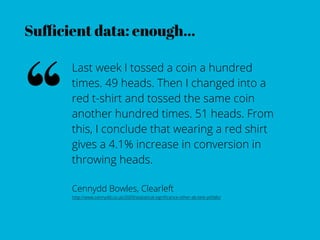
      Last week I tossed a coin a hundred
      times. 49 heads. Then I changed into a
      red t-shirt and tossed the same coin
      another hundred times. 51 heads. From
      this, I conclude that wearing a red shirt
      gives a 4.1% increase in conversion in
      throwing heads.

      Cennydd Bowles, Clearleft
      http://www.cennydd.co.uk/2009/statistical-significance-other-ab-test-pitfalls/
... but not too much
‣ lurking danger: A/B test everything!
 result: Frankenstein interfaces

‣ Google testing 41 shades of blue
 http://www.nytimes.com/2009/03/01/business/01marissa.html?pagewanted=3
Correct data
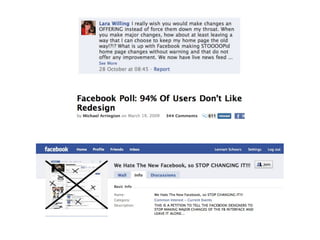
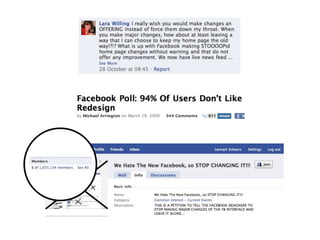
‣ people don't like change
‣ negative bias in user feedback
Unhappy users write angry comments, join groups,
sign petitions, vote in polls, …

Happy users just use your product.
Unhappy users write angry comments, join groups,
sign petitions, vote in polls, …

Happy users just use your product.


‣ measure user behavior as well as user feedback
Interpretation


“
      When a company is filled with engineers, it
      turns to engineering to solve problems.
      Reduce each decision to a simple logic
      problem. Remove all subjectivity and just
      look at the data. […] And that data
      eventually becomes a crutch for every
      decision, paralyzing the company and
      preventing it from making any daring design
      decisions.

      Doug Bowman, Twitter
      http://stopdesign.com/archive/2009/03/20/goodbye-google.html
2. Taste
Objective taste
‣ basic principles of design
‣ the mere fact that you follow a certain
  design direction

‣ also: copy, usability, flow, interactions,
  customer relations, ...
Good taste supports


“
      Problems with visual design can turn users
      off so quickly that they never discover all
      the smart choices you made with navigation
      or interaction design.

      Jesse James Garrett, Adaptive Path
      http://uxmyths.com/post/1161244116/myth-25-aesthetics-are-not-important-if-you-have-good-us
Good taste creates trust


“
      Good design at the front-end suggests that
      everything is in order at the back-end,
      whether or not that is the case.

      Dmitry Fadeyev
      http://www.usabilitypost.com/2010/03/24/value-of-good-design/
Good taste has to be ingrained


“
      The reason large companies with bad
      design are the way they are is because they
      are run poorly from the top, with
      philosophies that force the entire company
      to behave like its lowest common
      denominator. […] And if the company is
      being run by people who don't have taste, it
      gets stuck. Eventually, the company's brand
      suffers.

      Dustin Curtis
      http://dustincurtis.com/dear_dustin_curtis.html
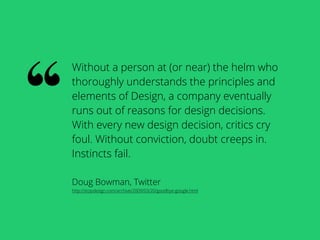
“
    Without a person at (or near) the helm who
    thoroughly understands the principles and
    elements of Design, a company eventually
    runs out of reasons for design decisions.
    With every new design decision, critics cry
    foul. Without conviction, doubt creeps in.
    Instincts fail.

    Doug Bowman, Twitter
    http://stopdesign.com/archive/2009/03/20/goodbye-google.html
3. Confidence
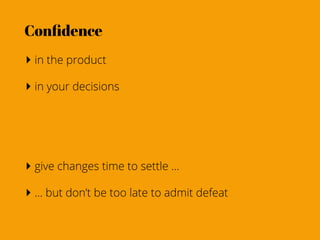
Confidence
‣ in the product
‣ in your decisions


‣ give changes time to settle ...
‣ ... but don’t be too late to admit defeat
“
    I don’t mean this as a negative, but I don’t
    think of the audience at all. I don’t go to see
    a movie –a filmmaker’s vision– hoping to
    second-guess what I want. I go to see what
    he wants. [...] The day we start think about
    what the audience wants is the day we’re
    going to start making bad choices.

    Andrew Stanton, Pixar/Disney
    http://www.bigscreenanimation.com/2008/06/andrew-stanton-roundtable-discussion.html
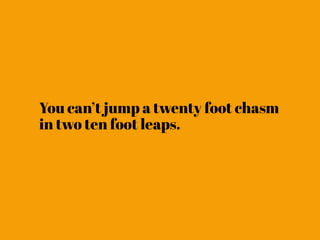
You can’t jump a twenty foot chasm
in two ten foot leaps.
Data,
Taste &
Confidence
   Lennart Schoors | http://lensco.be

Data, taste & confidence

  • 1.
    Data, Taste & Confidence Lennart Schoors(Lensco) — IA day Gent 2012
  • 2.
    Data, taste &confidence 3 ingredients for a good product decision
  • 3.
    Data, taste &confidence 3 ingredients for a good product decision or ... a bunch of experiences and observations from five years as lead designer at Netlog, riddled with quotes from people smarter than me
  • 4.
  • 5.
    Research Good research consistsof correctly interpreting sufficient, correct data.
  • 6.
    Sufficient data: enough... “ Last week I tossed a coin a hundred times. 49 heads. Then I changed into a red t-shirt and tossed the same coin another hundred times. 51 heads. From this, I conclude that wearing a red shirt gives a 4.1% increase in conversion in throwing heads. Cennydd Bowles, Clearleft http://www.cennydd.co.uk/2009/statistical-significance-other-ab-test-pitfalls/
  • 7.
    ... but nottoo much ‣ lurking danger: A/B test everything! result: Frankenstein interfaces ‣ Google testing 41 shades of blue http://www.nytimes.com/2009/03/01/business/01marissa.html?pagewanted=3
  • 8.
    Correct data ‣ peopledon't like change ‣ negative bias in user feedback
  • 11.
    Unhappy users writeangry comments, join groups, sign petitions, vote in polls, … Happy users just use your product.
  • 12.
    Unhappy users writeangry comments, join groups, sign petitions, vote in polls, … Happy users just use your product. ‣ measure user behavior as well as user feedback
  • 13.
    Interpretation “ When a company is filled with engineers, it turns to engineering to solve problems. Reduce each decision to a simple logic problem. Remove all subjectivity and just look at the data. […] And that data eventually becomes a crutch for every decision, paralyzing the company and preventing it from making any daring design decisions. Doug Bowman, Twitter http://stopdesign.com/archive/2009/03/20/goodbye-google.html
  • 14.
  • 15.
    Objective taste ‣ basicprinciples of design ‣ the mere fact that you follow a certain design direction ‣ also: copy, usability, flow, interactions, customer relations, ...
  • 16.
    Good taste supports “ Problems with visual design can turn users off so quickly that they never discover all the smart choices you made with navigation or interaction design. Jesse James Garrett, Adaptive Path http://uxmyths.com/post/1161244116/myth-25-aesthetics-are-not-important-if-you-have-good-us
  • 17.
    Good taste createstrust “ Good design at the front-end suggests that everything is in order at the back-end, whether or not that is the case. Dmitry Fadeyev http://www.usabilitypost.com/2010/03/24/value-of-good-design/
  • 18.
    Good taste hasto be ingrained “ The reason large companies with bad design are the way they are is because they are run poorly from the top, with philosophies that force the entire company to behave like its lowest common denominator. […] And if the company is being run by people who don't have taste, it gets stuck. Eventually, the company's brand suffers. Dustin Curtis http://dustincurtis.com/dear_dustin_curtis.html
  • 19.
    Without a person at (or near) the helm who thoroughly understands the principles and elements of Design, a company eventually runs out of reasons for design decisions. With every new design decision, critics cry foul. Without conviction, doubt creeps in. Instincts fail. Doug Bowman, Twitter http://stopdesign.com/archive/2009/03/20/goodbye-google.html
  • 20.
  • 21.
    Confidence ‣ in theproduct ‣ in your decisions ‣ give changes time to settle ... ‣ ... but don’t be too late to admit defeat
  • 22.
    I don’t mean this as a negative, but I don’t think of the audience at all. I don’t go to see a movie –a filmmaker’s vision– hoping to second-guess what I want. I go to see what he wants. [...] The day we start think about what the audience wants is the day we’re going to start making bad choices. Andrew Stanton, Pixar/Disney http://www.bigscreenanimation.com/2008/06/andrew-stanton-roundtable-discussion.html
  • 23.
    You can’t jumpa twenty foot chasm in two ten foot leaps.
  • 24.
    Data, Taste & Confidence Lennart Schoors | http://lensco.be