Data protection
PROTEC TION
DATA
What is data protection
Data protection is the process of
safeguarding important data from
corruption, compromise or loss and
providing the capability to restore
the data to a functional state
Data protectionis the process ofsafeguarding
important data from corruption,compromise or
loss and providingthcapability to restorethedata
to a functional state
Methods of Data Protection
Encryption of data
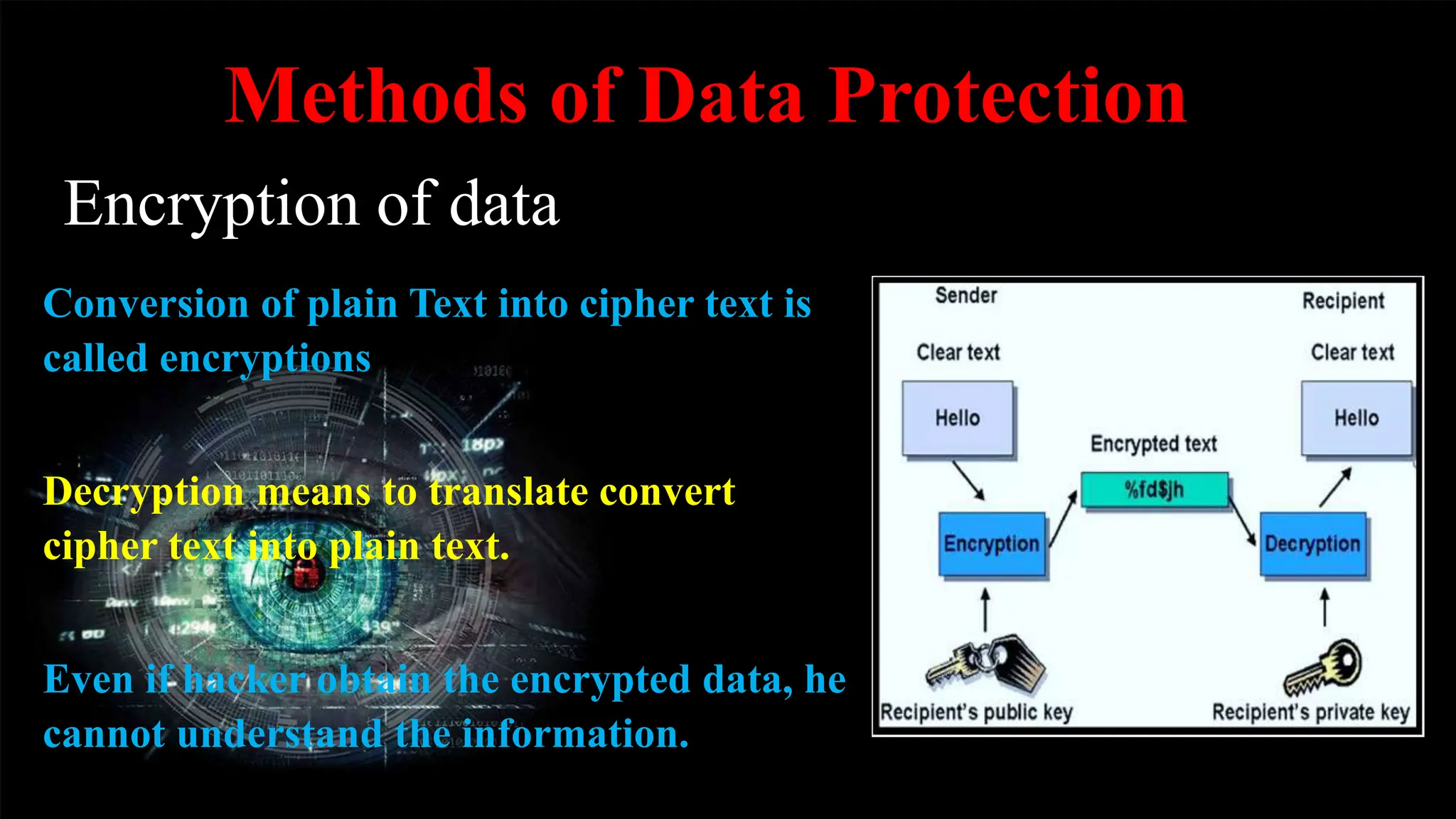
Conversion of plain Text into cipher text is
called encryptions
Decryption means to translate convert
cipher text into plain text.
Even if hacker obtain the encrypted data, he
cannot understand the information.
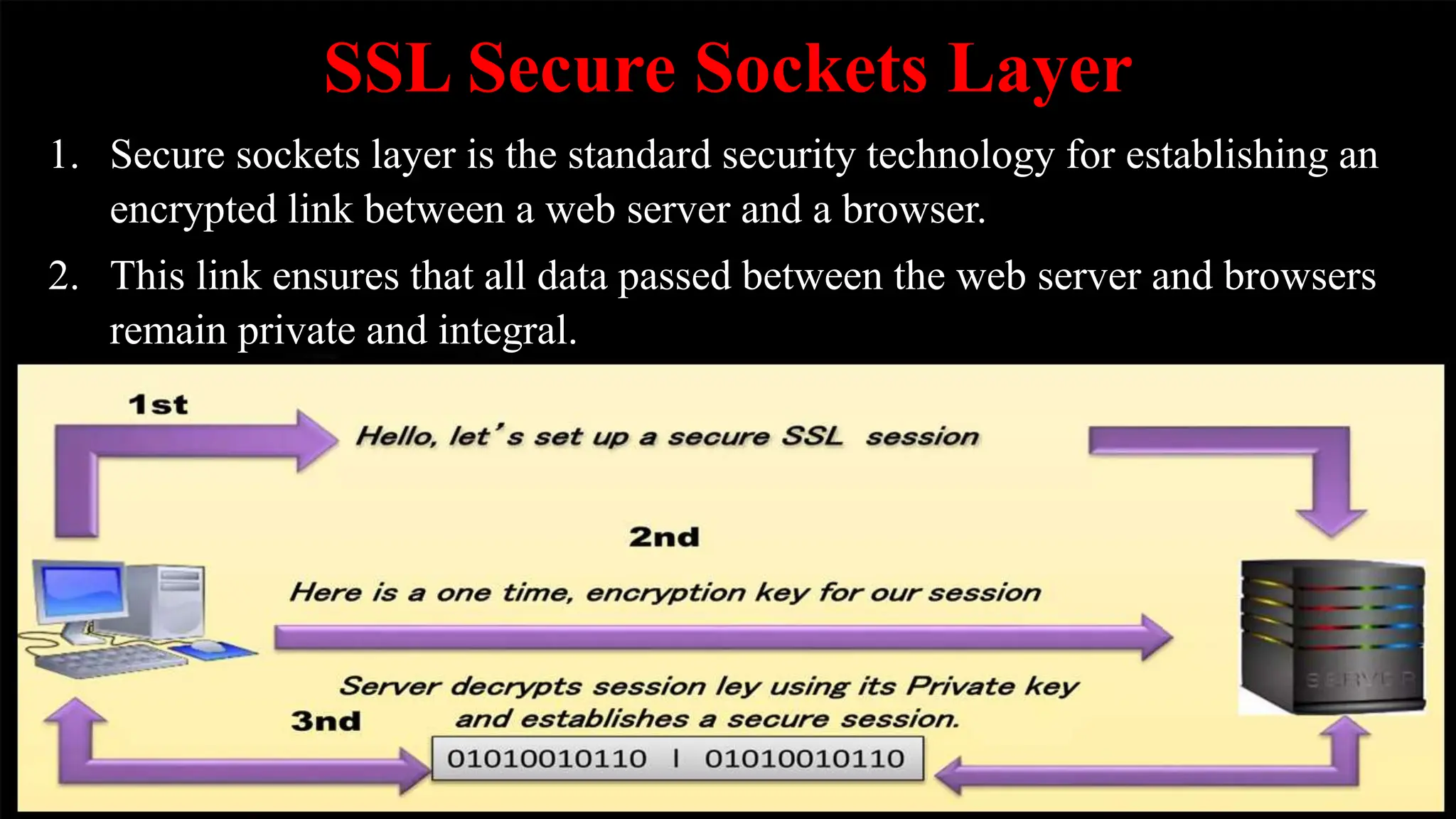
SSL Secure Sockets Layer
1. Secure sockets layer is the standard security technology for establishing an
encrypted link between a web server and a browser.
2. This link ensures that all data passed between the web server and browsers
remain private and integral.
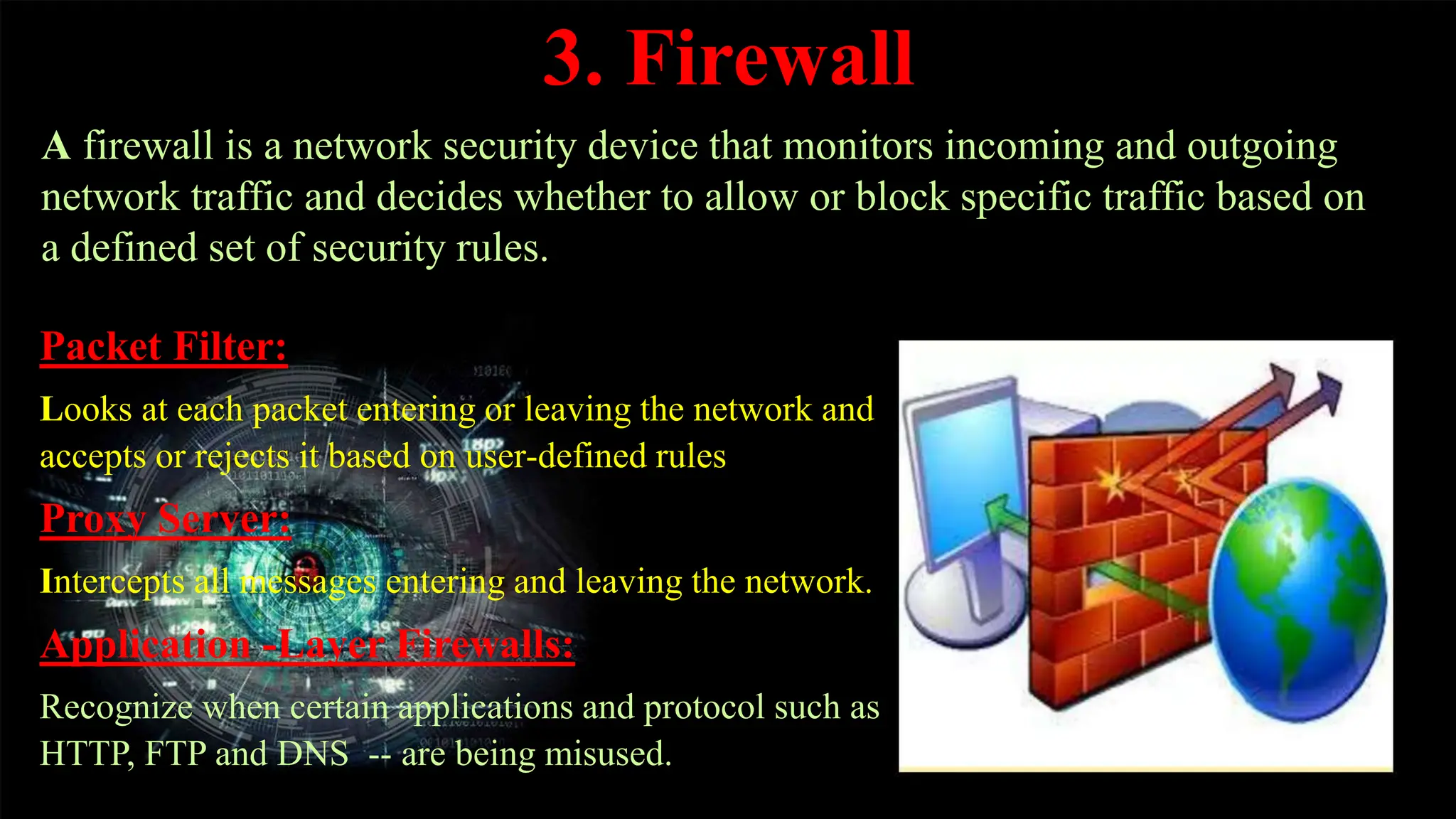
3. Firewall
Packet Filter:
Looks at each packet entering or leaving the network and
accepts or rejects it based on user-defined rules
Proxy Server:
Intercepts all messages entering and leaving the network.
Application -Layer Firewalls:
Recognize when certain applications and protocol such as
HTTP, FTP and DNS -- are being misused.
A firewall is a network security device that monitors incoming and outgoing
network traffic and decides whether to allow or block specific traffic based on
a defined set of security rules.
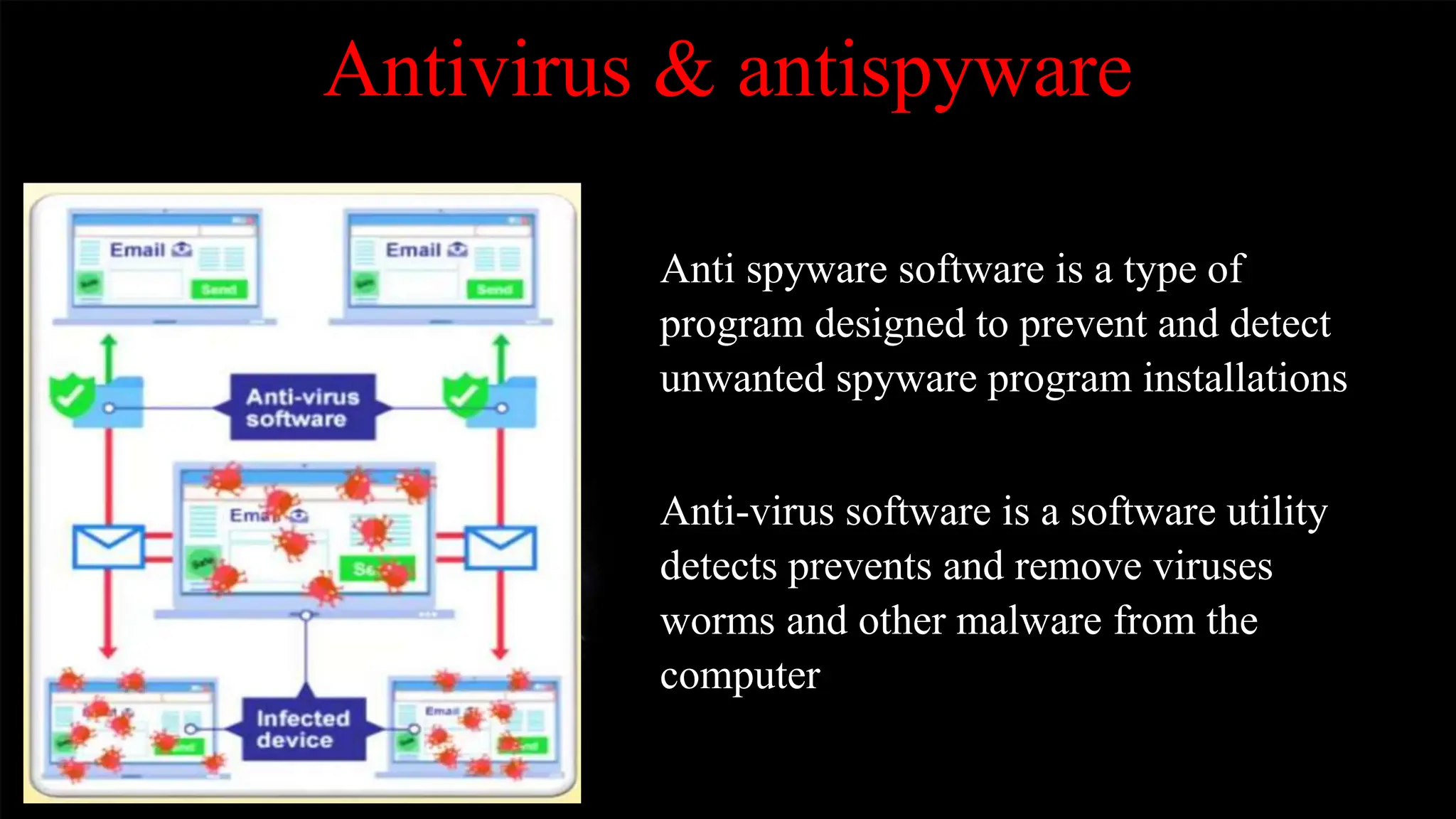
Antivirus & antispyware
Anti spyware software is a type of
program designed to prevent and detect
unwanted spyware program installations
Anti-virus software is a software utility
detects prevents and remove viruses
worms and other malware from the
computer
Other necessary steps
1. Other necessary steps
2. Do a background checks
3. At least two reference for new employee
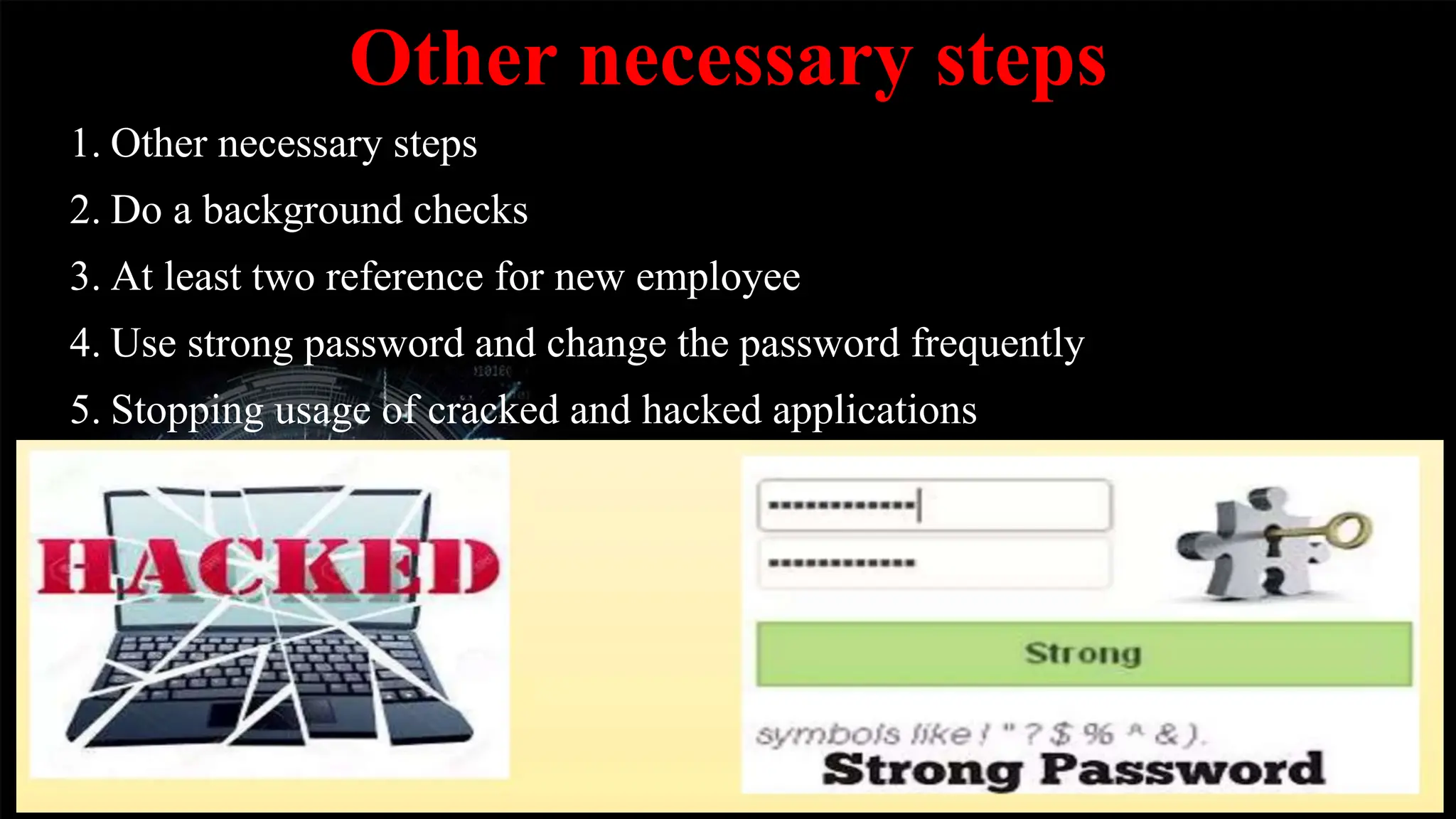
4. Use strong password and change the password frequently
5. Stopping usage of cracked and hacked applications
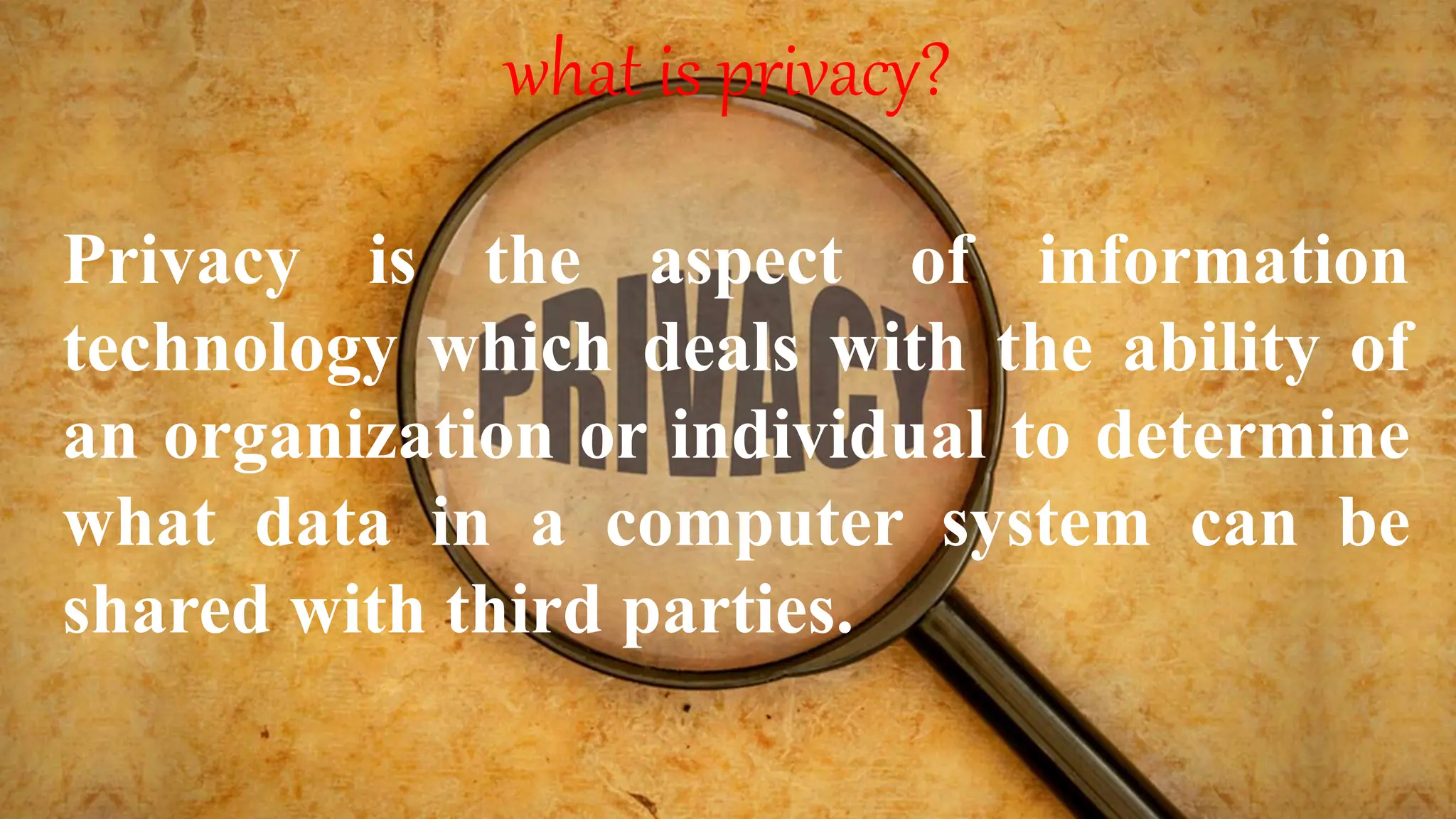
what is privacy?
Privacy is the aspect of information
technology which deals with the ability of
an organization or individual to determine
what data in a computer system can be
shared with third parties.
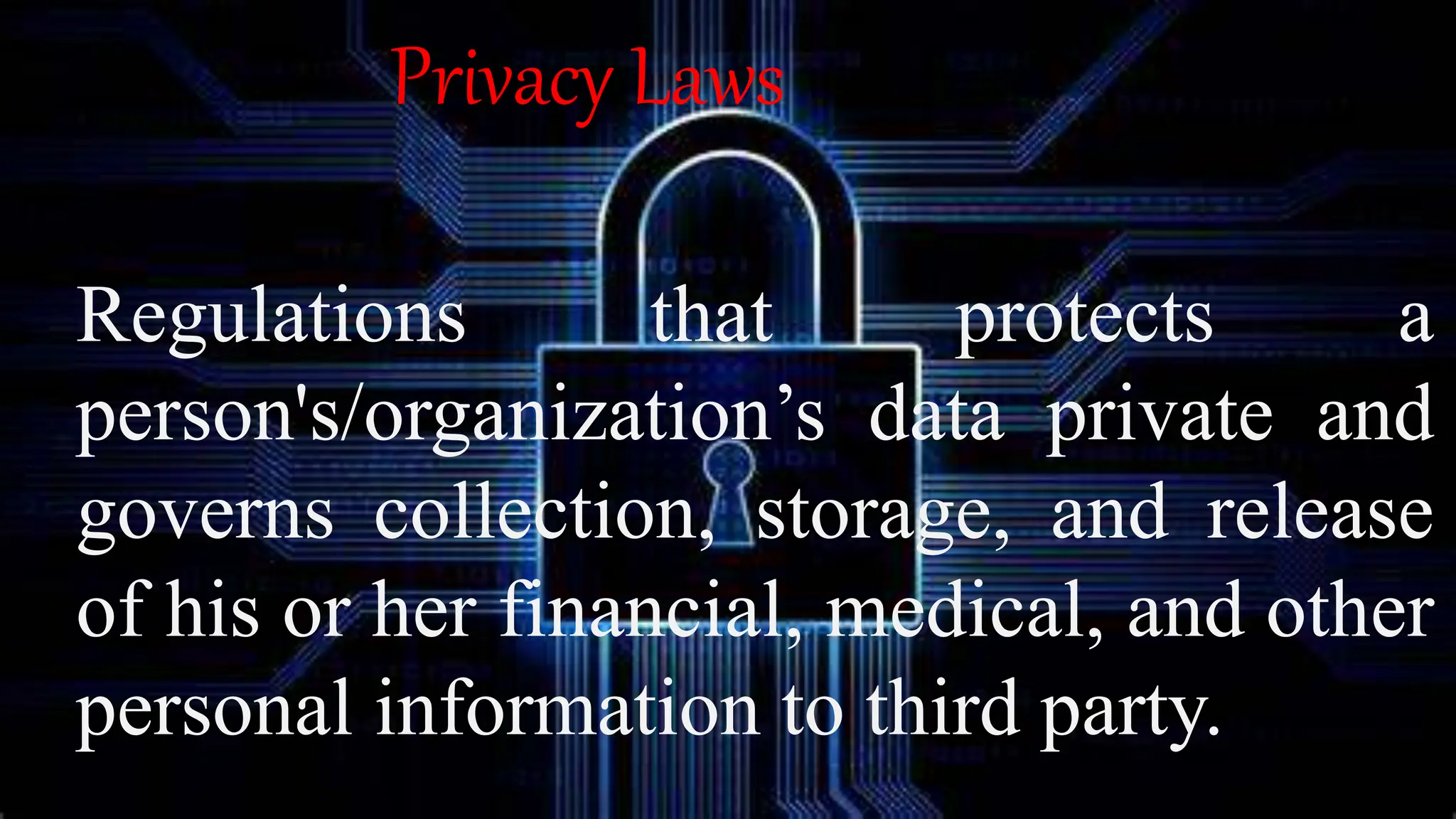
Privacy Laws
Regulations that protects a
person's/organization’s data private and
governs collection, storage, and release
of his or her financial, medical, and other
personal information to third party.
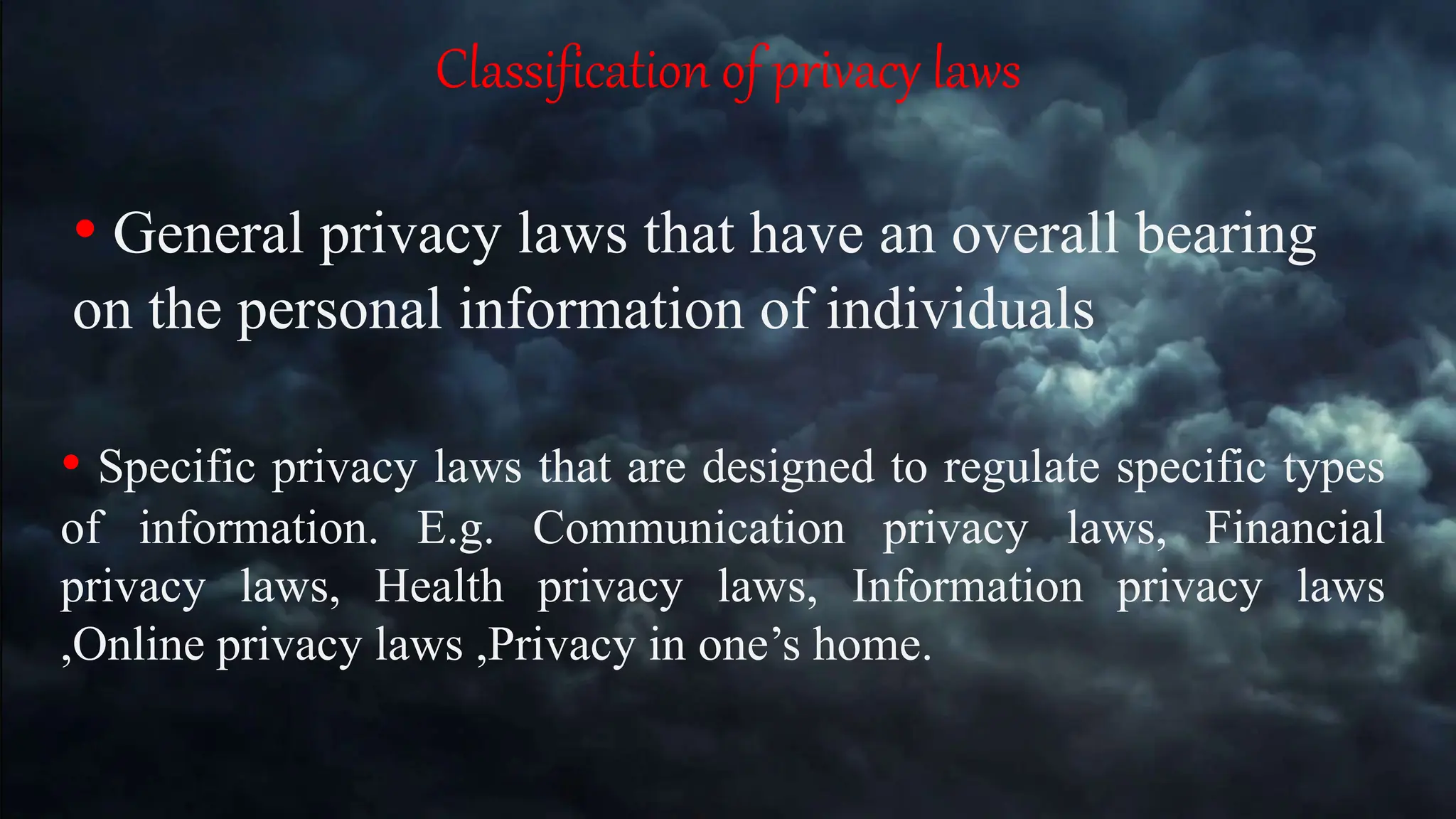
Classification of privacy laws
• General privacy laws that have an overall bearing
on the personal information of individuals
• Specific privacy laws that are designed to regulate specific types
of information. E.g. Communication privacy laws, Financial
privacy laws, Health privacy laws, Information privacy laws
,Online privacy laws ,Privacy in one’s home.
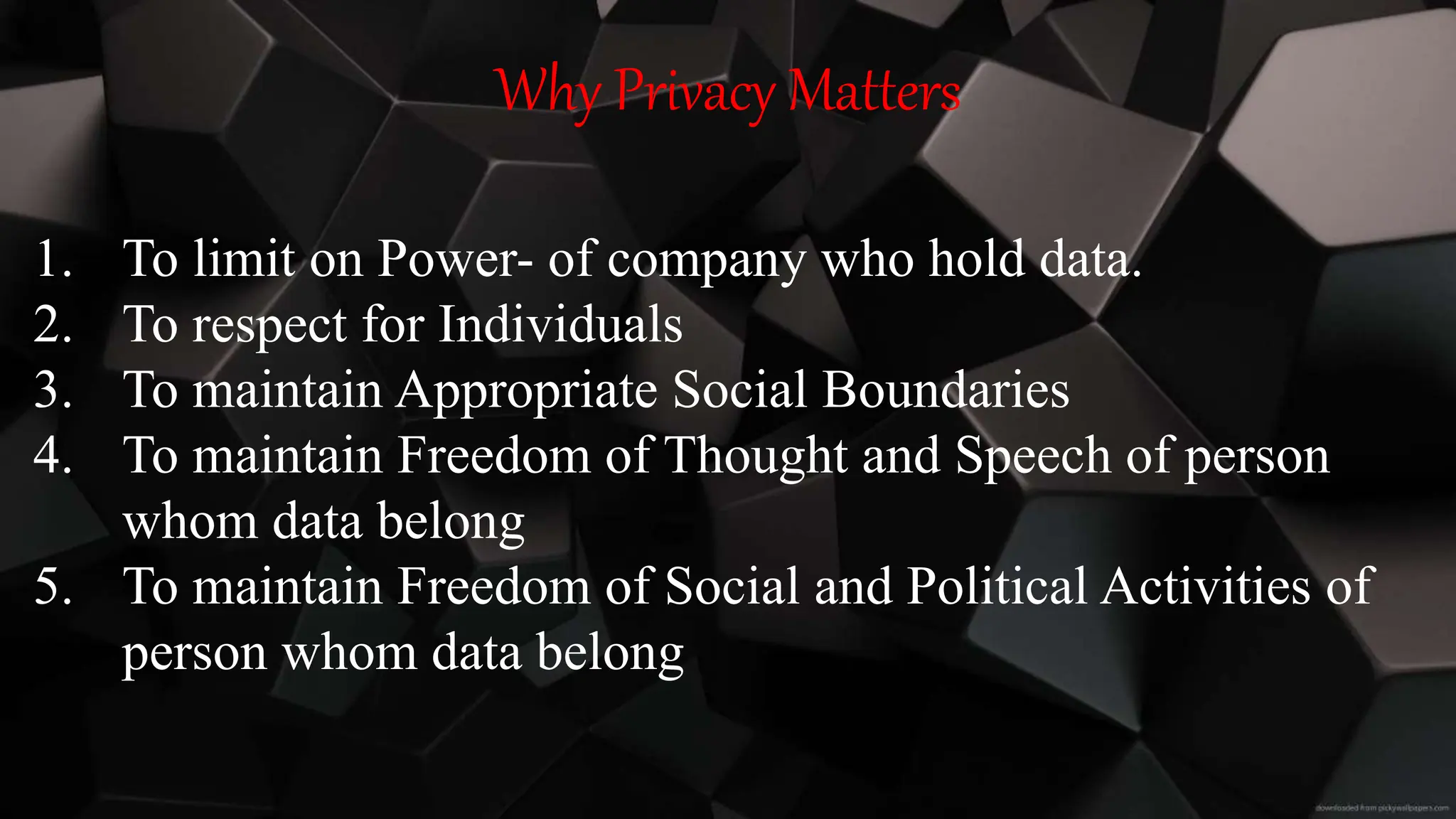
Why Privacy Matters
1. To limit on Power- of company who hold data.
2. To respect for Individuals
3. To maintain Appropriate Social Boundaries
4. To maintain Freedom of Thought and Speech of person
whom data belong
5. To maintain Freedom of Social and Political Activities of
person whom data belong
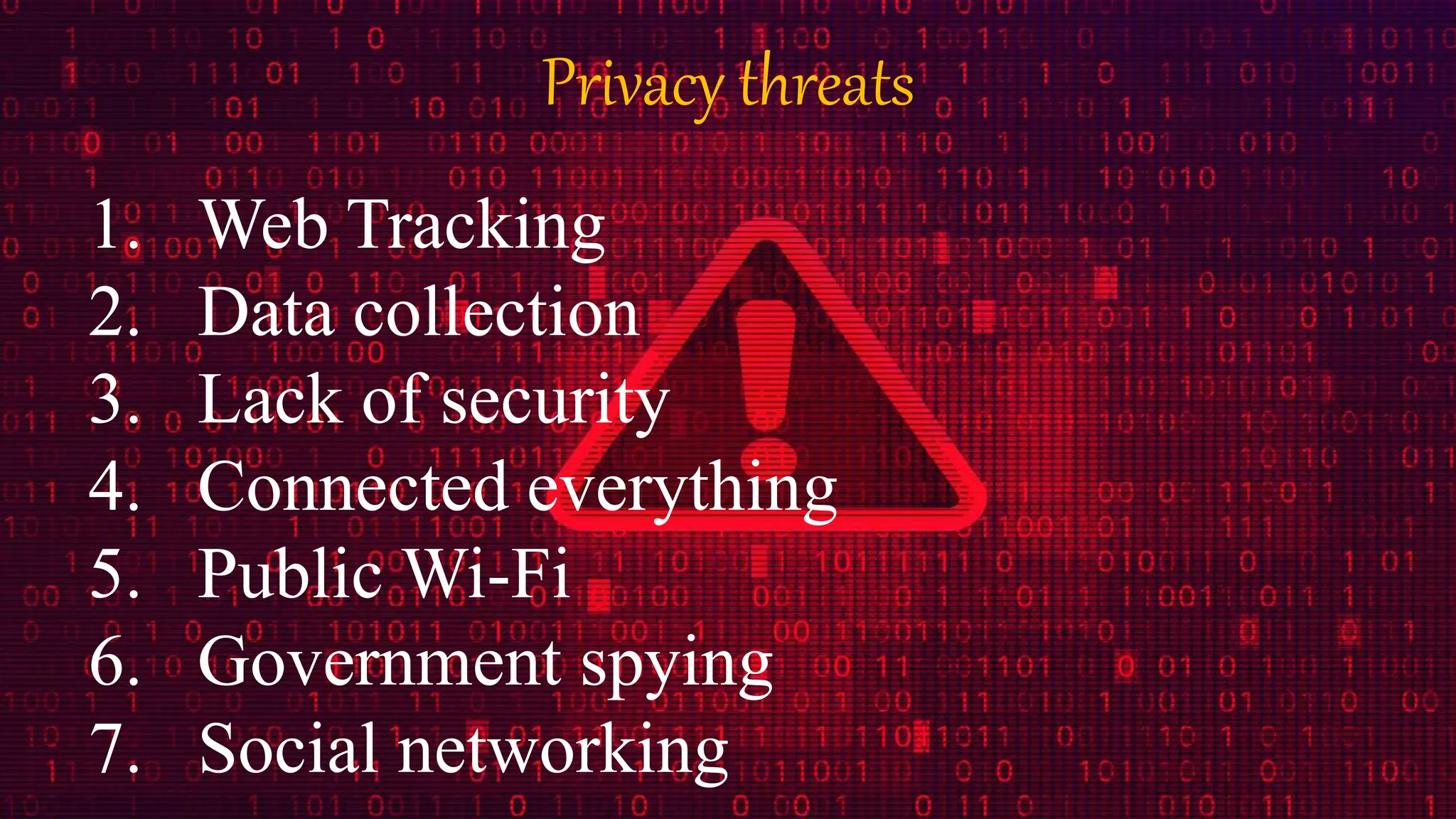
Privacy threats
1. Web Tracking
2. Data collection
3. Lack of security
4. Connected everything
5. Public Wi-Fi
6. Government spying
7. Social networking
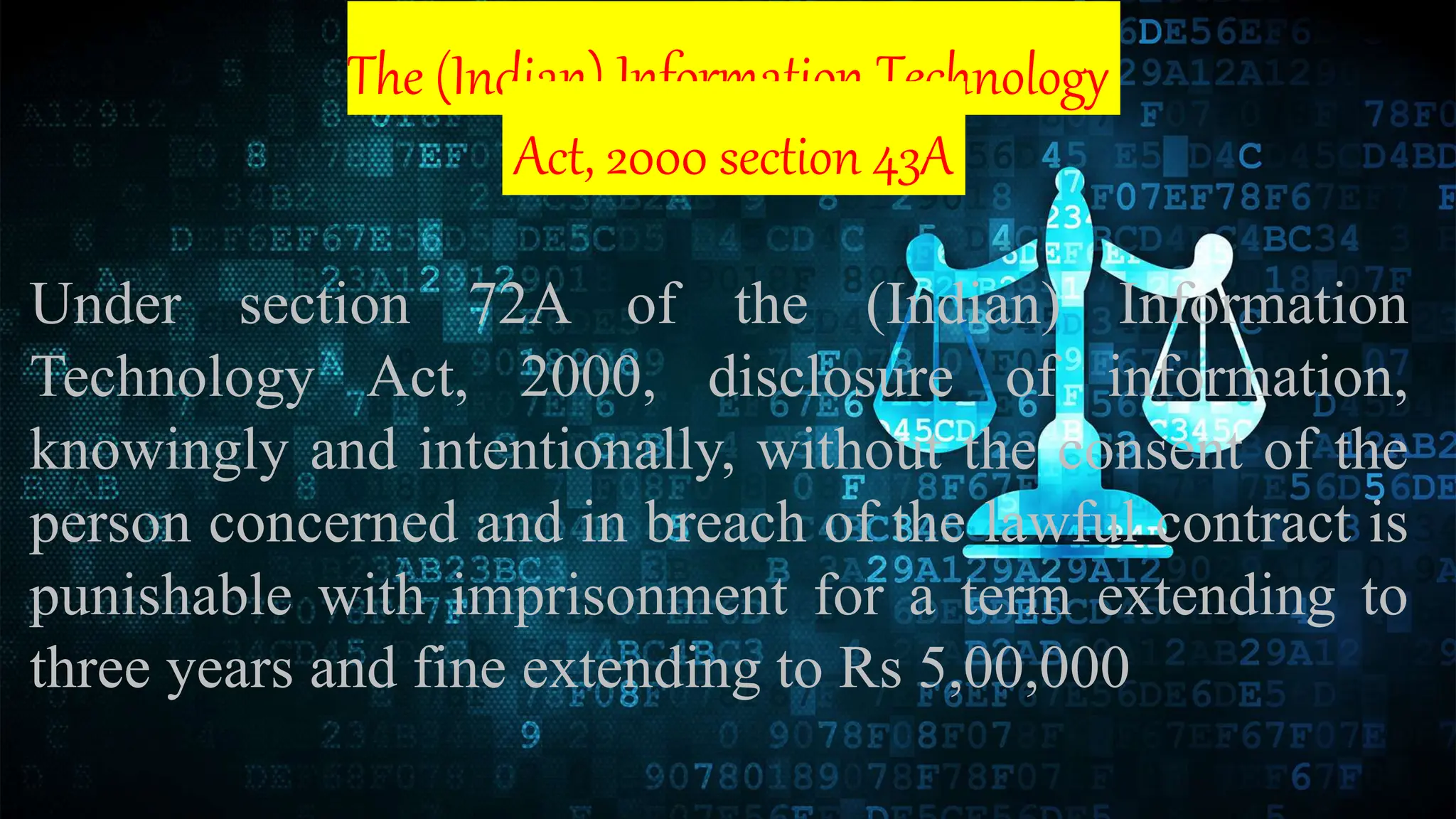
The (Indian) Information Technology
Act, 2000 section 43A
Under section 72A of the (Indian) Information
Technology Act, 2000, disclosure of information,
knowingly and intentionally, without the consent of the
person concerned and in breach of the lawful contract is
punishable with imprisonment for a term extending to
three years and fine extending to Rs 5,00,000
Thank You

Data Protection and Privacy laws class 11

  • 1.
  • 2.
    What is dataprotection Data protection is the process of safeguarding important data from corruption, compromise or loss and providing the capability to restore the data to a functional state
  • 4.
    Data protectionis theprocess ofsafeguarding important data from corruption,compromise or loss and providingthcapability to restorethedata to a functional state
  • 5.
    Methods of DataProtection Encryption of data Conversion of plain Text into cipher text is called encryptions Decryption means to translate convert cipher text into plain text. Even if hacker obtain the encrypted data, he cannot understand the information.
  • 6.
    SSL Secure SocketsLayer 1. Secure sockets layer is the standard security technology for establishing an encrypted link between a web server and a browser. 2. This link ensures that all data passed between the web server and browsers remain private and integral.
  • 7.
    3. Firewall Packet Filter: Looksat each packet entering or leaving the network and accepts or rejects it based on user-defined rules Proxy Server: Intercepts all messages entering and leaving the network. Application -Layer Firewalls: Recognize when certain applications and protocol such as HTTP, FTP and DNS -- are being misused. A firewall is a network security device that monitors incoming and outgoing network traffic and decides whether to allow or block specific traffic based on a defined set of security rules.
  • 8.
    Antivirus & antispyware Antispyware software is a type of program designed to prevent and detect unwanted spyware program installations Anti-virus software is a software utility detects prevents and remove viruses worms and other malware from the computer
  • 9.
    Other necessary steps 1.Other necessary steps 2. Do a background checks 3. At least two reference for new employee 4. Use strong password and change the password frequently 5. Stopping usage of cracked and hacked applications
  • 11.
    what is privacy? Privacyis the aspect of information technology which deals with the ability of an organization or individual to determine what data in a computer system can be shared with third parties.
  • 12.
    Privacy Laws Regulations thatprotects a person's/organization’s data private and governs collection, storage, and release of his or her financial, medical, and other personal information to third party.
  • 13.
    Classification of privacylaws • General privacy laws that have an overall bearing on the personal information of individuals • Specific privacy laws that are designed to regulate specific types of information. E.g. Communication privacy laws, Financial privacy laws, Health privacy laws, Information privacy laws ,Online privacy laws ,Privacy in one’s home.
  • 14.
    Why Privacy Matters 1.To limit on Power- of company who hold data. 2. To respect for Individuals 3. To maintain Appropriate Social Boundaries 4. To maintain Freedom of Thought and Speech of person whom data belong 5. To maintain Freedom of Social and Political Activities of person whom data belong
  • 15.
    Privacy threats 1. WebTracking 2. Data collection 3. Lack of security 4. Connected everything 5. Public Wi-Fi 6. Government spying 7. Social networking
  • 16.
    The (Indian) InformationTechnology Act, 2000 section 43A Under section 72A of the (Indian) Information Technology Act, 2000, disclosure of information, knowingly and intentionally, without the consent of the person concerned and in breach of the lawful contract is punishable with imprisonment for a term extending to three years and fine extending to Rs 5,00,000
  • 17.