

Data Journalism 101
(Part II)
Donald W. Reynolds National Center for Business
Journalism at ASU
Michael J. Berens – The Seattle Times
Meet my editor – a
guy who thought a
special project was
something that took
two hours instead
of one
Database types
•  Obtained from a public agency or other

institutional source (Part I)]
•  Scrapped from the web or digital document –

copy and paste (Part I)
•  Created from scratch using any mixture of

paper records
•  Hybrid data analysis – layering existing data

with your own database
Poll Question:
Have you ever created a
database from scratch?
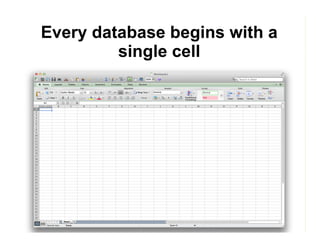
Every database begins with a
single cell
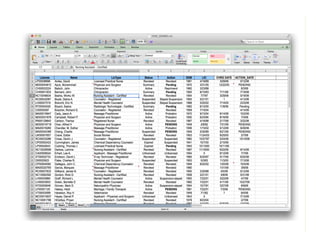
Cells, fields and headers, oh my
Segregation is good
Address number from street name
Middle initial from first name
First name from last name
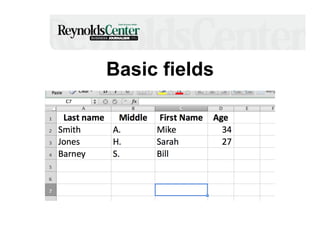
Basic fields
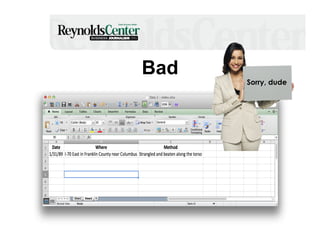
Bad

Sorry, dude
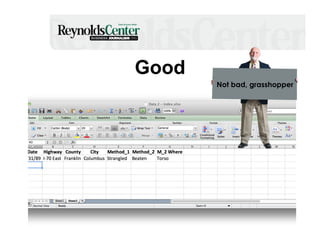
Good
Not bad, grasshopper
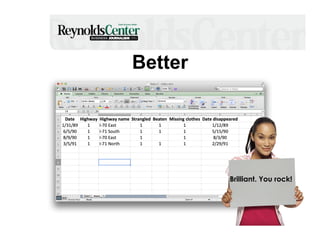
Better

Brilliant. You rock!
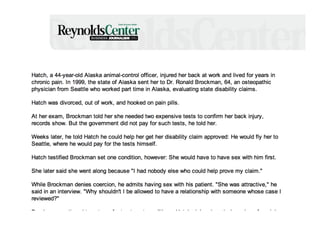
Hiding in plain sight
•  A health care professional was administratively

charged with sexual misconduct with patients.
•  His punishment?
•  He was only allowed to treat women age 50 or

older (re: public record posted on Wa. Dept. of
Health website)
Basic Fields
• 

License #

• 

Name

• 

Occupation

• 

Offense type

• 

Dates of action

• 

Sexual misconduct; unprofessional conduct; moral
turpitude
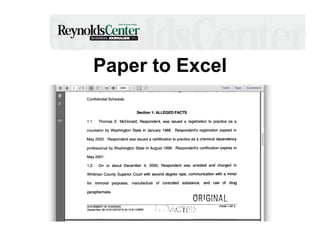
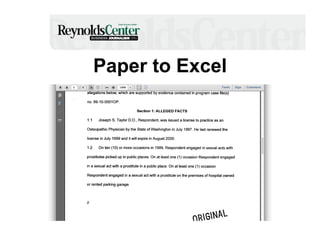
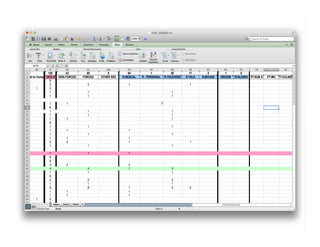
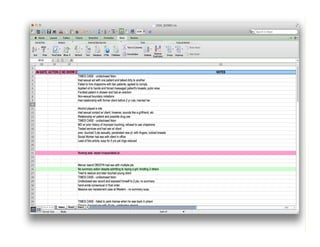
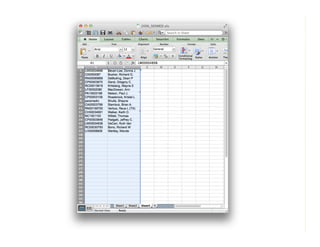
Paper to Excel
Paper to Excel
Poll Question:
What is your suggestion
for a unique field?
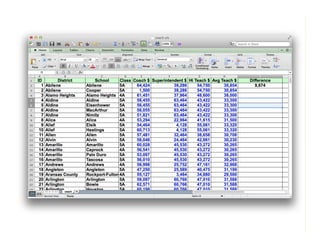
Tapping the power of Excel
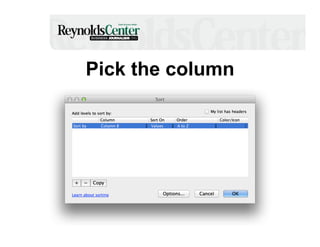
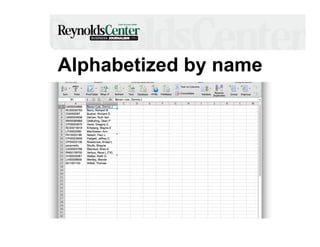
•  Sorting
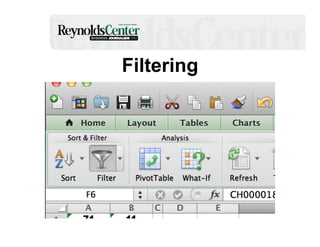
•  Filtering
•  Basic calculations
Pick the column
Alphabetized by name
Filtering
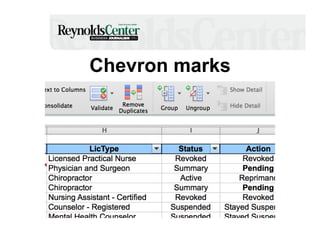
Chevron marks
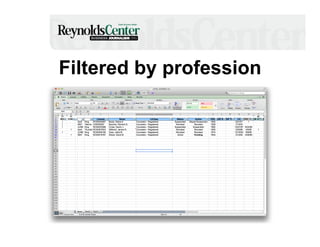
Filtered by profession
Calculations
•  Always begins with an equal

sign

•  Basic math structure using

names of cells

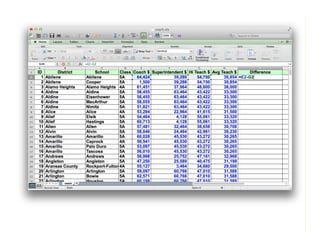
•  =A1+A2
Data training resources
Investigative Reporters and Editors:
www.ire.org
http://www.ire.org/nicar/

Reynolds Center
http://businessjournalism.org
http://businessjournalism.org/registration/llc/
Keep the trash – everything has value
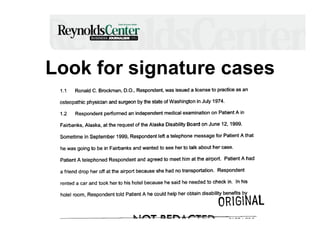
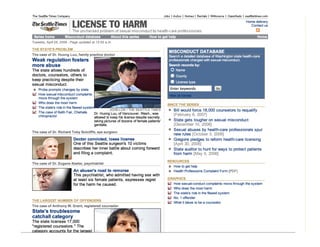
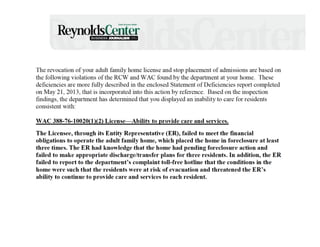
Look for signature cases
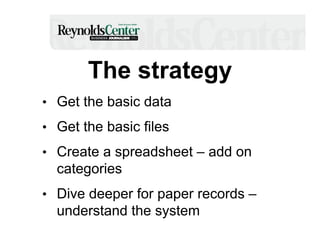
The strategy
•  Get the basic data
•  Get the basic files
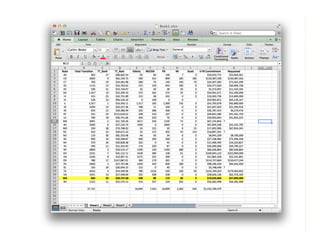
•  Create a spreadsheet – add on

categories
•  Dive deeper for paper records –

understand the system
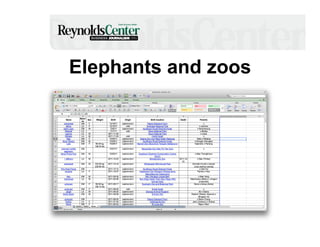
Elephants and zoos
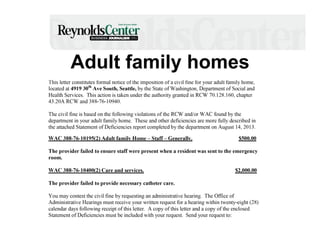
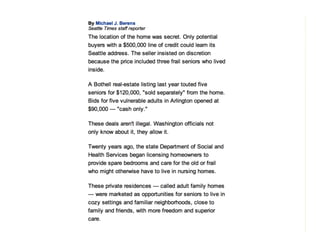
Adult family homes
The federal government has launched a grant
program that pays states to relocate seniors.
They call it “rebalancing.”

Poll Question:
What would you do with
this information?
Develop your nose for data

Data Journalism 101 - Day 2 by Michael J. Berens