Data Governance IS6120 Enterprise Business Intelligence 22/02/2011
IS6120 Important Issue CIOs, seem to realize the cost   of poor data governance  Planning to take action 39%  of organizations have little to no focus on data governance 45%  have pockets of data governance for critical data 19%  have established enterprise-wide data governance 72%  of all CIOs surveyed were targeting enterprise-wide data governance within the next three years 01/03/11 IS6120 (Accenture’s 2007 CIO Survey)
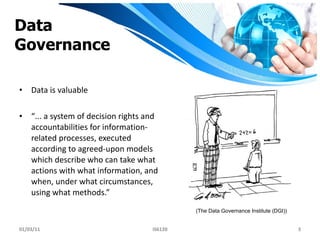
Data Governance Data is valuable “ ... a system of decision rights and accountabilities for information-related processes, executed according to agreed-upon models which describe who can take what actions with what information, and when, under what circumstances, using what methods.”  01/03/11 IS6120 (The Data Governance Institute (DGI))
“ The true function of governance is to actively link integrated business and technology teams with corporate and strategic initiatives. Within this context, governance becomes an integral part of enterprise line management. Executed properly, the governance function can actively and effectively reallocate business, technology, reporting and analytic resources to align with rapidly changing market demands ” (Duffie Brunson from B-eye-Network)  01/03/11 IS6120
Definitions Data governance refers to the overall management of the availability, usability, integrity, and security of the data employed in an enterprise. Data Governance is a system of decision rights and  accountabilities for information-related processes, executed according to agreed-upon models which describe who can take what actions with what information, and when, under what circumstances, using what methods. “ data needs to be governed as it has neither will nor intent of its own. Tools and people shape the data and tell it where to go. Therefore, data governance is the governance of people and technology ” (Thomas, 2006)  01/03/11 IS6120
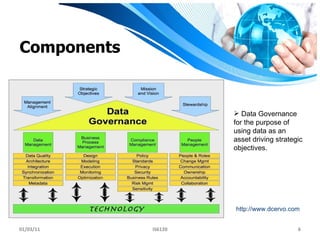
Components 01/03/11 IS6120 Data Governance for the purpose of using data as an asset driving strategic objectives. http://www.dcervo.com
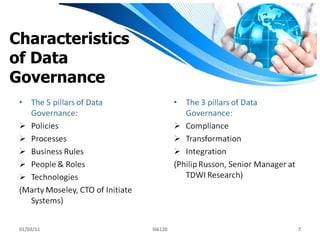
Characteristics of Data Governance 01/03/11 IS6120
Focus Areas Policy, Standards, Strategy Data Quality Privacy, Compliance, Security Architecture Integration, Analysis Data Warehouse & BI Management Alignment  01/03/11 IS6120
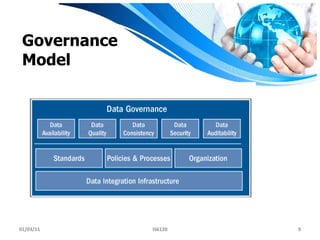
Governance Model 01/03/11 IS6120
Critical Success Factors Accountability and strategic accountability Standards Managerial blindspot Embracing complexity Cross divisional issue Metric Partnership Choosing strategic points of control Compliance monitoring Training and awareness 01/03/11 IS6120 (Marinos, 2004)
Steps for Success Step 1: Get a governor and the right people in place to govern Step 2: Survey your situation Step 3: Develop a data-governance strategy Step 4: Calculate the value of your data Step 5: Calculate the probability of risk Step 6: Monitor the efficiency of your controls 01/03/11 IS6120
Conclusion General consensus being that most data governance programs - if they exist at all - remain extremely immature and full with risks. The most common roadblocks range from minimal to no executive sponsorship, IT-driven efforts with limited to no business participation, lack of business justification and the ever-present likelihood of "de-prioritization" when a more compelling initiative or fire drill comes along. Increase Focus on Business Process to Build Momentum 01/03/11 IS6120

Data governance

  • 1.
    Data Governance IS6120Enterprise Business Intelligence 22/02/2011
  • 2.
    IS6120 Important IssueCIOs, seem to realize the cost of poor data governance Planning to take action 39% of organizations have little to no focus on data governance 45% have pockets of data governance for critical data 19% have established enterprise-wide data governance 72% of all CIOs surveyed were targeting enterprise-wide data governance within the next three years 01/03/11 IS6120 (Accenture’s 2007 CIO Survey)
  • 3.
    Data Governance Datais valuable “ ... a system of decision rights and accountabilities for information-related processes, executed according to agreed-upon models which describe who can take what actions with what information, and when, under what circumstances, using what methods.” 01/03/11 IS6120 (The Data Governance Institute (DGI))
  • 4.
    “ The truefunction of governance is to actively link integrated business and technology teams with corporate and strategic initiatives. Within this context, governance becomes an integral part of enterprise line management. Executed properly, the governance function can actively and effectively reallocate business, technology, reporting and analytic resources to align with rapidly changing market demands ” (Duffie Brunson from B-eye-Network)  01/03/11 IS6120
  • 5.
    Definitions Data governancerefers to the overall management of the availability, usability, integrity, and security of the data employed in an enterprise. Data Governance is a system of decision rights and accountabilities for information-related processes, executed according to agreed-upon models which describe who can take what actions with what information, and when, under what circumstances, using what methods. “ data needs to be governed as it has neither will nor intent of its own. Tools and people shape the data and tell it where to go. Therefore, data governance is the governance of people and technology ” (Thomas, 2006) 01/03/11 IS6120
  • 6.
    Components 01/03/11 IS6120Data Governance for the purpose of using data as an asset driving strategic objectives. http://www.dcervo.com
  • 7.
    Characteristics of DataGovernance 01/03/11 IS6120
  • 8.
    Focus Areas Policy,Standards, Strategy Data Quality Privacy, Compliance, Security Architecture Integration, Analysis Data Warehouse & BI Management Alignment  01/03/11 IS6120
  • 9.
  • 10.
    Critical Success FactorsAccountability and strategic accountability Standards Managerial blindspot Embracing complexity Cross divisional issue Metric Partnership Choosing strategic points of control Compliance monitoring Training and awareness 01/03/11 IS6120 (Marinos, 2004)
  • 11.
    Steps for SuccessStep 1: Get a governor and the right people in place to govern Step 2: Survey your situation Step 3: Develop a data-governance strategy Step 4: Calculate the value of your data Step 5: Calculate the probability of risk Step 6: Monitor the efficiency of your controls 01/03/11 IS6120
  • 12.
    Conclusion General consensusbeing that most data governance programs - if they exist at all - remain extremely immature and full with risks. The most common roadblocks range from minimal to no executive sponsorship, IT-driven efforts with limited to no business participation, lack of business justification and the ever-present likelihood of "de-prioritization" when a more compelling initiative or fire drill comes along. Increase Focus on Business Process to Build Momentum 01/03/11 IS6120

Editor's Notes

  • #11 Corporate Oversights