DATA CENTER ARCHITECTURE
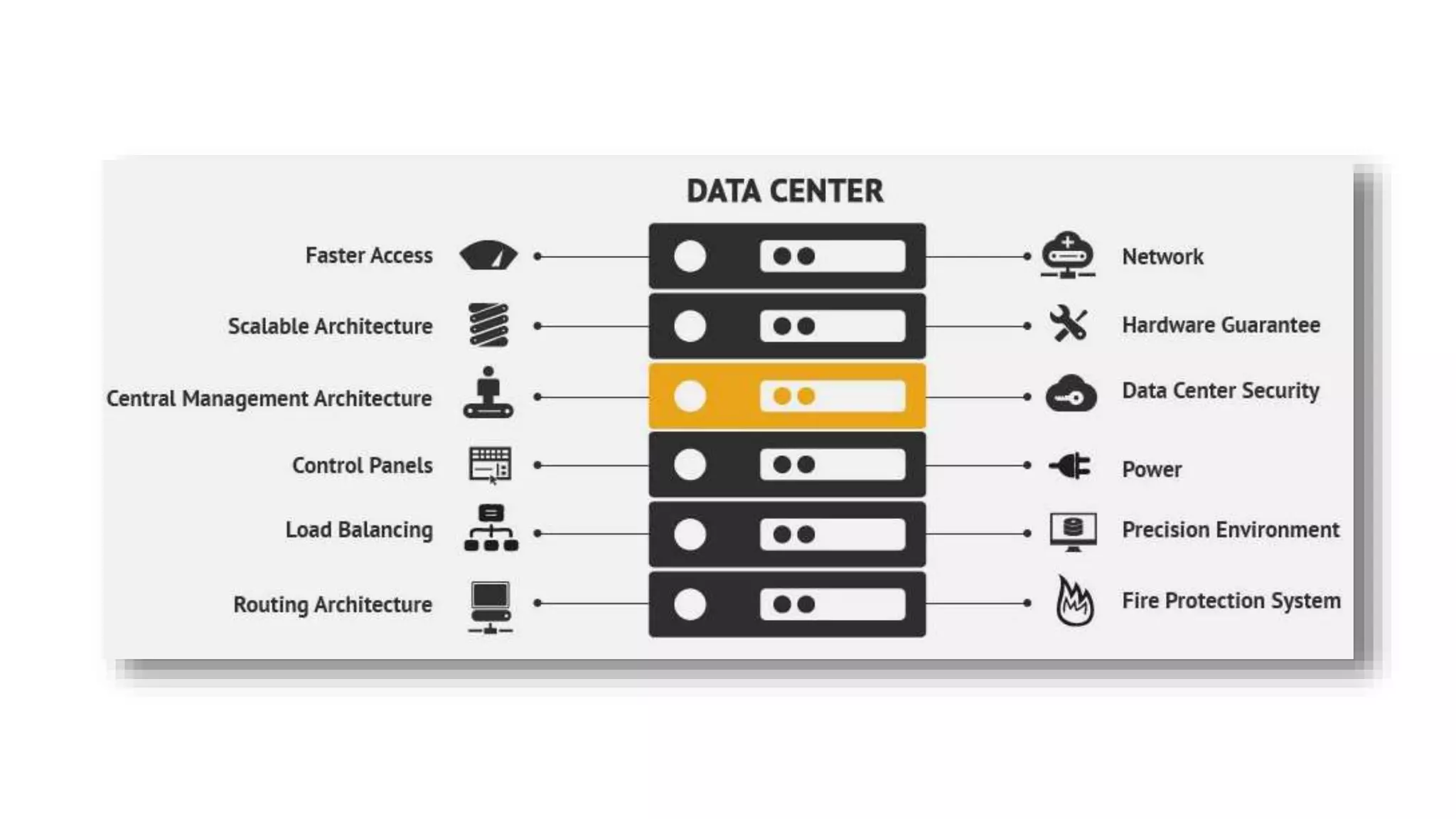
Data Center
• Data centers are simply centralized locations where computing and
networking equipment is concentrated for the purpose of collecting,
storing, processing, distributing or allowing access to large amounts of
data. They have existed in one form or another since the advent of
computers.
Data Center Architecture
• Data center architecture is usually created in the data center design
and constructing phase.
• The data center architecture specifies where and how the server,
storage networking, racks and other data center resources will be
physically placed.
• It also addresses how these resources/devices will be interconnected
and how physical and logical security workflows are arranged.
Data Center Infrastructure
Data Center Types
• According to architecture of data centers and the services they offer;
there are mainly three types of data centers
• Traditional Data Center
• Modular Data Center
• Cloud Data Center
Traditional Data Center
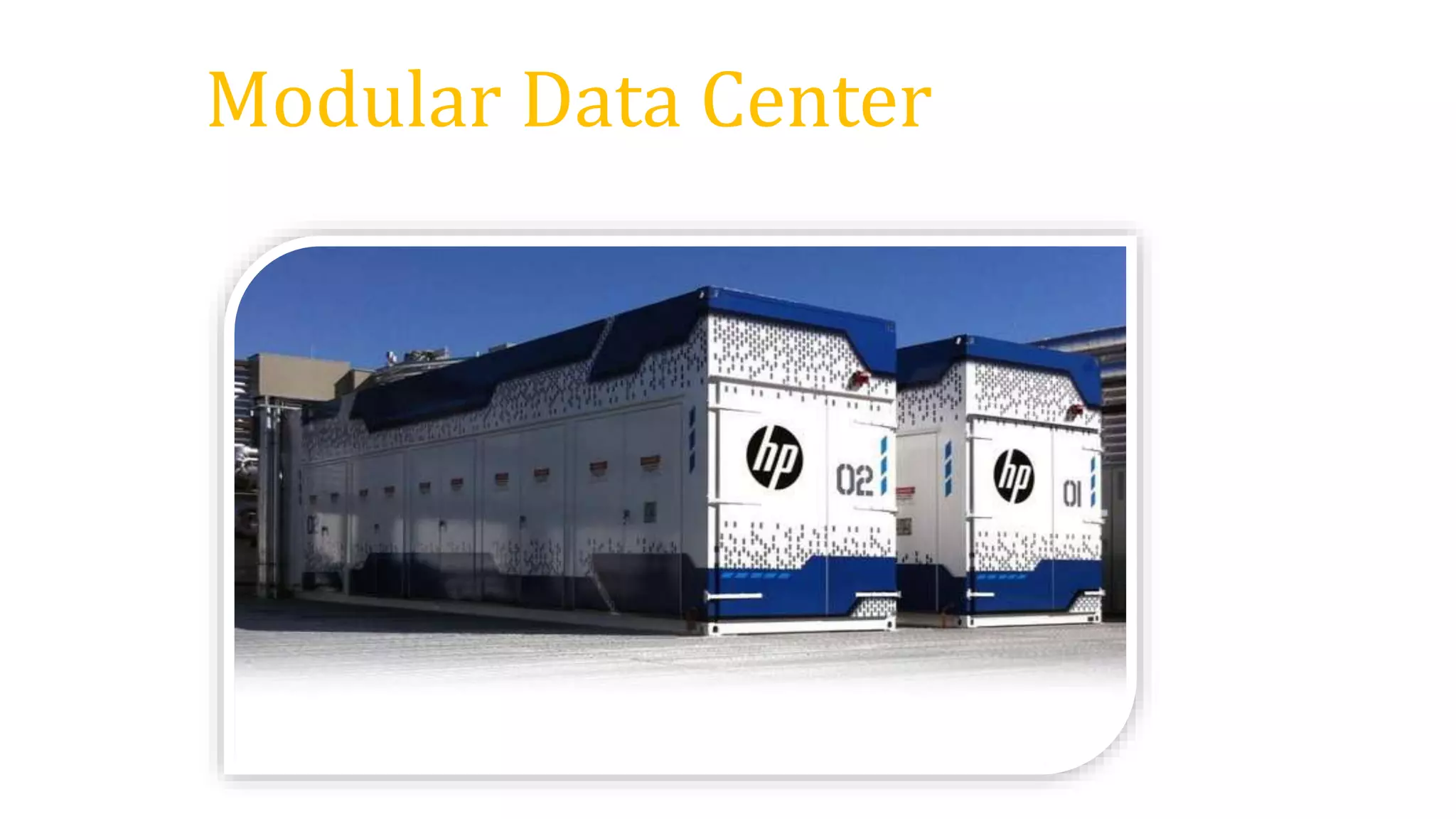
Modular Data Center
Cloud Data Center
Role in Business
• In the world of enterprise IT, data centers are designed to support
business applications and activities that include:
• Email and file sharing
• Productivity applications
• Customer relationship management (CRM) and enterprise resource
planning (ERP)
• Big data, artificial intelligence, and machine learning
• Communications and collaboration services
The core components of a data center
• Data center design includes routers, switches, firewalls, storage
systems, servers, and application delivery controllers. Because these
components store and manage business-critical data and
applications, data center security is critical in data center design.
Together, they provide:
• Network infrastructure –
This connects servers (physical and virtualized), data center services,
storage, and external connectivity to end-user locations.
• Storage infrastructure –
Data is the fuel of the modern data center. Storage systems are used to
hold this valuable commodity.
• Computing resources –
Applications are the engines of a data center. These servers provide the
processing, memory, local storage, and network connectivity that drive
applications.
Data center architure ppts

Data center architure ppts

  • 1.
  • 2.
    Data Center • Datacenters are simply centralized locations where computing and networking equipment is concentrated for the purpose of collecting, storing, processing, distributing or allowing access to large amounts of data. They have existed in one form or another since the advent of computers.
  • 4.
    Data Center Architecture •Data center architecture is usually created in the data center design and constructing phase. • The data center architecture specifies where and how the server, storage networking, racks and other data center resources will be physically placed. • It also addresses how these resources/devices will be interconnected and how physical and logical security workflows are arranged.
  • 5.
  • 6.
    Data Center Types •According to architecture of data centers and the services they offer; there are mainly three types of data centers • Traditional Data Center • Modular Data Center • Cloud Data Center
  • 7.
  • 8.
  • 9.
  • 10.
    Role in Business •In the world of enterprise IT, data centers are designed to support business applications and activities that include: • Email and file sharing • Productivity applications • Customer relationship management (CRM) and enterprise resource planning (ERP) • Big data, artificial intelligence, and machine learning • Communications and collaboration services
  • 11.
    The core componentsof a data center • Data center design includes routers, switches, firewalls, storage systems, servers, and application delivery controllers. Because these components store and manage business-critical data and applications, data center security is critical in data center design. Together, they provide: • Network infrastructure – This connects servers (physical and virtualized), data center services, storage, and external connectivity to end-user locations.
  • 12.
    • Storage infrastructure– Data is the fuel of the modern data center. Storage systems are used to hold this valuable commodity. • Computing resources – Applications are the engines of a data center. These servers provide the processing, memory, local storage, and network connectivity that drive applications.