Data Analytics in banking
www.iabac.org
Data Analytics in banking
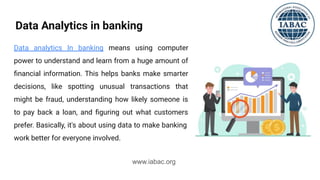
Data analytics In banking means using computer
power to understand and learn from a huge amount of
financial information. This helps banks make smarter
decisions, like spotting unusual transactions that
might be fraud, understanding how likely someone is
to pay back a loan, and figuring out what customers
prefer. Basically, it's about using data to make banking
work better for everyone involved.
www.iabac.org
Importance of Data in Banking
1. Informed Decision-Making
2. Risk Management
3. Customer Understanding
4. Operational Efficiency
5. Fraud Detection and Security
6. Compliance and Reporting
7. Product Development and Marketing
www.iabac.org
Key components of analytic in banking
Descriptive Analytics: Understanding what happened in the past.
Diagnostic Analytics: Analyzing reasons behind past outcomes.
Predictive Analytics: Forecasting future trends using machine learning.
Prescriptive Analytics: Suggesting actions to optimize future outcomes.
Customer Segmentation: Grouping customers based on shared characteristics.
Risk Management Analytics: Identifying and mitigating potential risks.
Operational Analytics: Enhancing day-to-day operations and resource allocation.
www.iabac.org
Types of Data in Banking
❖ Customer Data
❖ Transaction Data
❖ Credit Data
❖ Operational Data
❖ Regulatory and Compliance Data
❖ Risk Management Data
❖ Security Data
❖ Fraud Detection Data
www.iabac.org
Data Collection Methods in banking
1. Customer Forms: Information provided when opening accounts or applying for services.
2. Transaction Records: Data from customer transactions like deposits and withdrawals.
3. Credit Reports: Assessing creditworthiness using reports from credit bureaus.
4. Online and Mobile Banking: Gathering data from digital interactions.
5. Surveys and Feedback: Directly seeking customer opinions and preferences.
6. Social Media Monitoring: Analyzing customer sentiments on social platforms.
7. Call Center Interactions: Information from customer service interactions.
8. Biometric Data: Using fingerprints or facial recognition for identity verification.
Diverse banking analytics sources empower banks to better understand, serve, and secure their
customers by using current available data.
www.iabac.org
Data Analytics Tools
➔ Statistical Analysis System
➔ Statistical Package for the Social Sciences
➔ Tableau
➔ Microsoft Power BI
➔ Hadoop
➔ Apache Spark
➔ QlikView/Qlik Sense
www.iabac.org
Benefits of Data Analytics in banking
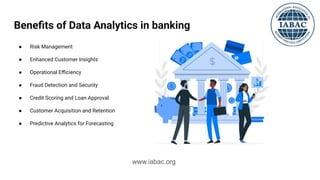
● Risk Management
● Enhanced Customer Insights
● Operational Efficiency
● Fraud Detection and Security
● Credit Scoring and Loan Approval
● Customer Acquisition and Retention
● Predictive Analytics for Forecasting
www.iabac.org
Data Analytics Process in Banking
1. Data Collection
2. Data Processing
3. Data Analysis
4. Predictive Modeling
5. Decision Making
6. Continuous Improvement
7. Communication and Visualization
www.iabac.org
Conclusion
Banking in Data analytics for understanding customer
behavior, managing risks, and improving efficiency. The
diverse types of data collected, coupled with advanced
analytics tools, offer insights that lead to better
decision-making. The benefits include personalized
services, fraud detection, and regulatory compliance,
making data analytics a transformative force in shaping the
future of the banking sector.
www.iabac.org

Data Analytics in the banking sector.pdf

  • 1.
    Data Analytics inbanking www.iabac.org
  • 2.
    Data Analytics inbanking Data analytics In banking means using computer power to understand and learn from a huge amount of financial information. This helps banks make smarter decisions, like spotting unusual transactions that might be fraud, understanding how likely someone is to pay back a loan, and figuring out what customers prefer. Basically, it's about using data to make banking work better for everyone involved. www.iabac.org
  • 3.
    Importance of Datain Banking 1. Informed Decision-Making 2. Risk Management 3. Customer Understanding 4. Operational Efficiency 5. Fraud Detection and Security 6. Compliance and Reporting 7. Product Development and Marketing www.iabac.org
  • 4.
    Key components ofanalytic in banking Descriptive Analytics: Understanding what happened in the past. Diagnostic Analytics: Analyzing reasons behind past outcomes. Predictive Analytics: Forecasting future trends using machine learning. Prescriptive Analytics: Suggesting actions to optimize future outcomes. Customer Segmentation: Grouping customers based on shared characteristics. Risk Management Analytics: Identifying and mitigating potential risks. Operational Analytics: Enhancing day-to-day operations and resource allocation. www.iabac.org
  • 5.
    Types of Datain Banking ❖ Customer Data ❖ Transaction Data ❖ Credit Data ❖ Operational Data ❖ Regulatory and Compliance Data ❖ Risk Management Data ❖ Security Data ❖ Fraud Detection Data www.iabac.org
  • 6.
    Data Collection Methodsin banking 1. Customer Forms: Information provided when opening accounts or applying for services. 2. Transaction Records: Data from customer transactions like deposits and withdrawals. 3. Credit Reports: Assessing creditworthiness using reports from credit bureaus. 4. Online and Mobile Banking: Gathering data from digital interactions. 5. Surveys and Feedback: Directly seeking customer opinions and preferences. 6. Social Media Monitoring: Analyzing customer sentiments on social platforms. 7. Call Center Interactions: Information from customer service interactions. 8. Biometric Data: Using fingerprints or facial recognition for identity verification. Diverse banking analytics sources empower banks to better understand, serve, and secure their customers by using current available data. www.iabac.org
  • 7.
    Data Analytics Tools ➔Statistical Analysis System ➔ Statistical Package for the Social Sciences ➔ Tableau ➔ Microsoft Power BI ➔ Hadoop ➔ Apache Spark ➔ QlikView/Qlik Sense www.iabac.org
  • 8.
    Benefits of DataAnalytics in banking ● Risk Management ● Enhanced Customer Insights ● Operational Efficiency ● Fraud Detection and Security ● Credit Scoring and Loan Approval ● Customer Acquisition and Retention ● Predictive Analytics for Forecasting www.iabac.org
  • 9.
    Data Analytics Processin Banking 1. Data Collection 2. Data Processing 3. Data Analysis 4. Predictive Modeling 5. Decision Making 6. Continuous Improvement 7. Communication and Visualization www.iabac.org
  • 10.
    Conclusion Banking in Dataanalytics for understanding customer behavior, managing risks, and improving efficiency. The diverse types of data collected, coupled with advanced analytics tools, offer insights that lead to better decision-making. The benefits include personalized services, fraud detection, and regulatory compliance, making data analytics a transformative force in shaping the future of the banking sector. www.iabac.org