Republic Act No. 10173
Data Privacy Act of
2012
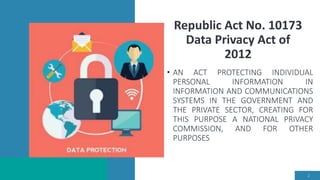
• AN ACT PROTECTING INDIVIDUAL
PERSONAL INFORMATION IN
INFORMATION AND COMMUNICATIONS
SYSTEMS IN THE GOVERNMENT AND
THE PRIVATE SECTOR, CREATING FOR
THIS PURPOSE A NATIONAL PRIVACY
COMMISSION, AND FOR OTHER
PURPOSES
2
Main Objectives of RA 10173:
Privacy and Integrity of Information
3
“PROCESSING” refers to any operation or any set
of operations performed upon personal data
including, but not limited to, the collection,
recording, organization, storage, updating or
modification, retrieval, consultation, use,
consolidation, blocking, erasure or destruction of
data. Processing may be performed through
automated means, or manual processing, if the
personal data are contained or are intended to
be contained in a filing system;
4
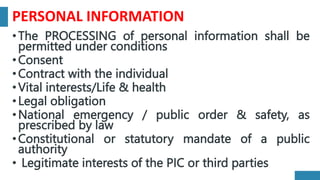
PERSONAL INFORMATION
•The PROCESSING of personal information shall be
permitted under conditions
•Consent
•Contract with the individual
•Vital interests/Life & health
•Legal obligation
•National emergency / public order & safety, as
prescribed by law
•Constitutional or statutory mandate of a public
authority
• Legitimate interests of the PIC or third parties
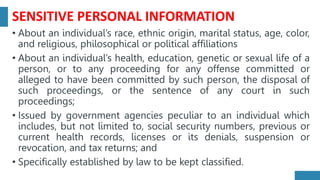
SENSITIVE PERSONAL INFORMATION
• About an individual’s race, ethnic origin, marital status, age, color,
and religious, philosophical or political affiliations
• About an individual’s health, education, genetic or sexual life of a
person, or to any proceeding for any offense committed or
alleged to have been committed by such person, the disposal of
such proceedings, or the sentence of any court in such
proceedings;
• Issued by government agencies peculiar to an individual which
includes, but not limited to, social security numbers, previous or
current health records, licenses or its denials, suspension or
revocation, and tax returns; and
• Specifically established by law to be kept classified.
The PROCESSING of sensitive personal information shall be
PROHIBITED, except in the following cases:
• The data subject has GIVEN HIS OR HER CONSENT
• The processing of the same is provided for by EXISTING LAWS
AND REGULATIONS
• Necessary to PROTECT THE LIFE AND HEALTH of the data
subject
• Necessary to achieve the LAWFUL AND NON-COMMERCIAL
• OBJECTIVES of public organizations and their associations
• Necessary for purposes of MEDICAL TREATMENT
• Necessary FOR THE PROTECTION OF LAWFUL RIGHTS AND
INTERESTS of natural or legal persons in court proceedings
Duties to Data Subjects
Assure data subjects of their rights;
•THE RIGHT TO BE INFORMED
•THE RIGHT TO OBJECT
•THE RIGHT TO ACCESS
•THE RIGHT TO RECTIFY
•THE RIGHT TO ERASURE OR BLOCKING
•THE RIGHT TO DATA PORTABILITY
•THE RIGHT TO FILE A COMPLAINT
•THE RIGHT TO DAMAGES
9
10
11
12
13
14
15
16
17
18
THE RIGHT AGAINST BREACHES
“PERSONAL DATA BREACH” refers to a breach of
security leading to the accidental or unlawful
•destruction,
•loss,
•alteration,
•unauthorized disclosure of, or access to, personal
data transmitted, stored, or otherwise processed;
19
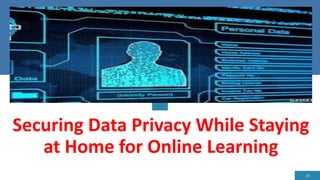
Securing Data Privacy While Staying
at Home for Online Learning
20
Preparing devices, network, and tools
Before learning online, preparing the devices,
networking, tools, and reading privacy policy are basic
aspects for personal data protection, which can
guarantee the quality of online learning.
•Setting up your device
•Managing network connection on your device
•Selecting and installing learning tools
•Browsing the privacy policy
21
Preserving privacy when signing up/in on
learning platforms
When signing in on any learning platforms, the first and
most important behavior is to register in the platform,
however, the importance is often ignored by users
which leads to forget the username/password, leak
password,
•Using strong password to create account
•Signing in a device that's not yours
22
Protecting privacy when navigating learning
platforms
After signing in on a learning platform, learners could enroll in
the courses, post messages in forums, blogs, browse and learn
the contents. This section will introduce the issues associated
with the personal data protection in navigating learning
platforms.
• Enrolling in an online course
• Utilizing personalized learning services
• Using search services carefully
• Recognizing location services
• Backing up your data
23
Staying safe while learning with social
networking
Social networking tools are increasingly being used in
online learning, providing students with a medium in
which they can actively engage with each other and
with their teachers, co-create knowledge, share
experiences, work and learn collaboratively.
Using video conference tools with caution
• Posting in the discussions and forums responsibly
• Surfing the Internet safely
24
Clearing personal data after learning online
After finishing online learning in period, the user
should notice the data generated as discussed in
the previous chapters, and make the decision on
whether to delete the data or not. If you decide to
delete the data, the following section provide
some suggestions and methods.
•Removing data traces in online learning
•Deactivating your account
25
26
27
28
29
30
31
32
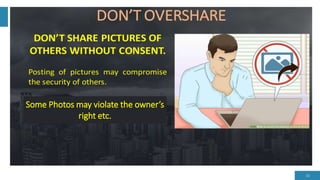
Some Photos may violate the owner’s
right etc.
33
34
35
You have an obligation to
use Social Media
responsibly and utilize the
online mechanisms for
reporting hate speech and
misinformation online.
36
37

Data aCT PRIVACY/................................................

  • 2.
    Republic Act No.10173 Data Privacy Act of 2012 • AN ACT PROTECTING INDIVIDUAL PERSONAL INFORMATION IN INFORMATION AND COMMUNICATIONS SYSTEMS IN THE GOVERNMENT AND THE PRIVATE SECTOR, CREATING FOR THIS PURPOSE A NATIONAL PRIVACY COMMISSION, AND FOR OTHER PURPOSES 2
  • 3.
    Main Objectives ofRA 10173: Privacy and Integrity of Information 3
  • 4.
    “PROCESSING” refers toany operation or any set of operations performed upon personal data including, but not limited to, the collection, recording, organization, storage, updating or modification, retrieval, consultation, use, consolidation, blocking, erasure or destruction of data. Processing may be performed through automated means, or manual processing, if the personal data are contained or are intended to be contained in a filing system; 4
  • 5.
    PERSONAL INFORMATION •The PROCESSINGof personal information shall be permitted under conditions •Consent •Contract with the individual •Vital interests/Life & health •Legal obligation •National emergency / public order & safety, as prescribed by law •Constitutional or statutory mandate of a public authority • Legitimate interests of the PIC or third parties
  • 6.
    SENSITIVE PERSONAL INFORMATION •About an individual’s race, ethnic origin, marital status, age, color, and religious, philosophical or political affiliations • About an individual’s health, education, genetic or sexual life of a person, or to any proceeding for any offense committed or alleged to have been committed by such person, the disposal of such proceedings, or the sentence of any court in such proceedings; • Issued by government agencies peculiar to an individual which includes, but not limited to, social security numbers, previous or current health records, licenses or its denials, suspension or revocation, and tax returns; and • Specifically established by law to be kept classified.
  • 7.
    The PROCESSING ofsensitive personal information shall be PROHIBITED, except in the following cases: • The data subject has GIVEN HIS OR HER CONSENT • The processing of the same is provided for by EXISTING LAWS AND REGULATIONS • Necessary to PROTECT THE LIFE AND HEALTH of the data subject • Necessary to achieve the LAWFUL AND NON-COMMERCIAL • OBJECTIVES of public organizations and their associations • Necessary for purposes of MEDICAL TREATMENT • Necessary FOR THE PROTECTION OF LAWFUL RIGHTS AND INTERESTS of natural or legal persons in court proceedings
  • 8.
    Duties to DataSubjects Assure data subjects of their rights; •THE RIGHT TO BE INFORMED •THE RIGHT TO OBJECT •THE RIGHT TO ACCESS •THE RIGHT TO RECTIFY •THE RIGHT TO ERASURE OR BLOCKING •THE RIGHT TO DATA PORTABILITY •THE RIGHT TO FILE A COMPLAINT •THE RIGHT TO DAMAGES
  • 9.
  • 10.
  • 11.
  • 12.
  • 13.
  • 14.
  • 15.
  • 16.
  • 17.
  • 18.
  • 19.
    THE RIGHT AGAINSTBREACHES “PERSONAL DATA BREACH” refers to a breach of security leading to the accidental or unlawful •destruction, •loss, •alteration, •unauthorized disclosure of, or access to, personal data transmitted, stored, or otherwise processed; 19
  • 20.
    Securing Data PrivacyWhile Staying at Home for Online Learning 20
  • 21.
    Preparing devices, network,and tools Before learning online, preparing the devices, networking, tools, and reading privacy policy are basic aspects for personal data protection, which can guarantee the quality of online learning. •Setting up your device •Managing network connection on your device •Selecting and installing learning tools •Browsing the privacy policy 21
  • 22.
    Preserving privacy whensigning up/in on learning platforms When signing in on any learning platforms, the first and most important behavior is to register in the platform, however, the importance is often ignored by users which leads to forget the username/password, leak password, •Using strong password to create account •Signing in a device that's not yours 22
  • 23.
    Protecting privacy whennavigating learning platforms After signing in on a learning platform, learners could enroll in the courses, post messages in forums, blogs, browse and learn the contents. This section will introduce the issues associated with the personal data protection in navigating learning platforms. • Enrolling in an online course • Utilizing personalized learning services • Using search services carefully • Recognizing location services • Backing up your data 23
  • 24.
    Staying safe whilelearning with social networking Social networking tools are increasingly being used in online learning, providing students with a medium in which they can actively engage with each other and with their teachers, co-create knowledge, share experiences, work and learn collaboratively. Using video conference tools with caution • Posting in the discussions and forums responsibly • Surfing the Internet safely 24
  • 25.
    Clearing personal dataafter learning online After finishing online learning in period, the user should notice the data generated as discussed in the previous chapters, and make the decision on whether to delete the data or not. If you decide to delete the data, the following section provide some suggestions and methods. •Removing data traces in online learning •Deactivating your account 25

  • 26.
  • 27.
  • 28.
  • 29.
  • 30.
  • 31.
  • 32.
    32 Some Photos mayviolate the owner’s right etc.
  • 33.
  • 34.
  • 35.
    35 You have anobligation to use Social Media responsibly and utilize the online mechanisms for reporting hate speech and misinformation online.
  • 36.
  • 37.