Power point presentation
Submitted by :-
DLS PG College, Bilaspur
Topic – Natural selection
Chetna Yadav
M.sc.(Zoology),3rd
sem.
Submitted to:-
Mrs. SUNITA DWIVEDI
Session- 2022-23
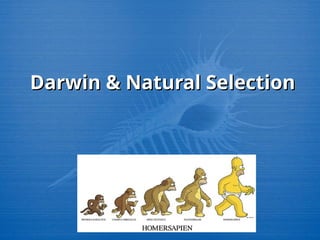
Darwin & Natural Selection
INTRODUCTION:-
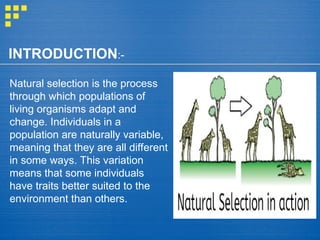
Natural selection is the process
through which populations of
living organisms adapt and
change. Individuals in a
population are naturally variable,
meaning that they are all different
in some ways. This variation
means that some individuals
have traits better suited to the
environment than others.
Learning Goals
 1. Define "Evolution" & "Natural Selection".
 2. Describe the 4 steps of Natural Selection,
giving an example of each.
 3. Explain the importance of "Variation".
 4. Does Natural Selection act on an
organism phenotype or genotoype? Explain!
 5. List the 5 evidences that support the
Theory of Evolution.
Theory of Evolution
Theory of Evolution
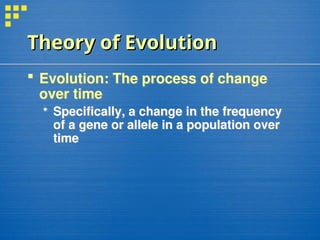
 Evolution: The process of change
over time
 Specifically, a change in the frequency
of a gene or allele in a population over
time
Charles Darwin
Charles Darwin
 Father of Evolution
 Proposed a mechanism for
evolution, natural selection
natural selection
 Darwin went on a 5-year trip
around the world on the ship,
the HMS Beagle
 As the ship’s naturalist, he
made observations of
organisms in South America
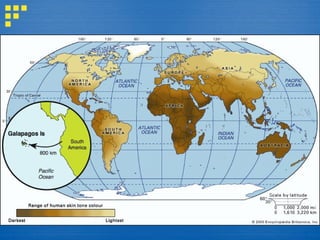
and the Galapagos Islands
•Wrote a book, “
Wrote a book, “Origin of the Species
Origin of the Species”
”
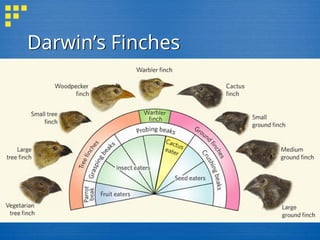
Darwin’s Finches
Natural Selection
Natural Selection
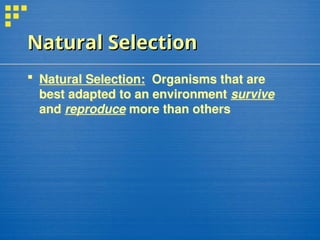
 Natural Selection: Organisms that are
best adapted to an environment survive
and reproduce more than others
 Darwin’s Theory of Natural Selection
occurs in four steps:
 Overproduction
 Variation
 Competition
 Selection
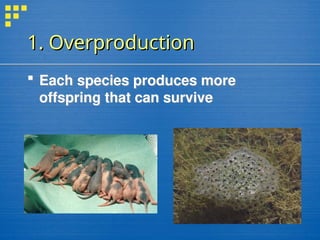
1. Overproduction
1. Overproduction
 Each species produces more
offspring that can survive
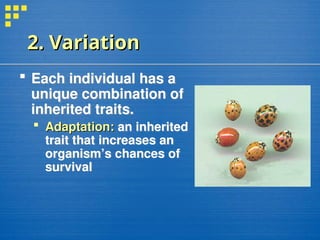
2. Variation
2. Variation
 Each individual has a
unique combination of
inherited traits.
 Adaptation:
Adaptation: an inherited
trait that increases an
organism’s chances of
survival
Why is Variation Important?
 Because the environment changes.
 The more variation
variation within
within a species
a species, the
more likely it will survive
survive
 EX: If everyone is the same, they are all
vulnerable to the same environmental
changes or diseases
 The more variation of
variation of types of
types of species
species in
an habitat, the more likely at least some
some
will survive
will survive
 EX: Dinosaurs replaced by mammals
3. Competition
3. Competition
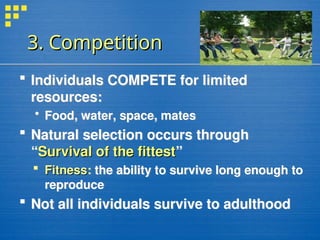
 Individuals COMPETE for limited
resources:
 Food, water, space, mates
 Natural selection occurs through
“Survival of the fittest
Survival of the fittest”
 Fitness
Fitness: the ability to survive long enough to
reproduce
 Not all individuals survive to adulthood
4. Selection
4. Selection
 The individuals with the best traits /
best traits /
adaptations will survive and have the
opportunity to pass on it’s traits
opportunity to pass on it’s traits to
offspring.
 Natural selection acts on the phenotype
(physical appearance), not the genotype
(genetic makeup)
 Ex: When a predator finds its prey, it is due
to the prey’s physical characteristics, like
color or slow speed, not the alleles (BB, Bb)
 Individuals with traits that are not
well suited to their environment
either die or leave few offspring.
 Evolution occurs when good traits
good traits
build up in a population
build up in a population over many
generations and bad traits are
bad traits are
eliminated by the death of the
individuals
individuals.
Descent with Modification
 Descent with Modification
Descent with Modification – each
living species has descended, with
changes, from other species over
time.
 Common Descent
Common Descent – all living
organisms are related to one another
Evidence of Evolution
Learner Outcomes
 I can explain the evidence that supports
evolution.
Evidence for Evolution:
 Fossil Record
 Homologous Body Structures
 Vestigial Organs
 Embryology
 Biochemical Evidence
The Fossil Record
The Fossil Record
 Fossils
Fossils: a record of the history of life
on Earth
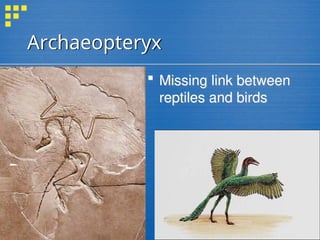
Archaeopteryx
 Missing link between
reptiles and birds
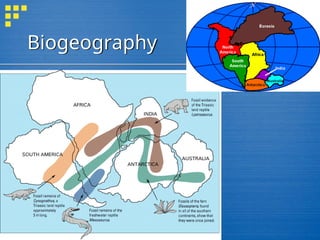
Biogeography
Homologous Body
Homologous Body
Structures
Structures
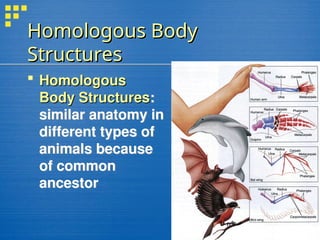
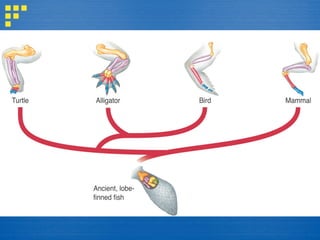
 Homologous
Homologous
Body Structures
Body Structures:
similar anatomy in
different types of
animals because
of common
ancestor
Vestigial Organs
Vestigial Organs
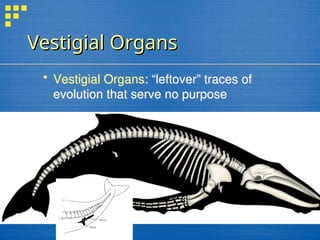
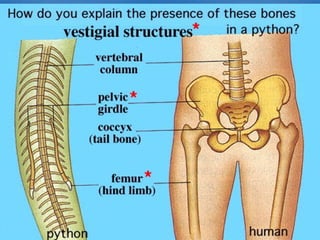
 Vestigial Organs: “leftover” traces of
evolution that serve no purpose
Embryology
Embryology
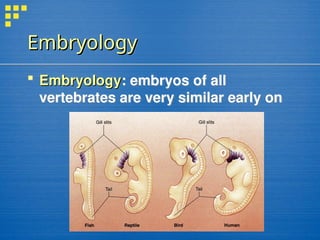
 Embryology
Embryology: embryos of all
vertebrates are very similar early on
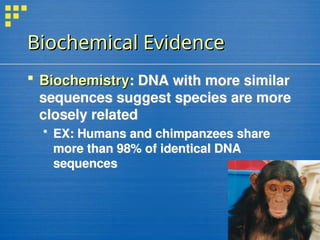
Biochemical Evidence
 Biochemistry
Biochemistry: DNA with more similar
sequences suggest species are more
closely related
 EX: Humans and chimpanzees share
more than 98% of identical DNA
sequences
REFERENCES:-
darwinnatural_selection11 (2).ppt natural selection

darwinnatural_selection11 (2).ppt natural selection

  • 1.
    Power point presentation Submittedby :- DLS PG College, Bilaspur Topic – Natural selection Chetna Yadav M.sc.(Zoology),3rd sem. Submitted to:- Mrs. SUNITA DWIVEDI Session- 2022-23
  • 2.
    Darwin & NaturalSelection Darwin & Natural Selection
  • 3.
    INTRODUCTION:- Natural selection isthe process through which populations of living organisms adapt and change. Individuals in a population are naturally variable, meaning that they are all different in some ways. This variation means that some individuals have traits better suited to the environment than others.
  • 4.
    Learning Goals  1.Define "Evolution" & "Natural Selection".  2. Describe the 4 steps of Natural Selection, giving an example of each.  3. Explain the importance of "Variation".  4. Does Natural Selection act on an organism phenotype or genotoype? Explain!  5. List the 5 evidences that support the Theory of Evolution.
  • 5.
    Theory of Evolution Theoryof Evolution  Evolution: The process of change over time  Specifically, a change in the frequency of a gene or allele in a population over time
  • 6.
    Charles Darwin Charles Darwin Father of Evolution  Proposed a mechanism for evolution, natural selection natural selection  Darwin went on a 5-year trip around the world on the ship, the HMS Beagle  As the ship’s naturalist, he made observations of organisms in South America and the Galapagos Islands •Wrote a book, “ Wrote a book, “Origin of the Species Origin of the Species” ”
  • 8.
  • 9.
    Natural Selection Natural Selection Natural Selection: Organisms that are best adapted to an environment survive and reproduce more than others
  • 10.
     Darwin’s Theoryof Natural Selection occurs in four steps:  Overproduction  Variation  Competition  Selection
  • 11.
    1. Overproduction 1. Overproduction Each species produces more offspring that can survive
  • 12.
    2. Variation 2. Variation Each individual has a unique combination of inherited traits.  Adaptation: Adaptation: an inherited trait that increases an organism’s chances of survival
  • 13.
    Why is VariationImportant?  Because the environment changes.  The more variation variation within within a species a species, the more likely it will survive survive  EX: If everyone is the same, they are all vulnerable to the same environmental changes or diseases  The more variation of variation of types of types of species species in an habitat, the more likely at least some some will survive will survive  EX: Dinosaurs replaced by mammals
  • 14.
    3. Competition 3. Competition Individuals COMPETE for limited resources:  Food, water, space, mates  Natural selection occurs through “Survival of the fittest Survival of the fittest”  Fitness Fitness: the ability to survive long enough to reproduce  Not all individuals survive to adulthood
  • 15.
    4. Selection 4. Selection The individuals with the best traits / best traits / adaptations will survive and have the adaptations will survive and have the opportunity to pass on it’s traits opportunity to pass on it’s traits to offspring.  Natural selection acts on the phenotype (physical appearance), not the genotype (genetic makeup)  Ex: When a predator finds its prey, it is due to the prey’s physical characteristics, like color or slow speed, not the alleles (BB, Bb)
  • 16.
     Individuals withtraits that are not well suited to their environment either die or leave few offspring.  Evolution occurs when good traits good traits build up in a population build up in a population over many generations and bad traits are bad traits are eliminated by the death of the eliminated by the death of the individuals individuals.
  • 17.
    Descent with Modification Descentwith Modification  Descent with Modification Descent with Modification – each living species has descended, with changes, from other species over time.  Common Descent Common Descent – all living organisms are related to one another
  • 19.
    Evidence of Evolution LearnerOutcomes  I can explain the evidence that supports evolution.
  • 20.
    Evidence for Evolution: Fossil Record  Homologous Body Structures  Vestigial Organs  Embryology  Biochemical Evidence
  • 21.
    The Fossil Record TheFossil Record  Fossils Fossils: a record of the history of life on Earth
  • 22.
    Archaeopteryx  Missing linkbetween reptiles and birds
  • 23.
  • 24.
    Homologous Body Homologous Body Structures Structures Homologous Homologous Body Structures Body Structures: similar anatomy in different types of animals because of common ancestor
  • 26.
    Vestigial Organs Vestigial Organs Vestigial Organs: “leftover” traces of evolution that serve no purpose
  • 28.
    Embryology Embryology  Embryology Embryology: embryosof all vertebrates are very similar early on
  • 30.
    Biochemical Evidence Biochemical Evidence Biochemistry Biochemistry: DNA with more similar sequences suggest species are more closely related  EX: Humans and chimpanzees share more than 98% of identical DNA sequences
  • 31.