CENTRALIZED PRODUCT TEAMS:
HOW TO TRANSFORM YOUR PMs FROM
ORDER TAKERS INTO THOUGHT
LEADERS
Daniel Alvarez
VP, Product & Design
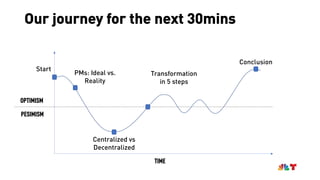
Our journey for the next 30mins
PMs: Ideal vs.
Reality
Centralized vs
Decentralized
Transformation
in 5 steps
OPTIMISM
PESIMISM
TIME
Conclusion
Start
REALITY CHECK: SOMETIMES
WHAT WE SAY WE DO IS
DIFFERENT FROM WHAT WE
ACTUALLY DO
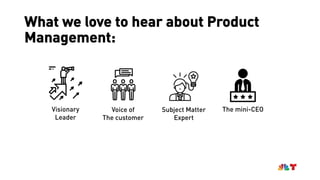
What we love to hear about Product
Management:
The mini-CEOVisionary
Leader
Subject Matter
Expert
Voice of
The customer
However, more often than not we see
organizations in which this happens…
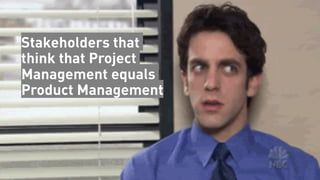
Stakeholders that
think that Project
Management equals
Product Management
PMs sitting in
endless meetings,
taking requests
from stakeholders
PMs drowning in
requests from all
sides
PMs only focused
on execution
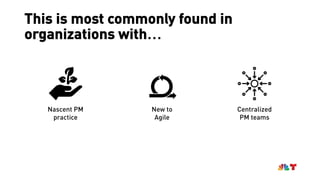
This is most commonly found in
organizations with…
New to
Agile
Nascent PM
practice
Centralized
PM teams
WHICH ONE IS BETTER,
CENTRALIZED OR
DECENTRALIZED?
(THEY BOTH HAVE THEIR MERITS)
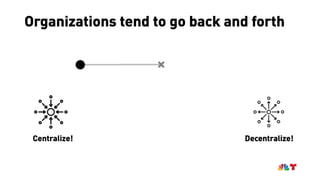
Organizations tend to go back and forth
Centralize! Decentralize!
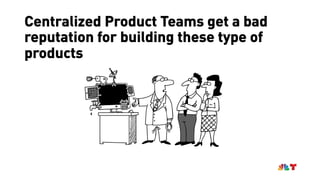
Centralized Product Teams get a bad
reputation for building these type of
products
But it doesn’t have to be that way
THE CASE FOR
CENTRALIZED TEAMS AT
Our team covers 40+ different local TV
stations across the US
A centralized approach makes sense for
us because…
• We have a relative small footprint of digital resources
in some stations
• Allows our stations to share solutions to common
problems
• Allows us to test in smaller markets and scale the
features that work
In all transparency…
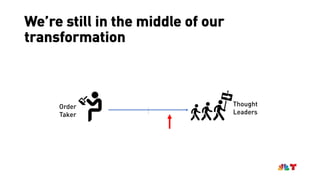
We’re still in the middle of our
transformation
Order
Taker
Thought
Leaders
WHAT IS THIS
TRANSFORMATION PROCESS
YOU SPEAK OF?
(5 STEPS, NO SILVER BULLETS)
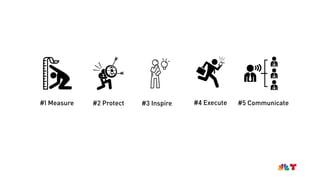
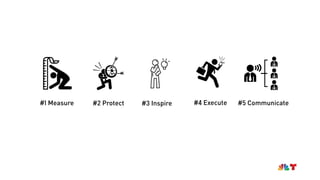
#1 Measure #2 Protect #3 Inspire #4 Execute #5 Communicate
#1 MEASURE
(ESTABLISH YOUR BASELINE OUTPUT)
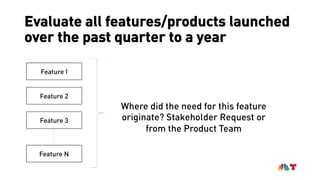
Evaluate all features/products launched
over the past quarter to a year
Feature 1
Feature 2
Feature 3
Feature N
Where did the need for this feature
originate? Stakeholder Request or
from the Product Team
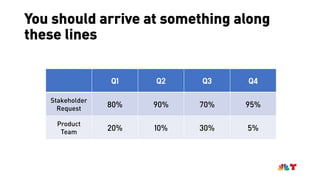
You should arrive at something along
these lines
Q1 Q2 Q3 Q4
Stakeholder
Request
Product
Team
80% 90% 70% 95%
20% 10% 30% 5%
#2 PROTECT
(YOUR TEAM AND YOUR PRODUCT)
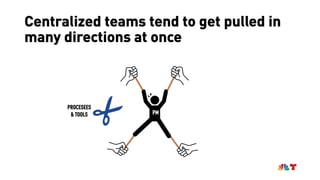
Centralized teams tend to get pulled in
many directions at once
PROCESEES
& TOOLS PM
#2.1 STREAMLINE YOUR INTAKE
CHANNELS FOR REQUESTS
(ONE CHANNEL TO RULE THEM ALL)
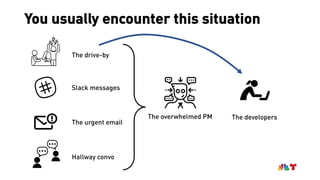
You usually encounter this situation
The drive-by
Slack messages
The urgent email
Hallway convo
The overwhelmed PM The developers
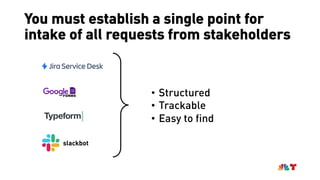
You must establish a single point for
intake of all requests from stakeholders
slackbot
• Structured
• Trackable
• Easy to find
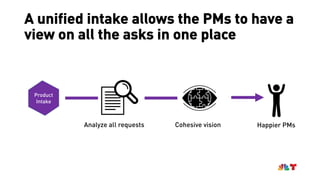
A unified intake allows the PMs to have a
view on all the asks in one place
Product
Intake
Analyze all requests Cohesive vision Happier PMs
Other benefits of the Unified Intake
include:
• Makes people stop and think!
• Allows you to shape the conversation
Important things to keep in mind:
• Set clear expectations for response times (SLA)
• Allow room for exceptions, with clear guidelines
• Be very strict about it
#2.2 CONSISTENT AND
TRANSPARENT VALIDATION OF
IDEAS
(EQUAL OPPORTUNITY FOR ALL)
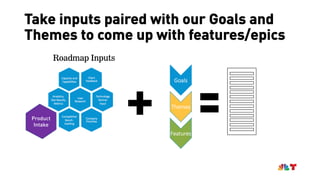
Take inputs paired with our Goals and
Themes to come up with features/epics
Roadmap Inputs Roadmap Outputs
Product
Intake
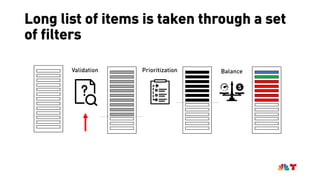
Long list of items is taken through a set
of filters
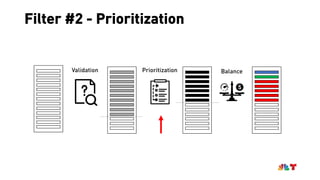
Validation Prioritization Balance
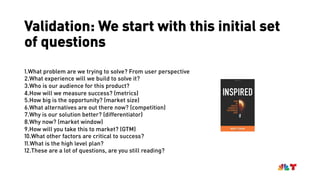
Validation: We start with this initial set
of questions
1.What problem are we trying to solve? From user perspective
2.What experience will we build to solve it?
3.Who is our audience for this product?
4.How will we measure success? (metrics)
5.How big is the opportunity? (market size)
6.What alternatives are out there now? (competition)
7.Why is our solution better? (differentiator)
8.Why now? (market window)
9.How will you take this to market? (GTM)
10.What other factors are critical to success?
11.What is the high level plan?
12.These are a lot of questions, are you still reading?
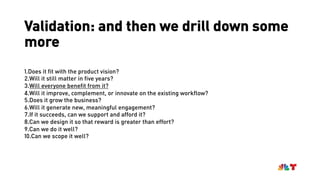
Validation: and then we drill down some
more
1.Does it fit with the product vision?
2.Will it still matter in five years?
3.Will everyone benefit from it?
4.Will it improve, complement, or innovate on the existing workflow?
5.Does it grow the business?
6.Will it generate new, meaningful engagement?
7.If it succeeds, can we support and afford it?
8.Can we design it so that reward is greater than effort?
9.Can we do it well?
10.Can we scope it well?
Filter #2 - Prioritization
Validation Prioritization Balance
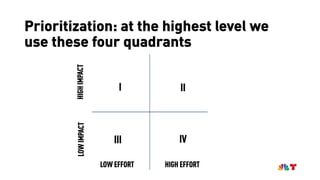
Prioritization: at the highest level we
use these four quadrants
HIGHIMPACTLOWIMPACT
HIGH EFFORTLOW EFFORT
I
III IV
II
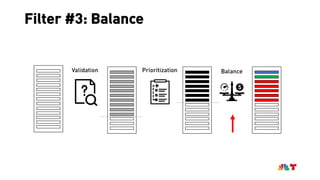
Filter #3: Balance
Validation Prioritization Balance
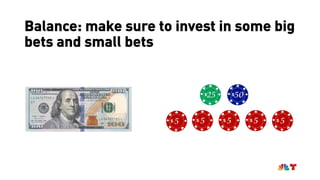
Balance: make sure to invest in some big
bets and small bets
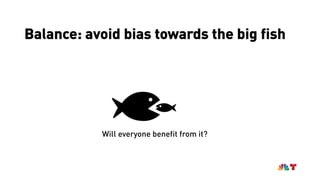
Balance: avoid bias towards the big fish
Will everyone benefit from it?
#2.3 EMPOWER YOUR TEAM TO
JUST SAY NO
(INSTEAD OF “MAYBE LATER”)
This is what
happens when you
say “maybe later”
(Be nicer than this)
Just say no
#3 INSPIRE
(FROM THE INSIDE OUT)
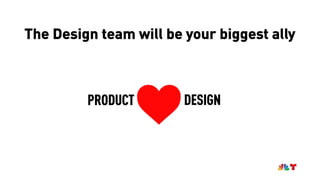
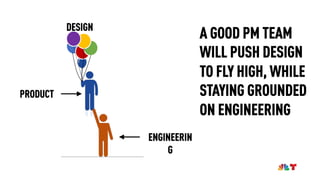
The Design team will be your biggest ally
DESIGNPRODUCT
A GOOD PM TEAM
WILL PUSH DESIGN
TO FLY HIGH, WHILE
STAYING GROUNDED
ON ENGINEERING
DESIGN
PRODUCT
ENGINEERIN
G
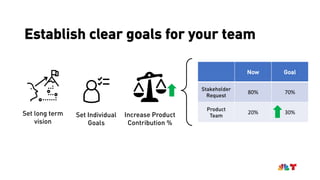
Establish clear goals for your team
Set long term
vision
Set Individual
Goals
Now Goal
Stakeholder
Request
80% 70%
Product
Team
20% 30%Increase Product
Contribution %
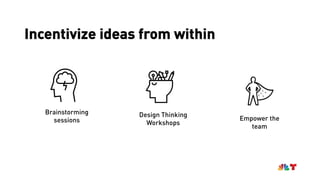
Incentivize ideas from within
Brainstorming
sessions
Design Thinking
Workshops
Empower the
team
#4 EXECUTE
(DO WHAT PMS DO BEST)
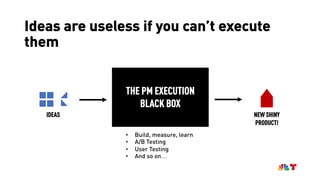
Ideas are useless if you can’t execute
them
• Build, measure, learn
• A/B Testing
• User Testing
• And so on…
THE PM EXECUTION
BLACK BOX
IDEAS NEW SHINY
PRODUCT!
#5 COMMUNICATE
(EARLY AND OFTEN)
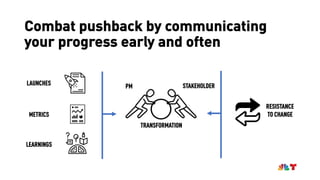
Combat pushback by communicating
your progress early and often
TRANSFORMATION
METRICS
RESISTANCE
TO CHANGE
LAUNCHES
LEARNINGS
PM STAKEHOLDER
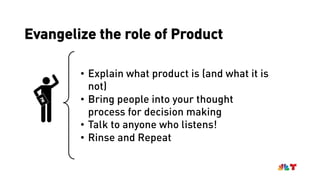
Evangelize the role of ProductPM
• Explain what product is (and what it is
not)
• Bring people into your thought
process for decision making
• Talk to anyone who listens!
• Rinse and Repeat
TRANSFORMATION
IS A LONG WINDING ROAD
#1 Measure #2 Protect #3 Inspire #4 Execute #5 Communicate
Happy PMs = Better Products
THANK YOU!

Daniel A

  • 1.
    CENTRALIZED PRODUCT TEAMS: HOWTO TRANSFORM YOUR PMs FROM ORDER TAKERS INTO THOUGHT LEADERS Daniel Alvarez VP, Product & Design
  • 2.
    Our journey forthe next 30mins PMs: Ideal vs. Reality Centralized vs Decentralized Transformation in 5 steps OPTIMISM PESIMISM TIME Conclusion Start
  • 3.
    REALITY CHECK: SOMETIMES WHATWE SAY WE DO IS DIFFERENT FROM WHAT WE ACTUALLY DO
  • 4.
    What we loveto hear about Product Management: The mini-CEOVisionary Leader Subject Matter Expert Voice of The customer
  • 5.
    However, more oftenthan not we see organizations in which this happens…
  • 6.
    Stakeholders that think thatProject Management equals Product Management
  • 7.
    PMs sitting in endlessmeetings, taking requests from stakeholders
  • 8.
  • 9.
  • 10.
    This is mostcommonly found in organizations with… New to Agile Nascent PM practice Centralized PM teams
  • 11.
    WHICH ONE ISBETTER, CENTRALIZED OR DECENTRALIZED? (THEY BOTH HAVE THEIR MERITS)
  • 12.
    Organizations tend togo back and forth Centralize! Decentralize!
  • 13.
    Centralized Product Teamsget a bad reputation for building these type of products
  • 14.
    But it doesn’thave to be that way
  • 15.
  • 16.
    Our team covers40+ different local TV stations across the US
  • 17.
    A centralized approachmakes sense for us because… • We have a relative small footprint of digital resources in some stations • Allows our stations to share solutions to common problems • Allows us to test in smaller markets and scale the features that work
  • 18.
  • 19.
    We’re still inthe middle of our transformation Order Taker Thought Leaders
  • 20.
    WHAT IS THIS TRANSFORMATIONPROCESS YOU SPEAK OF? (5 STEPS, NO SILVER BULLETS)
  • 21.
    #1 Measure #2Protect #3 Inspire #4 Execute #5 Communicate
  • 22.
  • 23.
    Evaluate all features/productslaunched over the past quarter to a year Feature 1 Feature 2 Feature 3 Feature N Where did the need for this feature originate? Stakeholder Request or from the Product Team
  • 24.
    You should arriveat something along these lines Q1 Q2 Q3 Q4 Stakeholder Request Product Team 80% 90% 70% 95% 20% 10% 30% 5%
  • 25.
    #2 PROTECT (YOUR TEAMAND YOUR PRODUCT)
  • 26.
    Centralized teams tendto get pulled in many directions at once PROCESEES & TOOLS PM
  • 27.
    #2.1 STREAMLINE YOURINTAKE CHANNELS FOR REQUESTS (ONE CHANNEL TO RULE THEM ALL)
  • 28.
    You usually encounterthis situation The drive-by Slack messages The urgent email Hallway convo The overwhelmed PM The developers
  • 29.
    You must establisha single point for intake of all requests from stakeholders slackbot • Structured • Trackable • Easy to find
  • 30.
    A unified intakeallows the PMs to have a view on all the asks in one place Product Intake Analyze all requests Cohesive vision Happier PMs
  • 31.
    Other benefits ofthe Unified Intake include: • Makes people stop and think! • Allows you to shape the conversation
  • 32.
    Important things tokeep in mind: • Set clear expectations for response times (SLA) • Allow room for exceptions, with clear guidelines • Be very strict about it
  • 33.
    #2.2 CONSISTENT AND TRANSPARENTVALIDATION OF IDEAS (EQUAL OPPORTUNITY FOR ALL)
  • 34.
    Take inputs pairedwith our Goals and Themes to come up with features/epics Roadmap Inputs Roadmap Outputs Product Intake
  • 35.
    Long list ofitems is taken through a set of filters Validation Prioritization Balance
  • 36.
    Validation: We startwith this initial set of questions 1.What problem are we trying to solve? From user perspective 2.What experience will we build to solve it? 3.Who is our audience for this product? 4.How will we measure success? (metrics) 5.How big is the opportunity? (market size) 6.What alternatives are out there now? (competition) 7.Why is our solution better? (differentiator) 8.Why now? (market window) 9.How will you take this to market? (GTM) 10.What other factors are critical to success? 11.What is the high level plan? 12.These are a lot of questions, are you still reading?
  • 37.
    Validation: and thenwe drill down some more 1.Does it fit with the product vision? 2.Will it still matter in five years? 3.Will everyone benefit from it? 4.Will it improve, complement, or innovate on the existing workflow? 5.Does it grow the business? 6.Will it generate new, meaningful engagement? 7.If it succeeds, can we support and afford it? 8.Can we design it so that reward is greater than effort? 9.Can we do it well? 10.Can we scope it well?
  • 38.
    Filter #2 -Prioritization Validation Prioritization Balance
  • 39.
    Prioritization: at thehighest level we use these four quadrants HIGHIMPACTLOWIMPACT HIGH EFFORTLOW EFFORT I III IV II
  • 40.
    Filter #3: Balance ValidationPrioritization Balance
  • 41.
    Balance: make sureto invest in some big bets and small bets
  • 42.
    Balance: avoid biastowards the big fish Will everyone benefit from it?
  • 43.
    #2.3 EMPOWER YOURTEAM TO JUST SAY NO (INSTEAD OF “MAYBE LATER”)
  • 44.
    This is what happenswhen you say “maybe later”
  • 45.
    (Be nicer thanthis) Just say no
  • 46.
  • 47.
    The Design teamwill be your biggest ally DESIGNPRODUCT
  • 48.
    A GOOD PMTEAM WILL PUSH DESIGN TO FLY HIGH, WHILE STAYING GROUNDED ON ENGINEERING DESIGN PRODUCT ENGINEERIN G
  • 49.
    Establish clear goalsfor your team Set long term vision Set Individual Goals Now Goal Stakeholder Request 80% 70% Product Team 20% 30%Increase Product Contribution %
  • 50.
    Incentivize ideas fromwithin Brainstorming sessions Design Thinking Workshops Empower the team
  • 51.
    #4 EXECUTE (DO WHATPMS DO BEST)
  • 52.
    Ideas are uselessif you can’t execute them • Build, measure, learn • A/B Testing • User Testing • And so on… THE PM EXECUTION BLACK BOX IDEAS NEW SHINY PRODUCT!
  • 53.
  • 54.
    Combat pushback bycommunicating your progress early and often TRANSFORMATION METRICS RESISTANCE TO CHANGE LAUNCHES LEARNINGS PM STAKEHOLDER
  • 55.
    Evangelize the roleof ProductPM • Explain what product is (and what it is not) • Bring people into your thought process for decision making • Talk to anyone who listens! • Rinse and Repeat
  • 56.
  • 57.
    #1 Measure #2Protect #3 Inspire #4 Execute #5 Communicate
  • 58.
    Happy PMs =Better Products
  • 59.